47 Automated Digital Marketing Tools to Boost Your ROI


Automated digital marketing tools are software platforms that handle repetitive marketing tasks—like email campaigns, social media posting, lead scoring, and customer segmentation—without constant human intervention. These tools use triggers, workflows, and AI to deliver personalized messages across multiple channels at scale.
Quick Answer: Top Categories of Automated Digital Marketing Tools
The numbers tell a compelling story. 56% of companies already use marketing automation, with businesses seeing a 14.5% increase in sales productivity and 12.2% reduction in marketing overhead. More importantly for agencies, companies using automation experience a 451% increase in qualified leads and 53% higher conversion rates.
For agency owners drowning in manual SEO tasks and client deliverables, automation isn't just nice-to-have—it's survival. When you're juggling content creation, keyword research, and backlink outreach for multiple clients, the right tools can mean the difference between scaling successfully and burning out.
This roundup covers 47 automated digital marketing tools across six key categories. We'll focus on platforms that deliver measurable ROI improvements while reducing the grunt work that keeps agencies stuck in reactive mode instead of growing strategically.
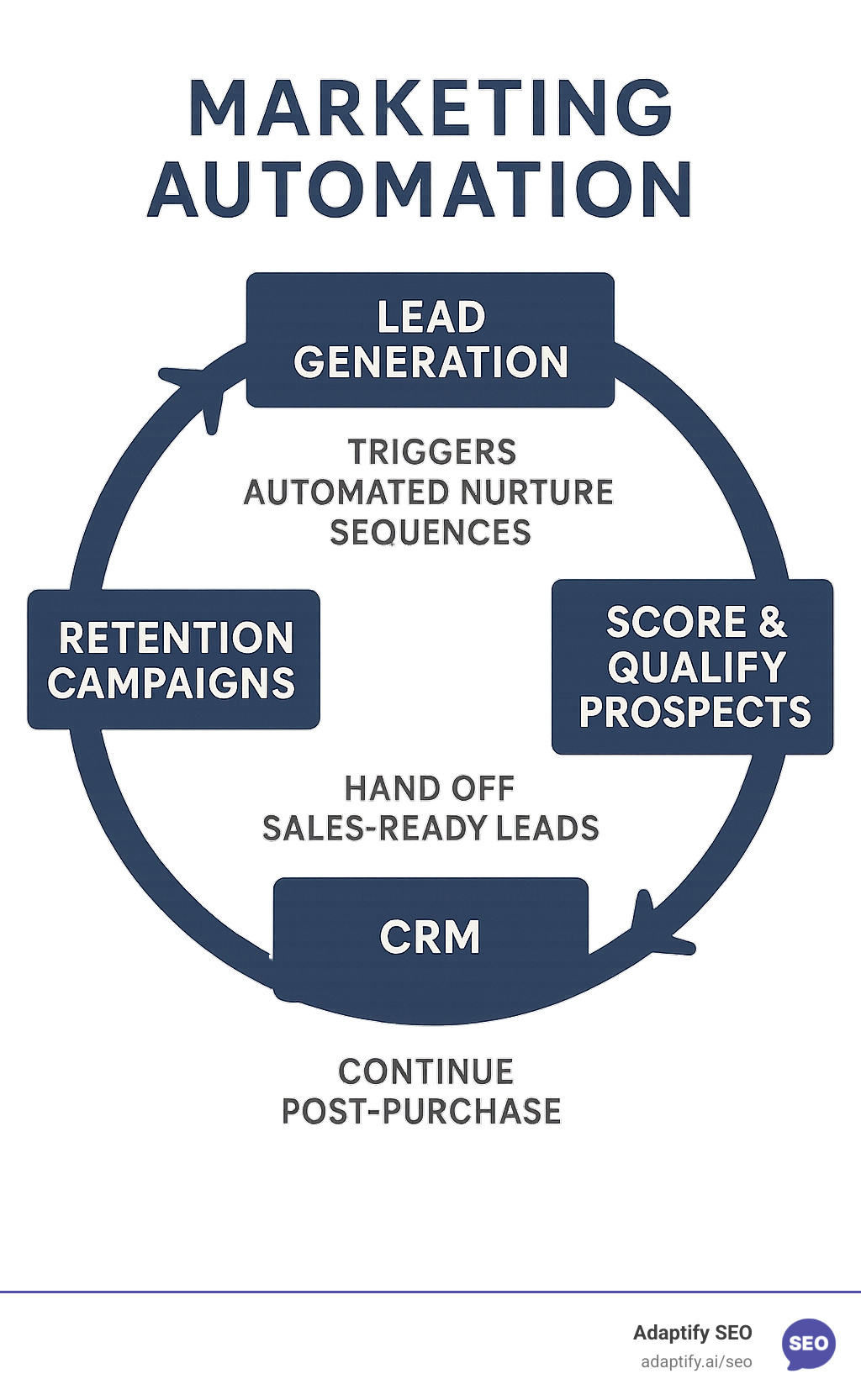
Picture this: A potential client visits your agency's website at 2 AM, downloads your SEO guide, and immediately gets added to a nurture sequence that sends them case studies, schedules a follow-up call, and alerts your sales team—all while you're sleeping. That's the power of automated digital marketing tools in action.
Marketing automation works like having a brilliant assistant who never takes a break. When someone takes a specific action—downloading content, visiting your pricing page, or clicking an email link—that action becomes a trigger that launches a carefully crafted sequence of follow-up activities.
The real magic happens when all your systems talk to each other. Modern automation platforms create a data integration hub that connects your website, CRM, email system, and social media accounts. AI-powered personalization takes this further by analyzing each person's behavior to predict what content they'll find most compelling and when they're most likely to engage.
Lead scoring happens automatically in the background, assigning points based on actions like email opens, website visits, and content downloads. When someone hits your threshold score, the system automatically notifies your sales team and moves them into your sales handoff process.
Latest research on marketing automation shows that companies using these integrated approaches see dramatically better results than those stuck with manual processes.
Think of marketing automation as your digital clone—one that never forgets to follow up, always knows exactly what to say, and gets smarter with every interaction. It's software that handles all those repetitive marketing tasks that eat up your day, from sending welcome emails to scoring leads.
The foundation is built on triggers—specific actions or conditions that kick off automated responses. When someone abandons their shopping cart, that's a trigger. When a lead hasn't opened your last three emails, that's another trigger. Each one launches a different workflow designed to move that person closer to becoming a customer.
Most people think automation is just about email nurture sequences, but automated digital marketing tools can transform your entire customer journey from first touch to loyal advocate.
At the top of your funnel, automation captures leads through smart touchpoints like exit-intent popups and social media engagement triggers. The middle of your funnel is where nurture sequences really shine, delivering educational content and case studies based on each person's specific interests and behavior.
But here's where many agencies miss out: post-purchase care is just as important as acquisition. Your automation should trigger onboarding sequences for new clients, satisfaction surveys at key milestones, and upsell campaigns when the timing is right.
Here's something that might surprise you: automated digital marketing tools aren't just about saving time—they're about fundamentally changing how your agency delivers results. Companies implementing marketing automation report a 14.5% increase in sales productivity and 12.2% reduction in marketing overhead. But here's the real kicker—businesses using automation to nurture prospects see a 451% increase in qualified leads.
Let's get practical. You can implement these high-impact automations starting tomorrow:
Email marketing workflows are the perfect starting point. Welcome sequences for new subscribers, abandoned cart recovery, post-purchase follow-ups, and re-engagement campaigns for inactive contacts practically run themselves once you set them up.
Social media scheduling goes way beyond basic posting. Modern tools store your content in evergreen libraries and automatically reshare your best-performing posts. Unlike basic schedulers that delete content after publishing, platforms like MeetEdgar keep recycling your content indefinitely.
Lead scoring and qualification automatically assigns points based on website behavior, email engagement, and demographic data. When leads hit your threshold, they're automatically routed to the right sales rep with full context about their journey.
Dynamic content and personalized ads adapt to user behavior in real-time. Your website can show different content to first-time visitors versus returning prospects, while retargeting campaigns automatically adjust based on what people have already seen.
For SEO-focused agencies, automated keyword research, content brief generation, and technical audits are game-changers. Advanced platforms can even implement SEO fixes directly, not just recommend them.
Here's where automation gets really exciting—it actually makes your marketing more human, not less. Predictive sending algorithms analyze individual engagement patterns to deliver emails when each recipient is most likely to open them. This simple optimization can improve open rates by 20-30% without changing a single word of your content.
Content recommendation engines work like having a personal assistant for every prospect. They analyze past behavior to suggest relevant blog posts, products, or resources. Instead of sending generic follow-ups, each prospect receives content custom to their specific interests and stage in the buying journey.
Scientific research on lead nurturing confirms what successful agencies already know: personalized automation drives 80% higher lead volume and 77% higher conversion rates compared to generic campaigns.
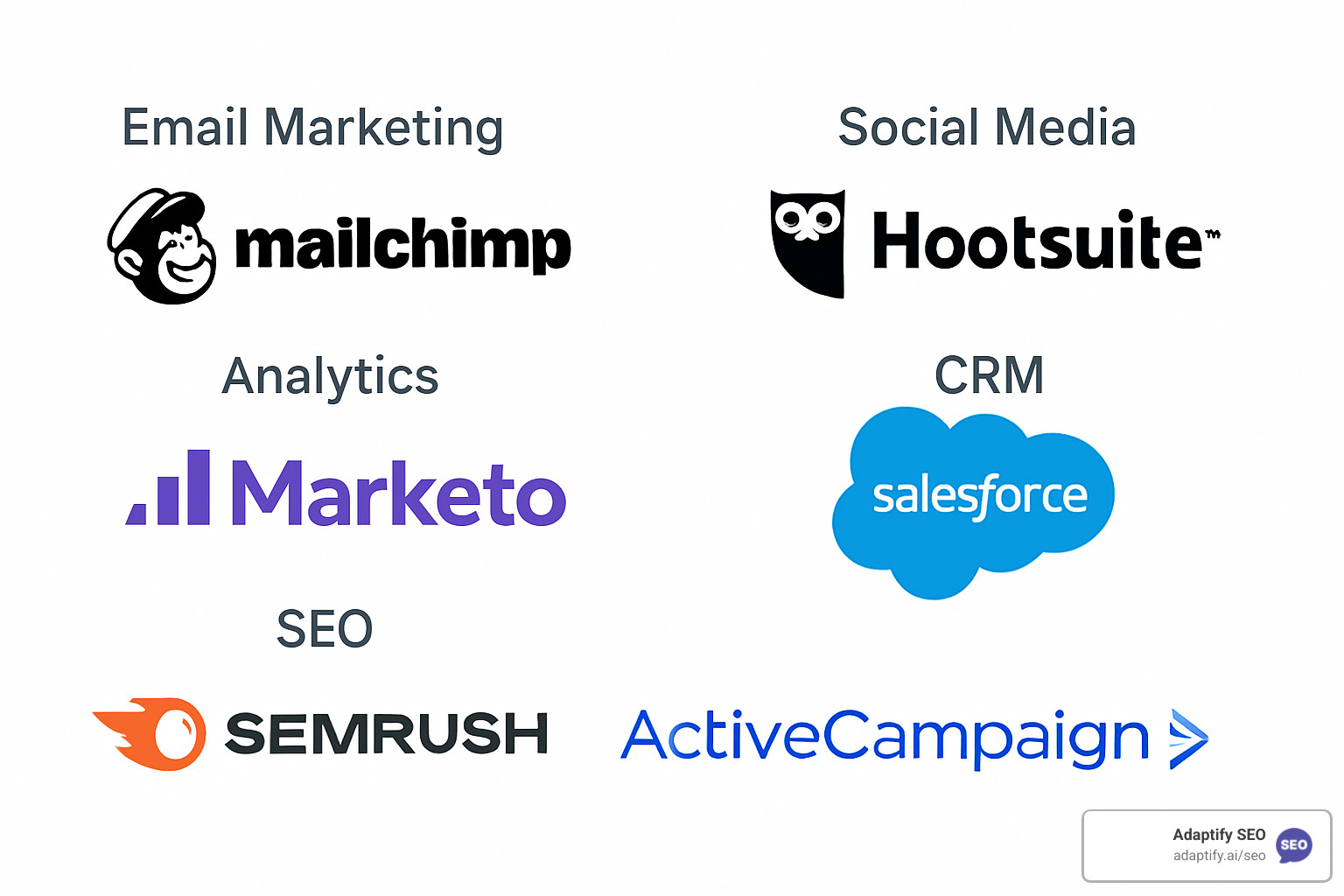
Choosing the right automated digital marketing tools feels overwhelming with so many options available. I've organized these 47 tools into six practical categories based on what they do best.
HubSpot Marketing Hub remains the platform everyone compares themselves to. Their free tier gives you email marketing, forms, and basic automation. The paid plans open up their AI content assistant and predictive lead scoring. What I love about HubSpot is how everything connects—when someone downloads your ebook, the system automatically scores them, adds them to a nurture sequence, and alerts your sales team.
ActiveCampaign focuses on behavioral automation with visual workflow builders that let you create campaigns adapting in real-time based on what people actually do. The predictive sending feature analyzes when each person typically opens emails and delivers messages at their personal peak engagement time.
Zoho Marketing Plus delivers serious value without the premium price tag. You get email marketing, social media management, webinar hosting, and survey tools that all talk to each other seamlessly.
Salesforce Marketing Cloud is the heavyweight champion for enterprise clients. Their Einstein AI provides predictive analytics and journey orchestration that can handle millions of contacts.
Brevo proves that good automation doesn't have to cost a fortune. Their free plan includes unlimited contacts with 300 emails per day—perfect for testing strategies before committing to bigger plans.
Search Atlas positions itself specifically for agencies with over 40 integrated tools covering SEO, PPC, content creation, and reporting. Their OTTO AI agent can actually implement SEO improvements and generate content briefs automatically.
Mailchimp has grown far beyond its simple email roots into a comprehensive marketing platform. Their automation workflows include sophisticated customer journey mapping and behavioral triggers.
Klaviyo owns the e-commerce email automation space. Their platform integrates deeply with Shopify and WooCommerce. Pre-built workflows for abandoned cart recovery and post-purchase upsells can generate 15-30% additional revenue without manual work.
Omnisend specializes in coordinating email, SMS, push notifications, and social media campaigns with laser-focused e-commerce segmentation.
Customer.io excels at behavior-triggered messaging for SaaS and app-based businesses. They track user actions in real-time and trigger relevant messages across email, SMS, and push notifications.
Drip calls itself an "ECRM" (E-commerce CRM), combining email marketing with customer data management and behavioral tracking.
Hootsuite remains the granddaddy of social media automation with comprehensive scheduling, monitoring, and analytics across all major networks. Their AI-powered content assistant suggests captions and optimal posting times.
Buffer focuses on clean, reliable social media scheduling with team collaboration features. Their queue-based system automatically spaces content throughout the day.
MeetEdgar takes a unique approach by storing social content in category-based libraries for automatic recycling. Unlike traditional schedulers that delete posts after publishing, Edgar continuously reshares your evergreen content.
CoSchedule combines social media scheduling with content calendar management and project coordination. Their Marketing Suite integrates blog post scheduling, social promotion, and team collaboration in one platform.
Canva might be known for design, but their automation features streamline content creation workflows. Brand Kit ensures consistent design across all materials, while template automation speeds up social media graphics production.
AdRoll specializes in automated retargeting and prospecting campaigns across display, social, and email channels. Their machine learning optimizes ad creative, bidding, and audience targeting automatically.
Metadata.io automates B2B advertising campaign creation and optimization across Google, LinkedIn, and Facebook. The platform generates ad creative, manages budgets, and adjusts targeting based on performance data.
Semrush has evolved far beyond keyword research into comprehensive marketing automation. The platform automates SEO audits, content optimization, social media posting, and competitive analysis.
Ahrefs focuses on SEO automation with features like automated site audits, keyword tracking, and backlink monitoring. Their Alerts system notifies you of ranking changes, new backlinks, and competitor activities.
Adaptify AI offers automated SEO services designed specifically for agencies looking to scale their SEO offerings. The platform streamlines everything from SEO strategy formulation to content creation and PR link building using artificial intelligence.
Pipedrive combines CRM functionality with marketing automation through their Campaigns add-on. The visual pipeline management shows deal progress automatically, while email automation nurtures prospects based on their pipeline stage.
Leadfeeder identifies anonymous website visitors and automatically creates leads in your CRM. The platform tracks company visits, page views, and engagement levels to prioritize follow-up efforts.
Keap combines CRM, email marketing, and sales automation in one comprehensive platform. Their visual campaign builder creates complex automation sequences that nurture leads and manage customer relationships.
Waxwing combines AI-powered workflows with human expertise in a unique hybrid model. Their platform automates initial tasks while providing expert review and customization for complex projects.
Seventh Sense optimizes email delivery timing using AI analysis of individual recipient behavior. By analyzing when each contact typically engages with email, they can improve open rates by 20-30%.
OTTO (Search Atlas's AI agent) represents the future of SEO tools by actually implementing changes rather than just making recommendations. The platform can make real changes to websites and content based on SEO best practices.
Browse AI automates data extraction and monitoring from websites without requiring technical skills. The platform can track competitor prices, monitor job postings, or extract lead information automatically.
Conversica specializes in AI-powered sales assistants that handle lead qualification and follow-up communications through natural email and text conversations.
When building your automation stack, you'll face a crucial decision: go with one platform that does everything, or pick specialized tools that excel in specific areas?
All-in-one platforms like HubSpot and ActiveCampaign feel like having a Swiss Army knife for marketing. Everything talks to each other naturally—your email campaigns automatically update your CRM, social posts trigger based on email opens, and lead scoring happens seamlessly across all touchpoints.
Specialized automated digital marketing tools often run circles around all-in-one platforms in their specific domains. Klaviyo's e-commerce automation makes HubSpot's version look basic. Hootsuite's social scheduling has features that ActiveCampaign can't match.
| Feature | All-in-One Platforms | Specialized Tools |
|---|---|---|
| Data Integration | Native, seamless | Requires APIs/Zapier |
| Feature Depth | Good across all areas | Excellent in specialization |
| Learning Curve | Single platform to master | Multiple interfaces |
| Cost at Scale | Often more economical | Can become expensive |
| Customization | Limited by platform design | Often more flexible |
Most platforms fall into four pricing categories:
Contact-based pricing is what HubSpot and ActiveCampaign use. You pay based on how many contacts you have, regardless of how often you email them.
Email volume pricing flips the script. Mailchimp and Brevo charge based on how many emails you send monthly.
Feature-based tiers are everywhere. Basic plans give you email marketing, pro plans add automation, and enterprise plans include everything.
Flat-rate enterprise pricing becomes attractive once you hit scale. Pay one monthly fee and use everything unlimited.
Here's the ROI math that matters: if your team spends 10 hours weekly on manual marketing tasks at $50 per hour, that's $26,000 annually in labor costs. Add the 14.5% productivity boost and 53% higher conversion rates that research shows, and most platforms pay for themselves in months.
Data volume matters first. If you're generating fewer than 100 leads monthly, focus on increasing that number before automating. Automation needs data to optimize.
Process clarity comes next. Automation amplifies whatever processes you already have—good or bad. Document your workflows, fix the broken parts, then automate the good stuff.
Content readiness is crucial. Effective automation feeds on content. You need blog posts for nurture sequences, case studies for sales enablement, and email templates for different scenarios.
Team alignment prevents disasters. Marketing and sales need to agree on what makes a qualified lead, when handoffs happen, and how success gets measured.
Implementing automated digital marketing tools successfully requires avoiding common pitfalls while preparing for emerging trends.
Over-Automation Syndrome: The biggest mistake agencies make is automating everything immediately. Start with high-impact, low-risk workflows like welcome emails and abandoned cart sequences. Complex behavioral triggers should come later, after you've mastered the basics.
Poor Data Foundation: Automation is only as good as your data quality. If your CRM contains duplicates, outdated information, or incomplete records, automation will amplify these problems. Clean your data before implementing automation.
Siloed Team Implementation: When marketing teams implement automation without involving sales, customer service, or leadership, you create disconnected experiences. Ensure all customer-facing teams understand and contribute to your automation strategy.
Set-and-Forget Mentality: Automation requires ongoing optimization. Monitor performance metrics, test different messaging, and adjust workflows based on results.
Ignoring Compliance Requirements: GDPR, CAN-SPAM, and other regulations apply to automated communications. Ensure your workflows include proper consent management, easy unsubscribe options, and data retention policies.
The future of marketing automation is being shaped by three major trends:
Generative AI Integration: Platforms are rapidly incorporating GPT-style AI for content creation, subject line optimization, and campaign ideation. Within two years, expect AI to handle most content creation while humans focus on strategy and brand voice.
Voice and Conversational Interfaces: As voice assistants become more sophisticated, automation platforms will need to orchestrate campaigns across voice channels. Smart speakers, voice search optimization, and audio content automation will become standard features.
Cookieless Future Preparation: With third-party cookies disappearing, automation platforms are investing heavily in first-party data collection and activation. Expect more sophisticated on-site behavioral tracking and identity resolution capabilities.
Privacy compliance isn't just a legal requirement—it's a trust issue that can make or break your agency's reputation. Modern automated digital marketing tools have evolved to include sophisticated compliance management systems.
Most leading platforms now include double opt-in processes that require subscribers to confirm their email address before entering your automation workflows. The real game-changer is automated consent management. Platforms like HubSpot and Brevo track exactly when and how each contact gave permission, creating an audit trail that protects you during compliance reviews.
Geographic segmentation has become essential as different regions have varying privacy laws. Your automation platform should automatically apply GDPR rules to European contacts while following CCPA guidelines for California residents.
After helping dozens of agencies choose automation platforms, I've learned that focusing on flashy features often leads to poor decisions. The platforms that deliver the best long-term results excel at these fundamental capabilities:
Visual workflow builders should feel intuitive, not like learning a programming language. Look for drag-and-drop interfaces where you can see your entire customer journey at a glance.
Multi-channel coordination separates modern platforms from outdated email-only tools. Your automation should orchestrate campaigns across email, SMS, social media, and web experiences seamlessly.
Advanced segmentation capabilities determine how personalized your automation can become. Look for platforms that segment contacts dynamically based on real-time behavior, purchase history, and engagement patterns.
Revenue attribution reporting proves your automation's value to clients. Look for platforms that track performance across the entire customer journey, not just individual email metrics.
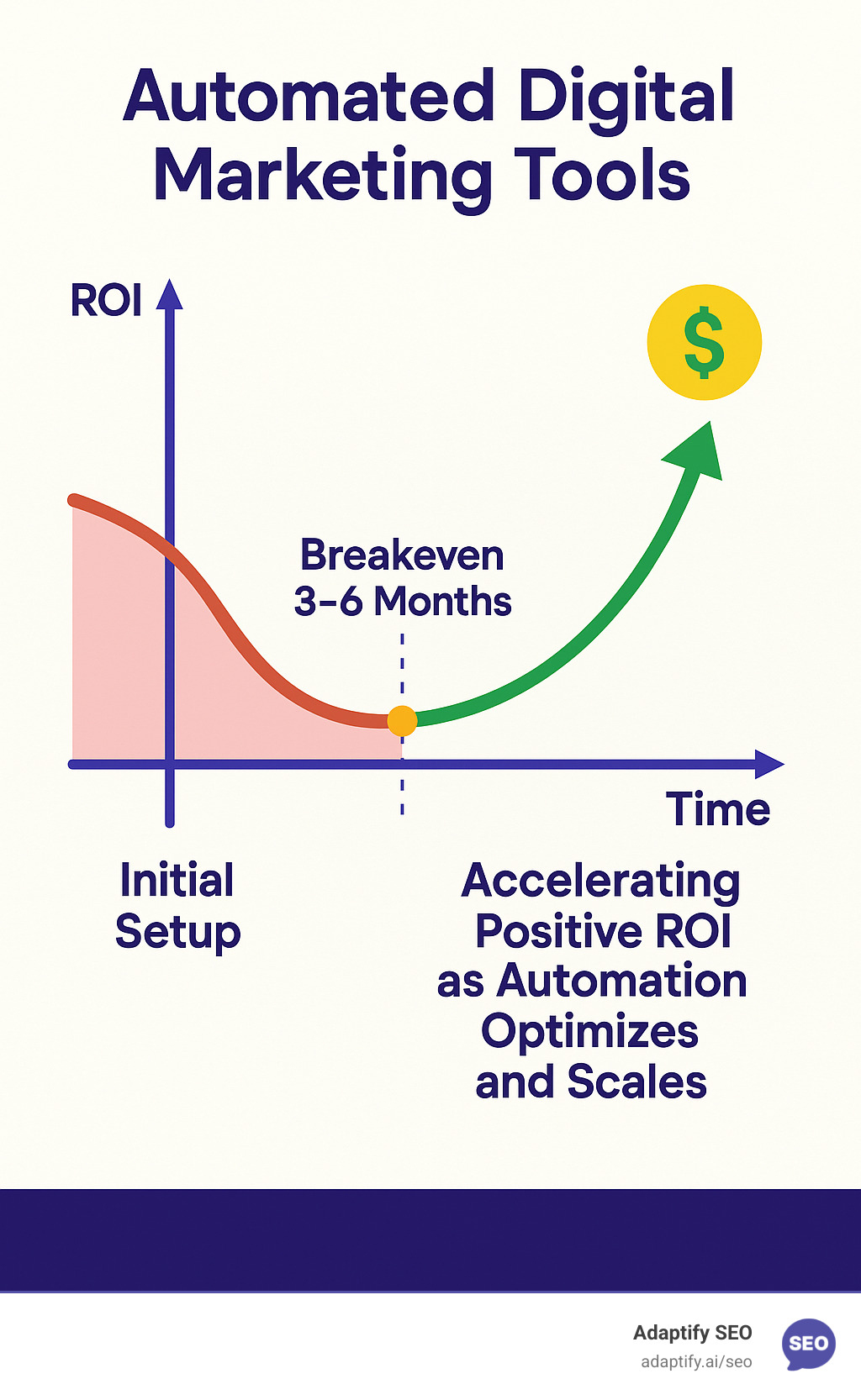
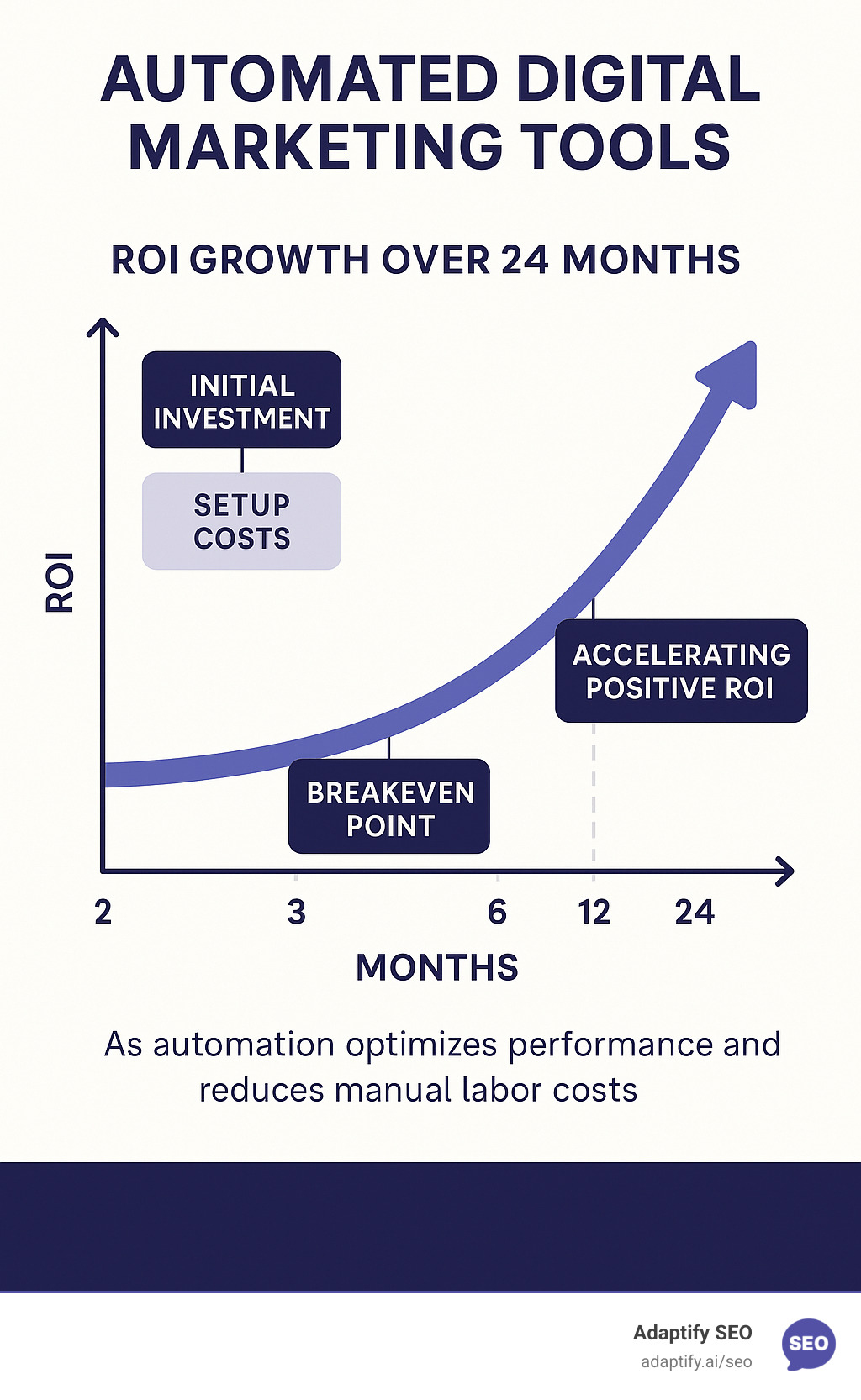
The typical timeline follows a predictable pattern:
The first two months are your investment period. You're building workflows, cleaning data, and training your team. Don't expect significant ROI during this phase.
Months three through six typically bring you to breakeven. This is when the 14.5% productivity increase becomes apparent as your team stops handling routine tasks manually.
The six to twelve month period is where automation really proves its worth. Complex workflows have matured, and you're seeing the 451% increase in qualified leads and 53% higher conversion rates that research documents.
The key to faster ROI is starting with high-impact, low-complexity automations. Welcome emails, abandoned cart sequences, and basic lead nurturing deliver quick wins while you build toward more sophisticated implementations.
The marketing landscape has fundamentally shifted. Automated digital marketing tools have moved from "nice-to-have" to "essential for survival" in just a few short years. The agencies that understand this shift—and act on it—will dominate their markets while others struggle with manual processes that no longer scale.
The evidence is overwhelming. Companies implementing marketing automation see 14.5% higher sales productivity and 12.2% lower marketing costs. But here's what really matters for agency owners: the 451% increase in qualified leads that automation delivers compounds across every client you serve.
The 47 tools we've covered represent different paths to the same destination: scaling personalized marketing without scaling your team proportionally. Whether you choose the comprehensive approach of HubSpot, the e-commerce specialization of Klaviyo, or the social media mastery of Hootsuite, the key is starting somewhere and expanding strategically.
Don't try to automate everything at once. Start with your highest-impact use cases—maybe welcome email sequences or social media scheduling—and build confidence before tackling complex behavioral workflows.
The future belongs to agencies that combine human creativity with automated execution. While AI handles the repetitive tasks that drain your team's energy, your people focus on strategy, relationship building, and the creative work that truly sets you apart from competitors.
This change is already happening in SEO services. At Adaptify AI, we've automated the entire SEO process—from initial strategy formulation through content creation to PR link building. Agencies using our platform can serve more clients with better results because they're not bogged down in manual keyword research and content optimization.
The choice is simple: accept automation now and lead your market, or watch competitors pull ahead while you're stuck in manual processes that can't scale. Your clients deserve better results, your team deserves more strategic work, and your business deserves sustainable growth.
Ready to see how automation can transform your agency's SEO services? Book a Demo to find how Adaptify AI eliminates the manual work that's holding your SEO services back.

Master SEO monitoring with key metrics and tools to track rankings, technical health, and organic growth for continuous performance optimi...
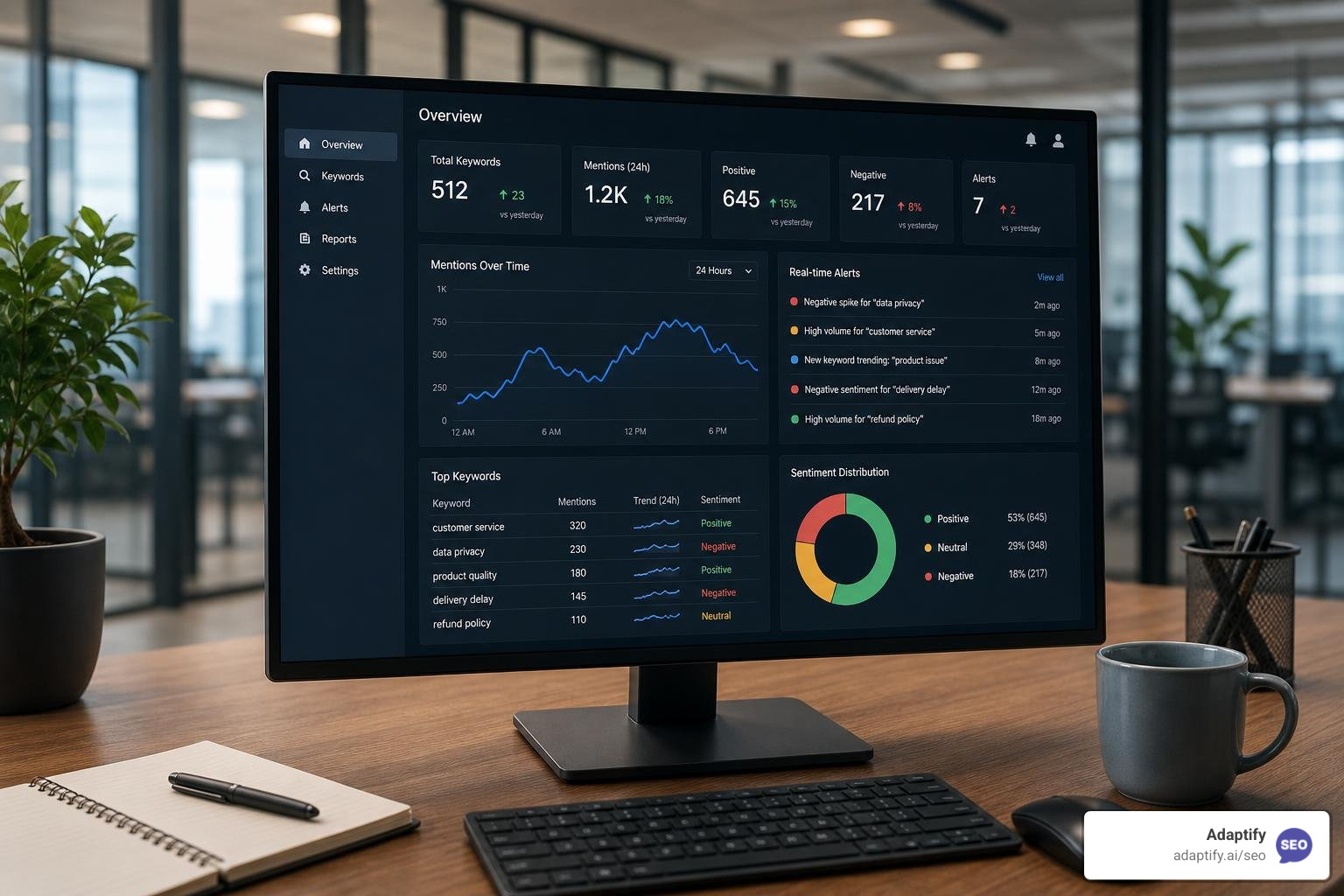
The Best Online Keyword Monitoring Tools for Real-Time Alerts - Learn about online keyword monitoring tool
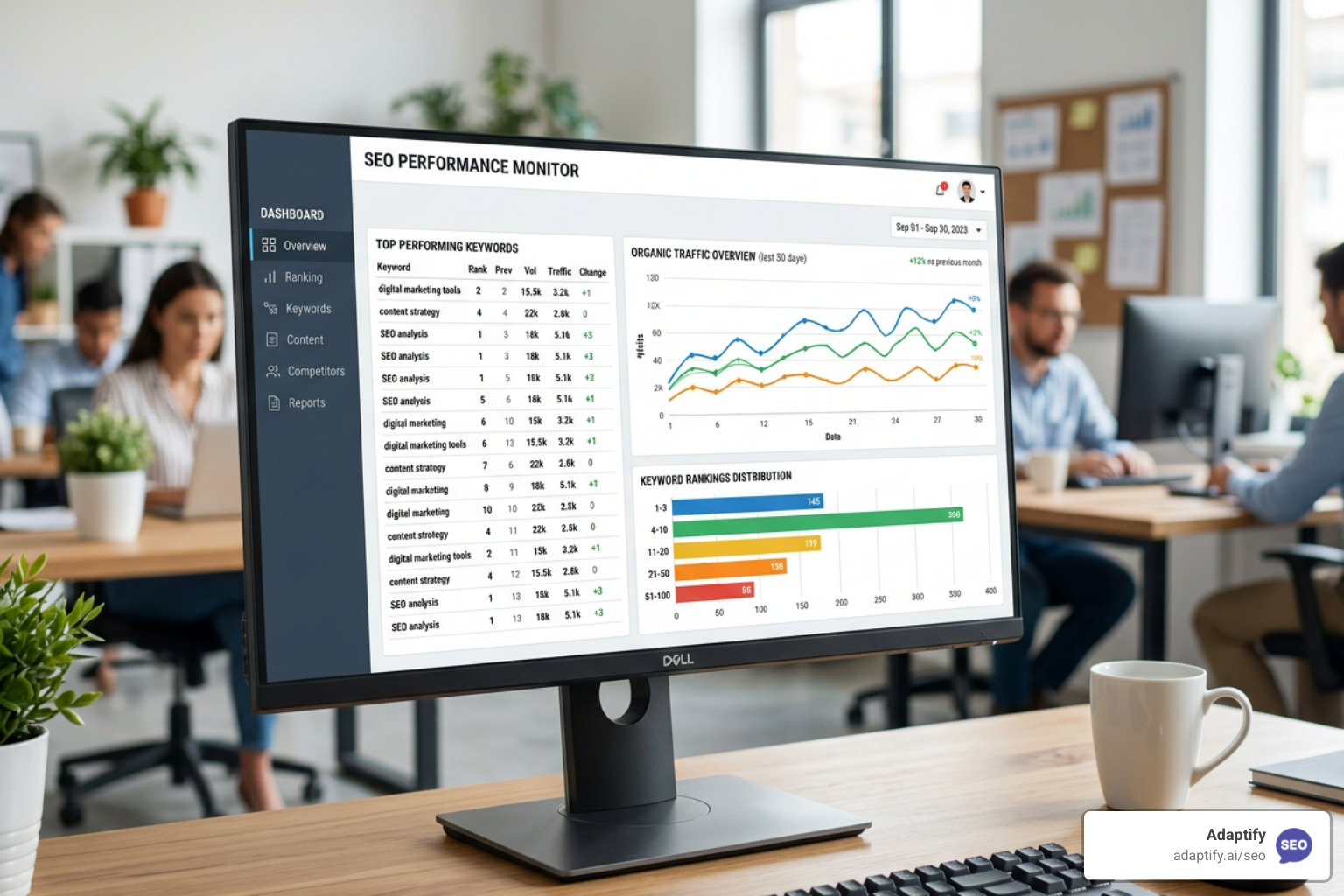
Stop Flying Blind with These Top SEO Monitor Tools - Learn about seo monitor tools
Join 1,000+ agencies already delivering SEO and AI visibility from a single platform without increasing their headcount.Join 1,000+ agencies already delivering SEO and AI visibility from a single platform without increasing their headcount.