Adaptify SEO Update: What Google’s New AI Watermarking Means for Your Agency



Happy Halloween everyone! 🎃
You know what's scarier than a haunted house? The thought that your clients might discover their content is AI-generated if you don’t plan on telling them. We get asked a lot whether clients can tell if their content is AI-generated and if it really matters. As we've discussed in a recent blog post, Google has made it clear that it doesn’t matter whether content is written by AI or humans, as long as it meets their EEAT (Expertise, Authoritativeness, Trustworthiness) standards. The focus is on the quality of the content, not who—or what—wrote it.
But with Google's new SynthID watermarking technology for AI-generated text, there are growing concerns about how this will impact content across the web. Rest assured, Adaptify does not use Google’s AI writer or any writer that embeds these supernatural watermarks into the text. You and your agency clients won’t ever have to worry about discovering that their content has been conjured up by an AI ghost.
Adaptify Minute Mastery: Google’s AI Watermarking
Now that we’ve tackled the scary part, let’s dive into what SynthID really is and what it means for the SEO world—no jump scares here, just the facts!
The Ghost in the Machine: Google's SynthID Watermarking
Google has officially open-sourced its SynthID watermarking tool for AI-generated text, making it available to developers through platforms like Hugging Face. As reported by TechCrunch, this tool allows developers to detect whether text has been generated by Google’s large language models (LLMs), such as the ones powering their Gemini chatbot.
So, how does it work? According to The Verge, SynthID subtly adjusts the probability scores of certain words as they’re generated by AI models. These changes are invisible to the human eye but detectable by software, allowing AI-generated content to be flagged through pattern recognition.
The technology is impressive—it even works on text that has been paraphrased or lightly edited. However, as noted by MIT Technology Review, it has its limitations, particularly with shorter texts or content that has been translated. It's also less effective when the AI is responding to factual queries, such as “What is the capital of France?”
SynthID is part of a broader push by Google to increase transparency around AI-generated content. Watermarks like these could help combat misinformation, non-consensual content generation, and other malicious uses of AI. In fact, as TechCrunch points out, California is already exploring legislation that could make watermarking mandatory, similar to regulations already in place in China.
Interestingly, while Google moves forward with watermarking, OpenAI has taken a different approach. According to a report from The Verge, OpenAI has decided not to watermark ChatGPT-generated text due to concerns that users may use the platform less if watermarking is implemented. OpenAI did create a watermarking system that’s reportedly 99.9% effective, but they worry it could deter non-native speakers and educators who rely on AI tools. For now, OpenAI is exploring alternative solutions like embedding metadata, but it remains unclear when—or if—these will be adopted.
For SEO agencies, this development raises questions: Does it affect the AI content we create for clients? If your agency uses Adaptify the simple answer is no. Adaptify does not use tools that watermark content, so your clients’ content will remain watermark-free, ensuring complete anonymity between the platform writer and your clients.
💡 Adaptify SEO Tip of the Week: Optimize Meta Descriptions
Use well written and compelling meta descriptions that accurately reflect the content of each page. While they don’t directly impact rankings, a good meta description can significantly increase click-through rates from search results.
Mini News Highlights
While SynthID takes the spotlight, there are other key updates in the SEO world this week that could impact your agency’s strategy.
Favicon Facelift: Size Does Matter
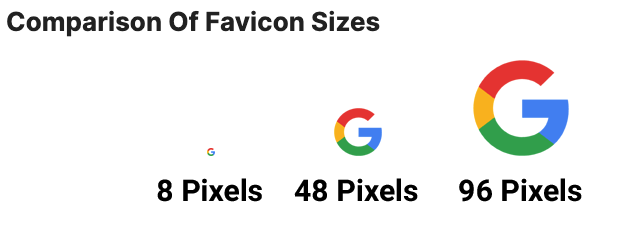
Google has updated its favicon guidelines, now recommending that favicons be at least 48x48 pixels in size to improve how websites appear in search results. This is a significant change, as favicons are a visual identifier that helps users quickly recognize websites in browser tabs and search results.
According to Search Engine Journal, the update emphasizes that while 8x8 pixels is still the minimum size, opting for a higher resolution is strongly recommended to improve your site’s presentation across various devices. This may be a small change, but it’s an easy win for enhancing brand visibility and click-through rates for your clients.
John Mueller On Core Web Vitals: Not So Vital After All?
Google's John Mueller made waves this last week by stating that Core Web Vitals—while important—are not the heavy hitters in SEO rankings that many thought they were. In a statement on LinkedIn, Mueller emphasized that while improving website performance can enhance user experience, it doesn’t significantly boost rankings compared to content quality.
This is a key insight for agencies that have been focusing heavily on technical metrics. Content quality still reigns supreme—like the king of Halloween candy (we're looking at you, full-size Snickers). Providing a quality experience for users remains the most important factor in search rankings. If your clients have been concerned about their site’s Core Web Vitals, reassure them that it’s more about creating engaging, high-quality content than chasing perfect technical scores.
Google Trends: Think of Them Like Your Crystal Ball for SEO
Finally, Google has published new documentation on using Google Trends for search marketing, making it easier for agencies to leverage trend data in content creation and keyword strategies. This updated guide offers insights into how you can use Google Trends to prioritize content, research competitors, and analyze brand sentiment.
As noted by Search Engine Journal, the guide breaks down how to monitor rising trends globally or within specific countries, which is especially useful when planning seasonal content or targeting specific markets. Whether you’re developing a content calendar for a new client or looking to optimize ongoing SEO campaigns, Google Trends can provide the data you need to stay ahead of the monster that is SEO.

As AI continues to evolve, so do the tools and techniques we use to manage it responsibly. Google’s SynthID watermarking is just one example of how AI-driven content is being monitored, but as an Adaptify client, you can rest easy knowing that our content creation tools remain free from watermarking concerns.
For SEO agencies, staying ahead of these trends is crucial for maintaining trust and delivering value to your clients. From higher-resolution favicons to understanding how Core Web Vitals really impact rankings, there are always new opportunities to optimize your clients' sites. And remember: At Adaptify, we're not just keeping up with the times—we're haunting the competition! (In a good way, of course.)
To learn more, check out Adaptify.ai and book a demo today. We’re here to help your agency thrive in this ever-changing digital landscape.
Before we go, here’s a little Halloween fun:
Q: What’s a ghost’s favorite type of website?
A: One with a lot of BOO-tiful content! 👻

Stop being invisible: discover what the best local SEO strategies for small businesses are to dominate Google Maps, reviews, and AI search...

Master localized SEO to rank your local business in Google Maps and drive more in-store visits.

Master local retail SEO to drive foot traffic from Google with proven strategies for GBP, reviews, and AI search optimization.
Join 1,000+ agencies already delivering SEO and AI visibility from a single platform without increasing their headcount.Join 1,000+ agencies already delivering SEO and AI visibility from a single platform without increasing their headcount.