Automate Your Way to the Top: Mastering AI for SEO Success


AI Powered SEO uses artificial intelligence and machine learning to automate, optimize, and scale search engine optimization tasks that traditionally required hours of manual work. It can:
With billions of Google searches happening daily, manual optimization is no longer scalable. AI doesn't just speed up SEO; it changes the game. While traditional SEO focused on keywords and backlinks, AI SEO prioritizes user intent, semantic meaning, and topic coverage. It's the difference between guessing what works and knowing what will, based on massive data analysis.
Google's Search Generative Experience (SGE) and other AI search engines are reshaping how people find information, often providing direct answers instead of just links. For agency owners drowning in manual tasks like keyword research, content creation, and backlink outreach, AI offers a lifeline, handling the grunt work so you can focus on strategy.
I'm Hansjan Kamerling, and I've spent years building AI-powered platforms. In my experience implementing AI Powered SEO solutions, I've seen how automation transforms agencies from overworked to overbooked.
Remember when SEO meant stuffing keywords and begging for backlinks? Those days are gone. AI Powered SEO has transformed how search engines work and how we optimize for them.
Traditional SEO was a guessing game. Today, Machine Learning (ML), Natural Language Processing (NLP), and predictive analytics give search engines an almost human-like ability to understand what people want.
Google's Search Generative Experience (SGE) and AI Overviews are perfect examples. Instead of just a list of links, Google now often answers questions directly using AI. It's faster for users and a fundamental shift for SEO professionals.
People now search conversationally, asking full questions like, "What's a good hotel near Covent Garden under $150 a night?" Search engines have evolved to match.
Google's Search Generative Experience (SGE) leads this charge by combining traditional results with AI-generated summaries. The rollout of AI Overviews across over 100 countries confirms this is the new normal.
This shift creates "zero-click searches." If AI answers a question directly, users may not visit your site. This means getting your content cited by AI is becoming as critical as ranking on page one. Research shows that AI algorithms excel at understanding user intent, so creating genuinely helpful, well-structured content is key.
Let's break down the technologies powering AI Powered SEO.
Machine Learning (ML) is the brain of modern search. It analyzes massive amounts of data to learn what works, spotting patterns humans would miss and predicting future trends. This allows search engines to understand which content will perform well.
Natural Language Processing (NLP) helps AI understand human language and context. For example, it knows "apple" means something different in "apple pie recipe" versus "apple stock price." Google's BERT is an implementation of this, making search results far more relevant.
Generative AI and Large Language Models (LLMs) are content creation powerhouses. They can draft articles, generate metadata, and create content outlines in minutes. However, AI-generated content still needs human oversight for accuracy, nuance, and brand voice.
Predictive modeling uses historical data and current trends to forecast what's next, like trending keywords or algorithm changes. This shifts SEO from a reactive to a proactive discipline, allowing you to anticipate changes rather than just respond to them.
Building an effective AI Powered SEO strategy is about working smarter, not just letting robots take over. AI acts as an efficient assistant, handling tedious tasks while you focus on the creative and strategic work that moves the needle for clients.
The change happens across four main areas: on-page optimization, technical SEO, content strategy, and link building. Each pillar becomes dramatically more powerful with AI.
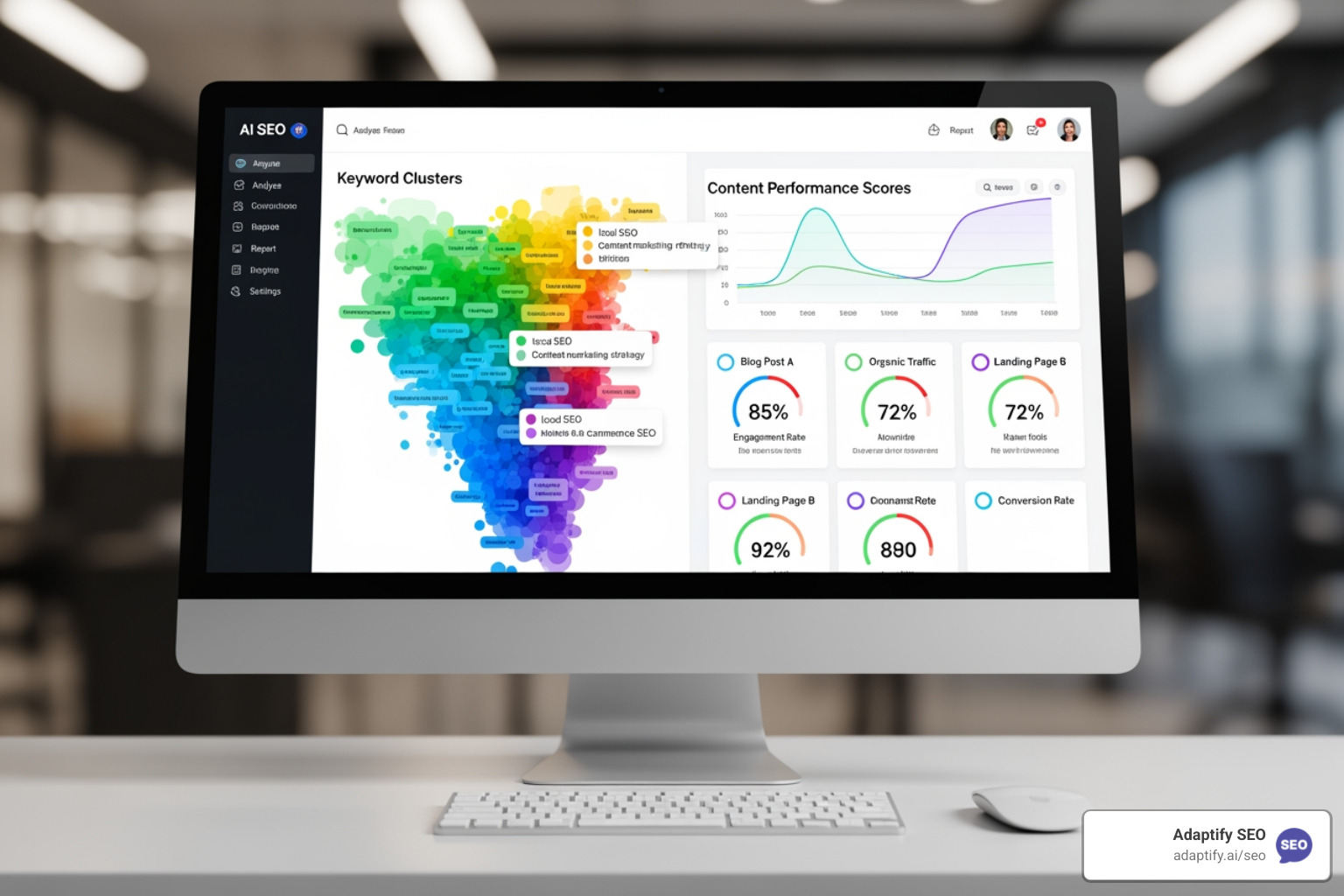
Forget spending hours in spreadsheets. Modern AI Powered SEO tools use machine learning to perform semantic keyword analysis at scale. Instead of just finding high-volume keywords, AI identifies entire topic clusters that reflect how people actually search. It's the difference between targeting a single term and understanding a whole ecosystem of related queries.
AI excels at understanding user intent—whether someone is researching, buying, or browsing. This allows you to tailor content precisely to the user's needs. The technology also performs competitor gap analysis, revealing opportunities your competitors have missed. For agencies, this level of automation is transformative.
For a deeper understanding of how AI shapes modern content strategy, there are resources that dive into the strategic side of content planning.
AI has changed the equation for content creation at scale. Generative AI can draft topic ideas, create detailed outlines, and produce initial drafts based on your target keywords. It analyzes top-ranking content to build comprehensive briefs. But here's the critical part: AI is your co-pilot, not your replacement. Every piece of AI-generated content needs human editing, fact-checking, and a unique perspective.
Studies and real-world tests confirm that high-quality, AI-assisted content does not negatively impact rankings, as long as it is carefully proofread and genuinely serves user needs and E-E-A-T principles.
AI also streamlines on-page optimization by suggesting relevant keywords, improving readability, and generating compelling metadata. For agencies, white-label SEO solutions can maintain brand consistency while dramatically scaling production.
Technical SEO is where AI really proves its worth. Automated site audits can identify crawlability issues, broken links, and slow-loading pages in minutes. AI-powered tools can generate schema markup automatically, helping search engines understand your content without you needing to be a coding expert. Some tools can even get your pages indexed faster while continuously monitoring for technical issues.
AI also shines at internal linking. It analyzes your site structure and suggests intelligent linking patterns to improve user experience and distribute page authority. Page speed optimization, Core Web Vitals monitoring, and image optimization can all be automated, freeing up specialists for more complex challenges.
Link building has always been one of the most time-consuming parts of SEO. AI Powered SEO tools now perform sophisticated backlink quality analysis, evaluating potential linking partners before you waste time on outreach. They can scan millions of websites to identify relevant targets, automating the prospecting process.
AI also helps craft personalized outreach emails that get responses, moving beyond generic templates. By analyzing competitor backlink profiles, AI can reveal where your rivals get their links, helping you identify new opportunities. The result is more high-quality backlinks in less time, with better targeting and higher success rates.
We're living through a revolution in search. AI Powered SEO has transformed traditional optimization, but now we have Generative Engine Optimization (GEO). This isn't a future concept; it's happening now, as AI-powered search engines become a primary way people find information.
Imagine your search result isn't a website—it's an AI-generated answer that solves your problem instantly. That's the world we're entering, and it requires a different approach.
| Feature | Traditional SEO | AI SEO | Generative Engine Optimization (GEO) |
|---|---|---|---|
| Goal | Rank high in SERPs for keywords | Improve rankings, automate tasks, gain insights | Be cited by AI, build entity trust, answer queries |
| Primary Focus | Keywords, backlinks, technical optimization | User intent, semantic relevance, data analysis | AI citation, entity recognition, structured data |
| Key Tactics | Keyword research, link building, on-page content | AI-driven research, content optimization, predictive | Fact-rich content, schema, consistent entity mentions |
| Metrics | Rankings, organic traffic, conversions | Efficiency, accuracy, improved user experience | AI visibility, brand mentions, citation analysis |
| Search Medium | Web browsers, traditional search engines | Web browsers, mobile, voice (Google, Bing) | Conversational AI (ChatGPT, SGE, Perplexity) |
GEO is about making your content visible and citable by AI systems like Google's SGE, ChatGPT, and others. While traditional SEO focused on ranking for keywords, GEO focuses on becoming a trusted source that AI models reference.
Your brand's visibility increasingly depends on whether AI systems cite you. Even if these citations lead to zero-click searches, being recognized by AI establishes credibility and brand awareness. The core of GEO is AI citation—creating fact-rich, well-structured content that AI can easily reference. This involves entity optimization, so AI understands your brand as a distinct entity, and leveraging the knowledge graph to establish authority.
In this new landscape, brand mentions become a critical metric. GEO complements traditional and AI SEO, future-proofing your digital presence for a world where AI prioritizes answer quality and accuracy.
Yes, SEO will exist, but the role will transform dramatically. AI isn't killing SEO; it's elevating it to be more strategic.
The SEO professional of tomorrow is a strategic overseer. AI will handle repetitive tasks, freeing us to focus on high-level strategy, interpreting complex insights, and making nuanced decisions. Human-AI collaboration will define successful SEO, combining AI's speed with human creativity and judgment.
Google's emphasis on E-E-A-T (Experience, Expertise, Authoritativeness, and Trustworthiness) will only intensify. AI can't replicate genuine human experience or build authentic trust. Your unique insights and real-world expertise become more valuable, not less.
Creativity and storytelling remain distinctly human. The most successful strategies will leverage AI for efficiency while injecting the human elements that truly resonate. With AI automating tasks, SEO professionals can focus more on demonstrating tangible business impact and ROI.
Choosing the right AI Powered SEO tools can be overwhelming, but the key is understanding what you need and how to measure success. What matters isn't just having fancy tools—it's knowing how to track AI visibility, analyze citations, and translate those metrics into organic traffic, conversions, and leads.

The AI SEO tool market has matured, with solutions available for every part of the optimization process. Instead of patching together dozens of different tools, a unified platform approach can be more effective.
At Adaptify.ai, we've built our platform to integrate these capabilities into a single, automated service. Our content optimization features handle everything from research to generation. We offer robust technical SEO features and sophisticated backlink tools to streamline outreach. Our white-label SEO services let agencies scale their offerings without the overhead of managing multiple tools and workflows.
AI is a powerful co-pilot, not a "set it and forget it" solution. To use it effectively, follow these best practices:
Google's Helpful Content updates target unhelpful content. High-quality, AI-assisted content that aligns with user intent performs well; low-quality content created just to rank does not.
AI generates granular data, making ROI measurement more precise than ever. Key metrics to track include:
No. AI is a powerful assistant, not a replacement. It excels at automating repetitive tasks like data analysis and initial content drafting. However, it cannot replicate human creativity, critical thinking, and strategic decision-making.
Humans are irreplaceable for understanding brand voice, interpreting complex data within business goals, and demonstrating genuine Experience, Expertise, Authority, and Trust (E-E-A-T)—qualities that are fundamental to Google's ranking criteria. The future is human-AI collaboration, where AI handles the grunt work, freeing specialists to focus on high-level strategy.
No, not automatically. Google's guidance states that they reward high-quality, helpful content, regardless of its origin. The focus is on quality and user intent, not on whether AI was involved.
Using AI to generate spammy, low-quality content to manipulate rankings is a violation of their policies and will be penalized by systems like the Helpful Content updates. However, using AI as a tool to help create genuinely useful, well-written, and fact-checked content is perfectly acceptable. Quality and helpfulness always trump origin.
Don't try to do everything at once. A gradual approach is most effective:
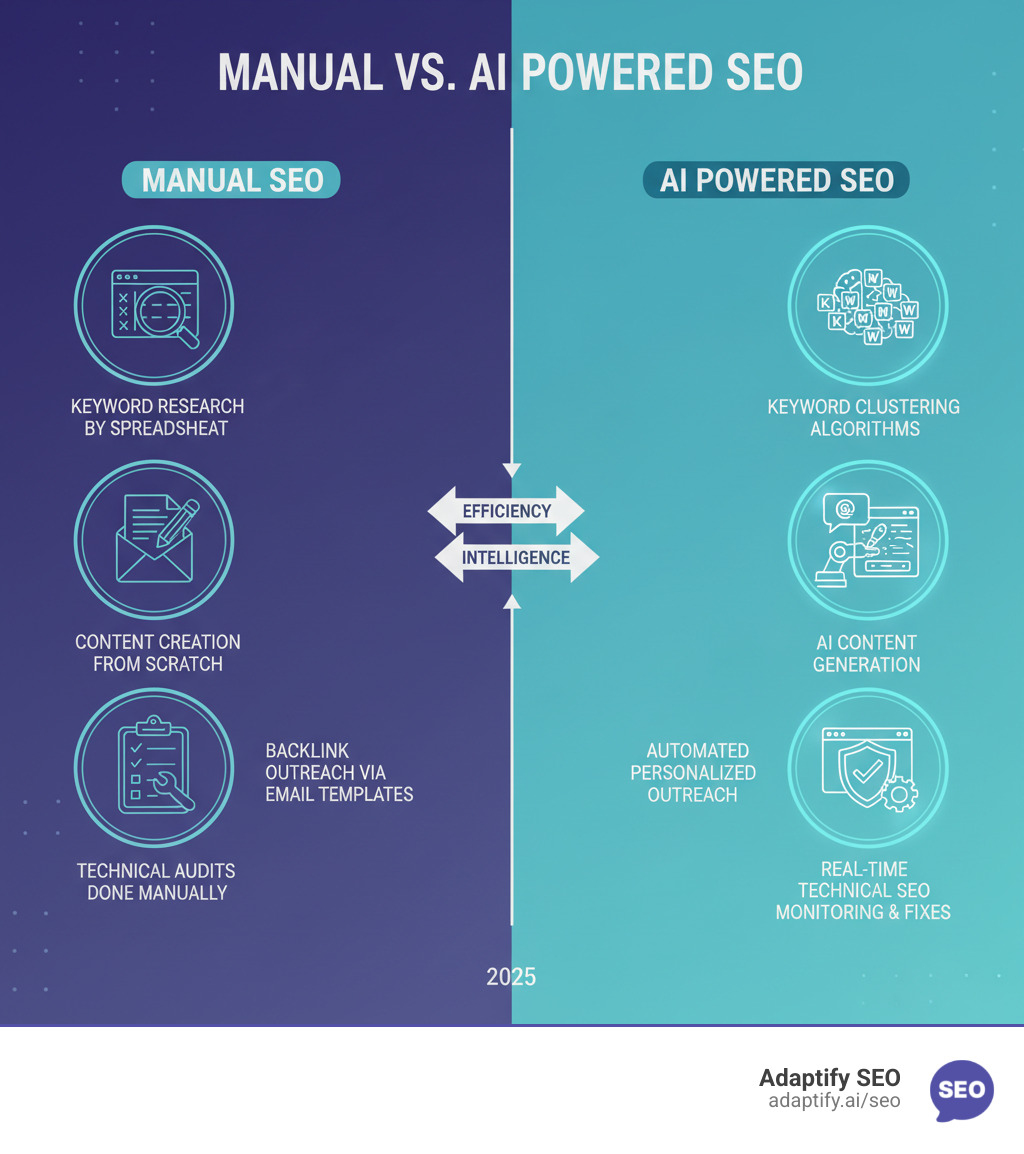
The era of AI Powered SEO is here, changing how we approach optimization. We've moved from hours of repetitive tasks to leveraging intelligent systems that handle keyword research, content creation, and technical audits with unprecedented efficiency. This isn't about replacing the human touch; it's about amplifying it, freeing you to focus on the strategy and creativity that drive results.
For agencies, this shift is a massive opportunity. The manual grind that once limited your capacity can now be automated, allowing you to serve more clients, scale your operations, and deliver measurable ROI faster. Adaptation isn't optional. The agencies that thrive will be those that accept AI Powered SEO and integrate it thoughtfully into their workflows.
For agencies looking to scale without the headache of managing multiple tools, Adaptify.ai provides a fully automated solution that handles everything from strategy to content creation and link building. We've built our platform to let you focus on client relationships and growth while AI handles the heavy lifting.
The future of SEO is about working smarter, not harder. Ready to automate and lift your SEO to new heights? Get your custom SEO proposal and find how AI Powered SEO can transform your agency.

Stop being invisible: discover what the best local SEO strategies for small businesses are to dominate Google Maps, reviews, and AI search...
Master localized SEO to rank your local business in Google Maps and drive more in-store visits.
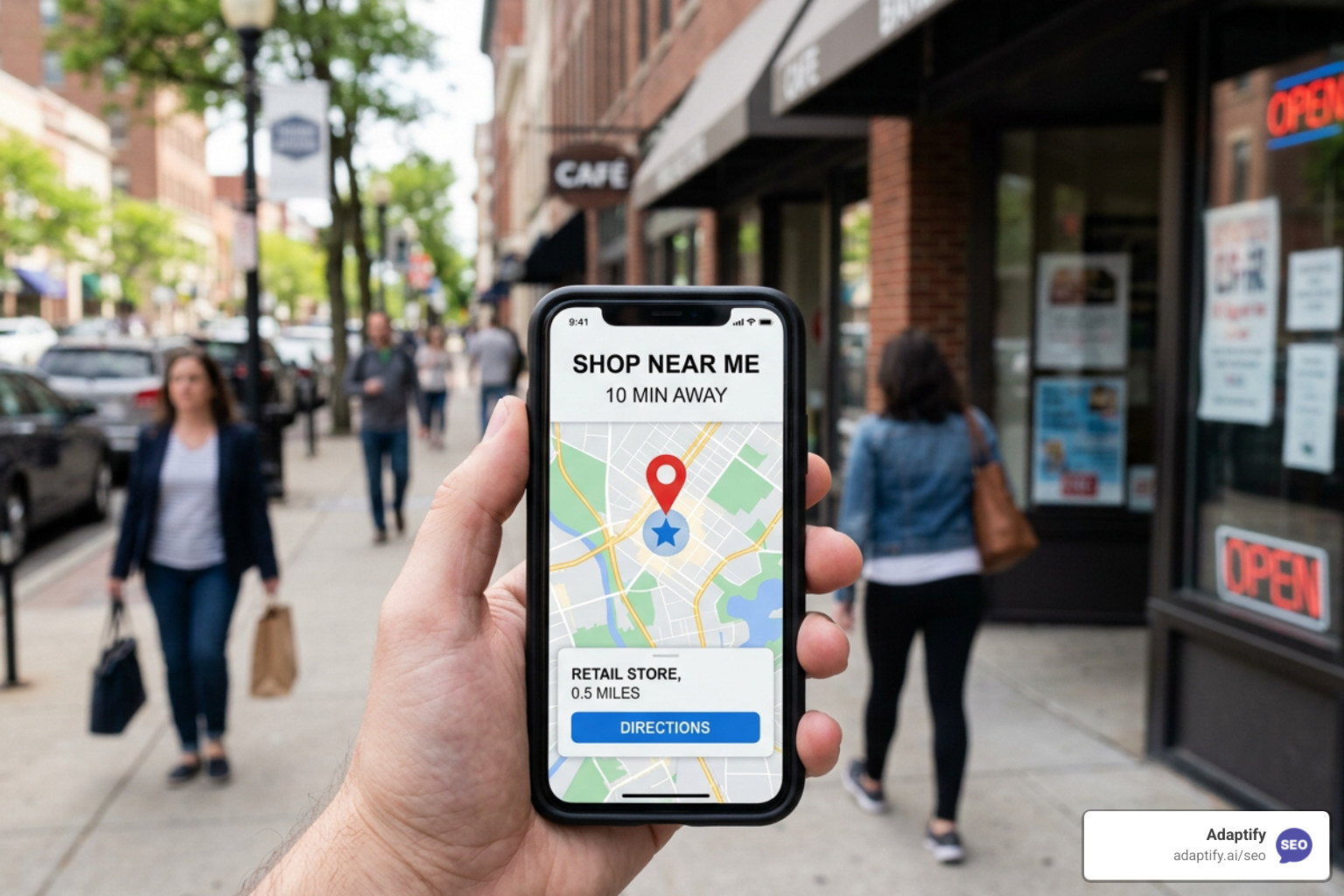
Master local retail SEO to drive foot traffic from Google with proven strategies for GBP, reviews, and AI search optimization.
Join 1,000+ agencies already delivering SEO and AI visibility from a single platform without increasing their headcount.Join 1,000+ agencies already delivering SEO and AI visibility from a single platform without increasing their headcount.