Automated SEO Reporting: The Secret Weapon for Agencies




Agency SEO reporting has become the defining factor between agencies that thrive and those that struggle to keep clients. Here's what every agency needs to know:
Key Components of Effective Agency SEO Reporting:
The reality is stark: agencies spend enormous amounts of time on manual reporting. One agency reported spending "30-40 hours on monthly reporting" before switching to automation, and now they're "down to 10-20 hours max while providing even more detailed information."
This isn't just about saving time - it's about survival. When agencies get trapped in endless cycles of data collection and spreadsheet formatting, they lose focus on what actually drives client results: strategy, optimization, and growth.
The agencies winning today have cracked the code on automated reporting. They're using tools that pull data from dozens of sources, apply their branding automatically, and deliver insights that make clients say "wow" instead of "what does this mean?"
Manual reporting kills agencies in three ways:
The solution isn't just better tools - it's a complete shift to automated systems that work while you sleep.
I'm Hansjan Kamerling, and I've helped build reporting systems for SaaS platforms with over 40,000 users, including custom AI models for data analytics. My experience with Agency SEO reporting across fintech, automotive, and marketing platforms has shown me exactly what separates agencies that scale from those that stay stuck in manual processes. Understanding the fundamentals of search engine optimization is crucial for creating reports that truly demonstrate value to clients.
I've seen it countless times: a brilliant SEO agency, bursting with strategic talent, gets bogged down by the sheer weight of manual reporting. Imagine a marketer drowning in a sea of spreadsheets while their automated counterpart sips coffee, calmly reviewing a single, comprehensive dashboard. That's the stark reality.
Manual data collection is a Herculean task. Agencies juggle multiple clients, each with unique data sources – Google Analytics, Search Console, various SEO tools, social media platforms, and PPC dashboards. Pulling and collating this disparate data is incredibly time-consuming. As one agency owner aptly put it, "The biggest benefit is the time saved in terms of data collection." I've even heard of agencies saving "over 125 hours per month" thanks to automation, which is just staggering!
This manual approach inevitably leads to inconsistent reports. Human error creeps in, formatting differs, and quality can be wildly inconsistent. This not only wastes precious billable hours but also breeds client dissatisfaction. When reports are late, confusing, or inaccurate, clients question the value they're receiving. This is a common pitfall in Agency SEO reporting that can severely damage client relationships. You can learn more about these traps here: Common Pitfalls in Agency SEO Reporting.
Choosing the right SEO reporting platform is like picking a co-pilot for your agency's growth journey. You need one that's reliable, intuitive, and packed with features that genuinely make your life easier. For me, a winning platform boils down to seamless integrations, robust customization and white-labeling, and powerful automation capabilities, all wrapped in a user-friendly interface that makes data visualization a breeze. If you're curious about making your reports truly shine, understanding the importance of data visualization is key: The Importance of Data Visualization in SEO Reports.
Think of your client's marketing ecosystem as a sprawling city, and data as the lifeblood flowing through it. Without a centralized hub, you're constantly running between different districts, trying to piece together the full picture. An effective SEO reporting platform acts as that central hub.
I prioritize tools that offer comprehensive integrations with all the platforms my clients use. This means not just the obvious ones like Google Analytics and Google Search Console, but also key SEO software, social media platforms (Facebook, LinkedIn, YouTube), and PPC platforms (Google Ads, Facebook Ads). The goal is to consolidate all client data into one single, powerful dashboard. Platforms with dozens of integrations allow you to stay focused and fast, with all your client data together in one place. This level of integration is a game-changer, eliminating the dreaded "tab-toggling" and allowing you to see the full picture of your client's digital performance.
Your reports are an extension of your brand. They should scream "your agency" from the cover page to the last data point. That's where white-labeling and customization become non-negotiable features.
A top-tier reporting platform allows you to apply your agency's branding, including logos, color schemes, and even custom domains, to every report. This isn't just about aesthetics; it's about building client trust and reinforcing your professionalism. As I always say, "The benefits of a well-designed report extend well beyond aesthetics... everything within emphasizes your agency's commitment to delivering quality services." When clients receive a polished, branded report that looks like it was custom-made just for them, it lifts their perception of your agency and the value you provide. It makes your work feel bespoke, not off-the-shelf. For deeper insights into tailoring your reports, check out: Customizing SEO Reports for Different Clients.
If there's one word that defines efficiency in Agency SEO reporting, it's automation. The ability to set it and forget it, knowing your reports will be delivered consistently and accurately, is incredibly liberating.
A robust reporting platform enables you to schedule reports for automated delivery via email or PDF, ensuring clients receive their updates precisely when they expect them. Beyond static reports, the best tools offer live, interactive dashboards that update in real-time. This means clients can log in at any moment and see the latest data, fostering transparency and reducing those "where are we at?" emails. I've seen automated reporting generate professional SEO reports in under 30 minutes, a stark contrast to the hours it takes manually. Setting up report templates allows you to standardize your reporting process, making it easy to onboard new clients and scale your operations. Want to master this? Here's a guide: How to Create Effective SEO Reports for Clients.
The world of Agency SEO reporting is always changing, right? But if there's one thing that's truly shaking things up lately, it's the incredible rise of Artificial Intelligence. AI isn't just a fancy tech term; it's actually changing how agencies turn piles of raw data into smart, actionable insights. This makes your reports way more powerful and impactful.
Let's be honest, traditional reports can feel a bit overwhelming, can't they? Sometimes it's like wading through a dense forest of numbers and charts. As the saying goes, "Most clients don't want to wade through 15 pages of SEO metrics. They want the highlights and what it means for their business." And that's precisely where AI steps in to save the day.
Modern reporting tools now offer amazing AI-generated summaries. These clever summaries cut right through the data noise, giving you quick, clear insights in plain, easy-to-understand language. Picture this: an AI chatbot that can answer your specific data questions almost instantly. Questions like, "Which keywords dropped rankings last week?" or "What was our biggest traffic increase last month?" It's like having a super-smart assistant at your fingertips!
But AI goes way beyond simple summaries. These smart tools are now diving into predictive analytics. This means they can help your agency forecast future trends and even spot potential issues before they become big problems. And then there's anomaly detection, another AI marvel. This feature can automatically flag unusual spikes or dips in your data. It's brilliant for drawing your attention to those critical shifts you might otherwise completely miss. This kind of proactive insight lets agencies react quickly and intelligently, turning potential headaches into opportunities.
It's probably no surprise then that industry studies show a whopping 65% of companies actually get better SEO results when they use AI tools. Here at Adaptify.ai, we're all about leveraging AI to truly streamline SEO processes for our agency partners. We use it for everything from crafting smart strategies to creating content and even building PR links. This significantly cuts down on manual effort and truly boosts efficiency.
When it comes to Agency SEO reporting, just throwing a bunch of numbers at your clients isn't going to cut it. Your reports need to do more than just show data; they need to tell a powerful story. This story should clearly demonstrate the return on investment (ROI) your agency is delivering, build strong client trust, and perfectly align with their unique business goals. That's why picking the right Key Performance Indicators (KPIs) is so incredibly important. Every single metric you include should have a clear purpose: to show the value you're bringing to the table. Want to dig deeper into which metrics truly matter? You can explore them here: Key Metrics for SEO Reporting.
These KPIs are all about how visible your client's website is and how many people are finding it. They show initial awareness and reach.
Truly understanding your client's SEO performance means looking at both how visible they are and how well that visibility turns into results. Want to dive deeper into striking this perfect balance? You can explore it here: Understanding Your Client's SEO Performance.
Effective Agency SEO reporting is about storytelling. Always start with a clear Executive summary that gives busy clients the biggest wins and takeaways upfront. Use annotations to explain trends in your charts and graphs. Did traffic dip? Explain why, whether it was a Google update or a seasonal shift. Always highlight key wins and show how your efforts directly contributed to growth. When you see performance dips, explain them transparently, outline the likely cause, and present your plan to fix it. This builds immense trust. Finally, conclude by setting future goals to provide a clear roadmap for what's next.
I've found that tailoring reports to each client's specific expectations makes a huge difference. As an agency strategist once wisely put it, "We start with a template for our new clients, and during their onboarding, we ask what their top KPIs are. We make sure to include those on the first page for them." This personal touch ensures your report immediately resonates. To really master this art of communicating results, take a look here: Communicating SEO Results to Clients.
Choosing the right SEO reporting tool for your agency shouldn't feel like solving a Rubik's cube blindfolded. Finding the perfect fit comes down to understanding what really matters for your specific situation.
Assessing your agency's needs is where everything starts. The scale of your operation—whether you're a boutique agency or managing dozens of enterprise accounts—dramatically impacts the features you'll need.
Your client expectations play an equally important role. Some clients want to dive deep into every metric, while others just want to know if their phone is ringing more often. The best Agency SEO reporting tools are flexible, allowing you to create both detailed technical reports and executive-friendly summaries from the same data.
Here are some key factors to consider when evaluating solutions:
My advice? Take advantage of free trials. Test tools with real client data, set up a few automated reports, and see how the support team responds to your questions. The best choice is the one that makes your daily work easier, not harder, and integrates smoothly with your existing workflow. For a comprehensive overview of available options, check out: Tools for SEO Reporting.
The world of Agency SEO reporting has reached a turning point. After working with thousands of agencies, I've witnessed how the right reporting approach can make or break client relationships. It's not just about presenting numbers anymore – it's about telling a story that resonates.
The change is remarkable when agencies accept automation. Agency owner who went from spending "30-40 hours on monthly reporting" to just "10-20 hours max"? That's not just time saved – that's 30 hours of strategic work returned to their week. It's the difference between being a data entry service and being a true SEO partner.
AI-powered insights have taken this evolution even further. When your reports can automatically flag anomalies, predict trends, and translate complex data into plain English recommendations, you're not just reporting – you're consulting. Your clients start seeing you as the strategic advisor they actually need, not just another vendor sending monthly updates.
But here's what I've learned matters most: effective reporting builds unshakeable client trust. When clients receive consistent, branded, insightful reports that clearly show ROI, they stop questioning your value and start asking how they can invest more. That's the competitive advantage every agency dreams of.
The agencies thriving today have cracked this code. They've moved beyond manual spreadsheets and generic templates to create reporting systems that work while they sleep. Their clients receive beautiful, actionable insights automatically, and their teams focus on strategy instead of data entry.
At Adaptify SEO, we've built our entire platform around this philosophy. Our AI-driven reporting integrates seamlessly with our automated SEO services – from strategy formulation to content creation and PR link building. We help agencies like yours scale efficiently while delivering the kind of results that keep clients coming back year after year.
The question isn't whether you should upgrade your reporting – it's how quickly you can make the switch.

Stop being invisible: discover what the best local SEO strategies for small businesses are to dominate Google Maps, reviews, and AI search...
Master localized SEO to rank your local business in Google Maps and drive more in-store visits.
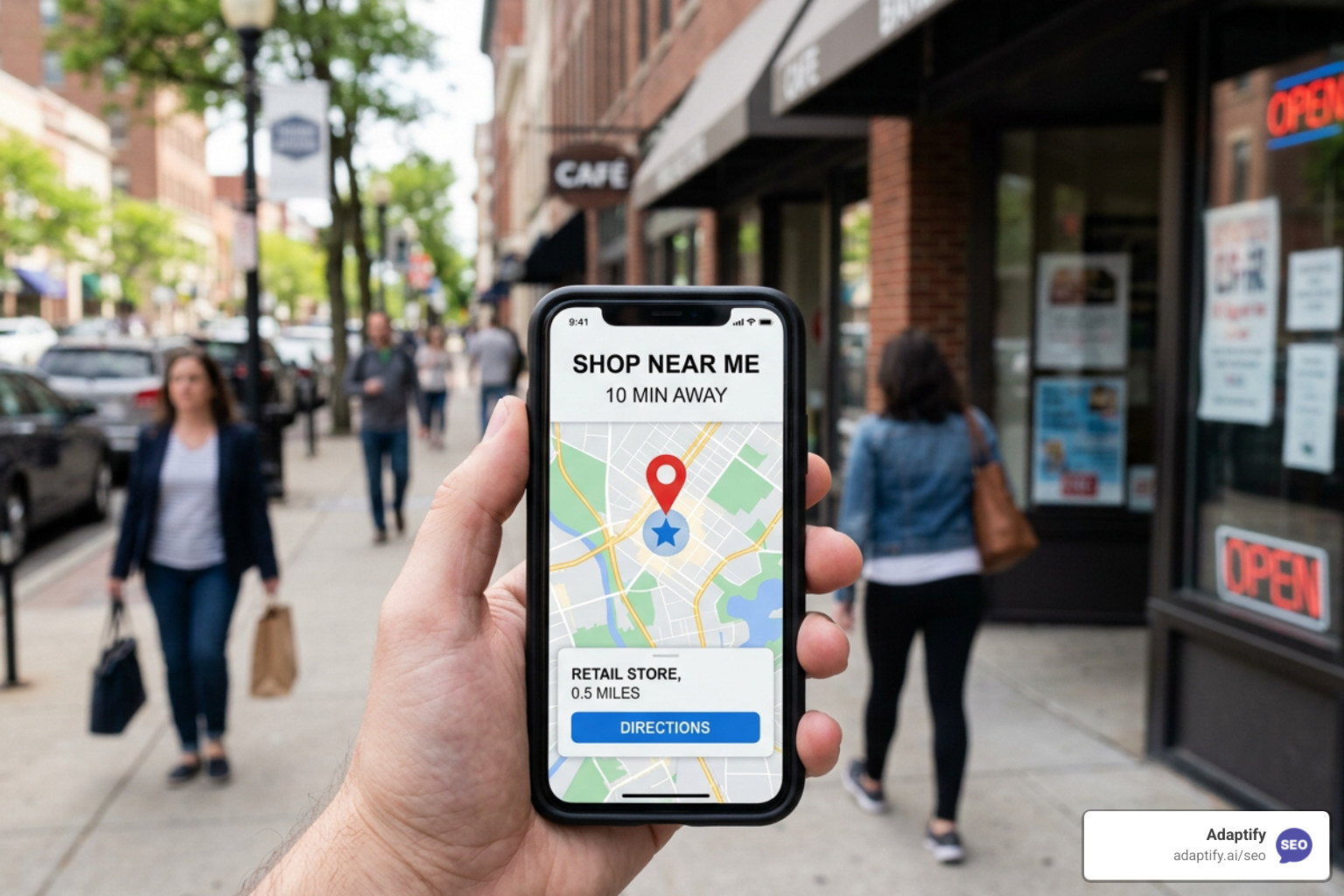
Master local retail SEO to drive foot traffic from Google with proven strategies for GBP, reviews, and AI search optimization.
Join 1,000+ agencies already delivering SEO and AI visibility from a single platform without increasing their headcount.Join 1,000+ agencies already delivering SEO and AI visibility from a single platform without increasing their headcount.