Automation in Writing: A Double-Edged Pen




Automated article writing software is changing the landscape of content creation, making it a double-edged pen in the evolving world of marketing. It offers remarkable efficiency, producing content at scale while ensuring personalized engagement. Yet, it also surfaces challenges such as maintaining creativity and addressing ethical concerns.
Quick Insights:
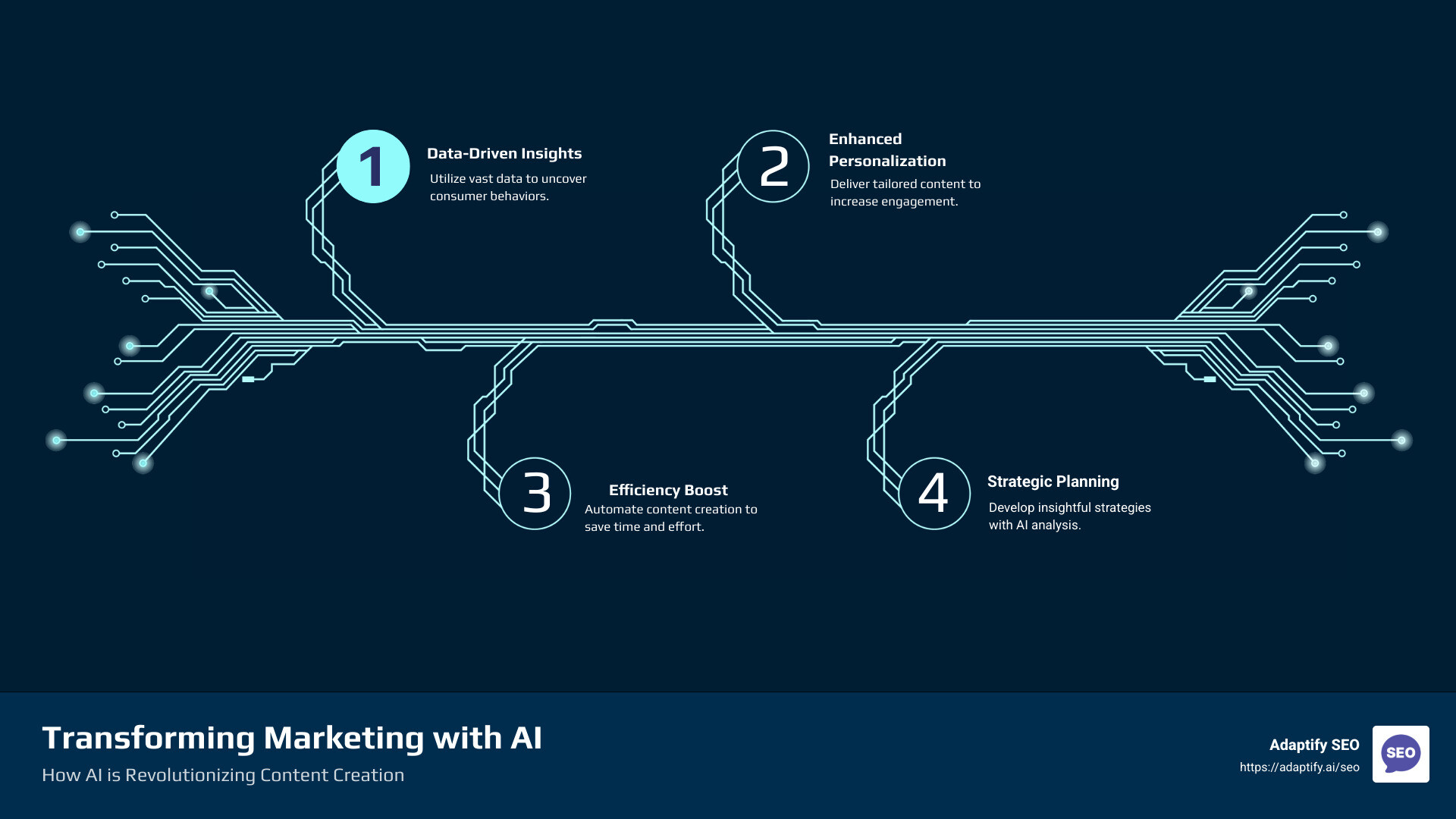
In today's high-stakes marketing environment, the role of AI is pivotal. It harnesses vast amounts of data almost instantly, providing marketers with insights that were once unfathomably out of reach. This capability not only fuels informed strategizing but also makes personalization possible on an unprecedented scale. AI tools tailor content specifically to individual consumer behaviors, enhancing engagement and satisfaction.
I'm Hansjan Kamerling, product designer and marketing consultant in the AI domain. With experience in AI startups, particularly in designing and managing automated article writing software, I've seen its profound benefits and challenges firsthand.
Call to Action: Book a Demo here to explore more.
The world of content creation is undergoing a change, thanks to automated article writing software. These AI writing tools are reshaping how we think about generating content, offering a blend of speed and personalization that was hard to imagine just a few years ago.
AI writing tools like ChatGPT and Jasper.ai are at the forefront of this change. They allow users to input a few keywords or phrases and receive a full article in return. This process, known as content generation, is not just about churning out words. It's about creating content that is aligned with specific goals, whether it's driving traffic, engaging users, or boosting conversions.
These tools rely on sophisticated machine learning algorithms to understand and process large datasets. They analyze existing content to learn patterns and structures, which they then use to create new, original content. This ability to mimic human writing styles while maintaining coherence and relevance is a game-changer for marketers and content creators.
As automated article writing software becomes more advanced, it's becoming a staple in the toolkit of marketers and writers. Tools like Rytr and Peppertype are designed for specific tasks, such as crafting social media posts or generating SEO meta descriptions. They're not just about speed; they're about precision and customization.
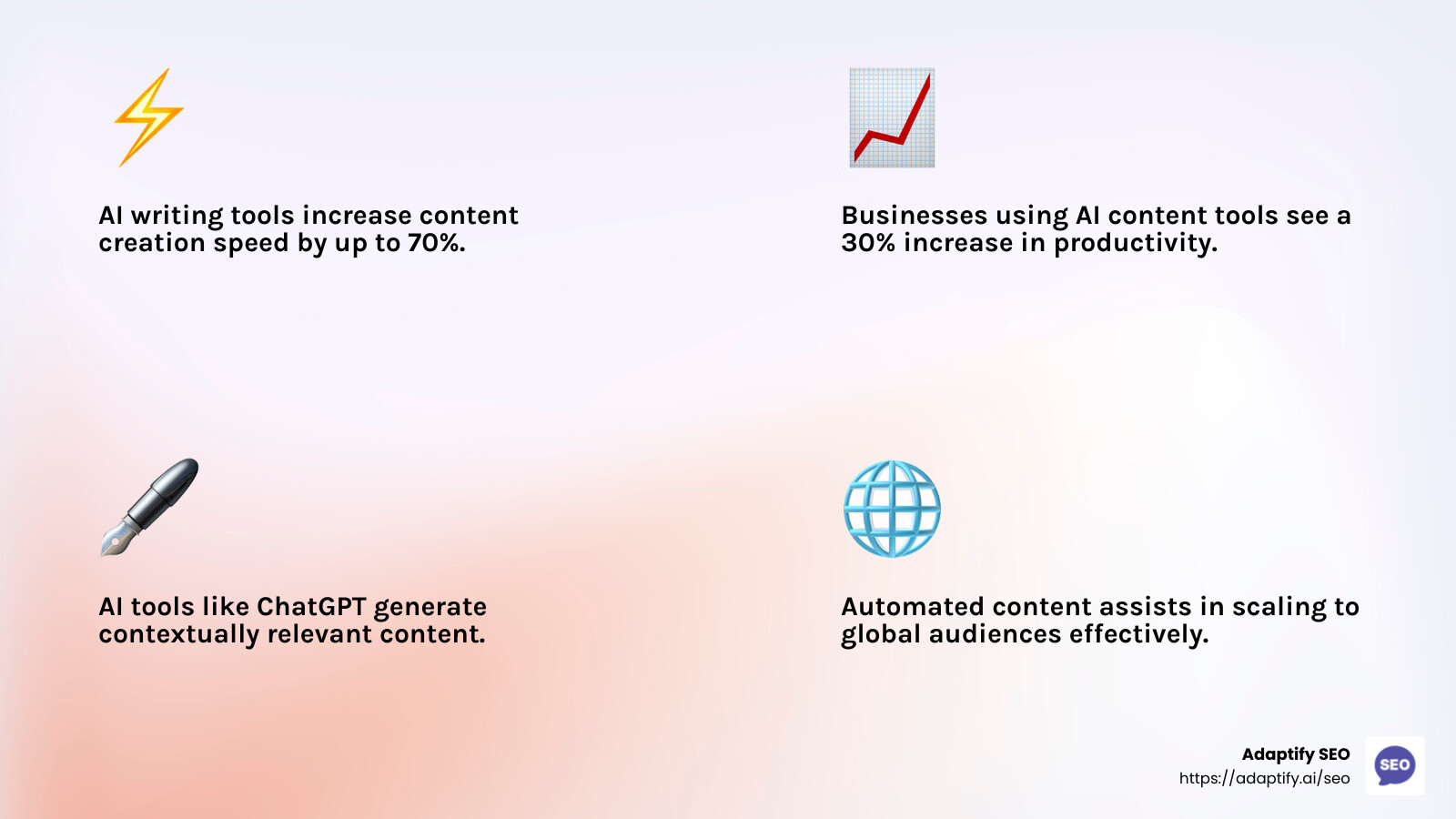
The rise of these tools is significant for several reasons:
However, the rise of automated article writing software also brings challenges. While these tools excel at generating content, they lack the unique perspectives and insights that only humans can provide. This makes human oversight crucial to ensure that the content remains engaging and authentic.
As we continue to integrate these tools into our workflows, strike a balance between automation and human creativity. The future of content creation lies in leveraging the strengths of both AI and human intelligence.
Call to Action: Book a Demo here to explore more.
Automated article writing software is revolutionizing how we approach content creation. It brings several key benefits that help businesses and individuals alike. Here's a closer look at these advantages:
One of the standout benefits of automated article writing software is its ability to improve efficiency. By automating the content creation process, these tools significantly cut down the time it takes to produce articles, social media posts, and other digital content. For instance, Adaptify SEO's own AI-driven tools can generate content in mere seconds, allowing writers to focus on more strategic tasks.
Imagine a marketing team that needs to produce a large volume of blog posts each month. With AI writing tools, they can quickly generate drafts, freeing up time for editing and strategy development. This efficiency boost is invaluable in environments where time is of the essence.
Personalization is another area where automated article writing software shines. These tools can analyze data to tailor content to specific audiences, ensuring that the message resonates with readers. Adaptify SEO's AI solutions adapt the tone of content to fit different platforms, making it more engaging and relevant.
By leveraging AI's ability to process large datasets, marketers can create content that speaks directly to their target audience's needs and preferences. This level of personalization was once time-consuming and labor-intensive but is now achievable at scale with AI.
Increased productivity is a natural byproduct of using automated article writing software. By handling the repetitive aspects of content creation, these tools allow writers and marketers to focus on higher-level tasks, such as content strategy and creative development.
Adaptify SEO offers templates for various content types, from email series to product descriptions, helping users quickly generate content that fits their needs. This means less time spent on drafting and more time available for refining and optimizing content.
In conclusion, the benefits of automated article writing software are clear: they offer efficiency, personalization, and productivity that can transform how content is created and delivered. As these tools continue to evolve, they will become even more integral to our content strategies, helping us balance automation with human creativity.
Call to Action: Book a Demo here to explore more.
While automated article writing software offers numerous benefits, it also presents a set of challenges and ethical considerations that we must address. Let's explore these complexities.
AI writing tools, despite their impressive capabilities, have limitations. These tools rely heavily on existing data and patterns, which means they can sometimes produce content that lacks originality or depth. For instance, AI-Writer, known for its excellent sourcing capabilities, can experience delays due to its thorough process. This highlights a common issue: AI can struggle with generating content that requires deep, nuanced understanding or creativity.
Moreover, AI models like GPT-4 or Claude 3 have distinct traits. As noted by Type Founder Stew Fortier, "Claude tends to be more creative and expressive but not quite as good at complex reasoning, whereas the GPT models are often much better at reasoning, but maybe a bit drier with tone." These differences underscore that AI can't yet mimic the full spectrum of human creativity and reasoning.
Human creativity is an area where AI falls short. While AI can assist in generating ideas and drafting content, it lacks the intuitive and emotional nuances that humans bring to writing. Creativity involves more than just stringing words together—it's about crafting a narrative that resonates on a personal level.
For example, while Buffer’s AI Assistant can generate social media ideas, it's ultimately up to humans to infuse these ideas with personality and context. This creative touch is something AI can't replicate, emphasizing the need for human oversight and intervention in content creation.
The use of AI in writing also raises ethical questions. One major concern is the potential for AI to propagate misinformation if not properly monitored. Since AI tools generate content based on existing data, they might inadvertently spread outdated or incorrect information.
Additionally, there's the issue of transparency. Readers deserve to know when content is AI-generated. This transparency helps maintain trust and ensures that audiences understand the nature of the information they consume.
Finally, there's the risk of over-reliance on AI, which could lead to job displacement in the writing and creative industries. It's crucial to strike a balance, using AI to complement human work rather than replace it entirely.
In summary, while automated article writing software offers exciting possibilities, we must steer its challenges and ethical implications carefully. By acknowledging AI's limitations and maintaining a focus on human creativity and ethical standards, we can harness these tools responsibly.
Call to Action: Book a Demo here to explore more.
Automated article writing software refers to tools that use artificial intelligence to assist in creating written content. These tools are designed to streamline the content creation process by generating text based on user inputs. They can help produce everything from blog posts to social media updates, making them valuable for marketers and writers alike.
At the heart of these tools are machine learning algorithms. These algorithms analyze vast amounts of data to understand language patterns and context. By processing this data, the software can generate coherent and contextually relevant content. Some platforms use data analysis to optimize content for SEO, ensuring that the generated text aligns with current search trends and keywords.
Develop a Content Strategy: Before diving in, it's crucial to have a clear content strategy. This includes defining your target audience, setting goals, and identifying key topics. A well-planned strategy will guide the AI in producing content that aligns with your objectives.
Ensure Human Oversight: While AI can handle a lot, it still requires human oversight. AI-generated content should be reviewed and edited to ensure accuracy, relevance, and tone. This step is vital to maintain quality and avoid potential pitfalls like misinformation.
Leverage AI for Efficiency, Not Replacement: Use AI to improve productivity by automating repetitive tasks like drafting outlines or generating ideas. However, AI should complement human creativity, not replace it. The human touch is essential for adding depth and emotion to the content.
Stay Updated with AI Capabilities: The field of AI is rapidly evolving. Keep abreast of new features and updates to make the most of your AI writing tools. New capabilities can offer fresh ways to improve your content strategy.
By integrating these best practices, you can effectively use automated article writing software to boost your content creation efforts.
Call to Action: Book a Demo here to explore more.
In the changing landscape of digital marketing, automated article writing software has emerged as a pivotal tool for content creators and marketers. These AI-driven platforms not only improve productivity but also ensure that content is optimized for search engines, aligning with current trends and keywords.
Adaptify.ai stands out as a comprehensive solution in this domain, particularly for agencies looking to streamline their SEO processes. By providing an all-in-one platform that automates everything from strategy formulation to content creation and PR link building, Adaptify.ai significantly reduces manual effort and improves efficiency. This makes it an invaluable asset for businesses aiming to scale their content creation workflow without compromising on quality.
Moreover, Adaptify.ai's unique approach to SEO automation ensures that agencies can focus on what truly matters: crafting engaging and impactful content that resonates with their audience. The platform's ability to integrate seamlessly with various CMS systems like WordPress and HubSpot further underscores its versatility and user-friendliness.
If you're ready to transform your content strategy and leverage the power of AI-driven SEO solutions, Book a Demo here to explore what Adaptify.ai can do for your agency. Accept the future of content creation and watch your digital presence soar.

Learn how an SEO automation system streamlines keyword research, content workflows, and reporting to scale your search operations efficien...

Discover what SEO tasks seo automation services can realistically automate for faster audits, keyword research, and content optimization.

Stop staring at blank pages. Use the best SEO article writing software to create optimized content that ranks in 2026.
Join 1,000+ agencies already delivering SEO and AI visibility from a single platform without increasing their headcount.Join 1,000+ agencies already delivering SEO and AI visibility from a single platform without increasing their headcount.