Backlink Competitor Analysis: Your Blueprint for Success




When it comes to boosting your website's visibility on search engines, backlink competitor analysis plays a critical role. Here's a quick breakdown for those seeking to perform this analysis:
Backlinks are the backbone of any effective SEO strategy. They act as endorsements from other websites, signaling that your content is valuable and worth noticing. In fact, the diversity of domains linking back to you is crucial. Pages with a wide range of backlinks tend to rank higher in search results, allowing you to outshine competitors and establish authority in your niche.
As Hansjan Kamerling, I've helped countless businesses thrive through backlink competitor analysis. My journey in the tech world has led to significant SEO project leadership, where mastering the art of backlink analysis was paramount to success. Now, let’s explore how analyzing your competitors’ backlinks can improve your SEO game plan.
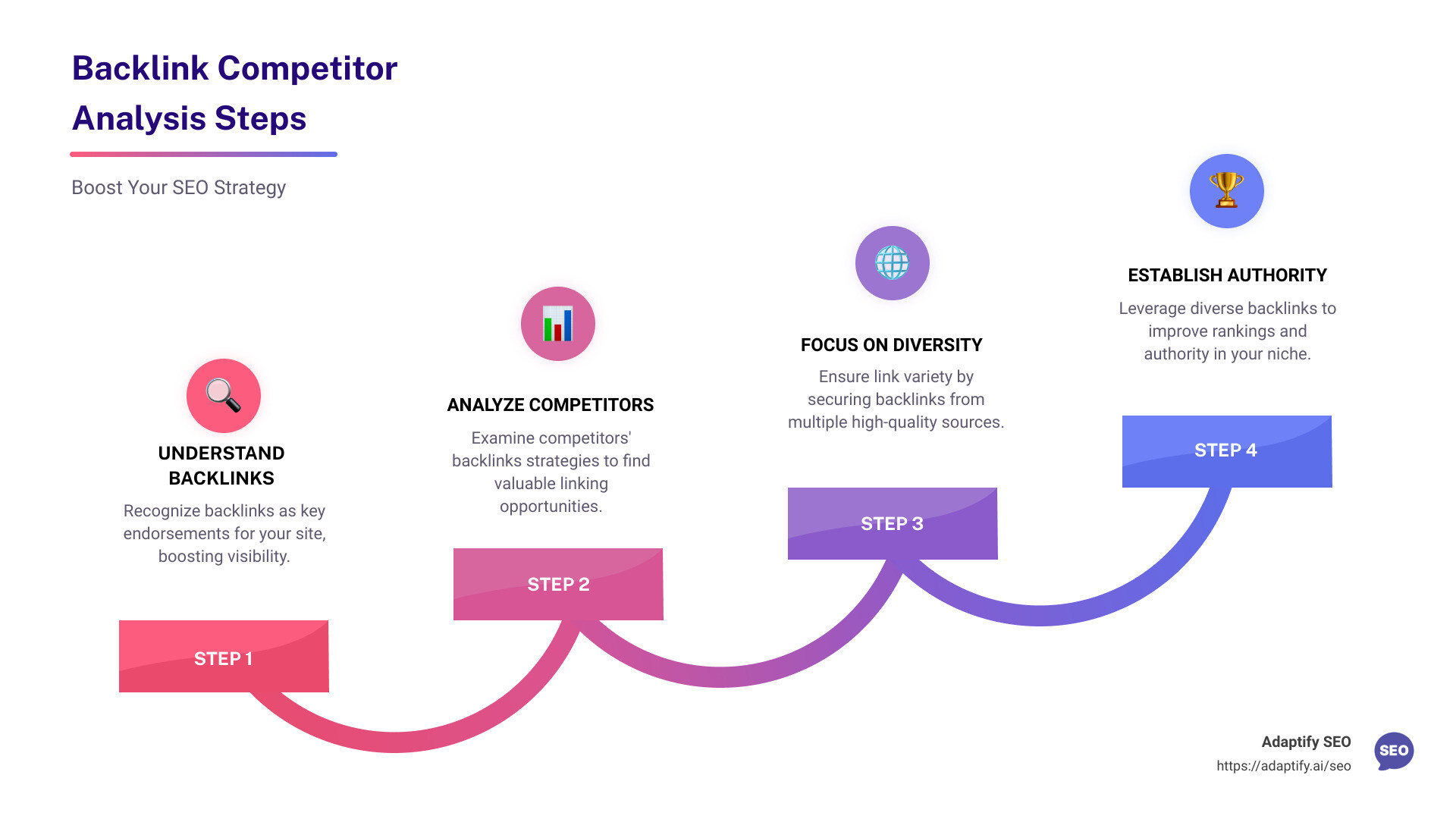
Backlink competitor analysis is a powerful technique that can lift your SEO strategy. By diving into your competitors' backlink profiles, you can uncover strategies that are working for them and apply these insights to your own site. Let's break down this process into three key components: backlink profiles, link gap analysis, and reverse engineering.
A backlink profile is like a report card for a website's link-building efforts. It shows who is linking to a site, providing insights into the quality and quantity of those links. By examining backlink profiles, you can understand what types of content attract links and how competitors are structuring their link-building strategies.
Think of it as peeking into your competitor's toolbox. You can see which tools (or links) they're using to build their online presence. This knowledge is invaluable for shaping your own strategy.
Link gap analysis is about identifying the links your competitors have that you don't. This analysis points out opportunities where you can build similar links. It's like finding the missing pieces in your puzzle that competitors have already finded.
By using tools like Ahrefs or Moz, you can generate a list of domains linking to your competitors but not to you. This list is your goldmine for potential outreach.
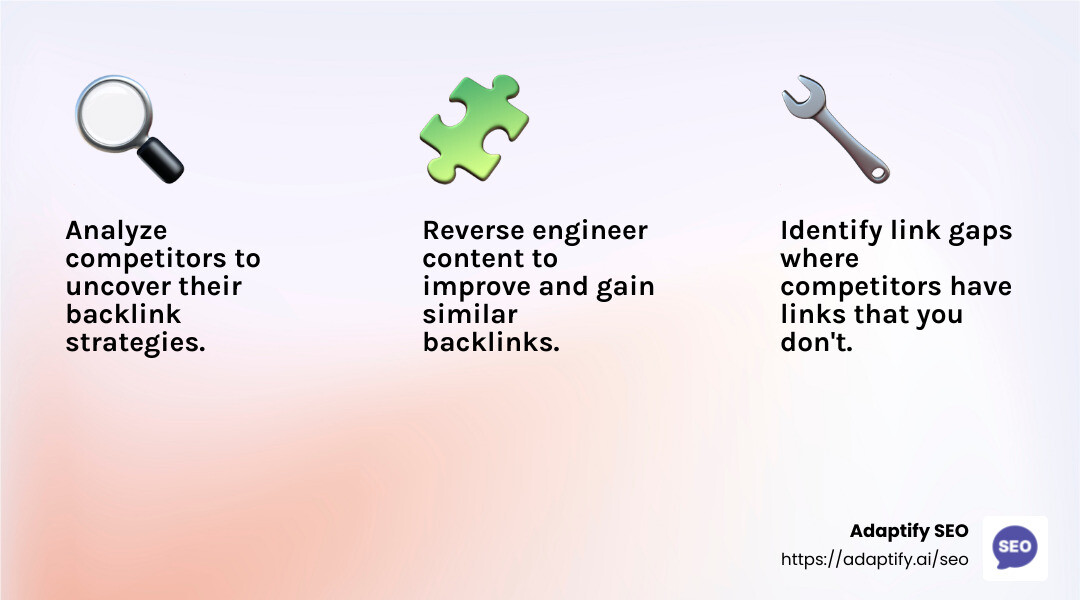
Reverse engineering in the context of backlinks means dissecting your competitor's strategy to see what makes it tick. It's about understanding why certain content is attracting more links and how you can create something even better.
For example, if a competitor's blog post is getting numerous backlinks, analyze its structure, content, and promotion strategy. Then, craft a piece of content that provides even more value, and reach out to those same sites for potential backlinks.
Reverse engineering allows you to learn from your competitors' successes and mistakes, giving you a roadmap for your own link-building efforts.
Understanding these components of backlink competitor analysis can significantly boost your SEO strategy. By analyzing backlink profiles, performing link gap analysis, and reverse engineering your competitors' strategies, you're setting the stage for a more authoritative and competitive online presence.
Conducting a backlink competitor analysis is a strategic process that involves identifying competitors, gathering data, and analyzing metrics. To streamline this process, there are several powerful tools at your disposal. Let's take a closer look at how you can effectively use these tools to gain an edge over your competition.
The first step in your analysis is to identify who your true competitors are. These are not just businesses in the same industry, but those ranking for the keywords you want to target. You can start by using tools to find competitors by entering your target keywords into their search functions. This will reveal the top-ranking sites for those keywords, helping you pinpoint who you're up against.
Once you've identified your competitors, the next step is to gather comprehensive data about their backlink profiles. Here's where various tools come into play:
Backlink Analysis Tools: Use tools that provide extensive backlink databases to export a complete list of backlinks for your competitors. This data includes important metrics like domain authority and anchor text.
Link Explorer Features: Look for features that offer insights into a competitor's backlink profile, including the number of linking root domains and spam score.
Simplified Backlink View: For those just starting out, use tools that give you a simplified view of your competitor's backlinks and highlight opportunities for improvement.
Recent Backlink Focus: Utilize tools that focus on recent backlinks, providing a snapshot of links acquired in the last 90 days. This is useful for understanding current strategies and trends.
With your data in hand, it's time to dive into the analysis. Focus on these key metrics to get the most out of your backlink competitor analysis:
Domain Authority (DA): This metric indicates the strength of a website's backlink profile. Higher DA suggests a more authoritative and trustworthy site.
Spam Score: A high spam score can signal low-quality links. Use this to filter out undesirable backlinks.
Anchor Text: Analyze the anchor text used in your competitor's backlinks. This can reveal the keywords they're targeting and help you refine your own strategy.
By using these tools and focusing on these metrics, you can uncover valuable insights into your competitors' link-building strategies. This information will help you identify high-quality link opportunities and craft a more effective SEO strategy for your own site.
Once you've gathered your data, it's time to put it to work. A backlink competitor analysis can reveal valuable patterns and opportunities that can lift your SEO strategy. Here's how to make the most of the information at your disposal:
Spot Patterns
Start by examining the backlink profiles of your competitors for recurring themes. Look for common types of websites linking to them, such as blogs, news sites, or industry directories. Identifying these patterns can help you understand what content resonates in your niche and where you might find similar opportunities.
Focus on Quality
While the quantity of backlinks is important, quality is paramount. High-authority domains lend more credibility and boost your site's authority in the eyes of search engines. Use tools to filter backlinks by domain authority, and prioritize those that offer the most value. A single link from a reputable site can outweigh dozens of low-quality ones.
Prioritize Opportunities
With a clear picture of the backlink landscape, it's time to prioritize which opportunities to pursue. Use side-by-side comparisons to see where your competitors are gaining ground. Identify gaps where your competitors have links, but you do not. These are prime targets for outreach, as they represent untapped potential for your own site.
High-Authority Domains
Focus your efforts on acquiring backlinks from high-authority domains. These links are like gold in the SEO world, significantly impacting your search rankings. Tools like Ahrefs and Moz can help you pinpoint these domains, making it easier to target your outreach efforts effectively.
Outreach Targets
Now that you've identified the best opportunities, it's time to reach out. Craft personalized pitches to the sites where you want your content featured. Highlight the unique value or perspective your content offers, and why it would be beneficial for them to link to it. Successful outreach can lead to valuable partnerships and a stronger backlink profile.
By leveraging backlink gap tools, you can uncover hidden opportunities and strategically improve your link-building efforts. This approach not only helps you keep pace with competitors but positions your site for long-term success.
A well-rounded backlink profile is crucial for SEO success. Not only does it strengthen your site's authority, but it also signals to search engines that your content is credible and widely referenced. Here's how to build a winning strategy:
High-Impact Opportunities
Start by focusing on high-impact opportunities. These are the backlinks from high-authority domains that can significantly boost your site's visibility. Look for domains that link to multiple competitors but not to you. These are prime targets because they’ve already shown interest in your industry. Reach out with personalized pitches, explaining how your content offers unique value.
Link-Worthy Content
Creating content that naturally attracts links is key. Consider crafting:
The more valuable and shareable your content, the easier it is to earn quality backlinks.
Outreach Tools
Streamlining your outreach process is essential. Tools like BuzzStream and Semrush can help you find contact details, manage campaigns, and automate follow-ups. When reaching out, tailor your emails to align with the site’s audience and highlight how your content adds value.
Blogs, News Sites, and Directories
Diversify your backlink sources by targeting a mix of blogs, news sites, and directories. Each type of site can offer different benefits:
By tapping into various platforms, you signal to search engines that your site is well-regarded across the web.
Monitor and Adjust
Once your strategy is in motion, monitor your progress. Use tools like Ahrefs or Semrush to track new backlinks and their impact on your rankings. If a particular method isn't working, tweak it. If a certain type of content is successful, double down on that format.
Building a diverse and high-quality backlink profile takes time, but with a strategic approach, you can improve your site's authority and search engine performance.
Identifying your competitors is the first step in backlink competitor analysis. Start by searching for the keywords you want to rank for in search engines. The websites that consistently appear at the top are your competitors. These are the sites that are currently outranking you for those keywords.
You can also use tools to find competitors by entering your domain and looking for websites with similar backlink profiles. Ensure these competitors operate in the same industry and target a similar audience as your business.
Several tools can help you conduct effective backlink analysis:
Each tool has its strengths, so choose one that fits your needs and budget. They can help you gather data on your competitors' backlinks, allowing you to spot opportunities for your own site.
Link diversity is crucial because it signals to search engines that your site is trusted across various platforms. Backlinks from a wide range of sources—such as blogs, news sites, and directories—improve your site's credibility and authority.
A diverse backlink profile:
Incorporate link diversity into your strategy to build a resilient and robust backlink profile.
In SEO, staying ahead of your competitors requires a strategic approach to backlink building. Backlink competitor analysis is a powerful tool that can help you uncover valuable insights from your competitors' strategies. By understanding where your competitors are getting their links, you can identify opportunities to improve your own backlink profile.
Adaptify SEO offers a comprehensive, automated SEO solution that simplifies this process. With our platform, you can streamline your backlink analysis, strategy formulation, and content creation, all while reducing manual effort. Our AI-powered tools are designed to help agencies efficiently manage their SEO tasks, ensuring you stay competitive in your industry.
Ready to take your SEO strategy to the next level? Book a Demo with Adaptify SEO today to see how our automated solutions can transform your approach to backlink building and improve your search engine rankings.
By leveraging the right tools and strategies, you can build a diverse and authoritative backlink profile that not only improves your site's credibility but also boosts your search engine performance. Start now and watch your site climb the rankings with ease.

Discover how backlink automation software streamlines outreach, saves time, and scales your SEO strategy safely and effectively.
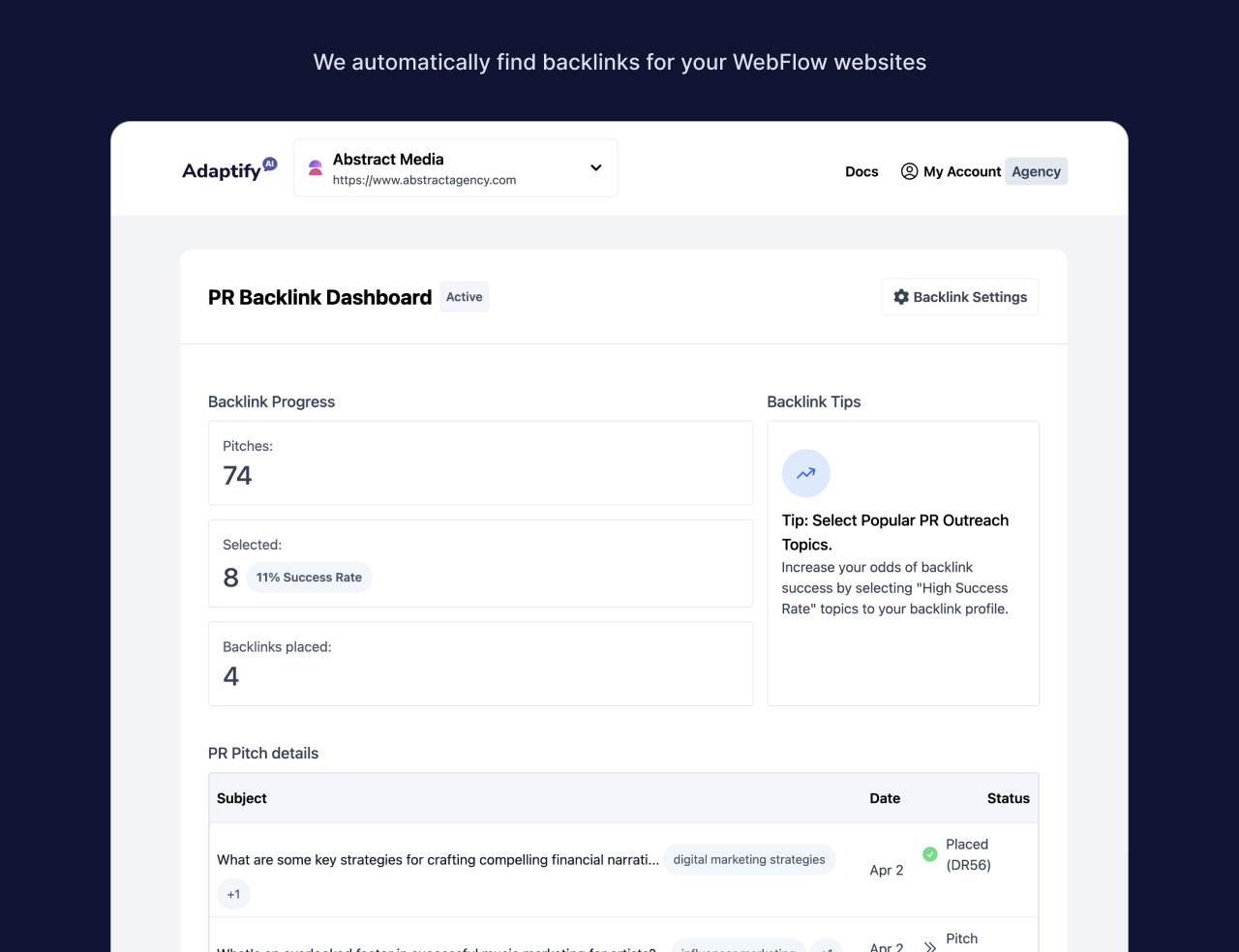
Track every backlink with an SEO backlink monitor—spot lost links fast, protect rankings, and boost ROI before competitors do.
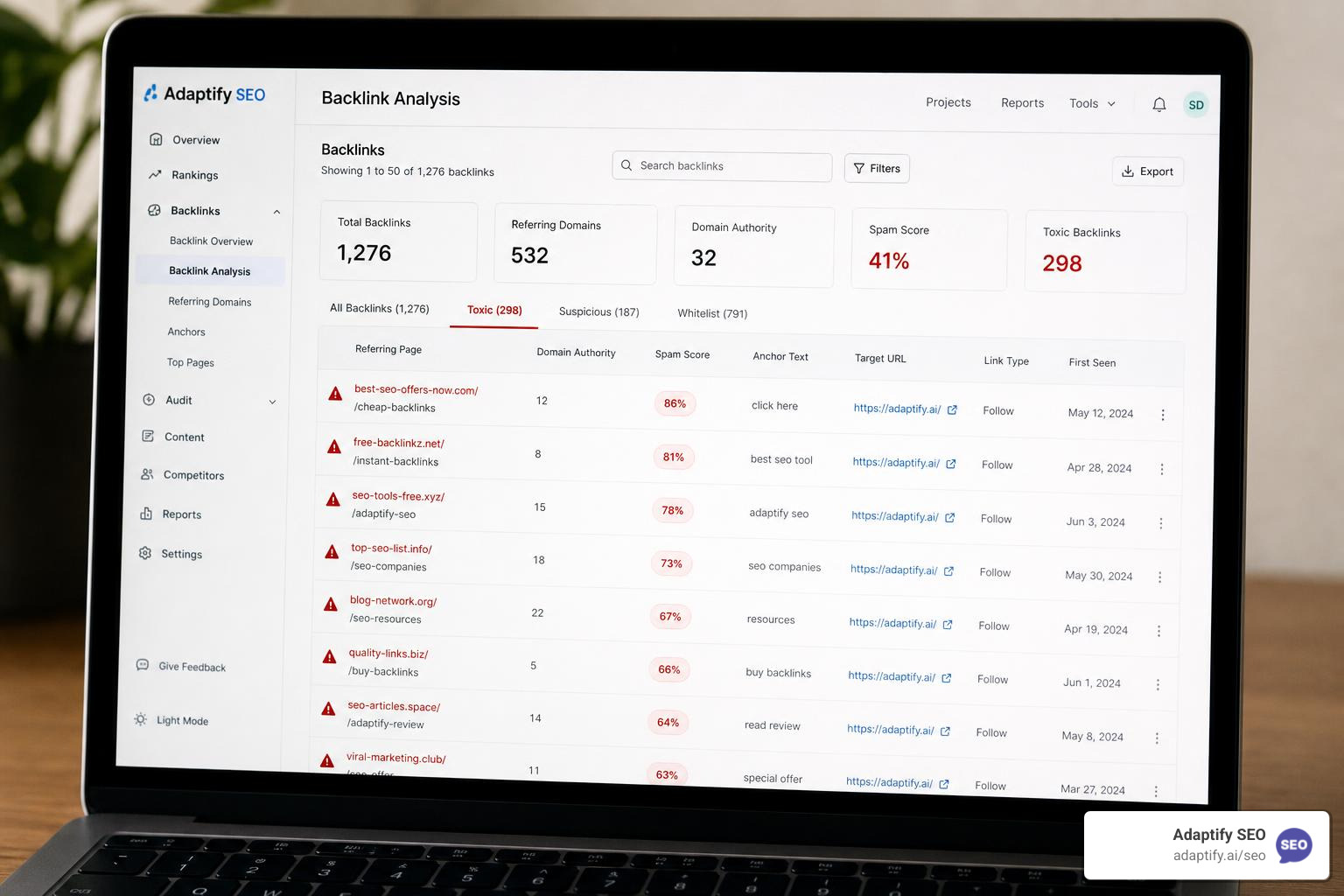
Learn how to disavow toxic backlinks, clean your profile, and recover rankings with this step-by-step guide.
Join 1,000+ agencies already delivering SEO and AI visibility from a single platform without increasing their headcount.Join 1,000+ agencies already delivering SEO and AI visibility from a single platform without increasing their headcount.