Beyond Manual: A Guide to Automating Blog Content for Scale


Automate blog content and you'll fundamentally shift how your agency operates. Reduce a 4-hour post to a 1-hour review, publish daily instead of weekly, and amplify your team's output by 5-10x without hiring more writers.
Here's what blog automation actually means:
Key benefits at a glance:
| Benefit | Impact |
|---|---|
| Time savings | 90% reduction in content creation time |
| Cost efficiency | Publish 20-30 articles/month with a small team |
| Consistency | Maintain brand voice and cadence automatically |
| Scalability | Enter new niches without hiring sprees |
| SEO performance | 30-40% organic traffic growth in 3 months |
Your competitors are already automating. The Associated Press grew from 300 to 3,700 articles per quarter. BuzzFeed's stock jumped 200% after announcing its AI strategy. The question isn't if you should automate, but how.
I'm Hansjan Kamerling, and I help companies build scalable content systems. I'll show you how to use AI for the grunt work so your team can focus on strategy.
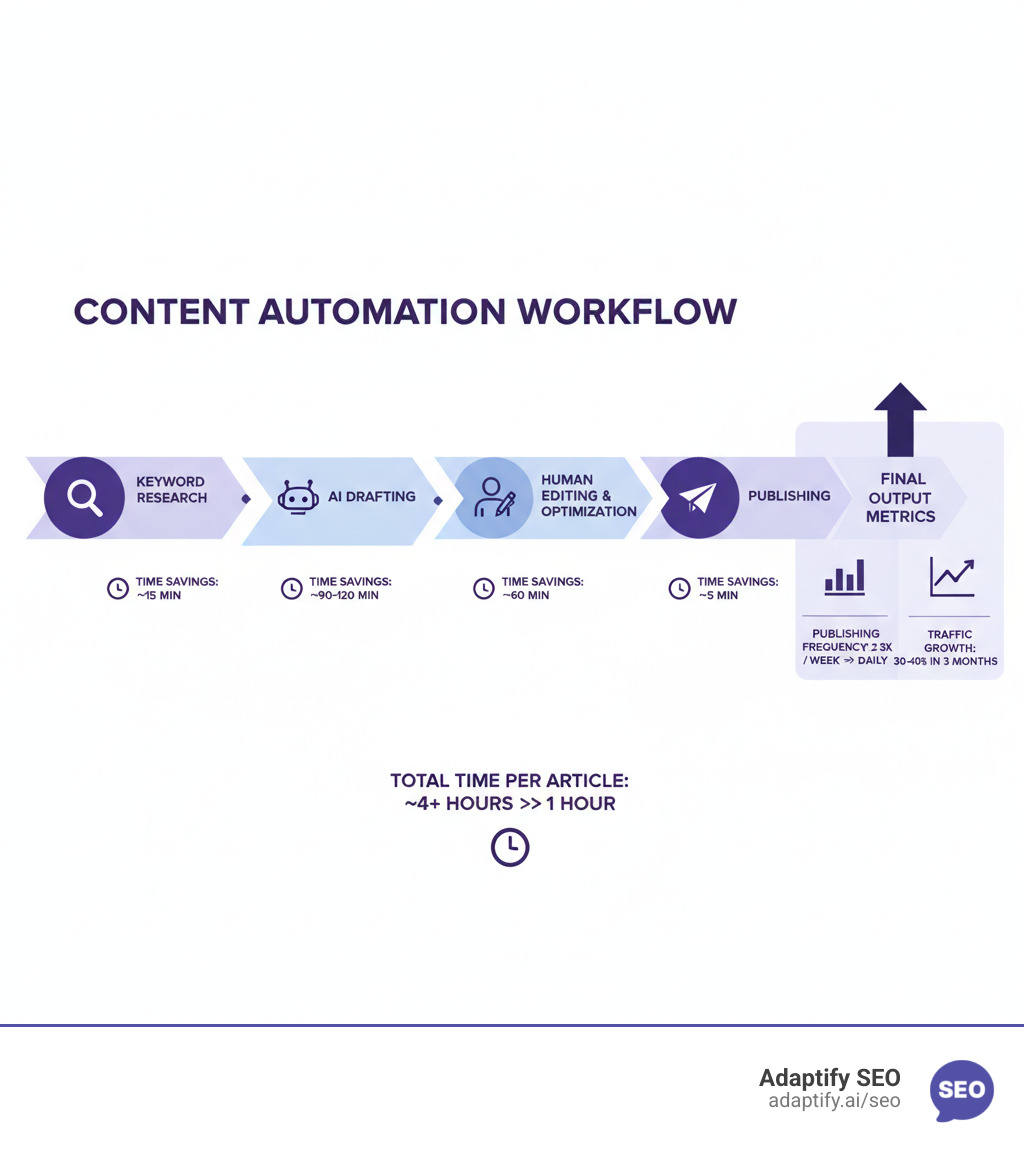
I used to spend over 4 hours on a single 1200-word article. After I found automation, I now see content as a system, not a chore. For agencies, the benefits go far beyond just saving time.
Time and cost savings are immediate. An AI blog automation system can cut article creation time by up to 90%, reducing a 6-7 hour task to about 1 hour of human oversight. This allows a small team to publish 20-30 articles monthly.
Content consistency becomes automatic. Automation ensures a steady publishing schedule, which is crucial for audience engagement and SEO. AI can adhere to style guides, maintaining a consistent brand voice across all content.
Scalability opens new possibilities. You can enter new niches or expand output without hiring sprees. When Buzzfeed announced its use of AI for content, its stock jumped 200%, demonstrating the growth potential when you effectively automate blog content.
SEO performance improves significantly. AI assists with keyword research, topic clustering, and on-page optimization. By consistently publishing helpful, optimized content, agencies report organic traffic growth of 30-40% in the first three months.
Writer's block disappears. AI generates ideas, outlines, and first drafts, giving your team a solid foundation to build upon.
Quality control improves. With AI handling initial drafting and optimization, your team can dedicate more time to fact-checking, adding depth, and infusing brand personality.
A Harvard Business Review study on productivity found that over 90% of workers said automation increased their productivity. Automation doesn't replace talent—it amplifies it.
Think of content automation as having different levels of involvement. When you automate blog content, you choose how much to delegate to tools. The right level depends on your agency's needs.
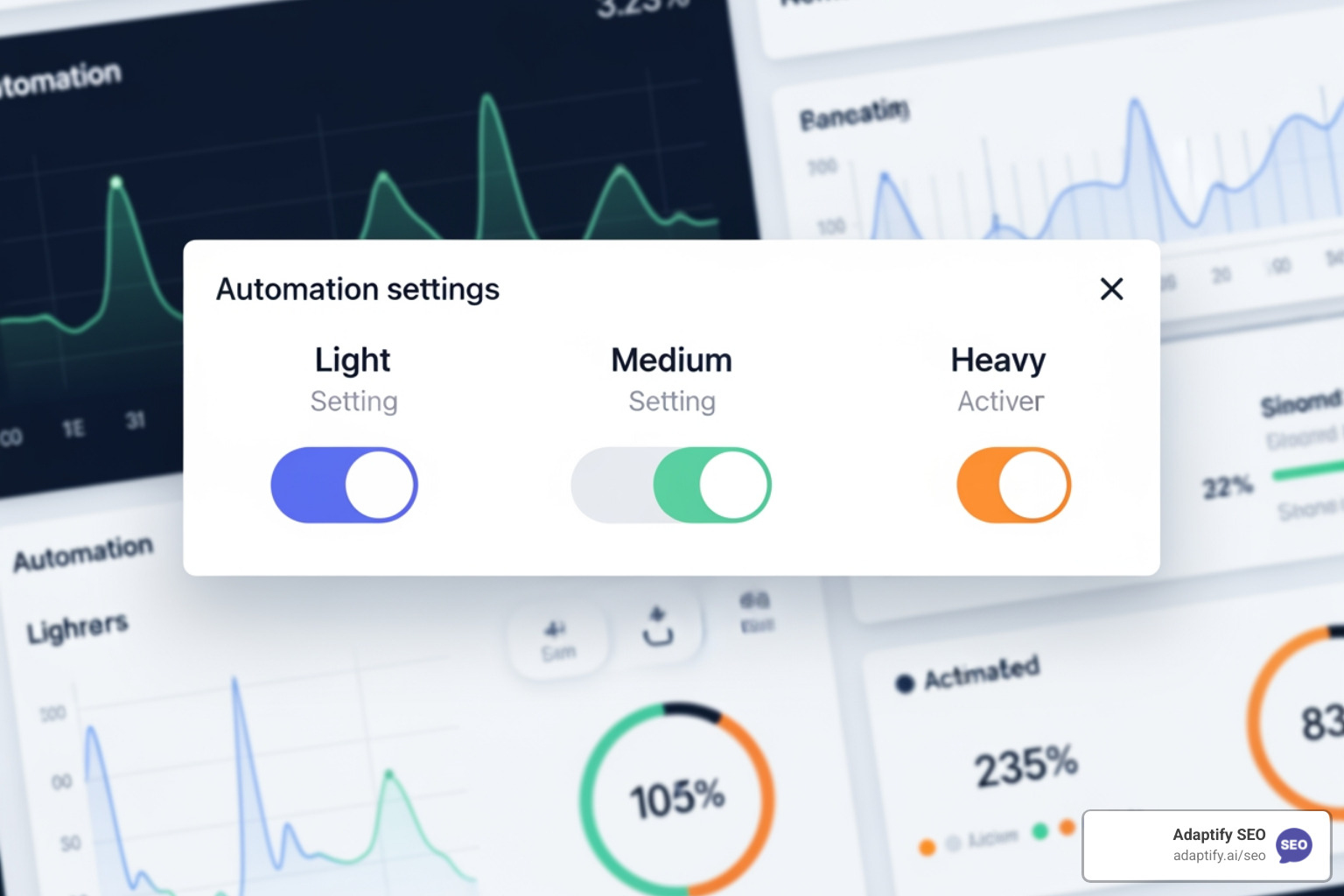
Let me walk you through the three main levels I've seen work in practice.
This is the best starting point. You still write everything but get smart assistance. Tools like Grammarly catch typos, SEO tools offer on-page suggestions, and idea generators like the Ahrefs blog post ideas generator jumpstart your creative process.
Here, AI does some of the writing, which you then review and refine. Use tools like Jasper AI to generate first drafts from an outline. The key is the human-in-the-loop approach: the AI draft is a foundation, not the final product. Your team adds anecdotes, fact-checks, and adjusts the tone. AI can also repurpose a blog post into social media snippets or an email newsletter, which you then review.
This involves building workflows that run largely on their own. Using Make.com or Zapier, you can create systems that monitor RSS feeds, generate and publish summarized blog posts with images, and even prioritize content based on trending keywords. Minimal human intervention doesn't mean zero; you still spot-check output and refine prompts. But instead of 4 hours per post, you spend 20 minutes reviewing. This is how we at Adaptify.ai help agencies scale. You can learn more about Adaptify's content services.
The right automation level for your agency depends on where you are right now. Start with light automation. As you get comfortable, move to medium. Heavy automation is for when you're ready to scale aggressively. The goal is to remove repetitive work so your team can focus on creativity and strategy.
To automate blog content, you need the right combination of tools that integrate into a seamless assembly line.
| Category | Purpose | Example Tools |
|---|---|---|
| AI Writing & Content Generation | Drafts, ideas, outlines, content refinement | ChatGPT, Jasper AI, Writer.com, SEO.AI, Claude AI |
| Workflow & Process Automation | Connects tools, automates tasks, creates workflows | Zapier, Make.com, n8n, Activepieces |
| Image & Video Generation | Creates visuals for blogs, social media, videos | DALL-E, Midjourney, Adobe Firefly, Runway AI, Pictory, Synthesia |
| SEO Optimization & Research | Keyword research, on-page SEO, content briefs, analysis | SurferSEO, Ahrefs, Semrush, Google Keyword Planner |
| Scheduling & Publishing | Automates posting across platforms | WordPress, Buffer, Hootsuite, Social Poster |
| Content Management | Stores ideas, tracks progress, manages assets | Google Sheets, Airtable, Google Docs |
These are your content engines. ChatGPT is great for outlines and first drafts. For specialized marketing needs, Jasper AI offers pre-built templates, while Writer.com lets you define a brand voice. SEO.AI focuses on generating search-optimized content from the start. These tools handle the heavy lifting, freeing your writers to focus on strategy and personality.
These platforms are the connective tissue of your content machine. Zapier and Make.com let you build automated workflows without code. For example, a new row in a Google Sheet can trigger ChatGPT to write a draft and save it to Google Docs. For more technical users, n8n and Activepieces offer open-source alternatives.
Content needs more than words. DALL-E, Midjourney, and Adobe Firefly generate unique images from text prompts. AI video generators like Runway AI and Pictory can turn blog posts into engaging videos. For SEO, SurferSEO, Ahrefs, and Semrush are essential for keyword research, competitive analysis, and on-page optimization. Finally, scheduling tools like Buffer and Hootsuite automate distribution.
Success comes from selecting the right tools and integrating them into efficient workflows.
Let's build your first automated blog post. This system, inspired by Helena Liu's method, uses Make.com (or Zapier), Google Sheets, AI, and WordPress to automate blog content.
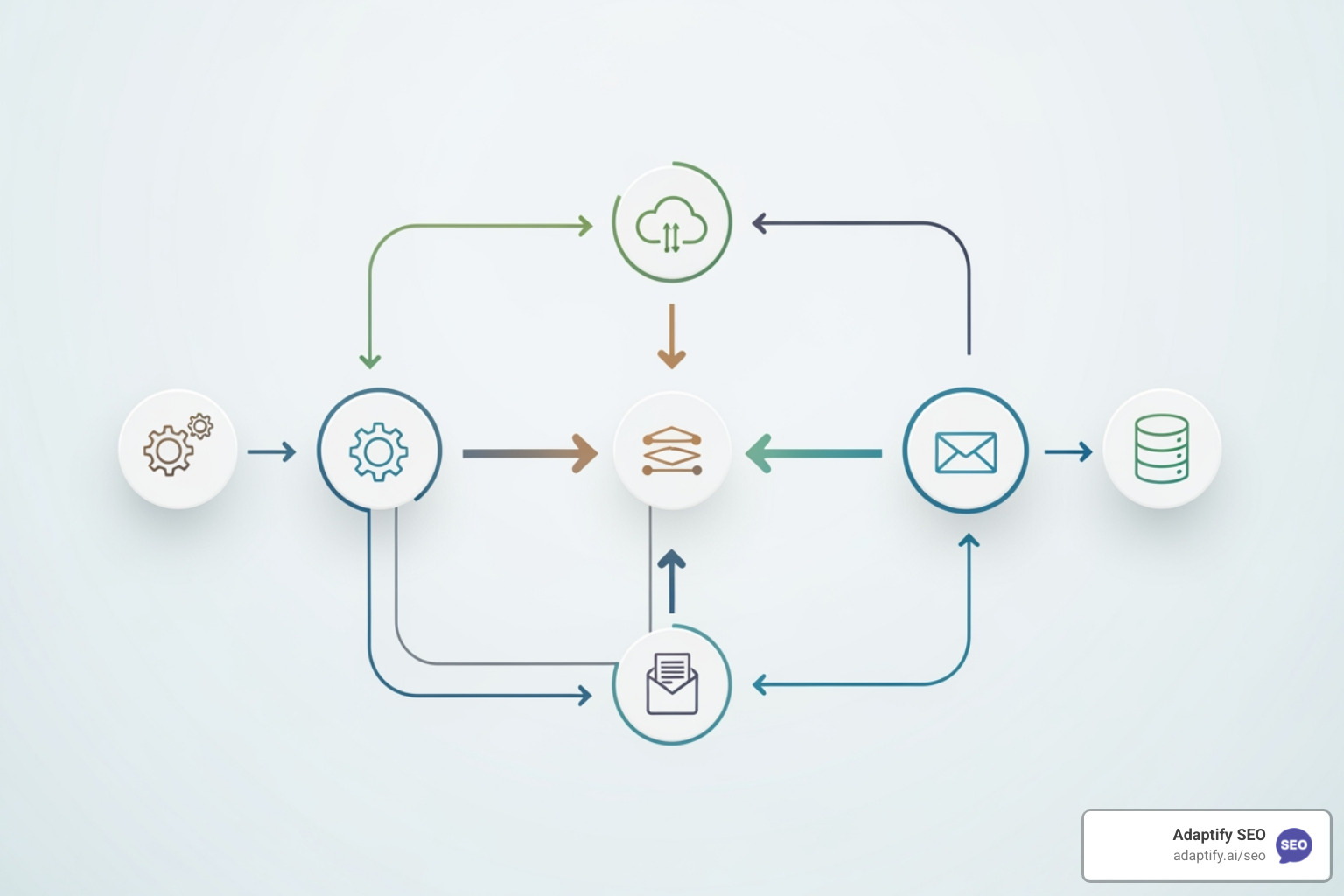
Your automation needs a starting point. Use a Google Sheets database with columns for "Idea" and "Guidelines" (keywords, tone, etc.). Adding a new row triggers the process. Alternatively, use RSS feeds from sources like Google News (via RSS.app) to automatically generate content on trending topics.
Create a new scenario (Make) or Zap (Zapier). Set the trigger to "Watch New Rows" in your Google Sheet or "Watch RSS Feed Items." Then, connect the OpenAI API by adding its module to your workflow. You'll need an API key from the OpenAI platform.
Prompt engineering is key—give clear, detailed instructions. Create separate AI steps to generate:
Add a WordPress module to your workflow and select "Create a Post." You may need a simple WordPress plugin for API access. Map the AI-generated title and body to the corresponding WordPress fields.
Crucially, set the post status to "Draft." This creates a human checkpoint. Your team should review each draft for accuracy, add unique insights, and ensure brand voice before publishing. This final review is what separates effective automation from risky spam.
When I started to automate blog content, I worried about Google penalties and sounding robotic. The truth is, Google doesn't care if AI wrote your content; it cares if the content is helpful. However, automating carelessly is risky.
No, AI-generated content itself won't get you penalized. But low-quality, unhelpful content will. Google's guidance on AI content is clear: they reward high-quality, people-first content, regardless of origin. The danger is what Google calls "scaled content abuse" in its spam policies—generating massive amounts of low-value content to manipulate rankings. If your content isn't helpful to a human, it won't pass Google's test.
My system for scaling without sacrificing quality relies on these principles:
AI should amplify human creativity, not replace human judgment. This is the philosophy we follow at Adaptify.ai.
Major organizations have already proven that content automation delivers transformative results.

The news industry has been a pioneer in automation:
Other major players like Forbes, Reuters, and Guardian Australia all use similar systems. They understand that to automate blog content is to multiply reach without multiplying headcount.
For agencies, this strategy open ups significant growth:
The old model of one perfect post per month is dead. Your competitors are already automating. The key is to combine AI speed with your team's unique expertise. At Adaptify.ai, we helped one client increase organic traffic by 89% in under two months with an automated system. See more on our case studies page.
Here are answers to common questions I hear from agencies looking to automate blog content.
The key is treating your AI like a junior writer. Use detailed prompts specifying tone, audience, and brand personality. Most AI tools have custom instruction features to save these preferences. However, human editing is non-negotiable. An editor must add personal stories, humor, and real-world examples, and smooth out awkward phrasing. This is where the human spark is added.
Start small. Don't try to build a fully automated empire on day one.
Build confidence with small wins before adding complexity.
No, it's a terrible idea for long-term success. Fully automated content without human oversight is a fast track to a Google penalty. This approach produces generic, low-depth content that violates Google's helpful content guidelines and falls under their definition of scaled content abuse.
Human oversight is not optional; it's essential. Use AI as an amplifier to handle grunt work, but keep humans in the loop for strategy, editing, fact-checking, and adding unique expertise. This is how you scale sustainably.
The ability to automate blog content is no longer an experiment; it's an essential strategy for growth.
Automation is not the enemy of creativity. By letting AI handle tedious first drafts and research, your team is free to focus on what humans do best: strategy, storytelling, and adding unique insights.
The benefits are measurable: agencies are cutting production time by 90% and boosting organic traffic by 30-40% in months. The path forward is to start small, automate strategically, and always prioritize quality.
Google rewards helpful content, regardless of its origin. That's why human oversight is the secret ingredient that turns an AI draft into a great article. Your expertise is your competitive advantage.
At Adaptify.ai, this is exactly what we help agencies build. Our automated SEO services handle everything from strategy to creation, freeing your team to do their best work. If you're ready to transform your content operations, explore automated content solutions with us and let's build something remarkable together.

Learn how an SEO automation system streamlines keyword research, content workflows, and reporting to scale your search operations efficien...

Discover what SEO tasks seo automation services can realistically automate for faster audits, keyword research, and content optimization.

Stop staring at blank pages. Use the best SEO article writing software to create optimized content that ranks in 2026.
Join 1,000+ agencies already delivering SEO and AI visibility from a single platform without increasing their headcount.Join 1,000+ agencies already delivering SEO and AI visibility from a single platform without increasing their headcount.