Beyond Manual: What is SEO Automation and How Can It Help You?



SEO automation is the process of using software and AI to handle repetitive SEO tasks like keyword research, site audits, rank tracking, and reporting. By handling the grunt work, it frees you to focus on strategy, creativity, and growing your business.
Quick Answer: What SEO Automation Can Do for You
If you run an agency, you know the pain of the endless manual grind of SEO. The reality is that you can't compete with modern search engines using manual methods alone. Your competitors are already using automation to scale their operations, and your team is likely drowning in repetitive tasks instead of focusing on what actually moves the needle: strategy, creativity, and building relationships.
SEO automation isn't about replacing human expertise; it's about amplifying it. Research shows that workers using automation are more productive and collaborative. Automation handles the robot work so you can do the human work. Technical audits run on autopilot, keyword rankings update in real-time, and reports generate themselves. You finally have time to think strategically.
However, many agencies get it wrong by treating automation as a simple add-on rather than integrating it into their workflow. They forget that the best automation combines AI pattern recognition with human strategic oversight, leading to mediocre results.
I'm Hansjan Kamerling, and I've spent years helping companies scale through smart automation. In this guide, I'll show you how to do SEO automation right—what to automate, what to keep human, and how to build a stack that delivers results.
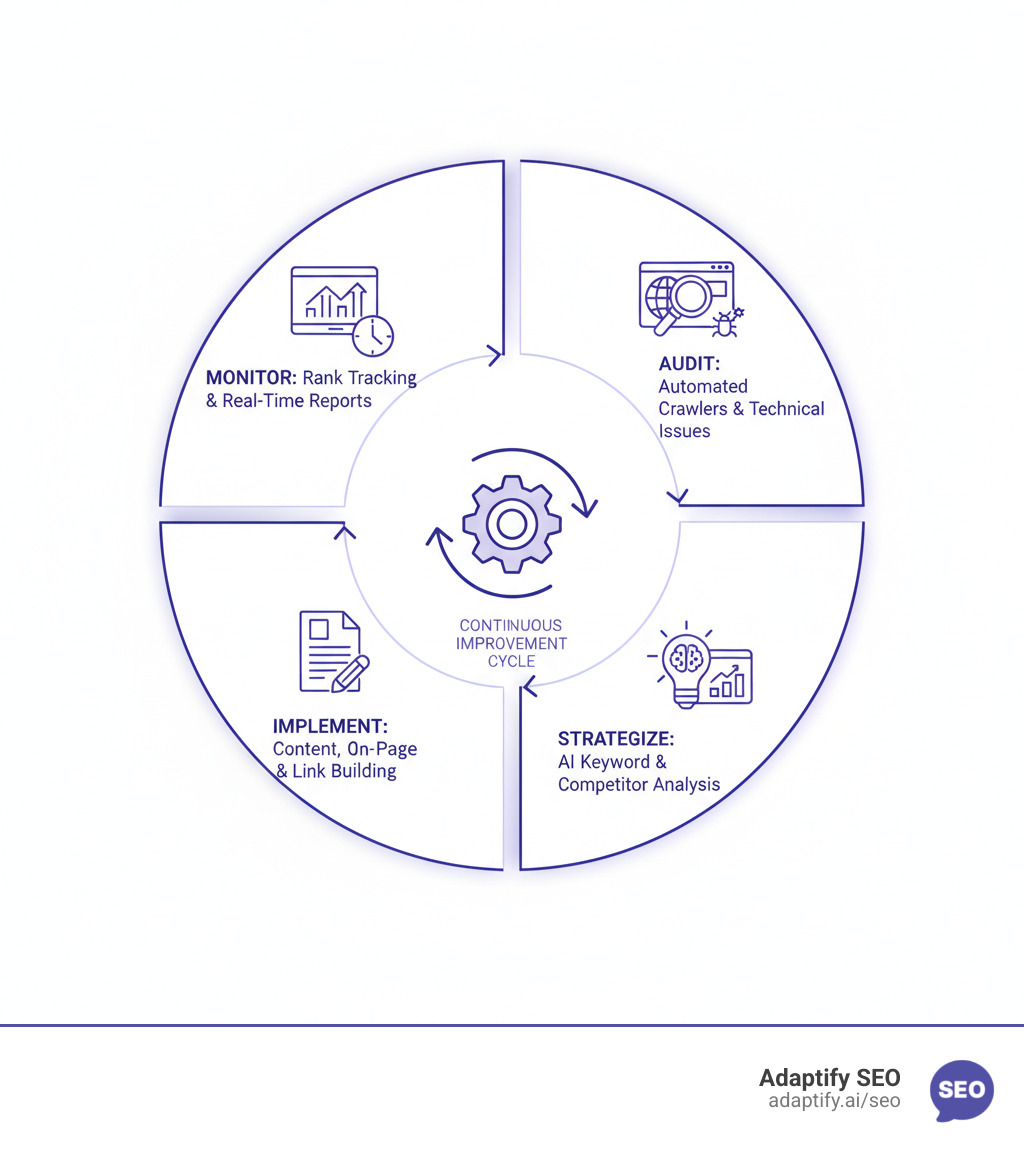
For many agencies, the day is consumed by manual tasks: checking keyword rankings, reviewing site crawls, and generating reports. This leaves little time for the strategic work that truly moves the needle for clients.
SEO automation changes that equation. At its core, it's about using software to handle repetitive, data-heavy tasks. Think of it as a tireless team member working 24/7, processing thousands of data points in seconds. This isn't about cutting corners—it's about working smarter so you can focus on strategic thinking.
Modern SEO automation platforms use APIs, AI agents, and scripts to create seamless workflows. They connect to your data sources—like Google Analytics and Google Search Console—to continuously monitor everything. While you're sleeping, these systems check for broken links, track competitors, and flag issues. You wake up to data-driven insights and actionable recommendations, changing raw data into ranking improvements without the manual grind.

It's important to distinguish between SEO automation and AI in SEO. They're related but not the same.
SEO automation is about task execution. It's the software that performs routine actions automatically, like scheduling website crawls or generating reports. The goal is to eliminate manual work that doesn't require human judgment.
AI in SEO is about intelligent analysis and decision-making. AI-powered tools don't just execute tasks—they understand patterns, learn from data, and make recommendations. For example, an AI tool can identify a 404 error and recommend the best page for a redirect based on content similarity and user intent.
The magic happens when you combine both. AI-powered automation handles monitoring while simultaneously analyzing data to give you strategic recommendations. It's not just faster; it's smarter.
SEO automation isn't about replacing your team; it's about amplifying what you're already great at. Most SEOs spend 80% of their day on manual work, leaving only 20% for strategy and creativity.
Automation flips that ratio. When systems handle repetitive tasks, you can shift to 80% strategy. That's where your real value lies—the human insight that no AI can replicate. You understand client goals, craft compelling narratives, and know when to break the rules for better results.
Successful marketers understand this partnership: AI handles data crunching, while you bring strategic thinking and creative control. This transforms you from a "doer" of manual tasks to a strategist who manages intelligent systems. You're no longer buried in spreadsheets; you're focused on high-impact decisions that drive real growth. We've built our entire platform around this human-AI collaboration, increasing efficiency while keeping strategic control where it belongs: with you. You can more info about our AI SEO services to see how it works.
Many SEO tasks can be automated, but just because you can automate something doesn't mean you should. Understanding this distinction is the key to using SEO automation effectively.
Automation excels at repetitive, data-heavy tasks that follow predictable patterns. It struggles with tasks requiring creativity, strategic thinking, or genuine human connection.
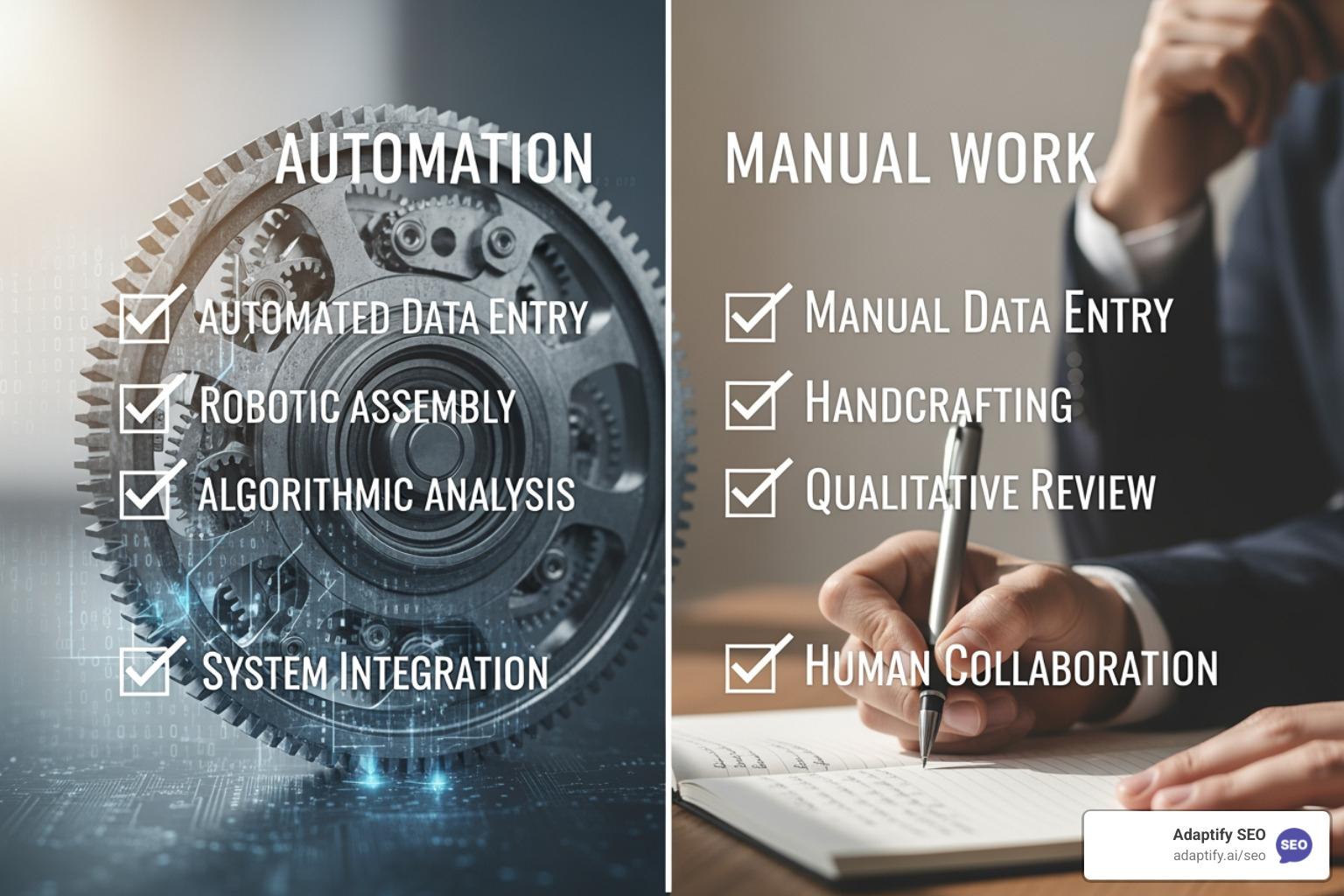
These tasks are perfect for automation, freeing up significant time and improving accuracy.
SEO automation is especially valuable in the early stages of content production.
Not everything in SEO should be automated. The most important aspects still require human expertise, creativity, and judgment.
Embracing SEO automation is transformative, but it comes with a learning curve. Understanding both the powerful benefits and potential risks is key to successful implementation.
Here's what gets me excited about SEO automation: the sheer amount of time it gives back to you.
Time and Cost Savings: The most immediate benefit is reclaiming hours. Tasks that took days, like site crawls or monthly reporting, are completed in minutes. This efficiency is well-documented: research on automation and productivity shows over 90% of workers using automation report increased productivity.
Accelerated Performance: Automated monitoring helps you catch technical issues and content decay before they become major problems, allowing for proactive optimization and consistent, long-term ranking improvements.
Scalability: Automation allows agencies and in-house teams to handle more work without increasing headcount. It dramatically expands your capacity to serve more clients or manage larger projects effectively.
Improved ROI: With predictable software costs and measurable outcomes, automation provides a clear return on investment. Integrating with tools like Google Analytics helps you make faster, better decisions with fewer errors, directly impacting your bottom line.
SEO automation isn't a magic bullet. Treating it like one can lead to trouble.
Over-Reliance on Automation: Publishing purely AI-generated content without human oversight often results in generic output that fails to rank. AI should amplify human insight, not replace it.
Tool Errors and Inaccuracies: Automation tools can make mistakes. Human review checkpoints are non-negotiable to catch bugs or inaccuracies before they cause problems.
Security Risks: Integrating third-party tools means giving them access to your data. Always vet tools for their security and privacy policies to prevent data breaches.
Loss of Human Touch: Automated outreach for link building often feels robotic and gets ignored. Genuine relationship building requires a personal touch that can't be automated.
Evolving Role of SEO Professionals: Automation shifts the SEO role from execution to strategy. Professionals must adapt to managing automated systems and focus on high-impact creative initiatives. This change isn't optional; it's the future of the profession.
Building an effective SEO automation stack is like assembling a high-performance race car—you need the right parts that work together seamlessly, and a skilled driver.
Most SEO automation tools solve one problem, leaving agencies juggling multiple platforms. We built Adaptify differently, designing it as a comprehensive ecosystem for agencies that need to scale.
At the heart of our platform is OTTO SEO, our AI agent that handles the technical heavy lifting. OTTO automatically detects technical issues and can deploy fixes directly to your site upon approval. This eliminates developer backlogs for simple changes and delivers consistent ranking improvements.
Our content workflows help you create detailed briefs, generate topic ideas, and optimize for semantic SEO. The system understands context, not just keywords, ensuring content resonates with your audience. Our white-labeled reporting dashboards pull data directly from sources like Google Search Console, providing real-time insights and professional reports for your clients.
We are also focused on LLM Visibility and Generative Engine Optimization. As AI-driven search grows, your clients need to appear in AI-generated responses. We've built this optimization directly into our platform. You can customize everything through our Knowledge Graph feature, ensuring every optimization is specific to your client's brand.
Instead of paying for multiple tools that don't talk to each other, you get one integrated platform for strategy, execution, and reporting. Explore Adaptify's SEO automation solutions to see how this transforms agency operations.
Avoid common mistakes by implementing SEO automation thoughtfully.
The landscape is evolving rapidly. Here's what's next:
No, SEO cannot be fully automated. While automation excels at repetitive tasks like rank tracking and site audits, it can't replace human expertise in high-level strategy, creative content writing, genuine relationship building for links, or nuanced search intent analysis. The best approach combines automation for efficiency with human oversight for strategy and quality, letting you focus on what truly moves the needle.
No. Google doesn't care how you create content; they care about its quality. According to Google's policy on AI content, their focus is on whether the output is helpful and valuable. If you use SEO automation to produce high-quality work, you're fine. If you use it to create spam, you'll face penalties, just as you would with human-written spam. The key is human oversight to ensure quality and adherence to E-E-A-T (Experience, Expertise, Authoritativeness, and Trustworthiness).
SEO automation lifts the role from a "doer" to a "strategist." Instead of spending days on manual tasks, you manage intelligent systems. This frees up your time for strategic planning, interpreting data insights, guiding AI-driven content creation with human creativity, and focusing on high-impact relationship building. You become the conductor of an orchestra of tools, using your expertise to ensure everything works harmoniously to drive meaningful results.
SEO automation is no longer a luxury; it's essential for staying competitive. Manually tracking rankings, creating reports, and performing site audits is inefficient and puts you behind competitors who have already acceptd automation.
The promise is simple: let machines handle repetitive work so your team can focus on what drives results—strategy, creativity, and client relationships. This isn't about replacing humans; it's a partnership between human expertise and AI capabilities. The tools handle the data crunching and grunt work, while you provide the strategic thinking and quality control.
The efficiency gains, scalability, and ROI improvements are real. I've seen teams transform from overwhelmed order-takers to strategic advisors, serving more clients better without burnout.
At Adaptify.ai, we built our platform to address these challenges. We offer a comprehensive solution that integrates automated technical SEO, AI-powered content workflows, and white-labeled reporting. We provide a way to fundamentally transform how your agency operates.
The future of SEO combines the speed of automation with the irreplaceable value of human insight. The question isn't whether to adopt SEO automation—it's how quickly you can implement it to start seeing results.
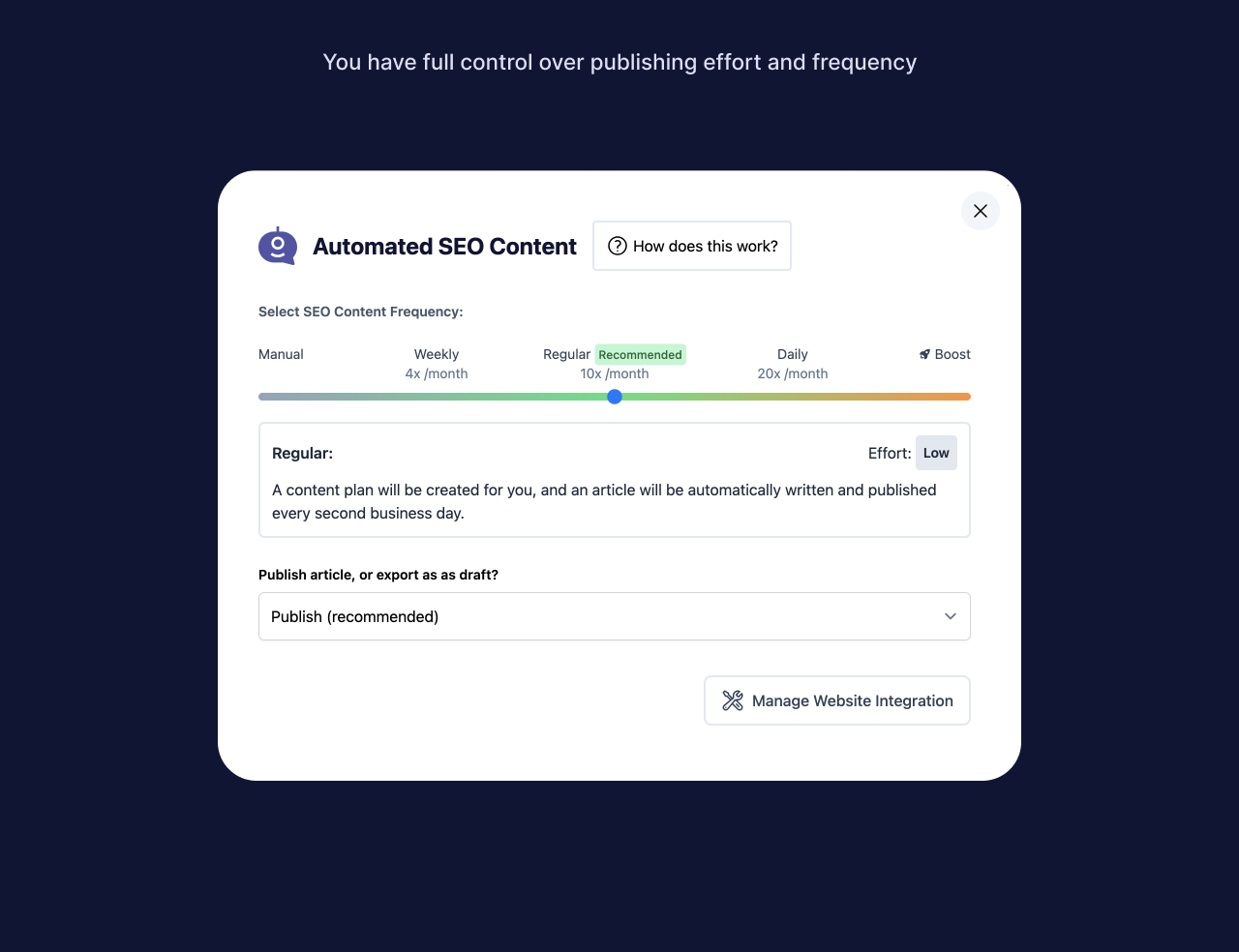
Ready to make the shift? Explore our automated content solutions and find how Adaptify can help your team work smarter, scale faster, and focus on the strategic work that truly moves the needle.

Master SEO monitoring with key metrics and tools to track rankings, technical health, and organic growth for continuous performance optimi...
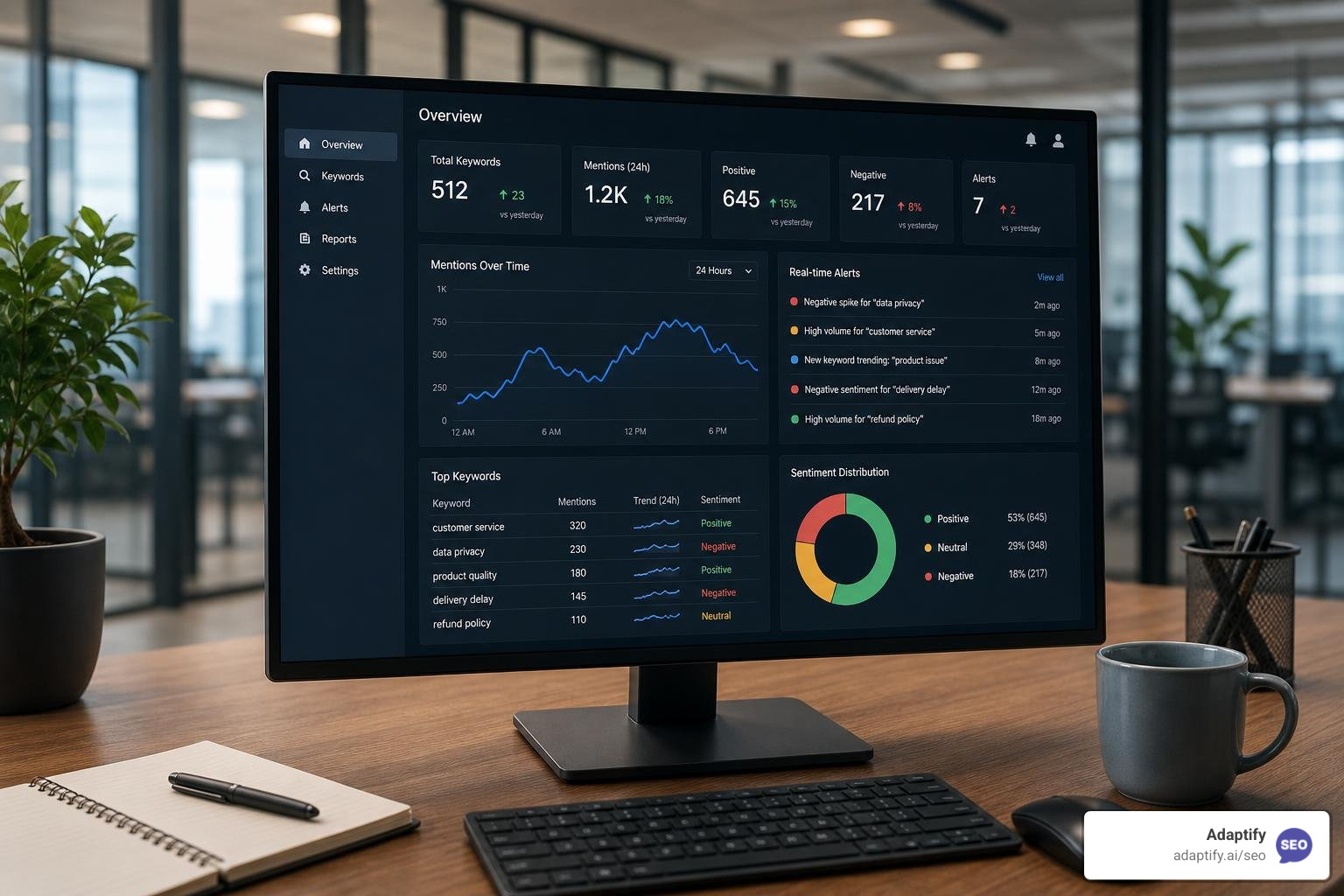
The Best Online Keyword Monitoring Tools for Real-Time Alerts - Learn about online keyword monitoring tool
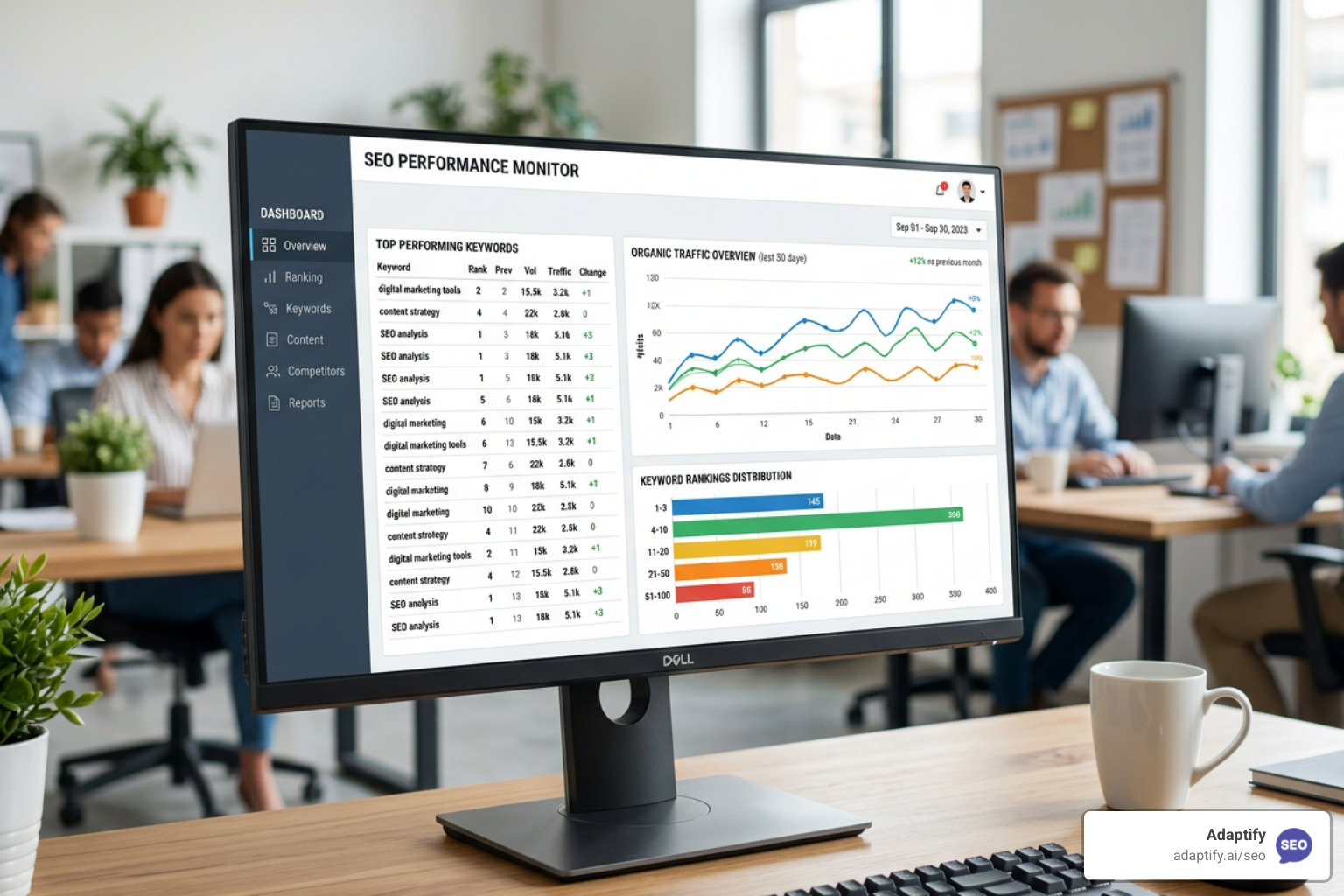
Stop Flying Blind with These Top SEO Monitor Tools - Learn about seo monitor tools
Join 1,000+ agencies already delivering SEO and AI visibility from a single platform without increasing their headcount.Join 1,000+ agencies already delivering SEO and AI visibility from a single platform without increasing their headcount.