Beyond the Algorithm: Boosting E-E-A-T with Smart Backlink Strategies




To boost eeat with backlinks, you must strategically earn links from high-authority, niche-relevant websites. Quality backlinks signal to Google that your content demonstrates Experience, Expertise, Authoritativeness, and Trustworthiness—the four pillars of E-E-A-T.
Backlinks remain one of Google's strongest ranking signals, acting as votes of confidence from other reputable sites. According to Google's Search Quality Rater Guidelines, which mention E-E-A-T over 100 times, backlinks are a primary way Google assesses a website's authority. However, modern SEO demands strategic link building. A single backlink from a trusted industry journal carries more weight than dozens of low-quality directory listings because Google evaluates the relevance, context, and trustworthiness of every link.
The stakes are even higher for YMYL (Your Money or Your Life) topics like health and finance, where Google scrutinizes E-E-A-T signals with particular intensity. A weak backlink profile can tank your rankings, while a strong one can establish your site as the go-to authority.
For agency owners, building a strong backlink profile takes hours of outreach and quality control. I'm Hansjan Kamerling, and through my work with SaaS platforms and AI startups, I've seen how smart automation and strategic approaches can transform an agency's efficiency and results.
Think of backlinks as digital endorsements. When a respected site links to your content, they're telling their audience (and Google) that your information is credible. This principle is the foundation of Google's original PageRank algorithm and remains a core part of how search engines operate today.
Google's Search Quality Rater Guidelines confirm this, training human raters to identify content with strong E-E-A-T. For YMYL (Your Money or Your Life) topics, this scrutiny is intense. The guidelines emphasize that Trust is the most important member of the E-E-A-T family, stating, "untrustworthy pages have low E-E-A-T no matter how Experienced, Expert, or Authoritative they may seem."
So how do you boost eeat with backlinks across each pillar?
Google values first-hand, real-world experience. Backlinks validate this when other sites reference your unique experiences. For example, a link from a major travel blog to your personal story about a hiking trip signals genuine experience. When tech blogs link to your product reviews that feature original testing and hands-on observations, those links confirm you've actually used the product. High user engagement from this referral traffic further reinforces to Google that your content provides value based on actual experience.
Expertise is about your depth of knowledge and skill. In the digital world, backlinks function like academic citations. When major financial news sites link to an article on tax strategy written by a CPA, those links act as powerful signals of expertise. The niche relevance of the linking site is critical. A link from a respected medical journal carries far more weight for health content than a link from a general news site, as it tells Google that other experts in your field trust your knowledge.
Authoritativeness is about your recognition and influence within your niche. Backlinks are a direct and powerful way to build it.
As Gary Illyes from Google noted, E-A-T is "largely based on links and mentions on authoritative sites." When high-authority sites like Forbes or top industry blogs consistently link to your content, it signals that you are a go-to resource. Media features, press coverage, and industry awards that result in backlinks all contribute to building this authority. Our backlink services focus on securing these high-impact links to build a formidable digital reputation.
Trustworthiness is the foundation of E-E-A-T. Backlinks contribute by reinforcing other on-site trust signals. For instance, links from reputable review platforms (like G2) or secure, HTTPS-enabled sites add layers of credibility. According to the Stanford Credibility Guidelines, trustworthy websites are well-organized and make it easy to verify information. Sites that follow these principles naturally attract links from other credible sources, creating a virtuous cycle where quality begets quality.
Earning high-quality links requires a strategic approach centered on creating valuable content and building relationships. For many agencies, the manual work is overwhelming, which is why we automated much of this process at Adaptify. Our content services help agencies focus on strategy while we handle the heavy lifting of content creation and PR link building.
The most effective way to boost eeat with backlinks is to become a primary source. By publishing original research, unique data, or industry studies, you create a resource that journalists and bloggers need to cite.
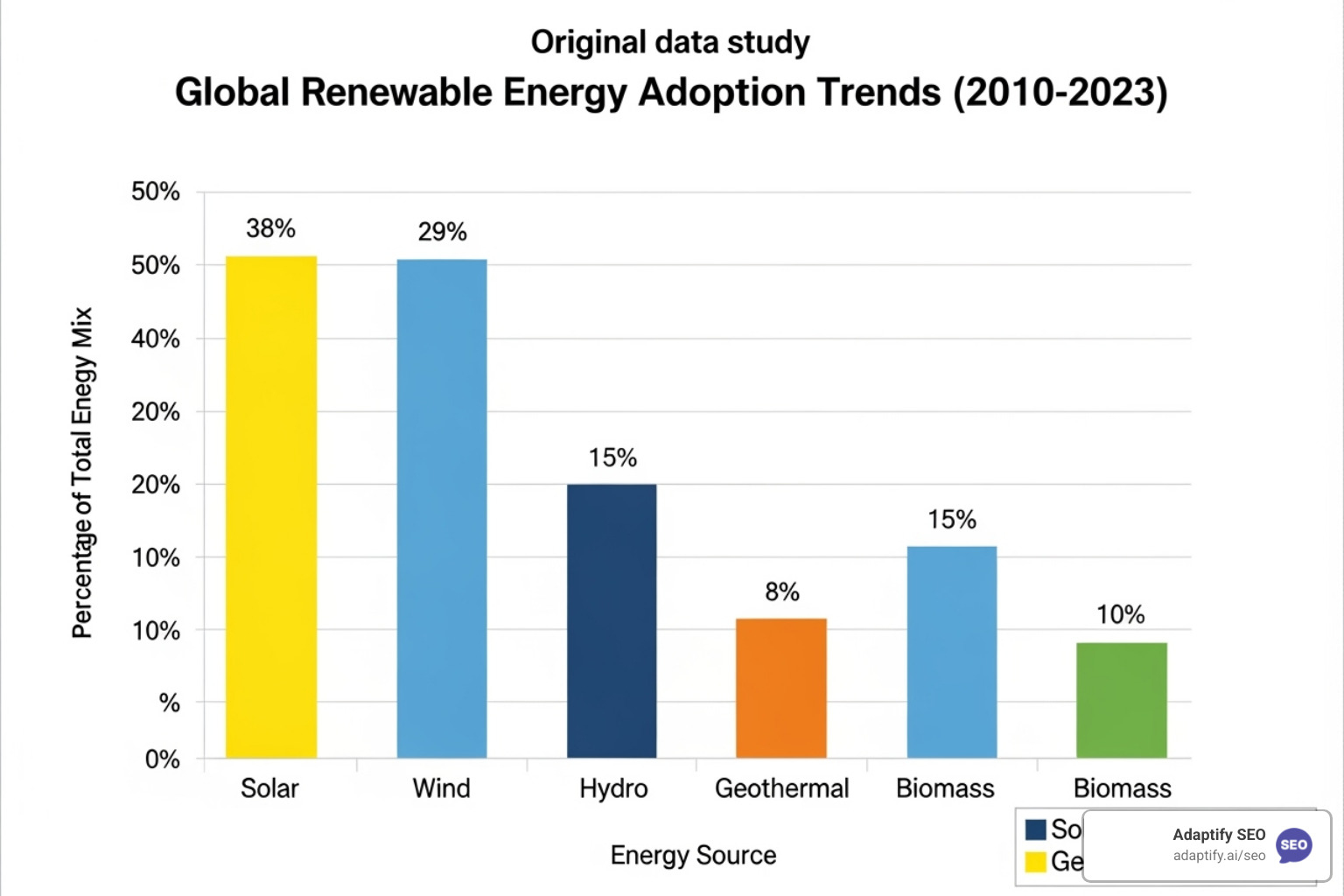
This can include industry surveys, analysis of public data, or detailed case studies with verifiable results. The key is transparency in your methodology. Clearly explaining how you gathered and analyzed your data builds credibility, turning a blog post into a citable source, like in this Semrush study about Google's AI mode. Once published, promote your research by reaching out to journalists and creating shareable assets like infographics.
Not all backlinks are created equal. To effectively boost eeat with backlinks, focus on quality links that Google values.
The pattern is clear: one contextual link from a respected industry publication will do more for your E-E-A-T than a hundred low-quality submissions.
According to Google's Gary Illyes, E-A-T is "largely based on links and mentions on authoritative sites." This means even an unlinked mention of your brand in a major publication builds authority.
Digital PR is invaluable for this. Proactively pitch your unique stories and expert insights to journalists, using platforms like HARO (Help a Reporter Out) to connect with reporters seeking sources.
Equally important is monitoring for unlinked brand mentions. Use tools to track when your brand is mentioned online without a link. When you find one on an authoritative site, politely reach out to the editor and request that a link be added to provide more context for their readers. This simple act turns brand awareness into a valuable, E-E-A-T-boosting backlink.
While strategic link building can boost eeat with backlinks, a single wrong move can undo months of progress. Google's algorithms are sophisticated at distinguishing genuine endorsements from manipulation, and black-hat tactics can trigger severe manual penalties. Our white-label SEO services help agencies build healthy link profiles without stepping on these algorithmic landmines.
The "quality over quantity" mantra is your insurance policy against penalties. Google explicitly warns against link schemes.
Most importantly, relevance is crucial. A link must make contextual sense and offer value to the user. An irrelevant link is a red flag for manipulation.
Anchor text—the clickable text in a hyperlink—is a common pitfall. Using the same exact-match keyword for every backlink looks unnatural and is a massive red flag for Google's algorithms.
A healthy anchor text profile is diverse. It should include a natural mix of:
This diversity signals that your links are earned, not manufactured.
To protect your E-E-A-T, avoid these common mistakes:
No, E-E-A-T is not a direct, measurable ranking factor. However, it's the framework Google's human Quality Raters use to assess content quality. Their feedback trains Google's machine learning algorithms to automatically recognize the signals of high-quality content. As Google explains in their rater guidelines documentation, these principles are baked into how their systems evaluate and rank pages. So, while not a direct factor, demonstrating strong E-E-A-T is critical for ranking well.
Strategic link building is a long-term investment. You should typically expect to see meaningful results within 6 to 12 months of consistent effort. The timeline depends on factors like industry competition, your site's current authority, and the quality of the backlinks you acquire. Patience is key; you are building a sustainable asset, not chasing a temporary boost.
Yes, you can and should improve your on-page E-E-A-T signals. This includes creating detailed author bios, having a transparent "About Us" page, publishing high-quality original content, and ensuring your site is secure (HTTPS) and user-friendly. However, these on-page signals only tell half the story. Google needs external validation from other reputable sources to truly see your site as an authority. Backlinks and brand mentions provide that essential third-party endorsement, confirming your claimed expertise and building trust. To truly boost eeat with backlinks, you need both strong on-page signals and external validation working together.

The message is clear: to boost eeat with backlinks is not about gaming the system. It's about building genuine credibility that both users and search engines recognize. Google's E-E-A-T framework rewards websites that demonstrate real value and trustworthiness through people-first content and editorially earned links.
For agency owners, the manual effort required for this can be overwhelming. That's the challenge we solve at Adaptify.ai. Our automated SEO platform handles the heavy lifting—from strategy and content creation to PR link building—allowing your team to focus on high-level strategy and client relationships.
Building lasting authority is an investment in sustainable growth. You're not just improving rankings; you're establishing your clients as trusted voices in their industries.
Ready to transform your agency's SEO approach? Learn more about our comprehensive SEO solutions and see how automation can help you scale without sacrificing quality.

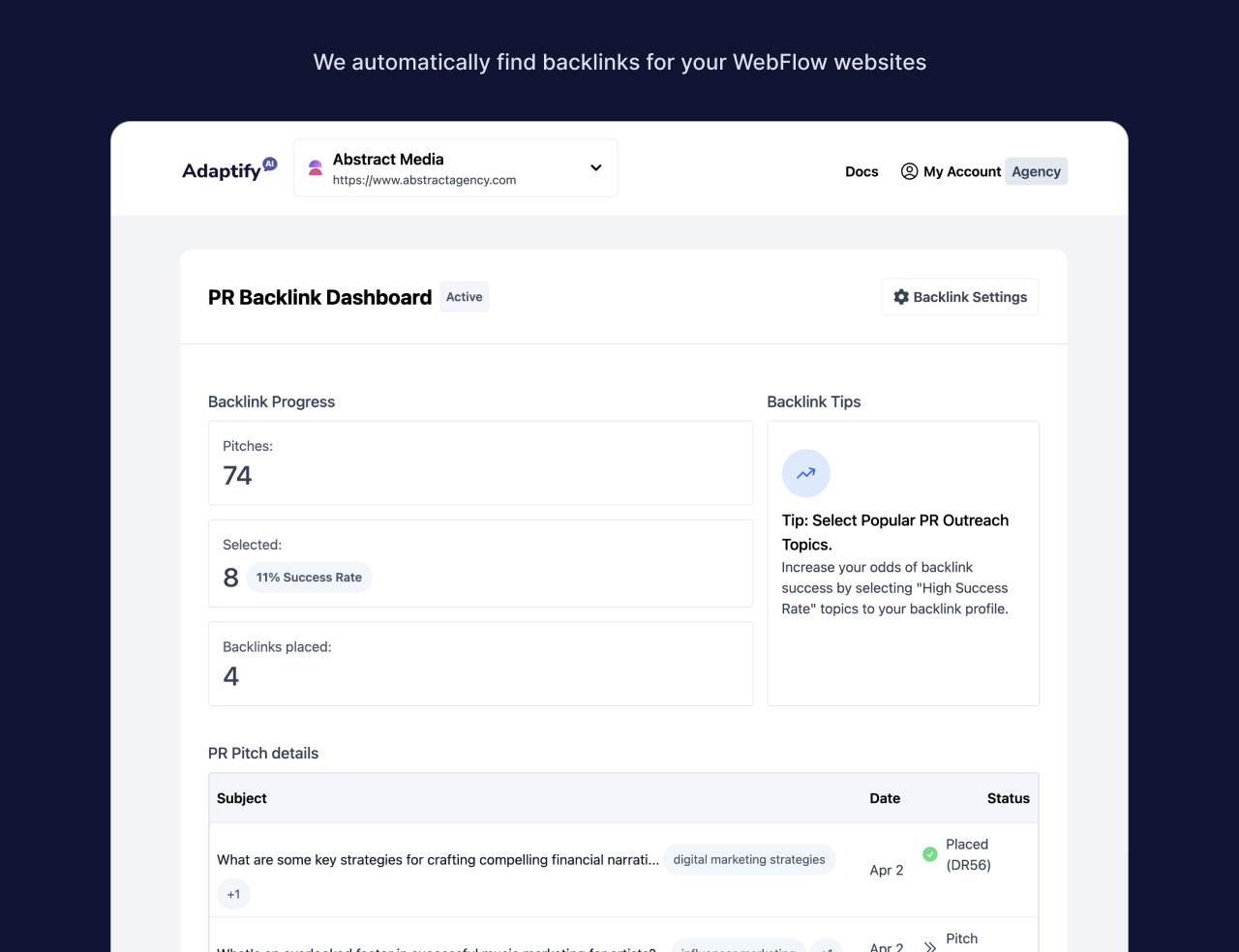
Discover how backlink automation software streamlines outreach, saves time, and scales your SEO strategy safely and effectively.
Track every backlink with an SEO backlink monitor—spot lost links fast, protect rankings, and boost ROI before competitors do.
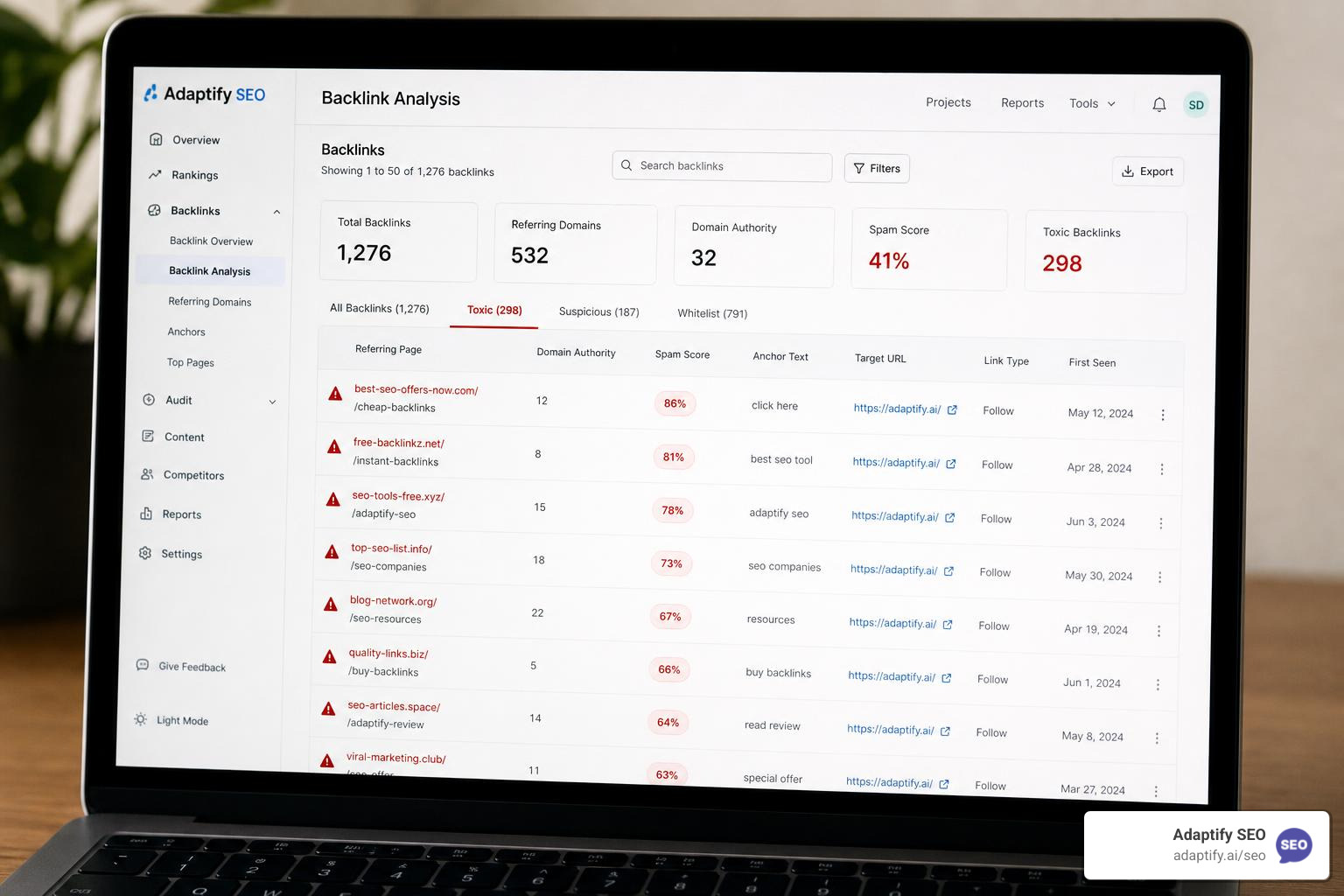
Learn how to disavow toxic backlinks, clean your profile, and recover rankings with this step-by-step guide.
Join 1,000+ agencies already delivering SEO and AI visibility from a single platform without increasing their headcount.Join 1,000+ agencies already delivering SEO and AI visibility from a single platform without increasing their headcount.