Beyond the Basics: Essential SEO Tools for Smarter Strategy

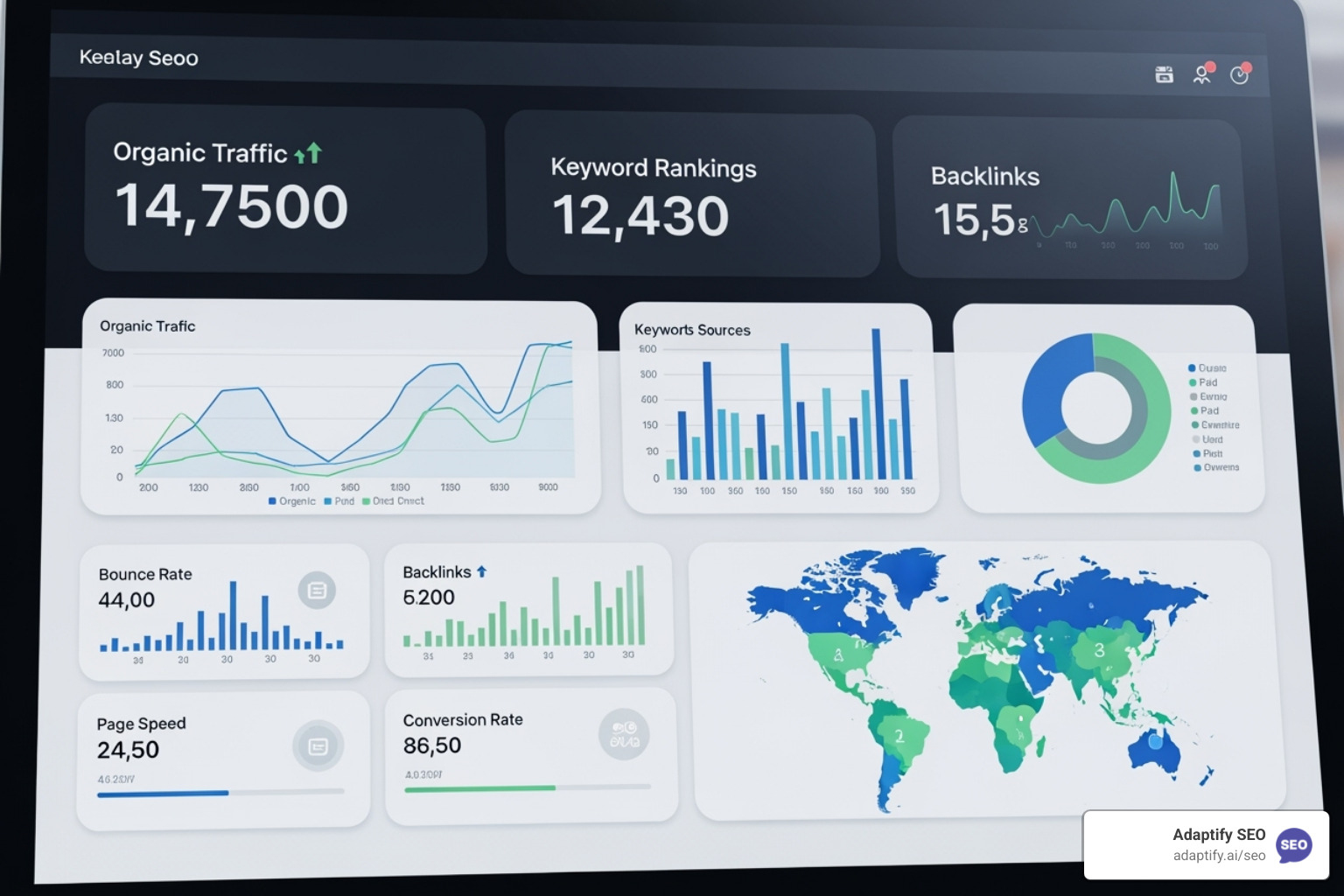

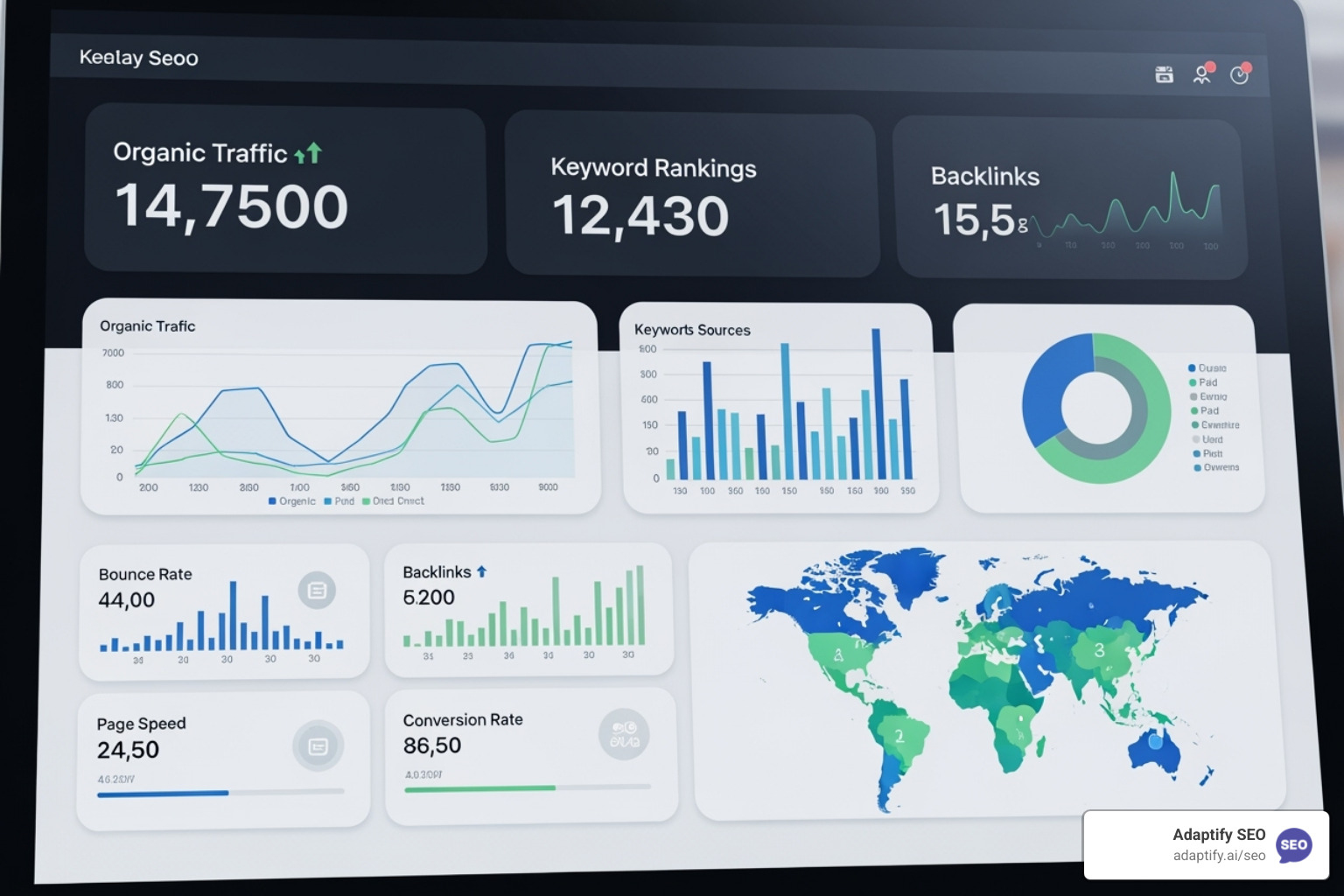
Finding the right seo optimisation tool is crucial for agencies drowning in manual tasks and struggling to scale their SEO operations. The modern SEO landscape has evolved far beyond simple keyword stuffing and basic on-page checks. It's a dynamic, multi-faceted discipline that encompasses technical precision, creative content strategy, and deep analytical insight. Without a sophisticated toolkit, keeping pace is not just difficult; it's impossible.
Quick Answer - Essential SEO Tool Categories:
Today's search landscape is more complex than ever. As one industry expert noted: "Search engine results pages (SERPs) are constantly shifting, with rankings changing due to algorithm tweaks and evolving search trends." This volatility, driven by major updates like Google's Helpful Content Update (HCU) and frequent Core Updates, means agencies can no longer rely on manual processes to deliver consistent results. What worked yesterday might be obsolete today, and only data-driven tools can reveal these shifts in real-time.
Modern SEO requires deep competitor analysis, granular technical auditing, user-centric content optimization, and continuous performance monitoring. It's about understanding the nuances of local SEO for a brick-and-mortar store, the complexities of international SEO with hreflang tags, and the rising importance of voice search queries. Without the right tools, agencies find themselves trapped in time-consuming manual work that prevents them from scaling or focusing on high-level strategy. This includes hours spent manually checking rankings, pulling competitor backlink data, or trying to diagnose why a page's visibility has suddenly dropped.
An effective seo optimisation tool does more than just track rankings. It's a command center for understanding search intent, identifying profitable content gaps, monitoring technical site health, and automating the repetitive tasks that bog down your team. The challenge isn't finding tools—the market is saturated with options. The real challenge is choosing the right combination that matches your agency's specific needs, workflow, and strategic goals.
I'm Hansjan Kamerling, and I've spent years helping agencies streamline their SEO operations. My experience building products for large SaaS platforms has shown me how the right seo optimisation tool can transform manual, reactive processes into scalable, proactive systems that drive predictable and consistent results for clients.
When I think about a complete seo optimisation tool that can handle almost anything, I immediately picture the all-in-one platforms. These are the heavy lifters of the SEO world, designed to consolidate vast amounts of data and streamline your workflow into a single, cohesive interface. They allow you to track keyword performance, perform in-depth competitor analysis, conduct site audits, and manage various other SEO aspects from a single dashboard. For agencies, this consolidation is a game-changer, saving countless hours that would otherwise be spent juggling multiple subscriptions and disparate datasets.
If SEO were a country, Semrush would be its sprawling, busy capital city. As one expert aptly put it, "Semrush is basically synonymous with SEO." It's not just a tool; it's an entire ecosystem for digital marketing. My team and I often rely on Semrush for its sheer breadth of features. It covers everything from traditional keyword research and competitor analysis to comprehensive site audits, a robust content marketing platform, and even tools for social media and PPC management. This holistic view is invaluable for creating integrated strategies.
For competitor analysis, Semrush is seriously overpowered. I can dive deep into a competitor's traffic trends, see their top-performing organic and paid keywords, analyze their ad copy, and understand their content strategies to identify crucial keyword gaps. Beyond standard SEO, Semrush is also embracing AI, with tools to help businesses monitor their brand presence across platforms like ChatGPT and Google AI Overviews. This forward-thinking approach is vital in a world where generative AI is taking up more and more real estate in search results.
When it comes to understanding the intricate web of backlinks that forms the backbone of a site's authority, Ahrefs stands out. "Ahrefs is a powerful SEO toolset that's particularly strong in backlink analysis and keyword research." While Semrush is incredibly comprehensive, many SEO professionals, myself included, find Ahrefs' backlink data to be unparalleled in its depth, accuracy, and freshness, thanks to its lightning-fast web crawler.
For competitive analysis, Ahrefs gets a slight edge when focusing specifically on backlinks. Their Link Intersect tool is brilliant for finding high-value linking opportunities by showing which websites link to your competitors but not to you. This provides a clear, actionable roadmap for link building outreach. Ahrefs' Keyword Explorer is another strong suit, offering unique metrics like "Clicks" to help you gauge the actual traffic potential of a keyword, not just its search volume. Its Content Explorer feature is also fantastic for finding popular content in a niche, analyzing its performance metrics, and identifying content gaps. For agencies focused on aggressive link building and deep competitor backlink analysis, Ahrefs is indispensable.
While Semrush and Ahrefs are often seen as the top two contenders, the market has other strong players. Moz, for instance, is one of the original pioneers in the SEO software space and remains a popular choice, especially for those who value its proprietary metrics like Domain Authority (DA) and its user-friendly interface. Moz Pro offers a solid suite of tools for rank tracking, site audits, and link research, making it a reliable alternative for agencies and businesses looking for a well-rounded platform.
Your all-in-one platform gives you the 30,000-foot view, but creating content that truly connects with your audience and satisfies search engine algorithms requires specialized tools. This is where you zoom in, moving from broad strategy to tactical execution. These tools help you understand exactly what your readers want and how to craft every piece of content for maximum impact and visibility. AI is revolutionizing this space, making it easier and faster than ever to create content that ranks well and genuinely helps people, hitting the core of what search engines want to reward.
When I need to ensure my content is perfectly optimized for a target query, Clearscope is my go-to seo optimisation tool. It takes the guesswork out of content creation by analyzing the top-ranking pages for your keyword and generating a comprehensive brief. This brief includes a list of semantically related terms, common questions, and thematic concepts that search engines expect to see in high-quality content on that topic.
As you write within its editor, its real-time content grading system provides a letter score that climbs as you incorporate the suggested terms and improve your piece. It's like having an SEO expert looking over your shoulder, guiding your writing process. Clearscope's approach aligns perfectly with Google's emphasis on E-E-A-T (Experience, Expertise, Authoritativeness, Trustworthiness), as it pushes you to create content that demonstrates true topic comprehensiveness and authority.
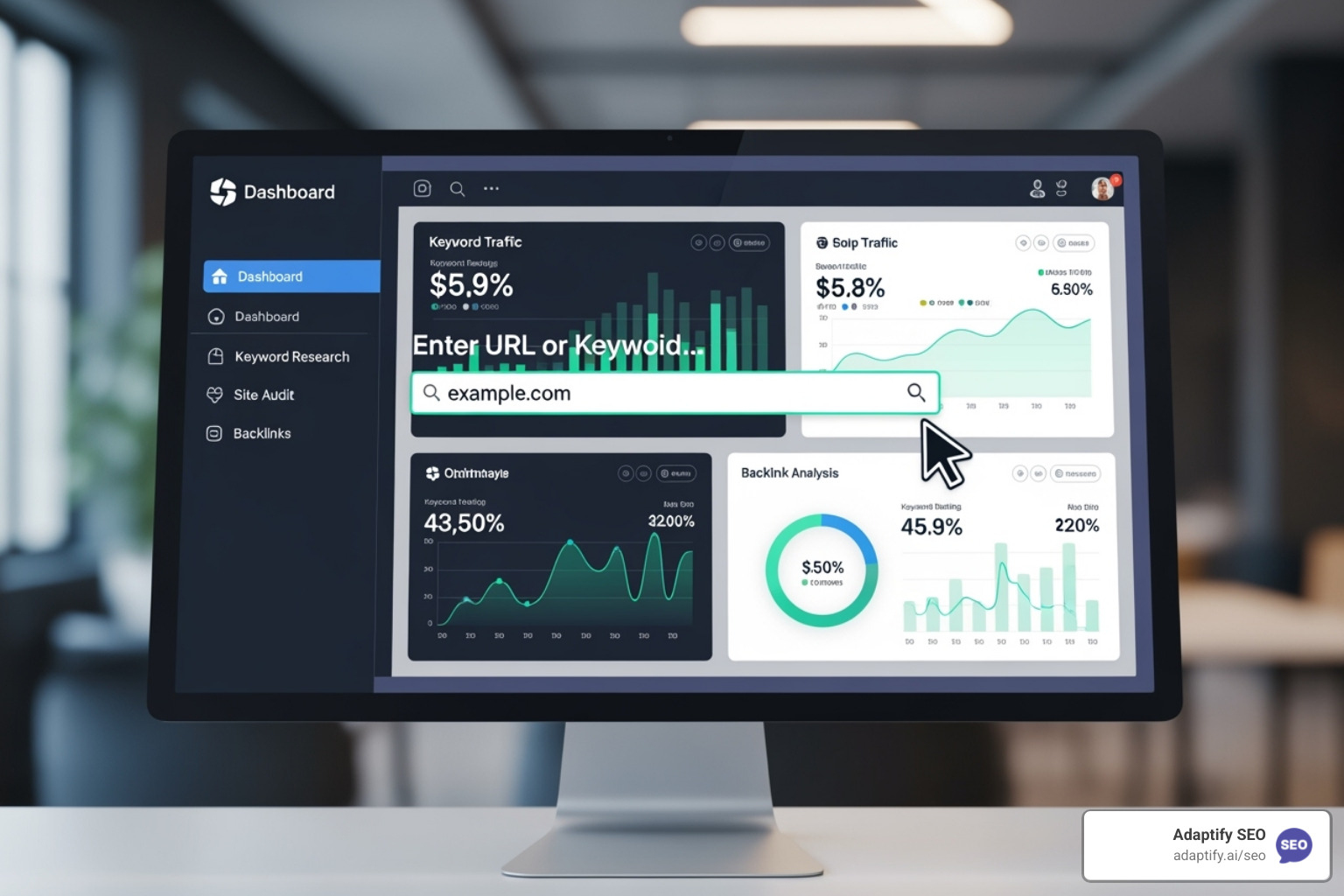
Surfer has quickly become a favorite tool in the SEO community, especially as the search landscape evolves to include AI-native interfaces. It's designed to ensure your content performs well in both traditional Google search and emerging AI-powered search environments. What sets Surfer apart is its deep AI integration. The Content Editor provides real-time feedback on hundreds of on-page factors, covering everything from structure and word count to NLP-ready keywords and entity density.
Surfer's AI features are particularly exciting for agencies focused on scale. The AI Content Detector and AI Humanizer help you work with AI-generated content responsibly and effectively. For agencies focused on efficiency, Surfer AI can generate a well-researched, ready-to-rank article in minutes, handling the research, writing, and optimization automatically. This dramatically speeds up content production without sacrificing quality—exactly the kind of intelligent automation that helps agencies scale their operations profitably. Other tools like MarketMuse also operate in this space, offering AI-driven content briefs and optimization features, often with a strong focus on enterprise-level content strategy and clustering.
Sometimes the best content ideas come from simply listening to what your audience is already asking. AnswerThePublic makes this process intuitive and insightful by turning raw keyword data into compelling visualizations that reveal what people truly want to know. This unique seo optimisation tool scrapes Google's autocomplete data and presents it in wheel-like charts, often called "search clouds." You'll see questions neatly organized by interrogatives like who, what, where, why, when, and how, as well as prepositions and comparisons.
For content ideation and strategy, AnswerThePublic is pure gold. Instead of guessing at user intent, you get a clear, visual map of actual search queries. This helps you create content that genuinely addresses user needs, which boosts both user experience and search visibility. You can structure an entire article around these questions, build a comprehensive FAQ page, or find long-tail keywords that your competitors have overlooked. It ensures your content is truly "people-first," a core principle that Google emphasizes heavily in its ranking guidelines.
Think of your website as a house. No matter how beautifully decorated it is with great content and design, if the foundation is crumbling, it won't stand strong in the competitive landscape of search results. Technical SEO tools are the structural inspectors for your digital property. They ensure your site's health, crawlability, and indexability, which are critical prerequisites for search engines to find, understand, and properly rank your content. A strong technical foundation also directly contributes to a better user experience through fast loading times, mobile-friendliness, and smooth navigation, all of which are key ranking factors.
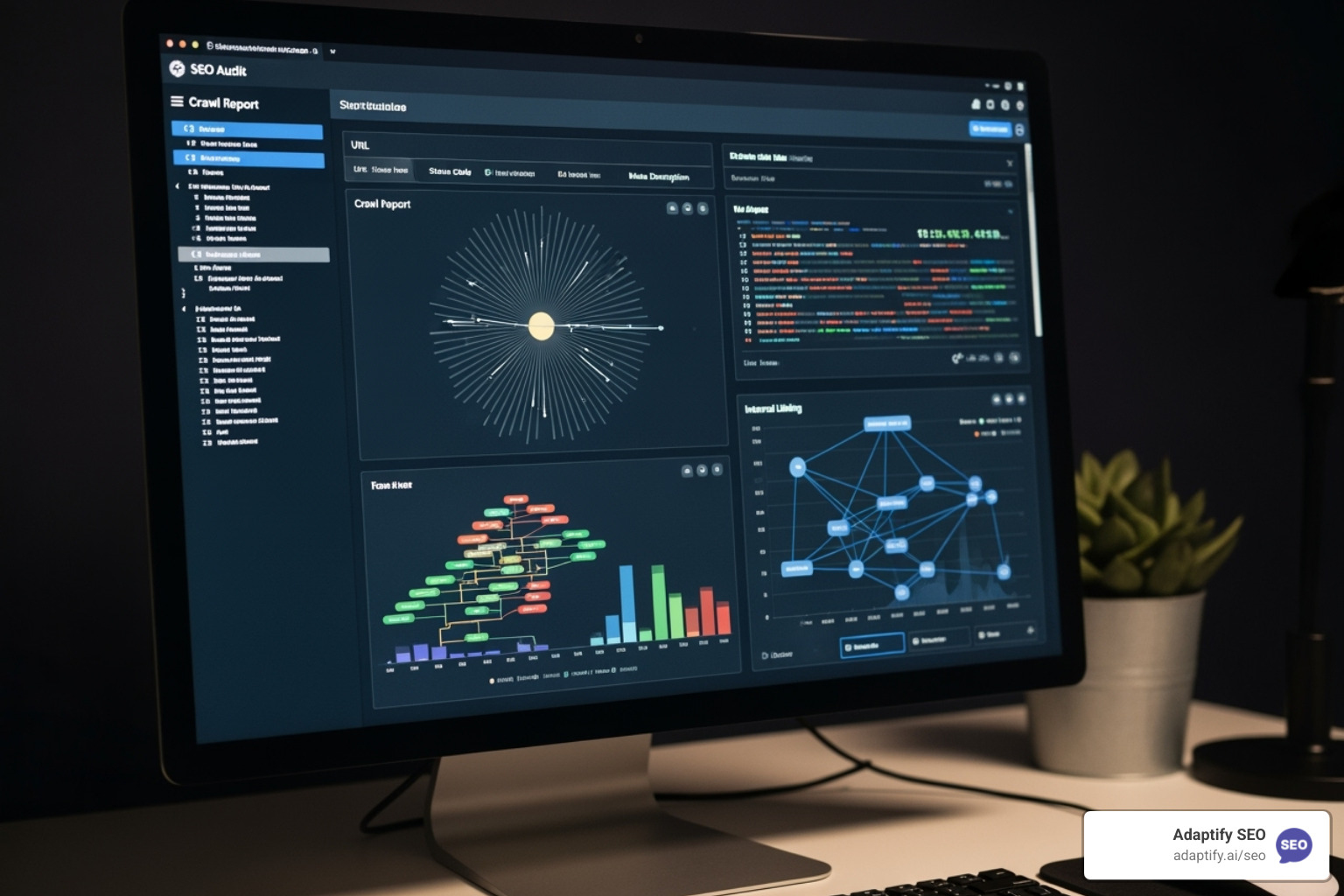
If you've ever needed to crawl a website exactly like a search engine bot would, Screaming Frog SEO Spider is your best friend. This powerful desktop application is the industry standard for in-depth technical SEO audits. It simulates how search engine bots steer a site, allowing you to crawl up to 500 URLs for free. This process helps you identify a myriad of technical issues: broken links (404s), server errors, improper redirect chains, duplicate content, missing or duplicated meta descriptions and title tags, and much more. It's incredibly detailed, providing granular insights that are essential for diagnosing problems and maintaining a healthy website.
I've used Screaming Frog countless times to diagnose complex technical problems that other tools miss. It can be configured for custom crawls (e.g., crawling a specific subfolder), integrate with Google Analytics and Search Console APIs to pull in performance data, and even render JavaScript-heavy websites to see them as Google would. While its interface might seem intimidating at first, it's an indispensable tool for any serious technical SEO work. Another excellent desktop crawler that serves as a strong competitor is Sitebulb, which is known for its highly visual reports and prioritized recommendations.
While Screaming Frog is for deep, technical dives, SEOptimer offers a more user-friendly, web-based approach, making it an excellent seo optimisation tool for beginners, sales teams, and agencies looking for quick, actionable insights. SEOptimer performs a detailed analysis across more than 100 website data points, providing a clear, graded score and straightforward recommendations. It's known for its fast analysis and its ability to handle JavaScript rendering, which is crucial for modern websites.
One of SEOptimer's standout features for agencies is its configurable white-label PDF reports. You can brand these comprehensive reports with your own logo and company information, making them professional and client-ready in minutes. This saves agencies hours on manual audits and allows them to impress prospective and current clients. The ability to embed an audit tool directly onto your agency's site for lead generation is another clever feature that helps convert website visitors into qualified leads.
No discussion about SEO tools would be complete without acknowledging Google's own free offerings. As an SEO professional, I can tell you unequivocally that "Google's own SEO tools are powerful, accurate, and indispensable." They are the ultimate source of truth for how Google sees and evaluates your site.
These tools are fundamental for every SEO professional. They provide raw, unfiltered data directly from the source that no third-party tool can fully replicate. They form the non-negotiable backbone of any effective SEO strategy. Google Search Console is your essential free seo optimisation tool for monitoring Google's view of your site.
Selecting the perfect seo optimisation tool feels a bit like choosing the right car; what works for a solo consultant might be entirely wrong for a large agency. Your specific goals, budget, team size, and technical expertise all play crucial roles in determining which tools will actually move the needle for your business. The key is finding that sweet spot where functionality meets practicality, and the investment yields a clear return.
When evaluating any seo optimisation tool, focus on features that directly impact your day-to-day operations and strategic goals. Key considerations include:
Building an effective tool budget requires a strategic approach that balances immediate needs with long-term growth. It's rarely about finding one single tool, but rather assembling a cost-effective stack.
Always start with Google's free suite. Search Console, Analytics, and PageSpeed Insights provide a foundational dataset at no cost. Before you spend a dollar, master the insights available here. Many premium platforms also offer free trials or limited free versions, giving you a chance to test functionality before committing.
Next, identify your core pain points to prioritize spending. If keyword research and content creation are your biggest bottlenecks, a specialized tool like Surfer or Clearscope might offer the best initial ROI. If technical audits are too time-consuming and complex, investing in Screaming Frog or SEOptimer makes sense. A common approach is to start with a specialized tool that solves your most pressing problem, then add an all-in-one platform as your needs and budget expand.
Tiered pricing structures work in your favor. You can often start with a mid-tier plan and upgrade as your client base or data needs expand. Where possible, annual payment discounts can save you a significant amount, often 10-20% compared to paying monthly.
The real question is always return on investment (ROI). A tool that costs $150 per month but helps you land or retain a single client worth thousands has paid for itself many times over. Sometimes, combining several specialized, lower-cost tools can deliver better, more focused results than one expensive, monolithic platform. The key is to view these tools as investments in efficiency, accuracy, and results—not just as monthly expenses. The right seo optimisation tool stack should save your team time, improve the quality of your work, and help you deliver better outcomes for your clients.
Let me address some of the most common questions I hear from agencies and businesses when they're navigating the complex world of SEO tools. Understanding these nuances will help you make more informed decisions as you build or refine your seo optimisation tool stack.
The SEO tool landscape can be broken down into several key categories, each designed to address a specific function within a broader SEO strategy:
Competitor analysis is where SEO tools truly shine, offering x-ray vision into your competitors' digital marketing strategies. They allow you to reverse-engineer their success. Specifically, they help you:
This is a question I get asked often, and my answer always starts with the same foundation: Google's free suite is non-negotiable and the perfect starting point. Google Search Console, Google Analytics, and PageSpeed Insights provide direct, accurate data from Google itself. Learning to steer these tools is the first and most important step for any beginner.
For paid tools, SEOptimer stands out as incredibly beginner-friendly. It performs quick audits and breaks down complex SEO issues into plain language with clear "how-to-fix" tutorials. Its accessible price point and easy-to-understand reports make it a great starting point for small businesses or solo marketers.
If you're running a WordPress site, the free Yoast SEO plugin is fantastic for beginners. It integrates directly into your page editor and uses a simple red-yellow-green color-coding system to make it easy to spot on-page issues. It guides you through writing meta titles and descriptions, checks for readability, and handles essential technical elements like XML sitemap generation automatically. The key is to start simple, master the fundamentals with these accessible tools, and then explore more advanced seo optimisation tool options as your needs and understanding grow.
AI is rapidly being integrated into SEO tools to automate complex analysis and content generation. In content optimization tools like Surfer or Clearscope, AI analyzes thousands of top-ranking pages to identify patterns, semantic relationships between words (NLP), and common structures. It then uses this data to provide real-time recommendations. In platforms like Semrush, AI can be used to generate content ideas or even entire article drafts. The core function is pattern recognition at a scale no human could achieve, turning massive datasets into actionable insights, whether it's for optimizing a single page or identifying a large-scale content opportunity.
Navigating today's hyper-competitive SEO landscape is a complex challenge, but it's one you don't have to face with manual processes and guesswork alone. With the right seo optimisation tool stack, what once seemed like an impossible mountain of tasks becomes a manageable, strategic process. The right tools empower you to make smarter decisions, faster.
We've explored the all-in-one powerhouse platforms like Semrush and Ahrefs, the specialized content wizards like Clearscope and Surfer, and the indispensable technical workhorses like Screaming Frog. But what ties all these powerful tools together is their ability to transform tedious, time-consuming manual tasks into smart, automated processes. This fundamental shift doesn't just save hundreds of hours; it frees your team from the weeds of data-pulling and report-building, allowing them to focus on the high-level strategic thinking that truly moves the needle for clients.
The future of SEO is undeniably powered by the synergy of automation and AI. The agencies that accept this shift are the ones scaling faster, making more data-informed decisions, and delivering superior, more consistent results. The goal isn't to replace human expertise but to augment it, using technology to handle the repetitive work so that human creativity and strategic insight can be applied where they matter most.
This is the philosophy we live by at Adaptify.ai. We've built our entire approach around the core belief that SEO shouldn't drain your team's energy on repetitive, low-impact tasks. Our automated SEO services are designed to help agencies streamline everything from initial strategy and content creation to technical optimization and PR link building. We use AI not to replace your strategists, but to amplify their capabilities—giving you back the time and mental space to focus on what you do best: building client relationships, fostering innovation, and growing your business.
Ready to see how intelligent automation can transform your SEO operations and give you back precious hours for strategic growth?
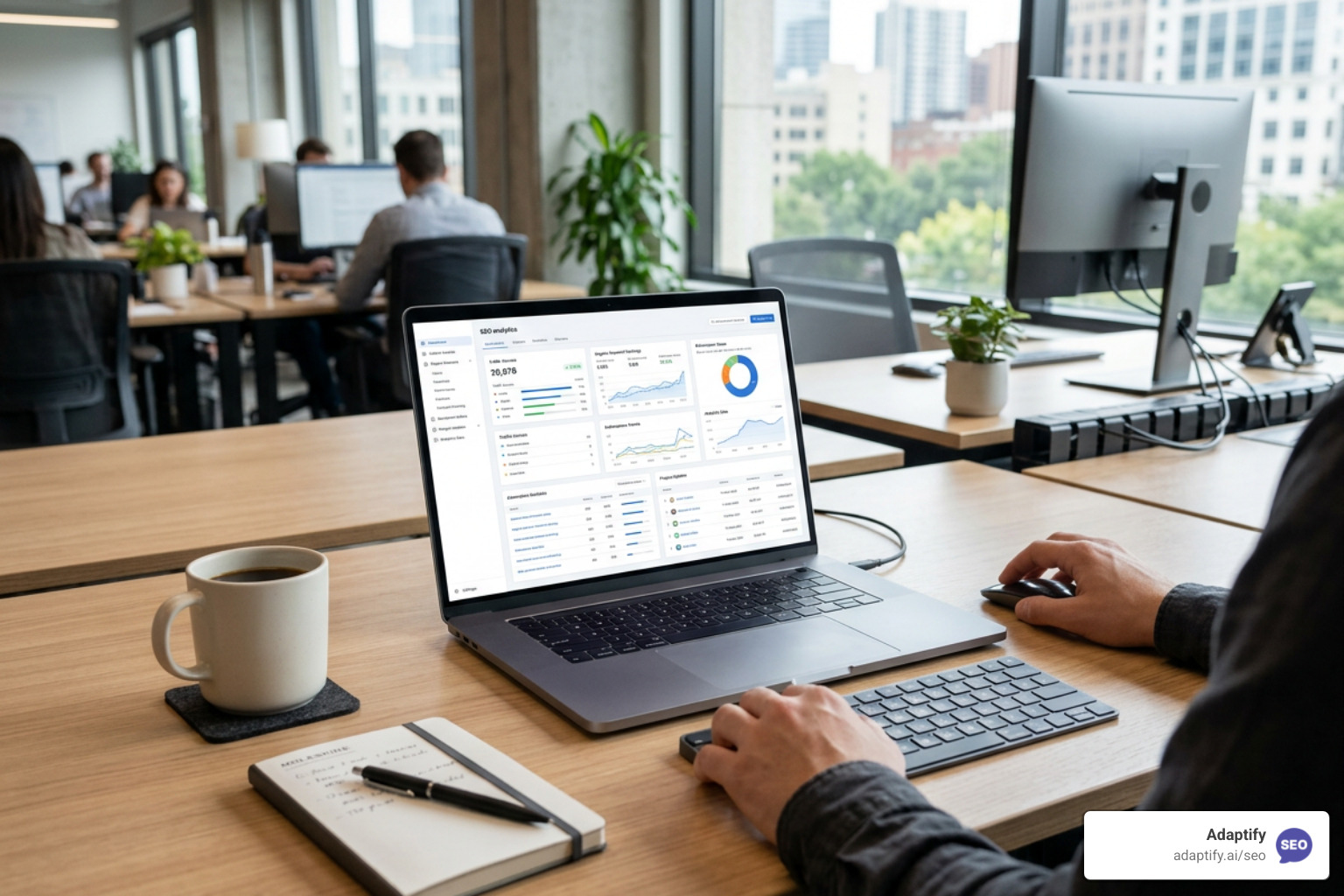
Learn how an SEO automation system streamlines keyword research, content workflows, and reporting to scale your search operations efficien...

Discover what SEO tasks seo automation services can realistically automate for faster audits, keyword research, and content optimization.
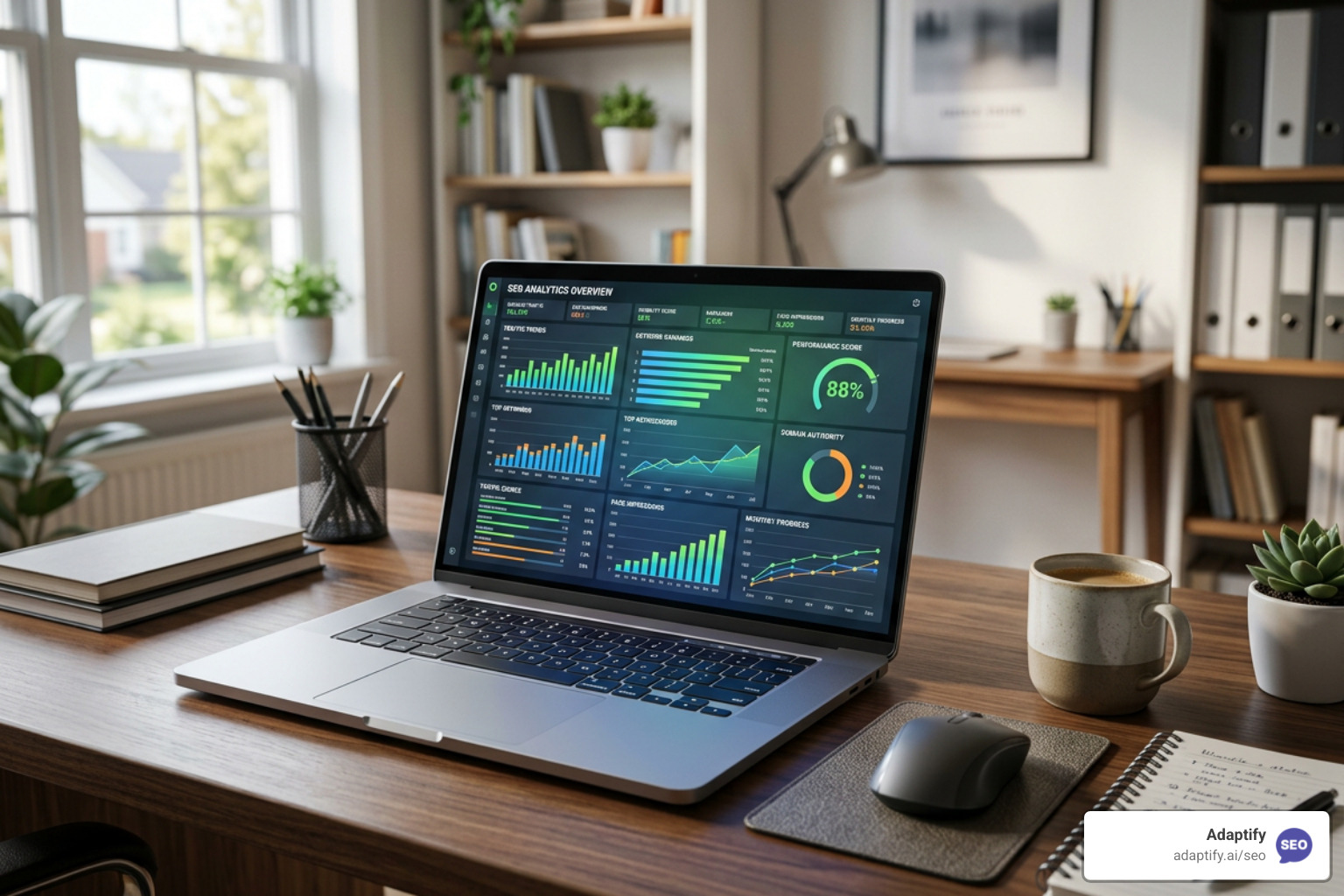
Stop staring at blank pages. Use the best SEO article writing software to create optimized content that ranks in 2026.
Join 1,000+ agencies already delivering SEO and AI visibility from a single platform without increasing their headcount.Join 1,000+ agencies already delivering SEO and AI visibility from a single platform without increasing their headcount.