Beyond the Buzz: Exploring Practical AI Content Solutions

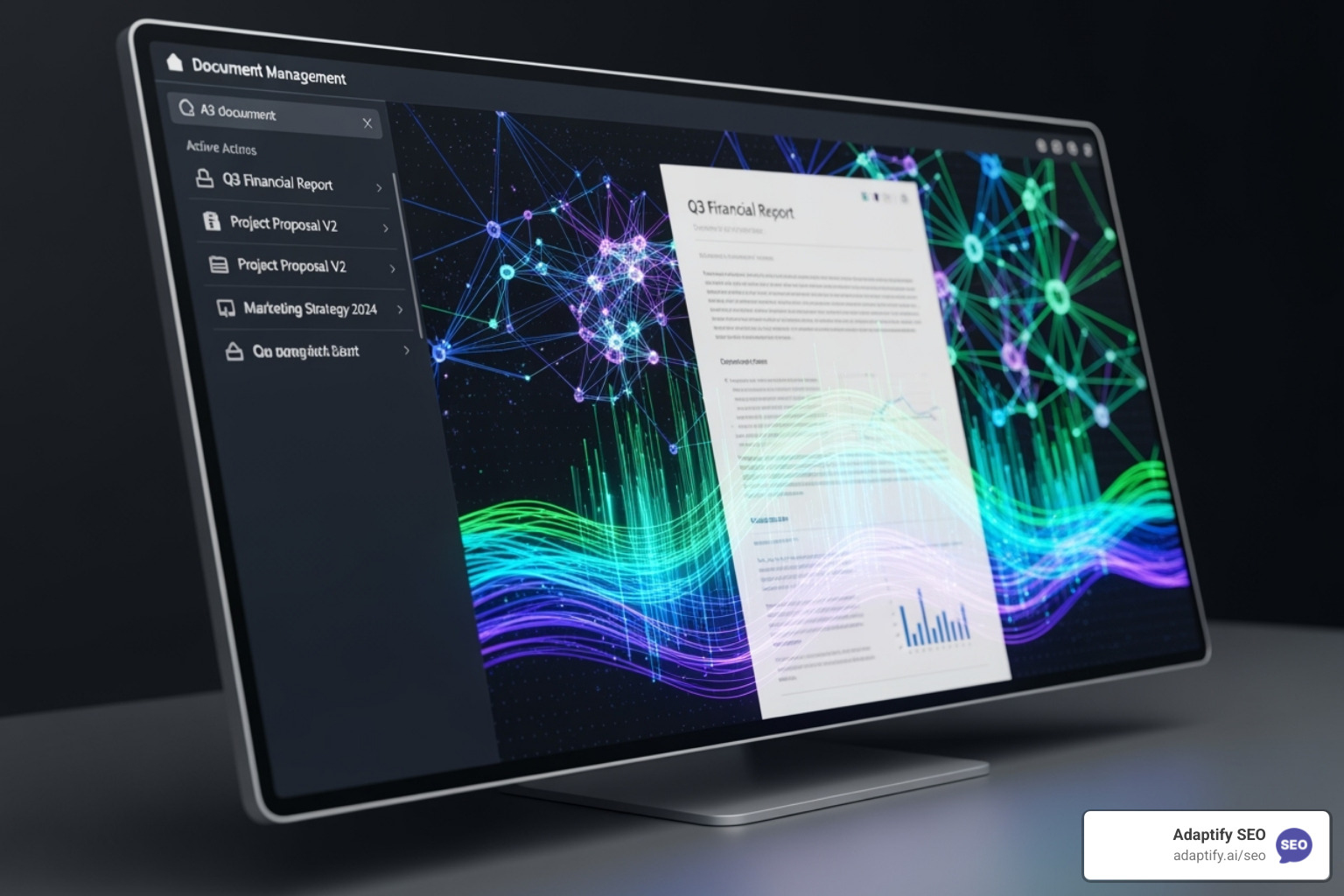

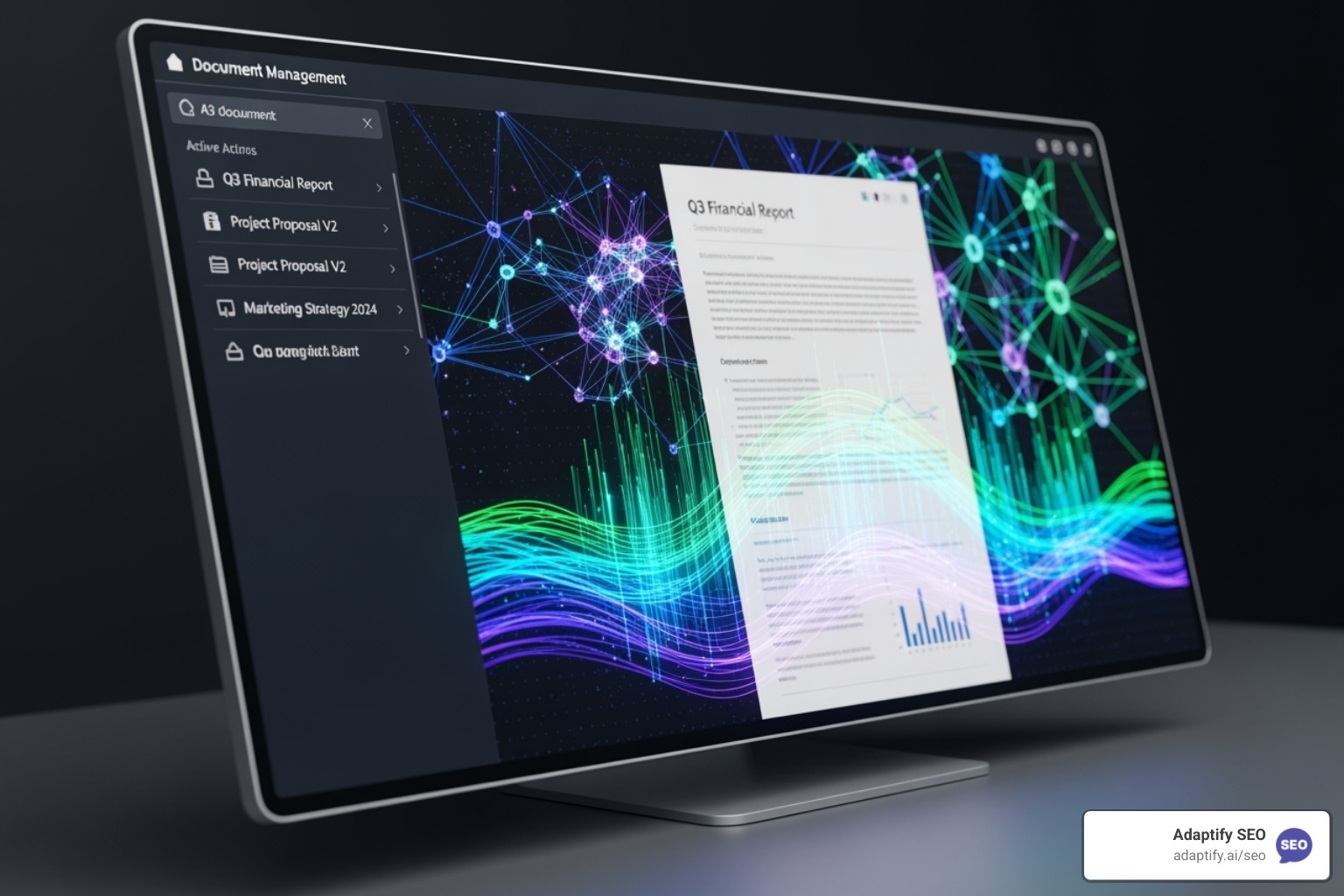
AI content solutions are changing how businesses create, manage, and optimize content at scale. These platforms use artificial intelligence to automate everything from document understanding and metadata enrichment to content creation and plagiarism detection.
Core AI Content Solution Capabilities:
The numbers tell a stark story. Research shows that 54% of employees spend two hours or more per day searching for information, and 66% report losing business opportunities due to an inability to access information in a timely manner. This information overload is expensive, causing productivity to plummet as workers hunt for documents instead of creating value.
Traditional content management systems are like static filing cabinets; they weren't built for today's data volumes. The evolution to intelligent AI solutions is a fundamental shift toward dynamic systems that understand content, learn from usage, and predict user needs.
I'm Hansjan Kamerling, and I've spent over a decade helping businesses scale with intelligent technology, including implementing AI content solutions for platforms serving millions of users. My experience ranges from designing viral content features to leading product development for fintech startups that successfully raised over £8 million in funding.
Imagine you could ask a question and get an exact answer in seconds, instead of digging through documents for hours. That's the power of modern AI content solutions—they're fundamentally changing how we interact with information.
As one industry expert puts it: "AI plays a pivotal role in content management, elevating how organizations and employees interact with, understand, and use information." This isn't just about speed; it's about making content management smarter.
The magic happens through document understanding, where AI comprehends your content. It can instantly extract key facts from a 50-page report, generate summaries, and identify important insights. Content findability becomes effortless with natural language processing. Instead of remembering exact keywords, you can ask, "What were our Q3 marketing results?" and get precise answers from across 160+ repository types and over 2,000 file formats.
Metadata enrichment happens automatically, tagging and classifying every document without manual effort. This solves the problem of files disappearing into digital black holes. Furthermore, multimedia analysis means your AI can "see" and "hear" content. It recognizes objects in images, identifies faces in videos, and transcribes speech from audio files, making all content searchable.
For businesses serious about scaling, great AI needs great content management. The foundation must be solid for the intelligence layer to shine.
Traditional content management often feels like searching through old filing cabinets—structured, but slow. AI content management flips this by learning and adapting as it goes.
| Feature | Traditional Content Management | AI Content Management |
|---|---|---|
| Content Organization | Manual tagging, folder structures | Automated classification, intelligent metadata |
| Search Capability | Keyword-based, rigid queries | Natural language search, semantic understanding |
| Data Access | Siloed data, disparate systems | Unified information access, cross-repository search |
| Workflow Automation | Static, rule-based workflows | Dynamic & adaptive workflows, proactive content delivery |
The difference is like comparing a paper map to GPS navigation. One anticipates your needs and adapts to changing conditions. In my experience, companies that accept this shift see immediate improvements in collaboration and decision-making. Information stops being a bottleneck and becomes a competitive advantage.
The theoretical benefits of AI are impressive, but the real value is in practical application. I've seen how AI content solutions transform daily operations, turning hours of manual work into minutes of intelligent automation.

Think about needing a specific piece of information buried in your company's digital archives. In the old world, you'd spend precious time digging. AI content solutions are changing this workflow, making the content lifecycle more efficient, supercharging marketing, and strengthening compliance. They directly tackle the sobering statistics—the 66% of employees losing business opportunities and the 54% burning hours just searching for data.
The heart of any thriving organization is its ability to manage and extract intelligence from its content. This is where AI content solutions prove their worth, turning chaotic information into organized, accessible knowledge.
Information retrieval and knowledge findability are key AI capabilities. Instead of playing digital hide-and-seek, AI content assistants instantly locate and analyze information. They don't just find files; they understand context, perform sentiment analysis, and create visual knowledge maps to clarify complex relationships. With cross-repository search, AI breaks down data silos, allowing you to search your entire digital universe—SharePoint, Google Drive, legacy databases—as one unified library.
User experience often centers on AI content assistants like OpenText Aviator, which let employees interact with content conversationally. This creates a "culture of knowing," as highlighted in OpenText's piece on "Create a culture of knowing with AI content management." The result is more time for strategic thinking and less time wasted on information archaeology.
For marketers, AI content solutions are a creative revolution. They amplify human creativity by removing tedious barriers.
Generative AI tools like Jasper and Writer can produce everything from blog posts to ad copy. A 500-word blog post that takes hours manually can be drafted in minutes, freeing up human creativity for strategy and nuance. SEO optimization has also evolved; AI tools analyze competitor content, suggest optimal structures, and provide real-time recommendations to improve search performance. Surfer SEO, for instance, guides content creation with data-driven insights.
Content ideation solves the blank page problem by generating topics and outlines. Personalization at scale allows for highly targeted content experiences, from dynamic website content to personalized emails. Translation and localization capabilities open global markets by translating content into over 100 languages while maintaining context. While human oversight is essential, the speed and scale of AI are best by traditional methods.
As AI-generated content grows, maintaining integrity is critical. AI content solutions for detection and verification help safeguard quality and compliance.
Plagiarism checking has become highly sophisticated. Tools like Copyleaks scan against massive databases, catching not just direct copying but also sophisticated paraphrasing. AI-generated content detection addresses the new challenge of identifying content from models like ChatGPT, Gemini, and Claude with high accuracy. This is invaluable for academic, journalistic, and professional contexts.
These tools also assist with copyright compliance and brand safety, ensuring all content aligns with legal requirements and brand guidelines. As Google has stated, "Google declared that AI content isn't bad – it's content generated primarily for spam that is bad." The goal is not to eliminate AI content, but to ensure it meets quality standards and serves genuine user needs.
When I talk to business leaders about AI content solutions, the conversation always comes down to the bottom line. Think of it like upgrading from a bicycle to a sports car: you'll go faster, but you'll need new skills and have more responsibility. The potential for both incredible gains and costly mistakes increases.

The return on investment can be substantial, but it must be balanced against ethical considerations and risk management. It's not just about what AI can do for your business; it's about what it means for your people, brand, and long-term strategy.
When organizations get AI content solutions right, the change is dramatic.
Time savings and cost reduction are the most immediate benefits. When AI handles content generation, summarization, and tagging, teams get hours back. Remi Brunier, Director of Product and UX at STV, captured this perfectly: "The AI Content Suite transformed our clip and trailer production process. What used to take hours now takes minutes, allowing us to reduce costs and focus more on creativity and strategy." This highlights a crucial point: AI frees people up to be more creative.
Improved employee efficiency means teams become more strategic and innovative. Better decision-making emerges when leaders have AI-powered insights in real-time. The scalability factor is also exciting, allowing companies to handle massive content demands without proportionally increasing staff. In fact, 75% of marketers are already using AI tools to some degree. Mastering these tools provides a significant competitive advantage.
Implementing AI content solutions isn't without challenges.
Creativity limitations are real. AI can produce well-structured content that lacks a human spark. Factual inaccuracies, or "hallucinations," are a dangerous pitfall. AI can confidently present false information, making human oversight and fact-checking essential. Tone consistency is also tricky to maintain across hundreds of AI-generated pieces without careful training and monitoring.
Job displacement is a real fear among content teams, which can create resistance. Data privacy is another concern, as AI systems require vast amounts of data, raising questions about how sensitive information is protected. Finally, bias amplification is an insidious challenge. If the training data is biased, the AI will perpetuate and even amplify those biases. Acknowledging these challenges and building systems to address them is the key to successful and responsible implementation.
Successfully implementing AI content solutions requires careful planning, thoughtful execution, and a clear vision. The key is ensuring responsible AI adoption from day one, considering how the technology fits into your workflows, culture, and business strategy.
The integration should feel seamless, empowering your team with better tools to do what they already do well, rather than forcing them to learn an entirely new job.
Picking the right AI content solutions platform is like choosing a business partner. Compatibility matters more than flashy features. Here's what to look for:
The future of content is unfolding fast, moving toward a world where AI content solutions anticipate our needs.
Hyper-personalization is emerging, where content adapts to individual users in real-time. Agentic AI workflows represent a transformative shift, with specialized AI agents autonomously handling complex, multi-step projects like researching trends, creating a content calendar, and writing articles.
The rise of Generative Engine Optimization (GEO) is creating a new discipline alongside SEO, optimizing content for how AI models interpret and present information. Proactive content generation will allow AI to identify trending topics before they peak, while deeper integration with business intelligence systems will make content strategy more data-driven than ever.
Looking ahead, the metaverse and immersive technologies will require new types of interactive content, and AI will be essential for creating these experiences at scale. The future is about shifting content from a reactive necessity to a proactive strategic asset.
The digital landscape is moving fast, and AI content solutions are now essential for staying competitive. We've seen how these intelligent systems are revolutionizing content creation, management, and optimization.
The statistics are clear: when employees spend hours searching for information and lose business opportunities as a result, traditional methods are no longer sufficient. The strategic advantage of AI lies not in replacing humans, but in amplifying their creativity. It's like having a brilliant research assistant, content creator, and data analyst working 24/7.
This human-in-the-loop approach is where the magic happens. AI handles time-consuming tasks, while humans provide the oversight, creativity, and strategic thinking that machines can't replicate. The most successful organizations accept continuous learning, using unified platforms that integrate creation, management, and optimization under one roof. This eliminates data silos and boosts productivity across the board.
At Adaptify SEO, we've built our platform around this philosophy. We provide a comprehensive, automated SEO solution that integrates these AI capabilities to streamline strategy, content creation, and link building for agencies. Our goal is to reduce the manual work eating up your time and budget while delivering better results for your clients.
Ready to see how AI content solutions can transform your agency's workflow and give you a competitive edge?

Stop being invisible: discover what the best local SEO strategies for small businesses are to dominate Google Maps, reviews, and AI search...

Master localized SEO to rank your local business in Google Maps and drive more in-store visits.

Master local retail SEO to drive foot traffic from Google with proven strategies for GBP, reviews, and AI search optimization.
Join 1,000+ agencies already delivering SEO and AI visibility from a single platform without increasing their headcount.Join 1,000+ agencies already delivering SEO and AI visibility from a single platform without increasing their headcount.