Beyond the Trophy: Getting Backlinks from Online Badge Programs

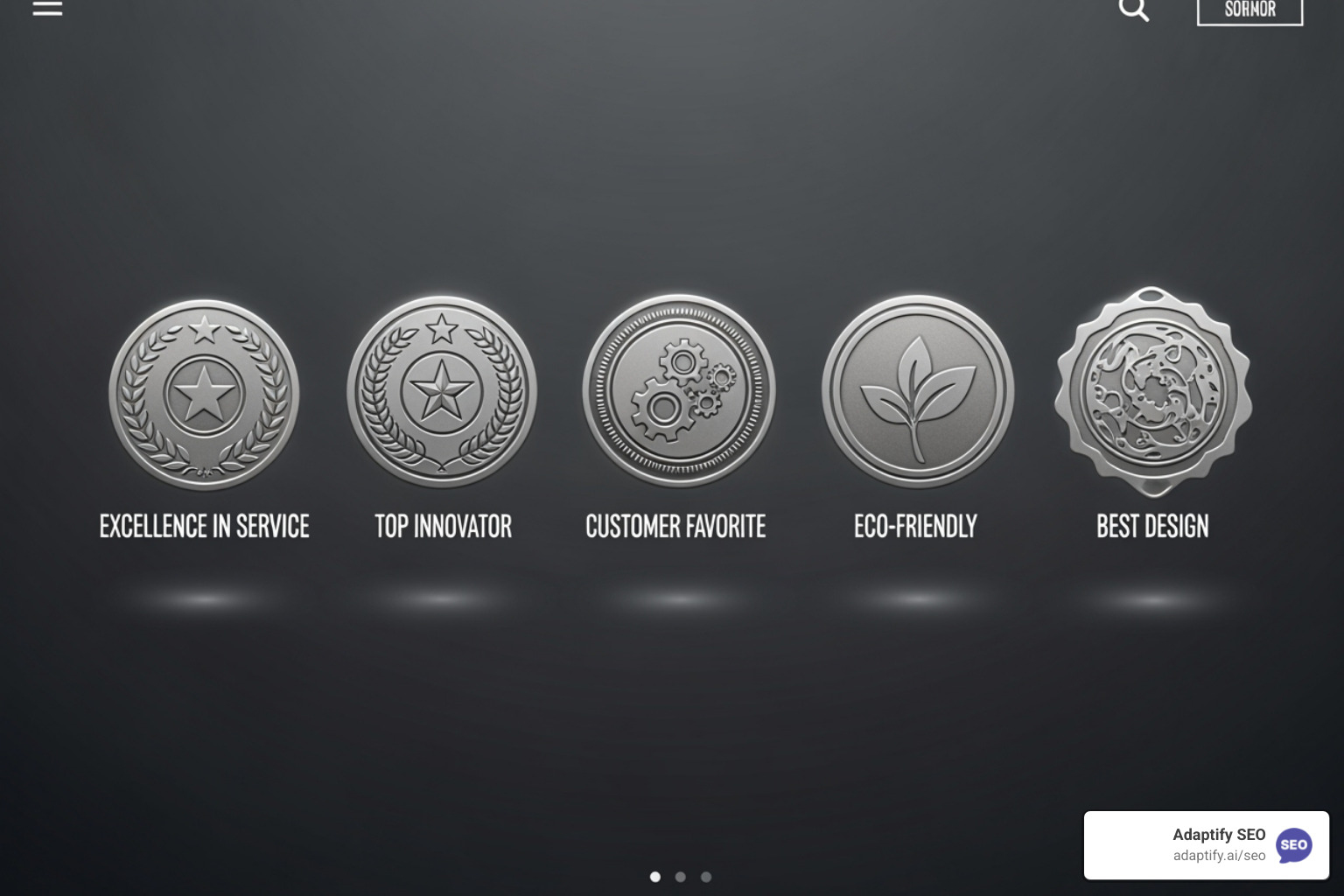

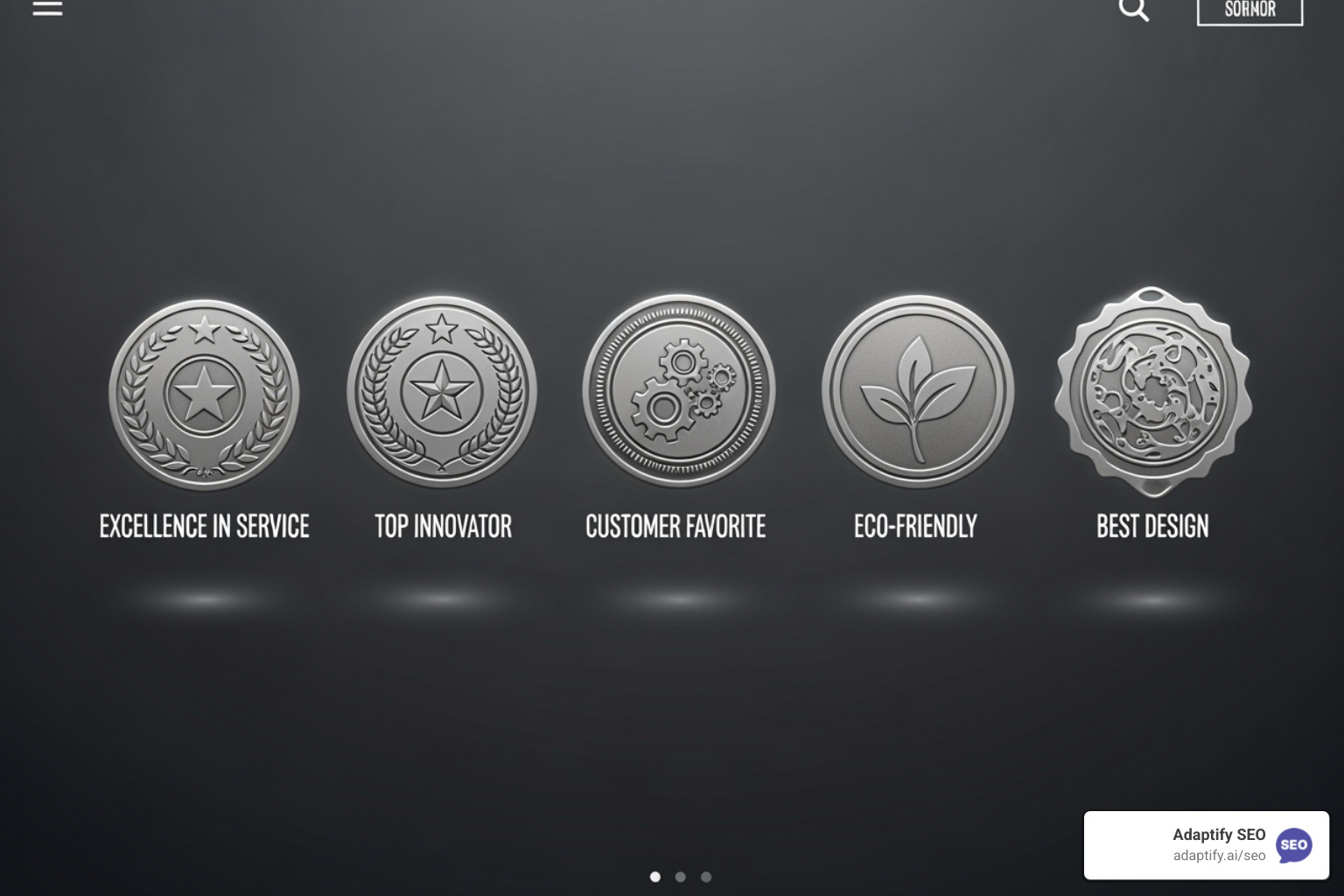
Badge program backlinks are a unique type of backlink earned when other websites display a digital badge that links back to your website. This underused SEO strategy works by creating awards or certifications that recipients proudly display on their sites—complete with a backlink to yours.
Quick Answer: How Badge Program Backlinks Work
Unlike traditional link building that requires constant outreach, badge programs leverage human psychology. People love recognition and are eager to display achievements on their websites. This creates a social stamp that efficiently earns backlinks from trustworthy websites while building genuine relationships.
The beauty of this strategy lies in its simplicity. When a company receives recognition, they're typically pleased to display it prominently on their website. That badge becomes both a credibility signal for them and a valuable backlink for you.
I'm Hansjan Kamerling, and I've helped numerous SaaS startups and marketing agencies scale their badge program backlink strategies. I've seen how well-executed badge programs can generate dozens of high-quality backlinks with minimal ongoing effort.
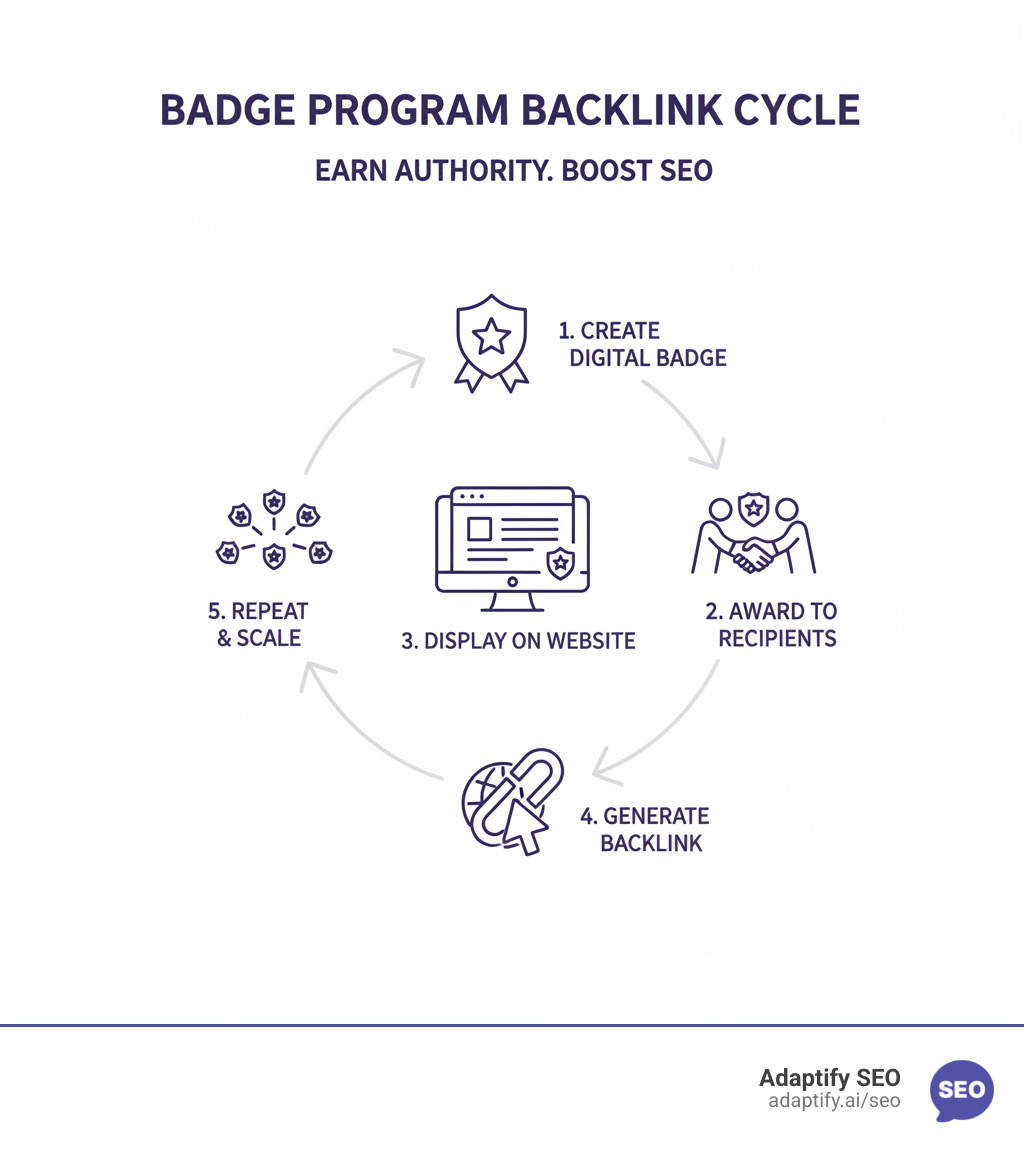
Why care about badge program backlinks? Backlinks are digital endorsements. When reputable sites link to yours, search engines like Google take notice. Many businesses overlook this simple approach for more complex tactics, but a well-executed badge program can transform SEO results without the usual headaches.
Improved search rankings are the most obvious benefit. Backlinks remain a cornerstone of how search engines determine which websites deserve to rank higher. When authoritative sites display your badge and link back to you, it sends a powerful signal that your content has value. Google's algorithm views these backlink qualities in a positive light, and the results speak for themselves.
Here's a sobering statistic: 66.31% of web pages have zero backlinks, and 90.63% get no organic traffic from Google. That's a massive opportunity for businesses smart enough to implement strategic badge programs.
Building brand authority and trust happens naturally when respected websites display your recognition. Each badge acts as a social stamp of approval, telling visitors that other credible businesses value what you offer. This isn't just about climbing search rankings—it's about establishing your reputation as an industry leader.
The relationship-building aspect sets badge program backlinks apart. You're not cold-calling strangers for favors; you're celebrating achievements and recognizing excellence. Recipients appreciate the recognition, creating authentic connections that often lead to future collaborations.
Earning links from trustworthy sites becomes remarkably efficient. Traditional outreach can feel like asking for something without offering much in return. Badge programs flip this dynamic by providing something valuable that businesses want to showcase.
Compared to other methods, badge programs have clear advantages. Guest posting requires constant content creation, while badge programs are more 'set it and forget it' once established. Editorial backlinks are hard to control, but you have more influence with badge links. Unlike low-value directory listings or risky paid links, merit-based badge programs are a white-hat approach that comes from sites actively choosing to feature your brand.
The beauty of this strategy lies in its scalability. Once you've created a compelling badge program, each new recipient can generate a high-quality backlink with minimal additional effort. It's relationship-building and SEO optimization rolled into one.
Ready to turn recognition into rankings? Here's my step-by-step guide to building a successful badge program backlink strategy.
A winning badge program creates an award people genuinely want to display—not a participation trophy. Your badge must represent real value and achievement. Start by identifying what your target audience would be excited to showcase, finding the sweet spot between exclusivity and attainability.
"Best Of" Awards work incredibly well because everyone loves being recognized as a top performer. Whether it's "Top 10 Marketing Blogs of 2024" or "Most Innovative SaaS Companies," these badges tap into our competitive spirit.
Certifications are another goldmine, especially if your business has specialized knowledge to share. A "Certified SEO Professional" badge from a respected agency carries real weight.
For B2B companies, Partnership Tiers create a natural hierarchy. Gold Partner or Certified Implementation Partner badges don't just look good—they help partners win more business.
Don't overlook Event Speaker or Sponsor badges. People love displaying their conference gigs, and sponsors want to show their industry involvement. Community Membership badges work similarly—being a "Founding Member" feels special.
Even recognizing loyal customers can work. An "Early Adopter" or "Power User" badge makes customers feel valued while earning you quality backlinks.
The key is to define clear criteria so the badge represents a meaningful achievement.
Many programs fail with poor design. A badge that looks like it was designed in five minutes using clip art won't be displayed.
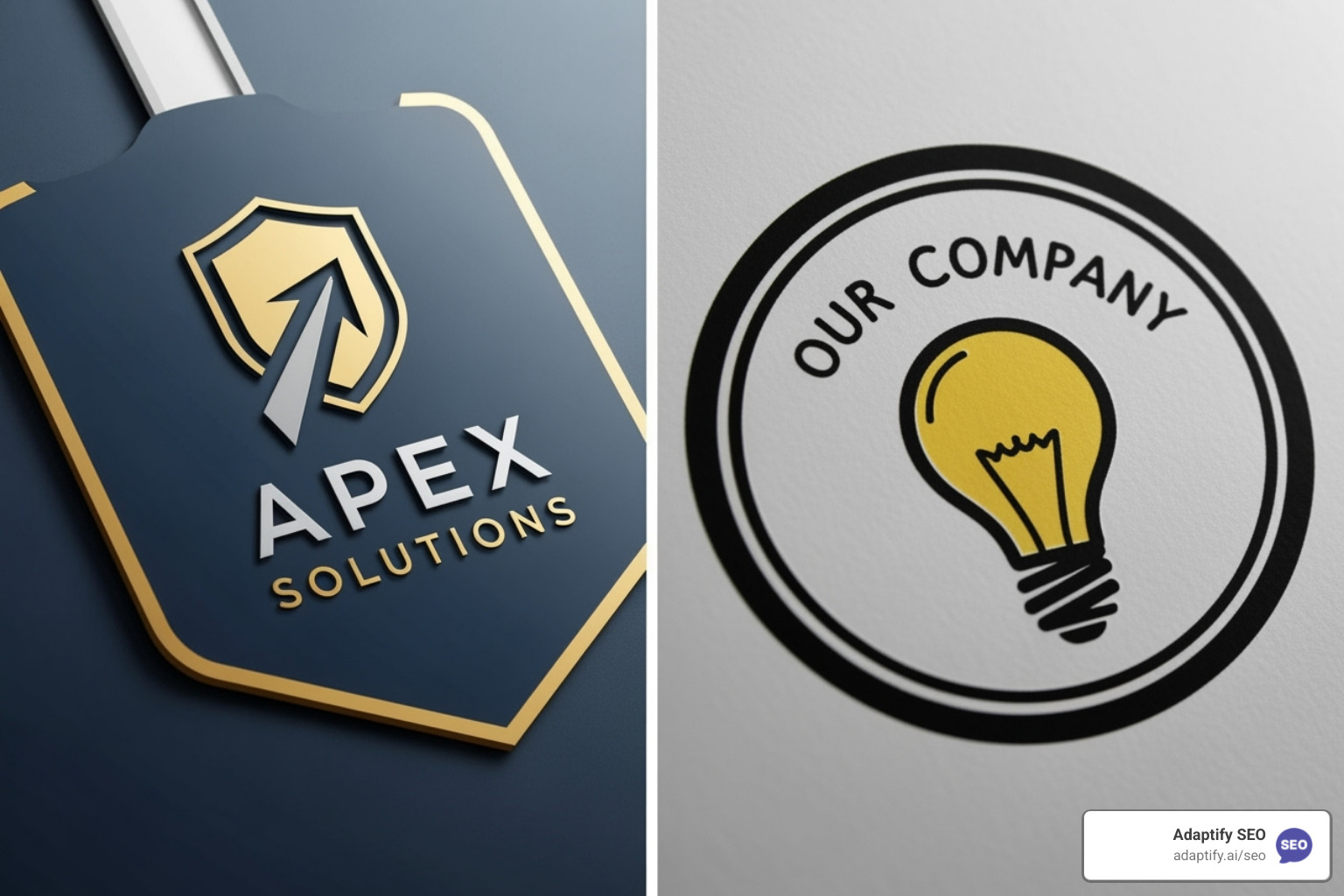
Professional design is crucial; an attractive badge is a status symbol, while a cheap one gets ignored.
Visual appeal is non-negotiable. Use high-quality graphics, choose colors that work on different website backgrounds, and ensure the typography is crisp. The badge should look good on a dark footer or a white sidebar.
Brand consistency matters, but be subtle. Incorporate your brand colors or a small logo, but remember the badge represents an achievement, not an ad. Recipients should feel proud to display it.
Keep the design clean and simple. Overcrowded badges look amateurish. Clearly state what the badge represents—"Top Performer 2024" or "Certified Partner" should be obvious.
Smart creators offer multiple sizes for footers, sidebars, and dedicated pages. This flexibility increases your adoption rate significantly.
Good design is the difference between a displayed badge and a failed badge program backlink strategy.
A great badge is useless without an easy way for recipients to display it with a backlink. The embed code is your delivery system; it must be simple to copy and paste while including all the technical elements valuable for SEO.
Here's what a proper embed code looks like:
<a href="https://yourwebsite.com/badge-program-page" target="_blank" rel="noopener">
  <img src="https://yourwebsite.com/images/your-badge-name.png" alt="[Descriptive Alt Text for Your Badge]" width="150" height="150" border="0" />
</a>
The anchor tag creates your backlink. Point it to a relevant page, ideally a dedicated badge program page that explains the award and lists all recipients. This gives context to visitors and search engines.
The image tag displays your badge. Don't forget the alt text for accessibility and SEO. Write something descriptive like "Awarded Best Digital Marketing Agency 2024 by Adaptify SEO."
Include target="_blank" rel="noopener" so the link opens in a new tab without security risks. Set width and height dimensions to prevent layout issues.
Make it foolproof for recipients. Provide clear instructions like "Simply copy and paste this code into your website's sidebar, footer, or About page." The easier you make it, the higher the adoption rate.
With your badge and embed code ready, it's time for outreach. Your strategy should be personal, not generic mass emails. Make each recipient feel genuinely recognized.
Craft personalized congratulations emails explaining why they were chosen. "We selected you as one of our Top 10 Content Marketing Blogs because of your innovative approach to storytelling." Specific praise feels authentic.
Email templates should feel celebratory, not transactional. Use subject lines like "Congratulations! You've Been Awarded the [Badge Name]!" Include the story behind the award, clear display instructions, and the embed code.
Create a dedicated landing page that showcases your program and lists all recipients. This validates the award's credibility, motivates others, and provides a logical destination for your backlinks.
Promote on social media and write a blog post announcing your program. Tag recipients in your posts—they often share the recognition, amplifying your reach organically.
When people feel proud of an achievement, they naturally want to share it. That's when your badge program backlink strategy takes off.
You need to track whether your badge program is moving the SEO needle.
Google Search Console is your first stop. Under the Links report, you can see which sites are linking to yours. Look for your badge program landing page in the target pages section to spot new backlinks.
Professional tracking tools give you deeper insights. Monitor how many new referring domains you're gaining—this is your primary success metric. Quality matters more than quantity, so pay attention to the domain authority of linking sites.
Referral traffic tells another important story. Check your analytics to see if badge backlinks are driving actual visitors to your site, which indicates genuine engagement.
Watch your keyword rankings over time. A healthy increase in referring domains should contribute to overall improvements in search visibility.
Successful programs create a snowball effect: as more reputable sites display your badges, their perceived value increases, encouraging others to participate. Track adoption rates and refine your approach based on what resonates with your audience.
Let's look at real examples of businesses using badge program backlinks to build their backlink profiles.
Accreditation badges are a prime example. Businesses display these trust seals in their footers or "About Us" pages, which link back to the accrediting organization. The business gains credibility, and the organization gets a high-quality backlink from a relevant site.
SaaS partner programs have mastered this strategy. Software companies create tiered partnerships like "Certified Consultant" or "Gold Partner" badges. These partners are eager to show off their official status on their websites, with each badge becoming a backlink.
The tech and open-source community has turned badge programs into an art form. Projects earn badges for security standards, code quality, or best practices. These are powerful link-building tools disguised as quality indicators.
Niche blogs have a straightforward approach. They create annual "Top 10" lists in their industry, like "Best Travel Agencies." The featured businesses get a badge to display, complete with a link back to the original article, building authority for both parties.
Professional awards and certifications work similarly. Industry recognitions like "Best Web Design Agency" come with digital badges that recipients eagerly showcase, reinforcing credibility for both the winner and the award-giver.
While any business can run a badge program, some industries are perfectly positioned for massive results.
SaaS companies can leverage their partner ecosystems, developer communities, and power users. A simple "Certified Partner" badge can generate dozens of relevant backlinks from agencies and consultants who use their platform.
Marketing agencies can get creative with client recognition. Awarding your best clients with "Digital Marketing Excellence" badges makes them happy to show off their achievements, especially when it comes from a trusted partner.
E-commerce stores can find opportunities too. "Verified Customer" badges for loyal buyers with blogs, "Brand Ambassador" recognition for influencers, or partnership badges with complementary businesses can all drive quality backlinks.
Niche blogs and publishers are sitting on a goldmine. They can create endless "Best of" lists and industry awards. Their audience trusts their judgment, making their badges highly desirable.
Local service businesses can also benefit. "Community Champion" badges for local partners, "Local Expert" certifications, or "Customer Favorite" awards can build powerful local authority and improve local SEO.
The beauty of badge program backlinks is their adaptability. Whether you're a global SaaS platform or a local plumbing company, there's a badge strategy that can work for you.
Even the best badge program backlink strategies can fail due to a few common, avoidable mistakes.
Low adoption rates are a common pitfall. This often happens if the badge is unprofessional, instructions are confusing, or the award lacks perceived value.
For example, one client's adoption rate jumped from 15% to over 60% after we redesigned their dated, unprofessional badge to look modern and prestigious. Design matters.
Lack of perceived value is another killer. If your badge feels like a participation trophy, website owners will see it as a mere link-building attempt rather than genuine recognition. The key is authenticity. Are you recognizing something that genuinely matters? Is there real criteria behind your selection?
Technical issues can be relationship destroyers. Broken embed codes, images that won't load, or links that lead to error pages make you look unprofessional. Always test your embed code on multiple website platforms before launching. Nothing kills enthusiasm like a recipient trying to display your badge only to have it break their site layout.
The most important consideration is staying compliant with search engine guidelines. Google is sophisticated at detecting manipulative link schemes. The good news is that when done right, badge programs are completely white-hat and align with Google's policy on link schemes.
The line is clear: if your badges represent genuine recognition, achievement, or partnership, you're golden. If you're essentially buying or trading links disguised as badges, you're asking for trouble. Google wants to see natural, earned links that provide real value.
I've seen companies get penalized for badge programs that were obviously link schemes—think "pay $50 and get our 'certified partner' badge." Don't be that company.
The secret is focusing on quality over quantity. A dozen badges displayed by relevant, respected websites in your industry will do far more for your SEO than hundreds of badges on random, low-quality sites. Keep it genuine and valuable, and the links will follow.
When I talk to business owners about badge program backlinks, I usually get a few key questions. Here are the most common ones with straight answers.
This is a common question. Both strategies build backlinks but work very differently.
Scalability is where badge programs shine. Once your system is set up, you can award dozens of badges with minimal effort. In contrast, guest posting requires creating unique content and outreach for every single link, which is difficult to scale.
With reciprocity, guest posts are a transactional trade of content for a link. Badge programs feel more natural because you're recognizing someone's achievement. People want to show off awards, tapping into basic human psychology.
Required effort is high upfront for badge programs (setup) but low for ongoing awards. Guest posting demands constant content creation and relationship management for each placement.
For long-term value, both deliver excellent results. A well-placed guest post can drive benefits for years. Similarly, a respected badge can generate backlinks continuously with minimal ongoing effort.
The best SEO strategies combine both: use badge program backlinks for scalable acquisition and guest posting for targeted, high-value placements.
Yes. Some of the most effective badge programs come from smaller businesses that understand their niche.
Niche authority is easier to establish when you're smaller and more focused. A local marketing agency can become the authority on digital marketing in their city.
Local awards work incredibly well. I worked with a local web design agency that created "Best Local Business Website" badges for clients and community partners. These businesses were thrilled to display the recognition, and the agency built serious local SEO authority.
Partner recognition doesn't require a massive network. Recognizing even a dozen key partners with a "Preferred Partner" badge can generate valuable backlinks from highly relevant sources.
The key for smaller businesses is to play to their strengths. Focus on being the most respected voice in your specific community or niche, as these specialized badge program backlinks often carry more weight for your target keywords.
Yes, when done correctly, badge program backlinks are a completely white-hat SEO tactic.
The foundation is genuine recognition. Your merit-based awards should be displayed voluntarily by recipients because they add credibility to their own site. As long as you avoid quid-pro-quo schemes and focus on celebrating real achievements, you're building the natural, earned links that search engines value.
Badge program backlinks are one of the most underused opportunities in digital marketing, effectively combining human psychology with smart SEO tactics.
You're not just building links; you're building relationships. You're not just improving search rankings; you're creating genuine value for others. When someone displays your badge, they're making a statement about quality and partnership that goes beyond a simple backlink.
This approach is authentic and scalable. Unlike forced link-building, badge programs tap into the natural desire for recognition. Create a badge that represents genuine value, and people will want to display it.
I've seen small local businesses create simple "Community Partner" badges that generated dozens of relevant local backlinks and watched SaaS companies build certification programs that strengthened their entire partner ecosystem. The perceived prestige of your badge becomes the engine that drives long-term success.
The five-step process we've covered gives you a roadmap. Start with genuine value; your first program doesn't need to be perfect, just authentic and well-executed.
For marketing agencies and SaaS businesses looking to scale these efforts, automation can be a game-changer. At Adaptify SEO, we've helped clients integrate badge programs into comprehensive automated SEO strategies that handle everything from strategy formulation to content creation and PR link building. The efficiency gains are remarkable when you combine human creativity with AI-powered execution.
Ready to take your link-building to the next level? Learn more about building a powerful backlink profile and find how automated SEO solutions can amplify your badge program success.
Your next badge program could be the turning point that transforms your SEO results. Start small, think authentic, and watch as recognition turns into rankings.

Discover how backlink automation software streamlines outreach, saves time, and scales your SEO strategy safely and effectively.
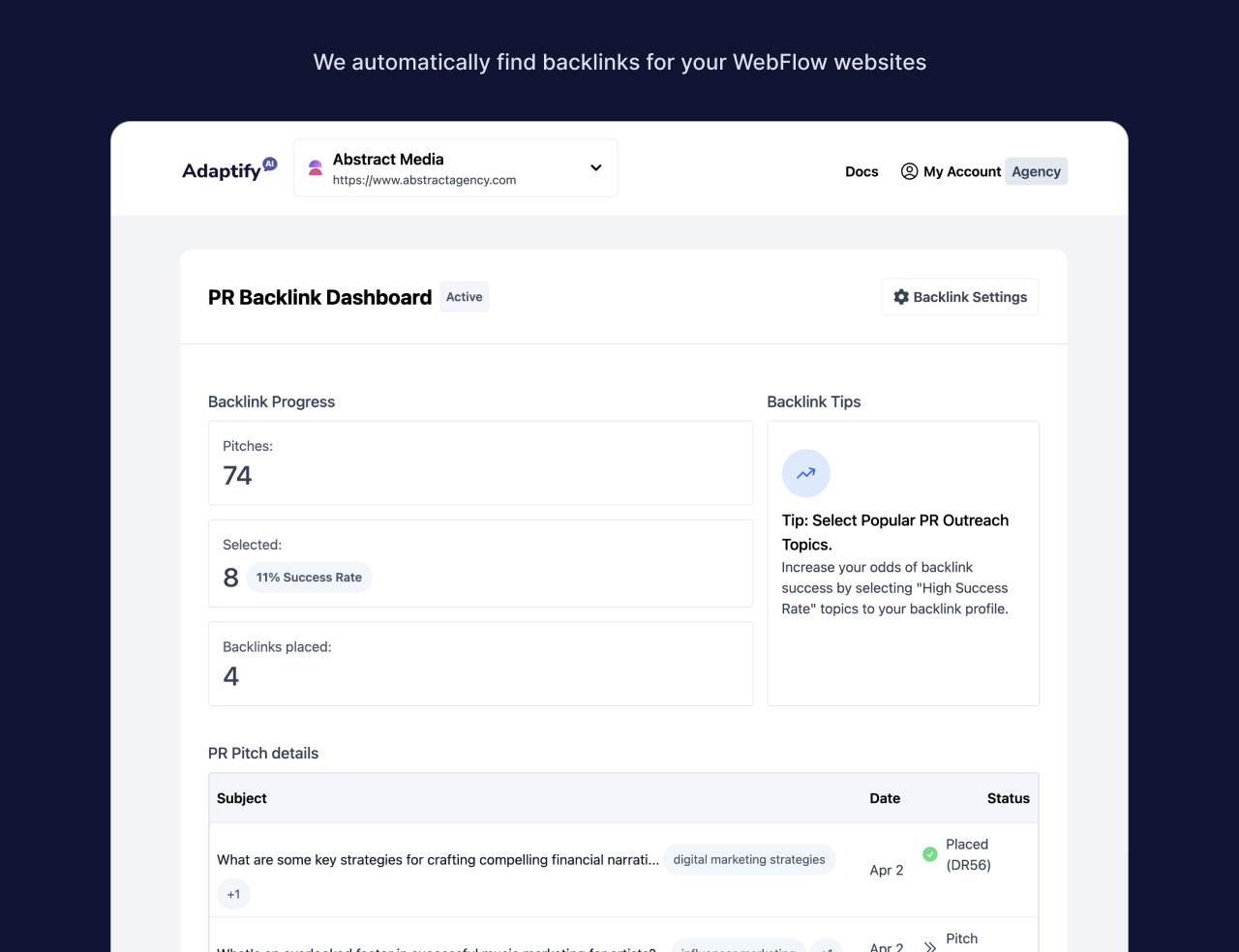
Track every backlink with an SEO backlink monitor—spot lost links fast, protect rankings, and boost ROI before competitors do.
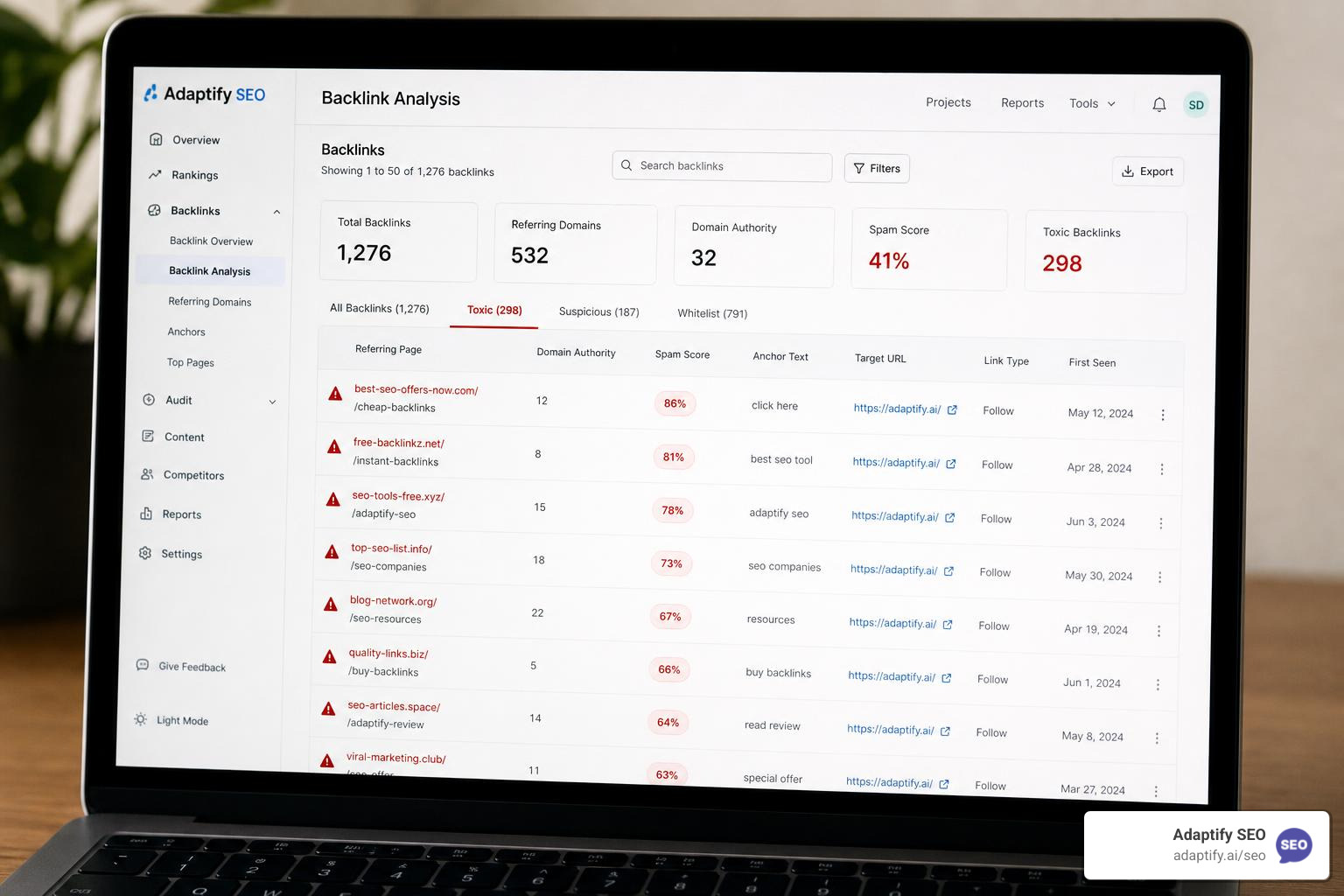
Learn how to disavow toxic backlinks, clean your profile, and recover rankings with this step-by-step guide.
Join 1,000+ agencies already delivering SEO and AI visibility from a single platform without increasing their headcount.Join 1,000+ agencies already delivering SEO and AI visibility from a single platform without increasing their headcount.