Cracking the Local Code:A Beginner's Guide to SEO Success
Hansjan Kamerling
Mar 6, 202618 min read
Why Local SEO for beginners is the Key to Open uping Your Community
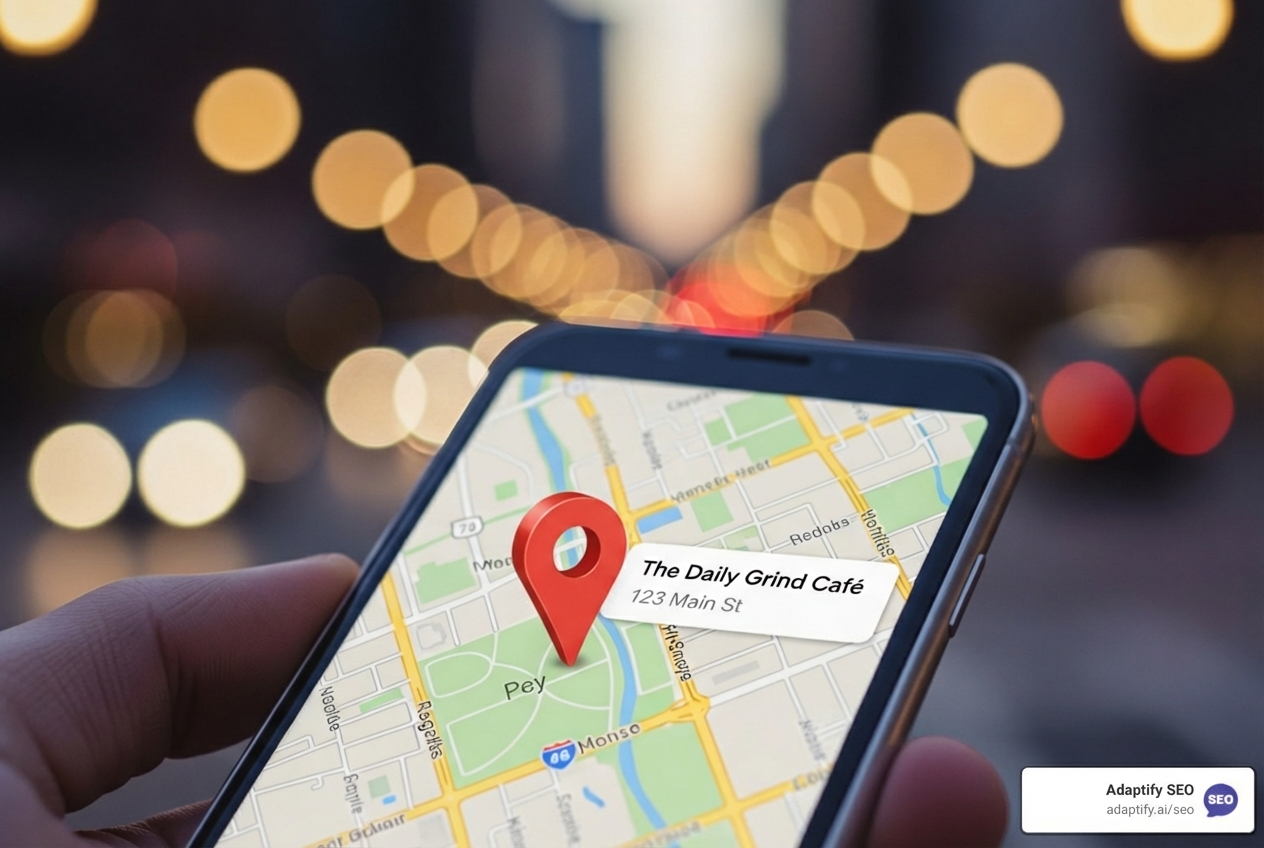
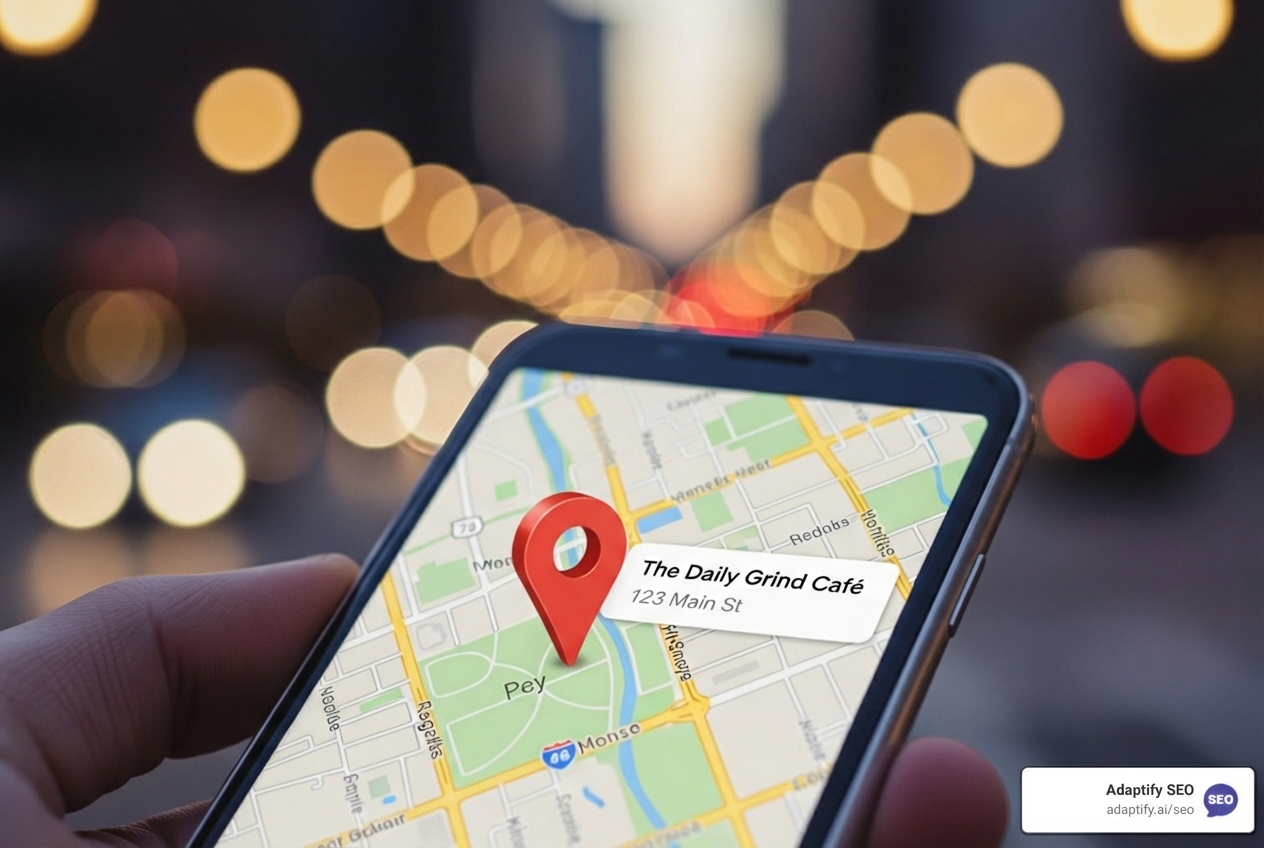
local business on smartphone map - Local SEO for beginners
Local SEO for beginners is optimizing your online presence to attract customers from relevant local searches. When someone nearby searches for your products or services, local SEO helps your business appear in critical results like the map pack, local listings, and your Google Business Profile.
Here's what you need to know to get started:
Set up and optimize your Google Business Profile - This is your digital storefront and the foundation of local visibility
Maintain consistent NAP information (Name, Address, Phone Number) across all online platforms
Encourage and manage customer reviews - They build trust and boost your rankings
Use location-based keywords in your website content, titles, and meta descriptions
Build local citations in directories like Yelp, Apple Maps, and industry-specific sites
Earn local backlinks from community organizations, local press, and business partners
Create location-specific website content that serves your local audience
Ensure your website is mobile-friendly - 80% of local mobile searches lead to conversions
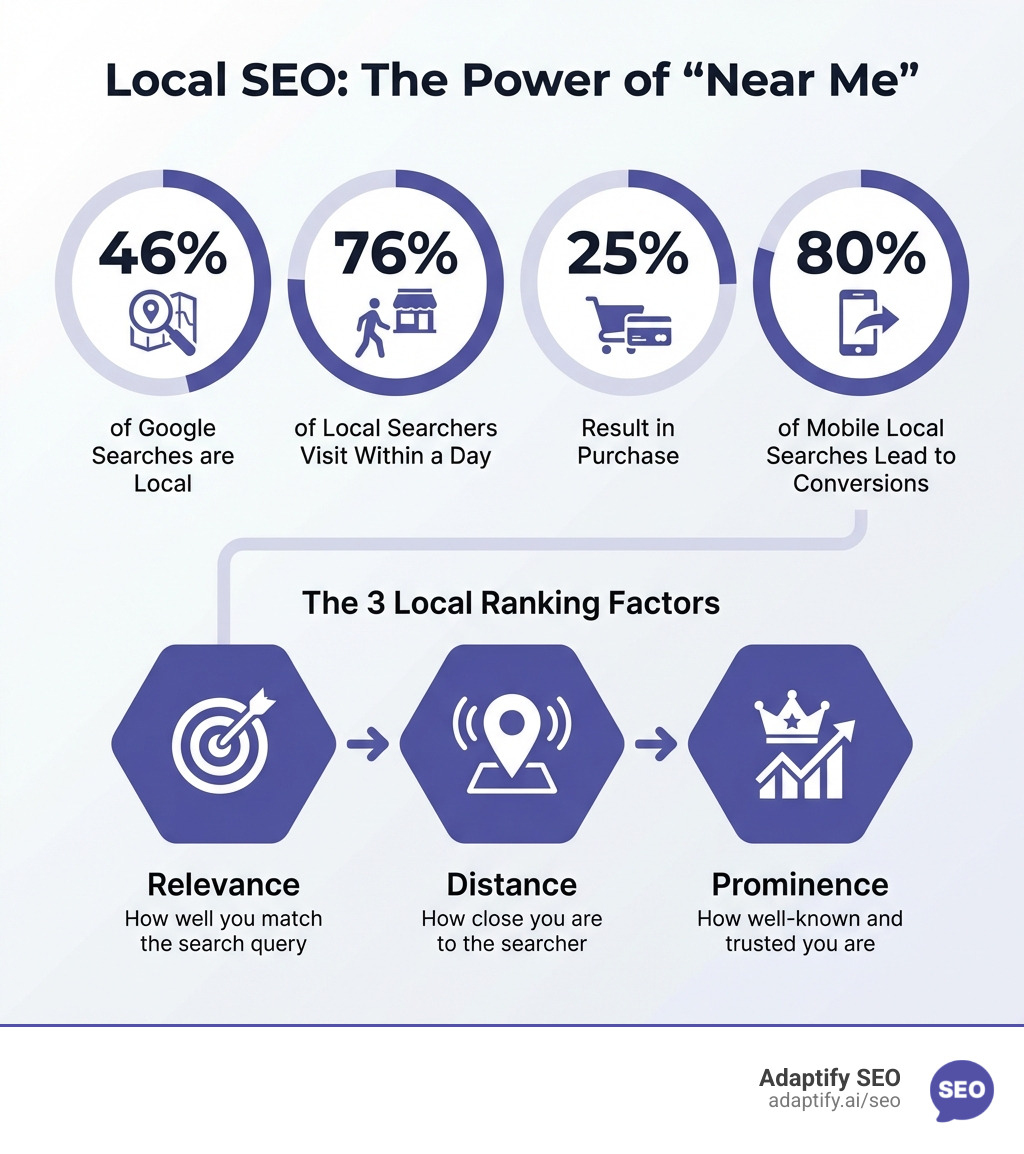
The numbers are compelling: 46% of all Google searches seek local information, and 76% of people who search for something nearby visit a business within a day. Over 25% of these local searches result in a purchase. If you're not visible in these searches, you're leaving money on the table.
Local SEO differs from general SEO in three critical ways. Google evaluates local businesses based on relevance (how well you match what someone's searching for), distance (how close you are to the searcher), and prominence (how well-known and trusted your business is online). Understanding these factors is the first step toward dominating your local market.
I'm Hansjan Kamerling, and for over a decade, I've helped businesses optimize their digital presence with Local SEO for beginners strategies that drive measurable growth. In this guide, I'll share proven tactics based on real data.
infographic showing local SEO statistics: 46% of Google searches are local, 76% of local searchers visit within a day, 25% result in purchase, and 80% of mobile local searches lead to conversions, with icons showing the three ranking factors of relevance, distance, and prominence - Local SEO for beginners infographic
The Foundation: Google Business Profile & Local Keywords
Alright, let's dive into the bedrock of Local SEO for beginners: your Google Business Profile (GBP). Think of it as your business's digital storefront. It's the information Google uses to display your business in Maps and the Local Pack for "near me" searches. With Google dominating the search market, optimizing your GBP is non-negotiable.
fully optimized Google Business Profile example - Local SEO for beginners
Claiming and verifying your GBP is the first crucial step. Google needs to know you're the real deal. This verification process typically involves receiving a postcard with a code, or sometimes via phone, email, or video call. Once verified, you gain control over the information Google presents to potential customers.
A cornerstone of local SEO is NAP consistency: Name, Address, Phone Number. Your business's NAP must be identical across your GBP, website, and all other online directories. Inconsistencies confuse Google and can hurt your rankings.
Your GBP is a dynamic profile. Specify your business categories (3-5 are ideal), list services, write a compelling description (100-200 words with keywords), and upload high-quality photos and videos. Photos of your storefront, products, and team boost engagement. Use Google Posts for updates and the Q&A feature to engage with customers. Since 97% of consumers research businesses online before visiting, a complete GBP is crucial.
Optimizing Your Google Business Profile
To truly make your GBP a local magnet, you need to complete every single section. Don't leave anything blank! This tells Google you're thorough and provides more data points for them to match your business to relevant searches.
Here's my checklist for a fully optimized GBP:
Complete all sections: Fill out every field Google provides. The more information, the better.
Accurate NAP: Double-check your Name, Address, and Phone Number. This is critical for consistency.
Primary & secondary categories: Select the most accurate primary category, then add 3-5 secondary categories that reflect all your services.
High-quality photos: Upload a variety of professional photos – your logo, cover photo, interior, exterior, products/services, and team. Businesses with photos receive more requests for directions and website clicks.
Use Google Posts for updates: Regularly share news, promotions, or events. These appear directly in your GBP and can capture attention.
Answer questions in the Q&A section: Proactively answer common questions and encourage customers to ask their own. This shows you're engaged.
Keywords are the bridge between what people search for and what your business offers. For local SEO, this bridge needs local landmarks! We're talking about city names, neighborhoods, and even specific districts.
My approach to local keyword research involves a few steps:
Brainstorm service + location terms: Think about how a customer would search for your services. For example, "plumber in [city name]," "best coffee shop [neighborhood]," or "dentist near me."
Use keyword research tools: Tools like Adaptify's Keyword Research Tools or Google Keyword Planner are fantastic for uncovering relevant terms and checking search volumes. While most tools show national search volumes, you can use Google Keyword Planner to see more localized data or use national trends as a proxy. ChatGPT can also be surprisingly helpful for generating initial keyword ideas!
Check local intent: Google the keywords you're considering. If you see a map pack or local organic "blue link" results, you know Google recognizes local intent for that query. If not, it might not be a strong local SEO opportunity.
Integrate into your website: Once you have your targeted local keywords, weave them naturally into your website content, especially in:
Title tags: The clickable headline in search results.
Meta descriptions: The short summary under the title tag.
Website content: Naturally throughout your pages, especially on location-specific pages or your "About Us" page.
URL slugs: Keep them clean and keyword-rich.
Keyword stuffing is a big no-no and will hurt your local SEO. The goal is to provide helpful, relevant content to your customers first, then gently optimize for search engines. For more in-depth strategies on crafting content that converts, check out Adaptify's content services. My team and I focus on creating localized content that resonates with your community and drives engagement. You can find more info about our content services here.
Building Local Authority: Citations, Reviews, and Links
Once your GBP is humming, it's time to build your business's reputation and authority across the web. This is where citations, customer reviews, and local backlinks come into play. These elements tell Google that your business is legitimate, popular, and a trusted part of the local community.
Citations are mentions of your business's NAP (Name, Address, Phone Number) on local directories. Reviews provide social proof, and local backlinks act as endorsements from other local websites. Together, they form a powerful trifecta for boosting your local search rankings.
The Role of Citations and Local Directories
Citations are like digital nods of approval. Every time your business's NAP appears online, it reinforces your legitimacy to Google. But here's the catch: NAP+W (Name, Address, Phone Number + Website) consistency is paramount. Even slight variations in your address (e.g., "St." vs. "Street") can confuse search engines.
Here's my advice on citations:
Top local directories: Start with the big players. These include Yelp, Apple Maps, Bing Places, and Facebook. While Google dominates, these other platforms are still important for user findy and search engine signals.
Data aggregators: In the U.S., major data aggregators like Data Axle, Localeze, and Foursquare collect and distribute business information to hundreds of directories. Getting listed with them is a smart move.
Industry-specific directories: Don't forget directories relevant to your specific industry (e.g., Avvo for lawyers, Healthgrades for doctors).
Fixing incorrect citations: Inconsistent information can arise if your business moved or changed its name. You'll need to audit your citations and manually correct any discrepancies. Specialized tools can help identify and manage these issues.
A quick list of top citation sources (beyond GBP):
Customer reviews are gold for local businesses. They build trust (99% of consumers read reviews) and significantly influence local search rankings. Google confirms that review signals—quantity, quality, and recency—impact local pack rankings.
Here's how I help businesses encourage and manage reviews:
Importance of reviews: They prove your business exists, validate your quality, and offer social proof. Plus, 92% of consumers consider business owner responses to reviews as part of high-quality customer service.
Asking for reviews: Don't be shy! Ask satisfied customers directly. You can send follow-up emails with a direct link to leave a Google review. Convert that link into a scannable QR code for business cards or in-store signage.
Creating a review link: In your Google Business Profile, there's an option to create a shareable review link. Make it easy for people!
Responding to positive and negative reviews: Always respond! Thank positive reviewers. For negative reviews, respond professionally, empathetically, and offer a solution or a way to take the conversation offline. This shows potential customers you care about service recovery.
Building trust: Consistent, positive reviews, coupled with thoughtful responses, build immense trust with both potential customers and Google.
Google's review policies: Familiarize yourself with these to ensure you're encouraging reviews ethically. Never offer incentives for reviews, as this violates Google's terms.
Earning Local Backlinks
Backlinks are powerful SEO signals, and for local SEO, links from other local businesses, organizations, or media are particularly valuable. They signal to Google that your business is a respected part of the local ecosystem.
Here are some strategies I use to help businesses earn local backlinks:
Local press: Pitch compelling stories about your business to local newspapers, online news sites, or community blogs. Did you sponsor a local event? Are you celebrating a milestone? Do you have unique expertise to share?
Sponsoring events: Sponsoring local events, sports teams, or charities can often lead to a backlink from the event's website or the organization's page. It's a win-win: you support your community and get a valuable link.
Chamber of Commerce: Getting listed on your local Chamber of Commerce website or other business associations often comes with a quality backlink.
Partnering with local businesses: Collaborate with complementary local businesses. For example, a bakery could partner with a coffee shop, or a gym with a health food store. This can lead to reciprocal mentions and links.
Testimonials: Offer to write a testimonial for a local supplier or partner whose services you genuinely value. They might link back to your site in return.
Building a strong backlink profile can be time-consuming, but the effort pays off. Adaptify.ai offers PR link building services that can help agencies streamline this process for their clients, leveraging AI to identify opportunities and craft outreach strategies. My team can help you build high-quality links that boost your local authority. You can find more info about our backlink services here.
On-Site Optimization: Turning Your Website into a Local Magnet
Your website isn't just an online brochure; it's a vital component of your local SEO strategy. It needs to be optimized to clearly signal your location and services to both search engines and local customers. In today's mobile-first world, this is more critical than ever.
Google primarily uses mobile versions of websites for indexing and ranking. This means your site absolutely must be mobile-friendly and fast-loading. If a local customer on their phone is trying to find your opening hours or directions, a slow, clunky site will send them straight to a competitor.
Localizing your website content means more than just dropping your city name into a few paragraphs. It involves creating specific pages for each location, including your NAP prominently, and using structured data to help search engines understand your local business information.
Creating Location-Specific Website Content
Every local business website needs to scream "I'm here!" Here's how I ensure a website is shouting loud and clear:
"Contact Us" page: This is a must-have. Include your full NAP, business hours, an inquiry form, and a clear call to action.
Homepage NAP: For single-location businesses, include your NAP in the footer of every page. For multiple locations, consider a "Visit Us" page that links to individual location pages.
City-specific landing pages: For multiple locations, create a unique landing page for each. These pages need unique content, including local keywords, staff bios, local testimonials, and area-specific service details. Avoid thin or duplicate content to ensure each page offers real value.
Blog posts about local events: Write about local happenings, community involvement, or news relevant to your area. This shows local relevance and provides fresh, engaging content.
Staff bios: Introduce your local team members. This adds a personal touch and builds trust.
Embedded Google map: Embed a Google Map directly onto your contact or location pages. This reinforces your physical presence and helps customers find you.
Implementing Local Business Schema
Schema markup is code you add to your website that helps search engines understand key business information like your address, hours, and services. This can lead to "rich results" in search, making your listing stand out.
What is Schema: It's a vocabulary (from Schema.org) that you can use with microdata, RDFa, or JSON-LD to improve how search engines interpret your content.
Rich results: Implementing schema can enable rich snippets in search results, like review stars or event details. This improves visibility and click-through rates.
Enhancing visibility: For local businesses, LocalBusiness schema is invaluable. It tells Google precisely where you're located, what you offer, and other critical details.
LocalBusiness schema: This specific type of schema is designed for local businesses. It allows you to mark up your NAP, opening hours, payment methods, reviews, and much more.
Schema generators: Tools like TechnicalSEO's Schema Markup Generator or Google's Structured Data Markup Helper can help you create the necessary code without needing to be a coding wizard.
Google's Rich Results Test: Always test your implemented schema using this tool to ensure it's valid and can be displayed correctly by Google.
Measuring Success & Avoiding Pitfalls: A Local SEO for beginners Guide
You've put in the work, now how do you know it's paying off? Measuring your local SEO efforts is just as important as implementing them. It helps you understand what's working, what's not, and where to focus your energy next. And trust me, even the pros make mistakes, but recognizing them early can save a lot of headaches.
How to Measure Your Local SEO Efforts
Tracking your key performance indicators (KPIs) is essential. Here are the metrics I focus on to gauge local SEO success:
GBP Insights: Your Google Business Profile dashboard offers invaluable data:
Searches: How many people found your business through direct or findy searches.
Calls: How many people called your business directly from your GBP.
Website clicks: How many visited your website from your GBP.
Directions requests: How many asked for directions to your physical location.
Tracking map pack rankings: Specialized tools can show you your ranking positions for specific keywords within a localized grid, helping you visualize your visibility across your service area.
Organic local rankings: Monitor your website's ranking for local keywords in standard Google search results. Google Search Console is excellent for this.
Website traffic from local sources: Use Google Analytics to segment your website traffic by geographic location. Look for visitors from your target service areas.
Conversion tracking: Local SEO aims to drive business. Track phone calls, form submissions, and in-store visits (if you have a way to attribute them) to see the real impact.
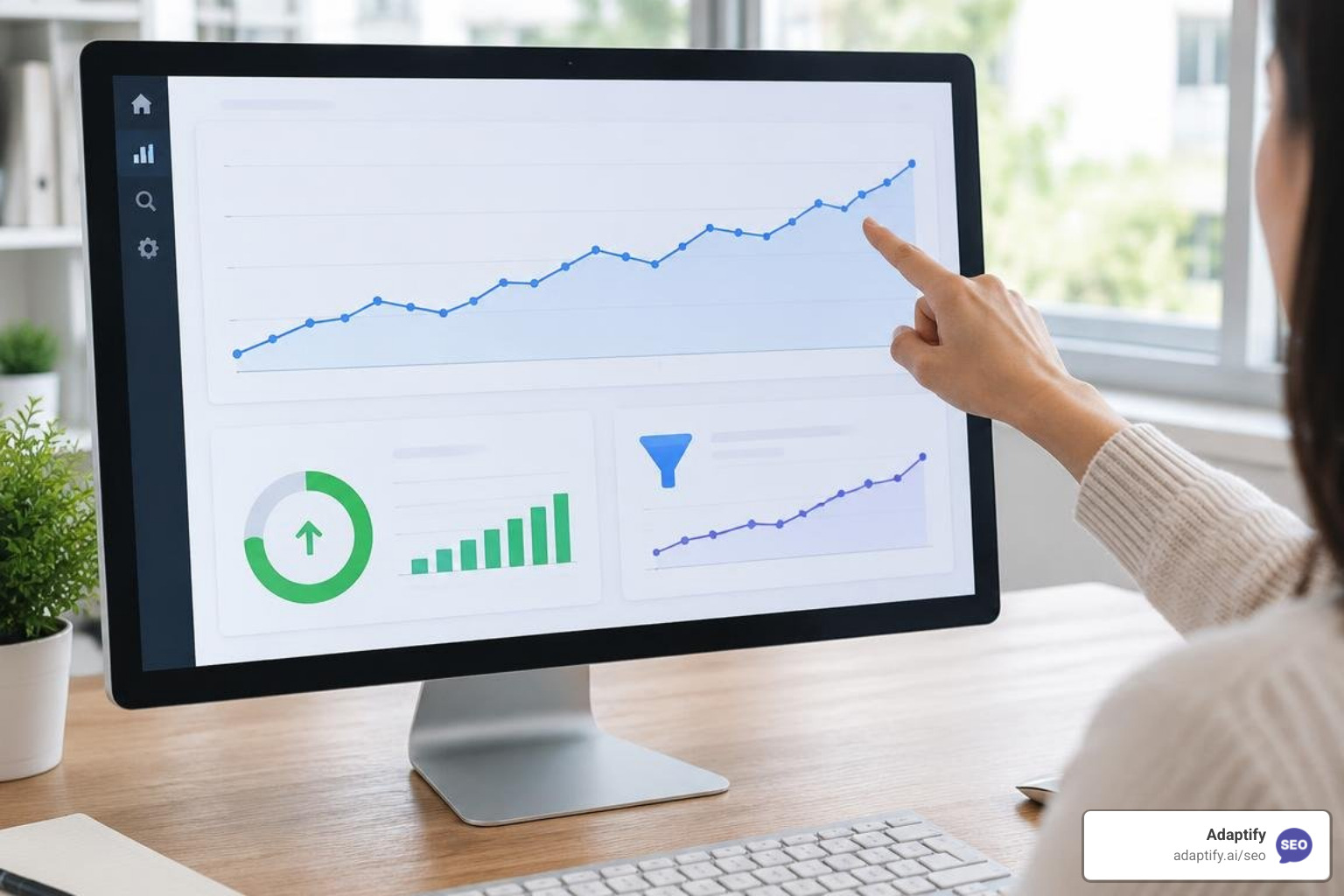
Google Analytics provides deep insights into your website performance and user behavior.
Common Mistakes in Local SEO for beginners
Even with the best intentions, it's easy to stumble. Here are some common pitfalls I see beginners make:
Inconsistent NAP: Even a tiny difference can hurt your rankings. Ensure your Name, Address, and Phone Number are identical everywhere.
Keyword stuffing: Cramming too many keywords into your content is a mistake. Google prefers natural language and relevance.
Ignoring negative reviews: A huge missed opportunity. Responding professionally shows you care about customer service and can turn a negative into a positive.
Neglecting GBP: Setting up your Google Business Profile and then forgetting about it. It's an active profile! Update photos, post news, and respond to questions.
Not having a mobile-friendly site: With so many local searches happening on mobile, a website that isn't responsive or loads slowly is a conversion killer. Ensure your site is fast and looks great on all devices.
Essential Tools for Local SEO for beginners
You don't have to manage your local SEO alone. Several tools can help streamline the process:
Google Business Profile: Your central hub for local visibility.
Google Search Console: Monitors your website's performance in Google Search, identifies errors, and helps with indexing.
Google Keyword Planner: A great free tool for keyword research and understanding local search volumes.
Adaptify Keyword Research Tools: Our platform offers robust keyword research capabilities to help you pinpoint high-intent local terms.
While free tools provide a great starting point, comprehensive SEO platforms offer more advanced features like backlink analysis, site audits, and competitor analysis.
At Adaptify.ai, we provide agencies with automated SEO services, including powerful tools and dashboards for local SEO tracking and optimization. My goal is to streamline the SEO process for you, so you can focus on growing your clients' businesses.
Frequently Asked Questions about Local SEO
I often get asked some excellent questions about local SEO, especially from beginners who are just starting to steer this exciting world. Let's tackle a few of the most common ones.
How long does it take for local SEO to work?
Local SEO for beginners is a long-term strategy, not a quick fix. While you won't see dramatic changes overnight, you will see progress.
Initial results: You can often see initial improvements within a few weeks, especially after optimizing your Google Business Profile. Getting your GBP verified and fully populated tends to yield the quickest gains in visibility.
Significant ranking improvements: To see substantial shifts in rankings and consistent traffic, you're typically looking at 3-6 months of consistent effort. This includes building citations, earning reviews, and optimizing your website.
Consistency is key: The algorithms constantly evolve, and competitors are always trying to outrank you. Ongoing optimization, content creation, and reputation management are crucial for sustained success. Think of it like tending a garden – you plant the seeds, nurture it, and keep weeding to ensure it flourishes.
Do I need local SEO if I don't have a physical storefront?
Absolutely, yes! If your business serves a specific geographic area, even if you don't have a brick-and-mortar shop, you need local SEO. These are often called Service Area Businesses (SABs).
Examples: Plumbers, electricians, landscapers, mobile mechanics, consultants who visit clients, and home-based businesses.
How it works: In your Google Business Profile, instead of displaying a physical address, you define a service area (e.g., specific cities, counties, or a radius around a central point). This tells Google which local searches you're relevant for.
Focus on local keywords: Your website and content should still use location-based keywords to signal your service areas. Reviews are also incredibly important for SABs to build trust.
So, whether you're a cozy cafe or a mobile dog groomer, local SEO is for you!
What's more important: my website or my Google Business Profile?
This is a trick question because they work hand-in-hand. You need both to succeed.
Your Google Business Profile: This is often the first impression a local searcher gets. It appears prominently in the "Local Pack" and on Google Maps, providing instant information like your hours, phone number, and reviews. For many "near me" searches, customers might make a decision based solely on your GBP without ever visiting your website. It's a direct gateway to contact or visit.
Your website: While GBP gets the initial glance, your website provides deeper information. It's where you can tell your full story, showcase your portfolio, detail your services, publish blog posts, and truly differentiate yourself. A well-optimized website also acts as a powerful ranking factor for your GBP, signaling authority and relevance to Google. It builds trust and converts interested leads into customers.
My advice? Optimize both! Your GBP gets you found quickly, and your website seals the deal by providing comprehensive information and building credibility. Neglecting one will hinder the performance of the other.
Conclusion: Put Your Business on the Local Map
Phew! We've covered a lot of ground, from the fundamentals of your Google Business Profile to the nuances of local backlinks and schema markup. The world of Local SEO for beginners might seem complex at first, but by breaking it down into manageable steps, you can absolutely put your business on the local map.
Let's quickly recap the key steps to local SEO success:
Optimize your Google Business Profile: This is your digital storefront and the anchor of your local presence. Make it shine!
Master local keywords: Speak the language your local customers are using to find you.
Build authority: Cultivate citations, encourage glowing reviews, and earn valuable local backlinks.
Localize your website: Make your website a local magnet with specific content and technical optimizations like schema.
Measure and adapt: Keep an eye on your performance and be ready to tweak your strategy.
Local SEO is an ongoing process. It requires dedication, consistency, and a focus on providing real value to your local customers. But the rewards are immense: more visibility, more foot traffic, more phone calls, and ultimately, more business.
For agencies looking to streamline these complex SEO processes for their clients, Adaptify.ai offers automated SEO services that leverage AI for strategy formulation, content creation, and PR link building. My team and I are passionate about helping businesses thrive online, and our platform is designed to reduce manual effort and improve efficiency, so you can deliver exceptional results.
By following this guide, you can improve your local visibility, attract more customers, and grow your business. Don't let your competitors steal your local spotlight. It's time to take control of your local search presence and watch your business flourish.
Join 1,000+ agencies already delivering SEO and AI visibility from a single platform without increasing their headcount.Join 1,000+ agencies already delivering SEO and AI visibility from a single platform without increasing their headcount.