Demystifying SEO: Everything You Need to Know About Search Engine Optimization


So, what does SEO stand for?
You’ve likely heard the term SEO, but what does it really mean for your business? Think of search engines as vast libraries. SEO ensures your website is the most relevant "book" the "librarian" (the search engine) recommends.
It's not about technical tricks; it's about understanding user needs and delivering valuable content. This guide will show you how SEO can be a powerful tool for your online success.
As Hansjan Kamerling, I've spent years in digital product design and marketing. My work at Adaptify AI, especially with custom-trained AI models and new search experiences, has given me deep insights into mastering what does SEO stand for in today's digital landscape.
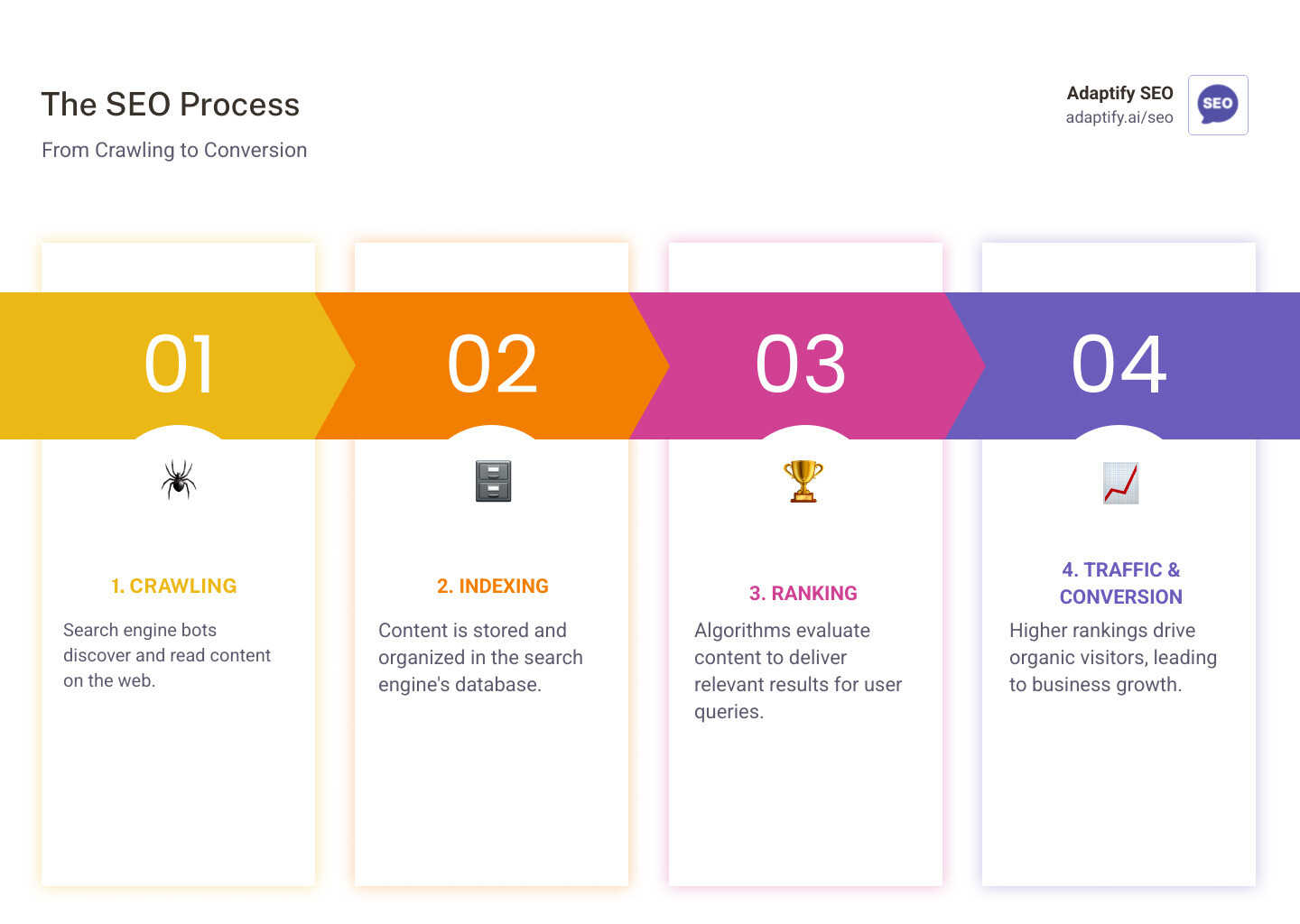
For any online venture, the primary challenge is getting found. SEO is the solution. Its main job is to make your website more visible and bring in organic (unpaid) traffic. More visibility means more potential customers, which leads to more sales, better brand trust, and a strong return on investment (ROI).
With billions of daily searches, visibility on Google is paramount. Google holds over 83% of the global market share, and even more in countries like the UK (93.61%) and Germany (89.85%). If you want to be seen online, you need to be on Google.
Imagine the growth potential when you get this right:

As a reminder, what does SEO stand for? It's Search Engine Optimization. This is the practice of refining your website's content and technical structure so search engines like Google, Bing, and DuckDuckGo can easily understand it. The goal is to rank higher in search results to attract quality visitors who are genuinely interested in what you offer. It’s about matching your site's offerings with what users are actively searching for.
Aiming for top Google rankings is about visibility, trust, and business opportunities.
High rankings mean your brand gets seen. Users naturally trust the top results, a phenomenon known as 'trust transference'—if Google trusts you, users will too. This builds credibility.
Organic search results also get clicked far more often. Our research shows SEO can drive 20 times more traffic than Pay-Per-Click (PPC) ads. While ads offer a quick boost, organic rankings build a steady, cost-effective stream of visitors over time.
Finally, high rankings give you a competitive edge. You capture potential customers at the exact moment they're searching for your services. With over 8.5 billion searches on Google daily, not showing up means missing out on a massive amount of business.
To truly master SEO, I believe understand the inner workings of search engines themselves. While Google keeps its exact algorithms a closely guarded secret (and for good reason, to prevent manipulation!), the fundamental mechanics are well-understood. Search engines, primarily Google due to its market dominance, use complex algorithms and a vast array of ranking factors to determine which content is most relevant and valuable to a user's query. At the heart of this process is user intent – what is the person really trying to find when they type those words into the search bar?
I often simplify how search engines work into three core steps:
Google’s algorithm is incredibly sophisticated, constantly evolving with over 500 changes in 2010 alone – almost 1.5 per day! While no one outside Google knows the exact formula, we understand many of the key ranking factors. Historically, Google's PageRank algorithm, based on the quantity and strength of inbound links, was foundational. Today, it's just one of many signals.
Modern algorithms prioritize:
An effective SEO strategy rests on three interconnected pillars: On-Page SEO, Off-Page SEO, and Technical SEO. Each component is crucial for building a strong, visible presence in search results.

On-Page SEO involves optimizing elements directly on your website to make your content relevant and easy for users and search engines to understand. This starts with keyword research to find terms that match business offerings and user needs, often using powerful tools like Ahrefs or Semrush to analyze search volume and competition. Next is high-quality content creation—writing helpful, original articles that answer user questions without "keyword stuffing." We then optimize title tags and meta descriptions to be compelling and keyword-rich. Header tags (H1, H2, H3) structure the content for readability, and internal linking guides search engines and users to related content on your site.
At Adaptify.ai, our automated SEO services help agencies create optimized content efficiently. You can find more info about our content services on our website.
Off-Page SEO involves actions taken outside your website to boost its authority and reputation, primarily through link building. Backlinks, or links from other websites to yours, are powerful "votes of confidence" for search engines. Acquiring high-quality, relevant backlinks from trusted sites, which can be analyzed using tools like Majestic or the backlink checkers within Ahrefs and Semrush, is one of the most important ranking factors. Link building is the process of earning these backlinks through methods like creating link-worthy content, guest posting, and digital PR. Additionally, brand mentions and social signals contribute to your online authority.
Adaptify.ai helps agencies with PR link building, using AI to find opportunities and streamline outreach. You can learn more about this in our backlink services section.
Technical SEO ensures search engines can easily crawl, index, and understand your site. It's the invisible framework supporting your content. Conducting a thorough technical audit with tools like Screaming Frog is a common first step. Key aspects include a logical site architecture, fast page speed, and mobile-friendliness, which is essential since Google uses the mobile version of a site for ranking. I also use Schema markup to help search engines understand content better, leading to richer search results. Finally, an XML sitemap helps Google find all your important pages, while a Robots.txt file tells crawlers which parts of your site to avoid.
For more details, Google's SEO starter guide is a fantastic resource.
In SEO, it's crucial to play by the rules. I always champion "white hat" SEO—the ethical, long-term way to build genuine value.
| White Hat SEO Techniques | Black Hat SEO Techniques |
|---|---|
| User-focused, high-quality content | Keyword stuffing (over-optimizing with keywords) |
| Follows search engine guidelines | Cloaking (showing different content to users and bots) |
| Organic link building (earned links) | Buying links or participating in link schemes |
| Ethical optimization practices | Hidden text or links |
| Focus on long-term value and user experience | Content spinning (auto-generated, low-quality content) |
| Transparency and integrity | Doorway pages (pages optimized for specific queries, redirecting users) |
Black hat SEO techniques try to trick search engine algorithms. While they might offer a quick boost, the risks are huge. Google penalizes sites using these methods, which can lead to severe ranking drops or even complete removal from its index. For example, KinderStart’s traffic plummeted by 70% after being removed from Google’s index.
Focusing on white hat SEO is the only smart, sustainable strategy. It builds a valuable asset for your business and aligns with Google's goal of providing users with the best results.
Artificial Intelligence is no longer a future concept; it's actively reshaping SEO today.
Google's Search Generative Experience (SGE) and AI Overviews represent a fundamental shift. Users now get answers from AI summaries, not just by clicking links. This means understanding what does SEO stand for has evolved. The goal is now to create content so authoritative that AI systems feature it in their responses.
This has led to Generative Engine Optimization (GEO), an approach focused on optimizing for AI-powered search. We must now consider how AI will interpret and present our content.
At Adaptify.ai, we've acceptd this change. Our platform uses AI to streamline the entire SEO process, from strategy to content creation and link building, turning weeks of manual work into days.
Google's AI, like its BERT models, now understands the nuances and intent behind search queries, not just keywords. This has profound implications for SEO.
AI is changing keyword research by analyzing massive datasets to spot trends and predict user intent with data-driven accuracy. Content creation has also been revolutionized, with AI tools assisting in brainstorming and drafting. However, Google's guidance on AI-generated content is clear: quality is paramount, regardless of how content is produced.
This means genuine human E-E-A-T (Experience, Expertise, Authoritativeness, and Trustworthiness) is more critical than ever. AI often lacks the "experience" component, making authentic human insight irreplaceable for creating standout content.
Measuring SEO success remains vital. Key Performance Indicators (KPIs) tell the story of your performance.
I rely on Google Analytics and Google Search Console for this data. These free tools offer incredible insights into site performance, search queries, and technical issues. For more comprehensive tracking, many professionals supplement these with all-in-one SEO platforms like Semrush or Moz Pro, which provide robust keyword rank tracking, competitor analysis, and site auditing features. These tools allow for tracking the entire user journey from search impression to final conversion.
Here are answers to some of the most common questions I get about SEO.
This is a common point of confusion. Simply put:
SEO (Search Engine Optimization) focuses on earning organic (unpaid) traffic. It involves optimizing your website to rank higher naturally based on relevance and authority. It’s about building long-term visibility without paying for each click.
SEM (Search Engine Marketing) is a broader term that includes both SEO and paid search activities like PPC (Pay-Per-Click). PPC involves paying for ads on platforms like Google Ads to appear at the top of search results. While SEO builds sustainable, unpaid visibility, PPC offers immediate, paid visibility. They often work best together.
SEO is a long-term strategy, not a quick fix. It typically takes 3-6 months to see significant results, and potentially 6-12 months for new websites. Search engines need time to crawl, index, and evaluate your changes, and building authority takes time.
Factors influencing this timeframe include:
Patience is essential in SEO, but the sustainable traffic it generates is worth the wait.
Yes, you can. For smaller websites, basic SEO is accessible with many free online resources and tools. Excellent starting points include comprehensive guides like Moz's Beginner's Guide to SEO and the free tools within platforms like Ahrefs. As you advance, you can use paid tools like Ahrefs, Semrush, or Moz Pro to manage keyword research, on-page optimization, and technical basics.
However, SEO can be complex and time-consuming. Staying on top of algorithm changes, analyzing data, and executing advanced strategies requires significant expertise. This is why many businesses hire agencies or use platforms like Adaptify.ai. Our automated services help agencies manage these complexities, streamlining strategy, content, and link building. This allows you to benefit from expert-level SEO while you focus on running your business.
So, after all this talk, what does SEO stand for? It stands for Search Engine Optimization, and as we've explored, it's so much more than just a techy term. It's truly the strategic heart of your online presence, the secret sauce for attracting organic traffic, and a powerful engine for growing your business and building your brand's reputation. My journey, from designing search experiences to creating AI-powered SEO solutions here at Adaptify.ai, has only deepened my conviction: SEO is absolutely essential in today's digital world.
Here's the thing to remember: SEO isn't a "set it and forget it" kind of task. Think of it as tending a garden; it's a continuous process that needs your attention, learning, and consistent effort. Why? Because the digital landscape is always shifting! Search engines are constantly updating their algorithms, user behaviors are evolving (especially with exciting changes like AI in search), and your competitors are always working to get ahead. To keep your garden thriving, you've got to be ready to adapt and grow with it.
By focusing on creating truly high-quality content, ensuring your website has a rock-solid technical foundation, and building genuine authority online, you're doing more than just pleasing algorithms. You're actually creating a much better, more helpful experience for your users. And ultimately, that's exactly what search engines want to reward!
If you're feeling ready to open up the full potential of SEO for your business or agency, I warmly invite you to see how Adaptify.ai can simplify your efforts and deliver consistent, scalable results.
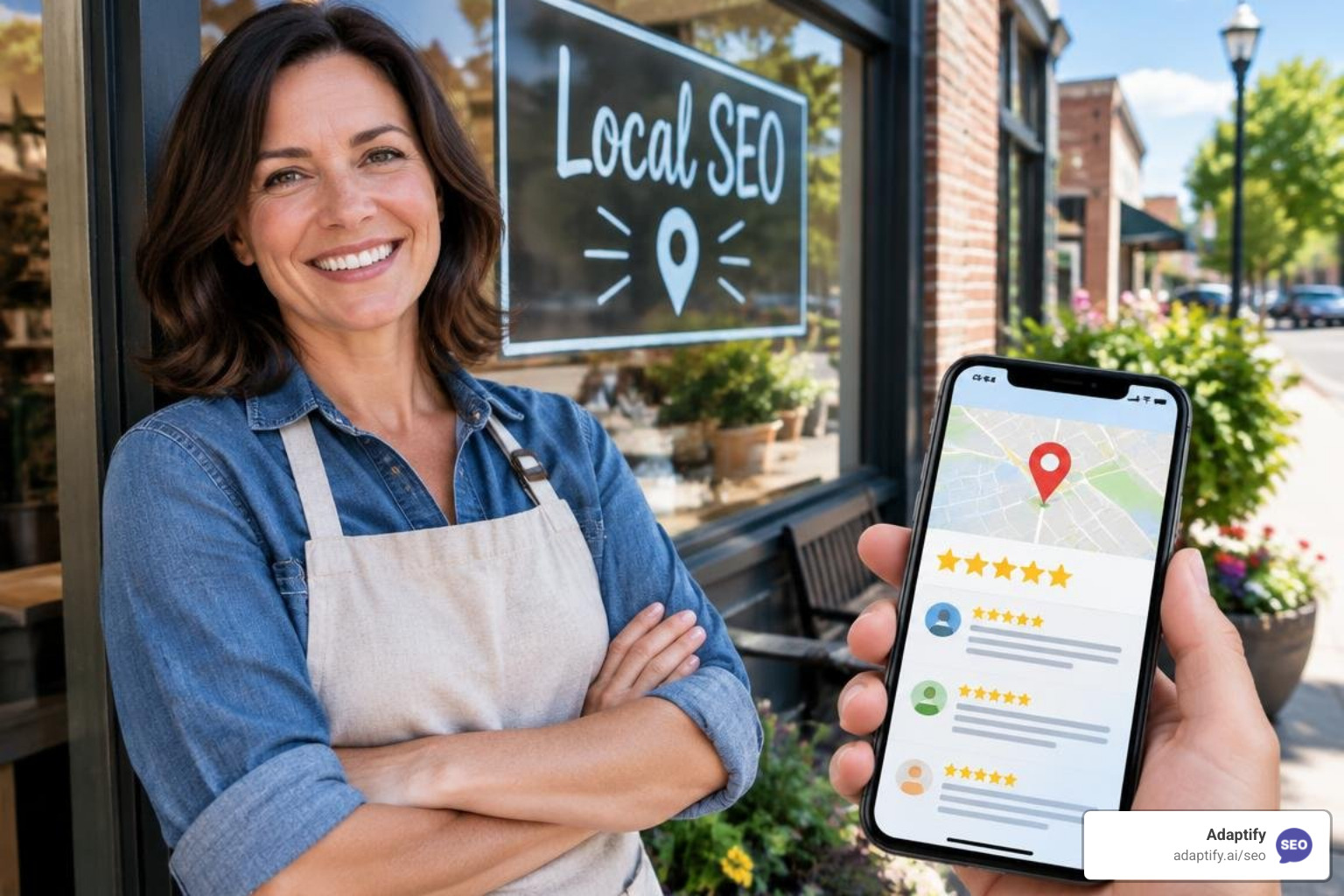
Stop being invisible: discover what the best local SEO strategies for small businesses are to dominate Google Maps, reviews, and AI search...
Master localized SEO to rank your local business in Google Maps and drive more in-store visits.
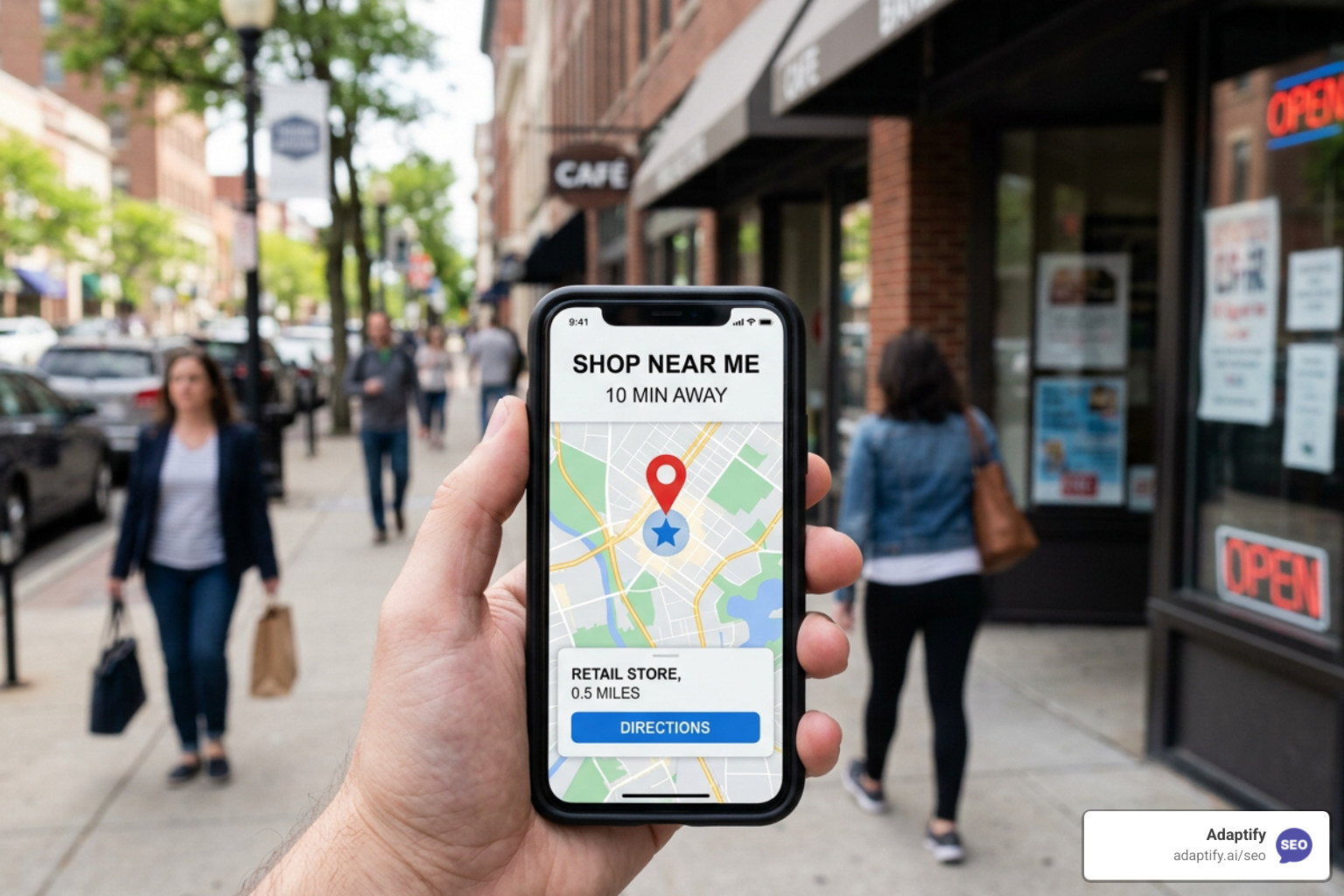
Master local retail SEO to drive foot traffic from Google with proven strategies for GBP, reviews, and AI search optimization.
Join 1,000+ agencies already delivering SEO and AI visibility from a single platform without increasing their headcount.Join 1,000+ agencies already delivering SEO and AI visibility from a single platform without increasing their headcount.