Don't Get Lost in the Link Jungle: How to Monitor Your Backlinks Effectively

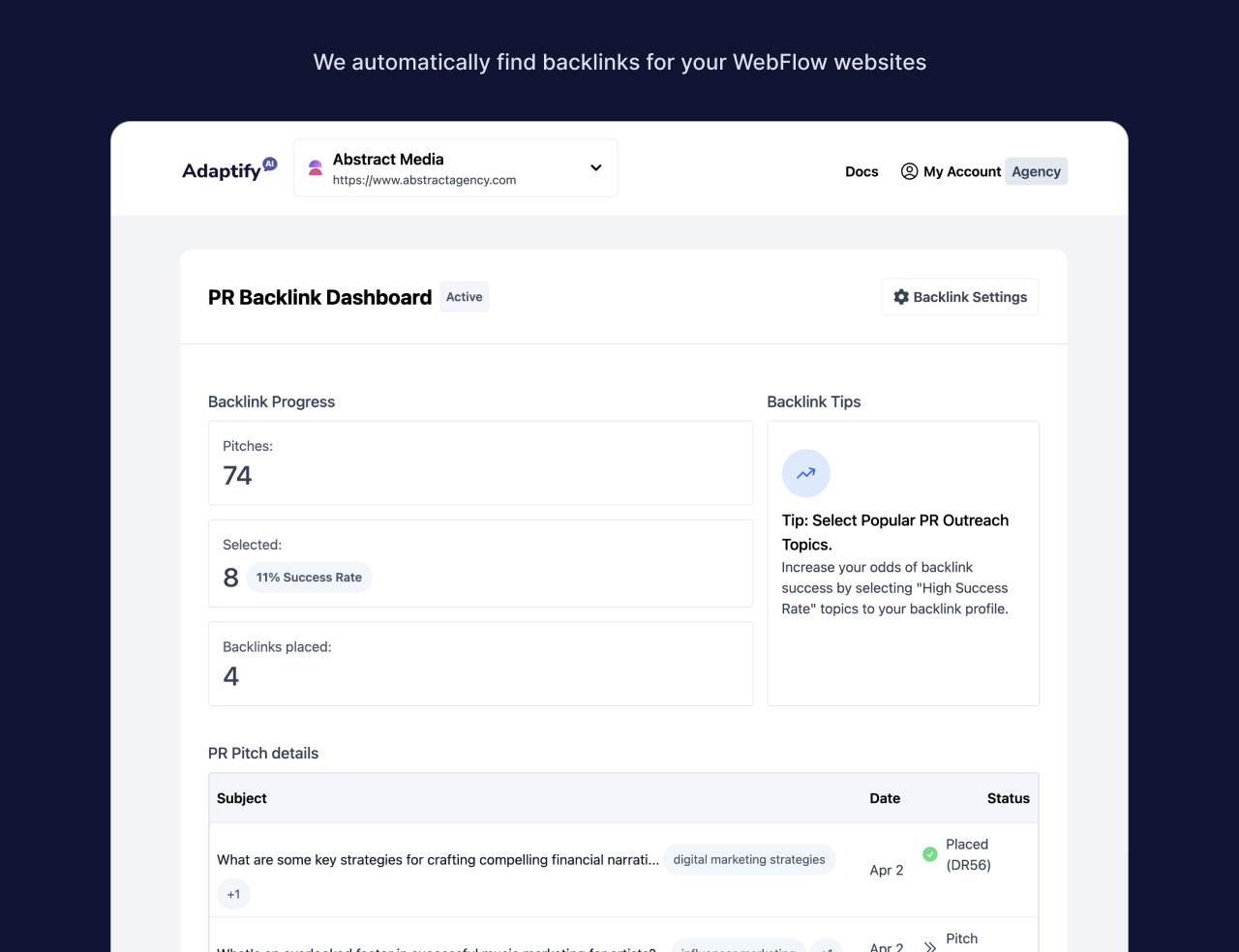


How do I monitor backlinks? You can monitor backlinks by using Google Search Console (free) and specialized SEO platforms to track new and lost links, analyze link quality, set up email alerts, and regularly audit your backlink profile. Professionals typically check backlinks monthly, or weekly for active link building campaigns.
Quick Answer: Steps to Monitor Backlinks Effectively
Backlinks are like highways to your website, guiding traffic and boosting your search visibility. When a reputable site links to yours, it tells search engines your content is valuable. In fact, 94% of marketers believe links will remain a key factor in Google's ranking algorithm for years to come.
But links can break, disappear, or worse—competitors might use spammy links to harm your rankings. That's why monitoring your backlinks is essential. Think of it as a GPS for your online presence; you need to know where your links are coming from and which ones are helping or hurting you.
The good news is you don't have to check every link manually. Modern tools automate this, sending alerts for new or lost links, helping you spot negative SEO attacks, and revealing competitor strategies.
I'm Hansjan Kamerling, and in my work with SaaS platforms and AI startups, I've seen how a solid backlink monitoring strategy is crucial for success. Understanding the right tools and techniques has been key to scaling SEO services across agencies and platforms.
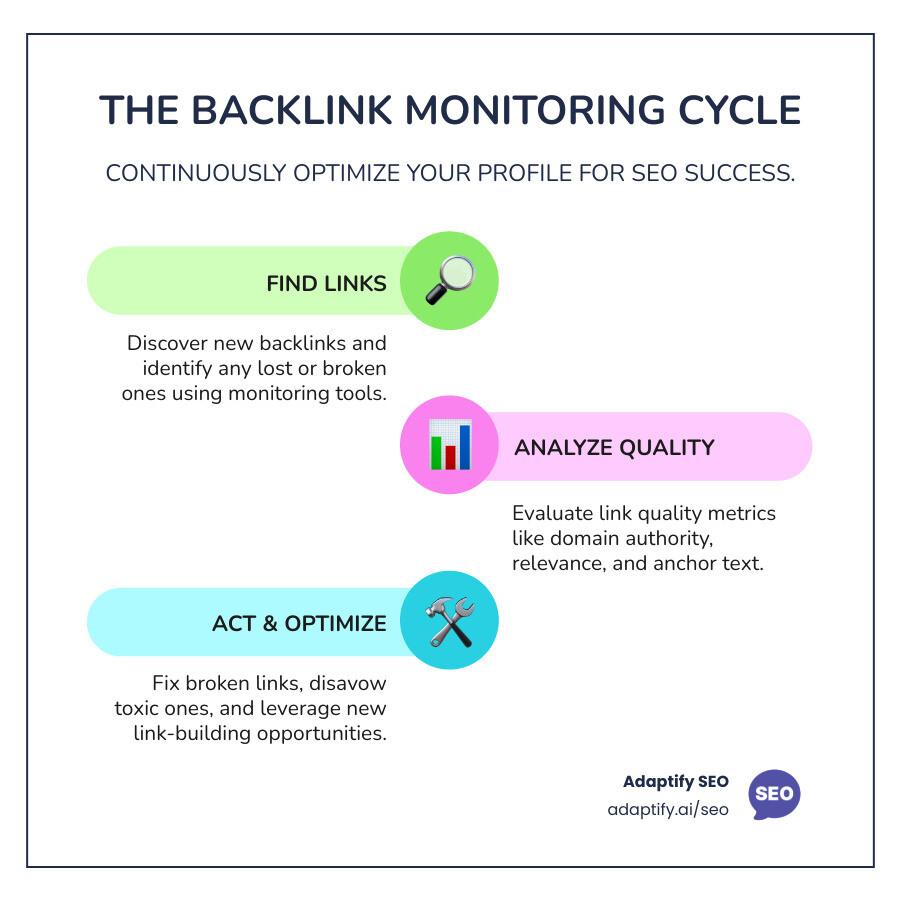
Monitoring your backlinks is about protecting the valuable online presence you've built. Your backlink profile is a dynamic asset, not a static one. Links change, and as Google's John Mueller confirmed, "there are still algorithms that look at link quality." Regular monitoring protects your SEO equity, validates your campaigns, and prevents minor issues from becoming ranking disasters. Here are the three biggest reasons this matters.
It's common to land a fantastic backlink, see your rankings improve, and then months later, the link quietly disappears, taking its SEO value with it.
Lost backlinks drain your link equity without warning. A referring site might redesign, delete old content, or change URLs. The result is that your carefully built backlink becomes a 404 error, doing nothing for your rankings. This phenomenon is known as link rot, as links often break for many reasons unintentionally.
The good news is that monitoring tools alert you when a valuable link goes missing. This allows you to perform link reclamation outreach. A friendly email to the webmaster is often all it takes to restore the link, but you can't fix what you don't know is broken.
A darker side of SEO is negative attacks, where competitors try to sabotage your rankings by pointing toxic, spammy links at your site.
Negative SEO floods your backlink profile with garbage links from sketchy websites, such as adult, gambling, or link farm sites. When Google sees these links, it can penalize your site, even if you had nothing to do with them.
The signs of bad backlinks include links from irrelevant websites, domains with low authority scores, and unnatural anchor text that doesn't match your business. A sudden spike in hundreds of new links from low-quality domains is a major red flag.
Without monitoring, you might not notice these attacks until your rankings tank. With alerts, you can spot suspicious activity immediately and use tools like Google's Disavow Tool to protect your site.
While monitoring your own links, you can also watch your competitors. This is a goldmine for your link building strategy.
By monitoring competitor backlinks, you reverse engineer their strategy. You see where they get links, what content earns them, and which sites in your industry are actively linking out. For example, if a competitor gets a link from an industry publication, that's a guest post opportunity for you.
If you see competitors getting links from business directories or associations, that pattern reveals a competitive edge you can exploit. They will likely link to you too. You might even find broken links on high-authority sites that once pointed to a competitor, giving you a chance to suggest your content as a replacement.
This competitive intelligence transforms link building from guesswork into a targeted strategy. If you want to scale this approach, our content services can help automate the process.
In short, monitoring backlinks is about being smart and protecting your SEO assets. It helps you recover lost links, defend against attacks, and find new opportunities, turning a simple question of how do I monitor backlinks into a competitive advantage.
Now that we understand why backlink monitoring matters, let's get practical. The most effective strategy combines manual checks with automated tools, giving you both hands-on control and the efficiency of automation.
The data backs this up: 76.92% of SEO experts focus on monitoring new backlinks, and 72.31% watch link quality. This proactive approach is what separates successful campaigns from mediocre ones.
If you're on a limited budget, you can start by monitoring backlinks manually using Google Search Console (GSC), a free tool from Google.
After verifying your site in GSC, steer to the Links section and review your "External Links." Here, you'll find a list of websites linking to yours, the pages on your site with the most links, and the most common anchor text. You can export this data for manual review.
However, manual checking has limitations. GSC data can be delayed, it lacks advanced link quality metrics, and it doesn't offer competitor analysis. It's a good starting point for detecting basic issues, but professional SEO requires more advanced solutions.
Automated backlink monitoring tools transform a tedious manual task into an efficient, streamlined process. They save time and reveal insights you would likely miss otherwise. When choosing a tool, look for these key capabilities:
Free tools are a good way to start. Beyond GSC, some SEO platforms offer free backlink checkers for quick spot-checks, but they lack the depth and real-time features of paid subscriptions.
Paid tools are indispensable for serious backlink monitoring. They offer extensive databases, real-time alerts, deep competitor analysis, and historical data. The investment pays for itself in time saved and opportunities found.
Here's how free and paid tools generally stack up:
| Feature | Free Tools (e.g., GSC, free checkers) | Paid Tools (e.g., comprehensive SEO suites) |
|---|---|---|
| Data Depth & Volume | Limited, often top 10-100 links | Extensive, millions of links |
| Real-time Alerts | No (GSC updates irregularly) | Yes, often daily or hourly |
| Competitor Analysis | Very limited or none | Comprehensive |
| Historical Data | Limited | Extensive archives |
| Link Quality Metrics | Basic (e.g., GSC's linking domains) | Advanced proprietary scores (DA, DR, AS) |
| Disavow Tool Integration | Manual (via GSC) | Often integrated, easier workflow |
| Support & Reporting | Minimal | Dedicated support, advanced reporting |
| Cost | Free | Monthly/Annual subscription |

Gathering backlink data is just the first step. The real power comes from turning that information into an action plan to improve your link profile health.
When reviewing backlink data, quality beats quantity every time. One solid link from a respected industry site is worth more than a hundred from low-quality directories.
When you find toxic links pointing to your site, you may need to disavow them. The disavow file is a text document you submit to Google, asking it to ignore specific links when evaluating your site.
You can access Google's Disavow Tool inside Search Console. However, use it with caution. Disavowing should be reserved for two main scenarios:
To create the file, list each problematic URL or entire domain (using "domain:example.com") on a new line in a .txt file. Then, upload it via the Disavow Tool.
Be aware of the cautions and risks. Disavowing good links can seriously damage your SEO. As one expert noted, "Unless you have a good reason to believe that you have been the victim of malicious spam link building strategies, you can assume that a low-value backlink is better than no backlink at all." When in doubt, consult an SEO professional. At Adaptify, we help agencies steer these decisions as part of our automated SEO services.
The ideal frequency depends on your site's activity.
No matter the frequency, consistency is key. Stick to a regular schedule to effectively track patterns and opportunities.
Understanding this distinction is fundamental to backlink analysis.
rel="nofollow") telling search engines not to pass authority. Variations include rel="ugc" for user-generated content and rel="sponsored" for paid links. While they don't directly boost rankings, they drive referral traffic and help create a natural-looking link profile.A natural link profile includes both types. A LinkedIn poll found that 43% of participants believe no-follow links have some value, suggesting they are not worthless. A healthy mix of do-follow and no-follow links looks more organic to search engines.
Spotting toxic backlinks early can prevent ranking drops. Here are the common warning signs:
Throughout this guide, we've journeyed through the essential question of how do I monitor backlinks – from understanding why your link profile needs constant attention to mastering the tools and techniques that make monitoring manageable. The truth is, backlinks are one of your most valuable SEO assets, and like any investment, they require regular care and attention.
Think of backlink monitoring as routine maintenance for your website's reputation. It's not something you do once and forget about. Rather, it's an ongoing process that protects everything you've built, helps you recover links that might have slipped away, shields you from competitors trying to sabotage your rankings, and reveals fresh opportunities you might otherwise miss. Every time you check your backlink profile, you're essentially taking your site's pulse – making sure it stays healthy and continues climbing in the search results.
The data is clear: successful SEO professionals make backlink monitoring a priority because they understand its impact. When you consistently monitor your links, you're not just being cautious – you're being strategic. You're ensuring that every link continues to work in your favor, and you're ready to act quickly when something changes.
For agencies managing multiple clients, the challenge multiplies exponentially. Manually tracking backlinks for dozens of websites simply isn't realistic. I've seen agencies struggle with spreadsheets and manual checks, spending hours on tasks that could be automated. That's where smart automation becomes a game-changer, freeing up your team to focus on strategy, client relationships, and actual growth rather than repetitive monitoring tasks.
At Adaptify.ai, we've built our platform specifically for agencies like yours. We understand that your time is better spent on high-level strategy and client success, not on manually checking link reports. Our automated solutions handle the heavy lifting of backlink monitoring, giving you real-time insights and alerts without the constant manual effort.
If you're ready to stop spending hours on backlink monitoring and start focusing on what really moves the needle for your clients, we'd love to show you how automation can transform your workflow. [Learn more about our automated backlink solutions](https://adaptify.ai/seo/overview/backlinks) and see how we're helping agencies scale their SEO services more efficiently than ever before.

Discover how backlink automation software streamlines outreach, saves time, and scales your SEO strategy safely and effectively.
Track every backlink with an SEO backlink monitor—spot lost links fast, protect rankings, and boost ROI before competitors do.
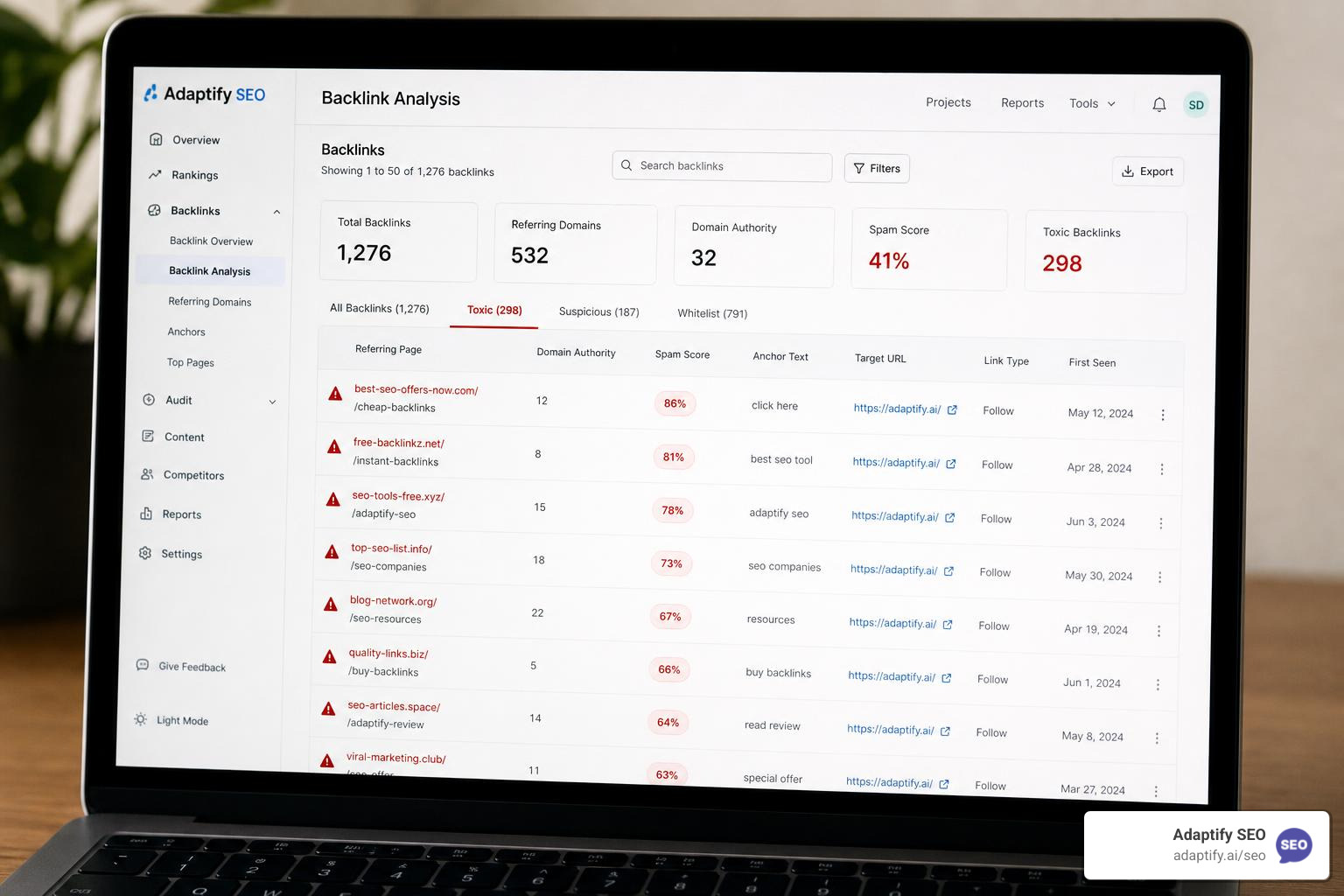
Learn how to disavow toxic backlinks, clean your profile, and recover rankings with this step-by-step guide.
Join 1,000+ agencies already delivering SEO and AI visibility from a single platform without increasing their headcount.Join 1,000+ agencies already delivering SEO and AI visibility from a single platform without increasing their headcount.