Don't Get Penalized: How to Identify and Disavow Bad Backlinks




Identify bad backlinks quickly to protect your website from Google penalties and ranking drops. Bad backlinks come from spammy, irrelevant, or manipulative sources and can damage your site's authority and search visibility.
To identify bad backlinks, you should regularly review your link profile using Google Search Console and specialized backlink audit tools. Look for red flags like links from spammy or irrelevant sites, low-authority domains, and over-optimized anchor text. A sudden spike in low-quality links can also signal a negative SEO attack.
You spend countless hours optimizing your clients' websites, creating quality content, and building a solid SEO strategy. Then one day, rankings plummet. The culprit is often toxic backlinks that Google's algorithm has flagged.
The frustrating reality is that bad backlinks can accumulate without you even knowing. While link quantity matters, it's the quality that truly counts. Even sites with millions of backlinks can see their traffic drop if those links are toxic.
Google's stance is clear: links obtained for artificial manipulation of search rankings are considered link spam. While Google's algorithm now mostly ignores bad links rather than penalizing sites, a large accumulation of toxic backlinks can still trigger a manual action from Google's webspam team. This can suppress your site in search results or remove it entirely.
The good news? You can take control. By learning to identify and manage toxic backlinks, you protect your clients' sites from penalties and build a healthier backlink profile for long-term success.
I'm Hansjan Kamerling, and I've helped multiple SaaS platforms and startups scale their SEO strategies, including managing link-building campaigns and backlink audits. In this guide, I'll show you exactly how to identify bad backlinks and what to do about them. The process isn't complicated—but it does require a methodical approach.
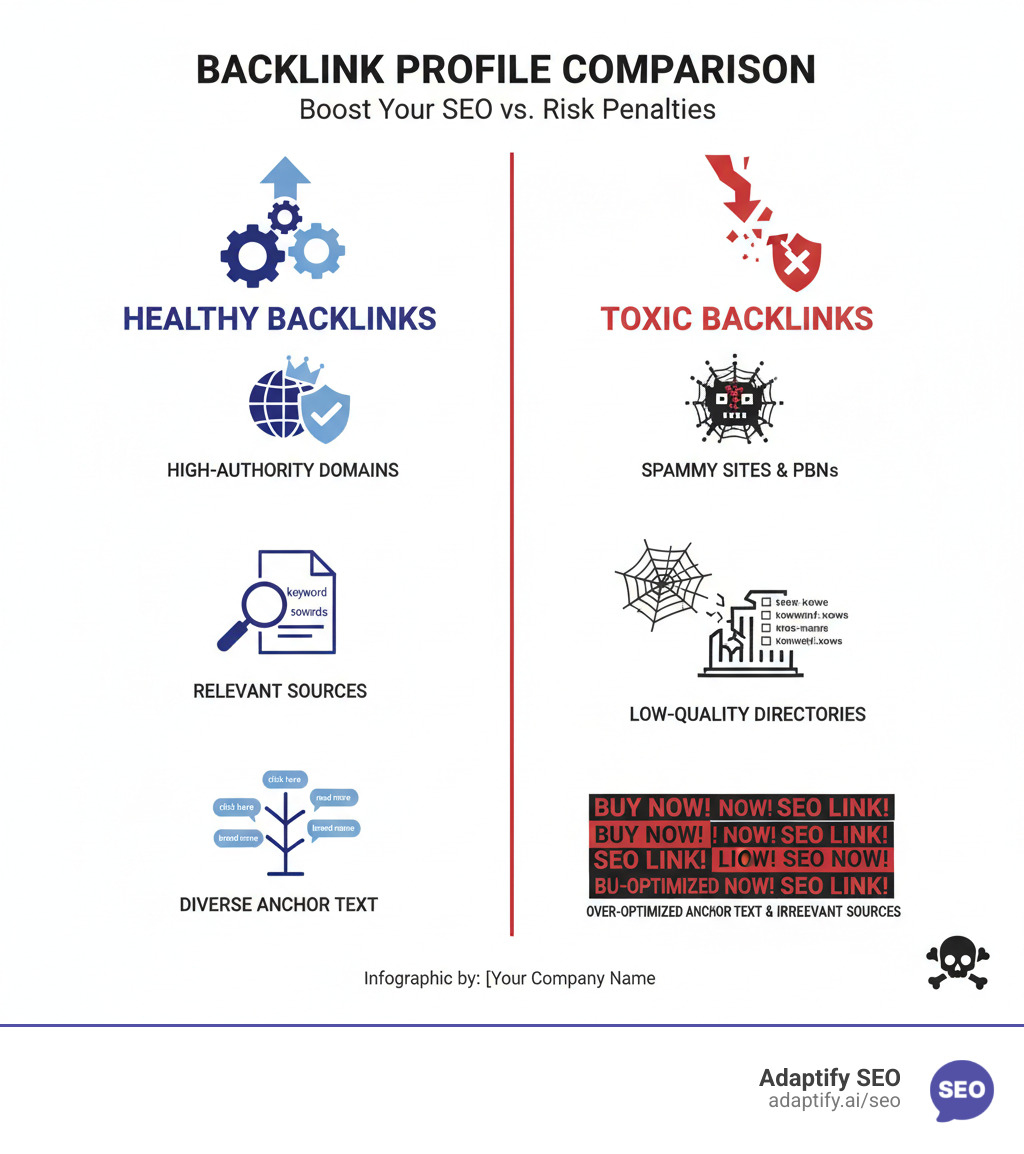
Imagine pouring countless hours into optimizing a client's website, only to see their organic traffic dwindle. That's the real cost of a bad backlink profile. Toxic backlinks don't just sit there; they actively undermine your SEO efforts. They can lead to Google penalties, causing ranking suppression, loss of organic traffic, and a damaged brand reputation. It's like having holes in your SEO bucket – no matter how much good work you add, the bad links keep draining your progress.
Google's approach to "bad" links has evolved. With the Penguin algorithm now part of its core, the focus shifted towards combating spammy and manipulative link building.
Google's stance on links intended to manipulate rankings is clear: "Links obtained primarily for artificial manipulation of Search rankings are link spam. Our algorithms and manual actions aim to nullify these unnatural links at scale..." This means Google is constantly improving its ability to identify and deal with manipulative link schemes.
A significant change came with Penguin 4.0, where Google switched from actively demoting pages with bad links to a system that largely ignores them. This means many low-quality links might simply be devalued rather than actively harming your site.
However, this doesn't mean you're off the hook. While Google's John Mueller has stated that negative SEO links rarely harm a site, there's a crucial distinction. If Google detects a pattern of deliberate manipulation, it can still result in a manual action or penalty. So, while Google might ignore accidental spam, it won't ignore deliberate attempts to manipulate its rankings.
Now that we understand the gravity of the situation, let's get practical. Learning to identify bad backlinks requires patience and a methodical approach. Think of it as a health checkup for your website—you're looking for symptoms that could indicate bigger problems.
I'll walk you through both manual auditing and using automated tools. The truth is, you'll probably need both approaches to get a complete picture of your backlink profile.
A manual audit takes more time, but it gives you a level of insight that no algorithm can match. You're using your human judgment to spot patterns and red flags that automated tools might miss.
Start by heading to Google Search Console. This should always be your first stop because it shows you which sites Google sees linking to you. Sign in, click on "Links" in the left sidebar, then hit "More" under "Top linking sites." From there, you can export a complete list of domains pointing to your website.
Open that exported file in a spreadsheet. Now comes the interesting part—visiting these websites and evaluating them. When you visit each linking domain, you're looking for specific warning signs:
My experience has taught me that your gut feeling matters here. Does the site feel legitimate? If not, that's probably a link you want to address.
Manually reviewing thousands of backlinks isn't practical for most agencies. This is where automated tools become your best friend. They can analyze massive amounts of data in minutes and flag potential problems.
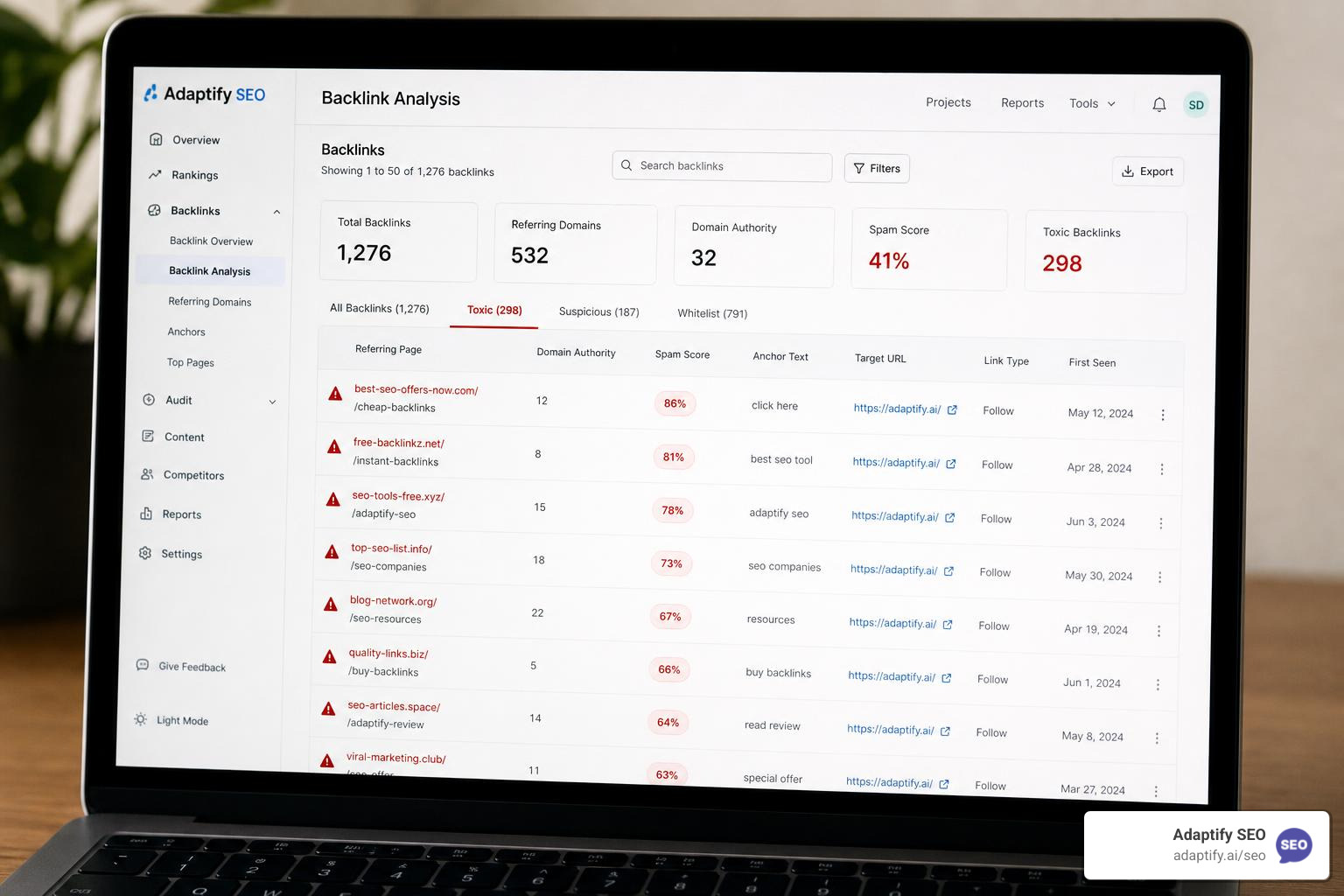
Leading backlink audit tools are comprehensive and intuitive. They analyze dozens of different markers to assign each backlink a Toxicity Score. The higher the score, the more likely that link is causing problems.
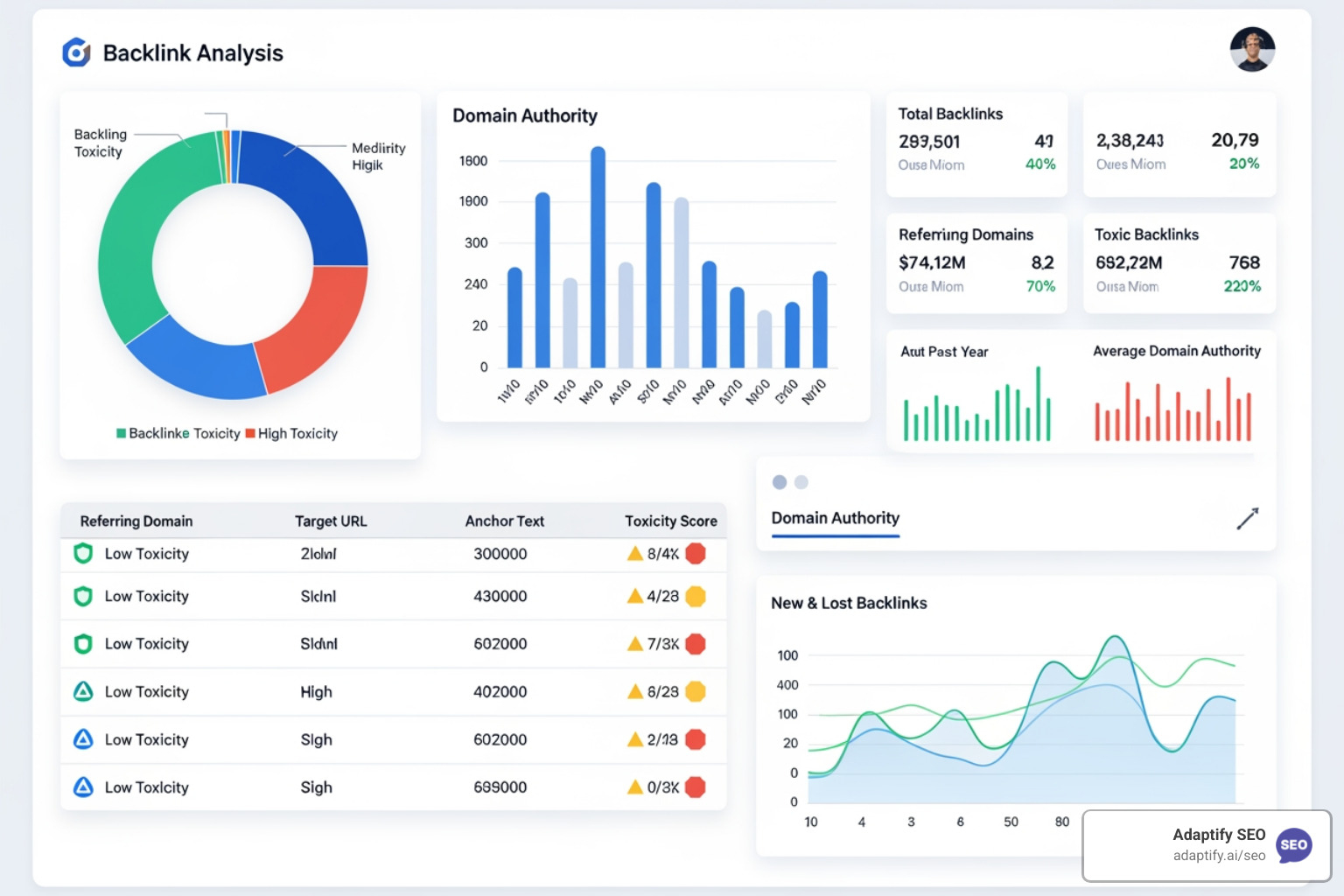
These tools often color-code links to make analysis easier. Highly toxic links are the most likely to be harmful. Potentially toxic links need a closer look. Non-toxic links are generally considered safe.
Other tools offer incredibly comprehensive backlink databases that are updated frequently. You can see domain and page-level metrics, monitor growth over time, and get a complete breakdown of any site's backlink profile. Their anchor text analysis is particularly useful for spotting negative SEO attacks. Plus, you can often add suspicious links directly to a disavow file right from the tool.
Regardless of which tool you choose, there are a few key metrics you should always pay attention to. The Spam Score or Toxicity Score gives you an aggregated assessment of how suspicious a link is. Domain Authority or Domain Rating metrics indicate the overall strength of the linking domain—lower scores often correlate with lower quality sites.
Anchor text analysis is crucial. You're looking for unnatural or over-optimized patterns. "Money anchor text" like "buy cheap widgets" is a red flag. Natural anchor text is diverse—it includes brand names, URLs, and generic terms like "click here."
The beauty of combining automated tools with manual review is that you get both speed and insight. The tools quickly surface the most problematic links, and then your human judgment determines which ones actually need action. That's how you effectively identify bad backlinks and protect your clients' SEO investments.
Let's talk about where toxic backlinks actually come from. Understanding the source of the problem is half the battle won. When you know what to avoid, you can protect your clients' sites from future damage and focus your efforts on building genuinely valuable links instead.
Google's spam policies are surprisingly clear about what constitutes manipulative link building. If you or your clients are engaging in any of these practices—even unknowingly—it's time to course-correct and clean up.
The most common culprits behind toxic backlinks are private blog networks (PBNs), paid links, low-quality directories, link farms, excessive link exchanges, spammy blog comments, forum spam, and hacked sites. Each of these sources operates differently, but they all share one thing in common: they're trying to manipulate search rankings rather than provide genuine value to users.
Think of it this way—Google wants to reward sites that earn links naturally through great content and genuine recommendations. When you try to game the system with artificial link building tactics, you're essentially trying to cheat. And Google has gotten very, very good at catching cheaters.
These two tactics represent some of the most serious violations of Google's guidelines. They're tempting because they promise quick results, but the long-term risks far outweigh any short-term gains.
Paid links are exactly what they sound like—you pay money, you get a link. The problem? Paying for links without appropriate disclosure is a direct violation of Google's Webmaster Guidelines. Google considers this a manipulative tactic. If you pay for a link, it must have a nofollow or sponsored attribute. Without those tags, you're playing with fire.
Then there are private blog networks. These are networks of websites created solely to link to other sites and manipulate search engine rankings. They might look legitimate at first glance, but they exist only to game Google's algorithm. PBNs are particularly risky because Google actively hunts them down. When they find one, the penalties can be severe—including complete de-indexing of your site. It's simply not worth the risk.
Some sources of bad backlinks are less about deliberate manipulation and more about low-quality, spammy environments that offer no real value.
Low-quality directories are a perfect example. Not all directories are bad—legitimate, industry-specific directories can be valuable. But directories with no editorial standards, or those that simply charge for listings without vetting the sites they include, can quickly become sources of toxic backlinks. Google's spam policies explicitly call out these practices as potential link spam.
Comment spam and forum spam are classic tactics. You've seen them—automatically generated comments on blog posts or forum threads that contribute nothing to the conversation but include keyword-rich backlinks. These links offer zero value. For any user-generated content (UGC) links on your own site, Google advises using the rel="ugc" attribute to ensure they're treated appropriately.
Excessive link exchanges fall into a gray area. Google's spam policies specifically state that "excessive link exchanges—which are clearly for the sake of cross-linking—can be considered link spam." If you're exchanging links purely to manipulate rankings, you're asking for trouble.
Watch out for widgets with embedded links too. If you create a widget that other sites can embed, and those widgets include links back to your site without a nofollow attribute, you can quickly generate thousands of unnatural links.
Link building bots and services promising "thousands of backlinks overnight" are almost always bad news. These automated services generate links from the lowest-quality sources imaginable—exactly the kind of links you're trying to avoid when you identify bad backlinks in your audit.
Finally, be aware of hacked sites. Sometimes your site receives links from websites that have been compromised by spammers. This is a common tactic in negative SEO attacks, and while it's not your fault, you still need to address it through the disavow process.
So you've done the detective work and identified the culprits. Now comes the cleanup. Removing bad backlinks is a two-step process. First, you politely ask the webmaster to remove the link. If that doesn't work, you tell Google to ignore it. Let me walk you through both approaches.
Manual removal through outreach is almost always your best first move. It's the only way to actually eliminate a toxic link from the web, rather than just masking it.
The process starts with contacting webmasters. For each harmful backlink on your list, you'll need to find contact information for the site owner. Look for an email address, a contact form, or even social media profiles.
Once you've got their contact details, craft a polite, professional email. Keep it concise and clear. Explain that you've noticed a link from their site to yours, and you'd appreciate it if they could either remove it or add a nofollow or sponsored attribute. Be friendly—you're asking for a favor. I always recommend sending the email from your business domain to prove you're legitimately associated with the website.
Tracking your outreach efforts is critical. Keep a detailed spreadsheet with dates, contact methods, and responses. Don't get discouraged if you don't hear back right away. A polite follow-up a week or two later can work wonders. Sometimes it takes two or three attempts before you get a response.
Now, let's talk about the Google Disavow Tool. Think of this as a powerful tool that should be used with care. It should only be your last resort, used after your outreach efforts have failed or if you've received a manual action from Google.
Google's own guidance is clear: "Most sites will not need to use this tool... You should disavow backlinks only if you have a considerable number of spammy, artificial, or low-quality links AND these links have caused, or are likely to cause, a manual action on your site." In fact, at Pubcon Austin 2023, Google's Gary Illyes suggested that disavows often do more harm than good. So proceed with extreme caution.
If you've received a manual action penalty in Google Search Console for "unnatural links to your site," then disavowing becomes a necessary step in your recovery process.
Creating a disavow file is straightforward. You'll need to compile a plain text (.txt) file with each URL or domain you want Google to ignore listed on a new line. If you're dealing with widespread spam from a particular domain, use the format domain:example.com to disavow the entire domain. You can add comments to your file by starting a line with #. The file has limits: 100,000 lines maximum and 2MB in size.
Once your file is ready, submitting to Google's disavow tool is the final step. Make sure you select the correct Google Search Console property.
Here's where patience becomes essential. Processing time can vary. It typically takes anywhere from one to eight weeks for Google to fully re-scan the web and for you to see any meaningful impact. The next time Google crawls your site, it will consider your disavow file.
Disavowing links tells Google to ignore them—it neutralizes their effect. It doesn't remove them from the web, and it doesn't guarantee an immediate rankings boost. Use this power wisely.
Maintaining a clean backlink profile isn't something you do once and forget about. It's an ongoing commitment. Leave it unattended, and toxic links will inevitably creep in.
Regular monitoring is your insurance policy against both the gradual accumulation of bad links and the sudden shock of a negative SEO attack. With the right systems in place, this doesn't have to be a time-consuming nightmare.
The smartest approach to bad backlinks is stopping them before they become a problem. Think of it as preventative medicine for your SEO health.
Schedule regular backlink audits using automated tools. Whether that's weekly, monthly, or quarterly depends on your site's size and link velocity, but consistency is key. These audits allow you to catch new, problematic links before they can snowball into a serious issue.
Set up alerts in your backlink monitoring tools to notify you whenever a new link points to your site. This real-time awareness is invaluable for spotting suspicious activity immediately.
When you're actively building links through guest posting, take the time to thoroughly vet each opportunity. A single link from a truly authoritative, relevant site is worth far more than dozens from mediocre ones.
Directory submissions deserve special caution. While high-quality, industry-specific directories can be valuable, low-quality ones are link profile poison. Use tools to help you identify trustworthy directories while avoiding the spam-ridden ones.
For agencies juggling multiple clients, automation becomes essential. Learn about our backlink management services to see how we help agencies maintain spotless link profiles without the manual headache.
Let's address negative SEO attacks. While Google's algorithm is generally good at ignoring malicious links, vigilance is still warranted.
The telltale sign of a negative SEO attack is a sudden, unnatural spike in backlinks from irrelevant, low-quality sites, often with spammy anchor text. Your monitoring tools will catch this if you've set them up properly.
Server monitoring is another piece of the puzzle. Attackers can try to overwhelm your server with requests. Regularly checking your website speed and server logs can help you spot these attempts early. Technical audit tools can streamline this process.
Watch out for duplicate content schemes. Some attackers scrape your content and republish it across low-quality sites. Tools that check for duplicate content across the web can help you identify this tactic.
A sneaky attack method involves spammers contacting websites that link to you, pretending to be you, and asking them to remove the link. Protect your valuable backlinks by always contacting website owners from an email address on your domain.
The best defense against bad backlinks is building such a strong profile of high-quality links that the occasional bad one becomes statistically irrelevant. It's the quality of those links that matters most.
Focus on earning links naturally through exceptional content. When you create comprehensive guides, original research, or useful resources, other sites want to link to you.
Content marketing should be your primary link-building strategy. Develop in-depth guides, create unique data studies, or design shareable infographics. When your content is truly valuable, links follow naturally. Explore our content marketing solutions to see how we help agencies create link-worthy content at scale.
Digital PR takes this a step further by actively promoting your best content to journalists, bloggers, and industry influencers. This strategic relationship building can lead to powerful mentions and backlinks from high-authority publications.
Strategic guest blogging on authoritative sites in your niche builds high-quality backlinks while establishing your brand as an industry authority. One guest post on a respected industry publication is worth more than fifty on mediocre blogs.
By consistently focusing on quality over quantity, you'll build a backlink profile that's not just resistant to toxic links—it's genuinely strong enough to compete for top rankings.
Spammy backlinks are like junk mail—low-quality, irrelevant links that Google's algorithms have gotten good at simply ignoring. They won't help your rankings, but they typically won't hurt them either.
Truly toxic backlinks are different. These come from deliberately manipulative practices designed to game Google's rankings, such as private blog networks or large-scale paid link schemes. While Google's Penguin algorithm now mostly devalues spam rather than actively penalizing sites, a clear pattern of manipulation can still trigger a manual action from Google's webspam team. The key difference is intent: a spammy link is often accidental, while a toxic link is a deliberate attempt to manipulate search rankings, which is what Google's spam policies are designed to catch.
Patience is key. It can take several weeks for Google to process your disavow file and for you to see any meaningful impact on your rankings or traffic.
Google's bots might notice your file within 48 hours, but acting on it takes time. Google needs to re-crawl the web and re-assess your site's backlink profile. This entire process typically takes anywhere from 1 to 8 weeks. During this waiting period, continue to monitor your site but understand that the effects will be gradual.
This is a debated topic. Google's John Mueller has stated that negative SEO links rarely harm your site because Google's algorithms are sophisticated enough to identify and ignore them.
That said, it's wise to stay vigilant. If you notice a sudden, massive spike of spammy links and this coincides with a drop in your rankings, it's worth investigating. While direct algorithmic harm might be minimal, a severe attack could theoretically trigger a manual review.
Many SEOs recommend monitoring your backlink profile regularly and disavowing clear attacks as a precautionary measure. Yes, Google's systems are good, but they're not perfect. A proactive approach to identifying bad backlinks and addressing obvious attacks gives you peace of mind and protects your hard-earned rankings.
Maintaining a clean backlink profile isn't a one-time task—it's an ongoing commitment. But it's absolutely worth the effort.
Throughout this guide, we've walked through how to identify bad backlinks, assess their impact, and take action. You've learned to spot red flags, leverage automated tools, and understand the difference between low-quality and manipulative links.
Google's algorithms are sophisticated and usually good at ignoring spam. But "usually" isn't good enough when your clients' livelihoods depend on their search visibility. By regularly auditing your backlink profiles and consistently focusing on building high-quality links, you're not just avoiding penalties—you're building a stronger foundation for long-term success.
Every quality backlink you earn is a vote of confidence. Every toxic link you remove is one less vulnerability. Together, they create a resilient backlink profile that can weather algorithm updates and withstand negative SEO attacks.
Identify bad backlinks proactively, act decisively, and never stop building valuable, natural links. This diligent approach ensures your clients' websites remain authoritative, trustworthy, and visible in search results.
For agencies juggling multiple clients, this can feel overwhelming. Adaptify.ai's automated platform can handle backlink audits and acquisition efficiently, freeing you to focus on strategy. Explore our white-label SEO services to see how we can help you deliver exceptional results without the manual grind.

Discover how backlink automation software streamlines outreach, saves time, and scales your SEO strategy safely and effectively.
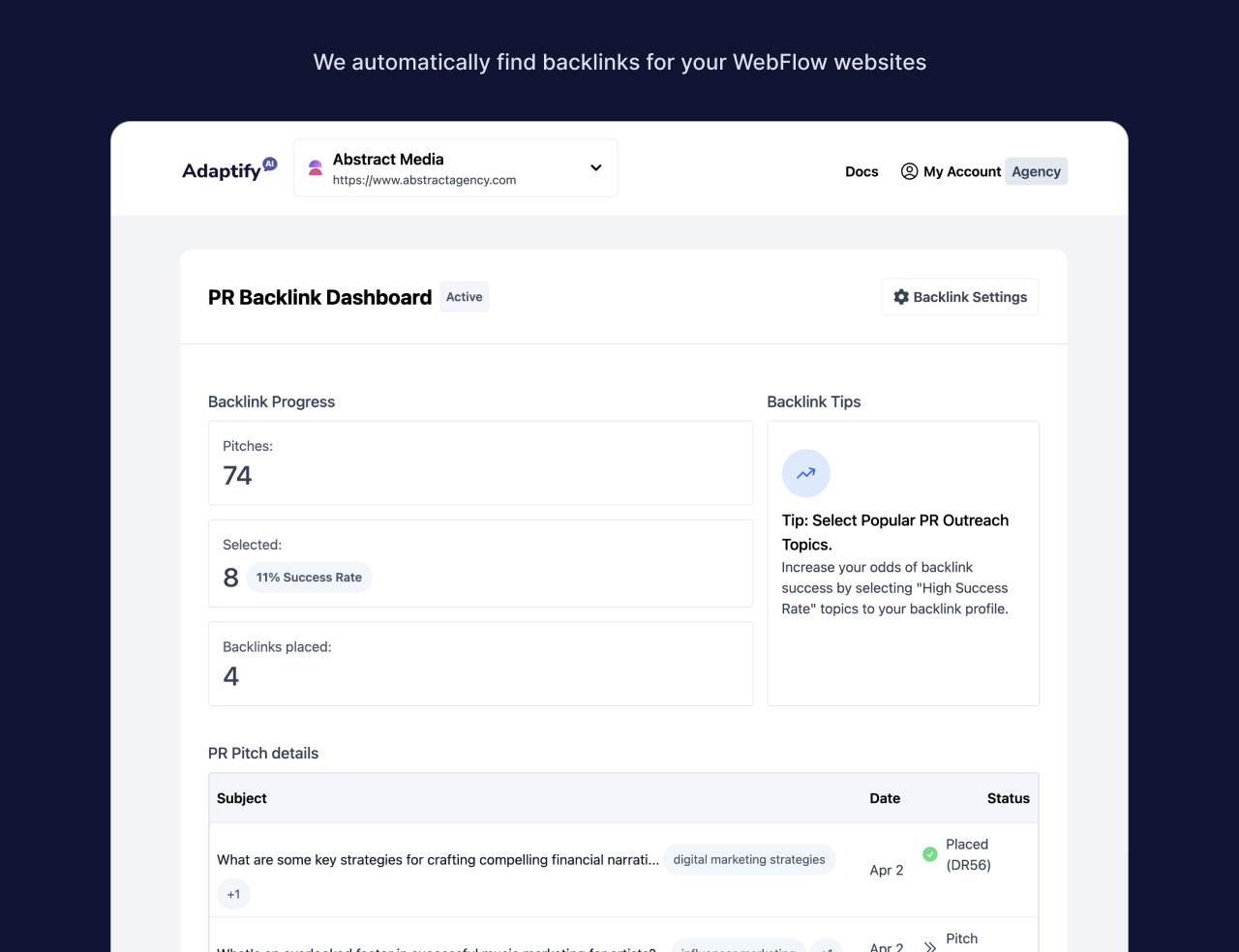
Track every backlink with an SEO backlink monitor—spot lost links fast, protect rankings, and boost ROI before competitors do.
Learn how to disavow toxic backlinks, clean your profile, and recover rankings with this step-by-step guide.
Join 1,000+ agencies already delivering SEO and AI visibility from a single platform without increasing their headcount.Join 1,000+ agencies already delivering SEO and AI visibility from a single platform without increasing their headcount.