Find the Best SEO Agency with Our RFP Sample

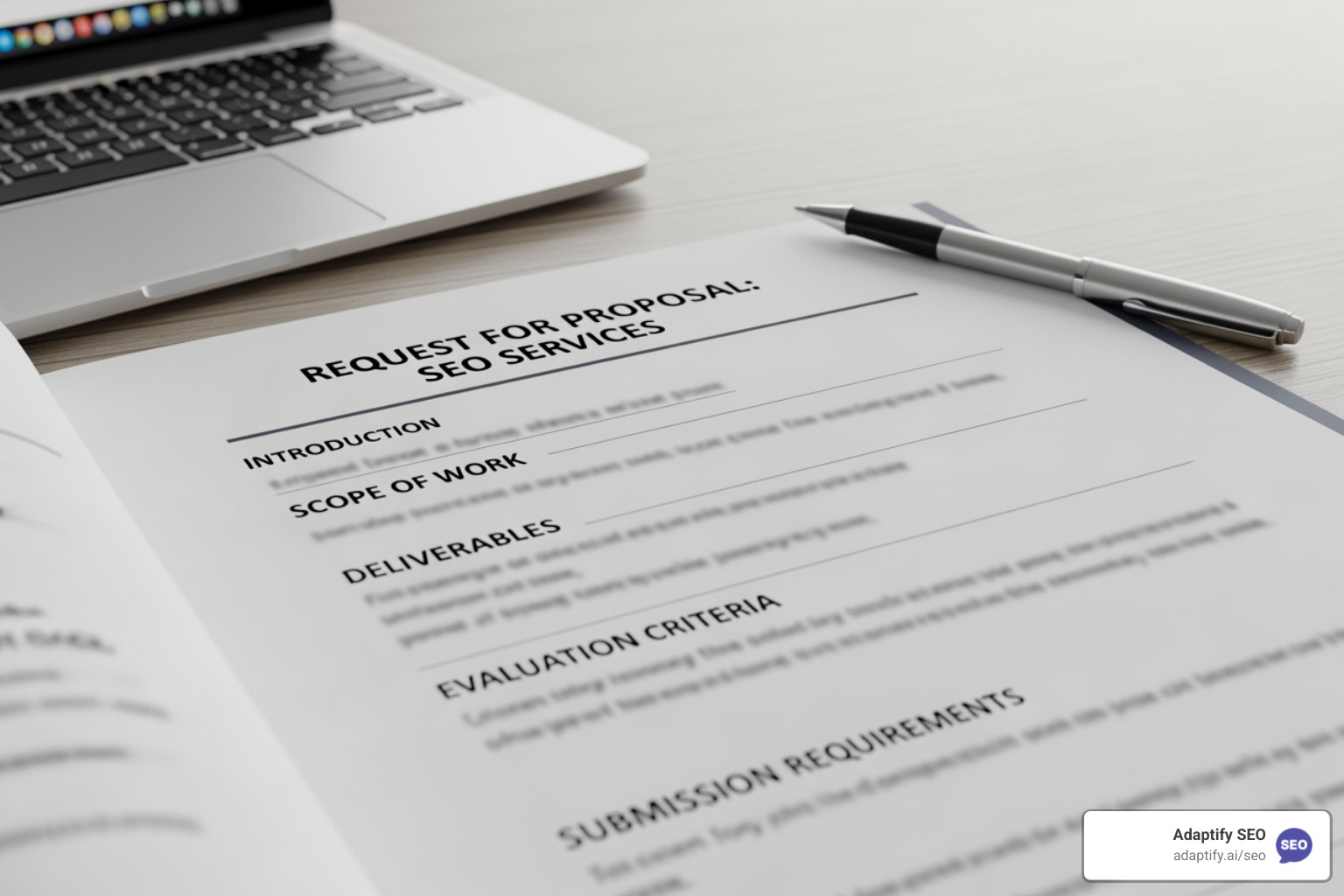

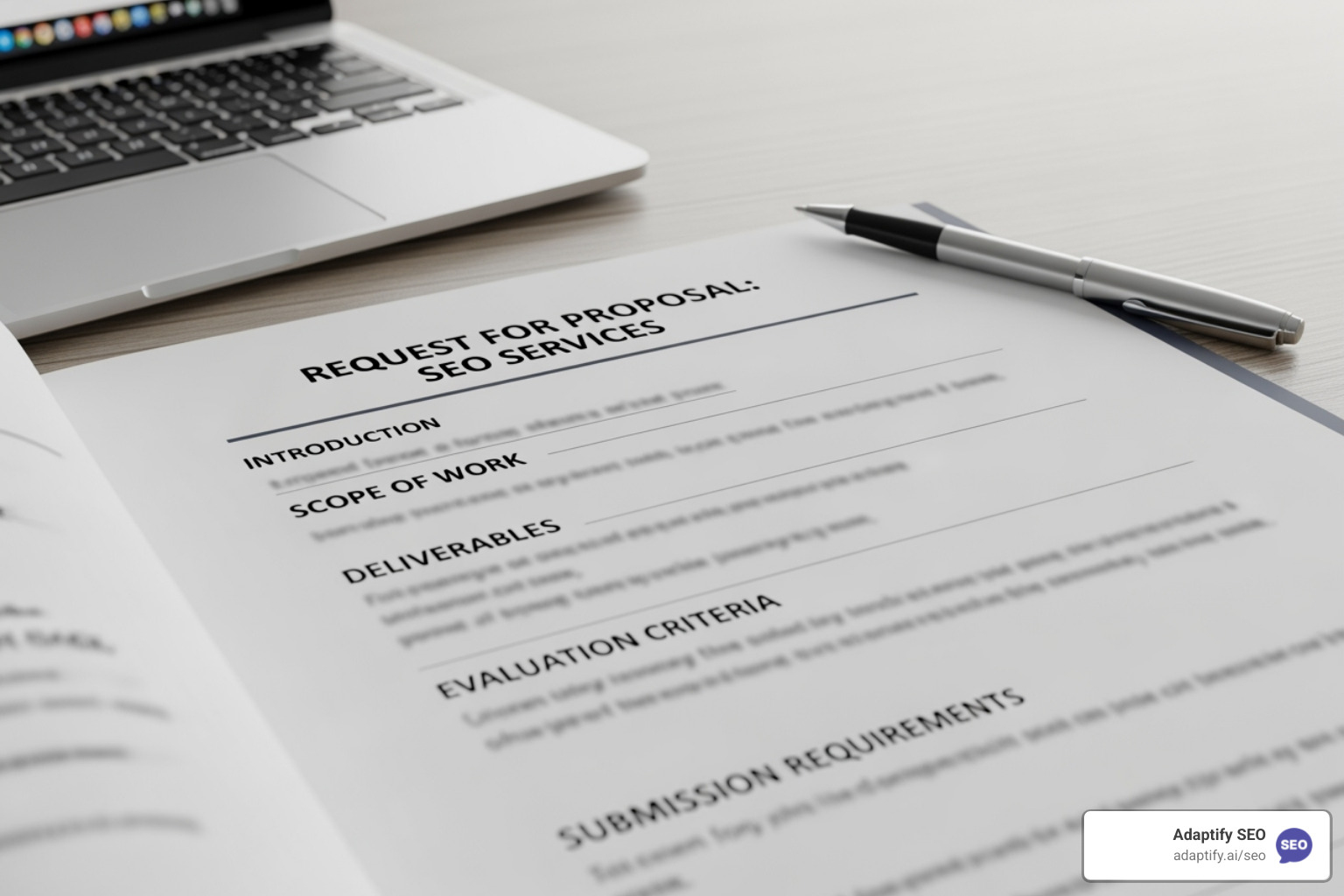
An seo rfp sample provides the structured framework you need to find and evaluate SEO agencies effectively. Here are the key components you should include:
Essential Elements of an SEO RFP:
The SEO agency market is saturated. With thousands of agencies claiming expertise, how do you separate genuine partners from overpromising vendors? Most businesses approach this challenge the wrong way—reaching out to agencies one by one, sitting through countless sales pitches, and trying to compare apples to oranges.
A well-crafted Request for Proposal (RFP) changes this dynamic completely. Instead of chasing agencies, you create a single document that brings qualified partners to you. The RFP serves as both a filter and a communication tool—it aligns your internal stakeholders, clarifies exactly what you need, and gives agencies the information they require to propose customized solutions rather than generic packages.
Research shows that 42.5% of proposals sent through structured systems close within 24 hours of opening, and using an RFP helps businesses skip contacting agencies that fall outside their budget, creating a pre-vetted list of serious contenders. More importantly, an RFP helps you mitigate risk by thoroughly vetting agencies before you invest time in meetings.
The challenge isn't just finding an SEO partner—it's finding the right one. The wrong choice can waste months and thousands of dollars with little to show for it. The right partner can fundamentally change your business trajectory.
I'm Hansjan Kamerling, and throughout my work with SaaS platforms and marketing agencies, I've seen how a strong seo rfp sample accelerates the vetting process and leads to better agency partnerships. This guide will show you exactly how to create one that attracts top-tier agencies and helps you make a confident decision.
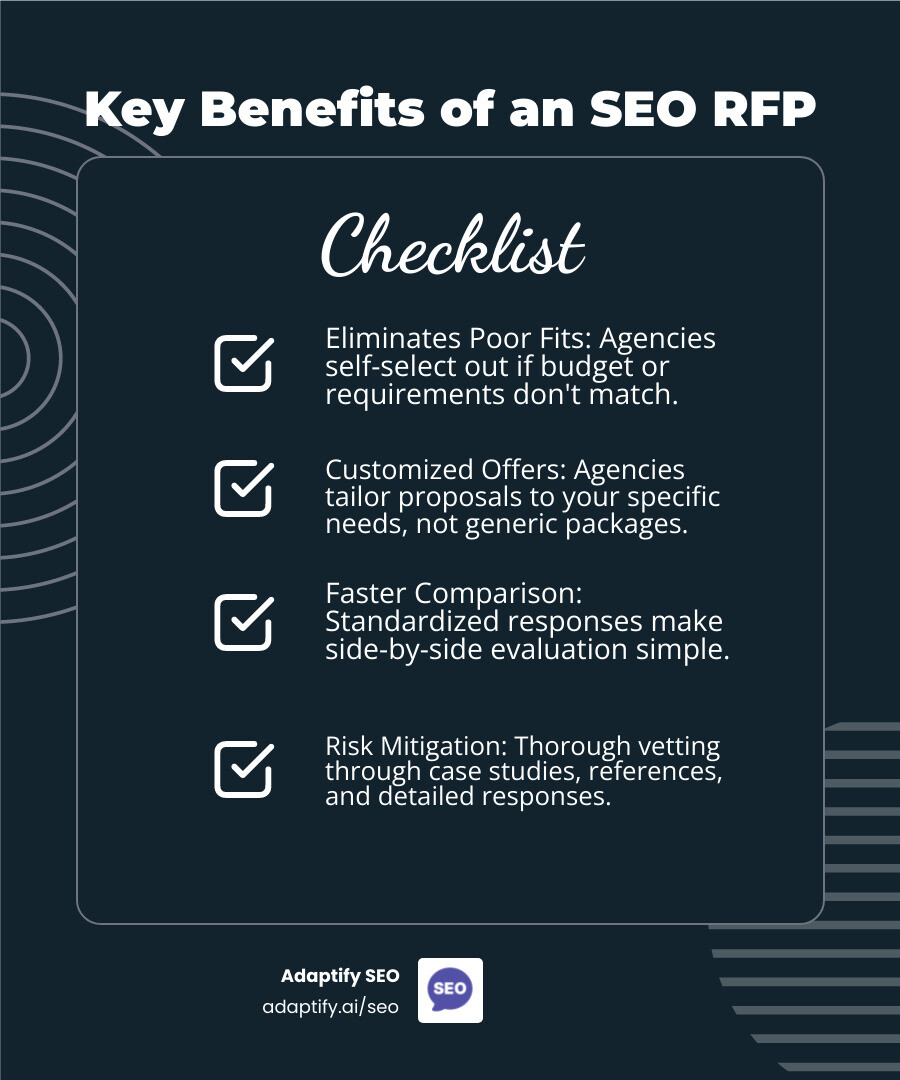
An SEO RFP (Request for Proposal) is a formal document you send to potential SEO agencies. It's a detailed briefing that says, "Here's who we are, what we need, and what we're working with." More than just a procurement document, a well-crafted seo rfp sample is a strategic tool that changes how you find and evaluate partners.
Without an RFP, you're stuck reaching out to agencies individually and sitting through endless sales pitches. It's inefficient and chaotic. An RFP flips this dynamic, bringing qualified partners to you with one comprehensive document. The benefits are substantial.
First, it aligns your stakeholders. Drafting an RFP forces your team to agree on goals, success metrics, and budget before you ever speak to an agency. By the time proposals arrive, everyone is on the same page.
Second, agencies that aren't a good fit self-select out. When you're transparent about your budget and needs, agencies that can't deliver or whose pricing doesn't match simply won't respond. This creates a naturally vetted list of serious contenders.
Third, you get customized offers instead of generic packages. With detailed information about your business, agencies can craft proposals specifically for you, improving pricing accuracy and eliminating cookie-cutter solutions.
An RFP also enables faster, more objective comparisons. With every agency responding to the same questions, you can easily compare their technical approaches, reporting structures, and strategies side-by-side.
Most importantly, an RFP mitigates risk. By requesting case studies, references, and strategic outlines upfront, you're doing a thorough background check. You're not just trusting a sales pitch—you're seeing proof of past performance.
An seo rfp sample transforms a long search into an organized, strategic process. It's not just about finding an SEO agency—it's about finding your SEO agency.
Think of your seo rfp sample as a roadmap—not just for the agencies reading it, but for your own team as well. When crafted thoughtfully, it becomes more than a procurement document. It's a strategic tool that brings clarity to what you actually need, helps agencies understand your world, and gives you actionable insights when it's time to evaluate their responses.
The good news? You don't need to start from scratch. A proven framework ensures you cover all the essentials without writing a dissertation. I highly recommend beginning with a template that's already structured for success. You can download our free SEO RFP template to save yourself hours of work and avoid missing critical details.

This opening section is where you introduce yourself. Agencies need to understand who you are before they can propose how to help you. Start with your company information—a brief but meaningful overview of your business, your mission, and what makes you different from competitors. Include your website URL and paint a picture of your target audience. Who are you trying to reach? What do they care about?
Don't forget to mention your key competitors. This gives agencies valuable context about the landscape you're operating in and the challenges you face. It helps them understand what you're up against and how aggressive your SEO strategy might need to be.
The project summary and statement of purpose is arguably the most important part of your entire RFP. This is where you explain why you're doing this. What problem keeps you up at night? Are you launching a new product line and need visibility? Has organic traffic plateaued? Did your previous agency underdeliver? This statement reveals important information that shapes everything that follows.
Finally, be honest about your current SEO strategy. If you've been working with another agency or handling SEO in-house, share what's been done, what's worked, and what hasn't. Include past performance metrics, current keyword focus, content efforts, and link-building activities. This transparency helps agencies avoid proposing things you've already tried and allows them to build on your existing foundation rather than starting from zero.
Here's where you define what success actually looks like. Vague aspirations like "we want more traffic" won't cut it. Your project goals need to be SMART—Specific, Measurable, Achievable, Relevant, and Time-bound. Instead of "improve search rankings," try "increase organic website traffic by 30% and generate 50 qualified leads per month from organic search within 12 months." See the difference? One is a wish; the other is a target.
Beyond traffic numbers, identify your Key Performance Indicators (KPIs) that truly matter to your business. Maybe it's organic conversions, revenue attributed to organic search, lead quality, or visibility for specific high-value keywords. These KPIs tell agencies what you actually care about, not just what sounds impressive.
The critical elements of project scope outline exactly which areas of SEO you need help with. This is where you get specific about whether you need technical SEO work like site audits and page speed optimization, on-page SEO including keyword research and content optimization, or content strategy and creation. If content is a priority, you might be interested in how Adaptify.ai helps agencies scale their content services using AI-powered automation.
You might also need off-page SEO and link building support—strategies for earning high-quality backlinks that boost your authority. Adaptify.ai offers tools to help agencies streamline their backlink services and outreach efforts. Other scope areas could include local SEO, e-commerce optimization, or analytics and reporting.
Finally, spell out your expected deliverables. What tangible outputs do you want to see? Monthly reports? A comprehensive technical audit? Content calendars? A specific number of optimized pages or acquired backlinks? Being clear here prevents misunderstandings down the road.
Let's talk about the elephant in the room: budget transparency. Many companies treat their budget like a state secret, but this actually works against you. When you share your budget range—even if it's broad—agencies can tailor their proposals to what's actually feasible. It helps improve pricing accuracy dramatically, and agencies that are way outside your range will politely bow out, saving everyone's time.
If you're genuinely unsure what SEO should cost for your situation, try using a tool to estimate your SEO budget before finalizing your RFP.
Your decision timeline keeps the process moving and manages everyone's expectations. Include key dates: when questions are due, the proposal submission deadline, when you'll conduct interviews, and your anticipated decision date. Without these guideposts, the process can drag on indefinitely.
The submission requirements section ensures you can actually compare proposals side-by-side. Specify the format (PDF? Presentation?), approximate length, and which questions you want directly addressed. Requiring specific formats makes your evaluation process infinitely easier.
Finally, designate a single point of contact for all RFP-related questions. This person becomes the central hub for communication, ensuring agencies get consistent information and preventing confusion from conflicting answers.
Having a solid seo rfp sample is just the beginning. The real work starts when you prepare your team, review proposals, and choose your long-term SEO partner. With the right approach, this process becomes manageable and empowering.

The best RFPs start with conversations, not writing. Before drafting, gather your key stakeholders—marketing, sales, product, and leadership—to get aligned on goals. This prevents internal confusion and ensures the RFP reflects what success truly means for your organization.
Once aligned, define clear objectives and goals. Go beyond "better rankings" and focus on specific business outcomes like qualified leads, conversion rates, or brand visibility. These will become the SMART goals in your RFP.
Next, outline your existing SEO efforts in detail. Document past strategies, current tools, team involvement, and results. This context helps agencies propose relevant solutions instead of suggesting things you've already tried.
Finally, proofread your draft carefully and ask someone outside your team to review it. A fresh perspective can catch confusing jargon or unclear instructions that could lead to mismatched proposals. These preparation steps are crucial for clarifying your needs and preventing wasted time with the wrong agency.
When proposals arrive, you need a system to evaluate them.
Start with an objective scoring system. Create a rubric based on your RFP criteria (strategy, experience, deliverables, price, etc.) and score each proposal consistently. Use this agency evaluation template to keep your analysis organized.
Pay attention to the small stuff. Did the agency answer your specific questions, or use generic copy? Typos and sloppiness in a proposal are red flags for their future work.
Investigate their agency case studies thoroughly. Are they relevant to your industry? Do they show real business outcomes (revenue, leads) or just vanity metrics? Ask follow-up questions about their methodology and challenges.
Actually call the references. This is a critical step many businesses skip. Ask past clients about the agency's communication, problem-solving, and responsiveness. A 15-minute call can be more revealing than a 30-page proposal.
When comparing pricing, look at value, not just cost. A lower price might mean a junior team or a cookie-cutter strategy. Compare the investment against the depth of their approach, team experience, and track record.
Finally, schedule follow-up meetings with your top two or three finalists to assess cultural fit. You're looking for a long-term partner, not just a vendor.
Even with a great seo rfp sample, common pitfalls can derail your search. Avoid these mistakes:
Avoiding these mistakes ensures your RFP process attracts the right partners for a successful, productive relationship.
I've worked with countless businesses navigating the RFP process, and certain questions keep coming up. Let me share the answers that will help you move forward with confidence.
Here's the reality: most effective SEO proposals run about 11 pages and include 7 core sections. But before you start counting pages, understand that length isn't the real measure of quality.
The best proposals I've reviewed are concise, visually engaging, and laser-focused on value rather than volume. They use clear headings, short paragraphs, and visual content to make complex strategies digestible. Think of it this way—a proposal isn't just a demonstration of what an agency can do. It's proof of how well they can communicate their strategic thinking and tailor their approach specifically to your needs.
If you receive a 40-page document filled with generic industry information, that's not impressive—it's overwhelming. A well-crafted seo rfp sample should inspire equally well-crafted responses that respect your time while thoroughly addressing your needs.
Yes, and I can't stress this enough: always include your budget or at least a realistic range.
I know some businesses worry that revealing their budget means agencies will automatically charge the maximum amount. But the opposite is true. When you're transparent about what you can invest, something powerful happens: agencies that can't deliver meaningful results within your budget will respectfully step away. This isn't a loss—it's a massive time-saver.
Research backs this up. Providing your budget upfront allows out-of-budget agencies to self-select out, creating a naturally vetted list of providers who can actually work within your parameters. You'll receive proposals with improved pricing accuracy because agencies can tailor their scope and services to fit your reality, not guess at what you might spend.
Think about all those awkward conversations you'll avoid—the back-and-forth about whether they can "sharpen their pencil" or adjust their pricing. When budget is clear from the start, agencies present their best, most relevant offer immediately. You're not leaving money on the table; you're ensuring every proposal you review is genuinely aligned with your financial capacity.
AI is fundamentally reshaping how SEO works, and the SEO game is changing faster than ever. If you're not asking about AI in your RFP, you're missing a critical piece of the puzzle.
When it comes to AI in content creation, you need to understand how agencies balance efficiency with authenticity. Ask them directly: How do you ensure that AI-generated content still feels genuine and engaging? What's your disclosure policy? The last thing you want is content that reads like it was written by a robot, even if it technically wasn't.
Dig into their AI tools and processes. Which AI-powered platforms do they use for keyword research, competitive analysis, or technical audits? More importantly, how do these tools integrate into their overall workflow? Are they using AI to improve human expertise, or as a replacement for strategic thinking?
You should also explore their understanding of AI's impact on search behavior. Google's AI Overviews and other generative search experiences are changing how people find information. How will the agency adapt your strategy to maintain visibility in this new landscape? Do they track performance in generative AI results?
Data protection is another crucial consideration. If you're thinking about blocking AI bots from crawling your site, or if you're concerned about proprietary information, you need to know what safeguards the agency has in place when using AI tools.
Finally, ask about adaptability. The AI landscape shifts monthly, sometimes weekly. How does the agency stay current, and more importantly, how quickly can they pivot your strategy when things change?
For agencies seeking to offer cutting-edge solutions, platforms like Adaptify.ai specialize in automated SEO services that streamline everything from strategy formulation to content creation and PR link building. Our approach reduces manual effort while enhancing efficiency—exactly the kind of AI integration that forward-thinking businesses should be asking about.
The agencies that can answer these questions thoughtfully and specifically are the ones equipped to steer the future of SEO, not just its present.
Finding the right SEO agency shouldn't feel like searching for a needle in a haystack. With a thoughtful seo rfp sample in hand, you've got the power to turn what could be an overwhelming process into something strategic, manageable, and even empowering.
Think of your RFP as more than just paperwork—it's your roadmap to a partnership that could fundamentally change your business trajectory. It brings clarity to your needs, gets your team rowing in the same direction, and invites agencies to show you their best work. Most importantly, it helps you make a decision you can feel genuinely confident about, not one you're second-guessing six months down the line.
Throughout my years working with agencies and SaaS platforms, I've witnessed how the businesses that take their RFP process seriously end up with the strongest, most productive partnerships. These aren't just vendor relationships—they're collaborations with partners who understand your vision and have the expertise to make it reality.
The agencies that respond thoughtfully to your RFP, that ask smart questions and propose customized strategies, are showing you exactly how they'll approach your actual SEO work. You're essentially getting a preview of what it's like to work with them before you sign anything.
So don't settle for a rushed decision or a generic pitch deck that could have been sent to anyone. You deserve a partner who truly understands your unique challenges and opportunities. Take the time to craft a comprehensive RFP, evaluate responses objectively, and choose the agency that aligns with both your goals and your values.
Ready to move forward? If you're looking for a partner that accepts AI-powered efficiency while delivering real results, Get a customized SEO proposal from Adaptify.ai. We'll show you exactly how we can help accelerate your SEO success with our automated approach—custom specifically to your needs.
Your ideal SEO partnership is out there. Now you have the tools to find it.

Compare automated SEO vs manual SEO to build a hybrid workflow that scales rankings with human oversight in 2026.

Master SEO service differentiation to stand out in a crowded market and prove your agency's unique business-first value.
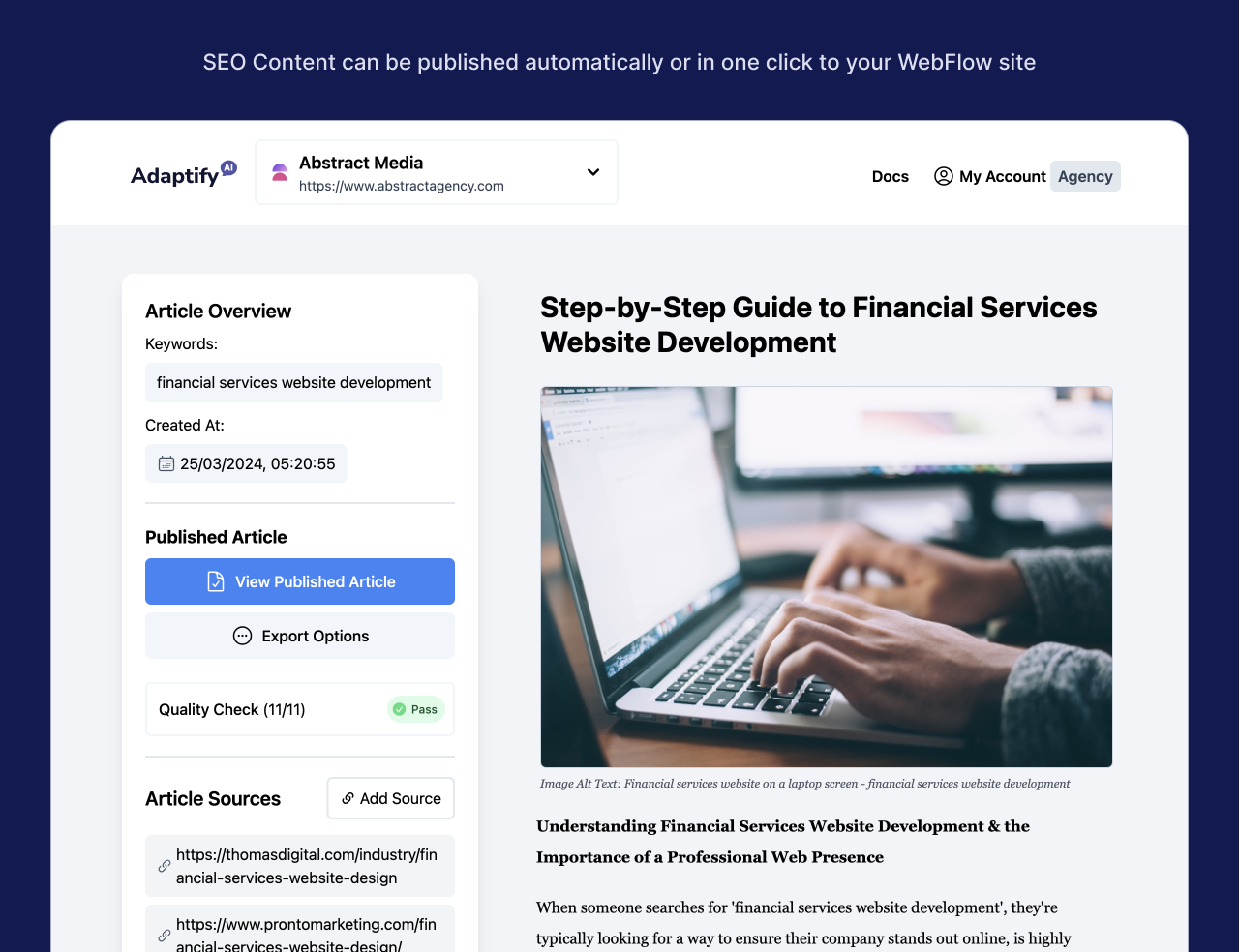
Stop wasting hours—automate your SEO reports to boost agency efficiency and client trust.
Join 1,000+ agencies already delivering SEO and AI visibility from a single platform without increasing their headcount.Join 1,000+ agencies already delivering SEO and AI visibility from a single platform without increasing their headcount.