From Idea to Publish: Automating Your Blog Writing Process

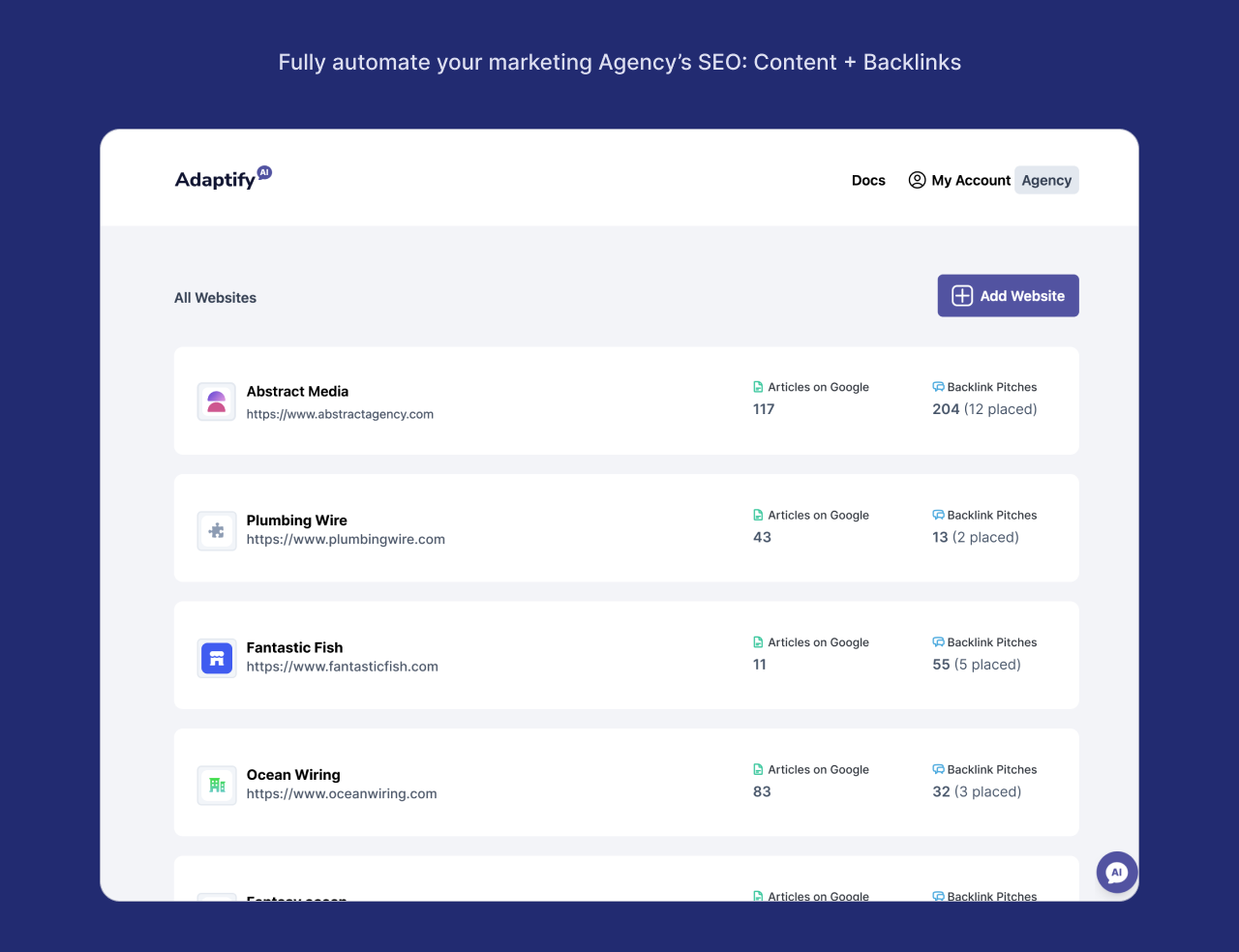

Automated blog writing is the process of using AI-powered tools to generate blog content—from outlines and drafts to full articles. Here's what you need to know:
The AI writing assistant market is growing rapidly, with businesses using AI for content creation reporting a 30% increase in content output.
But let's face it: the manual intensity of creating consistent, high-quality content can be a bottleneck that limits growth, especially for agencies managing multiple clients. That's where automation changes everything.
Modern AI tools like GPT-4o, Claude, and Gemini can now understand context, follow brand guidelines, and produce coherent long-form content that ranks. These aren't simple content spinners—they're sophisticated systems that can generate blog posts up to 5,000 words in under a minute.
The shift is already happening. Projections suggest AI is expected to generate 90% of all digital content by 2025. However, automation doesn't mean removing humans. The best approach treats AI as a powerful assistant that handles the heavy lifting, while human editors add fact-checking, personal insights, and strategic direction.
I'm Hansjan Kamerling, and I've spent years helping SaaS platforms and AI startups design systems that scale efficiently. In this guide, we'll walk through the entire process of automating your blog writing—from generating ideas to ensuring your AI-generated articles meet both Google's standards and your audience's expectations.
When I first explored AI-powered writing, I had my doubts. Could software really capture the nuance that makes content worth reading? I've since learned that AI isn't here to replace human writers—it's here to boost them.
The magic behind automated blog writing comes from natural language processing (NLP) and large language models (LLMs) like GPT-4, Google's Gemini, and Anthropic's Claude. These massive neural networks are trained on billions of words, learning patterns, grammar, and different writing styles. The AI infrastructure powering these systems is remarkably sophisticated. When you give an AI tool a prompt, it predicts the most likely next word, building sentences that sound natural and make sense.
The real-world benefits are changing how we create content.
The relationship between AI and human writing isn't competitive. AI excels at processing information quickly and handling repetitive tasks. Humans bring creativity, emotional intelligence, and critical thinking. The sweet spot is using AI for the groundwork so you can focus on adding the human touches that truly matter. For a comprehensive look at how AI-powered content fits into a broader strategy, check out more info about content services.
The bottom line? AI isn't replacing content creators. It's giving them superpowers.
The theory behind automated blog writing is fascinating, but you want to know how to make it work for your business. This is your blueprint for building a content machine that runs smoothly.

Before you use AI, you need direction. Start with topic generation that matters to your readers. Tools like Exploding Topics and Google Trends help you find what people are genuinely curious about.
Next, dig into keyword research to understand the questions people ask and their search intent. This context shapes everything. AI can then help create detailed content briefs by analyzing top-ranking pages for your target keyword, suggesting common themes and questions to answer. Don't skip competitor analysis. You can use AI to summarize what competitors are doing well and identify gaps where your content can provide more value.
The AI writing tool market is crowded, and the "best" tool depends on your needs. You'll generally encounter three categories:
When evaluating tools, look beyond marketing promises. Consider if it offers useful SEO analysis, can maintain a consistent brand voice, supports the languages you need, and fits your budget. Integration capabilities are also key to a smooth workflow. Start with your needs, then find the tool that fits.
A vague prompt gets you generic content. A well-crafted prompt gets you something you can actually use. Think of your AI tool as a literal assistant that needs clear instructions.
The AI-generated first draft solves the blank page problem instantly. But it's a first draft, not a finished product.
Now comes your essential role. Fact-check everything, as AI models can "hallucinate" and present false information confidently. Add personal stories and insights to transform the content from acceptable to excellent. This is your unique contribution that boosts your content's E-E-A-T (Experience, Expertise, Authoritativeness, and Trustworthiness), which Google values.
Finally, polish the draft with editing tools. Grammarly catches grammar mistakes, while the Hemingway Editor improves readability. Some platforms also include features to adjust phrasing to sound more natural. The result is collaborative content that combines AI's efficiency with human judgment. For agencies, platforms like Adaptify.ai provide comprehensive approaches to scaling these efforts, and you can explore more info about content services.
It's not enough to just generate content quickly. You need a system that ensures every piece meets high standards and ranks in search results.

The real challenge with AI content is making sure it's good. The human-in-the-loop approach is absolutely essential. Treat every AI-generated draft as exactly that—a draft. Your role shifts from writer to skilled editor.
For agencies managing multiple clients, maintaining quality is critical. For more insights on managing this at scale, check out more info about white-label services.
Will Google penalize my AI content? The answer is simple: Google doesn't care how you create your content—only whether it's helpful.
The Helpful Content Update reinforced this. Google wants to reward content created for people. If you're using AI to create genuinely useful content faster, you're in good shape. E-E-A-T principles (Experience, Expertise, Authoritativeness, Trustworthiness) are where human input is non-negotiable. AI can't experience anything. Add your unique insights and real-world examples to demonstrate genuine expertise.
Always make user-first content your north star. As Google states, they don't care if you use AI, "as long as the content is high quality." You can read their official position in Google's official stance on AI content. On-page SEO fundamentals like optimized titles, meta descriptions, and internal linking still matter. Tools like Yoast SEO can help guide you.
Automated blog writing isn't perfect. AI hallucinations—when a model generates false information—are real. This phenomenon is why human fact-checking is mandatory.
Inaccuracies and model bias can also stem from the AI's training data. Always review content with a critical eye for fairness and accuracy. While not required, being transparent with your audience about your use of AI can build trust.
Finally, don't worry about AI detection tools, as they often don't work. Google has made it clear they focus on quality, not detection. Invest your energy in making your content genuinely helpful, accurate, and valuable to your readers. That's what actually matters.
Choosing the right automated blog writing tool is about finding the one that fits your specific workflow, budget, and content goals. There's no single "perfect" tool, but they generally fall into a few categories.

Here are the main types of automated blog writing tools you'll encounter:
SEO-Focused Platforms: These tools are built for ranking. They integrate keyword research, SERP analysis, and content scoring directly into the writing process. The goal is to generate a draft that is already optimized for search engines, saving you significant time on SEO tweaks. They are ideal if your primary objective is to improve search visibility.
Brand-Centric AI Writers: These platforms excel at learning and maintaining a consistent brand voice. You can often create a 'brand voice' profile by providing examples of your writing, style guides, and audience information. This makes them perfect for larger teams or agencies that need to ensure all content, regardless of who works on it, sounds like it came from the same source.
All-in-One Marketing Platforms: These tools offer a broader suite of features beyond just blog posts. They come with extensive libraries of templates for social media updates, email campaigns, ad copy, and website content. Many also include workflow automation, allowing you to connect different tasks and streamline your entire marketing content production.
My advice? Don't commit based solely on feature lists. Most of these platforms offer free trials or limited free plans. Spend time with a few different types to see how the interface feels and whether the output matches your expectations. The "best" tool is simply the one that fits naturally into your existing workflow while delivering the quality your audience expects.
Through my work, I've encountered several common questions about automated blog writing. Let's tackle them.
This is the most common question. Google's primary concern is the quality and helpfulness of the content, not whether AI was involved. They have explicitly stated they don't penalize content just for being AI-generated.
If you use AI to create well-researched, valuable content that meets user intent, you are following their guidelines. The key is to infuse the content with E-E-A-T (Experience, Expertise, Authoritativeness, Trustworthiness) by adding your unique perspectives and real-world examples. Since AI detection tools don't work reliably, your focus should be on creating high-quality content that serves your audience, not on trying to evade detection.
No, content created by modern AI models is not plagiarism. These models generate new, statistically unique text based on learned patterns, rather than copying and pasting existing content. The expression of ideas is original, even if the underlying concepts are not. If you run AI-generated content through a plagiarism checker, it will typically pass as original. Generally, the copyright for the content belongs to the human who directed its creation. However, you should always review and edit AI content to ensure accuracy.
Achieving your unique brand voice requires a combination of smart prompting and human refinement.
The landscape of content creation is undeniably shifting. Automated blog writing isn't a fad—it's fundamentally changing how we work. The future of content isn't about AI replacing humans; it's about partnership.
This human-AI collaboration transforms tedious tasks into streamlined workflows, freeing up your team to focus on what truly matters: strategic thinking, creative planning, and adding the irreplaceable human perspective that makes content resonate. This is a genuine strategic advantage in a competitive digital world.
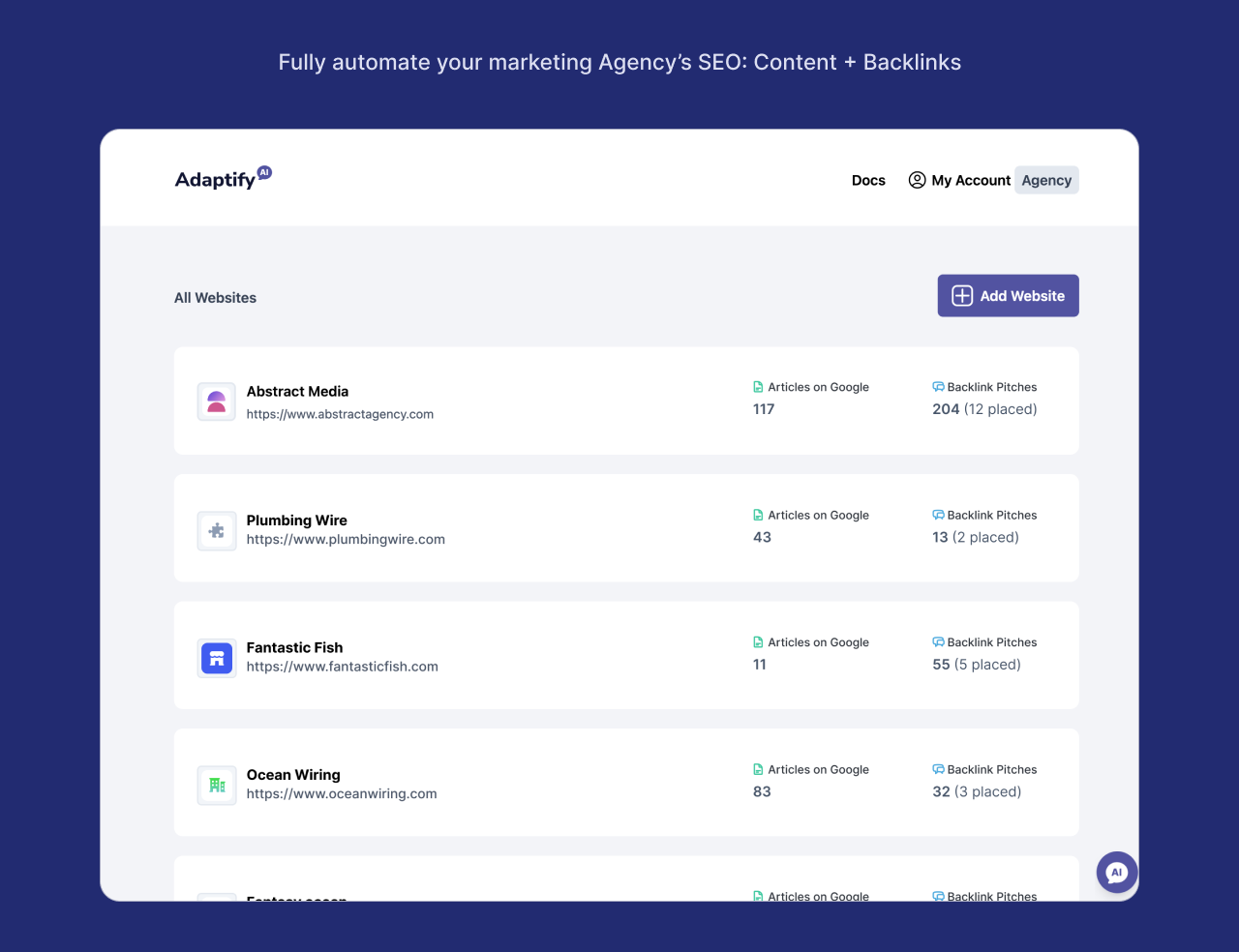
For agencies especially, the ability to scale content production while maintaining quality is critical. You need systems that work with you. Platforms like Adaptify.ai are designed to provide comprehensive, automated SEO solutions that streamline everything from strategy to content creation and link building. By leveraging such tools, agencies can deliver exceptional results with greater efficiency.
The most successful content strategies will be those that master the art of working with AI as a powerful assistant. If you're looking to explore how automated solutions can improve your agency's offerings, diving deeper into how to craft effective SEO proposals that incorporate these advanced methods is a logical next step.
The future is here, and it's collaborative. Let's make the most of it.

Stop being invisible: discover what the best local SEO strategies for small businesses are to dominate Google Maps, reviews, and AI search...
Master localized SEO to rank your local business in Google Maps and drive more in-store visits.

Master local retail SEO to drive foot traffic from Google with proven strategies for GBP, reviews, and AI search optimization.
Join 1,000+ agencies already delivering SEO and AI visibility from a single platform without increasing their headcount.Join 1,000+ agencies already delivering SEO and AI visibility from a single platform without increasing their headcount.