Future-Proofing Your SEO: Adapting to AI's Evolution by 2025


How will ai impact seo strategies in 2025 is fundamentally reshaping the digital marketing landscape. Here's what you need to know:
Key AI Impacts on SEO by 2025:
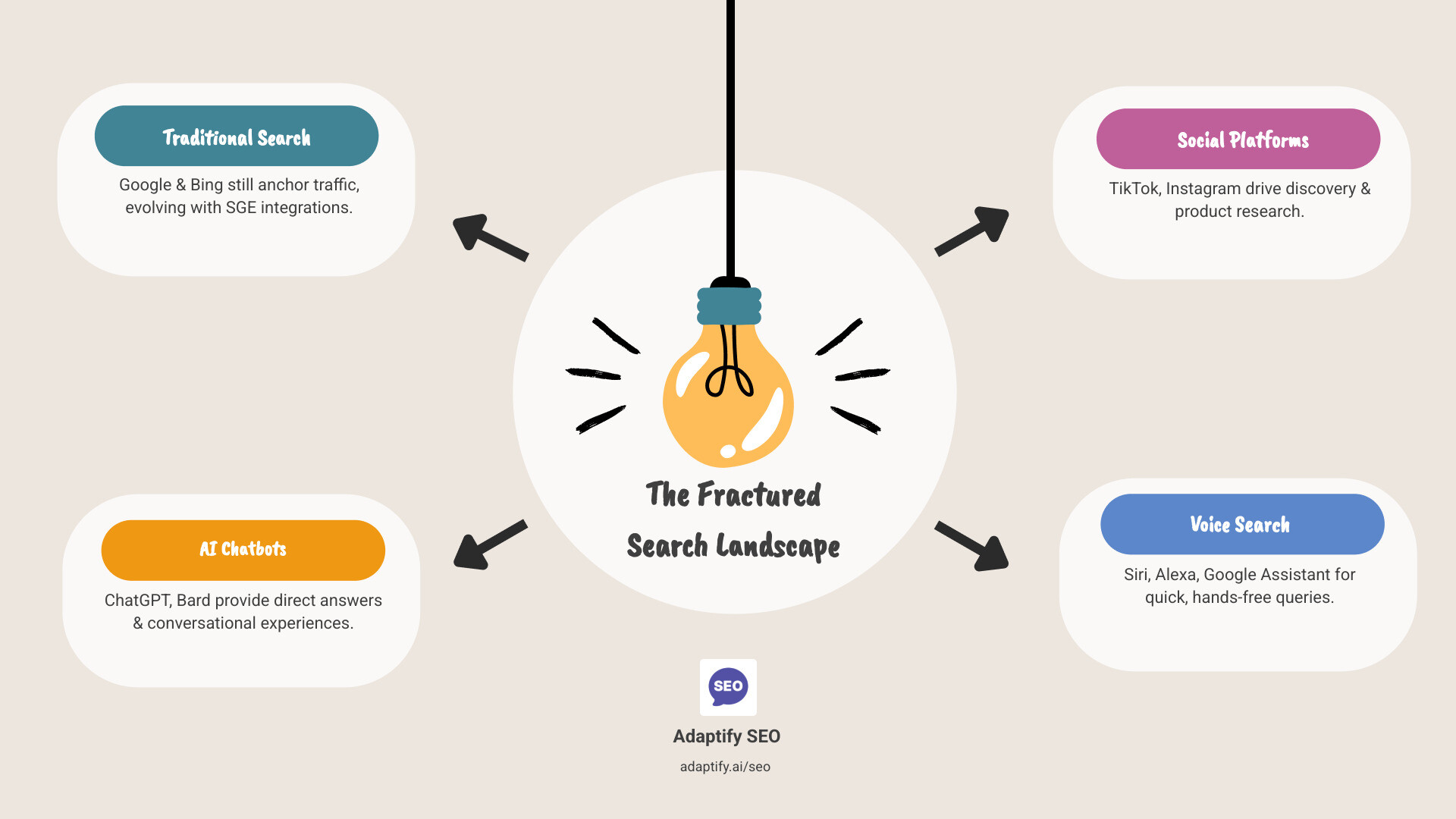
The cyclical, now AI-fueled, "SEO is dead" panic cycle is in full swing. But here's what most of those headlines miss: Search isn't a platform, it's a behavior. And that behavior is fracturing across traditional Google results, AI chatbots like ChatGPT, and social platforms.
The numbers tell the story. Research shows that 82% of consumers find AI-powered search more helpful than traditional SERPs, while AI chatbots have grown to nearly 5 billion monthly visits. Yet traditional organic search still drives over 53% of all website traffic. We're not seeing replacement - we're witnessing evolution.
For agency owners drowning in manual SEO tasks, this shift presents both challenge and opportunity. The agencies that survive and thrive will be those that accept AI as a capability amplifier, not a threat. They'll automate the grunt work while doubling down on the strategic, creative elements that only humans can provide.
I'm Hansjan Kamerling, and I've spent years working with AI-powered platforms that serve millions of users, from fintech startups to automotive communities. Understanding how will ai impact seo strategies in 2025 has become essential for every agency I advise, as those who adapt early gain competitive advantages that compound over time.
The way people search for information has fundamentally shifted, and it's happening faster than most of us realize. I've been watching this change unfold, and how will ai impact seo strategies in 2025 is no longer a future concern—it's a present reality reshaping every customer interaction.
Think about your own behavior lately. When you need a quick answer, do you still type keywords into Google and scroll through ten blue links? Probably not. You're more likely asking a conversational AI like ChatGPT, Google's Gemini, or Perplexity AI a question, or letting your phone's AI assistant handle the heavy lifting. You're not alone—41% of Gen Z consumers already rely on AI-driven assistants for shopping and task management.
This shift represents something bigger than just new tools. AI agents aren't just search engines; they're becoming active decision-makers in our daily lives. According to McKinsey's research on AI shaping consumer decision making, these systems can automate lower-stakes decisions entirely. Need a restaurant recommendation? The AI doesn't send you to browse Yelp—it picks one based on your preferences, location, and dining history.
The implications are staggering. 82% of consumers now find AI-powered search more helpful than traditional SERPs. That's not a small preference shift; that's a fundamental change in how people expect to find and consume information. For businesses, this means if your content isn't part of that "trusted dataset" that AI systems draw from, you're essentially invisible to a growing portion of your audience.
What makes this even more complex is the personalization factor. AI doesn't just understand what you're asking—it understands who you are. The same query from two different people can yield completely different results based on their history, context, and preferences. This level of dynamic relevance means the old "one-size-fits-all" content strategy is becoming obsolete.
Remember when SEO meant stuffing keywords into every paragraph? Those days are officially over. Google's Search Generative Experience (SGE) and AI Overviews have changed the game entirely. Instead of presenting a list of links, these systems provide direct, conversational answers right at the top of search results.
This shift toward conversational queries means people are searching the way they naturally speak. Voice search and visual search are no longer novelties—they're becoming primary interaction methods. The growth of "near me" searches perfectly illustrates this trend, with these location-based conversational queries skyrocketing as people expect immediate, contextual answers.
Natural Language Processing (NLP) has gotten so sophisticated that it can understand the nuance behind questions like "What's the best coffee shop that's not too crowded around here?" versus "Where can I get work done with good wifi and coffee?" These might seem similar, but AI systems recognize the different intents and provide custom responses.
The challenge for content creators is clear: your content needs to directly answer the questions people are actually asking, not just contain the keywords they might type. Long-tail keywords that mirror natural speech patterns are becoming more valuable than broad, generic terms. But here's the catch—this shift is also increasing zero-click searches, where users get their answer without ever visiting your website.
The friction many users experience with traditional SERPs—cluttered ads, irrelevant results, overwhelming choices—is driving this migration to AI-powered alternatives. People want answers, not homework assignments.
AI systems have become the new gatekeepers of online information, and they're incredibly picky about their sources. To understand how will ai impact seo strategies in 2025, you need to recognize that entity authority and Google's E-E-A-T principles (Experience, Expertise, Authoritativeness, Trustworthiness) aren't just ranking factors anymore—they're survival requirements.
Here's what I've learned from working with agencies: AI agents don't just crawl your content; they evaluate it for trustworthiness before including it in their responses. This means structured data and schema markup aren't optional technical improvements—they're essential communication tools that help AI systems understand and trust your content.
When you properly mark up your FAQs, product details, and author credentials with JSON-LD schema, you're essentially providing AI systems with a clear, structured way to interpret your information. Without this semantic clarity, even the best content can be overlooked.
The stakes are higher because 78% of marketers are concerned about AI-driven misinformation. This concern is driving AI systems to be increasingly selective about their sources. They prioritize content that demonstrates clear expertise, transparent sourcing, and factual accuracy.
First-party data becomes incredibly valuable in this context. Your unique insights, original research, and proprietary information are exactly what AI systems need to provide comprehensive answers. Brand credibility isn't just about marketing anymore—it's about being recognized as a legitimate source of truth in your field.
The agencies I work with that are succeeding in this new landscape focus obsessively on building genuine expertise in their niches. They're creating content that only they can create, backed by real experience and clearly attributed to credentialed experts. This approach doesn't just help with traditional SEO—it ensures their clients become trusted sources that AI systems actively reference and recommend.
The question of how will ai impact seo strategies in 2025 isn't about whether AI will change SEO—it's about understanding that AI is becoming the very foundation of how search works. Think of it this way: we're moving from a world where SEO meant guessing what Google's algorithm wanted to a world where AI can actually understand what users need.

I've been working with agencies through Adaptify.ai to steer this shift, and what I see is fascinating. AI-driven SEO isn't just traditional SEO with some automation sprinkled on top. It's a completely different approach that uses machine learning to spot patterns in massive datasets, understand semantic relationships, and predict what content will resonate before trends even emerge.
The old way meant spending hours manually researching keywords, analyzing competitors, and making educated guesses about ranking factors. The new way? AI handles the heavy lifting while you focus on strategy and creativity. Established platforms like Semrush and Ahrefs are rapidly integrating AI, while new, AI-native tools like SurferSEO and Clearscope are pushing the boundaries of content optimization. We're seeing 74% of marketers already using AI tools in their workflow, with 43% specifically for SEO analysis. That's not a future trend—that's happening right now.
What excites me most is how predictive analytics is changing the game. Instead of reacting to algorithm updates after they hit, AI can forecast search trends, analyze competitor moves at scale, and suggest optimizations in real-time. It's like having a crystal ball for SEO.
Here's where things get really interesting. Everyone's talking about AI-generated content, but the real story is more nuanced. Yes, AI can pump out articles faster than any human writer. But here's the catch: quality still beats quantity, especially when Google's algorithms are getting smarter at detecting generic, soulless content.
I've seen agencies make the mistake of thinking AI content generation tools like Jasper or Copy.ai are a magic bullet. They crank out hundreds of AI-written articles and wonder why their rankings tank. The truth is, human oversight isn't optional—it's essential. AI is brilliant at research, ideation, and first drafts, but it can't replicate genuine expertise or authentic storytelling.
That's why our AI Content services focus on smart collaboration between AI and humans. We use AI to identify content gaps, suggest topics based on search data, and create comprehensive outlines. But every piece gets refined by human experts who add unique insights, real-world examples, and that authentic voice that readers connect with.
The winning strategy for 2025 is building topical authority—becoming the go-to expert in your niche through deep, comprehensive content clusters. AI helps us identify every angle and subtopic to cover, but humans provide the expertise that makes content genuinely valuable. As we always tell our clients, "Content that aligns with what your target audience is searching for is more likely to rank well and drive traffic to your site."
Programmatic SEO is another game-changer. Using AI to generate thousands of optimized pages for specific queries works incredibly well for e-commerce sites and directories. And then there's Generative Engine Optimization (GEO)—tailoring content specifically for AI-powered search engines by focusing on fluency, readability, and statistical backing.
Technical SEO might not be the flashiest part of the job, but it's where AI's impact is most immediate. By 2025, your site needs to speak fluent "AI"—and that means having a technical foundation that both humans and AI bots can steer effortlessly.
Site speed isn't just about user experience anymore; it directly affects how well AI systems can crawl and understand your content. Mobile-first indexing and Core Web Vitals are table stakes. If your site is slow or poorly structured, you're literally blocking AI from accessing your content.
The key is making your website as machine-readable as possible. This means implementing structured data through schema markup, maintaining clean site architecture, and using semantic HTML that clearly shows content hierarchy. When AI bots visit your site, you want them to immediately understand what each page is about and how it relates to everything else.
Google's Search Generative Experience (SGE) is already changing how technical optimization works. Crawlability for AI bots requires different considerations than traditional SEO. You need comprehensive sitemaps, proper robots.txt files, and JavaScript that doesn't hide content from AI systems.
Essential technical checks for AI readiness include implementing JSON-LD for key content types, optimizing Core Web Vitals scores, ensuring mobile responsiveness, maintaining proper HTML structure, adding accessibility features, securing your site with HTTPS, and continuously optimizing page speed. These aren't just ranking factors—they're the foundation that lets AI understand and trust your content.
In an AI-driven world, authority and trust aren't just nice-to-haves—they're survival requirements. AI systems are trained on massive datasets, and if your brand consistently appears in authoritative contexts, AI learns to trust and recommend you.
Digital PR becomes crucial because AI doesn't just look at links—it evaluates the entire context around your brand mentions. When reputable publications cite your expertise or link to your content, it signals to AI that you're a credible source worth featuring in search results.
Our PR Link Building services focus on earning these high-quality mentions from authoritative sources. It's not about gaming the system; it's about genuinely building your reputation in ways that both humans and AI can recognize.
Personal branding is exploding in importance too. As AI gets better at generating generic content, human expertise becomes the differentiator. Expert quotes, detailed author bios, and demonstrations of real-world experience aren't just E-E-A-T signals—they're proof that actual humans with genuine expertise created your content.
Source transparency matters more than ever. AI models are increasingly sophisticated at identifying credible sources versus questionable ones. Brand mentions across the web, quality backlinks, and consistent expert positioning all contribute to your authority score in AI systems.
The agencies thriving in 2025 will be those that understand AI isn't replacing human expertise—it's amplifying it. The combination of AI efficiency with human creativity and authority is where the real magic happens.
Here's the truth that many "SEO is dead" headlines miss: AI isn't here to replace SEO professionals. It's here to make us better at what we do. I've watched this change firsthand, and what I see emerging is a powerful human-AI symbiosis where AI becomes our capability amplifier, not our replacement.

Think about it this way: AI excels at crunching data, spotting patterns, and automating the tedious tasks that used to eat up our days. But it can't replace the strategic thinking, creativity, empathy, and ethical judgment that humans bring to SEO. When someone asks how will ai impact seo strategies in 2025, the answer isn't about replacement—it's about partnership.
In my experience working with agencies, I've found that the most successful teams operate with roughly 70% human strategy and relationship building, complemented by 30% AI execution and optimization. This balance lets us focus on what we do best while letting AI handle the heavy lifting.
The biggest challenge isn't the technology itself—it's the mindset shift. Many marketers are still afraid of AI, worried it will make them obsolete. But here's what 78% of marketers are really concerned about: not being replaced by AI, but ensuring their AI use remains ethical and doesn't contribute to misinformation. That's a very human concern that requires very human solutions.
Let me share where I've seen humans consistently outperform even the most sophisticated AI systems. These aren't just tasks—they're the core skills that will define successful SEO professionals in 2025.
Understanding nuanced user intent is where humans shine brightest. AI can analyze search patterns, but when someone searches for "best running shoes," are they a beginner seeking comfort, a marathoner chasing performance records, or someone recovering from injury who needs specific support? That emotional intelligence and contextual understanding? That's purely human territory.
Creative storytelling remains our superpower. AI can write decent content, but it can't craft the compelling narratives that make people stop scrolling and start caring. The ability to weave a brand's unique story into content that resonates emotionally—that's something no algorithm can replicate.
Building genuine relationships for link building and partnerships is another area where humans dominate. AI might identify outreach opportunities and even draft initial emails, but forging real connections, building trust, and negotiating meaningful partnerships requires authentic human interaction. People link to people, not algorithms.
Strategic decision-making is where experience meets intuition. AI provides incredible insights and can automate execution, but setting long-term vision, navigating unexpected market shifts, and making complex ethical choices? That requires human judgment and wisdom.
The research backs this up perfectly: "The only way to keep AI from taking your job is to use AI to do your job better." This isn't about competing with AI—it's about leveraging it to amplify our uniquely human capabilities.
Traditional ranking metrics are still important, but they're no longer the complete picture. With AI Overviews appearing in search results and conversational search changing user behavior, we need to track new indicators of success.
Here's what concerns me: only 22% of marketers currently track brand visibility in Large Language Models or AI-generated responses. This is a massive blind spot. We need to measure how often our content appears in AI summaries, chatbot responses, and voice assistant answers. Share of voice in AI-driven results is becoming as crucial as traditional SERP rankings.
The good news? AI is already delivering measurable value. 93% of marketers report that AI tools save them time each week. That's time we can reinvest in strategy, creative thinking, and building stronger client relationships. At Adaptify.ai, our SEO reporting services help agencies track these evolving metrics, giving you comprehensive insights into your AI-improved performance.
What's fascinating is that while how will ai impact seo strategies in 2025 continues evolving, the fundamentals remain strong. Organic search still drives over 53% of website traffic, and 57% of marketers believe SEO delivers higher ROI than other digital marketing tactics. The key is adapting how we measure that ROI to reflect AI's influence on user behavior.
Success in 2025 means tracking traditional metrics alongside new ones: AI Overview appearances, brand mentions in chatbot responses, voice search visibility, and conversion rates from AI-driven traffic. It's about understanding that visibility now spans multiple touchpoints, not just the traditional ten blue links.
Let me address the most common concerns I hear from agency owners and SEO professionals about the AI revolution that's reshaping our industry.
This is probably the question that keeps most SEO professionals up at night, and I completely understand why. But here's the reassuring truth: AI is changing SEO, not making it obsolete.
Think of it this way - when Google introduced algorithm updates like Panda and Penguin years ago, many predicted the "death of SEO." Instead, those updates forced us to evolve from keyword stuffing to creating genuinely valuable content. AI is simply the next evolutionary step.
The shift we're seeing moves us away from manual keyword matching toward strategic, authority-based optimization. Those core principles we've always championed - providing real value and demonstrating expertise through E-E-A-T - are becoming even more critical. SEO professionals who adapt will thrive, while those who resist change may struggle.
AI doesn't replace the need for SEO; it transforms how we approach it. Instead of spending hours on mundane tasks like keyword research or competitor analysis, AI automates these processes and frees us to focus on high-level strategy, creative problem-solving, and building genuine authority. The human elements - understanding nuanced user intent, crafting compelling narratives, and making strategic decisions - remain irreplaceable.
If you're feeling overwhelmed by all the changes coming in 2025, let me simplify this for you: focus on building topical authority and brand credibility. Everything else flows from this foundation.
Here's what this looks like in practice. Create high-quality, in-depth content that's based on genuine expertise rather than surface-level research. Structure that content with proper schema markup so AI systems can easily understand and trust your information. Then promote it strategically to earn authoritative mentions and high-quality backlinks from respected sources in your industry.
This approach makes your content a reliable source for both human users and AI systems. By 2025, being part of an AI system's "trusted dataset" will be absolutely paramount for visibility. That trust isn't built overnight - it comes from consistently demonstrating verifiable expertise through well-structured, easily digestible information that other authorities in your field reference and link to.
I've seen this strategy work incredibly well for our clients at Adaptify.ai. When you become the go-to source for specific topics in your niche, AI systems naturally gravitate toward featuring your content in their responses and recommendations.
I get this question constantly, and my answer might surprise you: while AI can be an incredible assistant, relying on it entirely for content creation is actually risky for your long-term SEO success.
Here's why this matters so much. Search engines like Google have become incredibly sophisticated at identifying content that lacks genuine human experience and originality. They're not just looking for grammatically correct text - they want content that demonstrates real-world expertise, unique insights, and authentic voice.
The smart approach is treating AI as a powerful tool in your content creation process. While tools like Jasper, Writer.com, or Claude can produce impressive first drafts, they lack the nuanced understanding of a specific brand's audience and the unique insights that come from real-world experience. Use AI for research, ideation, and even optimization suggestions, but ensure every piece is reviewed, edited, and improved by a human expert who can add those unique insights and maintain your brand's distinctive voice.
AI excels at efficiency and scale, which is fantastic for agencies managing multiple clients. However, human oversight remains essential for injecting the creativity, nuanced understanding, and authentic perspective that truly resonates with audiences. This human touch is exactly what Google's quality guidelines reward, and it's what separates memorable content from forgettable AI-generated text.
The agencies that succeed will be those that find the perfect balance - leveraging AI's capabilities while ensuring human expertise guides the strategy and adds the final polish that makes content truly valuable.
The future of SEO isn't about fighting against AI; it's about embracing it as your most powerful ally. By 2025, the line between SEO and AI strategy will blur completely, creating incredible opportunities for those who adapt early and authentically.
Think about where we've been on this journey together. We've explored how search behavior is fracturing across traditional Google results, AI chatbots, and social platforms. We've seen how 82% of consumers find AI-powered search more helpful than old-school SERPs. We've discussed the rise of conversational queries, the importance of becoming a trusted AI source, and why human expertise remains irreplaceable.
The agencies that thrive in 2025 will be those that accept automation while doubling down on genuine authority. They'll focus on the human elements that machines simply can't replicate - strategic thinking, creative storytelling, relationship building, and authentic expertise. These are the differentiators that matter when everyone has access to the same AI tools.
How will ai impact seo strategies in 2025? The answer is clear: it will reward those who integrate AI thoughtfully while maintaining the human touch that builds real trust and authority. Your content needs to be structured for AI understanding while remaining genuinely valuable to humans. Your technical foundation must be AI-ready while your brand authority grows through authentic relationships and expert insights.
For agencies drowning in manual SEO tasks, this change presents the ultimate opportunity. The businesses that fail to accept AI risk being completely left out of digital conversations and automated decision-making processes. But those who adapt? They'll find themselves leading the pack with streamlined workflows, deeper insights, and more time for strategic thinking.
This is exactly why we built Adaptify.ai - to help agencies automate their entire SEO workflow, from strategy formulation to content creation to PR link building. We reduce the manual effort that's keeping you stuck in the past while enhancing the efficiency that will propel you into the future.
The choice is yours: evolve with AI as your partner, or risk being left behind. The agencies that act now won't just be prepared for 2025 - they'll be the ones setting the standards everyone else scrambles to follow.

Stop being invisible: discover what the best local SEO strategies for small businesses are to dominate Google Maps, reviews, and AI search...
Master localized SEO to rank your local business in Google Maps and drive more in-store visits.
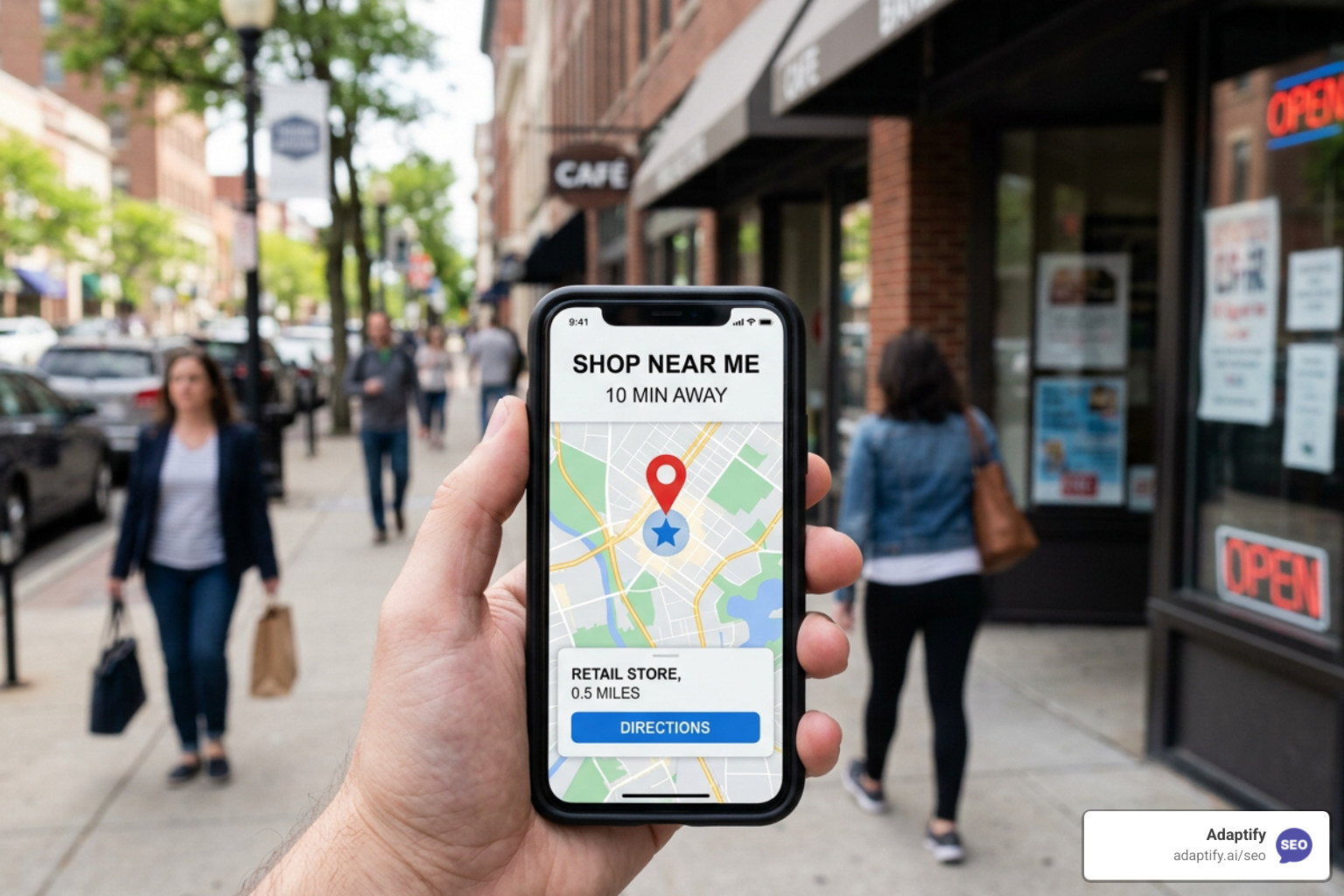
Master local retail SEO to drive foot traffic from Google with proven strategies for GBP, reviews, and AI search optimization.
Join 1,000+ agencies already delivering SEO and AI visibility from a single platform without increasing their headcount.Join 1,000+ agencies already delivering SEO and AI visibility from a single platform without increasing their headcount.