Generate Great Content for Free with These Handy Tools


A content generator free tool can transform your agency's content workflow, helping you produce high-quality drafts in seconds instead of hours. Here are the top free options that deliver real results:
Best Free Content Generator Tools:
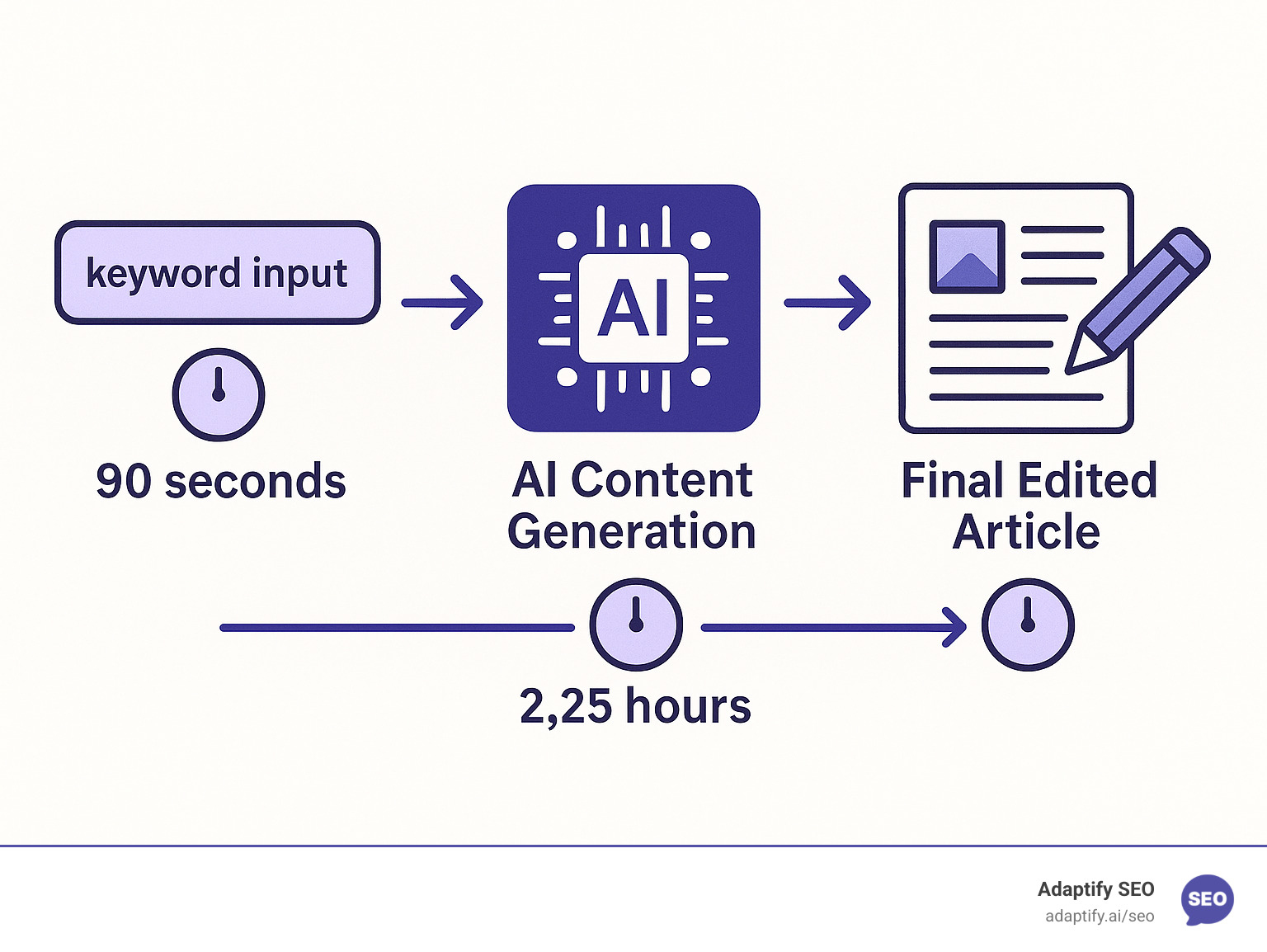
Content creation bottlenecks kill agency productivity. When you're juggling multiple client campaigns, spending 8 hours on a single blog post isn't sustainable. The research shows that AI tools can cut content creation time from 8 hours to just 2.25 hours per article.
Free content generators solve three critical problems:
I'm Hansjan Kamerling, and I've helped scale content operations for SaaS platforms with over 40,000 users using AI-powered workflows. Throughout my experience with data analytics platforms and growth-focused startups, I've seen how the right content generator free tool can be the difference between agencies that struggle and those that scale efficiently.
Content remains the backbone of digital marketing success. Search engines prioritize unique, valuable content when ranking pages, and engaging content drives higher conversion rates across all channels. For agencies managing multiple clients, the pressure to produce consistent, high-quality content has never been greater.
The cost savings are substantial. Freelance writers often charge around $5 per article on platforms like Fiverr, but when you need dozens of articles monthly across multiple clients, these costs add up quickly. A content generator free tool can help you produce first drafts at zero cost, allowing you to allocate budget to editing and optimization instead.
Think of a content generator free tool as having a brilliant writing assistant who's read millions of articles, books, and websites. These tools use something called Large Language Models (LLMs) – fancy neural networks like GPT-3.5 and GPT-4 that have learned how humans write by studying massive amounts of text.
When you type a prompt like "write a blog post about email marketing," the AI breaks your request into tiny pieces called tokens. It then uses everything it learned during training to predict what words should come next, building your content one piece at a time. The whole process happens in about 30-90 seconds, which still feels like magic even after using these tools hundreds of times.
Modern AI content generators work very differently from the clunky, template-based tools we used years ago. Neural network-based generators actually understand context and can write about topics they've never been specifically programmed for. It's like the difference between a player piano that can only play pre-recorded songs versus a jazz musician who can improvise.
The training process is remarkable. These models digest everything from Shakespeare to Reddit comments, learning patterns in grammar, style, and how ideas connect. They develop an understanding of tone, audience, and even industry-specific jargon without anyone explicitly teaching them these concepts.
Inference speed has improved dramatically over the past two years. What used to take several minutes now happens in under 90 seconds for most content types. This makes AI generation practical for real-time workflows where you need quick turnarounds.
One important caveat: these models sometimes produce "hallucinations" – confident-sounding information that's completely wrong. They're incredibly good at sounding authoritative, even when they're making things up. This is why fact-checking remains crucial in any content workflow.
Not all content generators are created equal. When testing any content generator free tool, I always look for specific features that separate the winners from the time-wasters.
Templates and use cases make a huge difference in output quality. The best tools offer 20-40+ specialized templates for blog posts, social media captions, email subject lines, and product descriptions. These templates include optimized prompts that help the AI understand exactly what you need.
Tone and style settings let you match your brand voice. Whether you need professional, casual, or persuasive writing, quality generators give you control over the AI's personality. This feature alone can save hours of editing time.
Word count controls help you get the right length content from the start. Look for tools that handle both short-form content (500-1,000 words) and longer articles (1,000+ words). Some advanced tools even let you generate specific paragraphs or sections.
Built-in SEO features are becoming standard in better tools. These include keyword targeting, meta description generation, and SEO title optimization. Having these features integrated saves you from jumping between multiple tools.
Export and integration options streamline your workflow. The ability to export in multiple formats (plain text, HTML, Word docs) and connect with other tools means less copy-pasting and fewer formatting headaches.
The landscape of free AI content tools has exploded in 2024, giving agencies incredible options without breaking the budget. After testing dozens of platforms, I've identified the standout performers that actually deliver on their promises.
What makes these tools special isn't just that they're free - it's that they genuinely compete with premium alternatives in many areas. The catch? You'll hit usage limits and miss some advanced features. But for most agencies getting started with AI content, these limitations won't slow you down.
Starting with a content generator free tool removes all the financial risk from your AI experiments. You can dive in today, test different approaches, and see real results before investing in premium subscriptions.
The speed gains alone make free tools worthwhile. While your competitors spend entire afternoons crafting single blog posts, you'll generate solid first drafts in under two minutes. This isn't about replacing human creativity - it's about giving your team superpowers to produce more high-quality content faster.
Free tools also let you test ideas without commitment. Want to try a completely different content angle for a client? Generate three variations in five minutes and see which direction feels right. This experimental approach often leads to breakthrough content that wouldn't emerge from traditional brainstorming.
The "best" tool depends entirely on how you work and what you need to create. Some agencies need high-volume social media content, while others focus on in-depth blog articles. Understanding your specific workflow helps narrow down the options quickly.
Content volume matters most for busy agencies. If you're creating content for multiple clients daily, prioritize tools with generous character limits or daily allowances. Integration capabilities can streamline your process - tools that work within your existing apps save countless copy-paste cycles.
Team collaboration features become crucial as your agency grows. Some tools excel at individual productivity, while others shine in collaborative environments. Content specialization also plays a role - certain platforms focus on specific content types and deliver superior results in their niche areas.
Copy.ai deserves special mention for offering 30+ free AI tools built for GTM teams, covering everything from email sequences to product descriptions. This comprehensive approach means you can handle diverse client needs from a single platform.
Rytr has earned its reputation through sheer reliability and generous free limits. With 10,000 characters monthly, you'll generate several complete blog posts or dozens of social media updates without hitting the wall. Over 8 million users have tested this platform extensively, resulting in an impressive 4.9/5 satisfaction rating.
The platform's 40+ use cases and 20+ writing tones make it remarkably versatile. Whether you need a professional white paper or casual social media content, Rytr adapts to match your requirements. The Chrome extension transforms any text field into an AI content generator, letting you create compelling copy directly in Gmail, WordPress, or social media platforms.
What really sets Rytr apart is its editing ecosystem. The platform includes AI autocomplete, text refinement tools, and built-in grammar checking. This means you can generate, edit, and polish content without switching between multiple applications.
Getting started requires zero commitment - no credit card, no lengthy signup process. You can begin generating content within minutes of signing up.
Canva Magic Write™ represents a unique approach by combining AI text generation with professional design capabilities. Free users receive 50 total uses, while Pro subscribers get 500 monthly queries. This integration makes it perfect for agencies creating social media campaigns, presentations, and marketing materials that need both compelling copy and visual appeal.
The Brand Voice feature stands out as particularly valuable for agency work. You can upload sample content to train the AI on specific client tones and styles. This ensures generated content maintains consistency across all campaign materials, solving a major challenge in multi-client environments.
Magic Write supports 20 languages and works seamlessly across all Canva document types. The visual-first approach eliminates the common problem of creating great copy that doesn't fit your design layout. Instead, you're crafting content that works perfectly with your visual elements from the start.
Semrush takes a refreshingly simple approach with three free content generations daily that require absolutely no registration. This friction-free experience makes it perfect for quick content needs or testing ideas without commitment.
The platform's built-in AI chatbot enables iterative editing through natural conversation. Instead of generating content and hoping it's perfect, you can refine and expand your drafts by chatting with the AI. This collaborative approach often produces better results than single-generation tools.
Content variety is impressive, covering blog posts, social media updates, ad copy, email campaigns, and specialized formats. The integration with ContentShake AI provides additional SEO insights and optimization recommendations, bridging the gap between content creation and search performance.
Grammarly's AI writer transforms content generation into a seamless part of your existing workflow. Working across 500,000+ apps and websites through browser extensions, you can generate content directly in Gmail, Google Docs, WordPress, LinkedIn, and virtually any online text field.
This ubiquitous approach eliminates the context-switching that slows down content creation. Instead of jumping between tools, you generate and refine content exactly where you need it. The integration with Grammarly's grammar and style expertise ensures generated content meets professional standards automatically.
With 40 million individual users and 50,000 organizations already relying on Grammarly, the platform offers proven reliability for business-critical content. The AI writer feels like a natural extension of the grammar tools you're likely already using.
RightBlogger focuses specifically on blog content creation, generating 500-1,000 word articles optimized for search engines by default. With account signup, you gain access to 10 daily uses across their 80+ tool suite, providing comprehensive blog workflow support.
The platform emphasizes outline editing, tone adjustment, and real-time data inclusion, recognizing that great blog content requires more than just text generation. These features help create articles that engage readers and perform well in search results.
RightBlogger's philosophy positions AI as a collaborative writing partner rather than a replacement for human creativity. This approach resonates with agencies who want to improve their capabilities without losing the strategic thinking that makes their content valuable.
TinyWow prioritizes simplicity above all else, offering completely signup-free blog post generation with built-in SEO optimization. The streamlined interface focuses on speed - enter your topic and generate content immediately without any configuration complexity.
While it lacks the advanced customization options of other platforms, this no-friction approach makes it invaluable for quick content needs or rapid idea testing. The platform also provides dozens of additional free tools for various content and productivity tasks, creating a comprehensive toolkit for content creators.
The emphasis on immediate results makes TinyWow perfect for those moments when you need content fast and don't want to steer complex interfaces or remember login credentials.
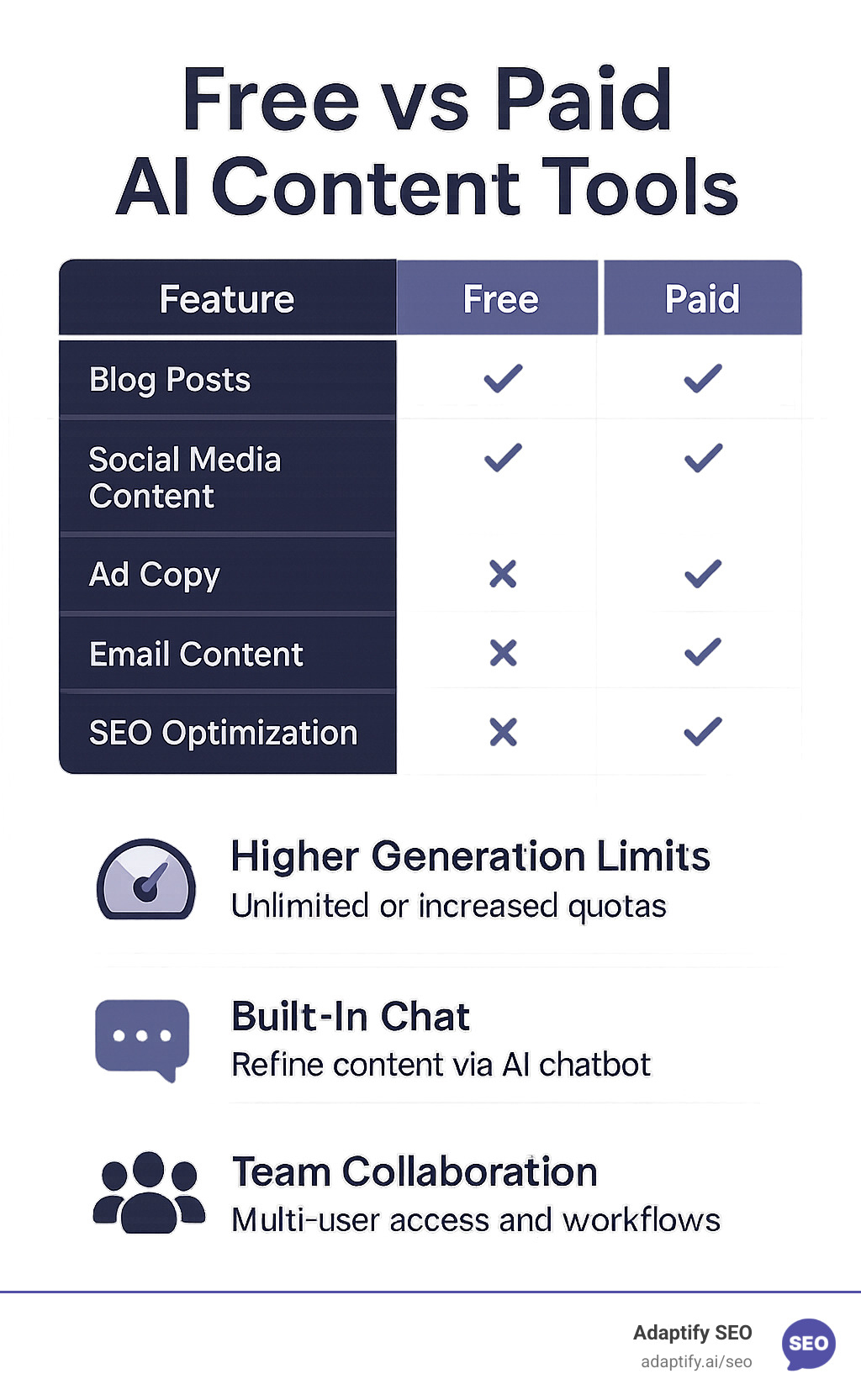
Choosing between free and paid AI tools depends entirely on your content volume and team needs. Most agencies start with free options to test the waters, then upgrade once they see real results.
Free content generator free tool options come with predictable limitations. Rytr caps you at 10,000 characters monthly, while Semrush allows just 3 generations daily. Canva Magic Write gives you 50 total uses before requiring a subscription. These limits work perfectly for small-scale testing or occasional content needs.
The real question isn't whether free tools work - they absolutely do. It's whether their limitations match your workflow. If you're creating 2-3 blog posts monthly for a single client, free tools handle that easily. But when you're managing content for 10+ clients with weekly publishing schedules, you'll hit those limits fast.
Paid plans open up the features that matter for scaling agencies. Higher generation limits remove the constant worry about running out of credits mid-project. Most paid tools offer unlimited or dramatically higher allowances - Rytr's paid plan jumps from 10,000 to 100,000+ characters monthly.
Advanced templates become crucial when serving diverse clients. Free versions typically offer 10-20 templates, while paid plans expand to 40+ specialized options. This includes industry-specific content types like SaaS landing pages, e-commerce product descriptions, and technical documentation.
Team collaboration features separate amateur from professional workflows. Paid plans add multi-user access, shared workspaces, and approval workflows. When you have writers, editors, and account managers all touching the same content, these features prevent chaos.
API access opens automation possibilities that free tools simply can't match. You can integrate content generation directly into your project management systems, automatically generate social media posts from blog content, or create custom workflows that fit your exact processes.
Priority support matters more than you'd expect. When client deadlines loom and your content tool stops working, having direct access to real humans who can solve problems quickly becomes invaluable.
The math usually works in favor of upgrading once you're generating meaningful value. If AI content generation saves your team 20 hours monthly, even a $50 subscription pays for itself immediately. Most agencies find that paid plans become essential once they're serving more than 3-5 active content clients.
The secret to AI content success isn't in the generation - it's in the preparation and editing. Smart agencies treat AI as a powerful first-draft machine, not a finished content creator.
Start with keyword research before touching any AI tool. Use Ahrefs, Semrush, or even free tools like Google Keyword Planner to identify your target keywords and related terms. Include these naturally in your AI prompts rather than trying to stuff them into generated content afterward.
Create detailed outlines first instead of asking AI to write entire articles from scratch. Break complex topics into 4-6 main sections with 2-3 subpoints each. Generate each section separately for better coherence and more focused content. This approach consistently produces higher-quality results than broad topic requests.
Fact-checking remains non-negotiable with any content generator free tool. AI can confidently state incorrect statistics, outdated information, or even completely fabricated details. Always verify claims, check recent data, and cross-reference technical information before publishing. Treat AI output as a starting point that needs human verification.
Humanize every piece of content by adding your unique perspective, client case studies, and industry-specific examples. Google's helpful content guidelines increasingly favor authentic, experience-based content over generic information. Your personal insights and real-world examples are what separate great content from AI-generated fluff.
Optimize meta descriptions and title tags separately rather than trying to extract them from longer content. Most quality AI tools have specific templates for these SEO elements, often producing more compelling results than generic article generation. These small details significantly impact click-through rates from search results.
Quality content generator free tools typically produce original content with similarity scores below 3%, but verification protects your reputation and client relationships. Run every piece through plagiarism checkers like Copyscape or Grammarly's built-in detection before publishing.
Transparency builds trust without hurting performance. Google doesn't penalize helpful, accurate AI-generated content, but being open about your process with clients and audiences demonstrates integrity. Focus on the value you're providing rather than hiding your tools.
Responsible AI practices mean maintaining human oversight at every step. AI should amplify human creativity and expertise, not replace critical thinking and quality control. The best agencies use AI to handle routine tasks while focusing human energy on strategy, optimization, and relationship building.
The short answer? Absolutely yes - but with some important caveats to keep in mind.
Most reputable content generator free tools like Rytr, Canva Magic Write, and Semrush explicitly welcome commercial use of their AI-generated content. These platforms understand that agencies and businesses are their primary users, so they've structured their terms of service accordingly.
However, here's where it gets a bit nuanced. While you won't run into legal issues using these tools for client work, the real consideration is whether the quality meets your commercial standards. Free tools often come with limitations that might affect the polish and depth of your final content.
The golden rule: Always treat AI-generated content as a first draft, not a finished product. This approach protects both your reputation and your clients' interests. I always recommend reading through each tool's terms of service - it takes five minutes and gives you complete peace of mind.
Here's some reassuring news: quality AI generators don't actually copy and paste from existing sources. Instead, they work by predicting text patterns based on their training, which means they're creating genuinely original content. Tools like Rytr consistently report similarity indexes below 3% - well within the acceptable range for original work.
That said, smart agencies take extra precautions. The most effective approach starts with your prompts. When you give the AI specific, detailed instructions rather than generic topic requests, you're much more likely to get unique, custom content.
Breaking content into sections also helps maintain originality. Instead of asking for a complete 2,000-word article, generate the introduction, main sections, and conclusion separately. This gives you better control over the flow and reduces any chance of repetitive patterns.
Running your final content through plagiarism checkers like Copyscape or Grammarly provides that extra layer of confidence. But honestly, the most powerful plagiarism protection comes from adding your own insights, client-specific examples, and industry expertise to the AI-generated foundation.
Free tools walk a careful balance - they want to provide genuine value while encouraging users to upgrade for serious workflows. Understanding these limitations helps you plan your content strategy effectively.
Character limits are the most common restriction. Rytr's 10,000 monthly characters might sound limiting, but it's actually enough for 3-5 solid blog posts or dozens of social media updates. For testing AI content generation, this gives you plenty of room to explore.
Daily generation caps work differently. Semrush allows three generations per day without even requiring signup. This approach works perfectly for occasional content needs or when you're evaluating whether AI fits your workflow.
Some tools use total usage limits instead. Canva Magic Write provides 50 uses across your entire account lifetime. While this sounds restrictive, you can often generate multiple content pieces in a single session by being strategic with your prompts.
Feature restrictions typically include limited template access, no team collaboration tools, and no API integration. These limitations rarely affect content quality but can impact workflow efficiency for larger agencies.
The reality is that these limits serve as excellent testing grounds. Once you're generating real value from AI content creation, the time savings alone typically justify upgrading to paid plans. Most agencies find that even basic paid plans pay for themselves within the first month through increased productivity.

Learn how an SEO automation system streamlines keyword research, content workflows, and reporting to scale your search operations efficien...

Discover what SEO tasks seo automation services can realistically automate for faster audits, keyword research, and content optimization.

Stop staring at blank pages. Use the best SEO article writing software to create optimized content that ranks in 2026.
Join 1,000+ agencies already delivering SEO and AI visibility from a single platform without increasing their headcount.Join 1,000+ agencies already delivering SEO and AI visibility from a single platform without increasing their headcount.