How to Overcome SEO Roadblocks: 5 Methods that Guarantee Results




SEO roadblock can feel like hitting a brick wall. But fear not! Here are five methods that guarantee results to help you overcome these challenges:
SEO, or Search Engine Optimization, is essential for connecting with customers online. However, the path to a top ranking on search engines is not always smooth. From setting undefined goals to overlooking mobile optimization, roadblocks can pop up at any step.
Let's steer these challenges together. By identifying these obstacles early and knowing how to tackle them, you can pave the way to higher traffic and more leads.
My name is Hansjan Kamerling, and I've spent years helping startups and big brands overcome SEO roadblocks. Whether it's creating a new product experience from scratch or optimizing search functionality for millions, I've been hands-on with every aspect.
Ready to remove these problems?
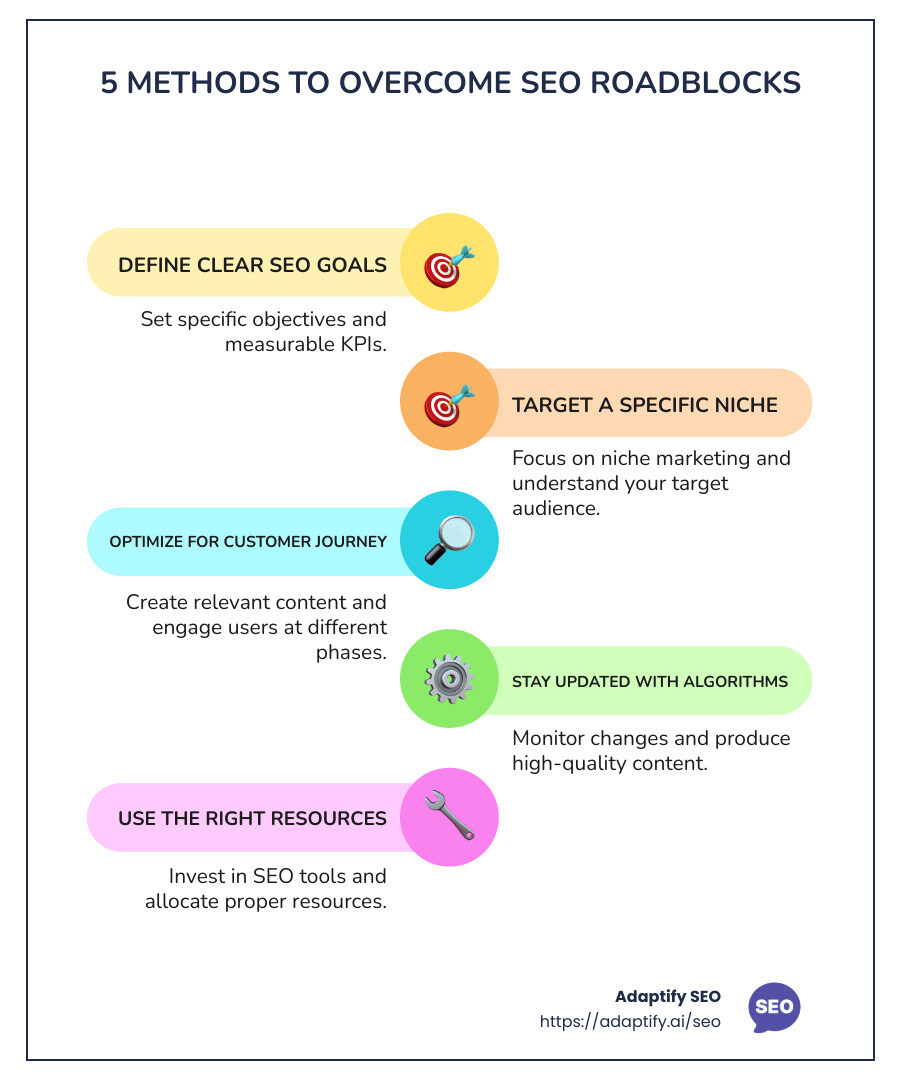
Setting undefined campaign goals is like driving without a destination. You need specific, measurable goals to guide your SEO efforts.
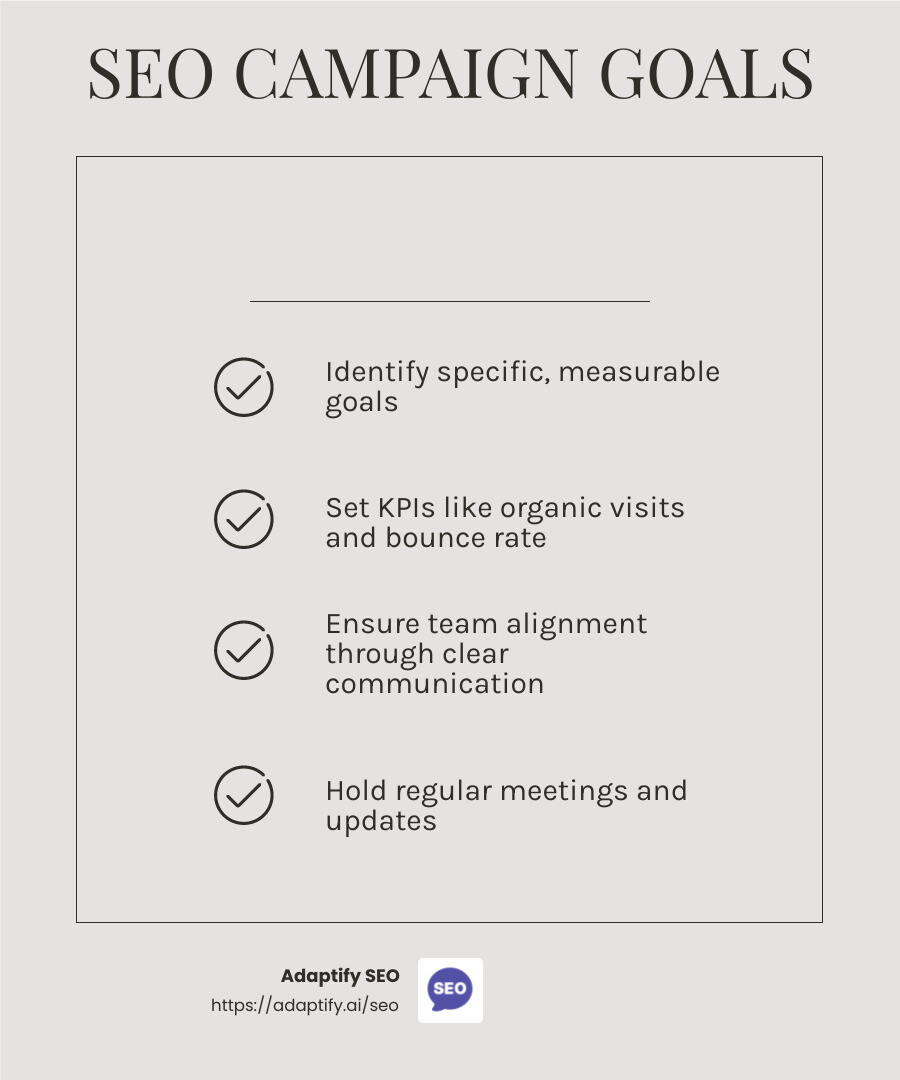
Start by identifying what you want to achieve. Do you want to increase organic traffic by 30% in six months? Or perhaps you aim to generate 100 new leads per month through SEO? These are specific objectives that give your team a clear target.
Key Performance Indicators (KPIs) are essential for measuring success. For example, if your goal is to increase organic traffic, your KPIs might include:
Setting these KPIs helps you track your progress and make necessary adjustments along the way.
Once you have specific goals and KPIs, the next step is clear communication with your team. Everyone involved in the SEO campaign should understand what the objectives are and how success will be measured.
Team Alignment is crucial. When everyone knows the goals and KPIs, they can work together more effectively. Regular meetings and updates can ensure everyone is on the same page and working towards the same objectives.
Here’s a simple way to communicate your goals:
By setting specific objectives and ensuring clear communication, you can overcome the SEO roadblock of undefined goals. This approach helps you stay focused and measure your success accurately.
Next, let's dive into the importance of targeting a specific niche to make your SEO efforts more effective.
Niche marketing is a powerful strategy for effective SEO. By focusing on a specific segment of the market, you can tailor your content and keywords to meet the needs of a targeted audience, leading to better conversion rates and higher engagement.
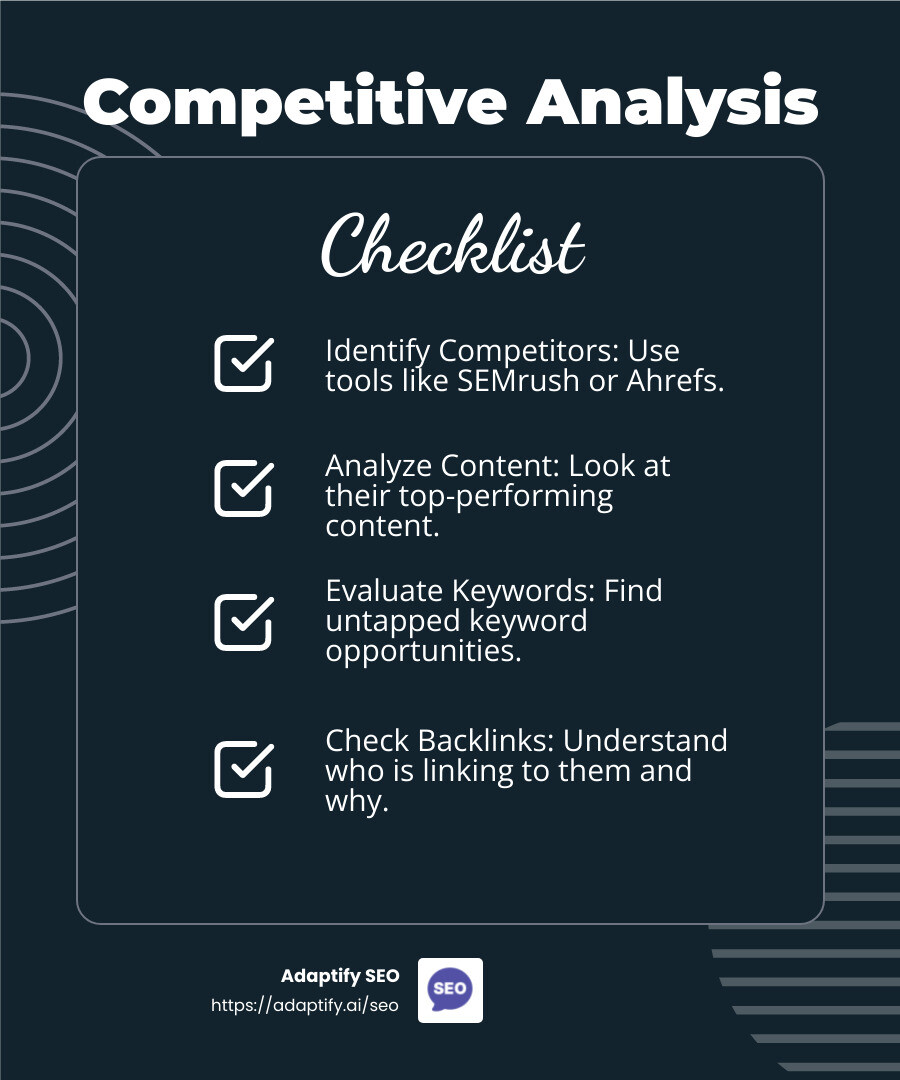
To find your niche, start by studying your competition. Look at what other businesses in your industry are doing well and identify gaps in their strategies. This process is known as competitive analysis.
Here’s how to conduct a competitive analysis:
By understanding what your competitors are doing, you can find opportunities to differentiate your business and carve out your own niche.
Once you’ve identified your niche, it’s important to adapt and evolve as market trends change. Industry trends can shift, and what works today might not be effective tomorrow.
Steps to adapt and expand your niche:
For example, if you start by targeting a niche like "eco-friendly home products," you might later expand to include "sustainable living tips" as your audience grows.
Case Study:
A small business specializing in organic skincare products started by targeting the niche of "organic face masks." By studying competitors, they identified a gap in content related to "DIY organic skincare routines." They created valuable content around this topic, which helped them attract a dedicated audience and eventually expand into other areas of organic skincare.
By focusing on a specific niche and staying adaptable, you can overcome the SEO roadblock of broad targeting and make your efforts more effective.
Next, we'll explore how to optimize for the entire customer journey to engage users at every stage.
Not every visitor to your site is ready to become a customer right away. They could be at different stages of their customer journey. Some might just be finding your brand, while others are comparing options or ready to make a purchase. To engage users effectively, your content needs to cater to all these phases.
Here’s how to create relevant content for each stage:
Awareness Stage:
Consideration Stage:
Decision Stage:
Engagement Phases:
Case Study:
A company selling eco-friendly home products noticed that their blog posts on "sustainable living tips" attracted a lot of initial interest. However, they had few conversions. By adding comparison guides and customer testimonials to their content strategy, they saw a 25% increase in sales within three months.
To optimize for the entire customer journey, you need to use a mix of informational keywords and transactional keywords. Informational keywords attract users who are looking for information, while transactional keywords target those ready to make a purchase.
Types of Keywords:
Steps to Use Different Types of Keywords:
Example:
A blog post titled "How to Choose the Best Organic Face Mask" can attract users looking for information. Within the same post, include links to product pages with transactional keywords like "buy organic face mask."
By targeting different keywords and creating content for each stage of the customer journey, you can significantly improve user engagement and conversion rates.
Next, let's dig into how to stay updated with algorithm changes to keep your SEO strategy effective.
Algorithm updates are a constant in SEO. Google and other search engines frequently update their algorithms to improve user experience and deliver more relevant search results. Staying updated with these changes is crucial for maintaining and improving your search rankings.
Here’s how to monitor algorithm changes effectively:
Follow Official Announcements:
Use Monitoring Tools:
Stay Active in SEO Communities:
Impact Analysis:
Once you detect a change, the next step is to analyze its impact on your site. Here's a simple method to do this:
Example:
A website noticed a 20% drop in organic traffic after a Google update focused on page experience. By using Ahrefs, they found that their slow-loading pages were most affected. They improved page speed and saw a recovery in traffic within two months.
High-quality content is the backbone of any successful SEO strategy. Google’s algorithms prioritize content that is relevant, well-optimized, and provides value to users.
Here’s how to produce high-quality content:
Focus on Relevance:
Optimize for SEO:
Engage with Multimedia:
Case Study:
A company in the home improvement niche started adding videos and infographics to their blog posts. They saw a 30% increase in user engagement and a significant improvement in their search rankings.
By monitoring algorithm changes and producing high-quality content, you can overcome many SEO roadblocks and ensure your strategy remains effective.
Next, let's explore the importance of using the right resources to support your SEO efforts.
Having the right tools is crucial for any successful SEO campaign. Effective tools can help you conduct research, analyze data, and monitor your progress more efficiently.
Here are some must-have SEO tools:
Keyword Research Tools:
Analytics Tools:
Content Optimization Tools:
Example:
A small business used Google Keyword Planner to identify high-performing keywords in their niche. They optimized their content based on these insights and saw a 25% increase in organic traffic within three months.
Running a successful SEO campaign requires both money and people. Without adequate resources, your efforts can stall.
Key areas to focus on:
Financial Resources:
Human Resources:
Case Study:
A company allocated a specific budget for SEO and hired a dedicated team. They also invested in high-quality content and tools like Google Analytics and Yoast SEO. Within six months, their search rankings improved, and they saw a significant increase in leads.
By investing in the right tools and resources, you can overcome many SEO roadblocks and ensure your campaign is on the path to success.
An SEO roadblock is any obstacle that hinders your website's ability to rank well on search engine results pages (SERPs). These roadblocks can be technical issues, content problems, or even strategic missteps. For example, having slow-loading pages or duplicate content are common roadblocks that can severely impact your SEO performance.
Example:
A website with pages that load in more than three seconds can experience a 38% bounce rate, meaning visitors leave before the page even loads. This negatively impacts user experience and search rankings.
Low search rankings can be frustrating, but there are effective strategies to overcome this SEO roadblock:
Case Study:
A small business saw a 25% increase in organic traffic within three months by using SEO tools to identify high-performing keywords and optimize their content accordingly.
Mobile optimization is crucial because Google uses mobile-first indexing. This means Google primarily uses the mobile version of your site for indexing and ranking. If your site isn’t optimized for mobile, you’re likely to face significant SEO roadblocks.
Key Points:
Fact:
According to Google, a site should load in three seconds or less. Websites that take longer often see higher bounce rates and lower rankings.
By addressing these FAQs and implementing the strategies discussed, you can effectively steer and overcome common SEO roadblocks.
Overcoming SEO roadblocks is crucial for maintaining and improving your website's search engine rankings. At Adaptify SEO, we specialize in helping you steer these obstacles with our automated SEO services.
Our platform streamlines SEO processes, making it easier to formulate effective strategies, create high-quality content, and build strong PR backlinks.
Automated SEO Services
Our automated approach reduces manual effort, allowing you to focus on what matters most: growing your business. Whether it’s optimizing for mobile, staying updated with algorithm changes, or targeting specific niches, our tools ensure you’re always ahead of the curve.
Backlinks
Building quality backlinks remains a cornerstone of effective SEO. We focus on earning links from reputable sources to improve your site's authority and search engine ranking. Tools like SEMrush and Ahrefs are integrated into our platform to help you identify and secure these valuable links.
Content Creation
High-quality content is key to overcoming many SEO roadblocks. Our AI-driven content creation tools ensure your website is filled with relevant, engaging, and well-optimized content. From blog posts to landing pages, we help you create content that resonates with your audience and ranks well on search engines.
By partnering with Adaptify SEO, you can effectively address and overcome any SEO roadblock. Our comprehensive, automated solution ensures your website is always optimized for the best possible performance.
Ready to take your SEO to the next level? Contact us today and let us optimize your website for your target customers.

Master SEO monitoring with key metrics and tools to track rankings, technical health, and organic growth for continuous performance optimi...

The Best Online Keyword Monitoring Tools for Real-Time Alerts - Learn about online keyword monitoring tool

Stop Flying Blind with These Top SEO Monitor Tools - Learn about seo monitor tools
Join 1,000+ agencies already delivering SEO and AI visibility from a single platform without increasing their headcount.Join 1,000+ agencies already delivering SEO and AI visibility from a single platform without increasing their headcount.