Insuring Your Future: Health Coverage Options for College Students




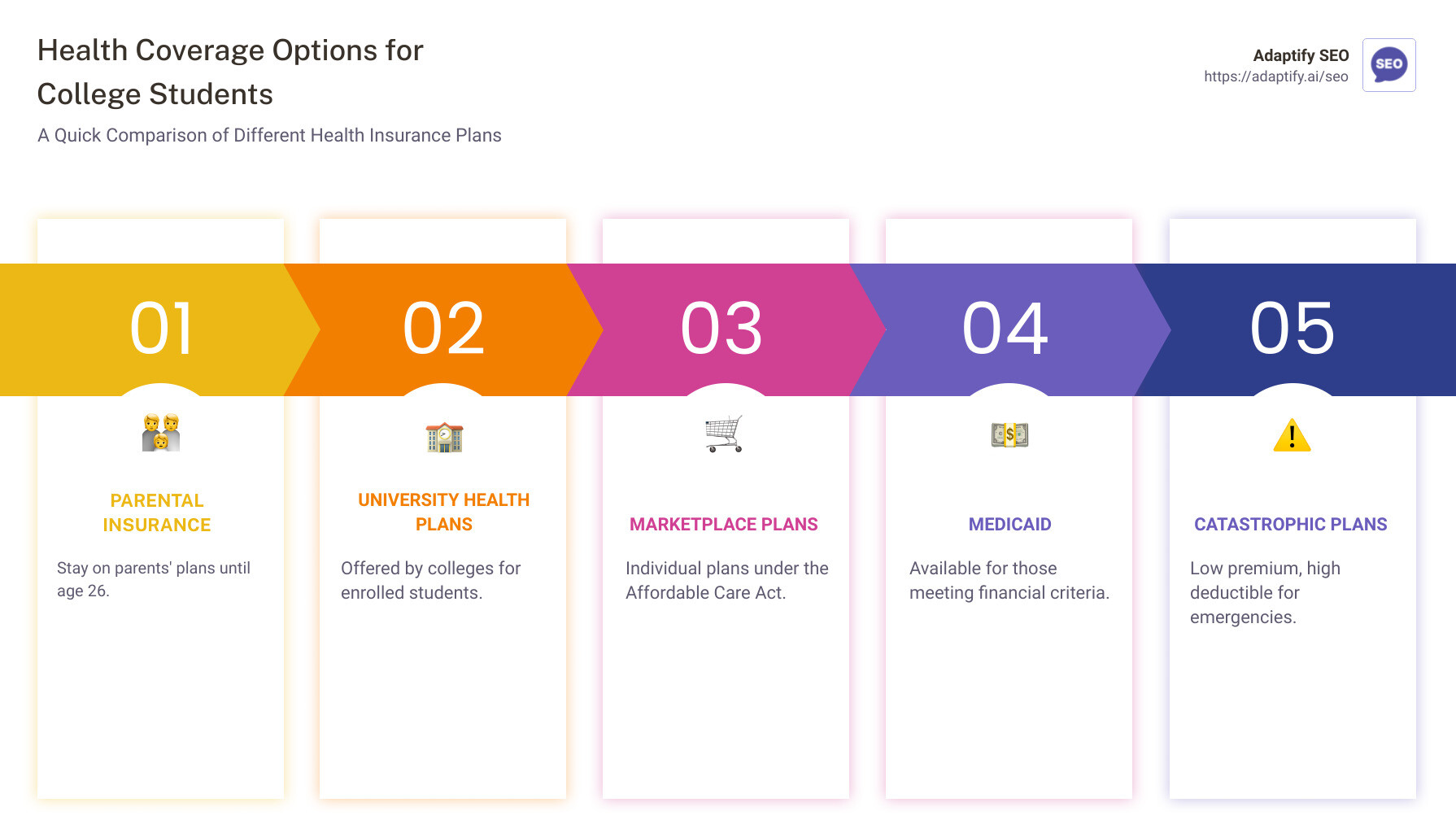
Health insurance for college students is more than just a policy; it’s a crucial element of a secure and healthy college experience. Navigating the myriad of health coverage options can be challenging, yet essential, for college students aiming to safeguard their academic journey against unexpected medical expenses. Here's a quick overview of key options:
The high cost of medical care in the United States can be a significant burden, with surveys highlighting that even routine checkups or prescriptions can become inaccessible without proper coverage. As Stephen L. Beckley aptly puts it, "Having insurance is tantamount to access to care." Without it, students are vulnerable to financial strain from medical bills, potentially jeopardizing their education.
I'm Hansjan Kamerling. With a strong background in crafting strategic content, I aim to explain crucial topics like health insurance for college students, guiding you toward informed decisions.
Book a Demo with Adaptify SEO to see how we can streamline your content creation processes and improve your search engine strategies.
Navigating health insurance as a college student can feel like learning a new language. But understanding the basics can make a world of difference in ensuring you're protected.
Health insurance is a contract between you and an insurance company. You pay a premium, and in return, the company helps cover certain medical costs. Coverage typically includes doctor visits, hospital stays, prescriptions, and preventive services. Without insurance, even a minor illness can lead to major expenses.
Most college students have several options for health insurance. Here are the main ones:
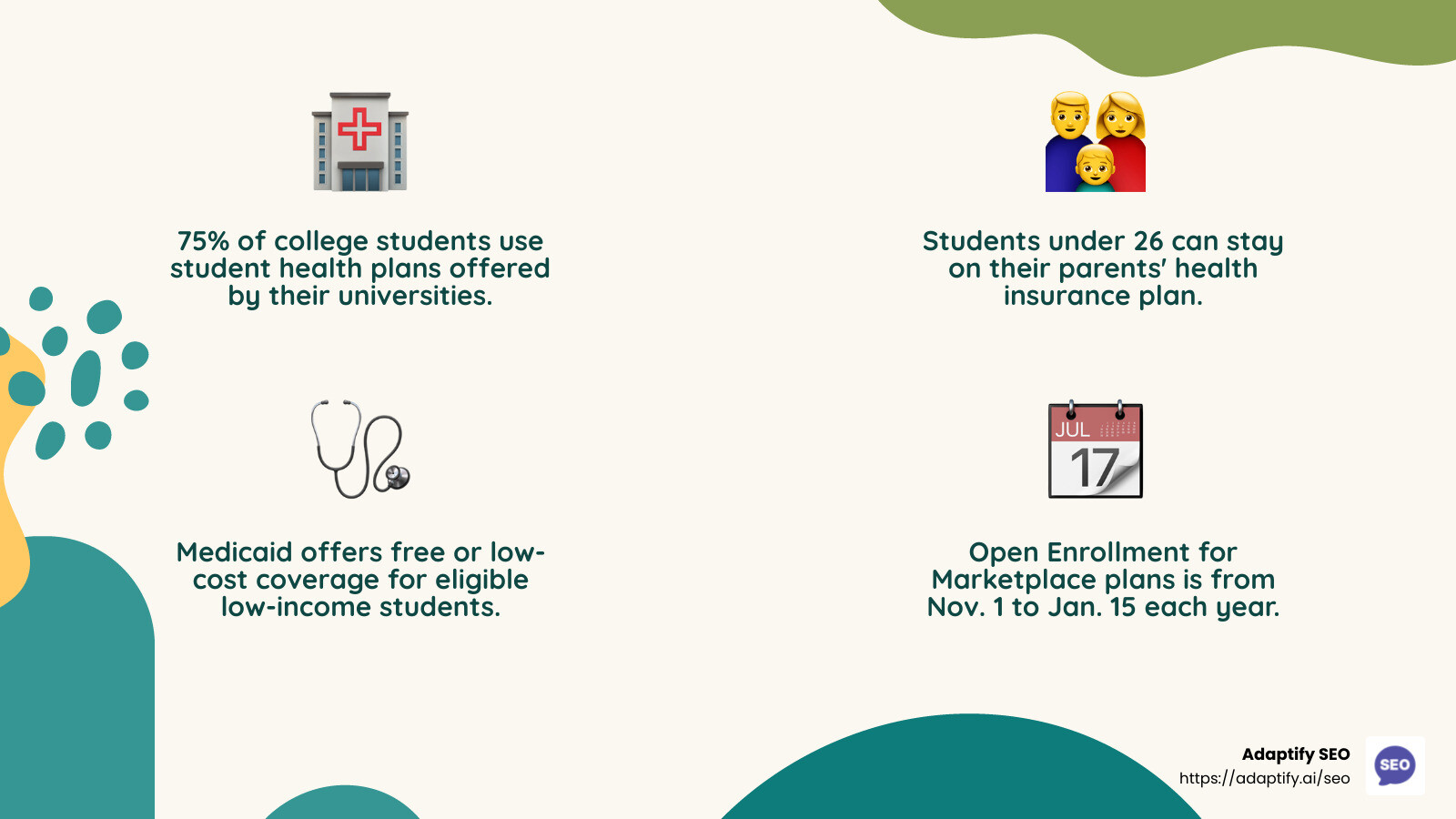
Timing is key when it comes to enrolling in health insurance:
Understanding these basics can help you make informed decisions about your health insurance needs. Having insurance not only protects your health but also your financial stability.
Book a Demo with Adaptify SEO to find how we can improve your content strategy and improve your online visibility.
Choosing the right health insurance for college students can be a daunting task, but breaking down the options makes it easier. Let's explore the different types of plans available:
Many colleges offer student health plans specifically designed for their students. These plans are convenient because they often include on-campus health services. They can cover a range of services from doctor visits to mental health support. If you're attending a university, check if they offer a health plan and what it covers.
Staying on your parents' insurance plan is a common choice for students under 26. This option is often the simplest and most cost-effective since it doesn't require additional enrollment. However, it's important to verify if your parents' plan has a network of providers in your college area. Some plans might only cover emergency services when you're out of state.
Marketplace plans are available through the Affordable Care Act. These are great if you're over 26 or if your parents don't have insurance. A major benefit is that these plans are custom to your new location, ensuring you have coverage where you study. However, if you return home for the summer, coverage might be limited to emergencies. Always check the details of your plan.
If you qualify based on income, Medicaid offers free or low-cost coverage. However, enrolling in Medicaid can vary by state. Some states have straightforward processes, while others may require more documentation and time. It's crucial to understand the specifics of Medicaid in your state, especially if you plan to move for school.
For those under 30, catastrophic plans are an option. These plans have low premiums but high deductibles, covering only essential health benefits after the deductible is met. They include free preventive care and three primary care visits per year. This is a viable option if you're healthy and don't expect to need frequent medical care.
Each type of plan has its pros and cons, and the best choice depends on your individual needs and circumstances. Consider how often you visit the doctor, your budget, and whether you'll be living in multiple states during the year.
Book a Demo with Adaptify SEO to find how we can improve your content strategy and improve your online visibility.
When it comes to health insurance for college students, comparing the options can seem tricky. But by breaking it down into a few key areas—cost, coverage benefits, network providers, and flexibility—you can make a more informed choice.
Cost is often the first consideration. Student health plans typically come with a semester or yearly fee, which can be rolled into tuition. This can be convenient but may end up being more expensive if you don't use the on-campus services frequently.
Staying on a parental insurance plan might save money since you won’t have additional premiums. However, if your college is far from home, out-of-network costs could add up.
Marketplace plans offer various price points. You might qualify for subsidies, which can lower your monthly premium significantly. But remember, lower premiums might mean higher out-of-pocket costs when you need care.
Medicaid is the most cost-effective if you qualify, offering little to no cost for coverage. Yet, eligibility criteria are strict, and coverage might not transfer if you study out-of-state.
Coverage benefits vary widely. Student health plans often cover essential services like doctor visits and mental health care directly on campus. This is a big plus if you need these services regularly.
With parental insurance, you benefit from the comprehensive coverage of a family plan. Just make sure your local providers are in-network.
Marketplace plans are custom to meet essential health benefits. This includes preventive care, which is fully covered, but check the specifics for other services you might need.
Catastrophic plans, while affordable, cover only major medical events after a high deductible is met. They do offer free preventive care, which is a bonus if you’re generally healthy.
Network providers are crucial, especially if you need specialist care. Student health plans usually have strong networks on campus but might not cover off-campus providers.
Parental insurance might limit you to in-network providers from your home area. This could mean higher costs if you need care away from home.
Marketplace plans are designed with local networks in mind, ensuring you have access to nearby providers. If you plan to move between states, verify the network coverage.
Flexibility is important if you're studying abroad or moving states. Student health plans might not cover you internationally, so check the specifics.
Parental insurance might offer some flexibility, but confirm if it covers out-of-state or international needs.
Marketplace plans can be adjusted during open enrollment or special periods. If you move or have a life event, you can change your plan to suit your new situation.
In summary, each plan type offers unique benefits. Your choice should align with your healthcare needs, budget, and lifestyle. Evaluate how often you need medical services, where you spend most of your time, and what you can afford.
Book a Demo with Adaptify SEO to learn how we can lift your content strategy and boost your online presence.
Selecting the right health insurance for college students involves several key factors. Let's break down how you can make the best choice for your needs.
Start by listing what you need from your health insurance. Do you have ongoing prescriptions, or do you require regular visits to a specialist? If you’re generally healthy, a plan with basic coverage might suffice. However, if you have specific health needs, ensure your plan covers those services.
Consider the location of your college. If you're attending school far from home, check if your plan covers out-of-network providers. This is crucial for accessing care without incurring hefty fees.
Your budget is a major factor in choosing a plan. Look at the monthly premiums and out-of-pocket costs, like deductibles and co-pays. Student health plans often bundle costs with tuition, but this might not be the cheapest option if you don't use campus services regularly.
Evaluate if staying on your parental insurance is cost-effective. You might save on premiums, but watch out for out-of-network charges if you're far from home.
If you're considering Marketplace plans, explore if you qualify for subsidies. These can significantly reduce your monthly costs, making a broader range of plans affordable.
Each insurance plan comes with different features. For instance, student health plans typically provide easy access to on-campus care, which is convenient for routine check-ups and minor illnesses.
Marketplace plans often include essential benefits like preventive services and mental health care. Check the specifics to ensure the plan meets your needs.
Catastrophic plans may be suitable if you are mainly concerned about major medical events. They have low premiums but high deductibles, meaning they’re best if you don’t expect to need regular care.
Think ahead. If you’re planning to study abroad or take internships in different states, you’ll want a plan that offers portability. Some Marketplace plans and parental insurance options provide better flexibility for these situations.
Also, consider how your plan choice might affect your future. For instance, having consistent coverage can help you maintain good health, which is crucial during your college years and beyond.
In conclusion, the right plan depends on your personal needs, financial situation, and future plans. Take the time to evaluate each option carefully.
Book a Demo with Adaptify SEO to see how we can help you improve your digital strategy and reach your target audience effectively.
Choosing the best health insurance for college students depends on individual needs and circumstances. College students generally have several options:
Student Health Plans: Offered by most colleges, these plans provide easy access to on-campus health services and are often bundled with tuition. They're convenient if you frequently use campus facilities.
Parental Insurance: If you're under 26, you might remain on your parents' plan. This can be cost-effective, but ensure it covers services near your college, especially if you're out-of-state.
Marketplace Plans: These plans offer a range of options and might include subsidies to lower costs. They often cover essential services, like preventive and mental health care.
Medicaid: If you qualify, Medicaid provides comprehensive coverage at little or no cost. It's a good option if your income is below a certain level.
Catastrophic Plans: Designed for emergencies, they offer low premiums but high deductibles. Suitable if you’re healthy and mainly concerned about major medical events.
Yes, college students can stay on their parents' health insurance until age 26, thanks to the Affordable Care Act. This option can be particularly beneficial if:
However, if you study far from home, it's crucial to check if local providers accept your parents' insurance. If not, consider other options that provide better local coverage.
Medicaid is a state and federally funded program providing health coverage for low-income individuals, including some college students. Here's how it works:
If you qualify for Medicaid, it can be an excellent choice due to its comprehensive coverage and low cost. However, eligibility varies by state, so check your state's requirements.
Book a Demo with Adaptify SEO to find how we can assist in enhancing your outreach to college students seeking health insurance information.
Health insurance is more than just a safety net for college students—it's a critical part of staying healthy and avoiding financial pitfalls during your studies. Whether you're dealing with routine check-ups or unexpected medical emergencies, having the right coverage ensures you can focus on your education without worrying about medical bills.
It's essential to weigh all your options carefully. From student health plans offered by your college to staying on your parents' insurance or exploring options like Medicaid, each choice has its unique benefits and challenges. The best plan is the one that fits your health needs, budget, and lifestyle.
At Adaptify SEO, we understand the importance of reaching college students with the right information about their health insurance options. Our automated SEO services can help streamline your content strategy and boost your online presence, ensuring you effectively connect with your target audience.
Ready to improve your outreach? Book a Demo with us today to see how we can help you reach more students seeking health insurance information.

Master SEO monitoring with key metrics and tools to track rankings, technical health, and organic growth for continuous performance optimi...

The Best Online Keyword Monitoring Tools for Real-Time Alerts - Learn about online keyword monitoring tool

Stop Flying Blind with These Top SEO Monitor Tools - Learn about seo monitor tools
Join 1,000+ agencies already delivering SEO and AI visibility from a single platform without increasing their headcount.Join 1,000+ agencies already delivering SEO and AI visibility from a single platform without increasing their headcount.