Keep Calm and Monitor Backlinks Free with These Tools


Monitor backlinks free tools have become essential for agency owners who need to track their clients' link profiles without breaking the budget. Here's what you need to know to get started immediately:
Top Free Backlink Monitoring Options:
Backlinks remain one of Google's top ranking factors, acting as votes of confidence for your content. According to Google's Andrey Lipattsev, "Content and Links going into your site, are the two most important ranking factors followed by RankBrain."
Why monitoring matters: Your clients' backlinks can disappear overnight, toxic links can trigger penalties, and competitors are constantly building new links. Without regular monitoring, you're flying blind in the most important area of off-page SEO.
The challenge for agencies is that manual backlink checking eats up valuable time that could be spent on strategy and client growth. Free monitoring tools solve this problem by automating the grunt work while providing the essential data you need.
I'm Hansjan Kamerling, and I've helped scale SEO operations for multiple SaaS platforms including a data analytics tool with 40,000 users where I learned how to monitor backlinks free at scale.
Here's the hard truth: if you're not actively monitoring your backlinks, you're playing SEO roulette with your clients' businesses. Every day you wait, competitors are building new links while yours might be disappearing into the digital void.
Monitor backlinks free isn't just a budget-friendly option—it's become essential for survival in today's hyper-competitive search landscape. Google's algorithms have grown smarter and more ruthless, making backlink monitoring as critical as checking your bank account.
Google uses backlinks as one of its top three ranking factors, alongside content quality and user experience signals. When Google's search quality team evaluates websites, they're looking at your link profile as a direct measure of authority and trustworthiness.
Google's E-E-A-T framework (Experience, Expertise, Authoritativeness, Trustworthiness) treats backlinks as digital endorsements. Each quality link acts like a professional recommendation, telling search engines that real websites trust your content enough to stake their reputation on it.
The penalty risk keeps me up at night, and it should worry you too. I've watched agencies lose major clients because toxic links triggered manual actions that destroyed months of SEO progress. One SaaS client I worked with saw their organic traffic plummet 60% overnight due to a negative SEO attack they didn't catch in time.
Referral traffic from backlinks often converts better than any other source because visitors arrive pre-qualified and engaged. When you lose quality backlinks, you're not just losing ranking power—you're losing warm prospects who were actively seeking your services.
The velocity of link changes surprises most people. Lost links happen constantly as websites redesign, change content, or simply go offline. Without monitoring, you'll never know when your most valuable links disappear, leaving you wondering why rankings suddenly dropped.
Competitor insights from backlink monitoring reveal their entire link building strategy. You'll find which publications they're targeting, what content attracts links, and where the real opportunities hide in your industry.
According to Google's link guidelines, they expect webmasters to actively manage their link profiles and disavow problematic links when necessary.
Think of your backlink profile as your website's credit score—it determines how much trust search engines place in your content. Each quality backlink serves as a vote of confidence, telling Google that real websites find your content valuable enough to reference.
Domain authority metrics like Ahrefs' DR or Moz's DA provide quick snapshots of link quality, but the real magic happens in the details. A single link from a highly relevant industry publication often outperforms dozens of generic directory listings.
Topical relevance matters more than raw authority numbers. When a fintech blog links to your financial software review, Google understands the contextual relationship and rewards that connection more heavily than a random link from a cooking website.
Toxic links are the silent assassins of SEO campaigns. They attach themselves to your domain like digital parasites, slowly poisoning your search visibility until rankings collapse without warning.
Spam attacks have become sophisticated and targeted. Competitors can blast thousands of low-quality links at your domain, hoping to trigger Google's spam detection algorithms. Without monitoring, you won't know about these attacks until the damage is done.
The disavow process exists because Google acknowledges that webmasters can't control every inbound link. But you can only disavow links you actually know about, making regular monitoring your first line of defense against negative SEO.
When I first started helping agencies monitor backlinks free, I quickly learned that not every tool delivers what it promises. After years of testing platforms, I've developed a clear checklist of non-negotiable features.
The difference between a useful tool and a marketing gimmick often comes down to real-time crawling capabilities. The best free tools update their massive databases daily, giving you fresh link data when it matters most. I've seen agencies miss critical PR opportunities because their monitoring tool was running three weeks behind the competition.
Email alerts transform everything from reactive scrambling to proactive strategy. When you set up notifications for new backlinks, lost links, or suspicious activity, you're essentially hiring a digital assistant that never sleeps. One client avoided a major penalty because our alerts caught a negative SEO attack within 48 hours.
Anchor text analysis reveals the story behind your links. Natural, diverse anchor text patterns scream "editorial links" to search engines, while repetitive exact-match anchors raise red flags about manipulation. The tools that break down this data help you spot both opportunities and potential problems before they impact rankings.
Don't overlook export functionality - it's your bridge between data and action. CSV exports let you combine insights from multiple tools and create those client reports that actually get read.
The ability to track follow vs nofollow tags matters more than most people realize. While nofollow links don't pass direct ranking juice, they still drive referral traffic and create natural-looking link profiles.
Here's something that surprised me early in my SEO career: referring domains count way more than total backlinks. I watched a client celebrate getting 500 new backlinks, only to find they all came from the same low-quality directory network. Meanwhile, a competitor gained just 15 links from 15 different authoritative domains and shot past us in rankings.
Domain Rating (DR) and Domain Authority (DA) scores provide helpful shortcuts for quality assessment, but I've learned not to worship these numbers. They're third-party approximations of Google's actual algorithms. A link from a smaller but topically relevant site often delivers more SEO punch than one from a high-authority but completely unrelated domain.
Link location within pages makes a huge difference that many people miss. Links buried in footers or sidebars pass less authority than those naturally woven into main content.
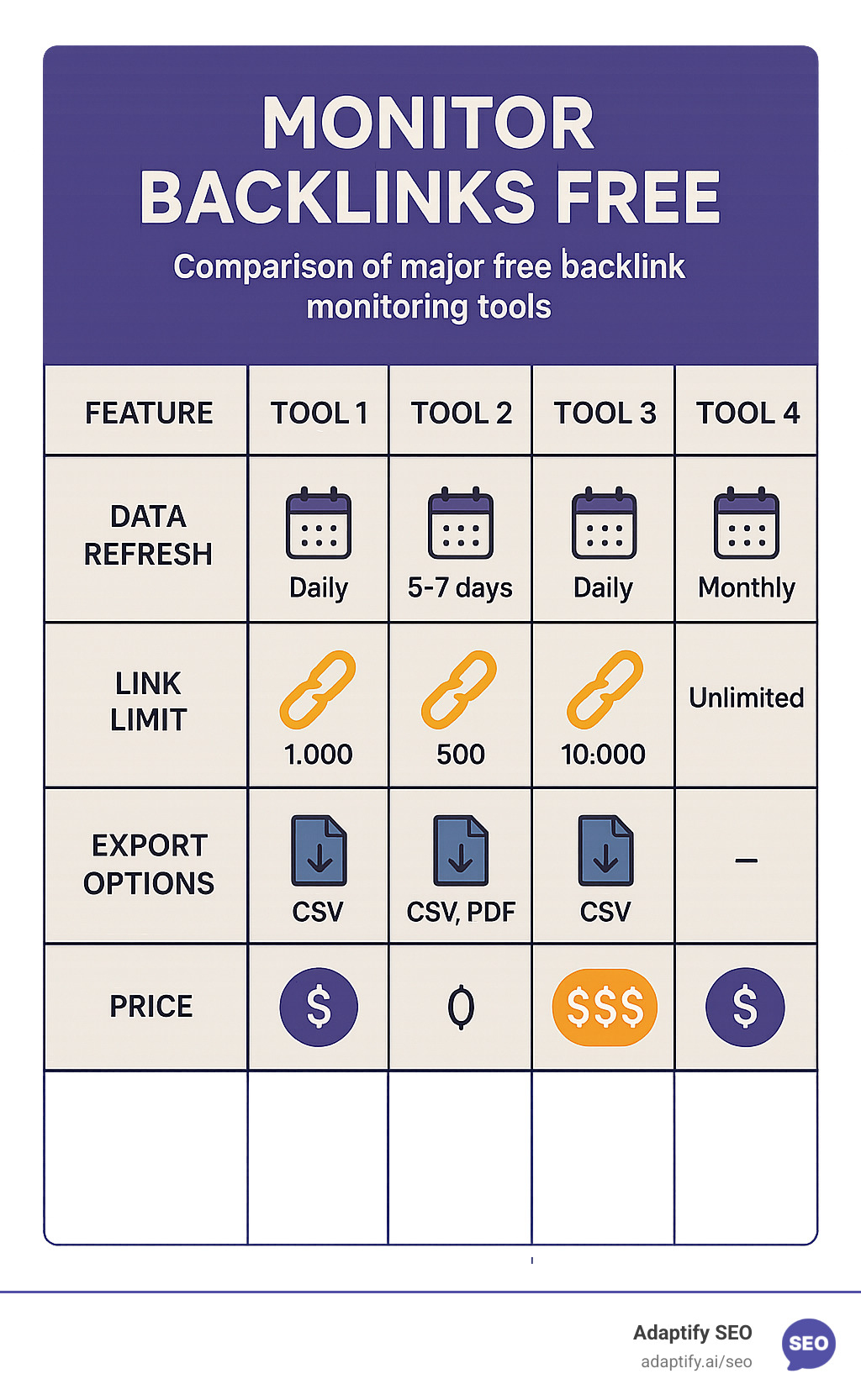
Let's be honest about what you're not getting with free tools. Most cap results at 100-1000 backlinks per domain, which means established sites with thousands of links only see a fraction of their profile. The good news? These tools typically prioritize showing the highest-authority links first.
Delayed indexing affects everyone, not just free tool users. New links can take weeks or months to appear in any tool's database - it's just the nature of crawling the entire web. Google's own Search Console often shows the freshest data because it comes straight from their crawling infrastructure.
Historical data access gets limited in free versions. You might see today's backlink snapshot but not track changes over time. This makes measuring campaign impact or identifying trends more challenging, though not impossible with regular manual exports.
Finding the right tool to monitor backlinks free can feel overwhelming with so many options available. I've spent countless hours testing these platforms, and I'm excited to share the ones that actually deliver value without hidden catches or useless limitations.
The truth is, most agencies don't need enterprise-level backlink tools right away. These free platforms provide enough data to protect your clients and identify growth opportunities.
Ahrefs built their reputation on having the most comprehensive backlink database, and their free tool taps into that same goldmine of 44.8 trillion links across 718 million domains. When I'm doing competitive research, Ahrefs consistently finds backlinks that other tools miss entirely.
The Domain Rating (DR) metric has become the unofficial standard for measuring link quality. While Google doesn't use DR directly, it correlates strongly with organic traffic potential. I've found it's one of the most reliable shortcuts for prioritizing which sites to target for outreach.
What sets Ahrefs apart is their traffic estimates for linking pages. Knowing that a page linking to you gets 1,000 monthly visitors helps you understand the referral traffic potential. This data has helped me prioritize relationship building with high-traffic sources that actually send visitors.
The disavow export feature is a lifesaver when dealing with toxic links. You can select harmful backlinks and export them directly in Google's disavow format. This alone has saved me hours of manual formatting work during link cleanup projects.
Their broken link filter reveals hidden opportunities. I regularly use the "404 not found" filter to find broken pages that still have valuable inbound links. Then I create replacement content and reach out to the linking sites - it's like finding buried treasure.
Moz completely rebuilt Link Explorer with a fresh database spanning 44.8 trillion links, focusing on quality over quantity. This tool has become my go-to for identifying the most valuable connections in any link profile.
Domain Authority (DA) and Page Authority (PA) scores remain incredibly popular despite Google's criticism of third-party metrics. The reality is that clients understand these scores, and they're still useful for competitive benchmarking and client reporting.
The spam score feature is where Moz really shines. It helps identify potentially harmful backlinks before they cause ranking problems. Any link with a high spam score gets flagged for closer inspection and possible disavowal.
Link Intersect functionality reveals shared backlinks between your site and competitors. This competitive intelligence is pure gold - it shows you link prospects that are already proven to link to sites in your industry.
Semrush claims the largest backlink database with 43 trillion links, and independent research backs up this claim. A scientific study on backlink checker accuracy found that Semrush finded 6.93 million links compared to Ahrefs' 2.43 million across 107 tested websites.
Their Authority Score metric proved more resistant to manipulation than competitor metrics. When researchers artificially inflated domain authority through paid links, Semrush's scores remained stable while other tools showed inflated ratings.
Speed of findy is another major advantage. Semrush often indexes new backlinks faster than competitors, making it invaluable for monitoring active PR campaigns or tracking what competitors are building.
The competitor gap analysis feature reveals linking opportunities by showing domains that link to competitors but not to your site. It essentially creates a prioritized outreach list based on proven link willingness.
MonitorBacklinks.com operated independently from 2012 until SEOptimer acquired it in 2023. The platform built a loyal following of over 100,000 users by focusing specifically on backlink monitoring rather than trying to be everything to everyone.
The change dashboard provides visual tracking of how link profiles evolve over time. You can see exactly when links were gained or lost, making it easier to correlate changes with specific campaigns or competitor actions.
Weekly email summaries ensure you never miss important link profile changes. These automated reports save tremendous time while keeping you informed about new opportunities and potential threats.
White-label reporting capabilities make this tool particularly valuable for agencies. You can generate branded PDF reports that showcase link building results to clients without revealing your monitoring tools.
Seobility's Free Backlink Checker requires no registration and provides comprehensive metrics including total backlinks, referring domains, IP addresses, and C-class distribution.
SEO Review Tools limits results to the 100 most valuable backlinks per domain but provides access to their database of 43 trillion links. With over 153,000 registered users, they maintain high data quality standards while keeping the interface simple and fast.
Google Search Console remains the most authoritative source for backlink data since it comes directly from Google's index. The Links report shows your most linked content and top linking sites.
Each of these tools brings something unique to the table. The key is understanding which features matter most for your specific workflow and client needs.
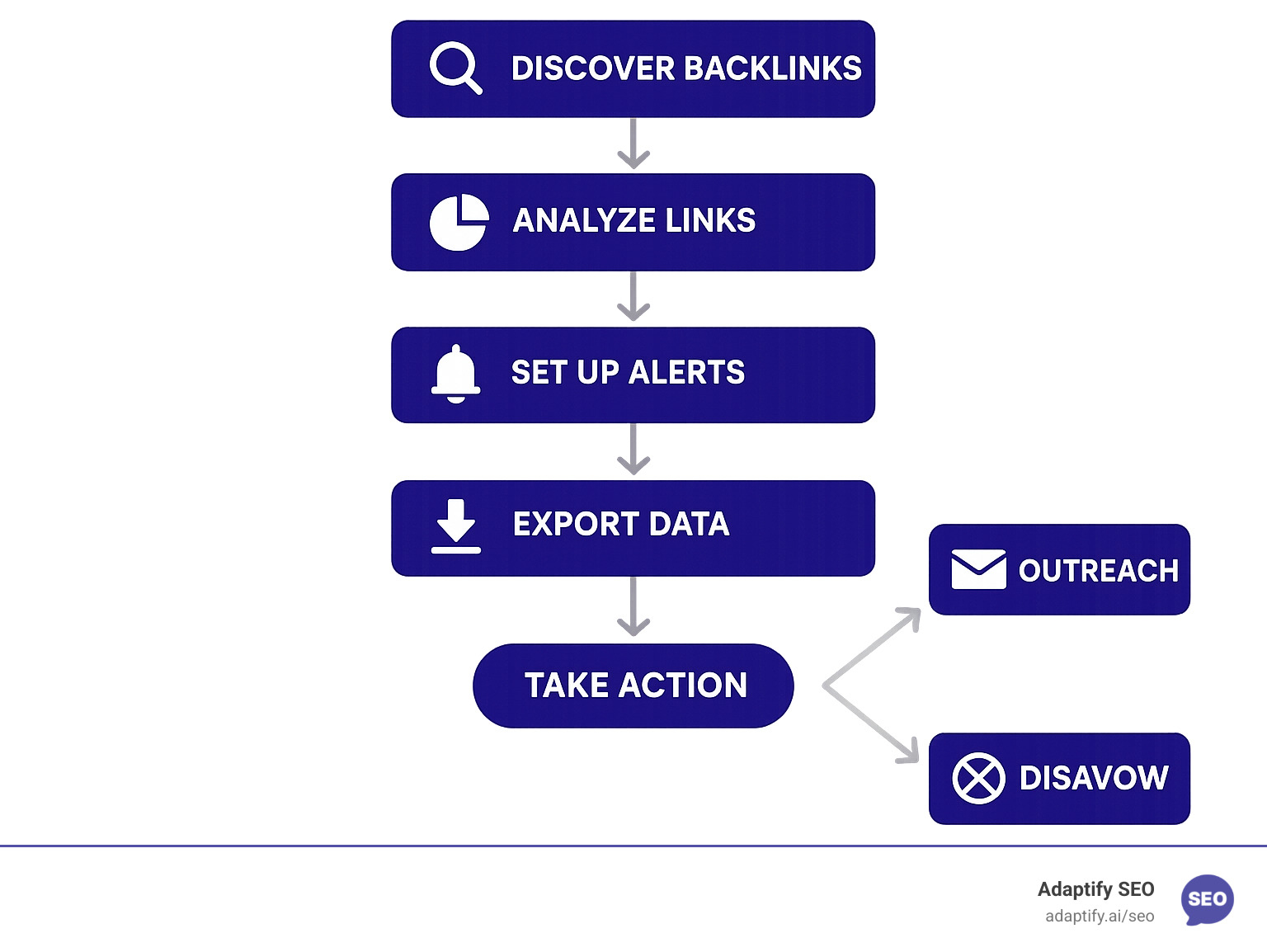
Your backlink monitoring data is only as valuable as the actions you take with it. After years of helping agencies turn link insights into real SEO wins, I've learned that the most successful teams follow a systematic approach that balances defense with offense.
Think of backlink management like tending a garden. You need to protect against weeds (toxic links), improve what's already growing (optimize existing links), and build new growth (acquire quality links).
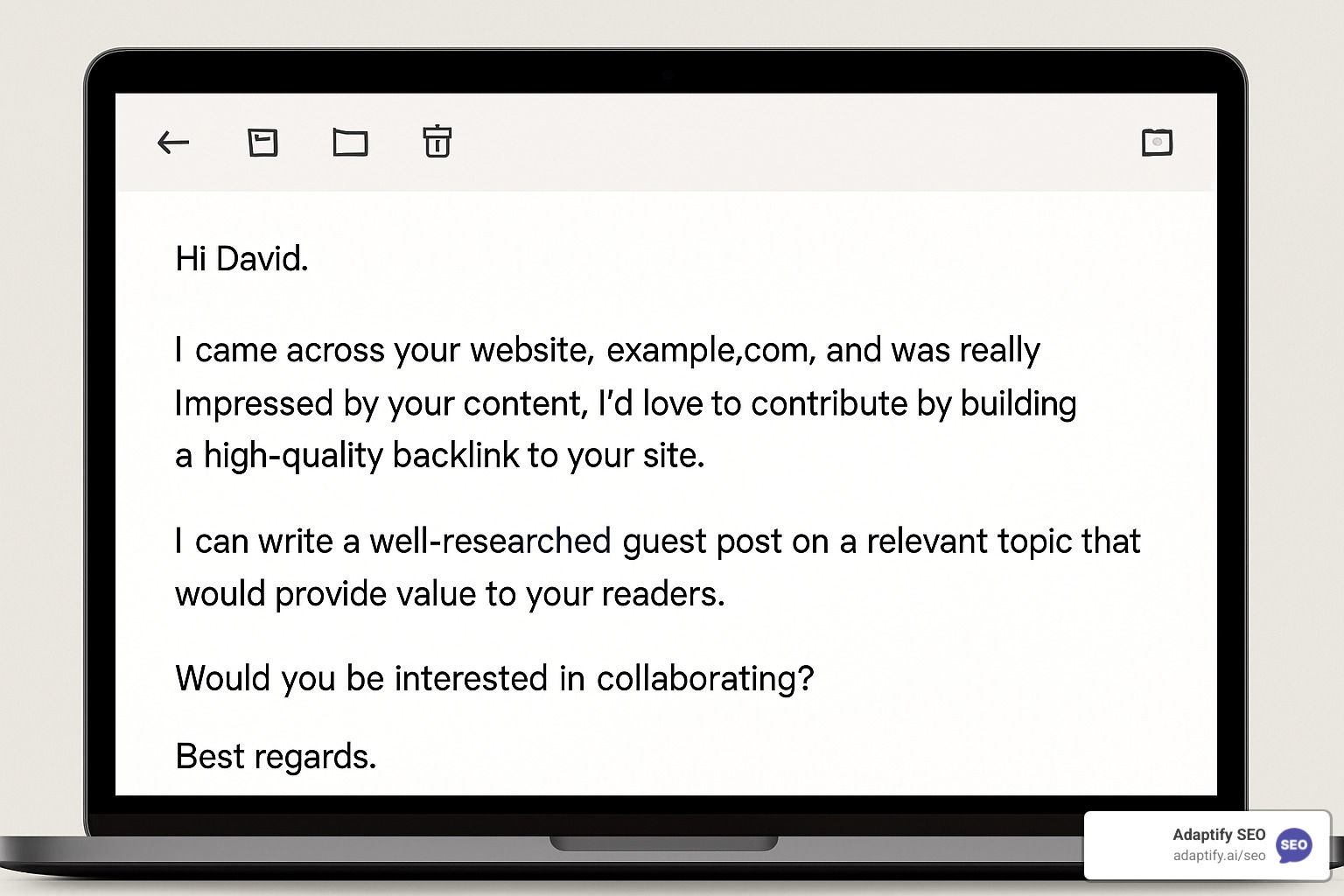
The protection workflow starts with regular link audits using the spam scores and metrics from your free monitoring tools. When you spot suspicious backlinks - think links from gambling sites, adult content, or obvious link farms - don't panic. Contact the site owner first with a polite removal request. Most legitimate sites will remove unwanted links when asked nicely.
Only move to Google's disavow tool after trying direct outreach. I've seen agencies jump straight to disavowal and miss opportunities for relationship building with site owners who were happy to help once contacted.
Improvement tactics focus on getting more value from links you already have. When you monitor backlinks free and find sites linking to your old blog posts, reach out and suggest they link to your newer, more comprehensive content instead.
Building strategies become much smarter when informed by competitor analysis. If your monitoring reveals that three competitors all have links from the same industry publication, that's a clear signal worth investigating.
Lost links hurt, but they're often recoverable with the right approach. When your monitoring shows a valuable backlink has disappeared, don't assume it's gone forever. Sometimes links vanish due to site redesigns, content updates, or simple technical glitches.
Reach out to the site owner with a friendly message asking if they'd consider restoring the link. Explain why the link was valuable to their readers and offer to update your content if needed. I've recovered dozens of high-value links this way - relationships matter more than most people realize.
301 redirects can save links pointing to deleted or moved content. Instead of letting those links hit 404 errors, redirect the old URLs to relevant new pages. This preserves the link equity while maintaining a good user experience for visitors following those links.
Link gap analysis reveals your biggest untapped opportunities by showing where competitors have succeeded in earning links. Focus your outreach efforts on domains that link to multiple competitors - they've already proven they're willing to link within your industry.
Resource page targeting becomes incredibly effective when you can see which resource pages already link to your competitors. These curated lists actively seek quality industry resources, making them much more receptive to well-crafted pitches than random websites.
Digital PR mentions often fly under the radar, but they represent golden opportunities. When journalists or bloggers mention your brand without linking, a polite follow-up email often converts those mentions into valuable backlinks.
The key to all of this is consistency. Set up your monitoring systems, create your workflows, and stick to them. The agencies that succeed with link building aren't necessarily the ones with the biggest budgets - they're the ones who consistently act on their data month after month.
Let me address the most common questions I get from agency owners who are just starting to monitor backlinks free. These answers come from real experience helping agencies build sustainable monitoring systems.
Here's what I've learned after years of testing different monitoring schedules: weekly scans work perfectly for most agencies. You'll catch important changes without drowning in data or burning out your team.
Think of it like checking your bank account - you want to know about significant changes quickly, but you don't need to obsess over every tiny fluctuation. Weekly monitoring gives you that sweet spot of staying informed without becoming overwhelmed.
For clients running active PR campaigns or operating in cutthroat industries, I recommend bumping up to daily checks during peak periods. When you're actively building links or launching major content, those daily updates help you measure campaign impact in real-time.
Monthly deep audits are where the real strategic work happens. Set aside time each month to dive deep into link profile health, spot emerging patterns, and plan your next moves.
Don't panic when you find sketchy links - every website gets them eventually. The key is responding systematically rather than frantically hitting the disavow button.
Start with polite outreach to the linking website. You'd be surprised how many webmasters will remove problematic links when you simply ask nicely. I've had success with messages explaining that the link appears to be spam or was added without permission.
Keep detailed records of every removal request you send. Google wants to see that you tried the diplomatic approach before using their nuclear option. Screenshot your outreach emails, track responses, and note which sites ignore your requests.
The disavow tool should be your last resort, not your first response. Only disavow links you absolutely cannot get removed through direct contact. When you do create a disavow file, include notes about why each link is problematic and when you attempted removal.
This question hits close to home because I've been on both sides of the fence. The honest answer is: it depends on your agency's size and ambitions.
Free tools provide excellent coverage for basic monitoring needs. If you're managing 5-10 clients and focusing on fundamental link profile health, you can absolutely build an effective system using only free platforms.
The hybrid approach works best for most growing agencies. Use free tools for initial research and basic monitoring, then strategically upgrade to paid features when you hit specific limitations. This approach maximizes your budget while ensuring you have the data you need.
Data validation becomes crucial when relying on free tools. Cross-reference findings between Ahrefs, Moz, and Semrush to build confidence in your analysis. When all three tools agree that a link is problematic, you can act with confidence.
The truth is, many successful agencies start with free tools and gradually add paid features as their revenue grows. There's no shame in starting small - the important thing is starting at all.
Learning to monitor backlinks free has completely changed the game for agencies working with tight budgets. You don't need to shell out thousands for enterprise software to keep tabs on your clients' link profiles anymore.
The landscape of free tools has matured beautifully. Ahrefs shines when you need deep competitive research, while Moz catches those sneaky spam links before they cause trouble. Semrush brings the biggest database to the table, and those specialized monitoring platforms keep you alert with real-time notifications.
Here's what I've learned after years of testing these tools: consistency beats perfection every single time. Running weekly checks with free platforms will uncover way more opportunities than doing monthly deep-dives with expensive software. It's like the difference between checking your email daily versus once a month - you'll miss the important stuff if you wait too long.
The smart move is building a monitoring stack that actually works for your agency's rhythm. Start with Google Search Console as your foundation since it's straight from the horse's mouth. Layer on Ahrefs or Semrush for those competitive insights that make clients say "wow, how did you find that?" Then add one of those specialized monitoring tools for the alerts that wake you up when something important happens.
Your future SEO success depends on staying ahead of changes, not just reacting to them. The agencies thriving in 2024 are the ones who've automated their monitoring so they can spend time on strategy instead of spreadsheets.
At Adaptify SEO, we get it - you want to focus on growing your agency, not wrestling with a dozen different tools every week. Our AI-powered platform handles everything from strategy and content creation to PR link building, so you can monitor backlinks free while we take care of building new ones. Ready to see how much time you could save? Book a demo and let's show you what automated SEO really looks like.

Discover how backlink automation software streamlines outreach, saves time, and scales your SEO strategy safely and effectively.
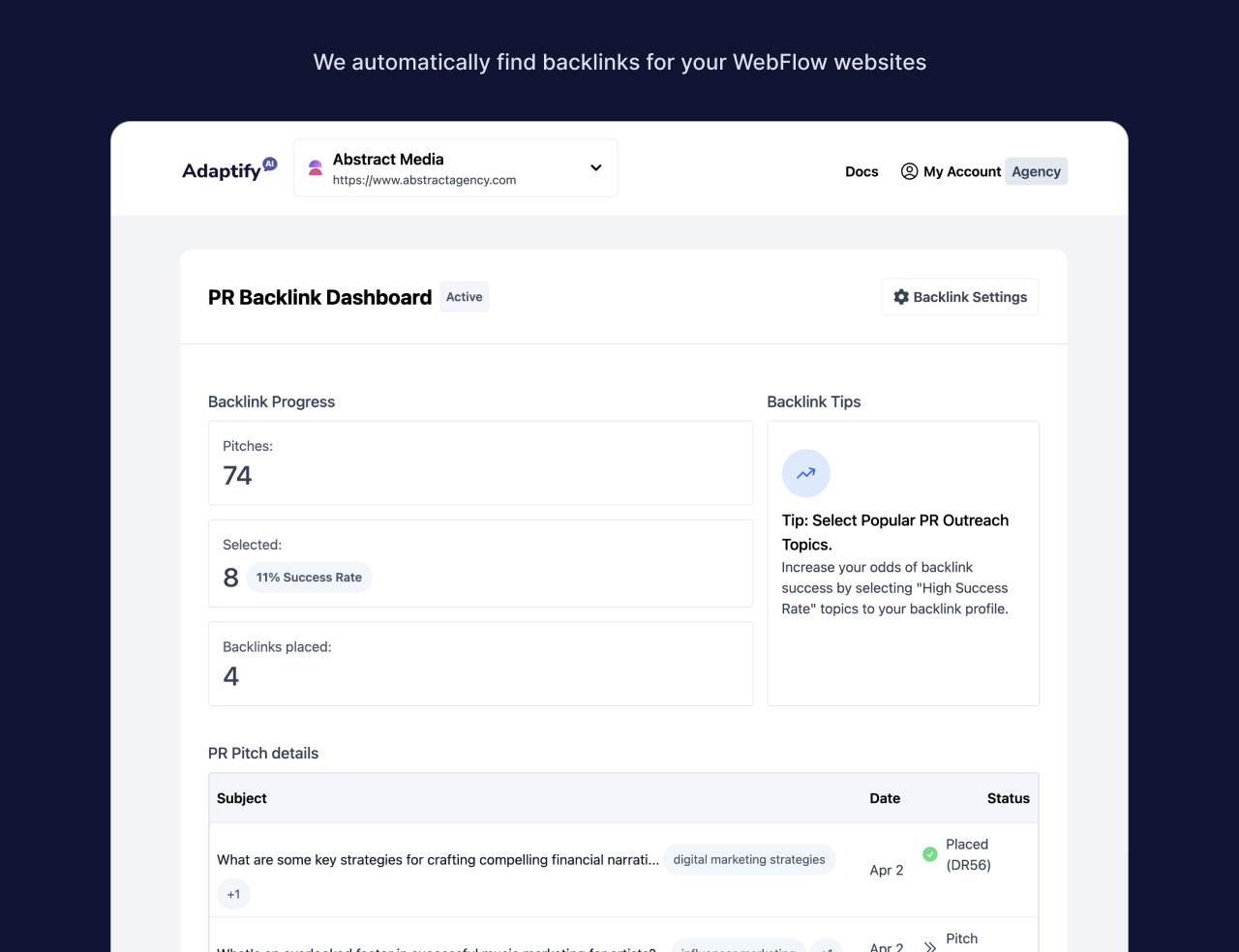
Track every backlink with an SEO backlink monitor—spot lost links fast, protect rankings, and boost ROI before competitors do.
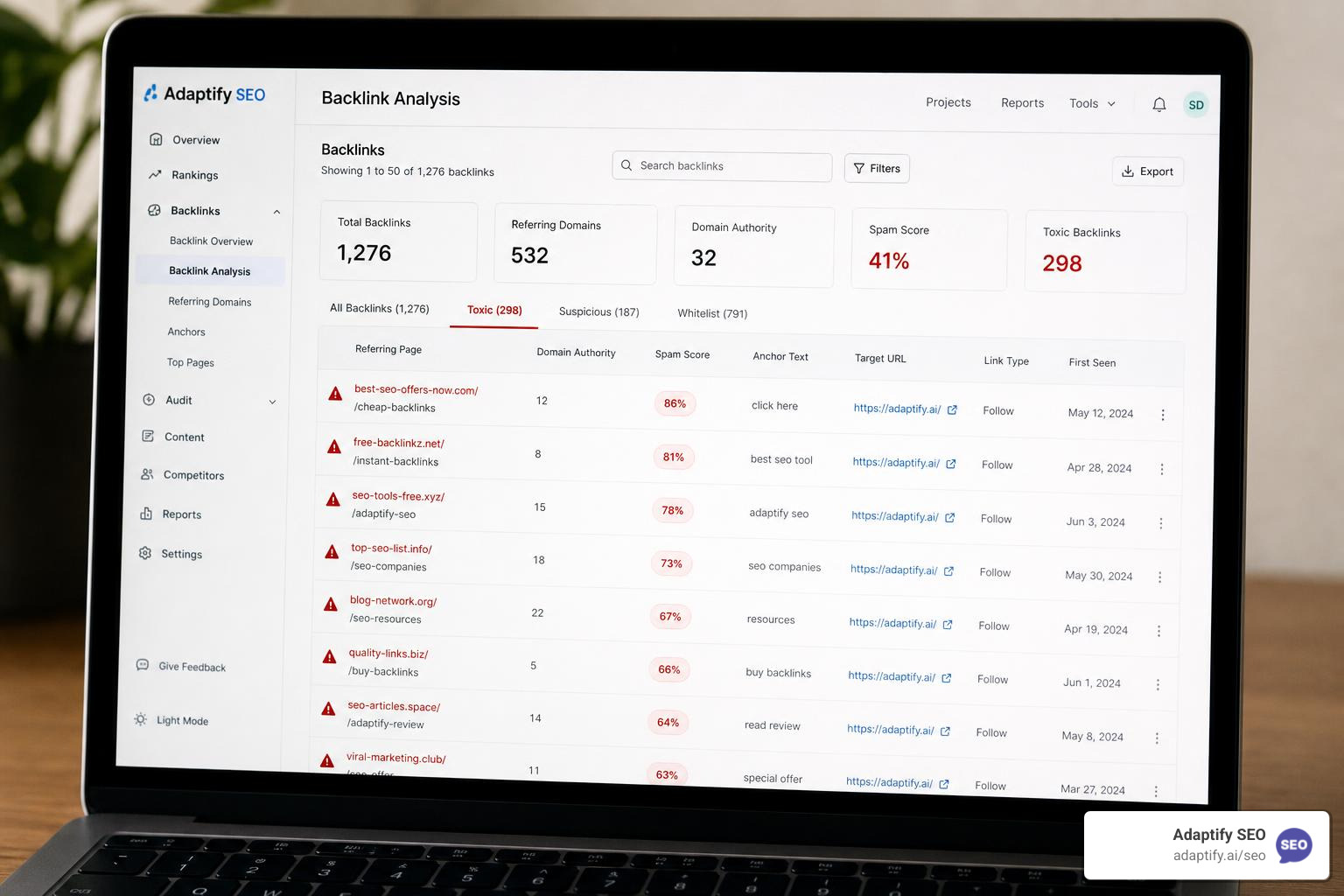
Learn how to disavow toxic backlinks, clean your profile, and recover rankings with this step-by-step guide.
Join 1,000+ agencies already delivering SEO and AI visibility from a single platform without increasing their headcount.Join 1,000+ agencies already delivering SEO and AI visibility from a single platform without increasing their headcount.