Link Building Automation: How to Scale Your Outreach Efforts

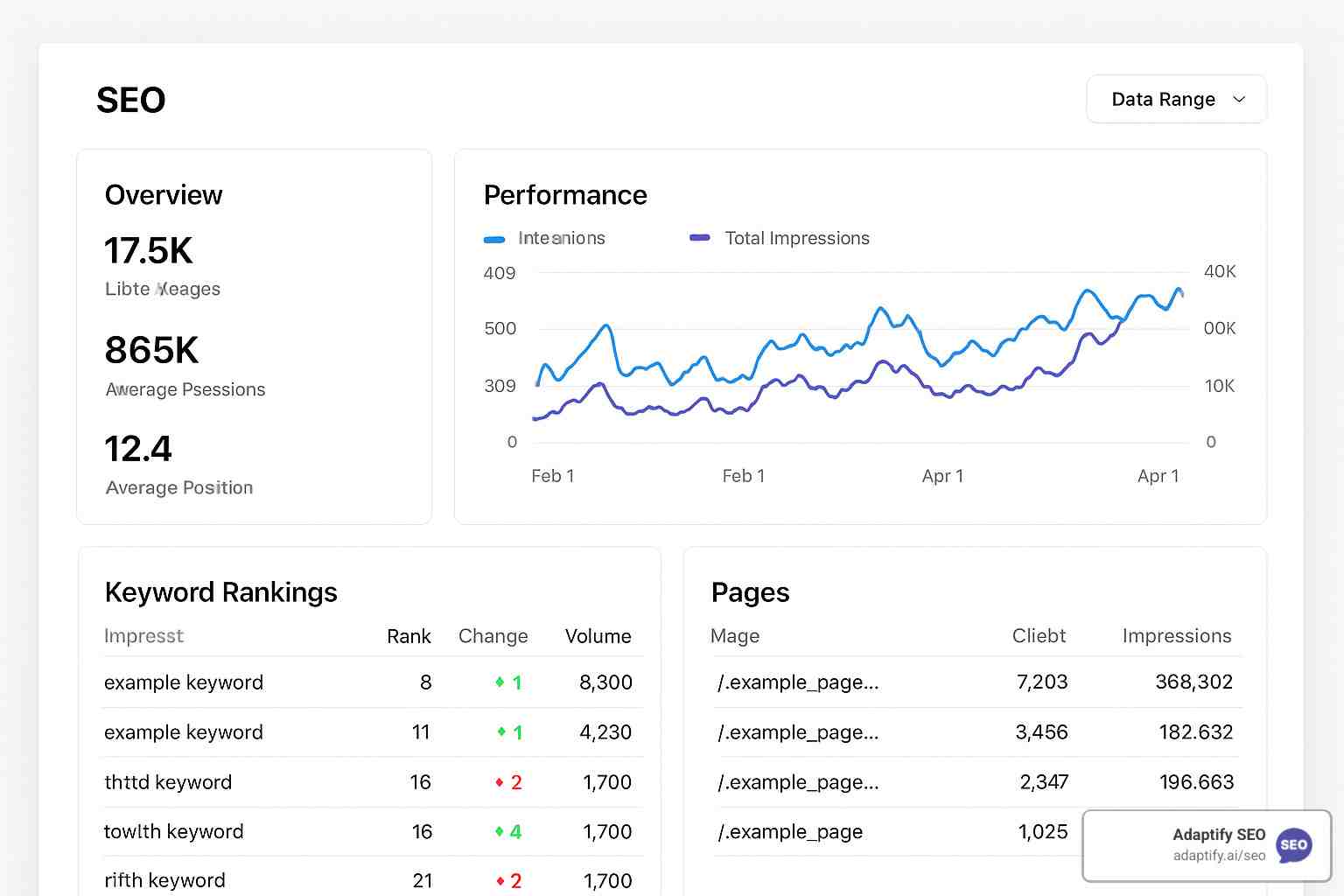

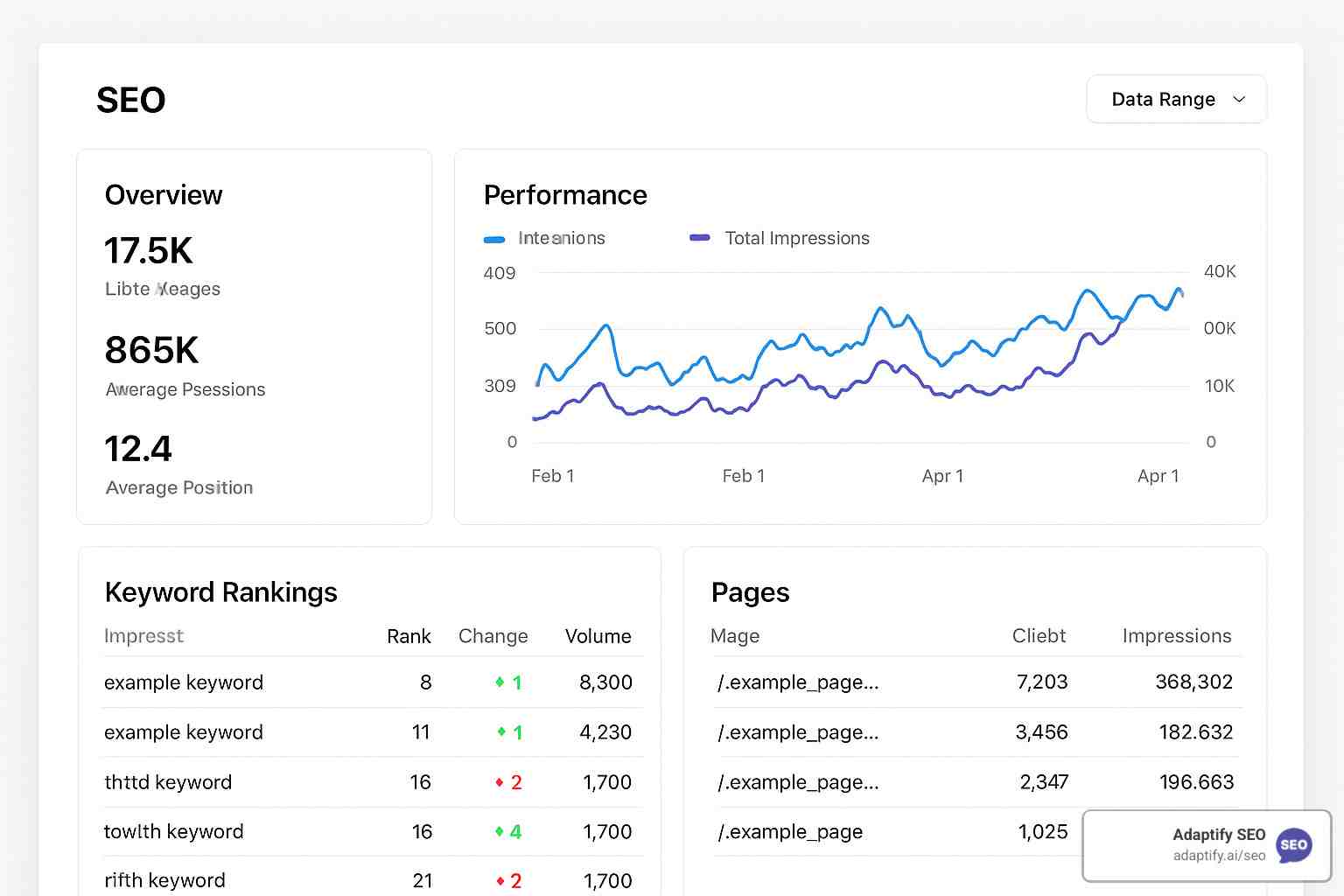
Automated link building process is a systematic approach that uses software and AI tools to streamline the time-consuming tasks of finding prospects, managing outreach, and tracking backlinks—allowing SEO professionals to scale their efforts without sacrificing quality.
Key Components of an Automated Link Building Process:
Link building can be incredibly frustrating. The reality is that 73.5% of link builders build fewer than 10 links monthly. That's not because they lack skill—it's because manual link building is painfully slow.
The traditional approach demands hours of research, endless email threads, and constant follow-ups. You're manually checking domain metrics, hunting down contact information, and tracking everything in spreadsheets. Meanwhile, your competitors are scaling their link profiles while you're stuck in the weeds.
Modern SEO doesn't wait. The manual intensity of link building creates a bottleneck that prevents agencies from scaling efficiently. When you're spending $40,000+ per year on a link builder who can only secure a handful of quality links per month, the math simply doesn't work.
This is where automation changes everything. By handling the repetitive grunt work—prospecting, email verification, and monitoring—automated systems free you to focus on strategy and quality control. The key isn't replacing human judgment; it's amplifying your team's effectiveness.
I'm Hansjan Kamerling, and I've spent years helping businesses scale their growth. I've seen how the right automated link building process transforms agencies from overwhelmed to efficient, allowing teams to focus on strategic relationships rather than administrative tasks.
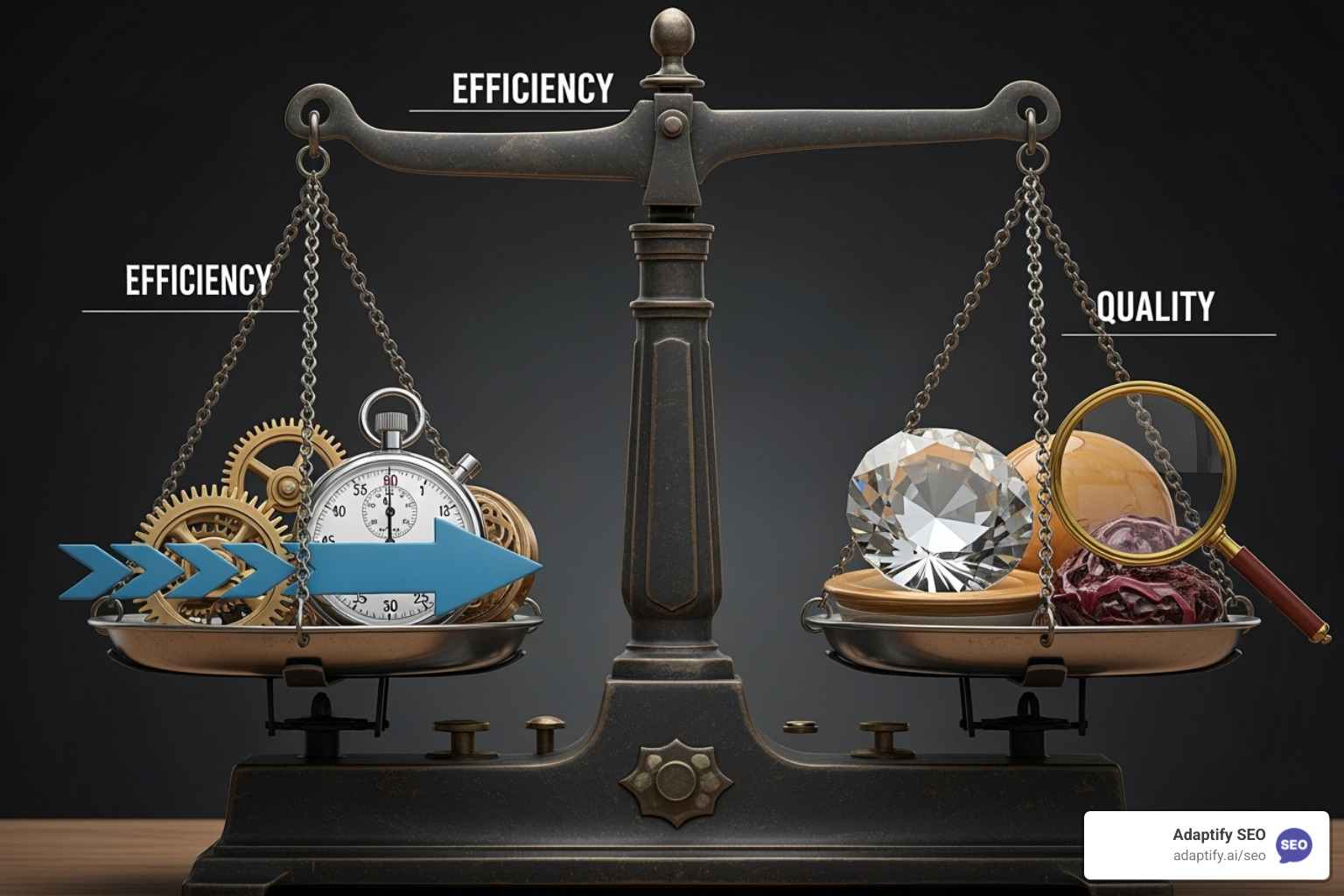
Let's be honest about automation in link building—it's not all sunshine and rainbows, but it's not the villain some make it out to be either. Think of it as a powerful amplifier: it makes everything you do louder, whether that's good practices or bad ones.
A scaling problem is what holds most link builders back, and it's a problem automation can solve—but only if you approach it with your eyes wide open to both its benefits and its dangers.
Here's where an automated link building process really shines. I've watched teams transform from overwhelmed to efficient because they stopped trying to do everything manually.
Time savings are the most obvious win. Instead of spending hours hunting for contact emails or tracking link placements, automation handles these tasks in minutes. Your team can finally focus on what requires human judgment—like crafting compelling pitches and building real relationships.
Increased outreach volume becomes possible without burnout. Manual outreach hits a wall fast. Automation lets you reach hundreds of prospects while maintaining personalization, dramatically expanding your opportunities.
Improved accuracy and organization are also key benefits. Humans make mistakes, especially with repetitive tasks. Automated systems don't forget follow-ups or lose track of conversations. Everything lives in one dashboard—prospects, outreach history, and performance metrics. No more scattered spreadsheets.
Most importantly, automation makes your campaigns truly scalable and cost-effective. When a client needs aggressive link building, you can deliver without hiring three more people. That's what makes an agency profitable.
But let's talk about where things can go sideways. The risks of automation are real, and ignoring them can tank your SEO efforts.
Spammy links are the first danger. Automating without proper vetting leads to outreach to low-quality sites. These associations hurt more than they help, as Google's algorithms are sophisticated at spotting unnatural link patterns.
This leads directly to Google penalties. Google's Webmaster Guidelines are clear about artificial link building. A manipulated link profile risks manual actions or algorithmic devaluations that can take months to recover from.
Finally, the loss of personal touch is subtle but damaging. Link building is about relationships. When your outreach feels robotic, recipients can tell. Your response rates plummet, and you've wasted everyone's time.
Avoiding these risks requires discipline. You need manual review of top-tier prospects, strict quality criteria, and a focus on a natural link profile by diversifying sources and anchor text. Someone must monitor for over-optimization—a link velocity or anchor text distribution that looks too perfect is a red flag.
Now we get to the practices that give automation a bad name. Impersonal mass outreach is the most common offense. Sending thousands of generic template emails isn't link building—it's spam that damages your sender reputation and brand.
Black-hat tactics take it further, using tools that function as link farms to create hundreds of low-quality links. These schemes are designed purely to manipulate rankings. Using them is playing Russian roulette with your domain authority.
I've seen businesses recover from penalties, but a toxic backlink profile built through aggressive, low-quality automation is a nightmare. The lesson is simple: automation should amplify good practices, not enable bad ones. That balance—efficiency without sacrificing authenticity—is what separates effective automated link building from spam.
Now that we've covered the good, the bad, and the ugly, let's walk through how to implement an automated link building process that works. This isn't a "set it and forget it" situation. It's about building smart systems that amplify your efforts without sacrificing quality.
Before you start, define what success looks like. Are you chasing higher domain authority, more organic traffic, or better keyword rankings? Set clear, measurable goals and define what a "quality link" means for your campaign. Without these goalposts, you're just collecting links for the sake of it.
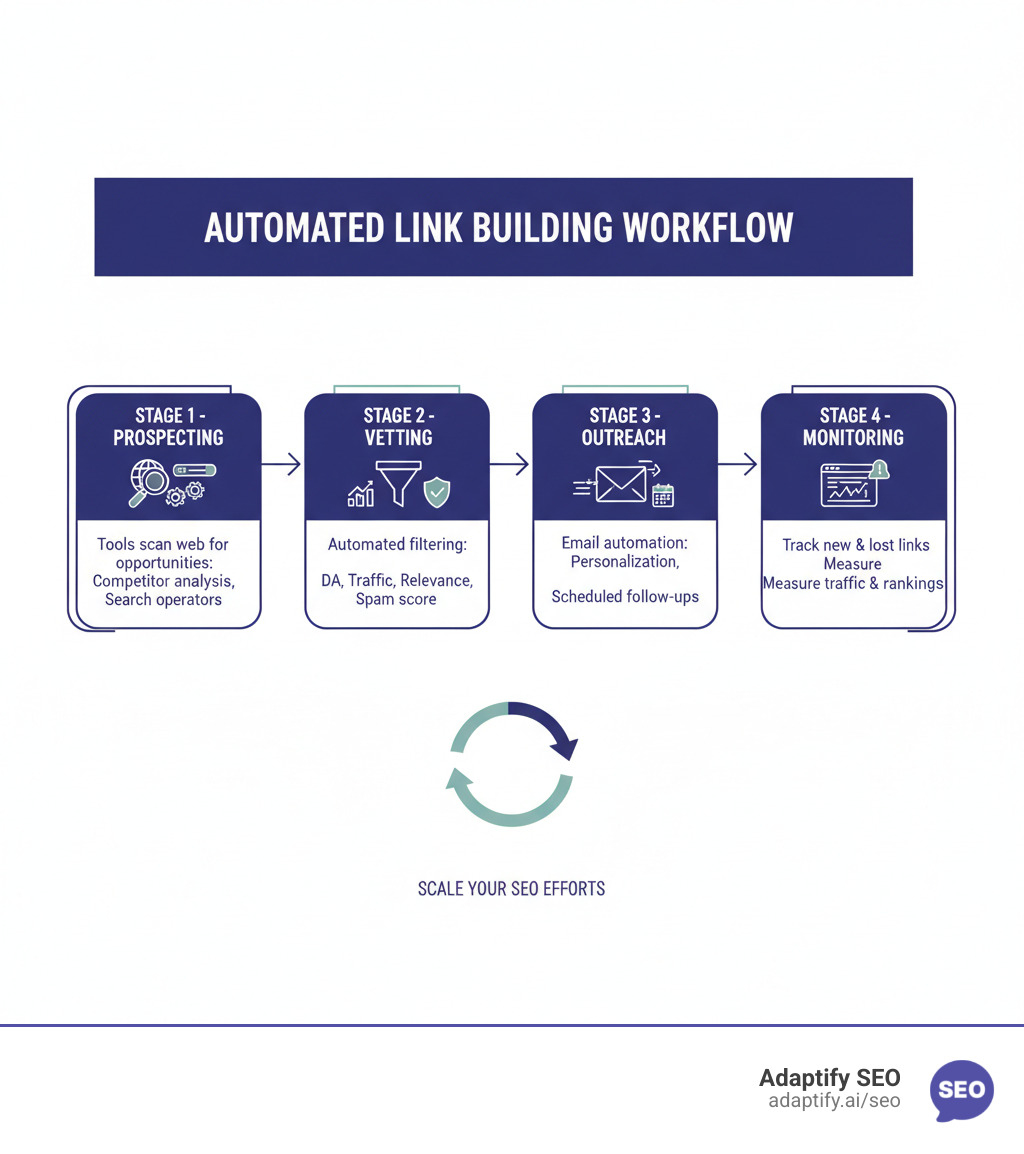
I break down the automated link building process into four stages: Prospecting, Vetting, Outreach, and Monitoring. Skipping or rushing any of them is where people get into trouble.
This first stage is where automation really earns its keep, turning days of work into hours. Your mission is to find as many relevant, high-quality link opportunities as possible.
Indispensable tools for prospecting are Ahrefs and Semrush. With their site exploration features, you can plug in a competitor's URL and see their entire backlink profile. It's like getting a map to buried treasure, showing you exactly where competitors get their links.
These tools also help you identify unlinked mentions of your brand. These are gold because the site already knows you; a friendly email can often turn these into quick wins. Another powerful technique is content gap analysis. Find topics your competitors rank for that you don't, create better content, and then reach out to sites already linking to them.
Don't underestimate Google, either. Advanced search operators can uncover specific opportunities. For example, site:.edu "digital marketing" intitle:"resources" can help find educational resource pages in your niche. For larger-scale prospecting, web scraping techniques can extract data from search results, but remember: quality matters more than quantity.
A thousand-site prospect list is useless if 900 of them are garbage. This vetting stage is where you separate the wheat from the chaff, and it's crucial for avoiding penalties.
I set up automated filters based on strict quality criteria. Domain Authority (Moz) or Domain Rating (Ahrefs) gives a quick snapshot of a site's strength. I typically set a minimum threshold, like DR 50+ for established sites or DR 30+ for newer ones.
But metrics only tell part of the story. I also look at organic traffic; a site with at least 1,000 monthly visitors from search is a good sign that Google trusts it. Most importantly, niche relevance matters more than any metric. A link from a DR 80 pet grooming site won't help your fintech company. I also use spam score metrics to automatically filter out toxic domains.
Even with these filters, I never skip manual spot-checking. For top-tier prospects, I personally review the site to check content quality and relevance. This human oversight is what separates successful campaigns from disasters.
This is where the automated link building process gets delicate. The automation here needs to be invisible—it should feel personal even when powered by software.
First, find the right person to contact. Tools like Hunter.io are my secret weapon for this, efficiently finding verified email addresses with names and job titles. Always verify the contact information to reduce bounce rates and protect your sender reputation.
For the emails, I use customizable templates with placeholders for personalization. I reference specific articles or company news to explain why a link benefits their readers. The template is just a starting framework.
Scheduling emails and setting up automated follow-up sequences ensures persistence without being annoying. Specialized outreach platforms are designed for this, combining contact findy, email sequencing, and relationship management. They allow you to manage large-scale campaigns without losing the personal touch.
Getting the link isn't the finish line. Links can disappear or change without warning. Continuous monitoring keeps your link profile healthy and measures impact.
I use automated tools to track when new links go live and, more importantly, monitor for link status changes. Tools like Linkody send automated notifications when a link is added, removed, or changed. This lets me address problems quickly.
The real question is whether these links are moving the needle. I constantly measure referral traffic, track ranking improvements for target keywords, and watch conversion rates to ensure links contribute to business goals. This systematic approach turns link building into an ongoing asset that compounds over time.
Here's the truth: the most effective automated link building process isn't about replacing humans—it's about freeing them up to do what they do best. Think of automation as your tireless assistant who handles the grunt work while you focus on strategy, creativity, and relationship building.
Too many teams go all-in on automation, treating it like a "set it and forget it" solution. The result is generic outreach, low-quality links, and frustration. The secret isn't choosing between automation and human touch—it's skillfully blending both.

This is where many automated campaigns fall flat. The key is using automation to scale personalization, not eliminate it.
Start with custom fields and dynamic tags that go beyond the basics. Every outreach tool lets you insert {first_name}, but the magic happens when you use fields like {article_title_they_wrote} to show you've done your homework. This small touch transforms a mass email into something that feels hand-crafted.
Name and company personalization is the bare minimum. Always address recipients by name and reference their specific website. Research shows this simple practice dramatically increases engagement rates.
The golden rule of outreach is referencing specific content. Mention a recent article they published or a unique perspective they shared. This proves you're not just another person blasting out generic requests. When someone sees you've invested time, they're more likely to invest time in your pitch.
AI-powered personalization is revolutionizing this process. I use AI tools to analyze prospect websites and suggest compelling opening lines. The AI can identify recent achievements or content themes that make each outreach feel bespoke, augmenting human insight to personalize at scale.
Quality control is where your human judgment is critical. Automation can suggest opportunities, but you are the gatekeeper.
I maintain a detailed vetting checklist for every potential link. Beyond metrics, I evaluate if the content is truly relevant, if their audience would benefit, and if the site looks healthy. I also examine their backlink profile to avoid spammy neighborhoods.
For top-tier sites, manual review is non-negotiable. I personally visit these sites and read their content to assess the strategic fit. No algorithm can replace this.
Diversifying your link sources is crucial for a natural-looking profile. Aim for links from various sites: industry blogs, news outlets, resource pages, and relevant forums. This diversity signals to search engines that your links are earned organically.
I regularly monitor my backlink profile and am not afraid to use Google's disavow tool when necessary. Think of it as pruning a garden—you need to remove the weeds. Finally, staying updated on algorithm changes and following Google's Webmaster Guidelines is essential for a sustainable, long-term SEO strategy.
If you're looking for expert help with quality backlink acquisition, check out our backlink services designed specifically for agencies.
The integration of AI is changing link building from an art into a science—or a blend of both.
Predictive analysis is an exciting development. AI can analyze massive datasets to predict which content types attract links and which sites are most receptive to outreach, shifting prospecting from reactive to proactive.
AI-assisted content creation is another game-changer. While it can't replace human creativity, it's valuable for generating outlines and optimizing content to create high-quality assets that naturally attract backlinks. For more on this, explore the future of SEO content.
Smarter prospecting uses AI to analyze relevance at a deeper level and prioritize opportunities. It can even enable hyper-personalization at scale by analyzing a prospect's content and social media to craft unique value propositions.
I envision a future where AI handles the heavy lifting—data analysis and repetitive tasks—while SEO professionals focus on strategy and relationship building. The automated link building process becomes less about manual labor and more about strategic decision-making.
Let me address some of the most common questions I hear about automation in link building.
Yes, they absolutely can—but only if you're not careful. The automated link building process itself isn't the problem; it's how you use it.
The danger comes from acquiring low-quality or spammy links. Google's algorithms are sophisticated at detecting manipulative link schemes. If your link profile looks unnatural, you're risking a penalty, and recovering is a nightmare.
What separates pros from amateurs is quality control and manual oversight. I always use reputable tools, but I never let them run completely unsupervised. Every prospect list gets vetted. The goal isn't just getting links—it's earning relevant, valuable links that strengthen your site's authority.
Think of automation as power steering: it makes driving easier, but you still need to keep your hands on the wheel.
The range is massive depending on your approach.
If you're going the DIY route with tools, expect to invest somewhere between $50 to $200 per month. This covers your software costs, but remember—your time isn't free. You're still managing the campaigns.
Agency services start around $1,000 per month for basic packages and can climb much higher. You're paying for their expertise, relationships, and the entire suite of tools they use. It's hands-off, but that convenience comes at a premium.
Building an in-house team is the most expensive option. The average salary for an SEO link builder is over $40,000 annually. Add in other team members and premium tools, and it's a serious investment that only makes sense at a very large scale.
The real question isn't just cost—it's ROI. A well-executed automated link building process can dramatically boost your organic traffic, often paying for itself many times over.
No, not completely, and probably not ever.
AI is incredible at handling repetitive, data-heavy tasks. It can process massive datasets, identify patterns, and draft personalized outreach templates. These capabilities are transformative for the automated link building process.
But humans remain irreplaceable. Strategic decision-making requires human intelligence—understanding market dynamics, adapting to algorithm changes, and making complex judgment calls. AI can inform these decisions, but it can't make them for you.
Relationship building is another area where AI falls short. Genuine connections with webmasters and publishers are built on trust and real conversations. No algorithm can replicate that human touch.
I also rely on manual quality checks for final decisions and creative content creation. While AI helps, human creativity and expertise still reign supreme.
Think of AI as your incredibly efficient assistant. It handles the grunt work, freeing you to focus on the strategy and relationships that move the needle.
Here's what I've learned after years of working with automated link building process strategies: automation is a multiplier, not a replacement. It takes all those mind-numbing tasks—prospecting, email tracking, spreadsheet updates—and handles them efficiently, giving you back your most valuable resource: time.
The efficiency gains are real. The scalability is undeniable. But we've also been honest about the risks. Low-quality links, Google penalties, and the loss of personal connection are real pitfalls that happen when people treat automation as a "set it and forget it" solution. The truth is simple: automate the process, not the relationship.
Would you want to receive a generic, obviously automated email? Neither do the webmasters and editors you're trying to build relationships with. The most successful link builders use automation for the grunt work, then invest their freed-up time into genuine personalization.
My core advice is this: quality always trumps quantity. A dozen high-quality, relevant links will always outperform a hundred spammy ones. Always vet your prospects, diversify your link sources, and stay current on Google's guidelines. These fundamentals matter more than any tool.
The future looks promising. AI and machine learning are enabling smarter prospecting and personalization at scales we couldn't have imagined. But even as these tools become more sophisticated, the strategic human element remains irreplaceable. You understand your brand, your audience, and the nuanced relationships that drive long-term SEO success.
For agencies juggling multiple clients, this balance is critical. At Adaptify.ai, we've built our platform for agencies who want to leverage automation without sacrificing quality. Our approach streamlines everything from strategy and content creation to PR link building, using AI to handle the heavy lifting while keeping strategic control in your hands.
The automated link building process isn't about replacing your expertise—it's about amplifying it. It's about spending less time on administrative tasks and more time on the strategic thinking that actually moves the needle.
Ready to scale your agency's link building without compromising on quality? Explore our automated SEO proposals and see how we help agencies deliver consistent, high-quality results for their clients.

Discover how backlink automation software streamlines outreach, saves time, and scales your SEO strategy safely and effectively.
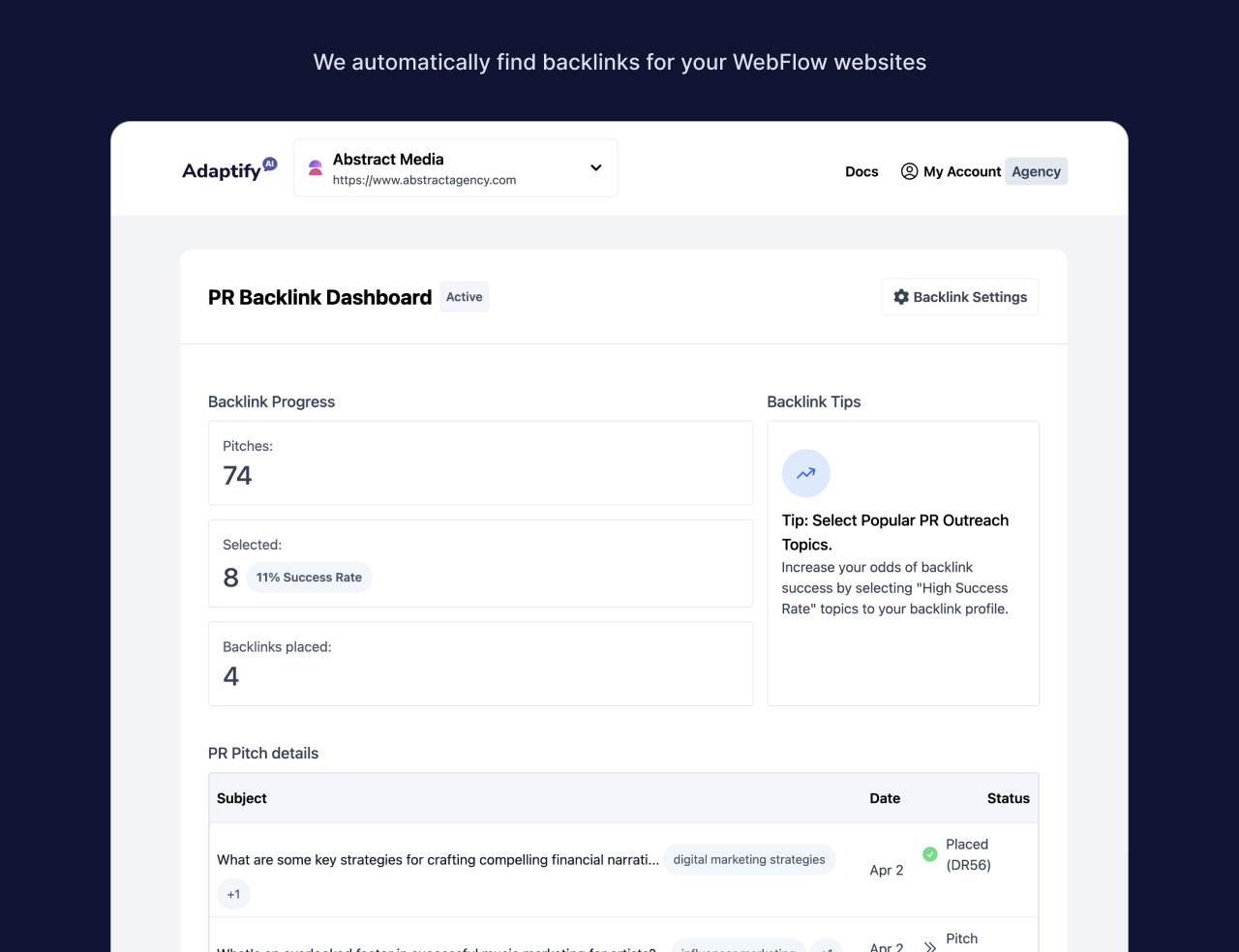
Track every backlink with an SEO backlink monitor—spot lost links fast, protect rankings, and boost ROI before competitors do.
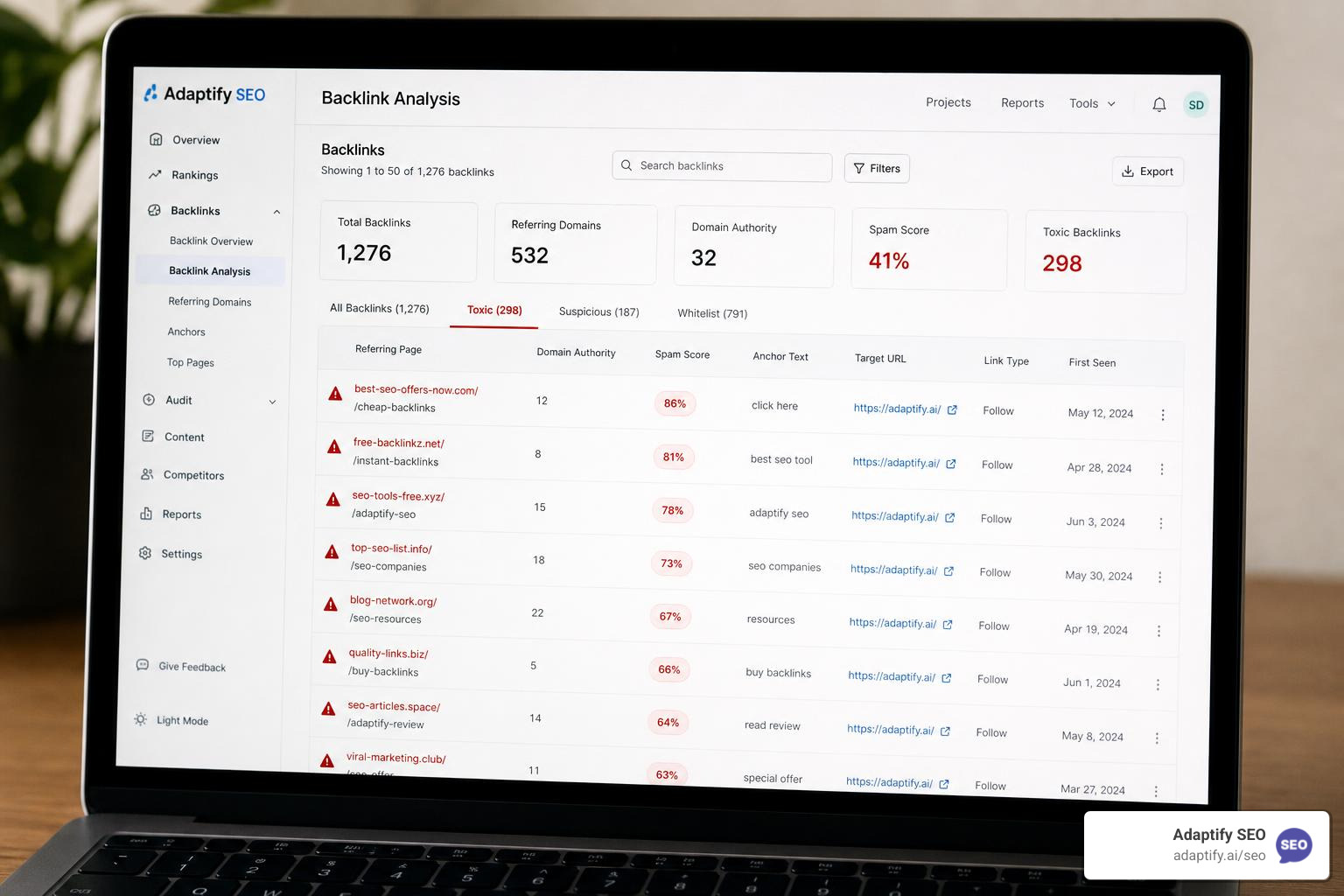
Learn how to disavow toxic backlinks, clean your profile, and recover rankings with this step-by-step guide.
Join 1,000+ agencies already delivering SEO and AI visibility from a single platform without increasing their headcount.Join 1,000+ agencies already delivering SEO and AI visibility from a single platform without increasing their headcount.