Local Rank Tracking: The Secret Sauce for Hyperlocal Visibility

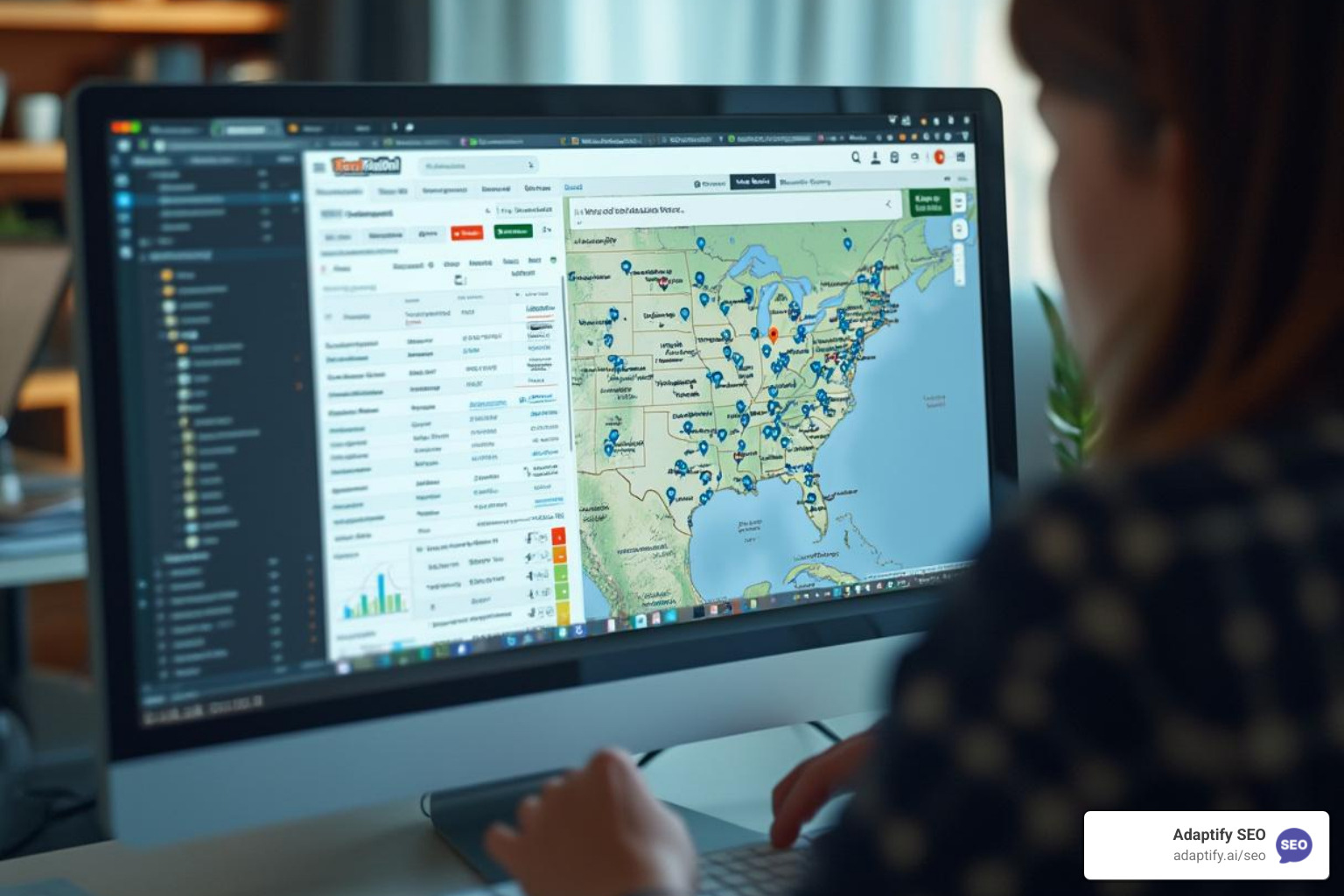

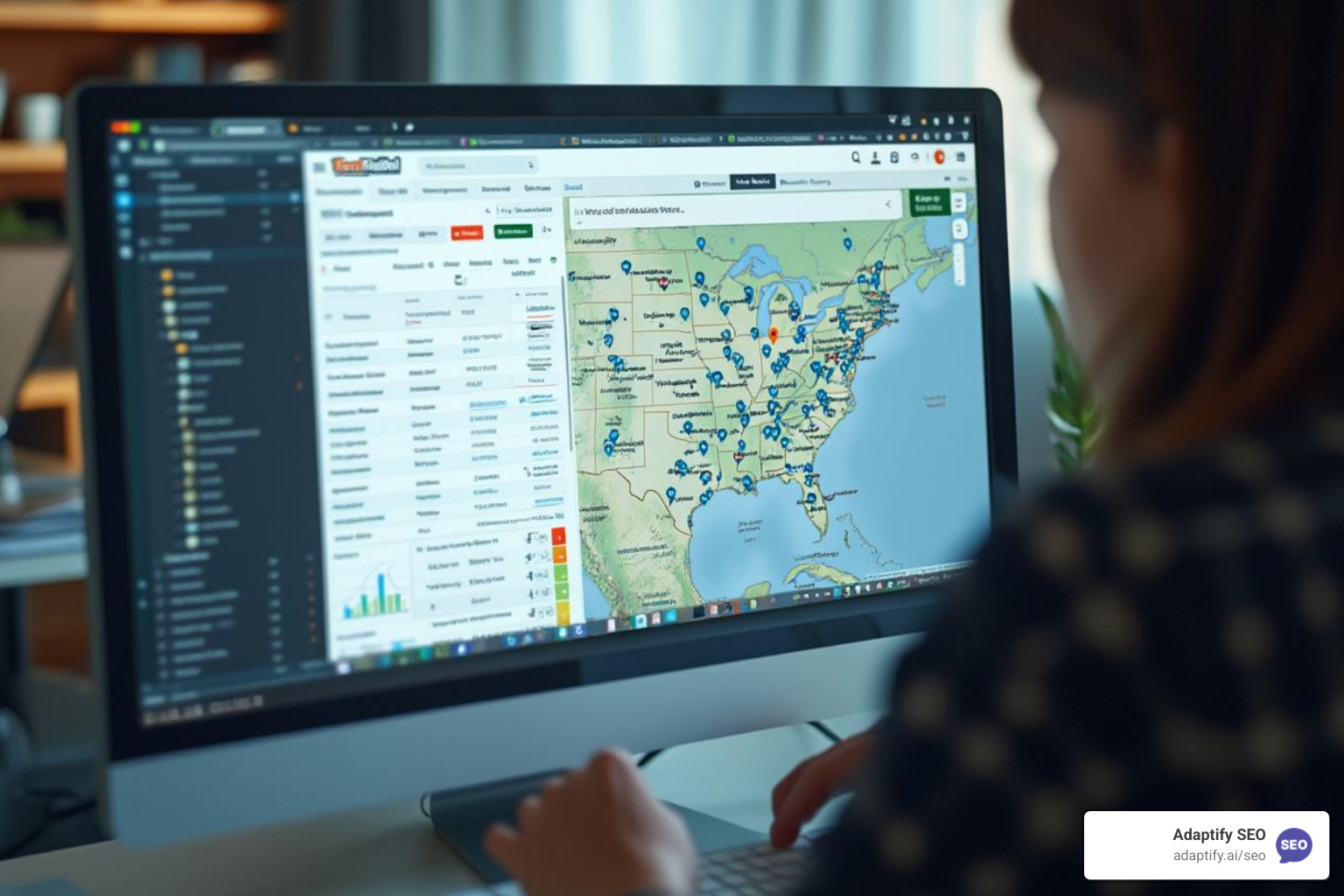
Local rank tracking is the process of monitoring your business's ranking in local search results for specific keywords and geographic areas. It reveals your exact position when potential customers search for products or services near them.
Why it's crucial for your business:
This guide will explain how local rank tracking works, how to choose the right tools, and how to use them to boost your local SEO. I'm Hansjan Kamerling, and I specialize in helping AI startups improve online visibility and optimize search experiences, applying principles directly relevant to local rank tracking.
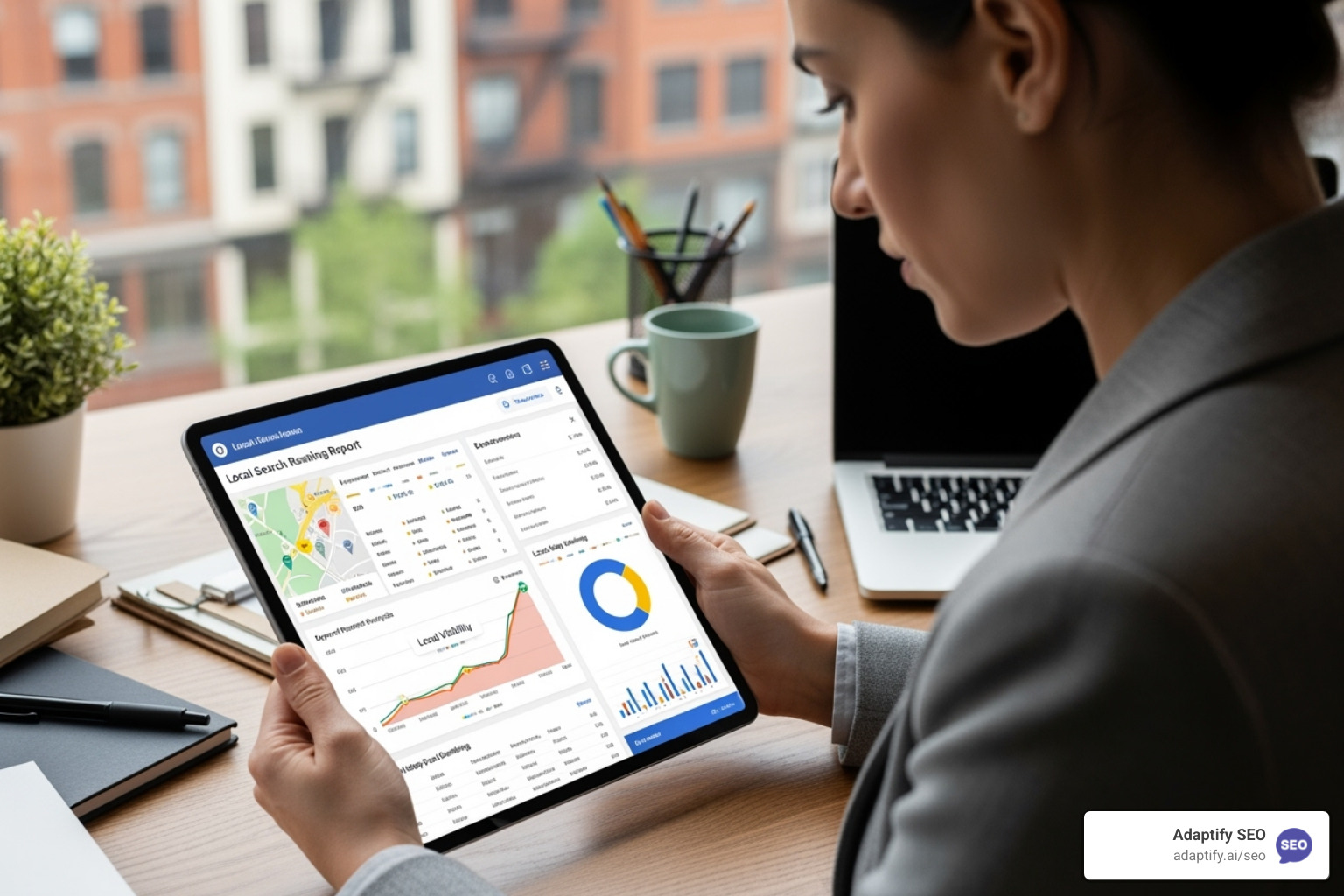
Local rank tracking is your business's ability to know exactly where it stands in local search results. When a potential customer nearby searches for "best coffee shop" or "plumber near me," do you appear? Local rank tracking answers this with precision, showing your business's spot on a map, neighborhood by neighborhood. This hyperlocal visibility is the key for any business that relies on local customers.
This data is vital because it drives smart decisions. Instead of wasting money on broad marketing, you can see what's working locally and focus your budget to increase foot traffic. After all, a great business is useless if no one in the area can find it. The numbers confirm this: "Searches on ‘Where to buy’ and ‘Near me’ have grown by over 200% in the past two years!" As the saying goes, "Understanding your local SEO performance is key to staying ahead of competitors."
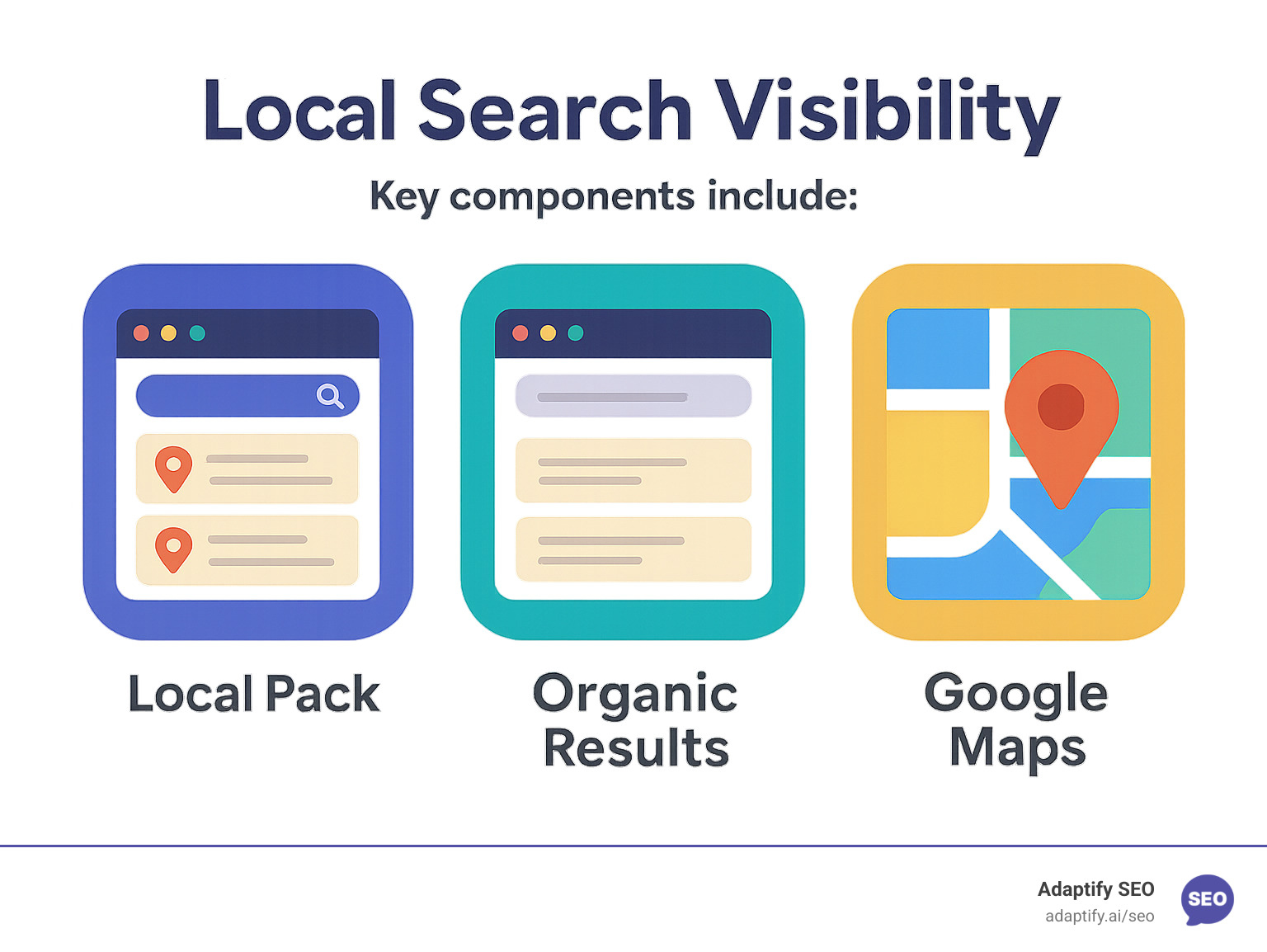
The Google Map Pack (or Local Pack) is the prime real estate at the top of local search results, showing three businesses on a map. Why is it so coveted? Because "The Google Map Pack attracts a whopping 70 percent of clicks." Getting into the Map Pack means being seen first, often before the regular organic listings. If your business has a physical location and isn't visible in the Map Pack, you're missing a huge portion of potential customers. A key part of local rank tracking is monitoring your position within this powerful feature. You can even get a view of your business on Google Maps to see how you appear to searchers.
To master local rank tracking, focus on these key metrics for a complete picture of your performance:
Choosing the right local rank tracking tool is critical for local search dominance. You need a tool that provides accurate data, automates tedious tasks, offers competitor insights, and delivers clear, actionable reports. For agencies managing multiple locations, scalability is essential.
Look for a tool that balances precision with a comprehensive overview. The digital landscape is always changing, so your tool must be dynamic. Key features include:

For agencies juggling multiple clients, tools must be built for scale and efficiency. Prioritize White-label Reporting to present professional, branded reports that build client trust and demonstrate ROI. At Adaptify, our automated SEO services are designed with this in mind. You can learn more on Adaptify's dedicated page.
Other key features for agencies include Client Dashboards for real-time transparency, Scalable Pricing that grows with your agency, and API Access for deeper integration with your internal systems. As local SEO expert Greg Gifford said, a good "Local Rank Tracker will be one local SEO tool that you can’t live without." For agencies, a robust local rank tracking solution is an indispensable asset.
The future of local rank tracking is about using intelligence to gain an edge. AI-powered insights are transformative, analyzing your data to provide automated recommendations, such as GBP tweaks or new keyword opportunities. It's like having a team of SEO experts working 24/7.
Automation further streamlines workflows with scheduled scans, auto-generated reports, and instant alerts for ranking drops. This frees up your time for strategy and client relations. At Adaptify, our mission is to provide automated SEO services that reduce manual effort and boost efficiency, allowing agencies to scale revenue without increasing headcount. Some advanced tools even offer predictive analysis to anticipate future ranking trends. To see how AI and automation can revolutionize your SEO, look at our case studies for real-world examples.
Knowing your rankings is the first step; using that data to craft winning strategies is where the magic happens. This requires a multi-faceted approach combining on-page, off-page, and technical SEO with a local focus. As noted by Joy Hawkins, a respected voice in local SEO, the right tracking tools empower you to pinpoint exactly what needs fixing.
Here are actionable strategies to improve your local visibility:
Your GBP is the single most important factor for local search success. A well-optimized profile can significantly boost your Map Pack and localized organic rankings.
At Adaptify, we understand the importance of a fresh, engaging profile. Learn more about our automated content solutions.
Building hyperlocal authority means proving your relevance to Google for specific local searches.
Technical SEO is crucial for local search. A fast, mobile-friendly site with proper schema sends strong positive signals to Google.
Local rank tracking isn't always a smooth ride. Challenges like data fluctuations and difficulty connecting visibility to revenue are common. However, once you learn to steer these issues and properly measure your return on investment, you'll see just how valuable your local SEO efforts are.
The key is understanding that ranking fluctuations are normal and that personalization means your view isn't always your customer's view. By steering through these challenges and measuring success correctly, the results can be game-changing.

Connecting improved rankings to business growth is where the real value becomes clear. It's not just about rank; it's about revenue.
Measuring ROI properly shifts local SEO from a cost center to a proven revenue driver. To help quantify potential returns, you can use our SEO ROI calculator to see what improved visibility could mean for your bottom line.
Here are answers to the most common questions business owners and agencies ask about local rank tracking.
For highly competitive markets, weekly checks are recommended to react quickly to competitor moves. In less competitive niches, bi-weekly or monthly checks are usually sufficient. The most important thing is consistency to spot trends and measure progress over time.
Local rankings are highly dynamic. They are influenced by many factors in real-time, including:
This constant change is why continuous monitoring with a reliable local rank tracking tool is essential for making informed strategic decisions.
Yes, absolutely. Businesses that operate without a public-facing address, known as Service-Area Businesses (SABs), can and should track their local rankings. Modern tracking tools are designed for this. Instead of monitoring from a single address, they simulate searches from multiple points across your entire designated service area. This gives you a comprehensive heatmap of your visibility where your customers are, helping you capture more leads and grow your business.
We've covered the essentials of local rank tracking, from its definition to the strategies that drive real results. It's the key to connecting with customers in your neighborhood by achieving precise, hyperlocal visibility.
The key takeaways are clear:
By embracing a solid local rank tracking strategy, your business can make smart, data-backed moves that drive growth. For agencies looking to deliver these results at scale, Adaptify.ai provides the automated platform to streamline every aspect of your local SEO campaigns. We believe leveraging AI and automation is the smartest way to secure your spot in the future of local search.
Ready to see how it all comes together?

Master SEO monitoring with key metrics and tools to track rankings, technical health, and organic growth for continuous performance optimi...
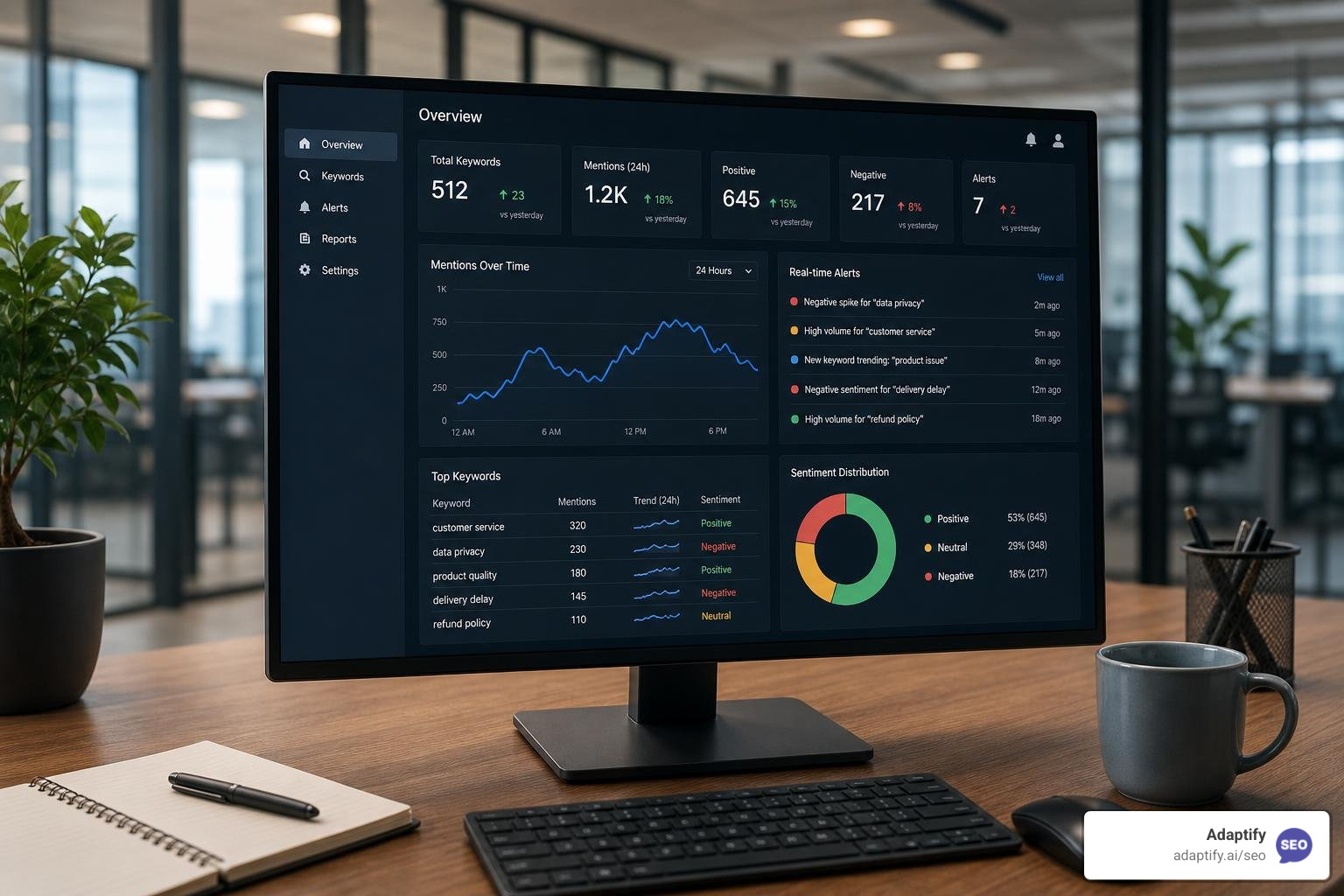
The Best Online Keyword Monitoring Tools for Real-Time Alerts - Learn about online keyword monitoring tool
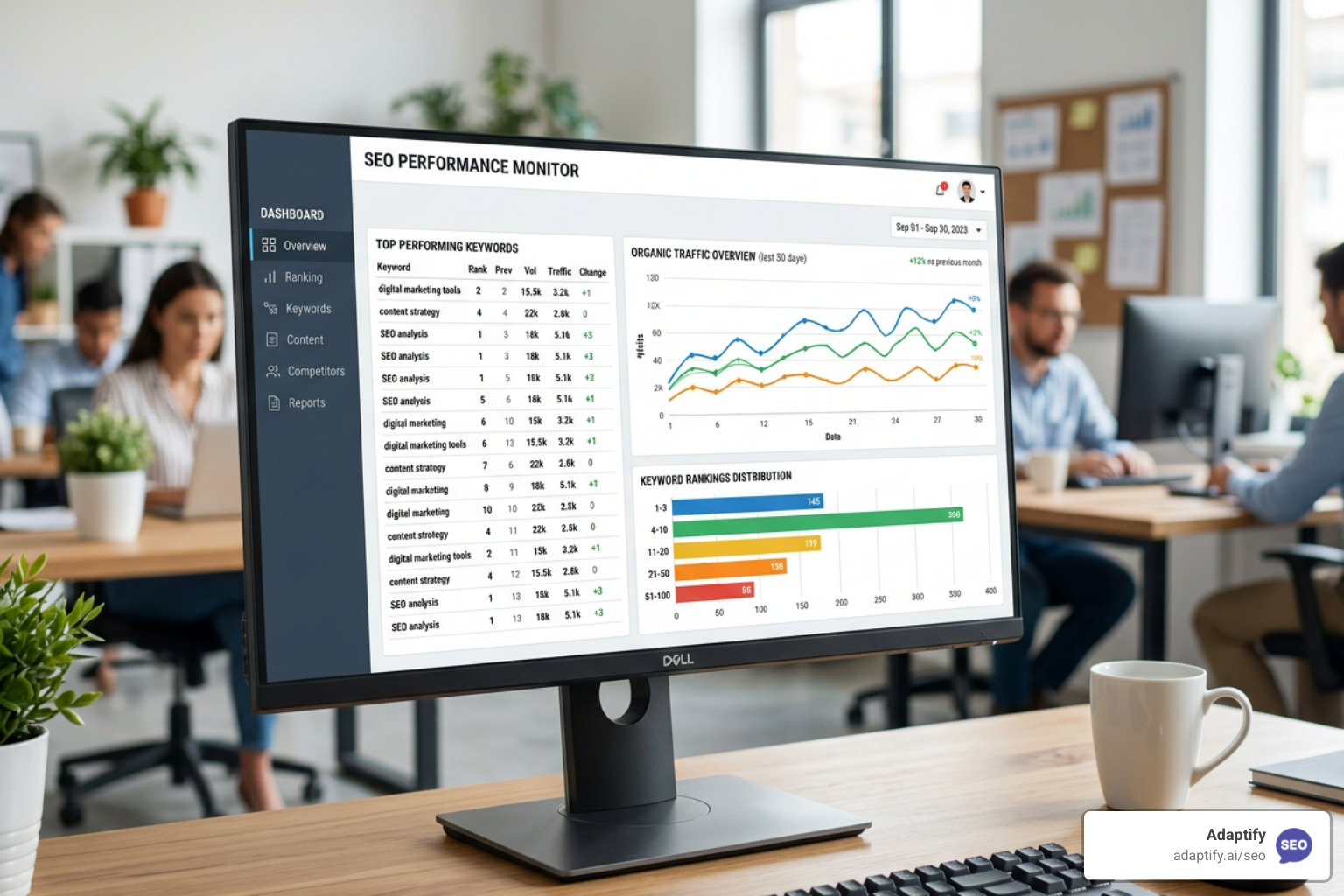
Stop Flying Blind with These Top SEO Monitor Tools - Learn about seo monitor tools
Join 1,000+ agencies already delivering SEO and AI visibility from a single platform without increasing their headcount.Join 1,000+ agencies already delivering SEO and AI visibility from a single platform without increasing their headcount.