Mastering Agency Growth: Tips and Strategies




Growing your agency is more than just finding new clients. It’s about creating a well-oiled machine that can adapt, evolve, and thrive. For a quick answer, here are some key steps:
Growth strategies are essential to keep your agency competitive and financially healthy. This article will walk you through practical tips and strategies to help you grow your agency efficiently.
I’m Hansjan Kamerling, a product designer and marketing consultant who has helped startups and agencies alike to grow your agency successfully. My experience spans launching new products, managing SEO tasks, and scaling businesses. Let's explore how you can achieve similar growth.
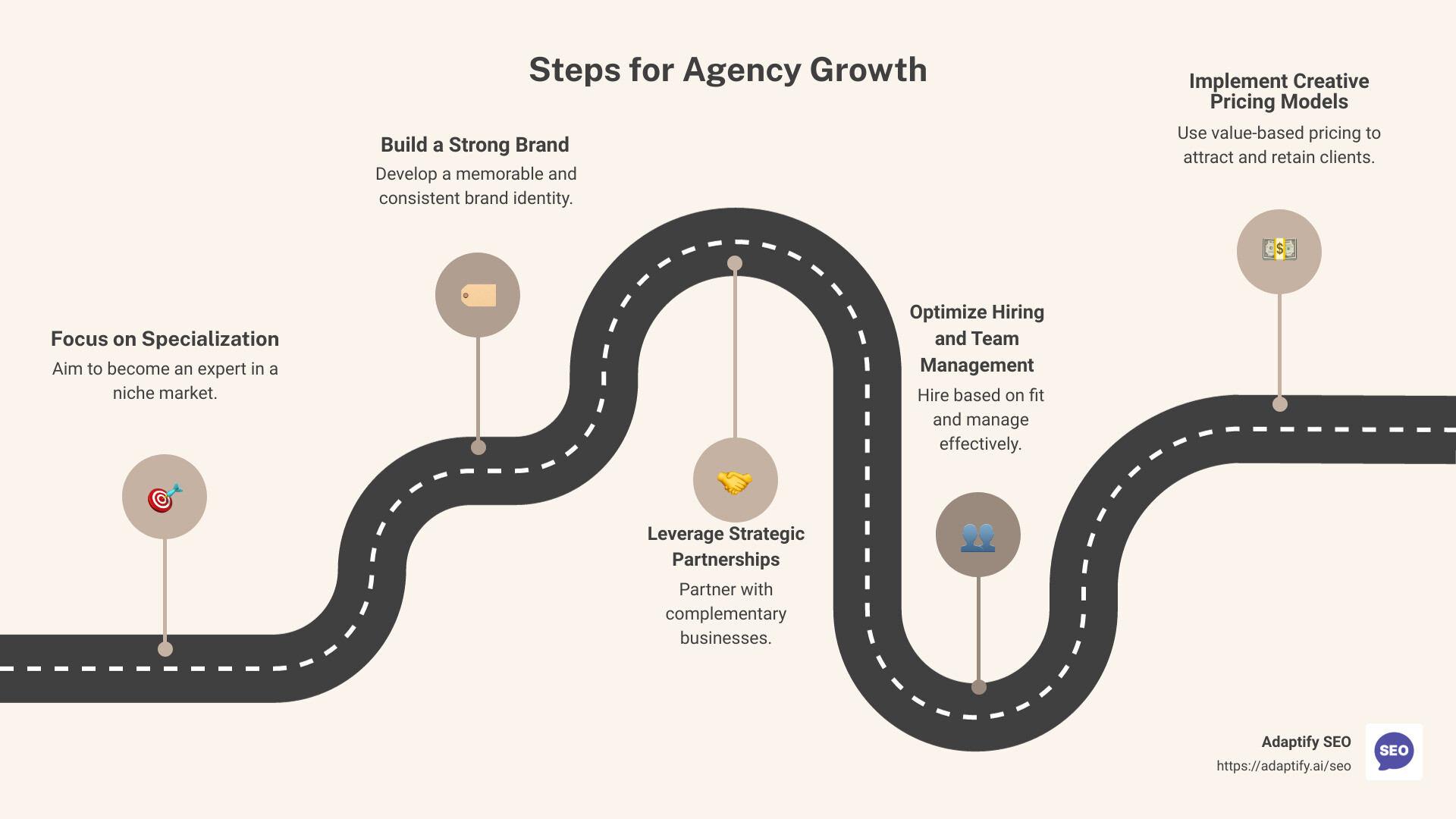
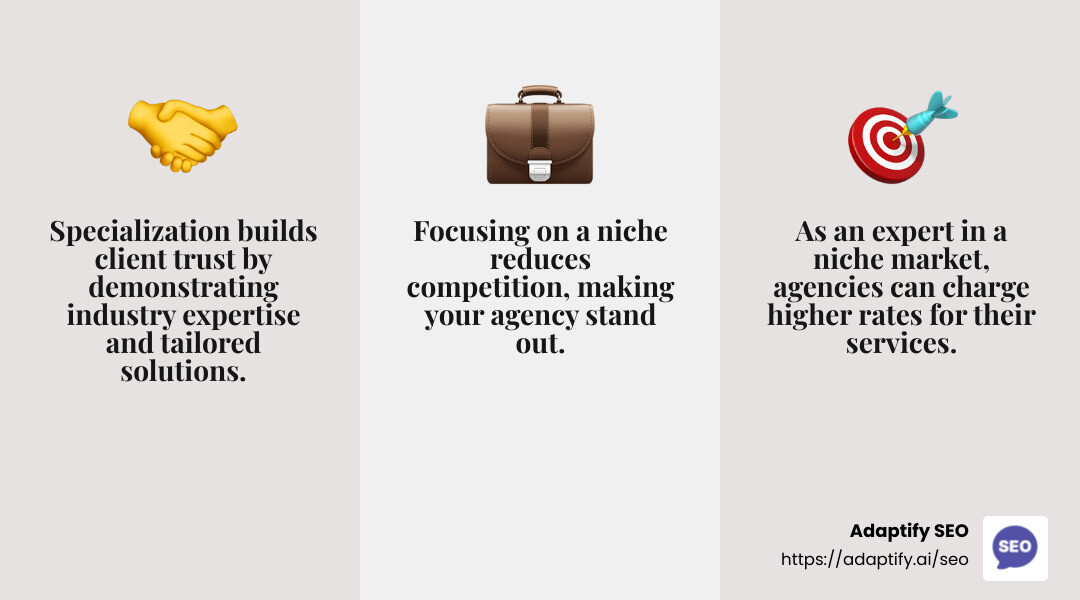
Specializing in a niche market can significantly grow your agency by making you an expert in a specific area. This expertise builds client trust, allows you to charge higher rates, and reduces competition.
Client Trust: Clients prefer agencies that know their industry inside out. Specialization shows that you understand their unique challenges and can offer custom solutions. According to Adam Cox, Technical Director at Brew, always giving your all and over-delivering can lead to unexpected opportunities and recognition.
Higher Rates: As an expert, you can command higher rates for your services. Clients are willing to pay a premium for specialized knowledge and proven results.
Reduced Competition: By focusing on a niche, you face less competition. Many agencies offer broad services, but few specialize. This makes you stand out and attracts clients looking for specific expertise.
Choosing the right niche involves thorough market research, understanding client needs, and keeping an eye on industry trends.
Market Research: Start by analyzing the market to identify gaps and opportunities. Look for industries that are underserved or have high demand for specialized services. Use tools like Google Trends and industry reports to gather data.
Client Needs: Talk to your existing clients to understand their pain points and needs. This can reveal areas where you can offer specialized services. Steve Krakower, Founder of Harbor Marketing Agency, emphasizes the importance of conducting a thorough audit of your client’s business to identify red flags and opportunities.
Industry Trends: Stay updated with the latest trends in your chosen industry. This helps you anticipate changes and adapt your services accordingly. For instance, if you're in digital marketing, keeping up with SEO and social media trends is crucial.
By focusing on specialization, you can grow your agency more effectively and sustainably. Specialization not only sets you apart from the competition but also builds a strong foundation for long-term success.
Next, let's explore how to build a strong brand to further improve your agency's growth.
Building a strong brand is essential for any agency looking to grow. A strong brand not only attracts clients but also instills trust and loyalty. Let’s dive into the key elements of creating a memorable brand and leveraging social media for branding.
Brand Identity: Your brand identity is the collection of all elements that a company creates to portray the right image to its consumer. It includes everything from your logo to your color scheme.
Brand Personality: Think of your brand as a person. What kind of personality does it have? Is it professional, friendly, innovative, or traditional? Defining your brand personality helps in connecting with your target audience on a deeper level.
Brand Consistency: Consistency is key in branding. Ensure that your brand’s voice, tone, and visual elements are uniform across all platforms. This helps in building a recognizable and reliable image.
Logo Design: Your logo is often the first thing people notice about your brand. It should be simple, memorable, and reflect your brand’s personality. A well-designed logo can make a lasting impression.
Brand Voice: Your brand voice is how you communicate with your audience. It should be consistent with your brand personality. Whether it’s formal, casual, or playful, maintaining a consistent tone helps in building a connection with your audience.
Visual Elements: Visual elements like color schemes, typography, and imagery play a crucial role in branding. They should be consistent and reflect your brand’s identity. For example, a tech company might use sleek, modern designs, while a children’s brand might use bright, playful colors.
Social Media Presence: Having a strong social media presence is crucial for brand building. Platforms like Instagram, LinkedIn, and Facebook allow you to reach a wider audience and engage with them directly.
Content Strategy: Emma Rundle, Founder of The Melting Pot, advises focusing on building relationships rather than selling. Share content that is relevant, thought-provoking, and showcases your expertise. This helps in establishing your brand as an authority in your niche.
Engagement: Engage with your audience regularly. Respond to comments, participate in discussions, and show appreciation for your followers. This not only builds relationships but also increases loyalty. As Dane Rossenrode, Founder at Touchdreams, puts it, staying in touch with your clients ensures you’re at the top of their minds when they need your services.
By focusing on these aspects of branding, you can create a memorable and consistent brand that resonates with your audience. This not only helps in attracting new clients but also in retaining existing ones, further helping to grow your agency.
Next, let’s explore how to become your own client to showcase your success and use your own services.
To grow your agency, you need to showcase your success effectively. Treat your own agency as a client and put your best foot forward.
Self-Promotion: Use your own website and social media platforms to highlight your achievements. Regularly update your blog with success stories and industry insights. Share these updates across your social channels to keep your audience engaged.
Case Studies: Create detailed case studies of your successful projects. Highlight the challenges faced, the strategies implemented, and the results achieved. This not only builds credibility but also demonstrates your expertise. For example, Duran Inci from Optimum7 emphasizes the importance of treating your website as if it belongs to a client, ensuring it reflects the quality you deliver.
Portfolio Development: Maintain a well-organized portfolio showcasing your best work. Include a variety of projects to demonstrate your versatility. Ensure your portfolio is easily accessible on your website.
Client Testimonials: Collect and display testimonials from satisfied clients. Positive feedback acts as social proof and builds trust with potential clients. For instance, Adam Cox from Brew suggests always giving your all and over-delivering on projects, as you never know who might see your work and become your next big client.
Project Highlights: Regularly feature project highlights on your website and social media. Use visuals and brief descriptions to capture the essence of each project. This keeps your audience informed and engaged with your latest work.
Performance Metrics: Share performance metrics to back up your success stories. Use data to show the impact of your work. This can include traffic growth, conversion rates, and ROI. Metrics provide concrete evidence of your capabilities.
Leverage your own services to grow your agency and attract new clients.
SEO: Optimize your website for search engines to increase visibility. Use relevant keywords, create high-quality content, and build backlinks. Tools like Adaptify SEO can help streamline this process, ensuring your content is optimized for Google's E-E-A-T (Experience, Expertise, Authoritativeness, Trustworthiness).
Content Marketing: Consistently produce valuable content that addresses your target audience's pain points. This can include blog posts, videos, infographics, and more. Share this content across your social media channels to reach a wider audience.
Social Proof: Use social proof to build trust with potential clients. This includes client testimonials, case studies, and performance metrics. Display these prominently on your website and marketing materials.
By becoming your own client and showcasing your success, you can effectively attract new clients and grow your agency. Next, let’s explore the importance of strategic partnerships in expanding your reach and resources.
Strategic partnerships can be a game-changer for your agency's growth. Collaborations and joint ventures open doors to new opportunities and resources that might be out of reach otherwise.
Industry Events: Attend industry events to network and find potential partners. These events are gold mines for meeting like-minded professionals. For example, the Forbes Agency Council suggests being proactive and participating in local chamber of commerce meetings to connect with potential partners.
Networking: Use your network to find partners with complementary services. If you're a web design agency, partnering with a content marketing firm can provide a more comprehensive service to clients. Networking platforms like LinkedIn can be a great place to start.
Complementary Services: Look for partners whose services complement yours. This can lead to a win-win situation where both parties benefit. For instance, a marketing agency might partner with a video production company to offer complete campaign solutions.
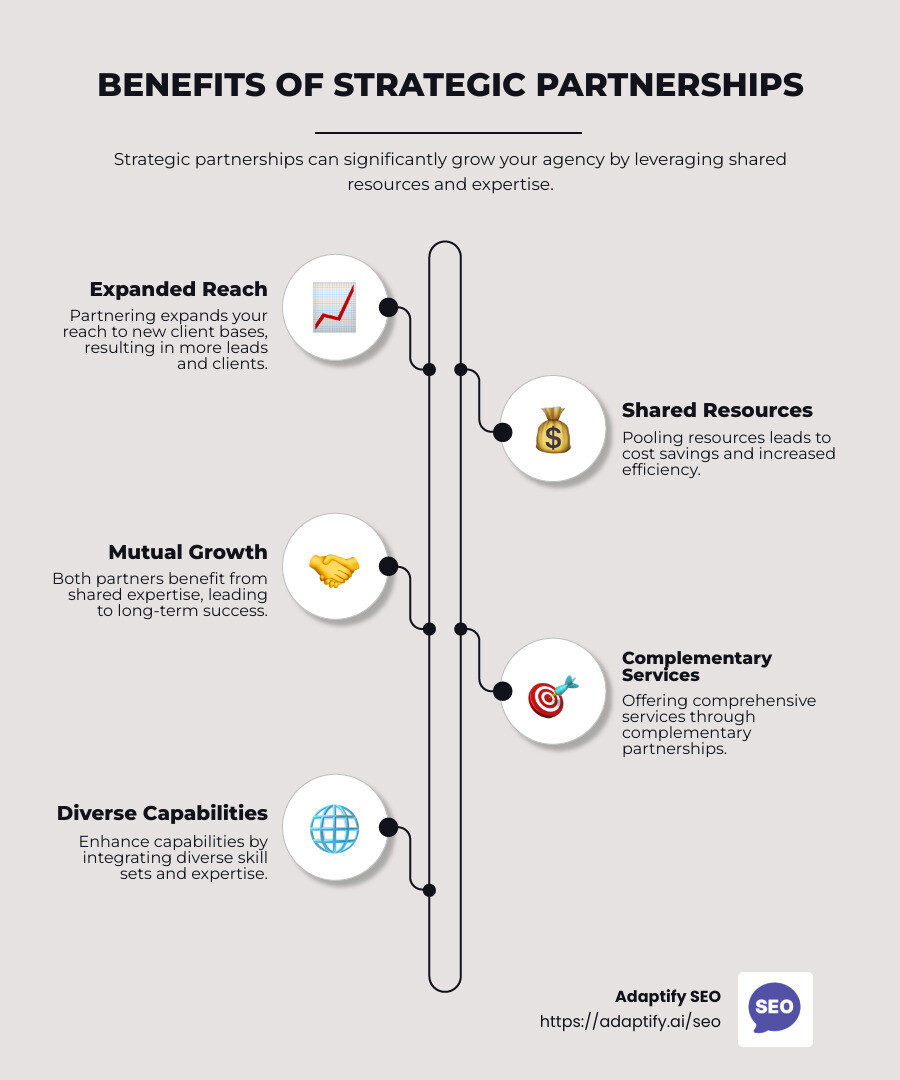
Strategic partnerships offer several benefits that can help grow your agency.
Expanded Reach: Partnering with another agency can expand your reach to their client base. This can result in more leads and, eventually, more clients. According to the Forbes Agency Council, working with businesses that will flourish in the current economic cycle is crucial.
Shared Resources: Pooling resources can lead to cost savings and increased efficiency. Whether it's sharing software tools or marketing strategies, partnerships enable you to do more with less.
Mutual Growth: Both partners can benefit from shared expertise and capabilities. This mutual growth can lead to long-term success. For example, Lars Voedisch from PRecious Communications highlights the importance of strengthening local capabilities to support clients' go-to-market strategies.
By finding the right partners and leveraging the benefits of strategic partnerships, you can significantly grow your agency. Next, let’s dive into effective hiring and team management strategies to ensure your agency runs smoothly.
When it comes to growing your agency, building and managing the right team is crucial. Let's break down some actionable tips on hiring and team management.
Cultural Fit: Hiring for cultural fit is as important as hiring for skills. A team member who aligns with your agency's values and culture is more likely to be engaged and productive. Cedrick Webb from Smart Digital emphasizes hiring based on character and competence.
Skill Assessment: Assess candidates' skills through practical tests and real-world scenarios. This ensures they can handle the tasks required. Bess Winston from Winston Agency suggests building a team of knowledge-rich, passionate experts to realize efficiencies of scale.
Interview Techniques: Use structured interviews to evaluate both technical skills and cultural fit. Ask open-ended questions to understand how candidates think and solve problems. This approach helps in identifying the best fit for your team.
Role Clarity: Clearly define roles and responsibilities to avoid confusion and overlap. This helps team members understand their tasks and how they contribute to the agency's goals. Nathan Miller from Miller Ink, Inc. warns against stretching employees too thin, which can lead to stress and subpar service.
Continuous Learning: Encourage ongoing learning and development. Offer training programs, certifications, and opportunities for skill improvement. Courtney Hiller from All Points Social advocates for a culture of learning to empower team members.
Onboarding: A structured onboarding process helps new hires integrate smoothly into the team. Provide them with the necessary tools, resources, and information to start their roles effectively. Cooper Munroe from The Motherhood Inc. highlights the importance of process documentation to ease staff onboarding.
Performance Reviews: Regular performance reviews help in tracking progress and providing feedback. Use these reviews to set goals, recognize achievements, and address any issues. This keeps the team motivated and aligned with the agency's objectives.
By focusing on these hiring and team management strategies, you can build a strong, cohesive team that will drive your agency's growth. Next, let's explore different pricing models to ensure your agency's scalability and profitability.
When it comes to growing your agency, choosing the right pricing model is key. Let's explore strategies that can help you break free from traditional models and implement value-based pricing for better scalability and profitability.
Hourly Rates: Charging by the hour is a common practice, but it has limitations. It caps your earnings based on the number of hours worked and can lead to burnout if you push your team too hard. This model also makes it challenging to scale since your income is tied directly to time spent.
Project-Based Pricing: This model involves setting a fixed price for a project. While it can be more predictable than hourly rates, it still has its drawbacks. Fixed pricing can lead to scope creep and unexpected costs, which eat into your profits. It also doesn't always reflect the true value you deliver to clients.
Retainer Agreements: Retainers offer a steady income stream by charging a fixed monthly fee for ongoing services. This model is great for cash flow stability but can sometimes undervalue the work if the client's needs fluctuate. It also requires consistent delivery to maintain client satisfaction.
Client Value: With value-based pricing, you charge based on the results you deliver, not the time you spend. This model aligns your interests with the client's goals and can significantly increase your revenue. For example, if a campaign you create nets the client $1 million, your fee could be a percentage of that ROI.
ROI Focus: Start by understanding the client's objectives. What are their revenue goals? How much would achieving these goals be worth to them? Use this information to set your price. Clients are often willing to pay more for guaranteed results.
Pricing Flexibility: Be flexible with your pricing structures. Offer different packages based on the level of service and results. This can include tiered pricing, where clients pay more for premium services or guaranteed outcomes.
Scalability: Value-based pricing allows your agency to scale without the need to constantly add more staff. Since your income is tied to the value you deliver, you can grow your profits without proportionally increasing your workload.
Implementing Value-Based Pricing:
By adopting value-based pricing, you can break free from the constraints of traditional models. This strategy not only increases your profitability but also strengthens client relationships by focusing on results.
Next, we'll look at effective upselling techniques and strategies for client retention to further grow your agency.
To grow your agency, mastering upselling and client retention is crucial. These strategies not only boost revenue but also build long-term relationships with clients.
Build a Product Suite: Create a range of services that naturally complement each other. For example, if a client starts with SEO services, you can later offer content marketing, paid ads, or social media management. Solomon Thimothy from OneIMS suggests that this makes upselling easier and more logical.
Listen and Learn: Understand your client's business deeply. The more you know, the better you can anticipate their needs. This builds trust and makes clients more open to additional services.
Prove Your Worth: Show clear ROI from your current services. If clients see value, they are more likely to invest in additional offerings. For instance, if your SEO services have increased their traffic, suggest a paid ads campaign to boost conversions further.
Offer Premium Packages: Create tiered service packages. Basic, standard, and premium tiers can cater to different client needs and budgets. This gives clients options and makes upselling to a higher tier easier.
Personalized Offers: Tailor your upselling efforts to each client. Use data and insights from your interactions to offer services that meet their specific needs. Personalized offers feel more relevant and are more likely to be accepted.
Consistent Communication: Keep in touch with clients regularly. Regular updates, check-ins, and progress reports help maintain a strong relationship. After the sale, don’t disappear. Follow up to ensure they are satisfied and address any concerns promptly.
Quality Service: Always deliver high-quality work. Adam Cox from Brew emphasizes the importance of giving your all and over-delivering on every project. This builds a reputation for excellence and keeps clients coming back.
Loyalty Programs: Implement loyalty programs to reward long-term clients. Discounts, exclusive offers, or early access to new services can make clients feel valued and appreciated.
Build Relationships: Focus on building strong, personal relationships with clients. Get to know them, understand their business challenges, and offer solutions proactively. Steve Krakower from Harbor Marketing Agency notes that understanding client needs and acting with integrity can save stress and protect your reputation.
Automate Where Possible: Use tools to automate repetitive tasks. This frees up time to focus on client relationships and ensures nothing falls through the cracks. For example, use CRM tools to keep all client communication in one place and set reminders for follow-ups.
By implementing these upselling and client retention strategies, you can build a loyal client base that continues to grow with your agency. Next, we will explore the frequently asked questions about growing your agency.
Growing your agency involves several key strategies, each contributing to a sustainable and scalable business model:
Specialization: Focus on a specific niche to become the go-to expert in that area. This builds trust and allows you to charge higher rates. For example, specializing in content marketing or paid advertising can set you apart from generalist agencies.
Branding: Develop a strong brand identity. This includes a memorable logo, consistent brand voice, and engaging visual elements. Leveraging social media effectively can also improve your brand's visibility and reputation.
Partnerships: Form strategic partnerships with complementary businesses. This can expand your reach and resources, leading to mutual growth. Networking at industry events or collaborating on joint ventures can be beneficial.
Hiring: Hire based on cultural fit and skills. Effective team management, including clear role definitions and continuous learning opportunities, can boost productivity and morale.
Pricing: Implement value-based pricing rather than sticking to traditional models like hourly rates. Focus on the ROI you provide to clients and offer flexible pricing options that reflect the value delivered.
Upselling: Develop a product suite that allows for natural upselling. Personalized offers and premium packages can cater to different client needs and budgets, enhancing revenue and client satisfaction.
Adaptify SEO is owned by a team of experienced digital marketing professionals who are dedicated to helping businesses grow their online presence. The company was founded with the mission to provide top-notch SEO and digital marketing services.
Adaptify SEO focuses on helping businesses with online marketing, SEO, content creation, paid traffic, and sales funnels. The company provides services and educational content to help businesses scale their online presence and achieve significant growth.
Adaptify.ai is an online platform that helps new agency owners start and scale their online marketing agencies to six and seven figures. The platform offers courses, resources, and a community for agency owners to learn and grow their businesses effectively.
By leveraging these strategies and resources, you can effectively grow your agency and achieve long-term success.
Growing your agency requires a blend of smart strategies, efficient processes, and the right tools. One of the most powerful tools you can leverage is automated SEO. This is where Adaptify.ai comes into play.
Adaptify.ai offers a comprehensive solution for SEO that can significantly improve your agency’s efficiency. By automating the SEO process, you can save time and focus on other critical aspects of your business.
Efficiency: Adaptify.ai automates the tedious and time-consuming tasks involved in SEO. This means you can achieve more in less time, freeing up resources to focus on client relationships and strategic growth.
Comprehensive Solution: With Adaptify.ai, you get a full suite of SEO tools that cover everything from keyword research to content optimization. This ensures that you are always on top of the latest SEO trends and can deliver top-notch results for your clients.
Scalability: As your agency grows, Adaptify.ai scales with you. Whether you’re managing SEO for a handful of clients or hundreds, the platform can handle the workload, ensuring consistent and reliable performance.
Smart Linking: The platform offers intelligent inbound and outbound linking, which is crucial for building authority and improving search rankings. This feature alone can give your clients a significant edge over their competitors.
Optimized Content: Adaptify.ai helps you create content that is not only engaging but also optimized for search engines. This includes smart CTAs, high-quality images, and infographics that improve user experience and drive conversions.
By integrating Adaptify.ai into your agency’s workflow, you can streamline your processes, deliver better results for your clients, and ultimately, grow your agency more effectively.
Ready to take your agency to the next level? Sign up for Adaptify.ai today and start mastering the art of agency growth with automated SEO solutions.

Compare automated SEO vs manual SEO to build a hybrid workflow that scales rankings with human oversight in 2026.

Master SEO service differentiation to stand out in a crowded market and prove your agency's unique business-first value.
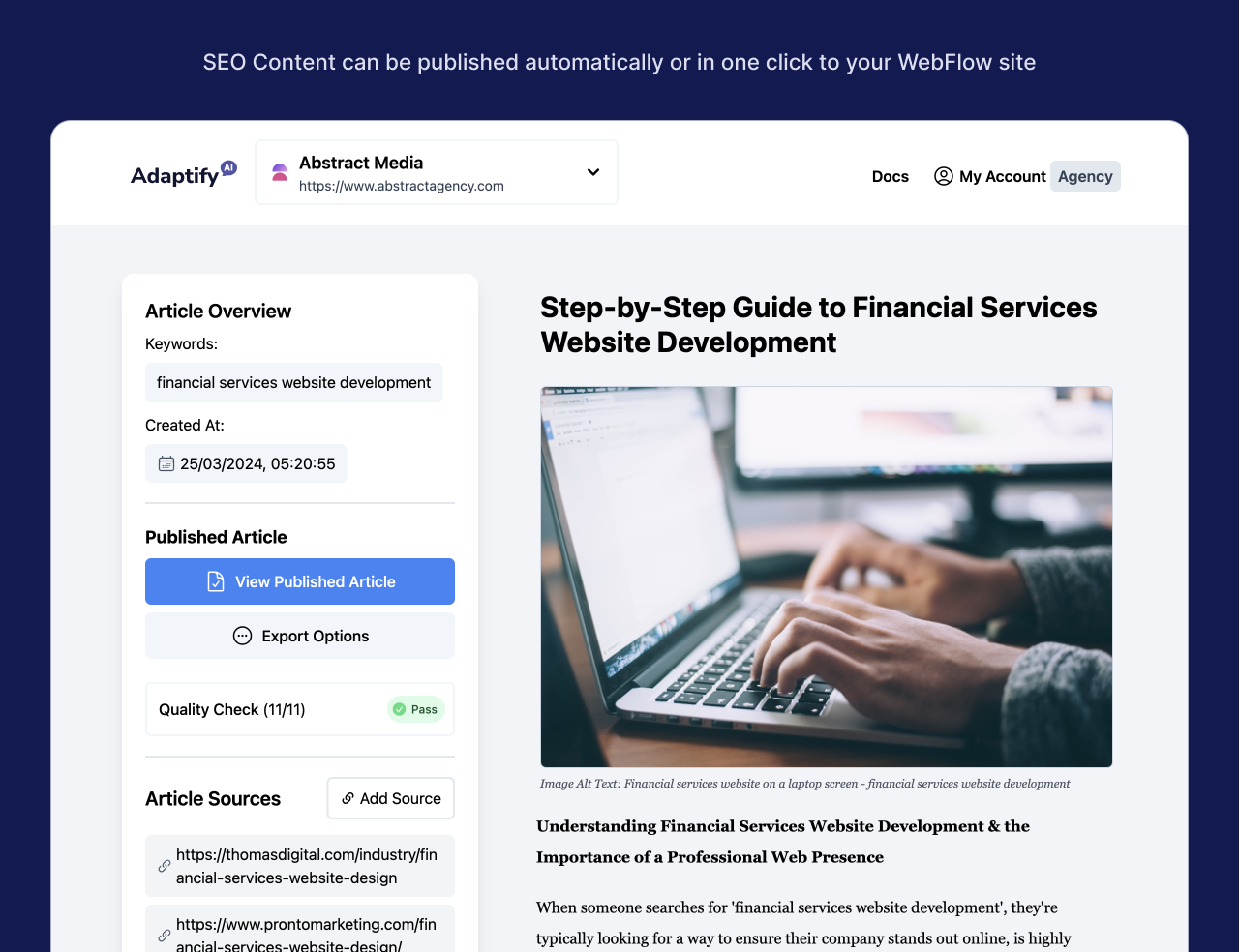
Stop wasting hours—automate your SEO reports to boost agency efficiency and client trust.
Join 1,000+ agencies already delivering SEO and AI visibility from a single platform without increasing their headcount.Join 1,000+ agencies already delivering SEO and AI visibility from a single platform without increasing their headcount.