Mastering SEO Management: A Step-by-Step Guide




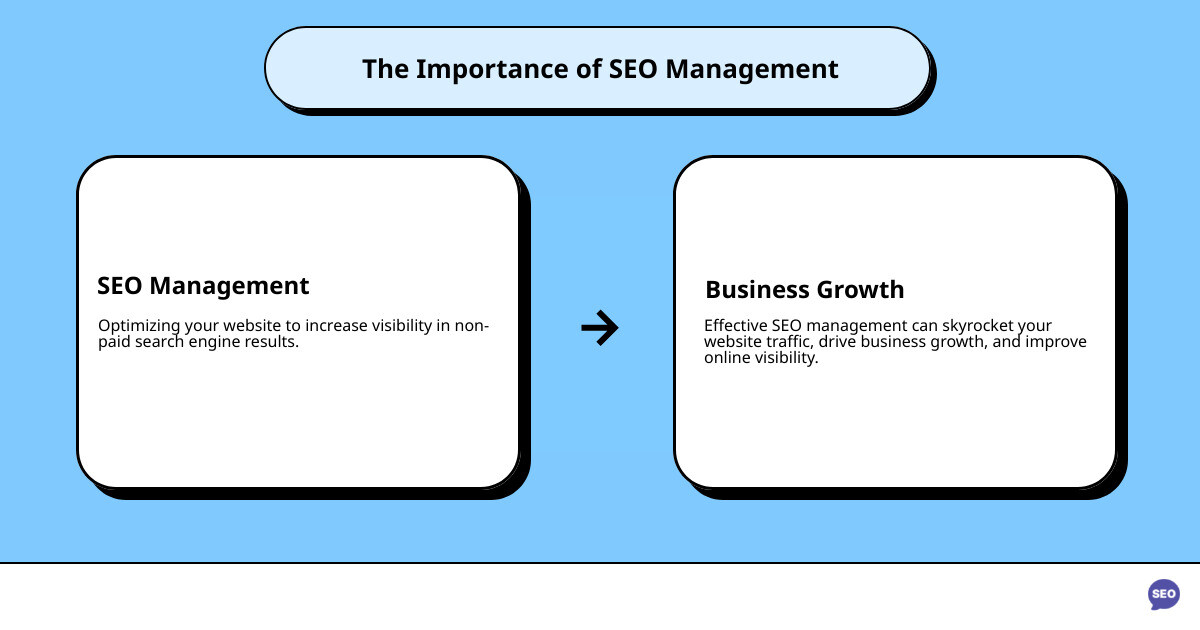
SEO management is crucial for any business looking to thrive online. SEO management involves optimizing your website to increase visibility in non-paid search engine results, attracting more organic traffic. Here's a quick rundown of what you need to know:
Simply put, effective SEO management can skyrocket your website traffic and drive business growth.
My name is Hansjan Kamerling, an expert in SEO management with experience in bringing advanced digital solutions and growing online communities for various startups and businesses.
SEO management is the practice of overseeing and optimizing your business's SEO strategy. This involves a range of activities aimed at improving your search engine presence, driving organic traffic, and ultimately boosting revenue.
An SEO manager plays a critical role in this process. They are responsible for developing, leading, and continually refining SEO strategies to meet your business goals. This includes:
A robust SEO management framework typically involves several key components:
Planning and Strategy: Define your business goals and how SEO can help achieve them. This involves conducting a thorough analysis of your current SEO performance and identifying areas for improvement.
Execution: Implement the SEO strategies, which include on-page optimization, off-page tactics, and technical SEO improvements.
Monitoring and Reporting: Use tools like Google Analytics to track your progress. Monitor metrics such as organic traffic, bounce rates, and keyword rankings.
Continuous Improvement: SEO is not a one-time task. Regularly update your strategies based on performance data and stay updated with the latest SEO trends and algorithm changes.
To master SEO management, you need to understand its four main pillars: on-page SEO, off-page SEO, technical SEO, and local SEO. Each plays a unique role in boosting your website's search engine rankings.
On-page SEO involves optimizing the content and HTML source code of individual pages to rank higher and earn more relevant traffic. Key components include:
Off-page SEO focuses on increasing the authority of your domain through content creation and earning backlinks from other websites. Important tactics include:
Technical SEO ensures that your website is free of technical issues that could prevent it from being properly indexed by search engines. Key areas include:
Local SEO is crucial for businesses with a physical presence or those serving a specific geographic area. It helps your business appear in local search results and Google Maps listings. Essential tactics include:
Creating user-focused content is essential for effective SEO management. Your content should be:
On-page SEO is about optimizing individual pages to rank higher. Key techniques include:
Off-page SEO focuses on building your site's authority through external activities. Key strategies include:
Technical SEO ensures your website is accessible and crawlable by search engines. Best practices include:
Local SEO helps businesses target local search queries. Important tactics include:
By focusing on these key components, you can create a robust SEO management strategy that improves your search engine rankings and drives more organic traffic to your website. Next, let's explore the practical steps to implement SEO management effectively.
Before diving into the nitty-gritty of SEO, it's crucial to define your business goals. Are you aiming to increase product sales, improve brand presence, generate local leads, or reduce customer acquisition costs? Knowing what you want to achieve will help shape your SEO strategy and ensure it aligns with your overall business objectives.
Keyword research is the backbone of any successful SEO strategy. Identify relevant keywords for your business that have a good balance of search volume and competition.
A well-structured website not only improves user experience but also helps search engines crawl and index your site more efficiently. Key aspects to focus on include:
Content is king in SEO. Create original, high-quality content that provides value to your audience. Regularly update your content to keep it fresh and relevant. Consider repurposing older content into new formats like infographics or videos to reach a broader audience.
Off-page SEO is all about building your website's authority through backlinks. Engage in guest blogging and influencer outreach to gain credible backlinks and expand your reach.
Tracking your SEO performance is essential for making informed decisions. Use tools to monitor key metrics like organic traffic, bounce rates, and conversions. Keep an eye on your keyword rankings. Regular monitoring will help you spot opportunities for improvement and adjust your strategy as needed.
SEO is a constantly evolving field. Staying updated with the latest trends and algorithm changes is crucial. Regularly updating your strategy based on new information will help you stay ahead of the competition.
By following these steps, you can implement a robust SEO management strategy that aligns with your business goals and drives sustainable growth.
SEO management is the process of overseeing and optimizing your website to improve its visibility on search engines like Google, Bing, and Yahoo!. This involves a variety of tasks, such as:
The goal of SEO management is to improve your site’s ranking on search engine results pages (SERPs), which can lead to more organic traffic and, ultimately, more revenue for your business.
The four main types of SEO are:
On-Page SEO: This involves optimizing the content and HTML source code of a page. Key elements include keyword usage, internal linking, and image optimization.
Off-Page SEO: This focuses on building your site’s authority through backlinks from other reputable sites. Activities include guest posting, social media shares, and brand mentions.
Technical SEO: This ensures that your website is technically sound and can be easily crawled and indexed by search engines. Important aspects are site speed, mobile-friendliness, and XML sitemaps.
Local SEO: This is crucial for businesses with a physical presence. It involves optimizing your Google My Business listing, gathering customer reviews, and building local backlinks.
SEO stands for Search Engine Optimization. It’s the practice of enhancing a website to make it more visible in search engine results pages (SERPs). The higher a site ranks, the more likely it is to attract clicks and traffic.
SEO involves a mix of strategies, including creating high-quality content, optimizing on-page elements, building backlinks, and ensuring technical excellence. Unlike paid advertising, SEO focuses on organic search results, making it a cost-effective way to drive long-term traffic.
By understanding and implementing effective SEO practices, you can significantly boost your website's visibility and reach your business goals.
In the changing world of SEO, staying ahead can be daunting. That's where Adaptify.ai steps in. Our platform offers a comprehensive SEO solution that caters to all your needs, from keyword research to on-page optimization and beyond.
Adaptify.ai leverages advanced algorithms to automate many of the tedious aspects of SEO management. This means you can focus on what you do best—running your business—while we handle the complexities of SEO.
Our automated SEO services streamline your workflow, making it easier to implement effective strategies without the usual time and effort. Imagine having your content optimized, backlinks managed, and performance monitored—all without lifting a finger.
With Adaptify.ai, you get:
Ready to simplify your SEO management? Visit Adaptify.ai to see how our automated solutions can help your business climb the search engine rankings.
By partnering with Adaptify.ai, you're not just investing in a tool; you're investing in your business's future success.

Master SEO monitoring with key metrics and tools to track rankings, technical health, and organic growth for continuous performance optimi...

The Best Online Keyword Monitoring Tools for Real-Time Alerts - Learn about online keyword monitoring tool

Stop Flying Blind with These Top SEO Monitor Tools - Learn about seo monitor tools
Join 1,000+ agencies already delivering SEO and AI visibility from a single platform without increasing their headcount.Join 1,000+ agencies already delivering SEO and AI visibility from a single platform without increasing their headcount.