Navigating SEO's Future: Insights from Adaptify’s Co-Founder on AI and Search



This week, we're doing things a little bit differently. Instead of our usual Adaptify Minute Mastery video, we’re diving deep into the future of SEO search and AI with an exclusive interview with one of our co-founders, Hansjan Kamerling. Join us as he shares valuable insights on how AI is transforming the SEO landscape and what it means for your strategy moving forward. Trust us, you don’t want to miss it!
But first…
Google Gemini Now Available in Chrome's Address Bar
Google is making it easier to access its Gemini AI tool by integrating it directly into Chrome’s address bar. Starting now, you can interact with Gemini by simply typing “@gemini” in the address bar, making AI assistance just a few keystrokes away.
Here’s how it works: After typing “@” in the Chrome address bar, select “Chat with Gemini” from the options, enter your query, and get a response from the AI. This feature aims to enhance user productivity and accessibility by providing quick AI-powered answers without leaving your browser tab.
This sounds almost too good, what’s the catch? Unlike Microsoft’s CoPilot, Gemini doesn’t have contextual awareness of your browsing activity, so it can’t offer insights based on the webpage you’re viewing. How much that matters will depend on your usage case, but it is something to keep in mind.

In addition, Google has been rolling out new features starting late last month, including Gemini Gems, which lets you create your own personal AI experts on any topic you want. Initially previewed at Google I/O back in May, Gems allow users to customize Gemini for specific tasks—anything from coding to career advice. These are now available for Gemini Advanced, Business, and Enterprise users.
Here’s what you can do with Gems:
These exciting updates are already rolling out on desktop and mobile devices in more than 150 countries, supporting most languages so expect to see them making even more waves soon.
So What Does It All Mean?
By adding Gemini directly to Chrome’s address bar, Google is making AI tools easier for everyone to use in their daily browsing. This could change how we interact with AI in everyday tasks, but it also highlights the growing competition among tech giants in the AI field. As companies like Google push to make AI a regular part of our digital lives, it’s important to consider both the benefits and potential concerns, such as privacy and how much we rely on these tools.

Interview with Co-Founder Hans: The Future of AI and SEO
I recently sat down with Hans, one of Adaptify’s co-founders, to discuss how AI is reshaping SEO and what agencies can do to stay ahead of the curve.
Q: What are the benefits of using AI overviews, like Google's Gemini, for the average user? Hans: When Google rolled out AI overviews they appeared for almost all searches, it has now been scaled back to where AI overviews are useful. AI overviews can answer questions with guidance and it can anticipate follow up questions, which can be very helpful.
Q: How do AI overviews affect SEO, and what impact should agencies expect on their search rankings? Hans: Non-Google data is now a bit less reliable, instead of a list of 10 results on page one, you have a custom generated blurb of text that is a lot harder to track. Tools like Semrush and Ahrefs don’t report accurately on this right now. We’ve seen clicks improve a lot for articles that we believe are often showing up in AI overviews.
Q: Does the rise of AI-generated content mean that high-quality, original content will get buried under AI-generated material? Hans: Short answer: AI overviews are summaries and the content is still linked to very prominently.
Q: How is Adaptify leveraging AI algorithms to benefit its clients, and what sets us apart in using these tools? Hans: The way we write content is very AI overview friendly. We write well researched, experience driven, information dense snippets.
Q: Beyond using Adaptify’s services, what steps can agencies take to leverage AI overviews to improve their clients' visibility? Hans: Besides using Adaptify’s services their sites need to be fast, and don’t ignore our long tail keyword suggestions. Most Google traffic is long-tail, and AI overviews are especially powerful to be #1 in even for minor sites.
Q: What are the biggest misconceptions about AI overviews and their impact on SEO? How can agencies address these misconceptions with their clients? Hans: SEO is changing, but we manage thousands of sites, and have a good understanding of which tweaks increase SEO performance. AI overviews are a different algorithm, so it needs different optimisations. We, almost by accident, realized that Adaptify written content is much more likely to rank for AI overviews than other (human or AI written) content out there.
Q: What potential challenges or pitfalls should agencies be aware of when incorporating AI overviews into their SEO strategies? Hans: Don’t create a separate strategy. Effectively you’re now placing two bets when trying to rank for a keyword: show in the SERP results on the first page, and also get mentioned in the AI overviews. Both will generate meaningful traffic, and they’re usually not exclusive.
Q: Looking ahead, how do you see AI overviews evolving, and what should agencies do now to prepare for these changes? Hans: We will likely see more tailored, customized, and personalized AI overviews. They [AI Overviews] are a lot less fixed than SERPs, which means the quality of the content and website matters even more. But as long as the performance numbers go up, and more customers will contact your clients you’ll end up with a great ROI on your SEO investment. Google started more prominently linking to the sources, people like a quick summary, but in a lot of cases the click-through rate seems to not have decreased at all, basically the AI overview is a “smarter” title but you still get clicks, this is a very different conclusion from what most people assumed.
Q: Do you foresee AI overviews completely replacing traditional SEO practices, or will they serve to complement them? Hans: No, just like Google Maps doesn’t replace Youtube, they’re different, and serve their own purpose. What is very clear is that existing reporting solutions are not good enough. Our keyword + results based strategy seems to work better.
Q: Can you share specific examples of how AI overviews have positively impacted SEO strategies for some of our clients? Hans: We have a marketing agency featured on multiple AI snippets for high-traffic keywords. We’ve also seen some clients in very difficult spaces like medical and law be featured as the primary source on AI overviews.
And there you have it—Hans shared some insightful perspectives on the future of AI in SEO, showing how it can be both an exciting challenge and an opportunity for your agency. As AI tools like Google’s Gemini and standard AI Overviews evolve, staying ahead means embracing these changes and optimizing strategies to make the most of what AI has to offer. Whether it’s adapting to new SEO dynamics or leveraging AI to boost content visibility, being proactive is key to success.
Ready to get started? Check us out at Adaptify.ai for more information and book a demo today!

Stop being invisible: discover what the best local SEO strategies for small businesses are to dominate Google Maps, reviews, and AI search...
Master localized SEO to rank your local business in Google Maps and drive more in-store visits.
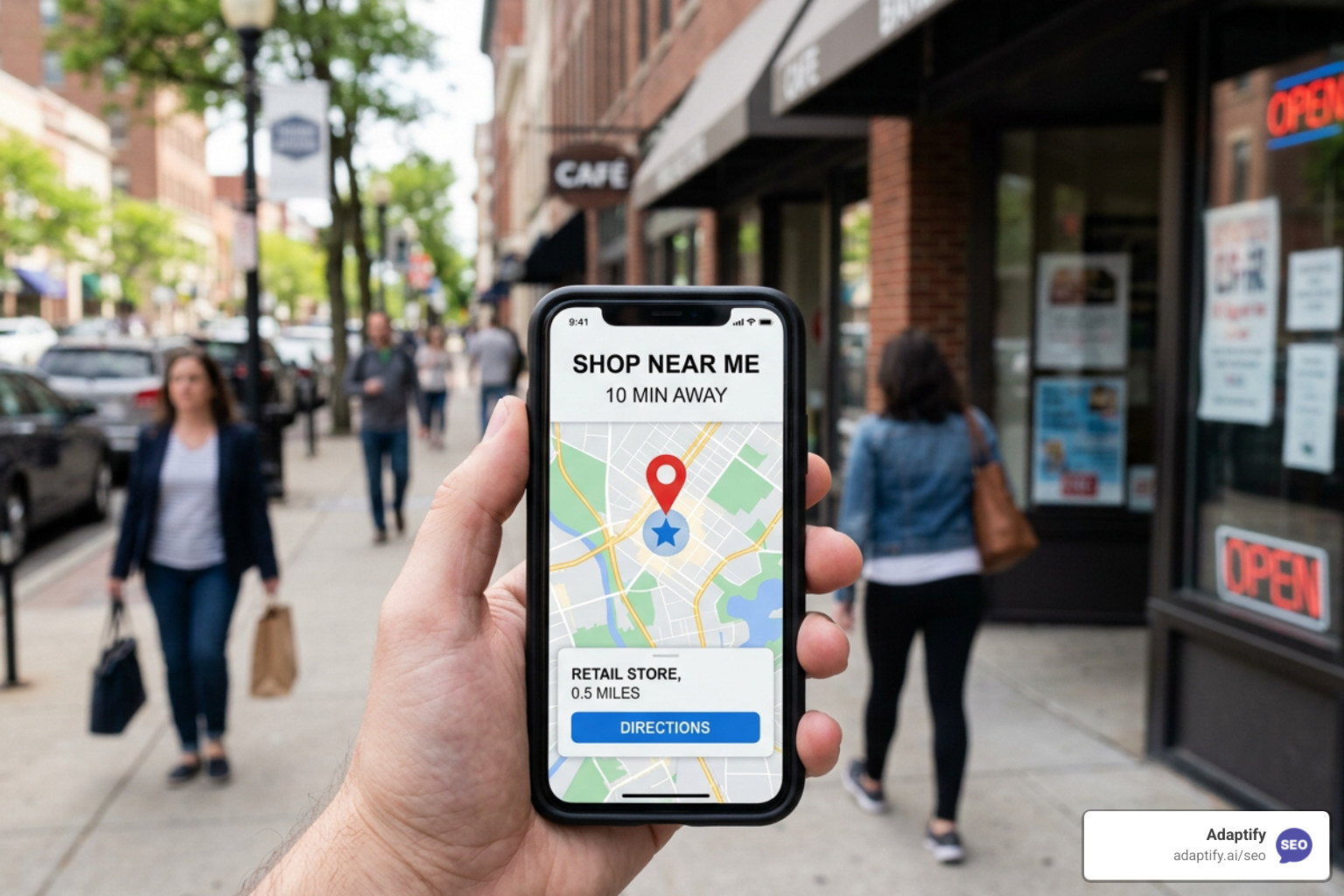
Master local retail SEO to drive foot traffic from Google with proven strategies for GBP, reviews, and AI search optimization.
Join 1,000+ agencies already delivering SEO and AI visibility from a single platform without increasing their headcount.Join 1,000+ agencies already delivering SEO and AI visibility from a single platform without increasing their headcount.