Revive Your SEO: A Guide to Effective Broken Link Building




Broken link building is a white-hat SEO strategy where you find broken links on other websites and offer your content as a replacement. This approach turns the web's natural decay into your competitive advantage. It's a method rooted in providing genuine value, making it one of the most respected and effective ways to earn high-quality backlinks.
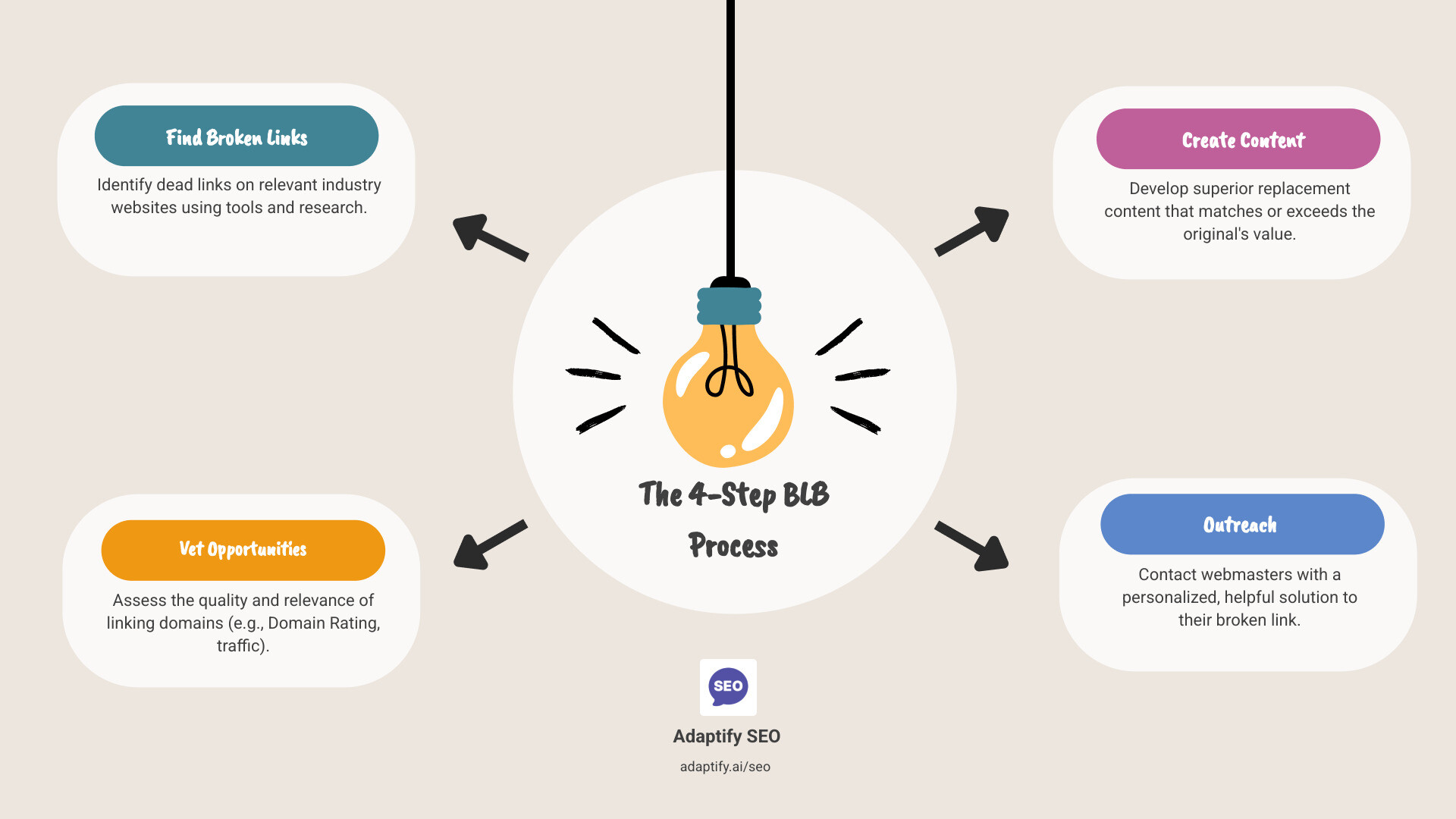
Here's how broken link building works in 4 simple steps:
The scale of this opportunity is massive. A study by Pew Research found that 25% of all web pages that existed between 2013 and 2023 are no longer accessible, highlighting the widespread nature of link rot on the web. This digital erosion is constantly creating new openings for savvy SEO professionals to step in with better, working alternatives. Every time a website shuts down, a page is moved, or content is deleted, a new set of broken link opportunities is born.
Unlike aggressive outreach tactics that primarily focus on self-interest, broken link building offers genuine value to website owners. You're not just asking for a favor—you're solving a real problem that hurts their user experience and SEO performance. A site riddled with broken links appears neglected to both users and search engines. By providing a fix, you position yourself as a helpful expert rather than a solicitor. This makes it one of the most effective link building strategies available, often yielding higher conversion rates than traditional guest posting or directory submissions.
The benefits extend beyond just earning backlinks. When you fix broken links with your content, you're improving the overall quality of the web while building valuable relationships with industry webmasters and editors. These connections often lead to future collaboration opportunities, social media shares, and additional link placements, creating a compounding return on your initial effort.
I'm Hansjan Kamerling, and throughout my work with SaaS platforms and AI startups—including helping companies grow to 40,000+ users—I've seen how strategic broken link building campaigns can dramatically accelerate organic growth. My experience scaling digital products has shown me that the most sustainable SEO strategies are those that genuinely improve user experience while building authority.
When a visitor clicks a link only to find a 404 error page, it creates a negative impression and a frustrating dead end. This is costly, as 88% of online consumers are less likely to return to a site after a bad experience. Google understands this; its core mission is to organize the world's information and deliver a great user experience. Consequently, its algorithms are designed to reward sites that are well-maintained, trustworthy, and work as intended. When Google's crawlers repeatedly encounter broken links on a website, it signals neglect and poor quality, which can negatively impact its search rankings over time.
This is where broken link building becomes your secret weapon. Instead of sending cold pitches asking for a link, you're approaching webmasters with a constructive, helpful solution to a problem that actively hurts their site's performance and user experience. You're not just asking for a link; you're helping them improve their website for their audience and for search engines. This value-first approach is the key to its high success rate.
When you replace a broken link with your high-quality content, that new backlink acts as a powerful vote of confidence from one site to another. These are often valuable editorial links—links placed naturally within the body of content—which Google values far more than links found in footers, sidebars, or low-quality directories. The conversion rates reflect this value-first approach. While traditional cold outreach might see a 2-5% response rate, well-executed broken link building campaigns can achieve 15-20% success rates or even higher because you're offering a solution, not just making a request.
Having run countless broken link building campaigns, I've seen the benefits extend far beyond simple link acquisition. The strategy's beauty lies in its multi-layered advantages. You can earn valuable editorial links from reputable sites by solving problems instead of asking for favors. These positive interactions often blossom into genuine, long-term relationships with webmasters and editors, leading to future collaborations like guest posts, expert roundups, or co-marketing initiatives. The process is also highly scalable; once you develop a system and master the tools, you can apply it across any niche or industry. Most importantly, you're improving the web for everyone while advancing your SEO goals, a helpfulness that is reflected in high outreach conversion rates and the quality of the links earned.
Google's Quality Rater Guidelines are clear: a high number of 404 errors and dead links are considered negative quality signals that undermine a site's credibility and trustworthiness. The technical impact is also significant. Each broken outbound link represents wasted link equity. Link equity, or "link juice," is the authority that flows from one page to another through hyperlinks. When a link points to a dead page, that authority hits a dead end instead of flowing to a valuable resource, effectively creating a leak in the website's SEO foundation. This also squanders your crawl budget. Search engines allocate a finite amount of resources to crawl any given website. When Googlebot wastes time and resources on non-existent pages, it has less capacity to find and index your new or important content, slowing down your overall SEO progress.
While Google's penalties for unnatural outbound links are designed to target spammy, manipulative schemes, a site with numerous broken links sends strong indirect signals of poor maintenance and low quality. I've seen authoritative sites with strong backlink profiles experience a slow but steady decline in rankings as their broken link count grew over time, creating a slow leak in their search visibility. When you reach out to help fix these issues, you're not just earning a backlink; you're helping the webmaster patch a hole in their SEO strategy and restore a page's potential to rank well.
Think of broken link building as digital archaeology meets strategic SEO. You're not just randomly hunting for dead links—you're systematically uncovering buried opportunities that can transform your website's authority and search rankings. It's a methodical process that requires patience, the right tools, and a strategic mindset.
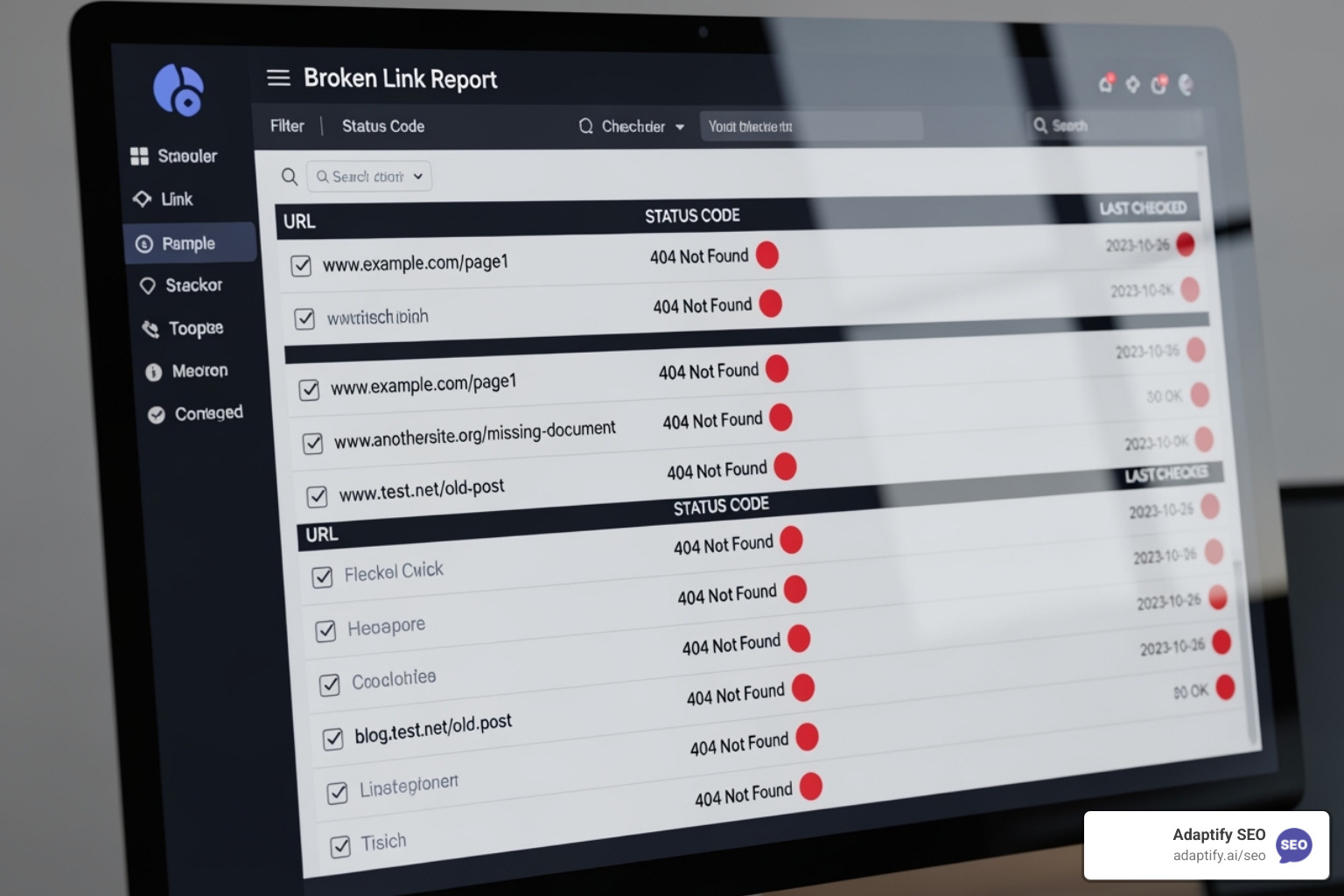
The beauty of this strategy lies in its methodical, four-phase approach: Prospecting is the detective work of finding 404 errors on sites in your niche. Vetting is the crucial qualification stage where you filter these opportunities to ensure they are high-quality, relevant, and worth pursuing. The content creation phase is where you craft a resource that is genuinely better than the original dead page, ensuring it serves the needs of the linking site's audience. Finally, outreach is where you contact webmasters with a helpful, personalized solution, making it easy for them to say yes to your replacement link.
Attempting broken link building without the right tools is like trying to build a house without a hammer—inefficient, frustrating, and often ineffective. A successful campaign relies on a well-equipped toolkit to streamline each phase of the process.
The foundation begins with industry-standard backlink analysis tools. Platforms like Ahrefs, SEMrush, and Moz are game-changers for finding broken pages on competitor sites or authority sites that already have a significant number of backlinks pointing to them. For on-site analysis, site crawling tools like Screaming Frog or Sitebulb are invaluable for auditing a website's entire structure to find both internal and external broken links at scale. For quick, on-the-fly checks, a simple browser extension like Check My Links is perfect for scanning a single page for dead links instantly.
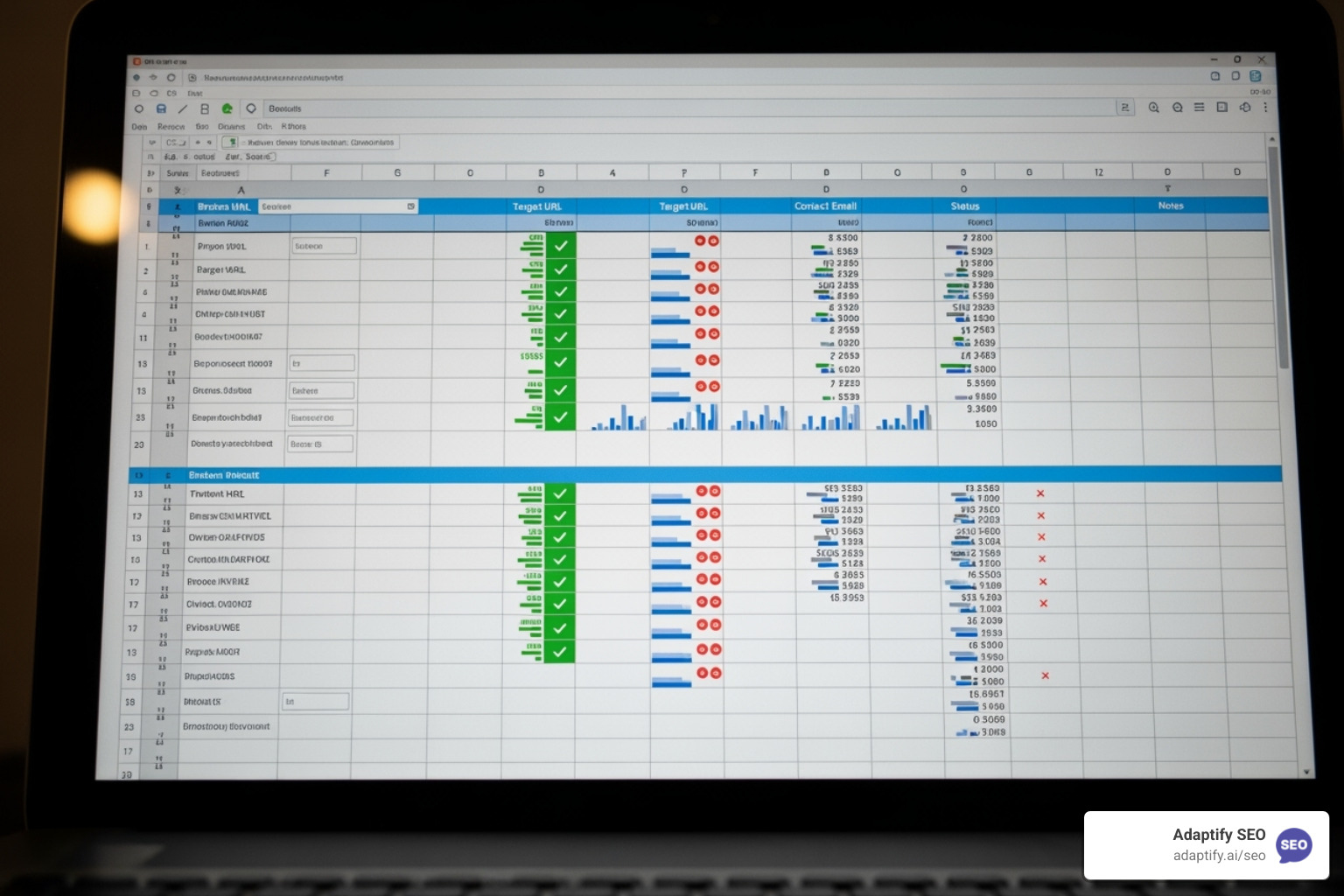
The Wayback Machine is another essential, non-negotiable tool in your arsenal. It acts as a digital time machine, allowing you to see what content used to exist at a broken URL. This insight is crucial for understanding the original context and creating a relevant, superior replacement. For the final step, outreach management platforms help you find accurate contact information, send personalized emails at scale, and track your campaign's performance without losing your mind in a messy spreadsheet.
At Adaptify, we've integrated these capabilities into our platform for agencies in New York, Scotland, and beyond. Instead of juggling multiple subscriptions, our partners get advanced broken link identification, outreach management, and results tracking in one streamlined solution.
The most effective prospecting often starts with competitor analysis. I use backlink analysis tools like Ahrefs to examine my competitors' link profiles, specifically filtering for their broken backlinks. A high-authority site that is linking to a competitor's now-dead page is an immediate, high-value opportunity waiting to be claimed.
Authority sites in your niche are also goldmines. Large, established websites, university resource pages, and industry blogs with years of content inevitably develop broken external links over time. These sites are perfect targets due to their high domain authority and trusted status. Google search operators are a free and powerful method for finding curated lists of links. I frequently use queries like "keyword" + "resource page", "keyword" + "useful links", or inurl:links "keyword". Once I find these resource pages, I use a link-checking extension to quickly scan them for broken links.
Chasing every broken link is a recipe for frustration and wasted effort; quality always trumps quantity. My first filter is always domain authority (DA) or domain rating (DR). I prioritize sites with a strong authority score, but this metric must be paired with topical relevance. A link from a high-DA site in an unrelated niche is far less valuable than one from a moderately authoritative site that is directly relevant to your industry. The site should also have decent organic traffic, as this indicates it is trusted by Google.
Context is everything. I examine the linking page and the anchor text to understand exactly why the original link was placed there. Was it a citation for a statistic? A link to a guide? A recommendation for a tool? My replacement content needs to serve the same purpose, only better. The difference between dofollow and nofollow links also matters. While a nofollow link can still drive traffic and build relationships, I prioritize dofollow opportunities, as they pass authority and directly boost search rankings. Finally, anchor text analysis provides valuable clues about the original content's topic, helping me craft the perfect replacement that aligns with what the linking page's author intended.
Once I've identified and vetted promising broken link opportunities, the real magic happens. This is where you transform a simple 404 error into a valuable, authority-building asset for your SEO strategy. It's also the stage where many campaigns succeed or fail—having a list of great opportunities means nothing if your content isn't compelling or your outreach falls flat on its face.
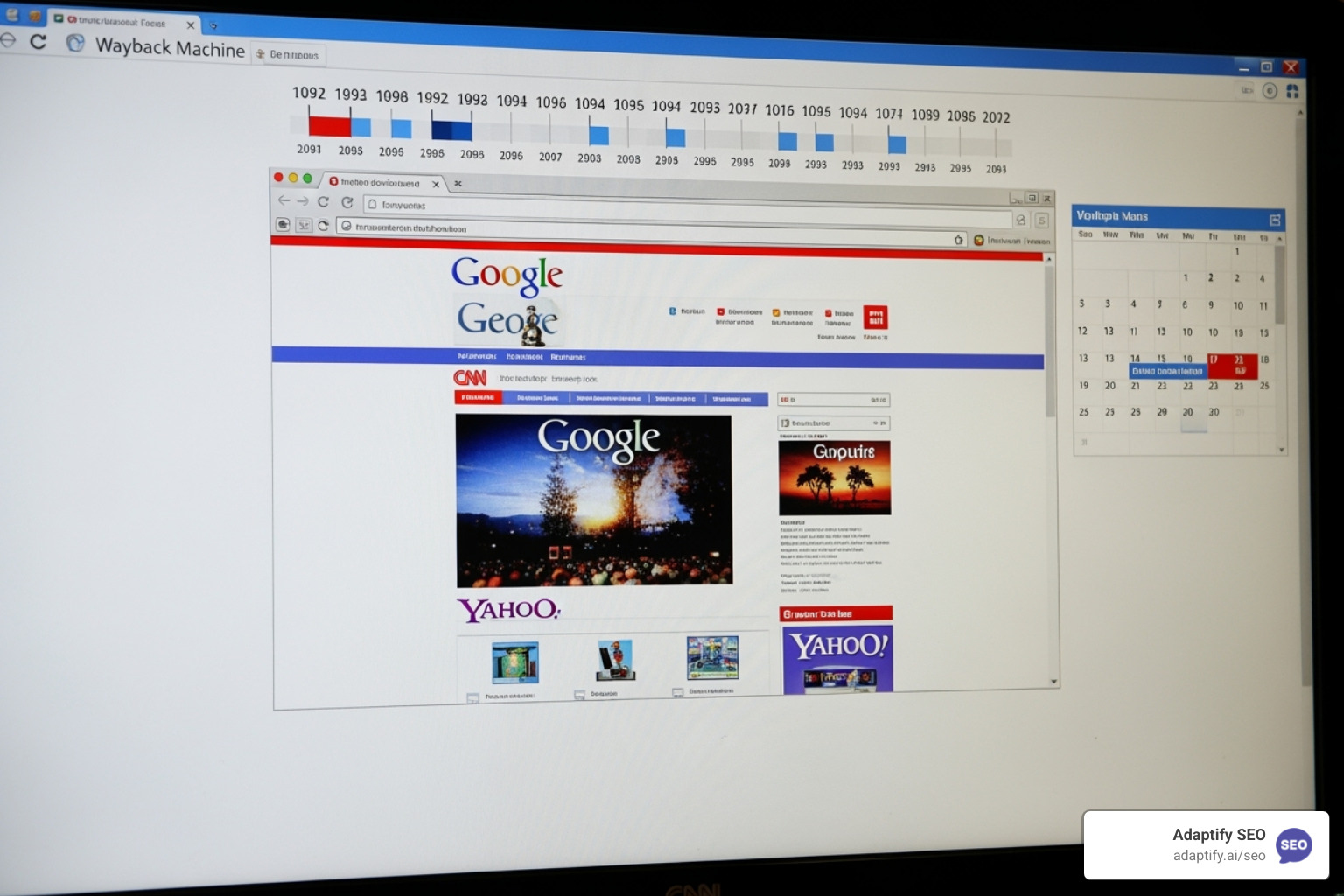
The heart of successful broken link building lies in creating content that webmasters genuinely want to link to. It needs to be a clear and obvious upgrade. My first stop is always the Wayback Machine. This digital archive lets me see what the original, now-dead page looked like. I analyze its structure, key points, length, and tone to understand its original purpose and why it was deemed worthy of a link in the first place.
But I don't just recreate the old content; I make it dramatically better. This is what the SEO industry calls creating "10x content"—content that's ten times better than the original. If the original was a text-only article with outdated statistics, I'll create a new version with updated data, custom infographics, expert quotes, and maybe even an embedded video. If the dead resource was a list of "5 Best Tools," my replacement will be "The 15 Best Tools for 2024, Reviewed and Compared," complete with screenshots and use cases. The key is to address the user's core need more thoroughly, accurately, and helpfully than the original page ever did, making the webmaster's decision to update the link an easy one.
Even the best content is useless if no one knows it exists. Effective outreach comes down to two things: genuine personalization and a clear value proposition. I always try to find the right person to contact, such as a content manager, webmaster, or specific editor, rather than using a generic "info@" or "contact@" address. Tools like Hunter or RocketReach can help, but sometimes a simple LinkedIn search is all it takes. An email addressed to a specific person is far more likely to be opened and read.
Your subject line is your first impression. I keep mine concise, clear, and helpful. Instead of a generic "Link Request," I use something like "Broken link on your [Page Name] article" or "A quick heads-up about your resources page." In the email body, I start by mentioning something specific I liked about their article or site to show I've actually done my research. Then, I get straight to the point, clearly explaining where the broken link is located and offering my content as a superior replacement. I always focus on the benefit to their audience, not just my own goals.
The tone should be friendly, professional, and helpful, never demanding or entitled. Here’s a template that works well as a starting point:
Subject: Broken Link on Your [Article Title] Page
Hi [Name],
I was researching [Topic] today and came across your excellent article, "[Article Title]." The section on [Specific Point] was particularly insightful.
While I was on the page, I noticed that the link to "[Original Link Anchor Text]" seems to be broken and leads to a 404 page.
I recently published a comprehensive guide on that exact topic that might be a great replacement. It's fully updated for this year and covers [Mention 1-2 key benefits, e.g., new data, expert quotes]. You can see it here: [Your Content URL].
Thought it might be a helpful resource to ensure your readers get the information they're looking for!
Thanks for your time,
[Your Name]
While acquiring a specific backlink is the immediate goal, the most successful and sustainable broken link building campaigns are about building genuine, long-term relationships. This shift in mindset transforms outreach from a transactional task into a strategic networking opportunity.
When a webmaster responds positively, I don't just take the link and disappear. I send a thank-you note and look for ways to provide additional value, perhaps by sharing their article on my social channels or pointing out another (non-competing) resource they might find useful. This positions me as a helpful industry peer, not just a link builder. These small interactions gradually build a network of trusted contacts. Even outreach that doesn't result in a link can open a door to future possibilities. Over time, this trust leads to unsolicited mentions, future link opportunities, and collaborations—the kind of organic growth that cold, transactional outreach can never replicate.
Once you've mastered the fundamentals of prospecting, content creation, and outreach for broken link building, it's time to level up your game. The basic rules of providing value still apply, but the strategic depth becomes much richer, allowing you to uncover opportunities that others miss and to scale your efforts effectively.
The versatility of broken link building allows for several advanced variations that can dramatically expand your pool of opportunities.
oldcompany.com to newbrand.com), it often creates a massive number of broken links from sites that haven't updated their links. By using backlink analysis tools to find all the sites still pointing to the old domain, you can contact each one and suggest they update the link—either to the company's new page or to your own superior resource on the topic.site:wikipedia.org [keyword] "dead link" to find relevant articles with broken citations. Once you find a dead link URL, plug that URL into a backlink tool like Ahrefs or SEMrush. This will reveal all the other sites (many of which will be dofollow) that also linked to that same defunct resource. You can then create a replacement and reach out to this pre-vetted list of sites.For large-scale campaigns, especially for agencies in competitive markets like New York, Scotland, and other global hubs, automation is essential. At Adaptify SEO, we've automated much of this prospecting and vetting process to help our partners scale their efforts efficiently without sacrificing quality.
Tracking the right metrics is crucial to demonstrate ROI and refine your strategy. A successful campaign delivers measurable value, not just a vanity list of links.
The Adaptify SEO platform integrates these tracking capabilities into comprehensive dashboards, which is especially valuable for our white-label SEO services.
More info about our white-label SEO services
After managing hundreds of campaigns, I've seen the same avoidable mistakes repeatedly. Here’s what to watch out for:
Yes, absolutely. In an era where Google's algorithms increasingly prioritize helpfulness and user experience, broken link building is more effective than ever. It's a white-hat strategy based on providing genuine value. You're helping webmasters fix issues that harm their site's user experience and SEO, which naturally leads to higher success rates for acquiring high-quality, editorially-placed links. The manual effort involved means there is less competition compared to easier tactics like directory submissions, making the opportunities you find even more valuable.
The timeline for broken link building results varies. You might secure your first new link within a day or two of starting outreach, but the full SEO impact unfolds over time. Search engines need time to crawl the new links, process the new signals of authority, and adjust rankings accordingly. Typically, you can expect to see meaningful, measurable improvements in metrics like organic traffic and keyword rankings within 4-8 weeks, with the most substantial benefits appearing after 2-3 months of consistent effort. The quality and authority of the links you build is the biggest factor influencing this timeline.
While technically possible to start with free tools, it is highly inefficient and extremely difficult to scale. You can use Google search operators for prospecting and free browser extensions like Check My Links to scan pages manually, but this process is incredibly time-consuming and you will inevitably miss many high-value opportunities that paid tools uncover in minutes. For serious campaigns, and especially for agencies in competitive markets like New York or Scotland, professional tools like Ahrefs or SEMrush are essential for efficient prospecting and vetting. Automation platforms like Adaptify SEO then take this a step further by streamlining the entire process, from finding opportunities to tracking results, ultimately paying for themselves through improved efficiency and superior outcomes.
Success rates can vary widely based on the quality of your prospecting, the appeal of your replacement content, and the personalization of your outreach. However, a good benchmark to aim for is a 10-20% success rate, meaning that for every 100 personalized emails you send, you acquire 10-20 high-quality links. This is significantly higher than most cold outreach tactics, which often hover in the low single digits. If your success rate is below 5-8%, it's a strong signal that you need to refine your process, whether it's targeting better prospects, creating more compelling content, or improving your email copy.
Both are effective white-hat link building strategies, but they differ in their approach. Guest posting involves creating entirely new content for another website in exchange for a backlink. The value proposition is providing free content for their blog. Broken link building, on the other hand, involves finding an existing problem on a website (a dead link) and offering a solution by providing a replacement link to your relevant content. The value proposition is fixing an error and improving an existing page. Broken link building is often seen as more natural and can have higher conversion rates because you are helping someone solve a problem rather than asking them to publish your work.
As we reach the end of this comprehensive guide, I hope you can see why broken link building has become one of my favorite and most recommended SEO strategies. It's not just another link building tactic to add to your checklist – it's a genuinely helpful, value-driven approach that creates a win-win-win scenario for everyone involved.
Think about it: when you successfully execute a broken link building campaign, you're earning high-quality, editorial backlinks that boost your search rankings and domain authority. At the same time, you're building meaningful, long-term relationships with industry webmasters and editors. And perhaps most importantly, you're improving the overall user experience of the web by cleaning up dead ends. It's a rare strategy where doing good for others directly and powerfully benefits your own SEO efforts.
The beauty of this approach lies in its scalability and repeatability. Once you've mastered the four-step process – finding, vetting, creating, and outreaching – you can apply this framework across countless websites and niches. With the web constantly evolving and new broken links appearing daily as sites are updated, rebranded, or retired, the opportunities are virtually endless for those willing to look.
What truly sets broken link building apart from other link building methods is its foundation in genuine value creation. You're not asking for unearned favors or trying to manipulate search engines with low-quality schemes. Instead, you're solving real problems that hurt both website owners and their visitors. This authentic, helpful approach to SEO is exactly what search engines like Google aim to reward in the long term. By mastering advanced tactics like the Moving Man Method or leveraging Wikipedia's dead links, you can uncover even more of these valuable opportunities.
Throughout my years helping SaaS companies and AI startups grow their organic presence, I've consistently seen that the most sustainable SEO strategies are those that genuinely improve user experience while building authority. Broken link building exemplifies this principle perfectly.
For agencies managing multiple clients – whether you're based in New York, Scotland, or anywhere else around the globe – scaling these manual processes can quickly become overwhelming and unprofitable. That's exactly why we built Adaptify.ai: to automate these sophisticated link building strategies while maintaining the quality and effectiveness that makes them work.
Our platform handles the heavy lifting of identifying high-value opportunities, managing personalized outreach campaigns, and tracking results in real-time, allowing your team to focus on what matters most: strategy and delivering exceptional results for your clients. Instead of spending countless hours manually searching for broken links and crafting individual emails, you can leverage automation to scale your efforts exponentially.
Ready to transform your agency's approach to link building? Book a Demo to see how we can put your SEO campaigns on autopilot while you focus on growing your business.

Discover how backlink automation software streamlines outreach, saves time, and scales your SEO strategy safely and effectively.
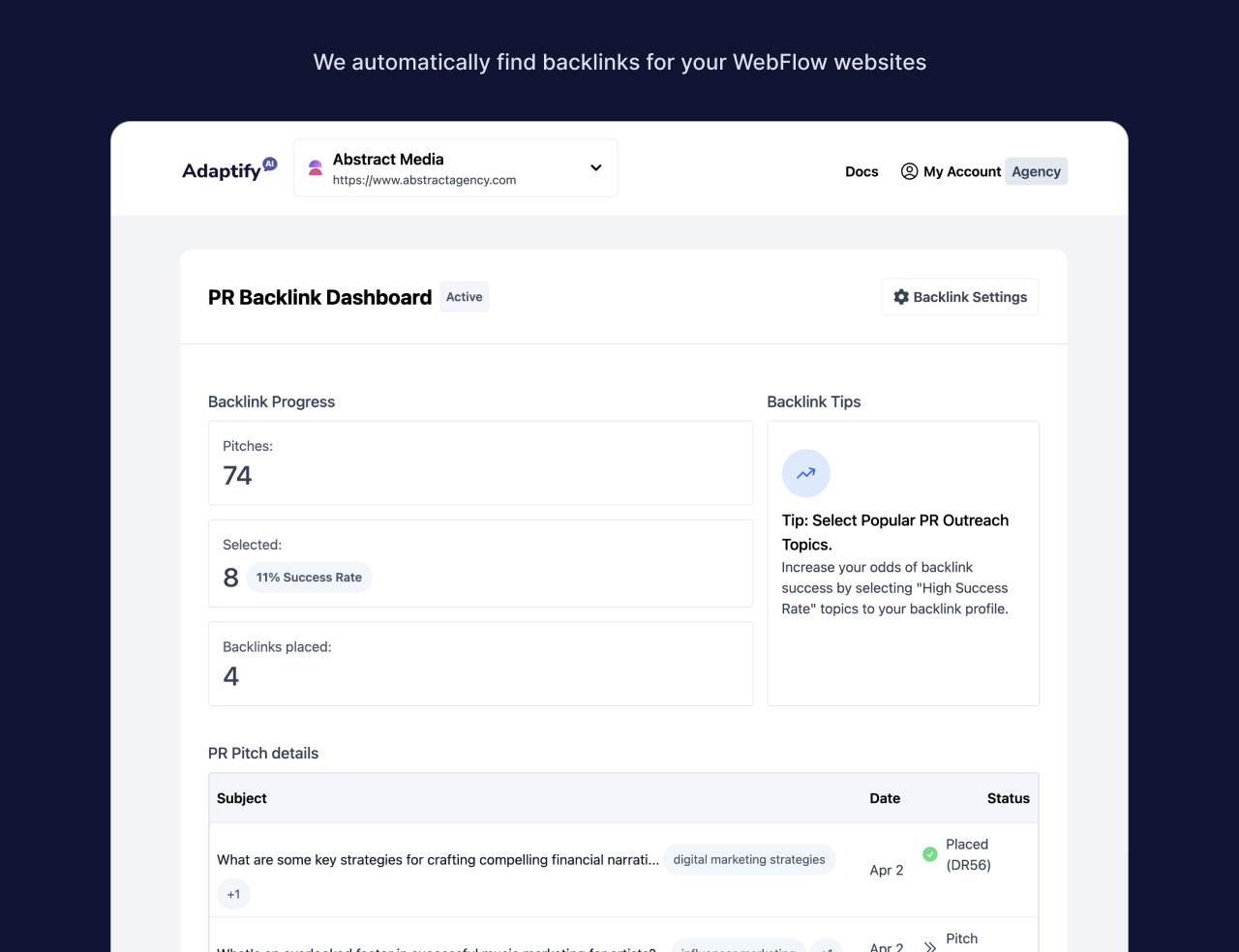
Track every backlink with an SEO backlink monitor—spot lost links fast, protect rankings, and boost ROI before competitors do.
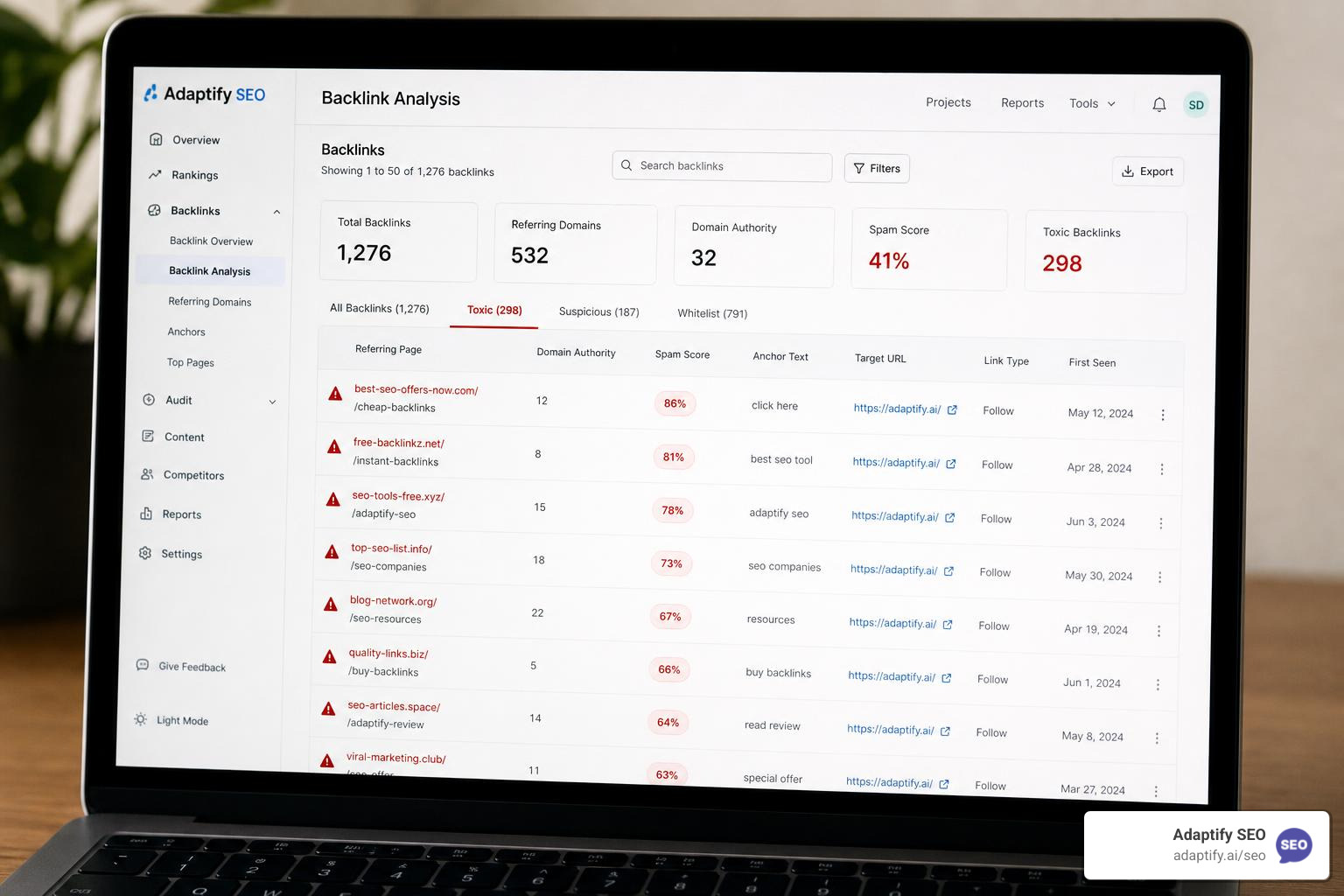
Learn how to disavow toxic backlinks, clean your profile, and recover rankings with this step-by-step guide.
Join 1,000+ agencies already delivering SEO and AI visibility from a single platform without increasing their headcount.Join 1,000+ agencies already delivering SEO and AI visibility from a single platform without increasing their headcount.