


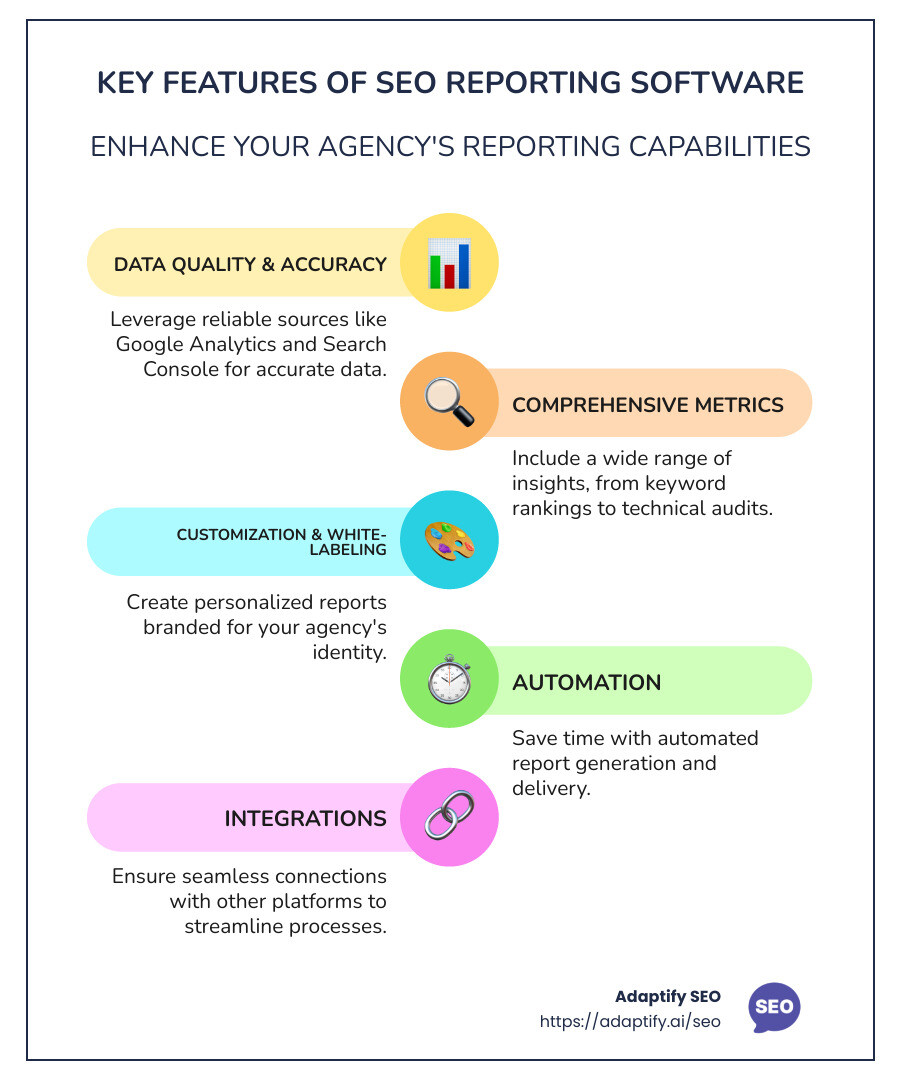
When it comes to running a successful agency, seo agency reporting software is indispensable. This software provides the data and insights needed to show clients the tangible impact of your SEO efforts on their business. The key elements to keep in mind when choosing such tools include:
- Data Quality and Accuracy: Ensure the software pulls from reliable sources like Google Analytics and Search Console.
- Comprehensive Metrics: Tools should cover a broad spectrum of insights—from keyword rankings to technical audits.
- Customization and White-Labeling: Personalize reports with your agency's branding.
- Automation and Integrations: Streamline your processes with automated reports and seamless platform integrations.
These features help agencies save time, keep clients informed, and make data-driven decisions to ultimately drive growth.
As an expert in this field, my name is Hansjan Kamerling. I have extensive experience working with SEO agency reporting software. My work has ranged from designing solutions for major SaaS platforms to aiding agencies in scaling their digital operations effectively.
CTA: Book a Demo
Understanding SEO Reporting Software
When diving into SEO agency reporting software, understanding the nuances of data quality, accuracy, metrics, and insights is crucial. These elements form the backbone of effective SEO strategies and client communications.
Data Quality and Accuracy
Reliable data is the lifeline of SEO reporting. Without it, your reports could mislead clients and hinder decision-making. The best tools pull data from trusted sources like Google Analytics and Google Search Console. This ensures that the metrics you're presenting are both current and accurate.
Accuracy in data is not just about numbers. It’s about ensuring that the data reflects the true performance of a website. This means capturing the nuances of organic traffic, keyword rankings, and other SEO factors without errors. Inaccurate data can lead to misguided strategies, so always prioritize tools that emphasize data integrity.
Comprehensive Metrics and Insights
A robust SEO reporting tool offers a broad range of metrics. These should include:
- Keyword Rankings: Understand where your client's website stands in search results.
- Organic Traffic: Track how many visitors are coming from search engines.
- Backlinks: Monitor the quality and quantity of links pointing to the website.
- Technical SEO Issues: Identify and resolve issues that could hinder site performance.
But metrics alone aren't enough. Insights derived from these metrics help in crafting a narrative. They explain the "why" behind the numbers, enabling you to provide actionable recommendations to clients.
Changing Data into Actionable Insights
The true power of SEO agency reporting software lies in its ability to turn raw data into insights. This involves analyzing trends, identifying opportunities, and understanding challenges. For instance, a drop in organic traffic might indicate a technical SEO issue or a change in search algorithms. By providing context and recommendations, you position yourself as an invaluable asset to your clients.
In summary, effective SEO reporting software combines high-quality, accurate data with comprehensive metrics and actionable insights. It’s about telling a story with the data—a story that helps clients understand the impact of your work and the path forward.
CTA: Book a Demo
Top Features of SEO Agency Reporting Software
When selecting the right SEO agency reporting software, focus on features that improve your workflow and impress clients. Let's explore the key attributes that make these tools indispensable.
Customization and White-Labeling
Every client is unique, and your reports should reflect that. Customization is crucial for tailoring reports to meet specific client needs. Look for software that allows you to adjust layouts, include your branding, and modify color schemes. White-labeling capabilities enable you to present professional, agency-branded reports that reinforce your expertise.
With customization, you can ensure that each client receives a report that speaks directly to their goals and priorities. This personal touch can significantly improve client satisfaction and trust.
Ease of Use and Automation
Time is one of the most valuable resources for SEO professionals. An intuitive interface and user-friendly features streamline the reporting process. Automated reporting is a must-have, allowing you to schedule and send detailed reports without manual effort. This not only saves time but also ensures consistency and reliability in your communications.
With automation, you can set up reports to be delivered at regular intervals, keeping clients updated and engaged without additional work on your part.
Integrations and Data Aggregation
A holistic view of SEO performance requires seamless integration with other marketing platforms. Your reporting tool should connect effortlessly with Google Analytics, Google Search Console, and social media analytics tools. By aggregating data from multiple sources into a single dashboard, you can offer a unified view of SEO efforts.
Integrations ensure that all your data is in one place, making it easier to analyze and report on. This comprehensive approach helps in delivering insights that are both deep and wide-ranging.
The best SEO agency reporting software combines customization, ease of use, automation, and integrations. These features not only improve your workflow but also lift the quality of service you provide to clients.
CTA: Book a Demo
Best Practices for Using SEO Reporting Software
Navigating SEO agency reporting software can be daunting, but following best practices can simplify the process and maximize the impact of your reports. Let's explore key areas like reporting frequency, KPIs, layout, and recommendations.
Reporting Frequency
The frequency of your reports should align with your client's needs and the pace of their SEO campaigns. For most clients, monthly reports provide a balanced view of progress without overwhelming them with data. However, some might require weekly updates for more dynamic campaigns.
Set expectations early on about how often reports will be delivered. Regular updates help maintain transparency and keep clients informed about their SEO performance.
Key Performance Indicators (KPIs)
Choosing the right KPIs is crucial for effective reporting. Focus on metrics that align with the client's business goals. Common KPIs include:
- Organic traffic: Measures the number of visitors from search engines.
- Keyword rankings: Tracks the position of targeted keywords in search results.
- Conversion rates: Evaluates how well the site turns visitors into customers.
- Backlink profile: Assesses the quality and quantity of backlinks.
By highlighting these KPIs, you can provide clients with a clear picture of their SEO performance.
Report Layout
A well-structured report improves readability and comprehension. Start with a summary that highlights key insights and achievements. Use visuals like charts and graphs to present data clearly and concisely.
Organize sections logically, such as:
- Overview: Summary of key metrics.
- Traffic Analysis: Detailed look at organic traffic trends.
- Keyword Performance: Insights into keyword rankings.
- Technical SEO: Identifying and addressing site issues.
A clear layout helps clients quickly understand the data and its implications.
Recommendations
Reports are not just about data; they should also guide future actions. Provide actionable recommendations based on the insights gained. For example, if a keyword is underperforming, suggest strategies to improve its ranking.
Tailor recommendations to the client's specific goals and challenges. This personalized approach demonstrates your expertise and commitment to their success.
By implementing these best practices, you can create reports that are not only informative but also actionable, helping clients make data-driven decisions to boost their SEO efforts.
Frequently Asked Questions about SEO Agency Reporting Software
What is a SEO reporting tool?
An SEO reporting tool is a software application designed to collect, analyze, and present data on a website's search engine optimization performance. These tools help agencies track key metrics such as organic traffic, keyword rankings, and technical SEO aspects. By providing a comprehensive view of a website's performance, these tools enable agencies to craft effective SEO strategies and demonstrate the value of their services to clients.
How to generate SEO reports?
Generating SEO reports involves compiling data from various sources to provide a clear picture of a website's performance. Here's how you can do it:
-
Determine Reporting Frequency: Decide how often you will generate reports. While monthly reports are common, some clients may benefit from weekly updates to keep pace with fast-moving campaigns.
-
Select Relevant KPIs: Choose KPIs that align with the client's business objectives. Common KPIs include:
- Organic Traffic: Number of visitors from search engines.
- Keyword Rankings: Position of targeted keywords in search results.
- Technical SEO Issues: Identifying and resolving site-related problems.
-
Design the Report Layout: A clear and logical structure is essential. Start with an overview and use visuals like charts for better data representation. Organize the report into sections such as:
- Traffic Analysis
- Keyword Performance
- Technical SEO Insights
-
Provide Actionable Recommendations: Based on the data, suggest next steps for the client. This could involve optimizing underperforming keywords or fixing technical issues.
By following these steps, you can create detailed and actionable SEO reports that inform and guide your clients.
How do I report SEO performance?
Reporting SEO performance effectively involves conveying complex data in an understandable way. Focus on the following elements:
-
Website Performance: Highlight improvements or declines in website metrics. Use data from tools like Google Analytics to show changes in organic traffic and bounce rates.
-
Keyword Rankings: Show how targeted keywords are performing over time. This helps clients see the impact of your SEO efforts on their visibility.
-
Technical SEO: Address any technical issues that might be hindering performance. This could include site speed improvements or fixing broken links.
-
Visuals and Summaries: Use graphs and charts to make data more digestible. Start with a summary that highlights the key takeaways.
By focusing on these areas, you can deliver reports that not only inform but also empower clients to make strategic decisions.
Conclusion
In today's digital landscape, finding the right SEO agency reporting software is crucial for agencies striving to deliver top-notch results to their clients. This is where Adaptify SEO shines. By offering automated SEO solutions, Adaptify SEO streamlines processes like strategy formulation, content creation, and PR link building, all powered by advanced AI technology.
Adaptify SEO's comprehensive approach significantly reduces manual effort, allowing agencies to focus on what truly matters—driving results and enhancing client satisfaction. With the ability to automate routine tasks, agencies can boost efficiency and allocate more time to strategic decision-making.
Moreover, the platform's automation capabilities ensure accurate and timely reporting, which is essential for maintaining transparency and trust with clients. By integrating data from multiple sources, Adaptify SEO provides a holistic view of a website's performance, enabling agencies to craft data-driven strategies that align with client goals.
In conclusion, Adaptify SEO not only simplifies the complexities of SEO reporting but also empowers agencies to achieve more with less effort. If you're looking to improve your agency's performance and client satisfaction, it's time to explore the benefits of Adaptify SEO.
Ready to transform your SEO strategy? Book a Demo today and experience the power of automated SEO solutions!
Related Articles
View All Articles
Agency Growth
Robots, Humans, and Rankings: The SEO Automation Reality Check
Compare automated SEO vs manual SEO to build a hybrid workflow that scales rankings with human oversight in 2026.
Aug 3, 20268 min read

Agency Growth
The Art of Standing Out: Differentiating Your SEO Agency
Master SEO service differentiation to stand out in a crowded market and prove your agency's unique business-first value.
Jul 21, 20268 min read
Agency Growth
Stop Wasting Hours and Automate Your SEO Reports Already
Stop wasting hours—automate your SEO reports to boost agency efficiency and client trust.
Jul 15, 20269 min read
Ready to lead the next era
of search visibility?
Join 1,000+ agencies already delivering SEO and AI visibility from a single platform without increasing their headcount.Join 1,000+ agencies already delivering SEO and AI visibility from a single platform without increasing their headcount.