SEO Superpowers: How to Track Your White Label Backlinks Like a Pro

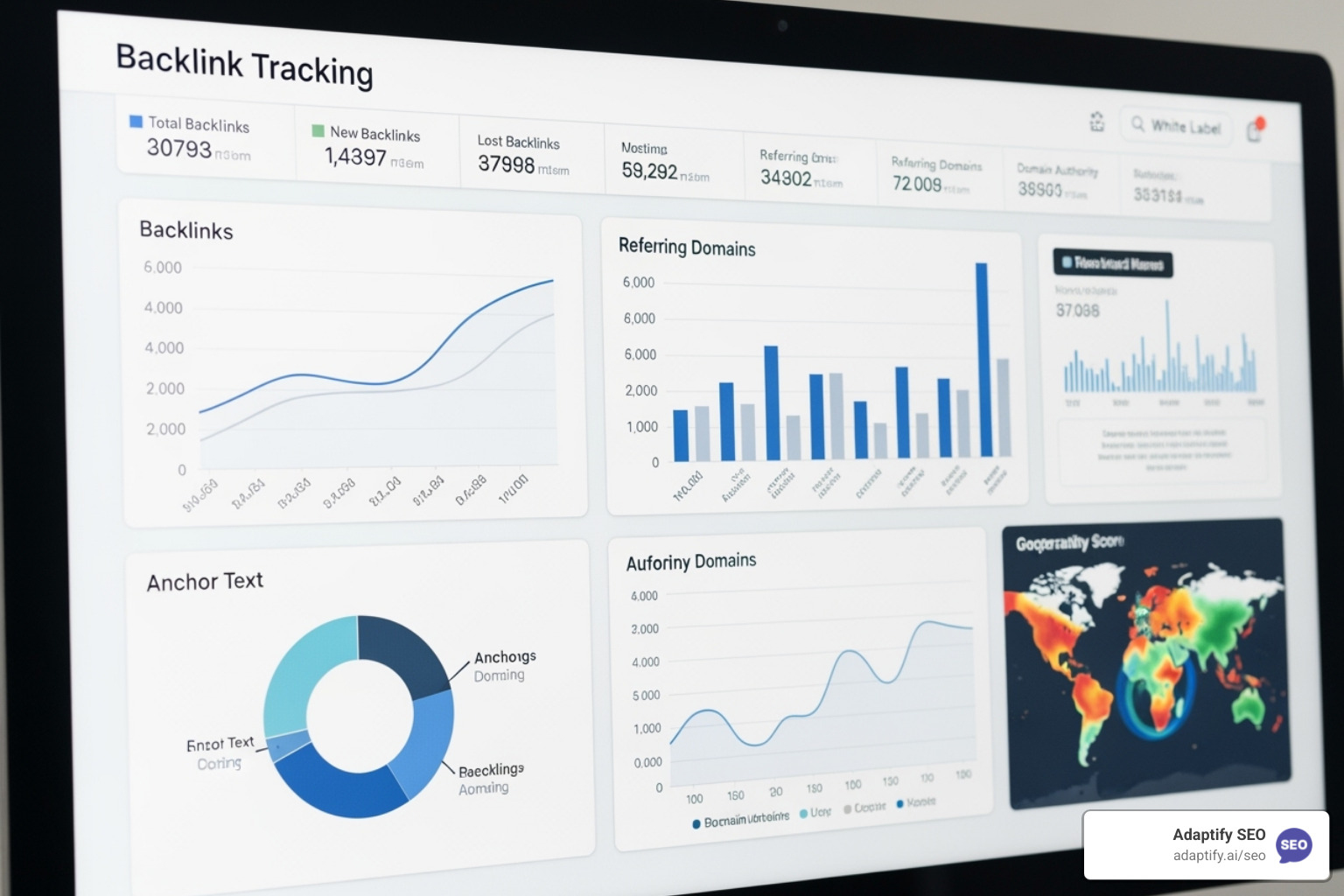

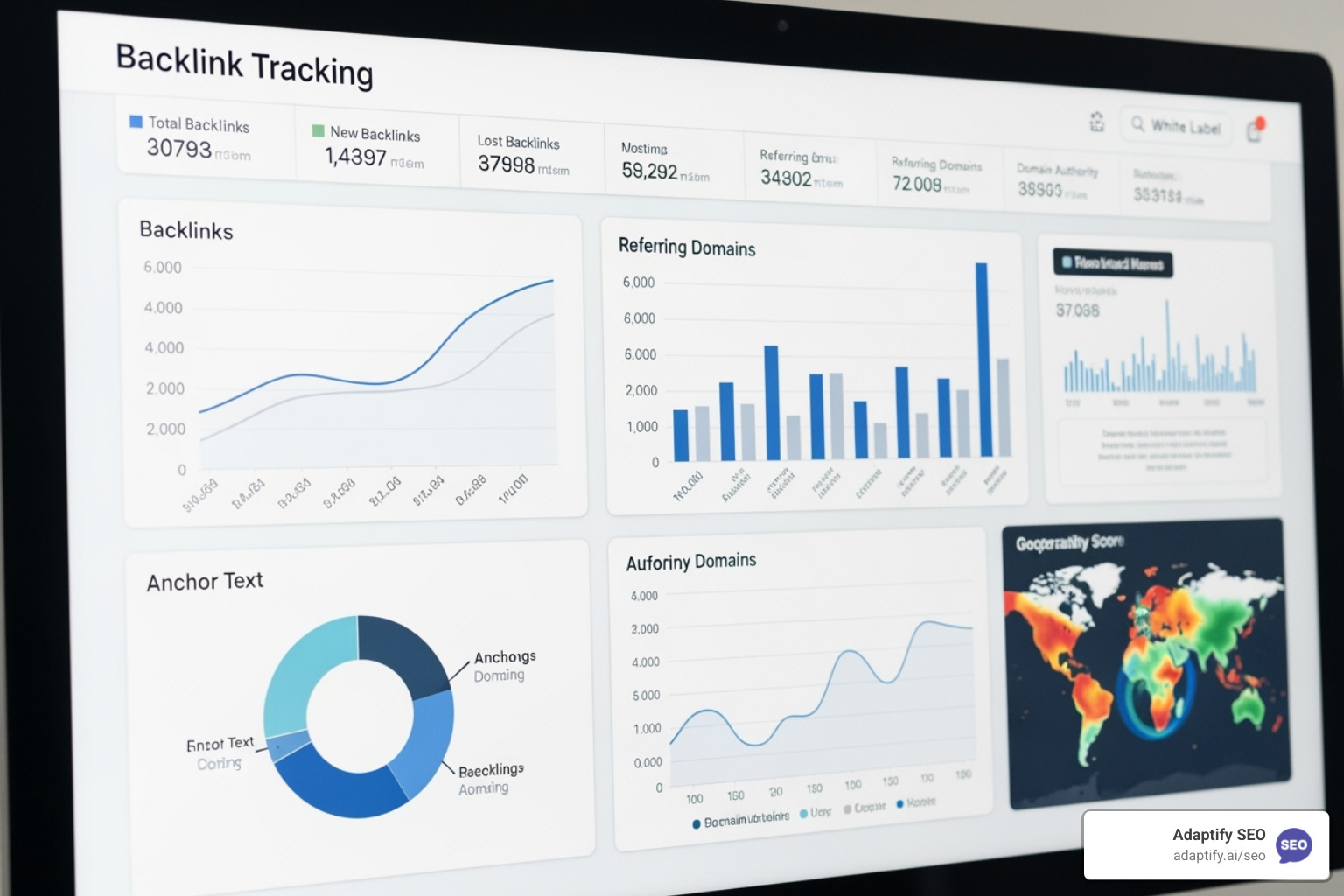
White label backlink tracking is a service that allows agencies to monitor and report on backlink performance under their own brand, using third-party tools and data sources while presenting results as their own proprietary solution.
Quick Answer for White Label Backlink Tracking:
If you're running an SEO agency, you know the pain. Link building is the hardest aspect of SEO for 52.3% of digital marketers, and tracking those hard-earned backlinks manually is even worse. Spreadsheets break, links disappear without warning, and clients constantly ask for proof that your campaigns are working.
The solution isn't working harder - it's working smarter with white label backlink tracking systems that do the heavy lifting while you focus on strategy and client relationships.
I'm Hansjan Kamerling. With years of experience helping SaaS platforms scale through automation, I've seen exactly how white label backlink tracking can transform agency operations from chaotic manual work into streamlined, profitable processes.
Picture this: It's Monday morning, and you're staring at countless spreadsheets, tracking backlinks for multiple clients. Links vanish without warning, and your inbox is flooded with client emails asking for progress updates you don't have time to compile.

Sound familiar? You're not alone. 52.3% of digital marketers find link building the hardest part of SEO, and a huge chunk of that difficulty comes from the nightmare of tracking those hard-won backlinks manually.
This chaos holds your agency back. Every hour spent on spreadsheets is an hour not spent on scaling SEO services or improving client retention. When you can't prove your value, clients question their investment.
The good news? White label backlink tracking transforms this daily struggle into smooth, automated operations. Instead of drowning in manual data collection, you get professional dashboards that update themselves while you focus on what actually grows your business - strategy, relationships, and results.
Consider the common agency challenges: Manual tracking errors that look unprofessional, the difficulty of proving link building value with scattered data, and the inability to scale because your tracking system is at its breaking point. These problems compound. A missed notification can lose a valuable link. A spreadsheet error can ruin a report. A frustrated client can mean losing thousands in monthly retainers.
Here's where things get interesting. White label backlink tracking is like having a world-class tracking system without building one yourself. You're essentially taking powerful third-party monitoring technology and presenting it under your agency's brand.
Think of it like a store's "house brand." They don't make the product, but it carries their label. With white label backlink tracking, you get enterprise-level monitoring capabilities wrapped in your agency's colors, logo, and custom domain.
Your clients see professional reports that look like they came from your internal development team. They log into portals branded with your agency name. The entire experience reinforces that they're working with a sophisticated, tech-forward partner.
This seamless client experience builds trust. Polished, automated reports show premium service. Using Adaptify's white label tools, agencies can deliver this professionalism without the massive investment of building proprietary systems.
The change goes way beyond just saving time on manual tasks. White label backlink tracking fundamentally changes how your agency operates and grows.
Increased efficiency happens immediately. Instead of your team spending hours each week checking link status manually, automated systems handle the monitoring while you focus on securing new, high-quality backlinks. Scheduled reports generate themselves, and real-time dashboards keep everyone informed without constant manual updates.
Improved professionalism shows up in every client interaction. When you send branded reports with clear visualizations and comprehensive data, you're demonstrating serious capability. Clients see you as an established agency with sophisticated tools, not a scrappy startup running everything through spreadsheets.
The scalability factor is huge for growing agencies. Manual tracking hits a wall fast - you simply can't check thousands of links across dozens of clients without drowning your team. White label solutions scale effortlessly, letting you duplicate proven reporting templates for new clients in minutes.
Most importantly, you can focus on core competencies that actually differentiate your agency. If your strength is content strategy or relationship building, why waste precious hours on repetitive data collection? Automation handles the tracking while your team delivers maximum value where it counts.
This shift often opens up increased revenue streams too. When you can offer sophisticated tracking and reporting as part of your service package, you're delivering more value and can often justify higher retainers. Clients appreciate comprehensive reporting and will pay for the peace of mind it provides.
For agencies ready to make this transition, exploring white-label services can provide the roadmap for changing operations from manual chaos into streamlined, profitable processes.
Choosing the right white label backlink tracking platform is critical for your agency's efficiency. The best platforms don't just track links—they transform how your team operates, avoiding the common pitfall of tools that fail in daily use.
The best platforms share must-have features. Comprehensive backlink databases provide fresh, reliable data. Automated monitoring and alerts eliminate manual checks. Quality metrics like Trust Flow and Citation Flow help you prioritize valuable links. Anchor text analysis prevents over-optimization, while referring domain analysis guides future campaigns. Crucially, white label reporting lets you present all data under your brand.
The platform should integrate seamlessly with Google Search Console and Google Analytics, creating a centralized hub for all your SEO data. Scalability features like reusable templates and bulk management tools become essential as your client roster grows. Finally, a user-friendly interface ensures your team can actually use these powerful features without a computer science degree.
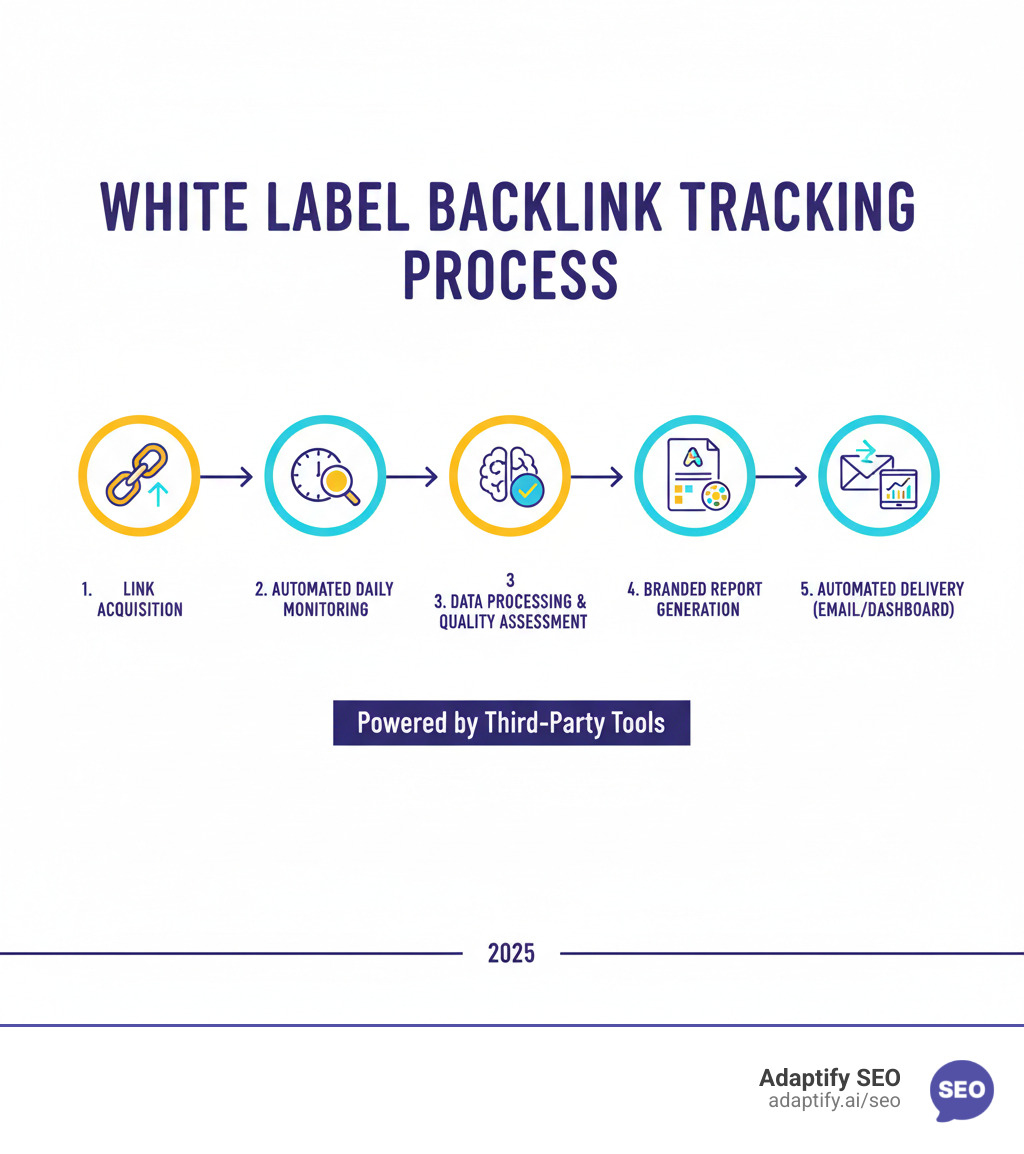
Automation transforms white label backlink tracking from a chore into a strategic advantage. One agency I worked with saved 15 hours a week by automating link checks, redirecting that time into securing higher-quality links.
Automated report scheduling is your first line of defense against last-minute client requests. Set up daily, weekly, or monthly reports that generate and deliver automatically. Your clients get consistent updates, and you avoid the Sunday night panic of preparing Monday morning reports.
New and lost link notifications act like an early warning system for your campaigns. When a high-authority link goes live, you can immediately share the good news with your client. More importantly, when links disappear, you can reach out to the site owner while the relationship is still warm. Quick action often means the difference between permanently losing a valuable link and getting it restored.
Daily monitoring keeps your finger on the pulse of every campaign. The best tools check your backlinks multiple times per day, catching changes almost as they happen. Email alerts can be customized to notify you only about significant changes – like losing a link from a domain with high Trust Flow or gaining multiple links from the same referring domain.
This proactive approach to preventing link loss has saved agencies countless hours of damage control. Instead of finding missing links during monthly audits, you're addressing issues within hours of them occurring.
Raw link counts tell you almost nothing about campaign success. What matters is the quality and context of those links, which requires sophisticated data integration and quality metrics.
Comprehensive backlink data is more than a URL list. It includes the referring domain, placement URL, anchor text, follow status, and timestamps for when links were found and last verified. This detail allows for thorough analysis and pattern identification.
Trust and authority metrics separate valuable links from digital noise. Trust Flow measures the quality of sites linking to you, while Citation Flow indicates link quantity. A link from a site with high Trust Flow but moderate Citation Flow is often more valuable than dozens of links from low-quality directories. These metrics help you focus your efforts on monitoring backlinks by trust and citation flow to identify the most valuable referring domains.
Integration with Google Search Console provides the gold standard of backlink data – information directly from Google's index. Combining GSC data with third-party sources creates a complete picture of your link profile. You can see which links Google recognizes, how they're being processed, and whether they're contributing to search performance.
The ultimate goal is centralized SEO data where backlink information lives alongside keyword rankings, organic traffic data, and technical SEO metrics. This holistic view reveals the true impact of your link building efforts. When you can show a client that new backlinks from high-authority sites coincided with ranking improvements and traffic growth, you're not just reporting activities – you're demonstrating clear ROI.
The best link building in the world means little if you can't effectively communicate its impact to your clients. This is where white label backlink tracking truly shines. It transforms complex data into clear, client-friendly reports that showcase progress and demonstrate ROI.
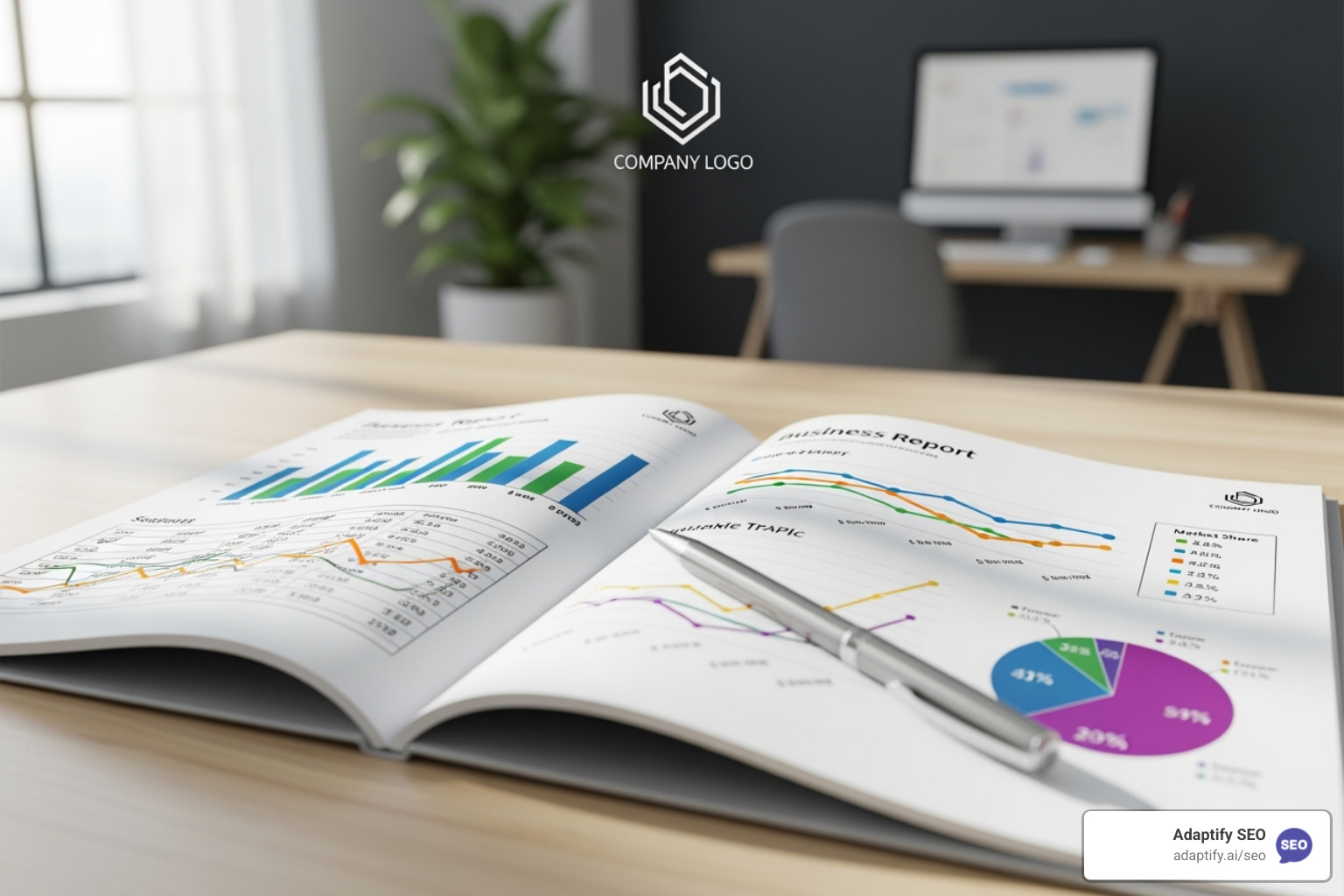
Reporting isn't just dumping numbers on a page; it's about telling a story of growth. When you show clients that the #1 result on Google has 3.8x more backlinks than lower positions, and then show how you're building that profile for them, it clicks.
The key is focusing on metrics that matter to clients. They want proof your work is moving the needle, not every technical detail. Focus on demonstrating progress with clear data visualization, showing how each link contributes to their success. For more on this, explore More info about backlinks.
Here's where the rubber meets the road. Your clients want to see tangible results, and your reports should paint a crystal-clear picture of what's happening with their backlink profile.
New backlinks are your victory laps. Highlight each new acquisition with key details like the domain's authority, Trust Flow, and anchor text. A steady stream of high-quality links reinforces the value of your efforts.
Transparency is also key. Lost backlinks happen. Instead of hiding them, address them head-on. Explain what happened and your plan to fix it. This honesty builds trust and shows you're actively monitoring their profile.
Link velocity tells the story of momentum. This metric shows how quickly new links are being acquired over time, and a consistent, healthy pace indicates your strategy is working. Clients love seeing upward trends, especially when you can connect those gains to improved rankings or traffic.
The beauty of automated tracking is how it shows clear gains through visual reports. Instead of boring spreadsheets, you can present dynamic charts that make progress obvious at a glance. These tools also help you identify SEO threats early - spotting potentially harmful links before they can damage your client's rankings.
Anchor text analysis might sound technical, but it's actually one of the most strategic parts of link building. The clickable text in each link sends powerful signals to search engines about what your client's pages are about.
A healthy anchor text distribution is like a balanced diet - you need variety to stay strong. Your reports should break down the mix of branded anchors (like "Adaptify SEO"), naked URLs, generic phrases ("click here"), and keyword-rich anchors. This breakdown helps you spot patterns and opportunities.
The balance between branded and keyword-rich anchors is crucial. Too many exact-match keyword anchors can trigger Google's spam filters, while too many branded anchors might miss ranking opportunities. Your tracking should monitor this ratio constantly.
Over-optimization risks become obvious when you analyze anchor text patterns. If you notice certain keywords being overused, you can adjust your strategy before it becomes a problem. This proactive approach is what separates professional agencies from amateur link builders.
Most importantly, this analysis directly refines your link building strategy. When you see gaps in anchor text diversity or opportunities for specific keywords, you can adjust your outreach accordingly. It's like having a roadmap for future link building efforts.
This is where your agency's professionalism really shines through. The difference between a generic tool report and a polished, branded deliverable is night and day.
Start by applying your agency logo to every report. This simple step immediately transforms a third-party tool into what appears to be your proprietary system. Follow that up with custom brand colors that match your agency's visual identity. When everything looks cohesive, clients naturally assume you have sophisticated in-house technology.
Custom report layouts let you tailor each deliverable to what matters most to that specific client. Maybe one client cares deeply about Trust Flow metrics while another focuses on anchor text diversity. You can prioritize different sections and visualizations accordingly.
For agencies ready to go all-in, using a custom portal domain like reports.youragency.com completely removes any trace of third-party tools. Clients log into what appears to be your own reporting platform, reinforcing your agency's technical capabilities.
All these elements work together to dramatically improve client perception. When clients receive beautifully branded, insightful reports that look like they came from your internal development team, their confidence in your agency soars. They see you as more than just a service provider - you become their trusted SEO technology partner.
Here's the truth: your clients aren't paying for pretty reports. They're investing in results that move their business forward. White label backlink tracking becomes truly powerful when you connect those backlinks to real business outcomes - more traffic, better rankings, and ultimately, more revenue.
Too many agencies struggle to connect backlinks to growth. The magic happens when you integrate backlink data with other key SEO metrics to tell a complete story of success.
Think about it this way: a backlink isn't valuable because it exists. It's valuable because it helps your client rank higher, which brings more qualified visitors, which leads to more conversions. Your job is to connect those dots clearly.
| New Links Acquired | Ranking Improvements | Organic Traffic Growth | Client ROI Demonstrated |
|---|---|---|---|
| 10 High-DR Links | +5 Positions (Target Keyword) | +15% Organic Sessions | Increased leads/sales, higher brand visibility |
| Consistent Link Velocity | Stable Top-10 Rankings | Reduced bounce rate, longer session duration | Improved user engagement, stronger brand authority |
| Quality Anchor Text | Improved Keyword Diversity | Higher conversion rate from organic traffic | Direct revenue impact |
The real breakthrough happens when you stop treating backlinks as isolated data points. Instead, you need to weave them into the bigger SEO story that includes rankings, traffic, and conversions.
Combining backlink reports with keyword ranking data creates "aha!" moments. Showing that new high-authority backlinks correlated with a jump from position 8 to 3 for a main keyword is tangible progress clients understand.
Google Analytics traffic data adds another crucial layer. You built 15 new backlinks this month, but did organic traffic actually increase? Are people spending more time on the site? Are bounce rates improving? When you can show that your link building efforts led to a 25% increase in organic sessions, you're proving real value.
Don't forget about Google Search Console performance data either. This shows impressions, clicks, and average position directly from Google's perspective. When combined with your backlink tracking, it creates an unshakeable foundation for your success stories.
The research highlights exactly this approach - combining backlink reports with keyword rankings, Google Search Console data, and on-site SEO metrics in one comprehensive client dashboard. This integrated view transforms scattered data points into a coherent narrative of growth and success.
Here's where white label backlink tracking becomes your strategic compass, not just your reporting tool. The data you collect doesn't just prove past success - it guides future decisions and justifies every dollar your clients spend.
Using backlink data to find new opportunities is like having a treasure map. When you analyze which types of content consistently attract high-quality links, or which referring domains link to your competitors but not your clients, you're uncovering golden opportunities. Maybe you notice that industry roundup posts generate the most valuable backlinks, so you can focus more outreach efforts there.
Refining link building strategies becomes data-driven rather than guesswork. If your anchor text analysis shows you're getting too many exact-match keywords, you can pivot to more branded anchors. If certain outreach angles consistently fail while others succeed, you can double down on what works.
Most importantly, this integrated approach makes justifying SEO spend straightforward. When clients see a clear timeline showing new backlinks leading to ranking improvements leading to traffic growth leading to more conversions, the value becomes undeniable. You're not just building links - you're building their business.
Demonstrating ROI to clients through this comprehensive approach transforms skeptical clients into advocates. They stop questioning your monthly retainer and start asking how they can invest more in SEO. That's the power of connecting backlinks to business outcomes through smart, integrated reporting.
Running an agency means fielding a lot of questions, and I've noticed the same ones come up again and again when agencies are considering white label backlink tracking. Let me walk you through the most common concerns and give you the straight answers.
This is probably the question I hear most, and the answer is a resounding yes! In fact, automation is the whole point of using white label backlink tracking tools in the first place.
Here's what you can automate: scheduled reports that generate and send themselves to clients daily, weekly, or monthly without you touching anything. Your clients get consistent updates on new links, lost links, and overall profile changes right in their inbox.
You can also set up live dashboards where clients log in anytime to check their backlink progress. Think of it as giving them a window into their SEO performance that's always up-to-date and branded with your agency's look.
The magic happens with automatic data pulls. These tools crawl the web daily, updating backlink information so you're always working with fresh data. No more manual exports or weekend data-gathering sessions.
This automation keeps clients informed without manual effort. Regular updates on new/lost links and authority scores keep clients engaged and focused on outcomes, not questioning your work.
I get this question a lot because both involve looking at backlinks, but they're actually quite different beasts with different goals.
Backlink tracking is all about looking inward at your client's own website. You're monitoring the links you've built to make sure they're still live, healthy, and helping your client's SEO. Think of it as taking care of your garden - you're watering, weeding, and making sure everything you planted is thriving.
Competitor analysis, on the other hand, is like peeking over the fence to see what your neighbors are growing. You're examining competitor backlink profiles to spot opportunities. Which high-authority websites link to them? What content are they creating that attracts links? Are there specific industries where they're getting links that your client isn't?
Both strategies work together beautifully. You track your own progress to ensure success and stability, while you analyze competitors to find new avenues for growth. Different goals, but they're complementary strategies that make your overall SEO efforts much stronger.
This is where white label backlink tracking tools really shine beyond just monitoring. They become your opportunity-hunting assistants.
By analyzing backlink profiles - both yours and competitors' - you can spot patterns. You'll see which sites consistently link to content in your client's niche or which content types (like guides or studies) earn the most links.
The tools let you find high-authority referring domains by filtering backlinks using metrics like Trust Flow, Citation Flow, or Domain Authority. This helps you identify those golden websites that are both authoritative and relevant to your client's industry. If they're linking to competitors, there's a good chance they might link to your client too.
You can also identify content gaps by seeing what content on competitor sites attracts the most links. Maybe they have an amazing industry report that earned 50 backlinks, but your client doesn't have anything similar. That's your cue to create something even better.
One of my favorite features is surfacing unlinked brand mentions. Many advanced tools monitor the web for mentions of your client's brand that don't include a link back to their site. These are easy wins - you just reach out and politely ask them to make the mention clickable.
These analytical capabilities transform white label backlink tracking from a passive monitoring system into an active strategy tool that helps you both protect existing links and find new opportunities.
If you've made it this far, you understand that white label backlink tracking isn't just another tool—it's a fundamental shift in how you operate and serve clients.
Think back to the start: drowning in spreadsheets, scrambling for reports, and struggling to prove value. Those days of manual chaos can end.
Agencies that accept automation see immediate changes. Efficiency soars as your team stops manual tracking to focus on strategy. Client trust deepens with professional, branded reports. Scalability becomes achievable, as adding new clients no longer means adding proportional manual work.
But perhaps most importantly, you finally get to demonstrate results in a way that connects every backlink to real business outcomes. When clients see how your link building efforts directly improve their rankings, increase their traffic, and drive tangible ROI, they stop questioning your value and start asking how they can invest more.
The beauty of Adaptify.ai's automated platform is that it handles the heavy lifting while you maintain complete control over client relationships and reporting. You get comprehensive backlink tracking, streamlined content creation, and strategic insights – all under your own brand. It's like having SEO superpowers that let you deliver enterprise-level results without the enterprise-level headaches.
Your agency deserves to work smarter, not harder. Your clients deserve professional reporting that clearly shows progress. And you deserve to focus on what you do best – building strategies that drive real results.
Ready to leave manual tracking behind and give your agency the tools it needs to thrive?

Discover how backlink automation software streamlines outreach, saves time, and scales your SEO strategy safely and effectively.
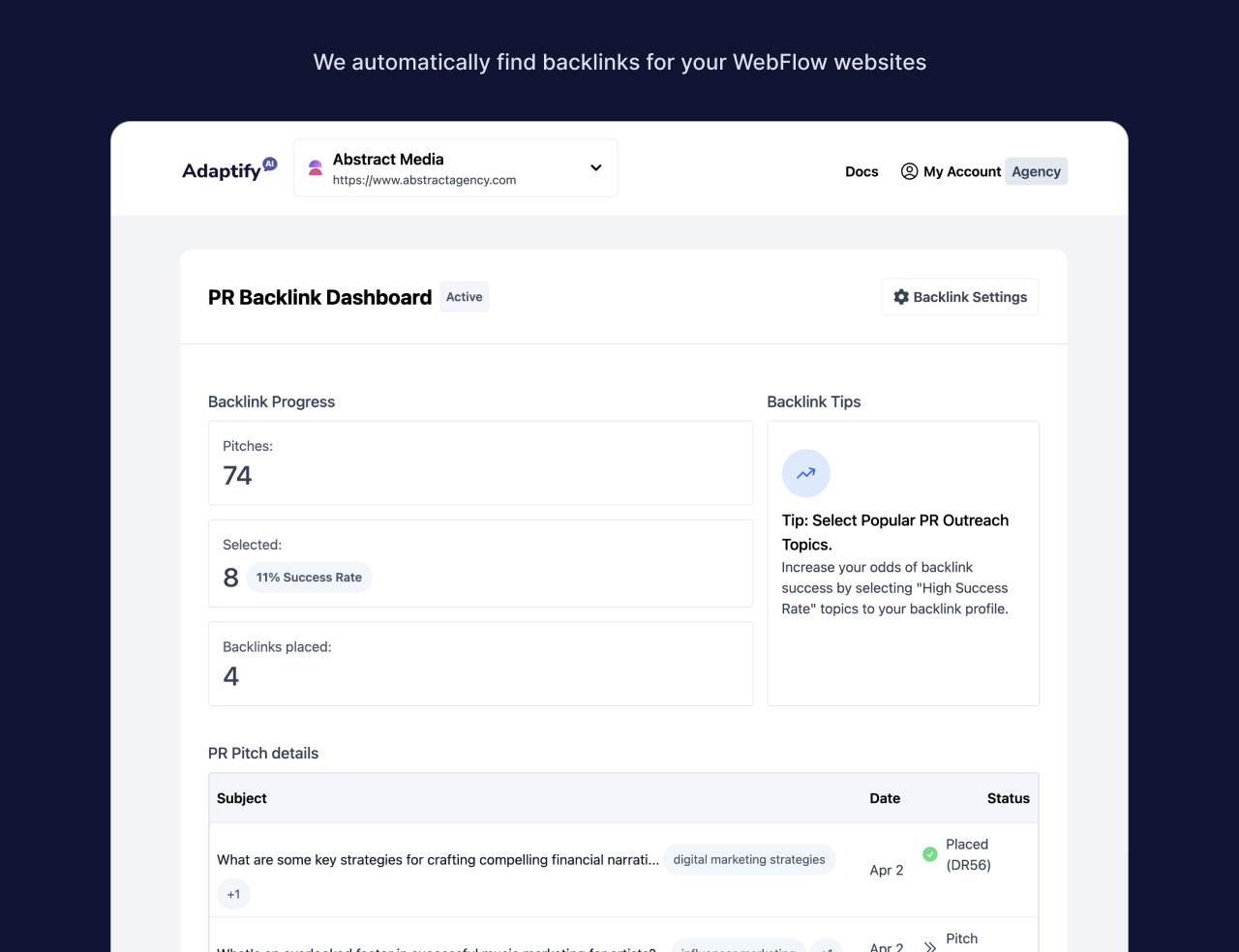
Track every backlink with an SEO backlink monitor—spot lost links fast, protect rankings, and boost ROI before competitors do.
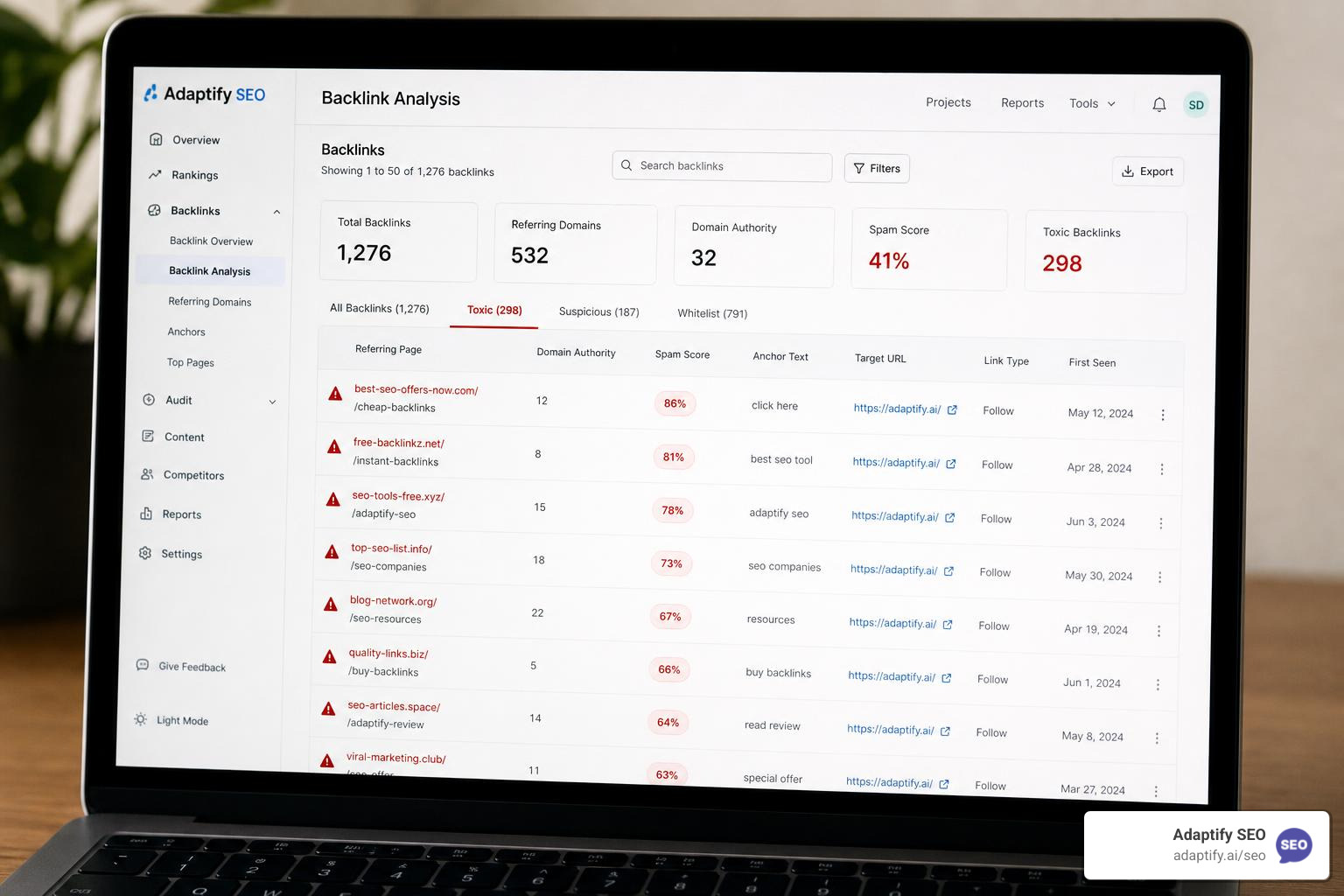
Learn how to disavow toxic backlinks, clean your profile, and recover rankings with this step-by-step guide.
Join 1,000+ agencies already delivering SEO and AI visibility from a single platform without increasing their headcount.Join 1,000+ agencies already delivering SEO and AI visibility from a single platform without increasing their headcount.