Set It and Forget It? The Real Deal on Automated SEO Strategies


Automated SEO strategies are revolutionizing how marketing agencies handle search optimization, with over 90% of professionals reporting increased productivity when using automation tools. Here's what you need to know:
Core Automated SEO Tasks:
The reality? Most SEO work is repetitive grunt work that machines handle better than humans. As one agency owner put it: "With SEO automation, we're publishing up to 20 high-quality blog posts per month with just two team members, consistently boosting organic traffic without increasing headcount."
Automation isn't about replacing human expertise. It's about freeing your team from tedious tasks so they can focus on strategy, creativity, and the high-level thinking that actually drives results. The sweet spot lies in knowing which tasks to automate (keyword clustering, site audits, rank tracking) and which require human judgment (brand voice, editorial oversight, strategic planning).
I'm Hansjan Kamerling, and I've spent years helping AI startups and SaaS platforms scale their operations through smart automation. My experience with automated SEO strategies spans everything from managing 40,000-user analytics platforms to designing growth systems that reach millions of users.
You're tired of spending countless hours on repetitive SEO tasks that feel like filling a bottomless pit. You want to scale your SEO efforts efficiently, deliver consistent results for clients, and reclaim your time for strategic work that actually moves the needle.
Whether you're running an agency, managing SEO for multiple clients, or trying to scale your own site's organic growth, automation is no longer optional—it's essential for staying competitive.
SEO automation is like having a digital assistant that never sleeps, constantly watching your websites, crunching data, and making optimizations while you focus on the big picture. It's the process of using smart software and AI to handle those repetitive, time-consuming SEO tasks that used to eat up your entire day.
The magic happens through machine learning algorithms that can process massive amounts of data in real-time. We're talking about analyzing millions of keywords, competitor movements, and search result patterns faster than any human team could manage. Harvard Business Review research on productivity shows that over 90% of workers report increased productivity when using automation tools.
Every effective automated SEO strategy runs on three core technologies: crawling systems, API integrations, and large language models (LLMs).
The crawling component acts like your personal Googlebot, continuously monitoring your website's health and performance. API integrations serve as the nervous system, connecting Google Search Console, Google Analytics, rank tracking tools, and your CMS into one unified data pipeline. LLMs like GPT-4 power the content and optimization recommendations, analyzing what's working for top-ranking pages in your niche.
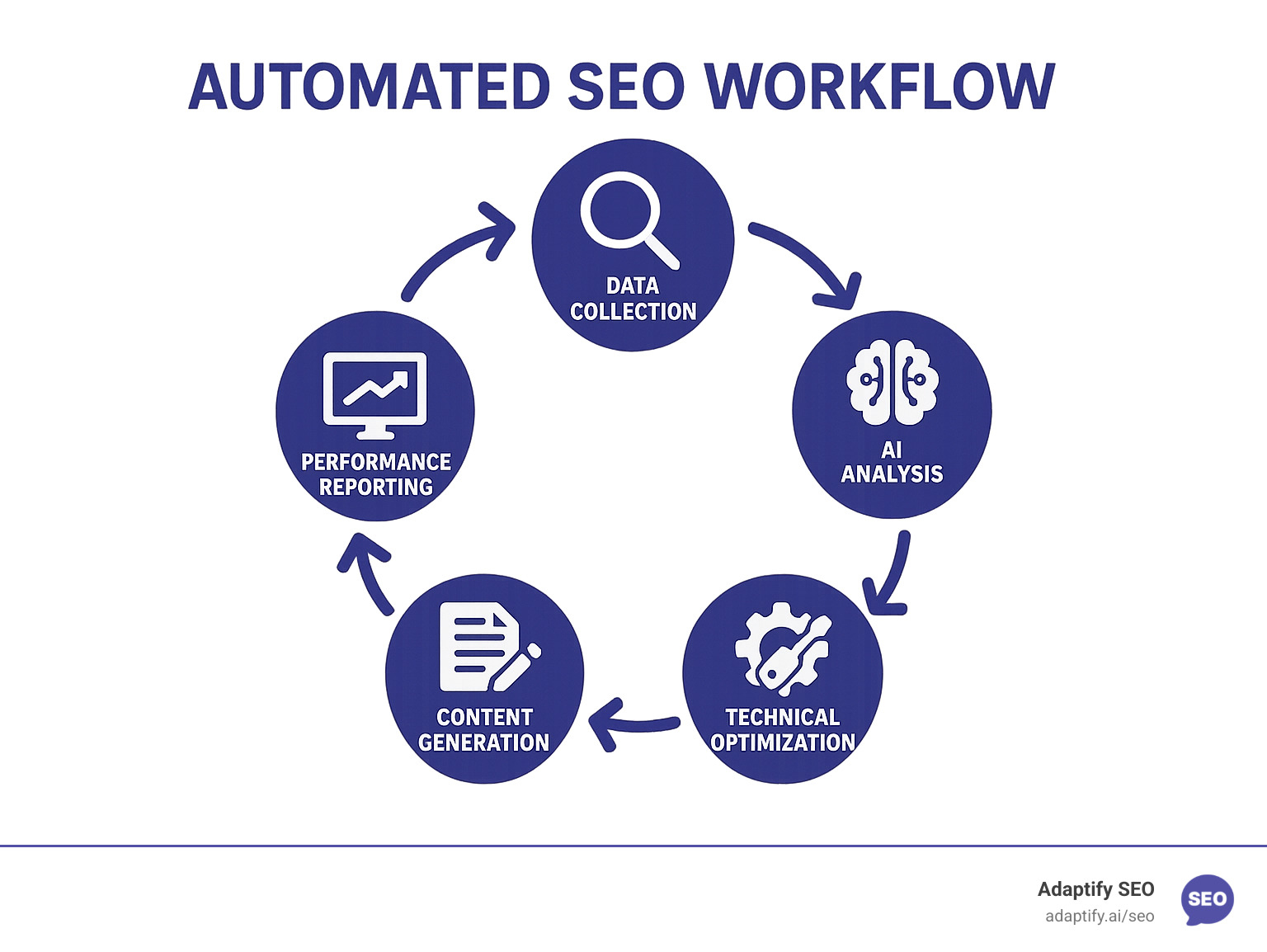
Every successful SEO automation system stands on three essential pillars: data collection, decision logic, and execution scripts.
Data collection runs quietly in the background, gathering information from multiple sources—your site's performance metrics, competitor activities, keyword rankings, and technical performance indicators.
Decision logic is where AI analyzes all that collected data against proven rules and learned patterns to determine the best actions to take.
Execution scripts handle the actual optimization work—updating meta descriptions, suggesting internal links, generating XML sitemaps, or publishing pre-approved content.
This creates a continuous improvement cycle where every action generates new data, feeding back into the decision logic and making the entire system smarter over time.
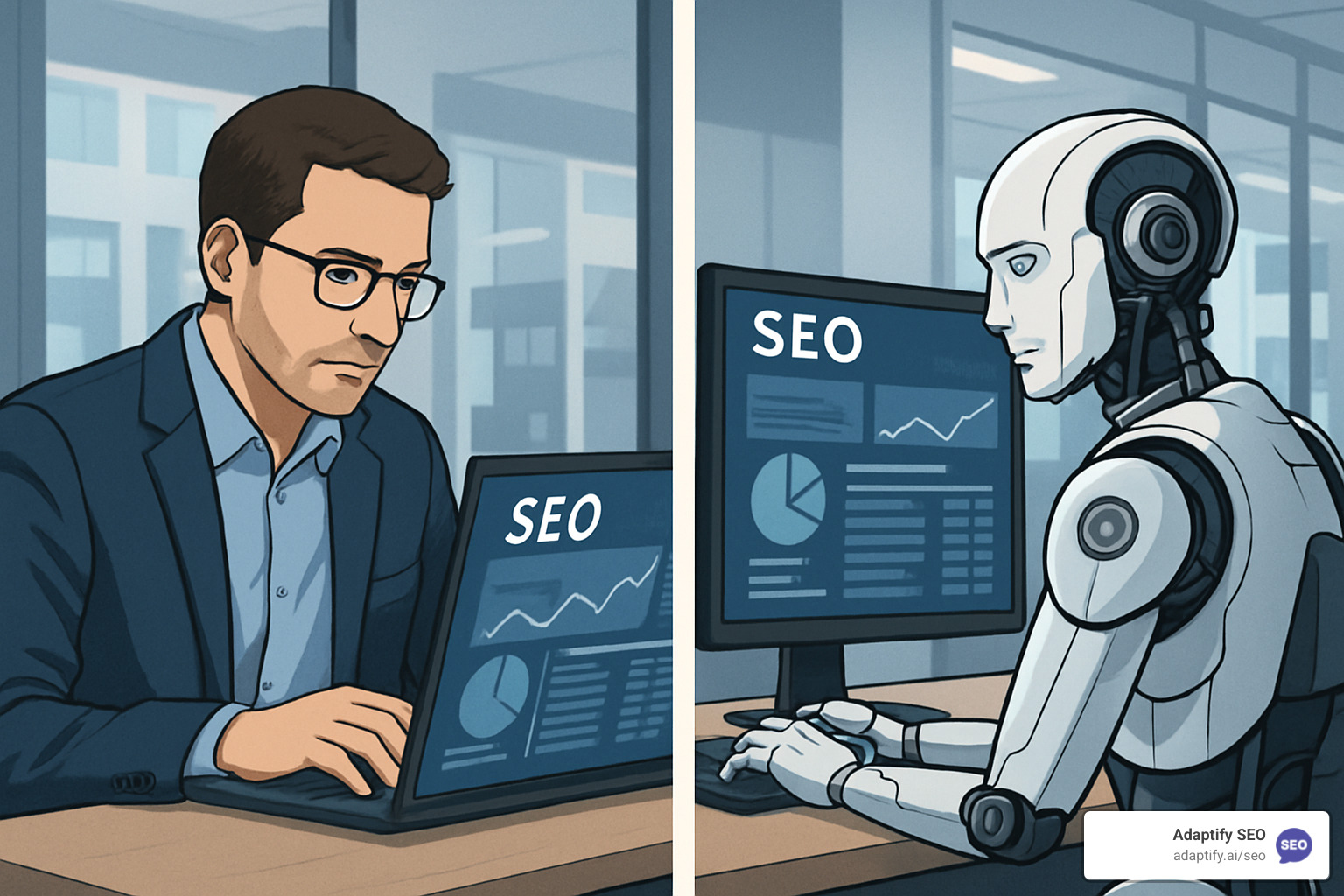
The magic of automated SEO strategies isn't in replacing humans entirely—it's in knowing exactly which tasks to hand off to machines and which ones need that irreplaceable human touch.
The most successful teams aren't the ones that automate everything. They're the ones that get smart about what should be automated, what should stay manual, and where human-AI collaboration creates the best results.
| Task Category | Automation Level | Why |
|---|---|---|
| Keyword Research | Fully Automated | AI processes millions of keywords instantly |
| Site Audits | Fully Automated | Machines catch technical issues humans miss |
| Rank Tracking | Fully Automated | Continuous monitoring across devices/locations |
| Content Briefs | Partially Automated | AI generates structure, humans add strategy |
| Content Writing | Hybrid | AI drafts, humans edit for brand voice |
| Link Outreach | Manual | Relationships require human touch |
| Strategic Planning | Manual | Business context needs human insight |
Site audits are perfect for automation. While you're sleeping, automated crawlers can scan thousands of pages, catching broken links, duplicate content, and technical issues that would take days to find manually.
Keyword clustering happens in minutes instead of weeks. AI analyzes thousands of keywords and groups them by search intent and semantic similarity.
Internal linking becomes manageable as sites grow. AI analyzes content relationships and suggests internal links that strengthen your site architecture.
Backlink monitoring never takes a break, tracking new backlinks, spotting toxic links, and keeping tabs on competitors 24/7.
Brand voice is uniquely yours. AI can generate technically optimized content, but maintaining that consistent personality that makes your brand memorable requires human oversight.
Editorial review becomes crucial with E-E-A-T requirements. Human editors catch factual errors, ensure claims are properly supported, and verify content actually helps users.
Outreach relationships are built on trust and genuine connections. The best link building happens through real relationships and personalized pitches.
Title and meta description generation works beautifully when AI generates multiple variations and humans pick the winners that align with brand voice.
A/B testing can run largely on autopilot, with AI continuously optimizing based on performance data while humans set parameters and interpret results in business context.
Automated SEO strategies transform keyword research from weeks of manual work into minutes of AI-powered analysis. What used to take teams 40+ hours monthly now happens in under 4 hours while actually improving results.
Modern automation handles nuanced work that makes keyword research valuable. AI analyzes semantic relationships between terms, classifies search intent patterns, and predicts seasonal trends. Tools like Ahrefs and SEMrush have evolved beyond simple keyword expansion—they're analyzing user behavior patterns and SERP features to surface long-tail opportunities.
Creating comprehensive topic clusters used to require deep industry knowledge and hours of organization. Now you can generate a year's worth of content ideas in seconds, complete with internal linking strategies and priority rankings.
You feed a primary keyword into an AI-powered mapping tool, and it analyzes millions of related searches to build a complete content ecosystem. For a recent client, we generated over 1,200 targeted content ideas in under 30 seconds, automatically organized into logical clusters with search volume data, keyword difficulty scores, and competitive analysis.
Competitive analysis has evolved beyond checking competitor keywords. Modern automation continuously monitors competitor content updates, tracks new publications, and identifies strategic gaps in real-time.
AI-powered gap analysis identifies content format gaps, semantic gaps in coverage, and backlink opportunities from sites linking to competitors. The automation prioritizes findings based on search volume, competition level, and realistic ranking chances.
Inputting "automated SEO strategies" into our AI research system returns 847 related keywords with complete search volume and difficulty data in seconds. The AI automatically classifies search intent and categorizes everything into logical content clusters.
The system exports everything to Google Sheets with priority scores automatically calculated, factoring in search volume potential, keyword difficulty, commercial intent, and content gap opportunities. This 10-minute workflow delivers comprehensive keyword intelligence that would have required days of manual research.
Modern automated SEO strategies have completely changed content creation. AI-powered platforms like Surfer AI and Clearscope don't just spin articles—they understand what makes content rank by analyzing top-performing pages and generating content that hits optimization targets while reading naturally.
Agencies typically see production speeds jump 300-400% while improving quality. One agency went from 5 blog posts monthly to 20, doubling organic traffic within six months.
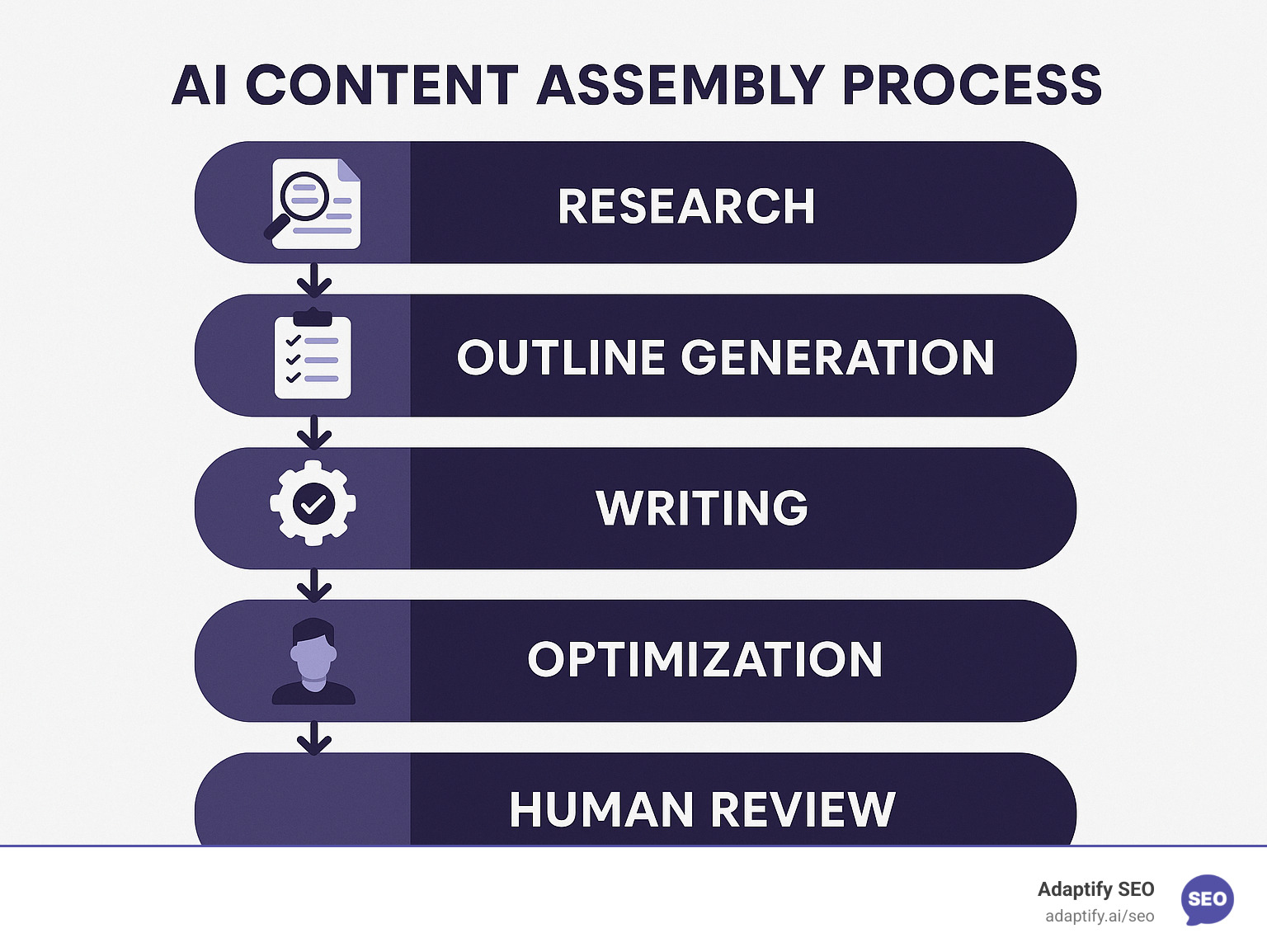
The most sophisticated systems handle comprehensive content briefs including target word counts, specific questions to answer, and optimal content formats. SERP analysis happens automatically, semantic keyword integration uses NLP analysis, and the AI optimizes structure, generates meta tags, and suggests internal links.
Quality guardrails are essential. Google's E-E-A-T guidelines haven't disappeared, and neither should your standards.
Fact-checking protocols must be built into workflows. AI can hallucinate statistics or reference outdated information. Citation requirements should automatically flag claims needing sources. Brand voice enforcement requires training AI models on existing content or detailed style guides.
Human editorial review remains your final checkpoint. Think of AI as your efficient first draft writer, not your final publisher.
The real magic happens when content automation creates feedback loops that continuously improve performance.
Heat-map feedback shows exactly how users interact with automated content. Automated A/B testing of titles and meta descriptions runs continuously, implementing highest-performing versions. Image compression and optimization happens seamlessly during creation.
These loops mean automated content gets better over time, learning from real performance data to improve both user engagement and search rankings.
Technical SEO is where automation truly shines. Manually checking every page for technical issues is practically impossible at scale, but automated SEO strategies work tirelessly in the background.
Tools like Screaming Frog, Google Lighthouse, and specialized monitoring platforms crawl sites 24/7, catching broken links, duplicate content, Core Web Vitals issues, and schema markup problems before they tank rankings.
Modern automation doesn't just find problems—it provides smart prioritization, highlighting critical issues needing immediate attention while separating "fix when convenient" optimizations.
Traditional SEO audits happen quarterly if you're lucky. Automated continuous auditing monitors sites 24/7, catching problems the moment they appear.
Broken link detection runs daily, often suggesting replacement URLs to preserve link equity. Duplicate content monitoring prevents cannibalization issues before they damage rankings. Indexability checks immediately alert you if critical pages get accidentally blocked from search engines.
Status code monitoring tracks HTTP responses across entire sites, detecting patterns like server issues before problems spread.
Advanced automation systems don't just identify problems—they fix them automatically.
Bulk redirect management automatically implements 301 redirects when pages move, preserving link equity without manual intervention. XML sitemap regeneration happens automatically with new content or structure changes.
Internal linking optimization might be the most impressive automated fix. The system analyzes content semantically and automatically adds relevant internal links, understanding site architecture and content relationships better than manual tracking could manage.
These automated fixes handle routine maintenance that often gets forgotten, keeping your technical foundation strong while your team focuses on strategy and growth.
Keeping tabs on competitors and tracking rankings used to mean days buried in spreadsheets. Automated SEO strategies have transformed this into 24/7 surveillance systems that never sleep.
Modern rank tracking tools monitor SERP features, track local variations, and compare mobile versus desktop performance automatically. The real magic happens when you connect these through APIs to create comprehensive dashboards pulling data from multiple sources at once.
Agencies cut monthly reporting time from a full day per client down to 30 minutes while delivering more insightful data.
Automated monitoring systems work around the clock, tracking every competitor move and alerting you to opportunities before they slip away.
Backlink gap analysis continuously scans when competitors gain new backlinks, immediately flagging potential opportunities. Content update tracking keeps you informed every time competitors publish new articles or restructure sites.
SERP feature monitoring catches changes when competitors gain or lose featured snippets, providing optimization opportunities within hours rather than weeks.
Executive reporting translates complex SEO data into clear business insights. Automated dashboards excel at connecting SEO metrics to actual business outcomes.
Organic traffic trends become meaningful when tied to revenue attribution. Share of voice tracking shows competitive positioning across your target market. Conversion rate optimization data proves SEO drives real business results, not just vanity metrics.
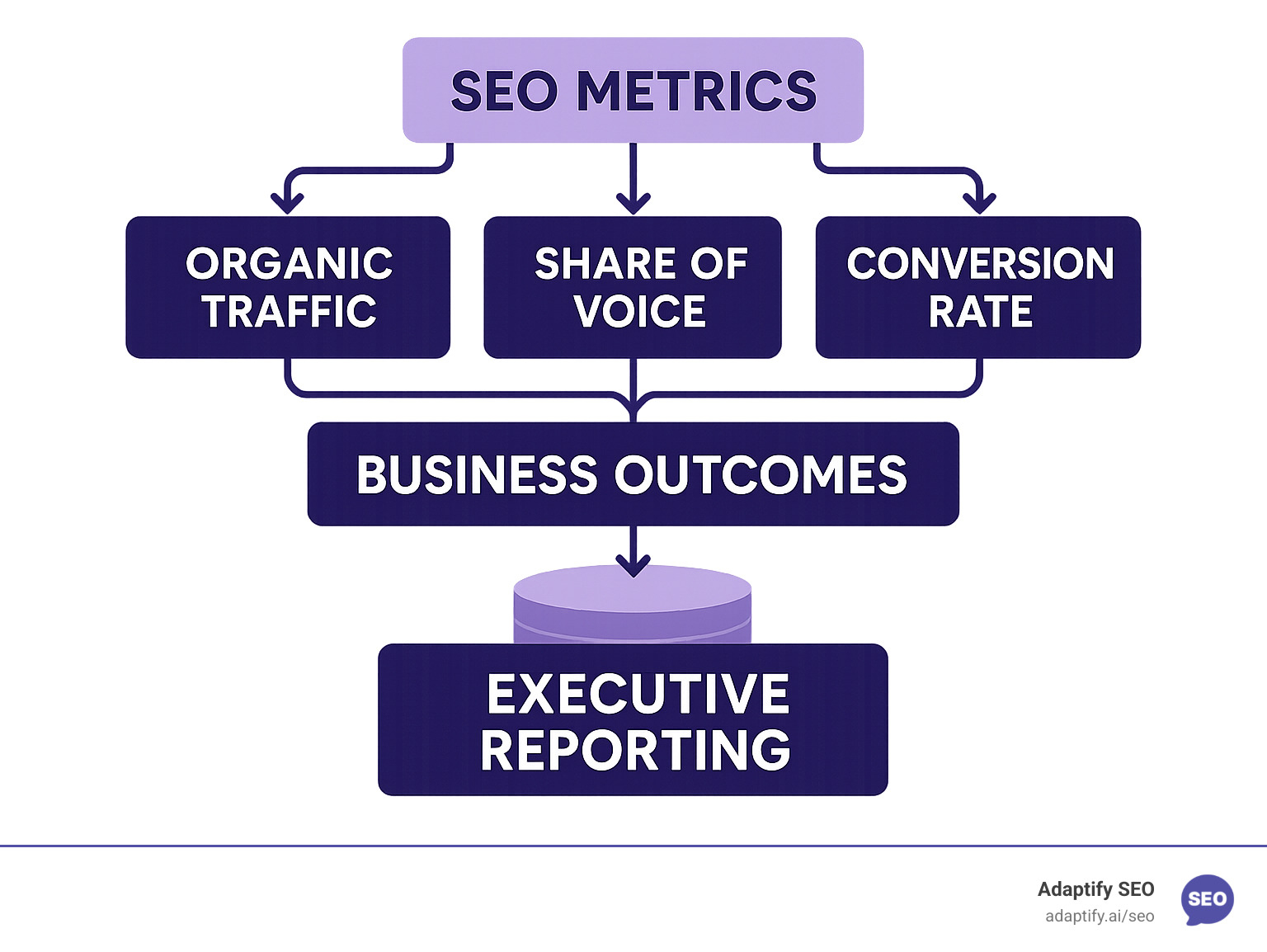
Automated dashboards update in real-time and can be scheduled for stakeholder delivery, freeing you to focus on strategic insights that move the business forward.
Automated SEO strategies aren't magic, and they're definitely not foolproof. The biggest mistake agencies make is treating automation as a silver bullet rather than a powerful tool needing careful handling.
Over-automation can create generic content that technically hits SEO checkboxes but fails to connect with humans. AI hallucinations are real—I've seen tools confidently state false "facts," create fake statistics, and invent expert quotes. Data privacy concerns multiply when connecting multiple tools through APIs.
Smart automation positions humans at strategic checkpoints where judgment matters most.
Content review should never be skipped. Use a three-layer approach: automated generation, human fact-checking and brand alignment review, then final editorial polish. Strategy decisions must stay human—while automation surfaces opportunities, deciding which align with business goals requires human insight.
Quality control checkpoints should be built into every workflow. Set up alerts when systems detect unusual patterns or content falling outside quality parameters. Ethical oversight ensures automated systems don't create misleading content or prioritize rankings over user value.
A two-person marketing team transformed their operation using smart automation, going from 4-5 monthly blog posts to consistently delivering 20 high-quality pieces. Their organic traffic jumped 150% in six months while engagement metrics improved because content still felt authentically human.
Another agency achieved 90% cost savings on content production, reducing per-article costs from $99 to $10 without sacrificing quality that keeps clients happy.
The pattern across all wins? Automation handles repetitive, data-heavy tasks while humans focus on strategy, creativity, and relationship building—the things that differentiate great SEO work from mediocre optimization.
Jumping into automated SEO strategies doesn't require learning rocket science. The secret? Start small, build confidence, then expand.
The most successful implementations follow a simple principle: automate the boring stuff first. Those repetitive tasks that make you want to pull your hair out—rank tracking, site audits, reports that eat up Friday afternoons.
Goal mapping becomes your North Star. Assess where your team spends the most time on mind-numbing tasks. Your tool stack doesn't need to be fancy—it needs integration. Three tools that communicate beat ten disconnected platforms.
Week 1: Lay solid groundwork without disrupting current operations. Set up automated rank tracking for critical keywords and implement basic site monitoring for technical issues. Create your first automated report template using Google Data Studio.
Week 2: Start seeing real efficiency gains. Automate keyword research workflows using AI-powered tools processing thousands of keywords in minutes. Set up automated alerts for ranking changes and begin creating automated content briefs analyzing top-ranking pages.
Week 3: Scale successful processes. Expand into content optimization automation suggesting meta tags and internal links. Implement bulk technical SEO monitoring and automated backlink monitoring for competitive intelligence.
Week 4: Focus on refinement. Review automation performance data and refine workflows based on real results. Train your team on new processes and plan next expansion phases.
Tool sprawl is automation's biggest enemy. Focus on building connected workflows rather than accumulating individual tools. Three integrated tools outperform ten disconnected ones.
Poor data quality undermines everything. Before automating, ensure Google Search Console is properly set up, Analytics tracking is accurate, and baseline data is clean.
Lack of ownership kills more automation projects than technical problems. Assign specific team members to own each automated process—automation shepherds, not engineers.
The measurement framework you establish determines success. Track time saved, error reduction, and output quality—not just automated process existence.
Anyone promising completely hands-off SEO is setting you up for disappointment. Think of automated SEO strategies like having a smart assistant who never sleeps—they handle tedious tasks but you still make big decisions and ensure quality.
The sweet spot: automation handles 70-80% of routine tasks while humans focus on strategy, brand voice, and creative problem-solving. The real value isn't eliminating human involvement—it's eliminating boring stuff so teams can focus on work that moves the needle.
Think tool costs versus manual labor replaced. Most successful agencies allocate 10-15% of total SEO budget to automation tools, covering rank tracking, content optimization, technical monitoring, and reporting.
Start small and prove ROI before going all-in. The key metric isn't cost per tool, but cost per result achieved. If automation helps you publish 20 articles monthly instead of 5, the math works quickly.
Google doesn't have an "automation detector." They care about user value and content quality, not creation method. Risks come from poorly implemented automation—systems churning out generic content or over-optimizing without testing.
The bottom line: automation amplifies your existing approach. Focus on user value with human oversight, and automation helps you do it better and faster.
While some agencies drown in manual processes, others use automated SEO strategies to publish 20 high-quality articles monthly with just two team members. The difference isn't talent—it's systems.
Automated SEO strategies work best amplifying human creativity rather than replacing it. The most successful agencies eliminate grunt work—endless keyword clustering, weekly technical audits, monthly report compilation—so teams can focus on strategic thinking that moves the needle.
Teams implementing smart automation see 90% cost savings on content production and 300-400% increases in output without sacrificing quality. But the real win? Relief when team members no longer spend weekends on client reports, excitement when they can focus on creative strategy instead of checking broken links.
The agencies thriving today aren't necessarily those with biggest teams or fanciest offices. They're the ones who figured out how to scale efficiently while maintaining the human touch clients care about. They use AI for repetitive tasks and save human expertise for strategy, relationships, and creative problem-solving.
Your competitors are already implementing these systems. The question isn't whether automation will transform SEO—it already has. The question is whether you'll lead the change or scramble to catch up.
Ready to see how automated SEO strategies can transform your agency's operations? Book a Demo and find how Adaptify.ai can help you implement intelligent automation that delivers real results while freeing your team to focus on what humans do best—building relationships and driving strategic growth.

Compare automated SEO vs manual SEO to build a hybrid workflow that scales rankings with human oversight in 2026.

Master SEO service differentiation to stand out in a crowded market and prove your agency's unique business-first value.
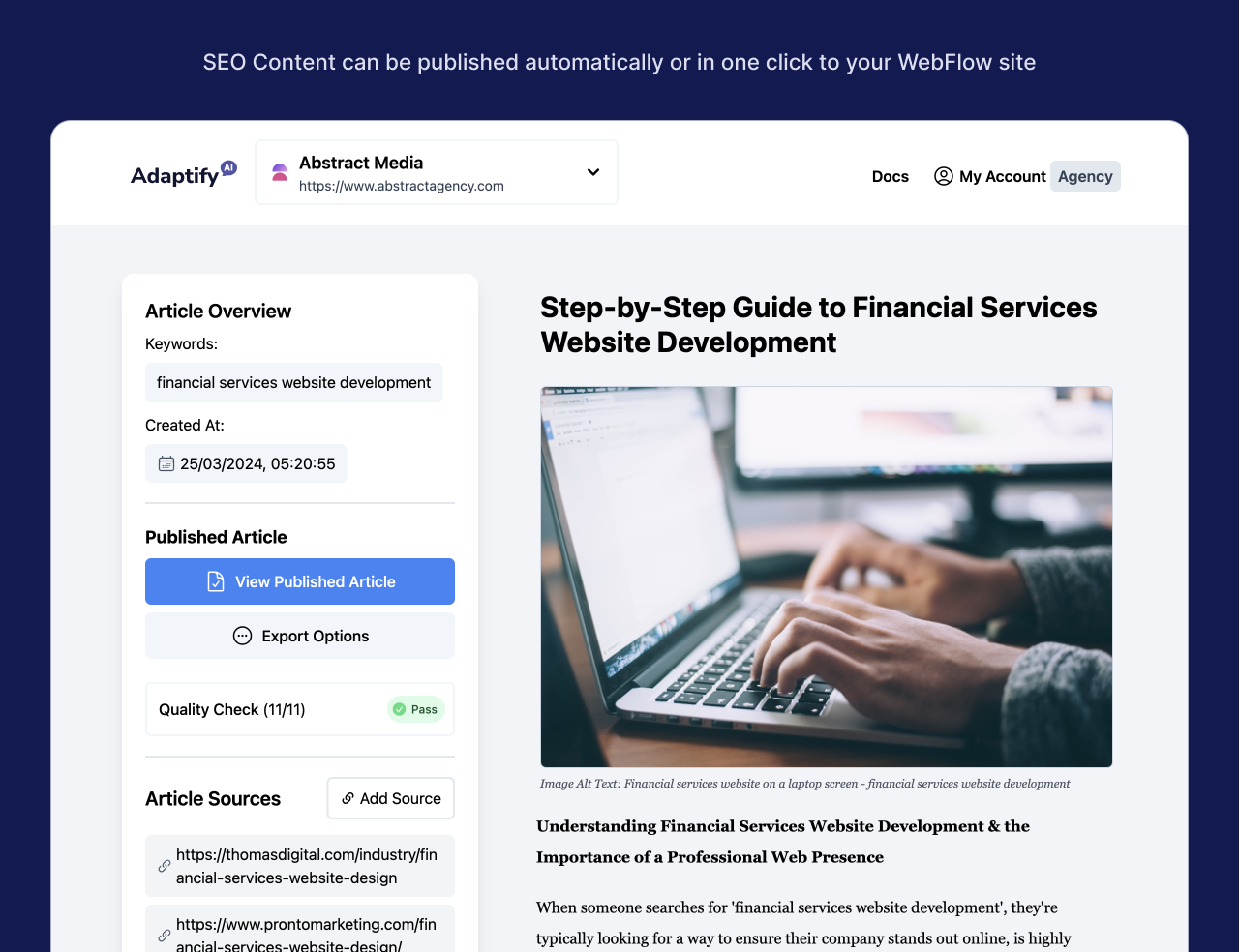
Stop wasting hours—automate your SEO reports to boost agency efficiency and client trust.
Join 1,000+ agencies already delivering SEO and AI visibility from a single platform without increasing their headcount.Join 1,000+ agencies already delivering SEO and AI visibility from a single platform without increasing their headcount.