Stop Paying for Data with These Backlink Analysis Free Tools



The best backlink analysis free tools available right now include:
| Tool | Free Limit | Key Metric |
|---|---|---|
| Moz Link Explorer | 10 queries/month | Domain Authority, Spam Score |
| Semrush Backlink Checker | Limited daily checks | Authority Score |
| Ahrefs Backlink Checker | 1 report/domain | Domain Rating (DR) |
| Majestic (free tier) | Limited lookups | Trust Flow, Citation Flow |
| SEO Review Tools | 100 backlinks/domain | Domain Authority |
Backlinks are one of the most important signals Google uses to rank websites. In fact, Google's own Search Quality Senior Strategist Andrey Lipattsev confirmed that "content and links going into your site are the two most important ranking factors." That quote is years old — but it still holds up.
Here's the problem most agency owners run into: backlink data is expensive. Premium tools can cost hundreds of dollars a month. That's a hard sell when you're managing SEO for multiple clients and trying to keep margins healthy.
The good news? You don't always need to pay. There are genuinely useful free tools out there — tools backed by databases of tens of trillions of links — that can give you real, actionable data without the subscription cost.
I'm Hansjan Kamerling, a product designer and marketing consultant who has scaled SaaS platforms and SEO systems for clients ranging from fintech startups to platforms with 40,000+ users — and backlink analysis free tools have been a core part of keeping those workflows lean and efficient. In the sections below, I'll break down exactly which tools are worth your time and how to get the most out of them.
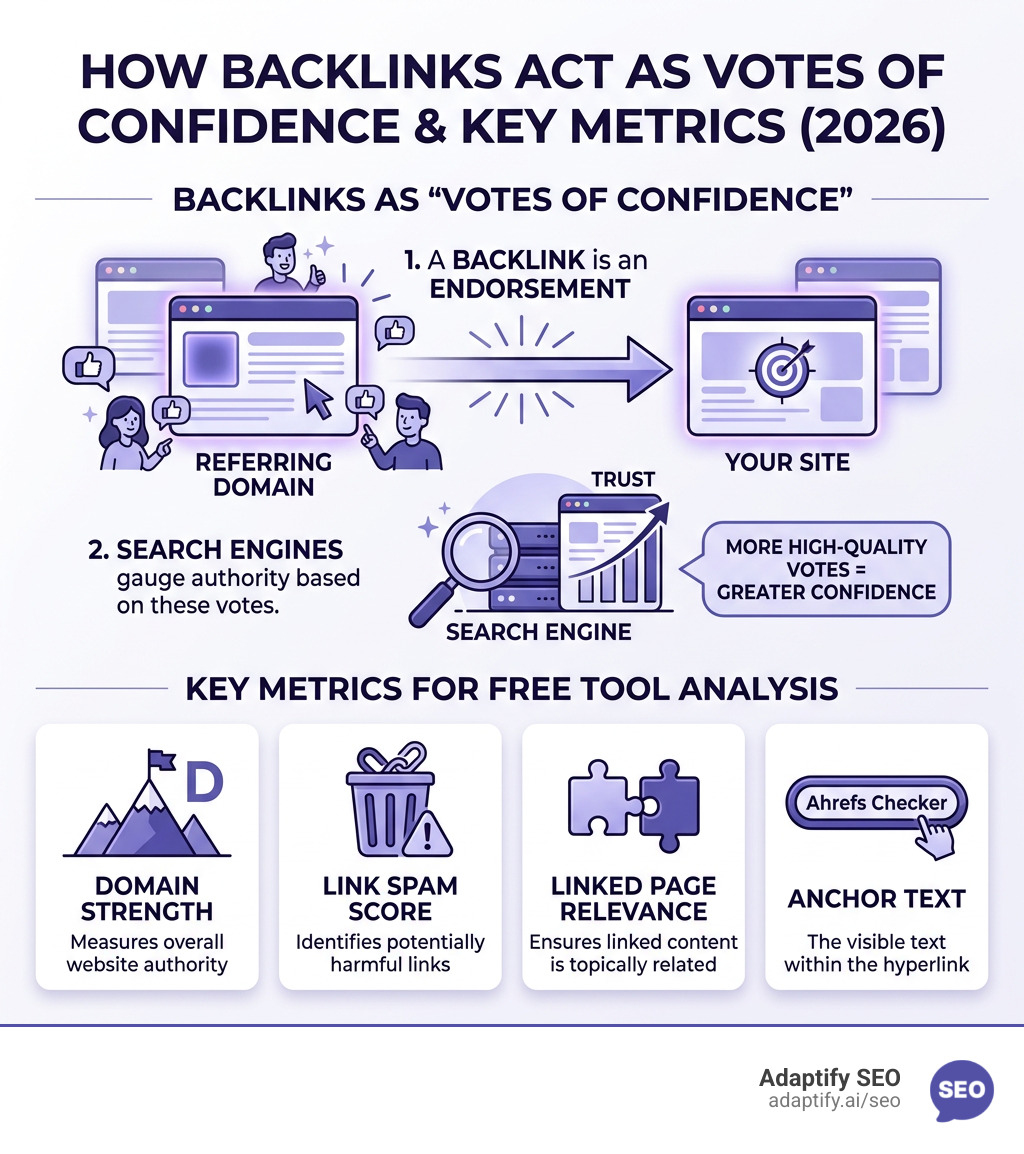
Before we dive into the software, we need to understand what we are actually looking at. Not all links are created equal. According to the Official Google Webmaster Central Blog, the quality of links pointing to your site is what truly results in the overall authority of your domain.
When I perform an audit, I don't just look at the total number of links. I look at the "votes of confidence" from other reputable sources. To do this effectively, you need to understand the following metrics:
Most backlink analysis free tools use a combination of these metrics to give you an "Authority Score." This score is generated by advanced algorithms that filter out duplicate or spammy links to provide a realistic view of a site's power.
When you look at a backlink profile, you’re also looking at "Link Juice"—the equity passed from one page to another. If a high-authority page links to you, it transfers a portion of its authority. This is why a single link from a site like the New York Times can be worth more than thousands of links from unknown blogs.
Furthermore, search engines look at IP diversity. If all your backlinks come from the same C-class IP address, it looks like you own all those sites and are trying to manipulate the system. A healthy profile has links from diverse IPs and locations.
One thing I've learned is that where the link sits on the page matters. Google values links placed within the main body content much more than links hidden in footers or sidebars. Contextual links are the gold standard for SEO.
Now, let's look at the heavy hitters. The "big three" in SEO - Semrush, Ahrefs, and Moz - all offer free versions of their backlink checkers. While they want you to upgrade, their free tiers are surprisingly robust.
Semrush is an absolute beast. Their backlink database is currently the largest in the industry, containing 43 trillion links from 390 million domains. Their web crawler is constantly scanning billions of pages to keep this data fresh. Even on their free tier, you can get a high-level view of any domain's Authority Score and its top referring domains.
Ahrefs is equally legendary. Their free Backlink Checker allows you to see the top 100 backlinks to any website. It provides the Domain Rating (DR), the number of referring domains, and the estimated organic traffic of the linking site. This is invaluable for a quick "health check" of a competitor.
If you are looking for a tool that doesn't require a login for a quick scan, a lightweight free backlink checker can be useful for a fast preliminary audit. These tools typically surface metrics like Domain Authority and Spam Score within seconds, making them handy for quick reviews before a deeper analysis.
Moz's Link Explorer is perhaps the most famous tool in this category. With a free Moz Community account, you get 10 queries per month. While that sounds low, the data is incredibly high-quality. You get access to their proprietary Domain Authority (DA) and Spam Score metrics, which are industry standards for benchmarking.
Majestic takes a different approach. They focus heavily on the "flow" of links. Their free tier gives you a glimpse into Trust Flow and Citation Flow. For developers or agencies looking to build their own internal tools, Majestic also offers developer documentation and connectors to integrate their dataset via API.
The real magic of backlink analysis free tools isn't just checking your own site - it's analyzing your competitors. If a competitor is outranking you, they likely have links you don't.
By using these free tools to perform a "Competitor Audit," you can identify exactly where their "votes" are coming from. Are they getting featured in industry list posts? Do they have links from high-authority resource pages?
One of my favorite strategies is Broken Link Building. You can use a free tool to find pages on a competitor's site that no longer exist (404 errors) but still have backlinks pointing to them. You then reach out to the site owner, tell them they have a broken link, and suggest your own better content as a replacement. It's a win-win.
Another tactic is Lost Link Recovery. Use free backlink analysis tools to see which links your own site has recently lost. Sometimes a page update accidentally removes a link, and a quick, friendly email can get it restored.
| Tool Feature | Benefit for Link Building |
|---|---|
| Link Intersect | Finds sites linking to multiple competitors but not you |
| Anchor Text Analysis | Shows which keywords competitors are targeting |
| Top Pages | Identifies which content types attract the most links |
| New/Lost Links | Helps you stay on top of your link growth velocity |
Free tools are great, but they do have ceilings. Usually, this manifests as a limit on the number of rows you can see (e.g., only the top 100 links) or the number of reports you can run per day.
To overcome this, I recommend data triangulation. Don't rely on just one tool. Check a domain in Moz for the Spam Score, then check it in Ahrefs for the DR, and use Semrush for the total link count. By combining these snippets of data, you can build a comprehensive picture without spending a dime.
For most small to medium sites, a monthly check is sufficient. However, if you are actively running a link-building campaign or are in a highly competitive niche, a weekly check is better to monitor your "link growth velocity" and catch any toxic links early.
The biggest limitations are data depth and query volume. Free tools might only show you the top 100 links out of 10,000. They also lack advanced features like historical data (seeing links from 5 years ago) and bulk analysis of thousands of URLs at once.
Yes. Tools like Moz and SEO Review Tools provide a "Spam Score." If you see links coming from sites with a high spam score or irrelevant niches (e.g., a gambling site linking to your dental blog), you should investigate. While you can't "remove" them yourself, you can reach out to the webmaster or use the Google Disavow tool as a last resort.
Mastering backlink analysis free tools is a game-changer for anyone serious about SEO but conscious of their budget. By understanding metrics like Domain Authority and Trust Flow, and strategically spying on your competitors, you can build a high-authority site that ranks.
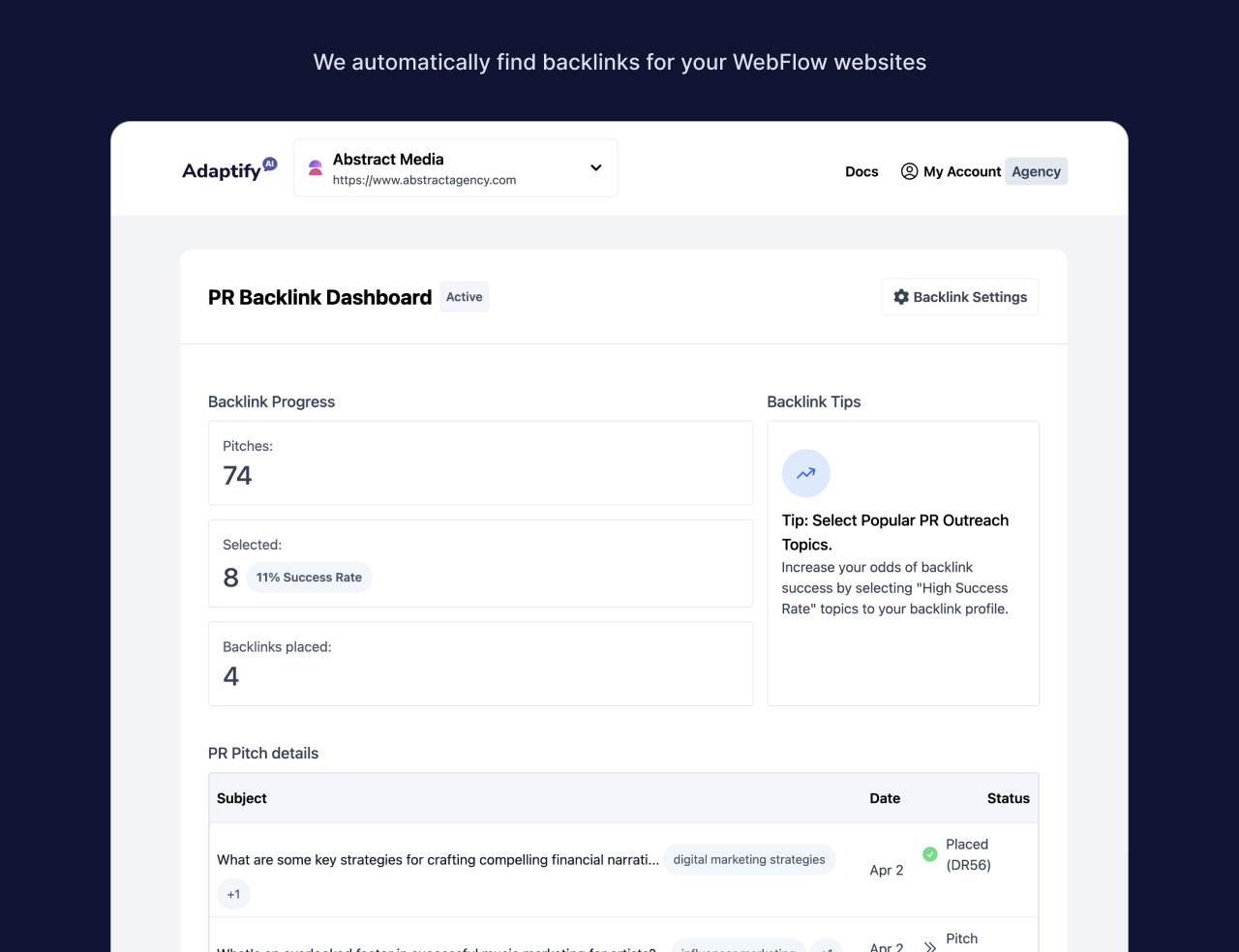
However, as you scale, the manual effort of checking multiple tools and triangulating data can become a bottleneck. This is where Adaptify.ai comes in. We offer automated SEO services designed specifically to help agencies scale. We streamline the entire process—from strategy formulation and content creation to high-quality PR link building—using advanced AI.
Our goal is to provide a comprehensive, automated solution that reduces your manual effort while enhancing your efficiency. If you're ready to stop chasing data and start building authority, start building your authority with Adaptify SEO today. Let us handle the technical heavy lifting so you can focus on growing your business.
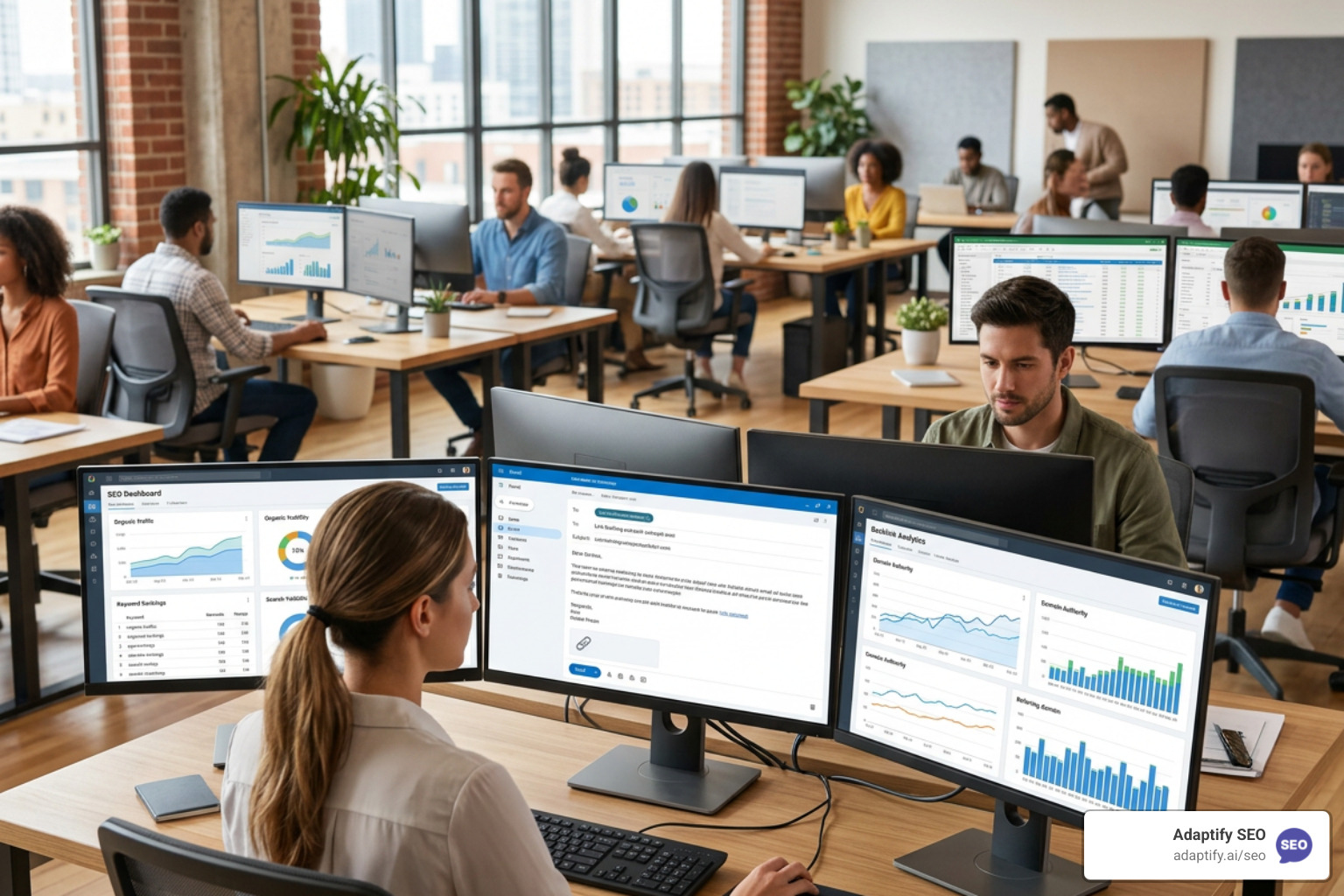
Discover how backlink automation software streamlines outreach, saves time, and scales your SEO strategy safely and effectively.
Track every backlink with an SEO backlink monitor—spot lost links fast, protect rankings, and boost ROI before competitors do.
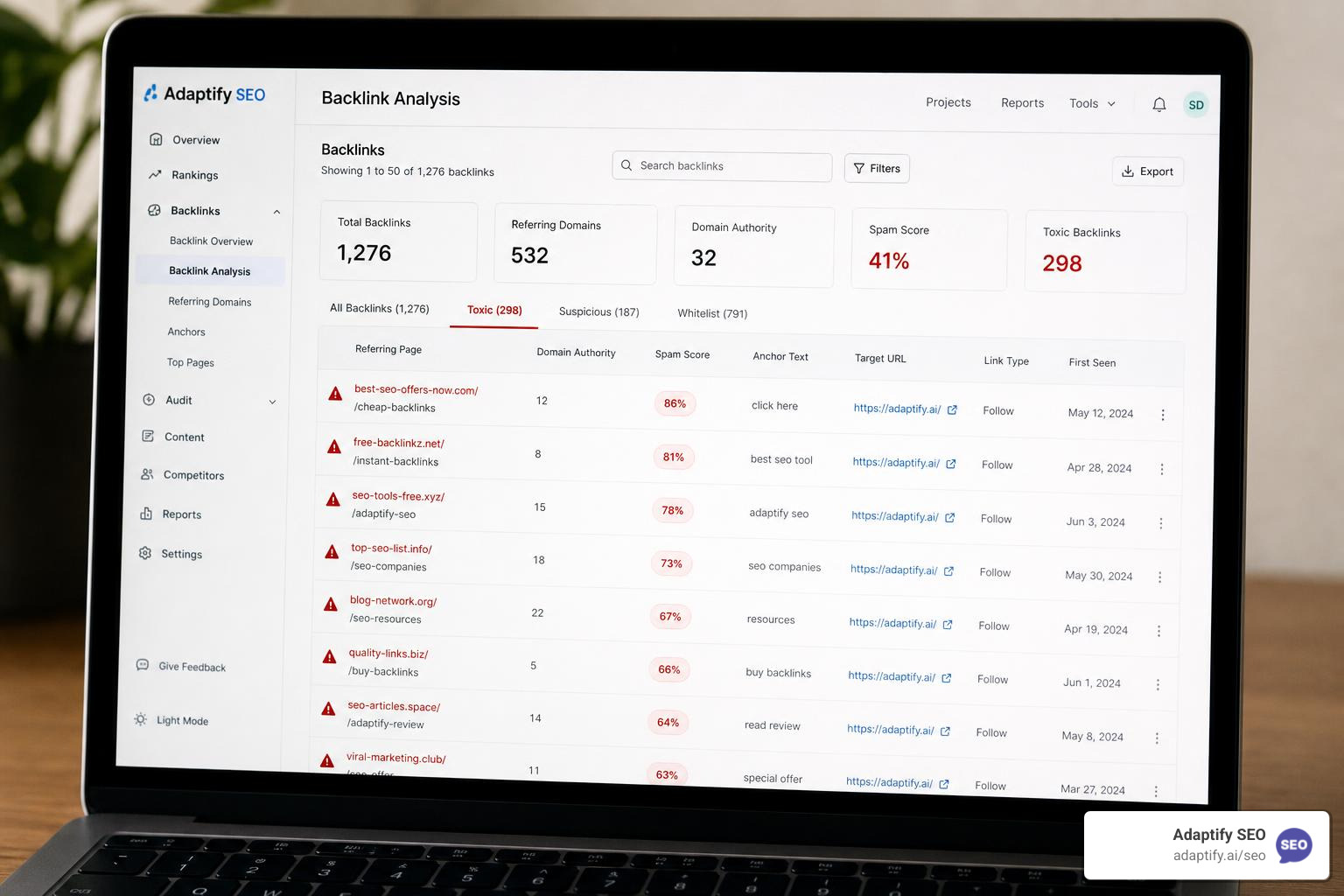
Learn how to disavow toxic backlinks, clean your profile, and recover rankings with this step-by-step guide.
Join 1,000+ agencies already delivering SEO and AI visibility from a single platform without increasing their headcount.Join 1,000+ agencies already delivering SEO and AI visibility from a single platform without increasing their headcount.