Supercharge Your Affiliate Site: The Ultimate Guide to Link Building




Link building for affiliate sites is the factor that separates thriving affiliate businesses from those stuck on page three of Google. Here's what you need to know:
Quick Answer: Essential Link Building Strategies for Affiliate Sites
rel="sponsored" tags and FTC disclosures to avoid penalties.Google views affiliate content with skepticism because it's commercial and competitive. Without high-authority backlinks vouching for your content, you're fighting an uphill battle. Research shows that affiliate content with zero backlinks is 10x more likely to stay stuck beyond page 2.
Backlinks are trust signals Google can't ignore. While you can automate content and optimize on-page SEO, backlinks remain the external validation that tells search engines your site deserves to rank.
I'm Hansjan Kamerling, and I've spent years helping companies scale through strategic SEO. The techniques I've used to grow businesses to millions of users directly apply to link building for affiliate sites, mastering the art of earning high-quality backlinks that drive real results.
Backlinks are the difference between ranking on page one and getting lost in the digital void. They are votes of confidence from other websites. When a reputable site links to your content, they're telling Google, "This is worth paying attention to." This was the foundation of Google's PageRank algorithm, and it still matters today. A study by Moz shows a direct relationship between quality backlinks and Google search rankings, a relationship that is especially critical for affiliate sites.
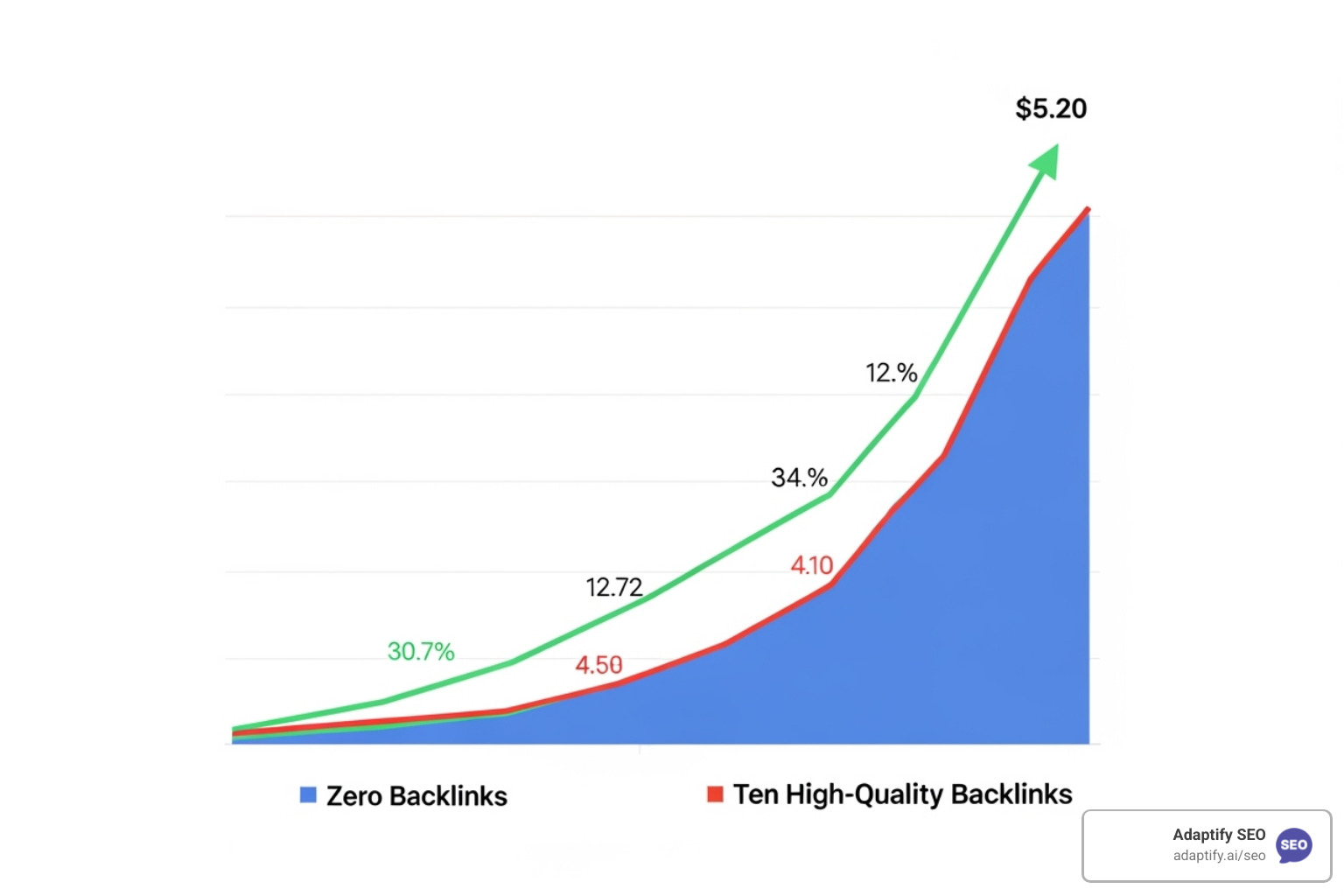
Affiliate content faces an uphill battle. Google knows you're trying to make money, so without external validation, your content is treated with skepticism. High-quality backlinks are the trust signals that separate legitimate resources from glorified sales pitches.
Better rankings mean more visibility, clicks, and conversions. A strong backlink profile can transform a struggling affiliate site into a consistent traffic generator. Backlinks are also a long-term asset. Unlike paid ads, they continue sending authority signals month after month, building your domain's resilience against algorithm updates. This is why 91% of affiliate pages in the top three have at least one backlink from a DA 50+ domain.
If link building for affiliate sites were easy, everyone would do it. The biggest hurdle is that site owners are hesitant to link to commercial content. They worry about appearing too promotional or that your content doesn't add enough unique value.
Most affiliate content, like a standard product review, lacks inherent link-worthiness. You are building credibility from scratch in a space viewed with suspicion, so your strategy must be more creative and value-focused. You also have to differentiate your site from spam, as Google's crackdown on thin affiliate sites affects everyone. Backlinks are how you prove you're a genuine, valuable resource.
Google's E-E-A-T framework—Experience, Expertise, Authoritativeness, and Trustworthiness—is the lens through which your site is evaluated, especially after the March 2024 Core Update.
Backlinks are a core component of demonstrating Authority and Trustworthiness. When authoritative publications link to your content, they're vouching for you. This external validation supports each pillar of E-E-A-T:
This is even more critical in YMYL (Your Money or Your Life) niches. Why this is crucial for YMYL queries is obvious: Google holds sites dealing with financial or health products to a much higher standard. For these topics, demonstrating expertise via linked content isn't optional—it's essential for ranking.
Successful link building for affiliate sites isn't about shortcuts; it's about understanding what Google values and delivering it consistently. The foundation is link diversity. A natural backlink profile has links from different site types with varied anchor texts, acquired at a steady pace (link velocity). A sudden spike of 100 backlinks overnight looks suspicious to Google.
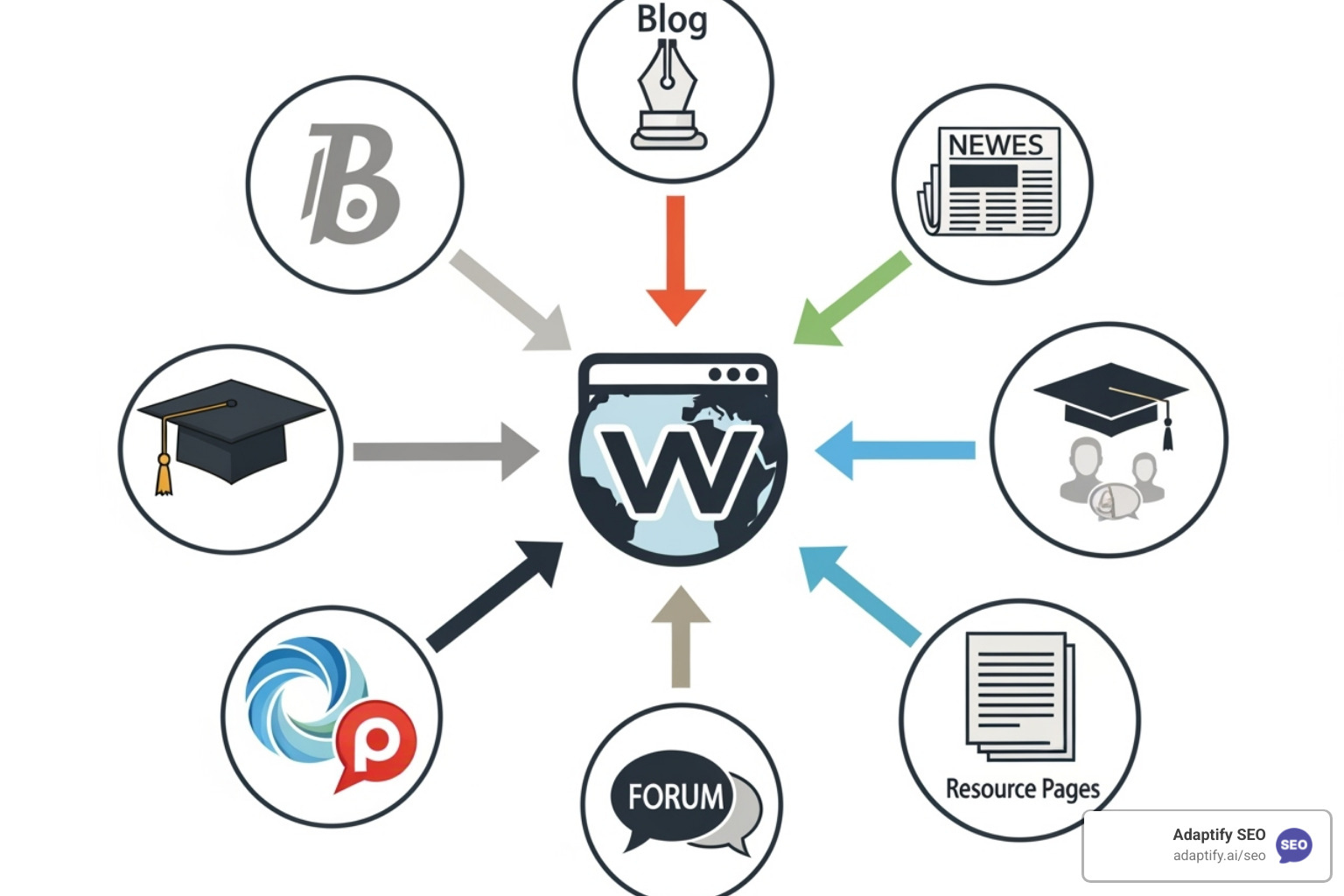
Stick to white-hat SEO. Gray-hat methods risk having years of work vanish in one algorithm update. Quality beats quantity every time. One solid link from a respected, relevant site is worth more than a hundred from sketchy directories. Your goal is a backlink profile that looks completely natural and trustworthy to Google. For agencies looking to scale these efforts, Adaptify offers comprehensive backlink services that build quality without sacrificing time.
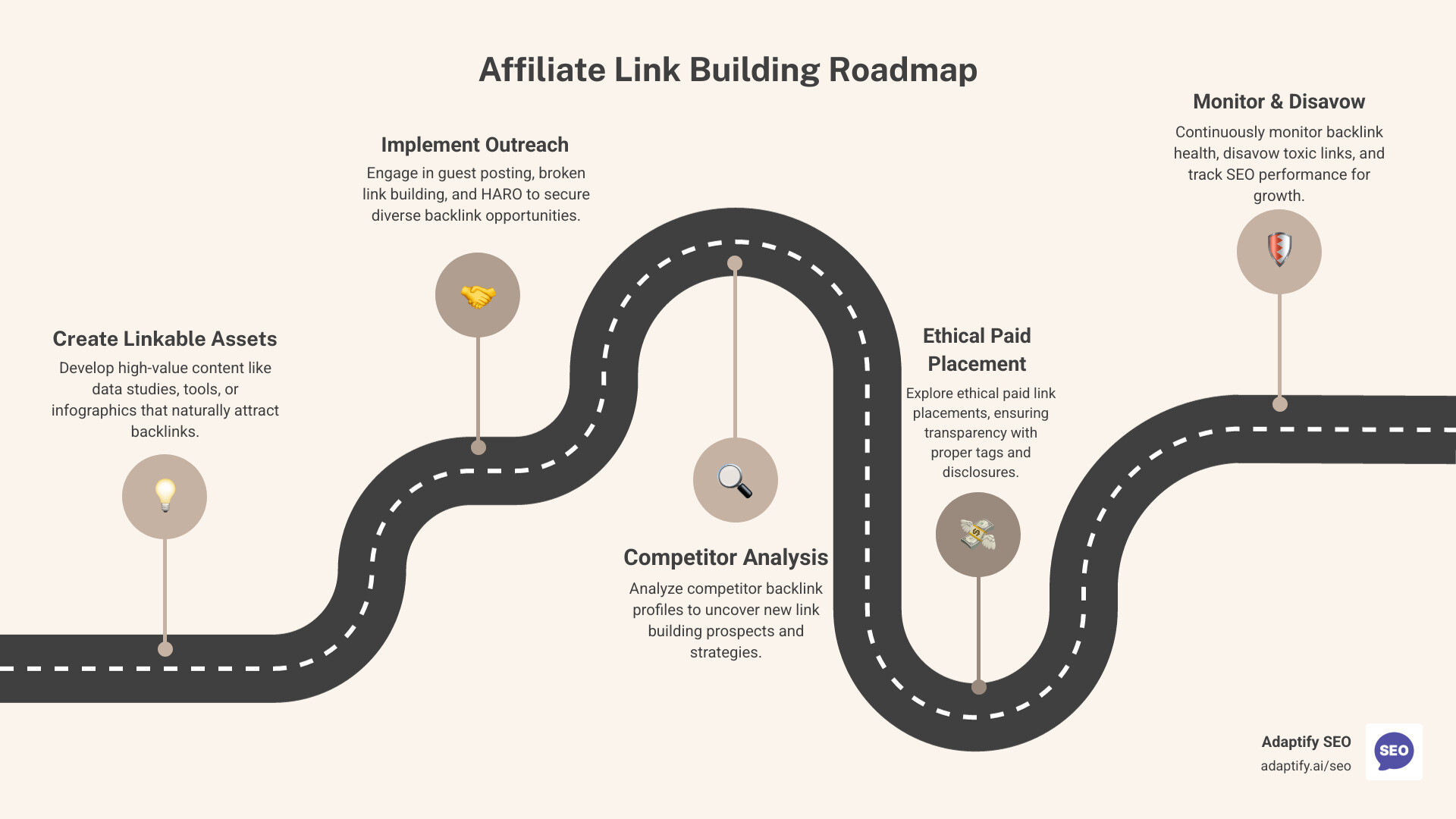
The best backlinks are the ones other sites want to give you. This only happens when you create exceptional content that provides real value.
Creating this level of content takes effort, but the ROI in backlinks and authority is worth it. For agencies, Adaptify's AI-powered content tools can help create stunning assets more efficiently.
Great content needs promotion. You must actively get it in front of the right people.
Most importantly, focus on building relationships, not just collecting links. Engage with industry leaders authentically. People link to people they know and trust.
Why guess what works when you can analyze what already is? Competitor backlink analysis provides a roadmap to success.
Use tools like Ahrefs or Semrush to analyze your top competitors' backlink profiles. Look for patterns in their top referring domains—are they getting guest posts on certain blogs or mentions in industry news? These patterns reveal opportunities you can pursue.
Once you know where competitors get links, your job is to replicate and improve. If a site linked to your competitor's article, create a more comprehensive version and reach out to those same sites, positioning your content as a better resource. This analysis also reveals content gaps where you can create a superior resource that attracts links.
Link building for affiliate sites is risky if you ignore Google's guidelines. Manipulative link schemes can lead to penalties that tank your traffic and revenue.
The biggest threat is toxic backlinks from sites you don't want to be associated with, such as link farms, PBNs (Private Blog Networks), and irrelevant directories. Google considers these manipulative, and the risk of penalties from such gray-hat techniques outweighs any short-term gains.
Violating Google's spam policies can lead to manual actions, which can severely reduce your search visibility or even de-index your site entirely. You can protect yourself by regularly auditing your backlink profile with tools like Ahrefs or Semrush. When you spot toxic links, use Google's Disavow Tool to tell Google to ignore them.
Organic links, earned naturally through exceptional content, are always the gold standard. They carry the most long-term value and signal authentic trust to Google.
However, paid links are a reality in SEO. If you consider them, you must understand the benefits and serious risks. Paid links can sometimes help jumpstart a new site's authority, but they must come from reputable, relevant, high-authority websites. Avoid cheap "link packages." Quality paid links from DA 60+ domains can cost $300-$800 each, but quality is what matters.
Crucially, paid links must be a tiny fraction of your overall backlink profile. The bulk of your links should be earned organically to maintain a natural-looking profile that won't attract Google's scrutiny.
Beyond Google, you have mandatory legal and ethical obligations regarding transparency.
The FTC disclosure requirements are non-negotiable. You must clear and conspicuously state that you may earn a commission from the products you recommend. Hiding this fact in fine print can lead to legal investigations, warnings, or fines.
Google's policy on tagging affiliate links is also explicit: all affiliate links should use the rel="sponsored" attribute. This tells Google the link is a paid placement and protects you from penalties. While rel="nofollow" is also acceptable, rel="sponsored" is more specific.
Finally, avoid "thin affiliation" penalties. This occurs when you publish content with affiliate links but add no original value, such as by copying product descriptions. Always add your unique insights and real-world experience to show you've actually used or tested the product. Ironically, transparency often builds more trust with your audience.
There's no magic number. Link building for affiliate sites is about quality and relevance, not quantity. A single backlink from a highly authoritative, relevant website is far more valuable than hundreds of spammy ones. The data shows 91% of top-ranking affiliate pages have at least one backlink from a DA 50+ domain.
Instead of a number, focus on competitor benchmarks. Analyze the sites ranking where you want to be to set a realistic target. Also, maintain a natural link velocity—a slow, steady acquisition of links over time looks more natural to Google than a sudden spike.
Yes, but with extreme caution. Buying links that pass PageRank violates Google's guidelines and can lead to severe penalties, including a total loss of rankings.
If you choose this route, you must minimize your risk:
rel="sponsored" attribute on any paid link to be transparent with Google.My honest recommendation? Invest that money in creating outstanding content instead. It's safer, more sustainable, and yields better long-term results.
While the fundamental principles are the same, the challenges and execution are very different.
The bottom line is that affiliate sites have to work harder, be more strategic, and provide significantly more value to earn the same quality of backlinks that might come naturally to an established brand.
If there's one thing to take away, it's this: link building for affiliate sites isn't an optional SEO tactic. It's the foundation that separates thriving affiliate businesses from those languishing in search obscurity.
We've covered why backlinks are your secret weapon for overcoming Google's skepticism, how they build E-E-A-T, and the proven strategies—from creating genuinely link-worthy content to proactive outreach and smart competitor analysis—that can transform your site's visibility.
Building a robust backlink profile is a marathon, not a sprint. There are no shortcuts. What works is patience, persistence, and a commitment to quality over quantity. Focus on creating content that helps people, build genuine relationships, and maintain transparency in your disclosures and link practices.
The investment you make today in a diversified, high-quality backlink profile is a long-term asset. It protects you from algorithm updates, builds sustainable organic traffic, and ultimately drives the affiliate revenue that makes the effort worthwhile.
For agencies looking to scale these processes without drowning in manual work, Adaptify.ai provides a comprehensive AI-powered solution that streamlines everything from content creation to strategic link building. We've built our platform to reduce the manual grind while maintaining the quality and ethical standards that move the needle. If you're curious about what's possible, explore our SEO case studies to see the real-world results our clients have achieved.
Now get out there and start building those links. Your future self will thank you.

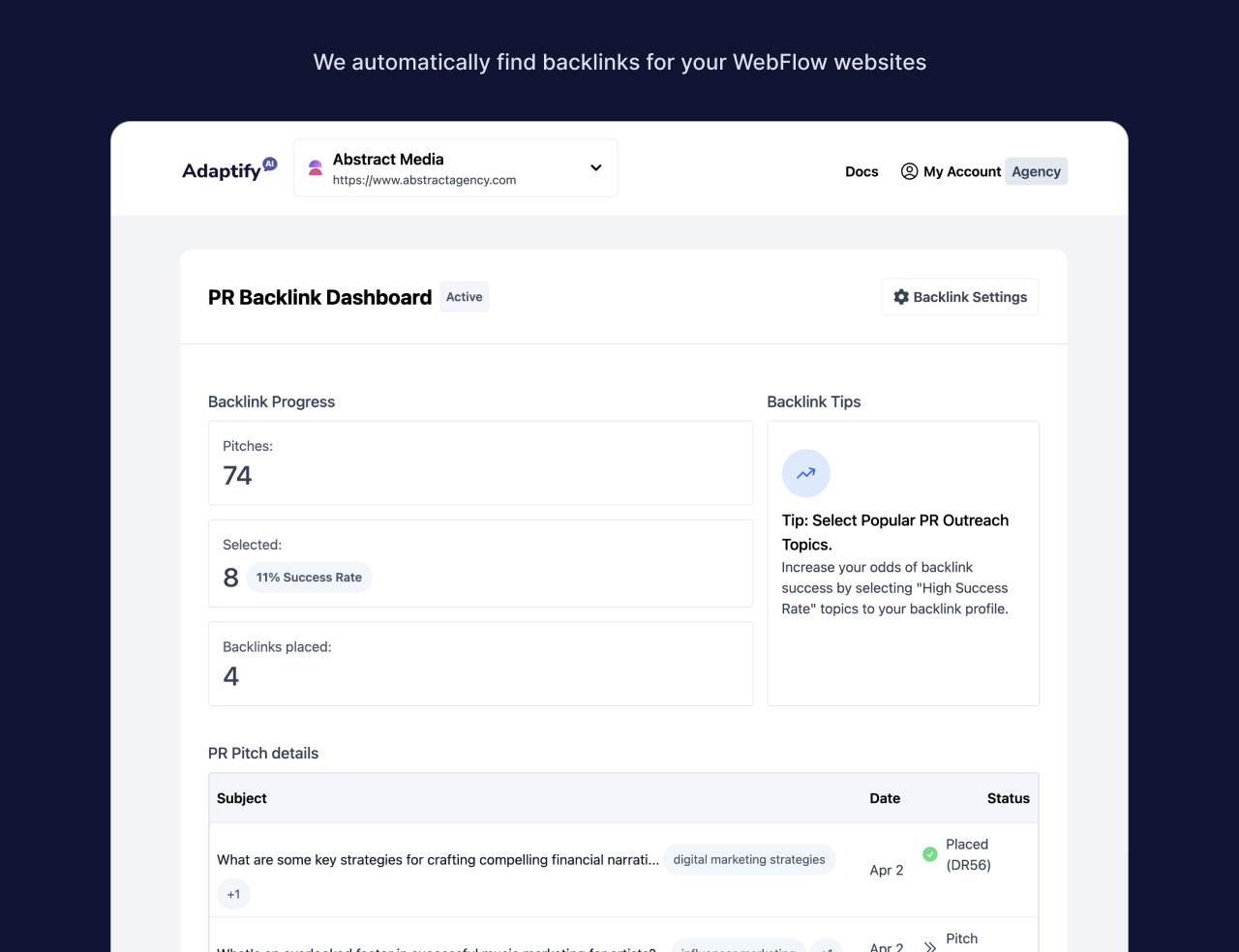
Discover how backlink automation software streamlines outreach, saves time, and scales your SEO strategy safely and effectively.
Track every backlink with an SEO backlink monitor—spot lost links fast, protect rankings, and boost ROI before competitors do.
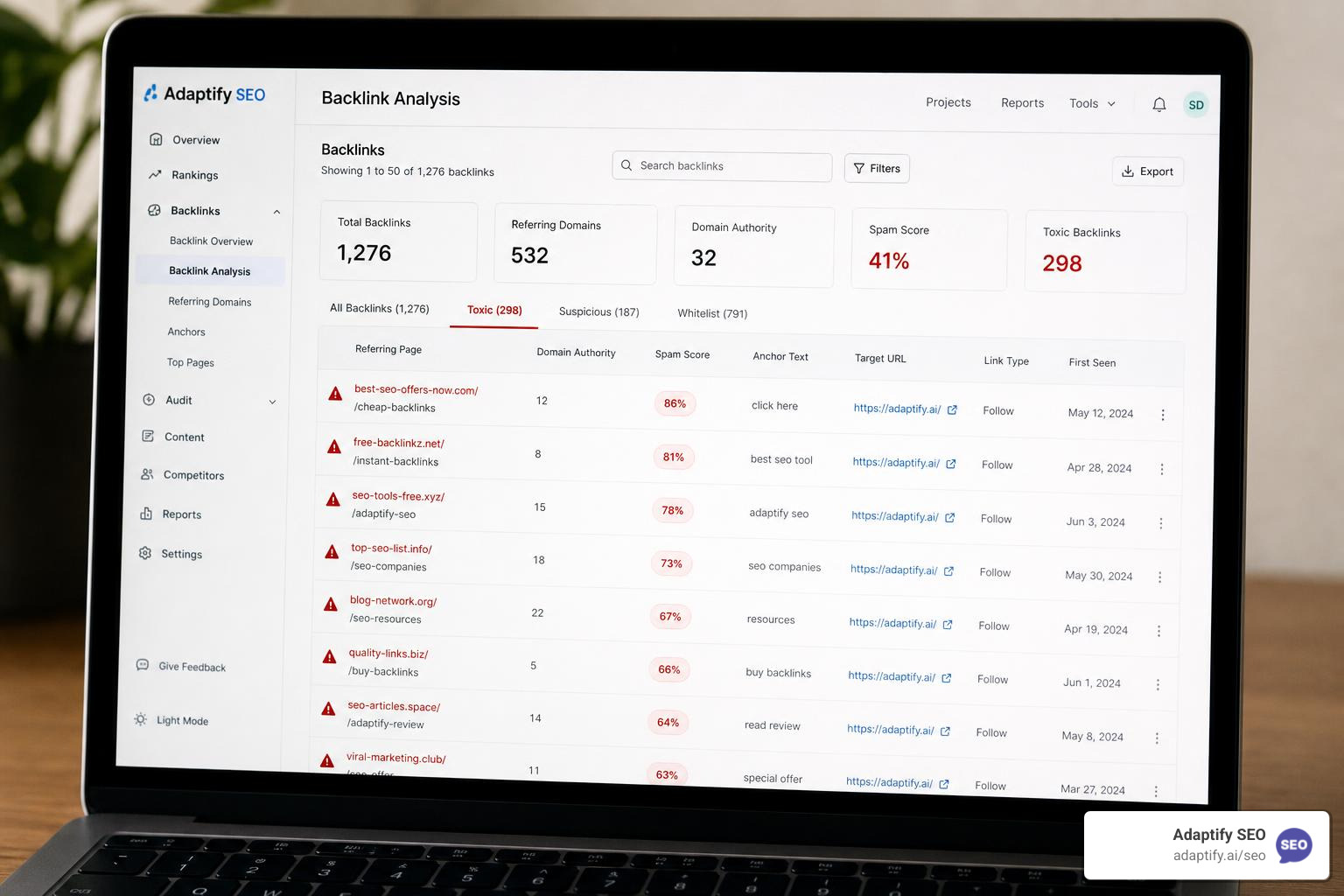
Learn how to disavow toxic backlinks, clean your profile, and recover rankings with this step-by-step guide.
Join 1,000+ agencies already delivering SEO and AI visibility from a single platform without increasing their headcount.Join 1,000+ agencies already delivering SEO and AI visibility from a single platform without increasing their headcount.