The 10K Challenge: A Foolproof Guide to Finishing Your First Race

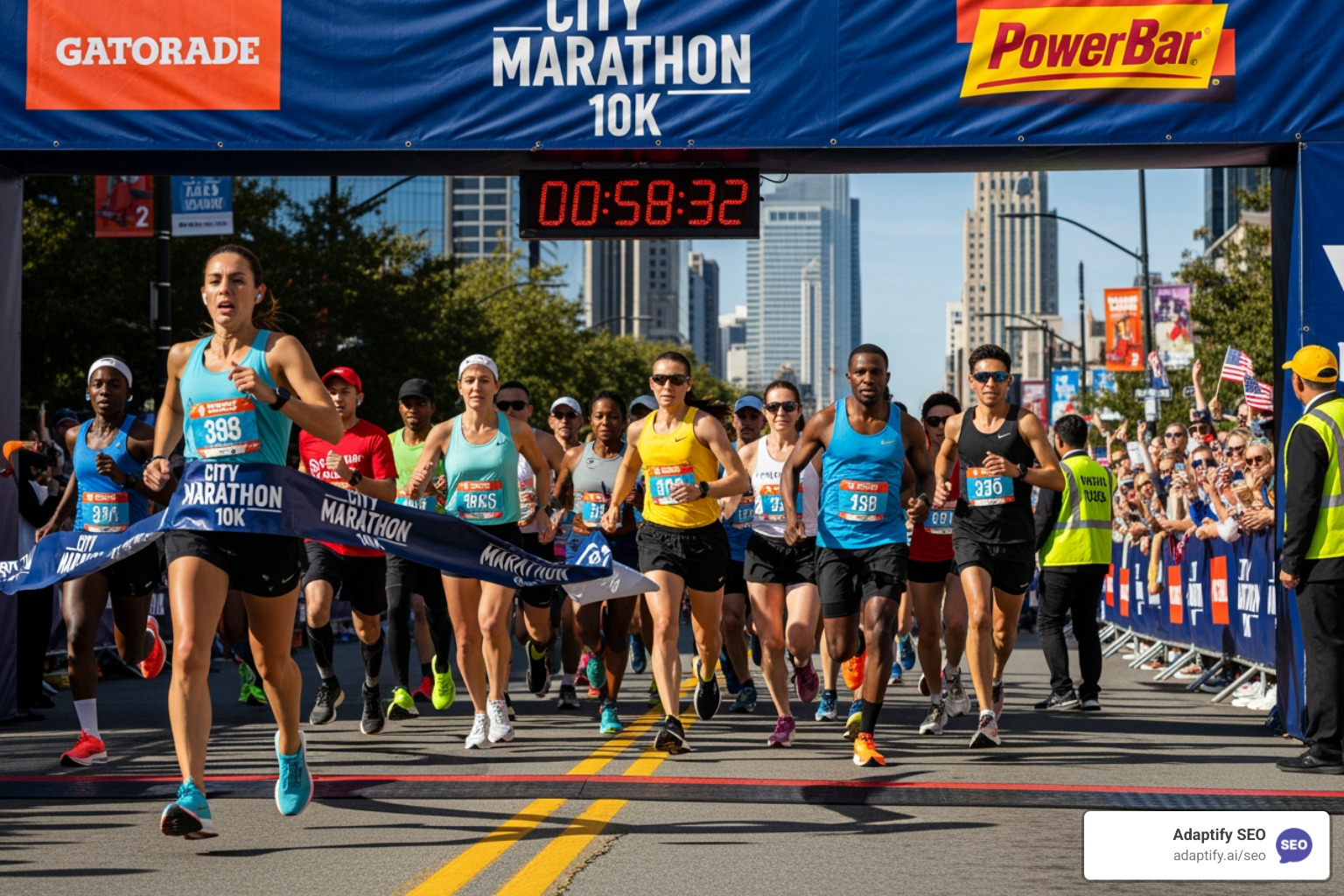

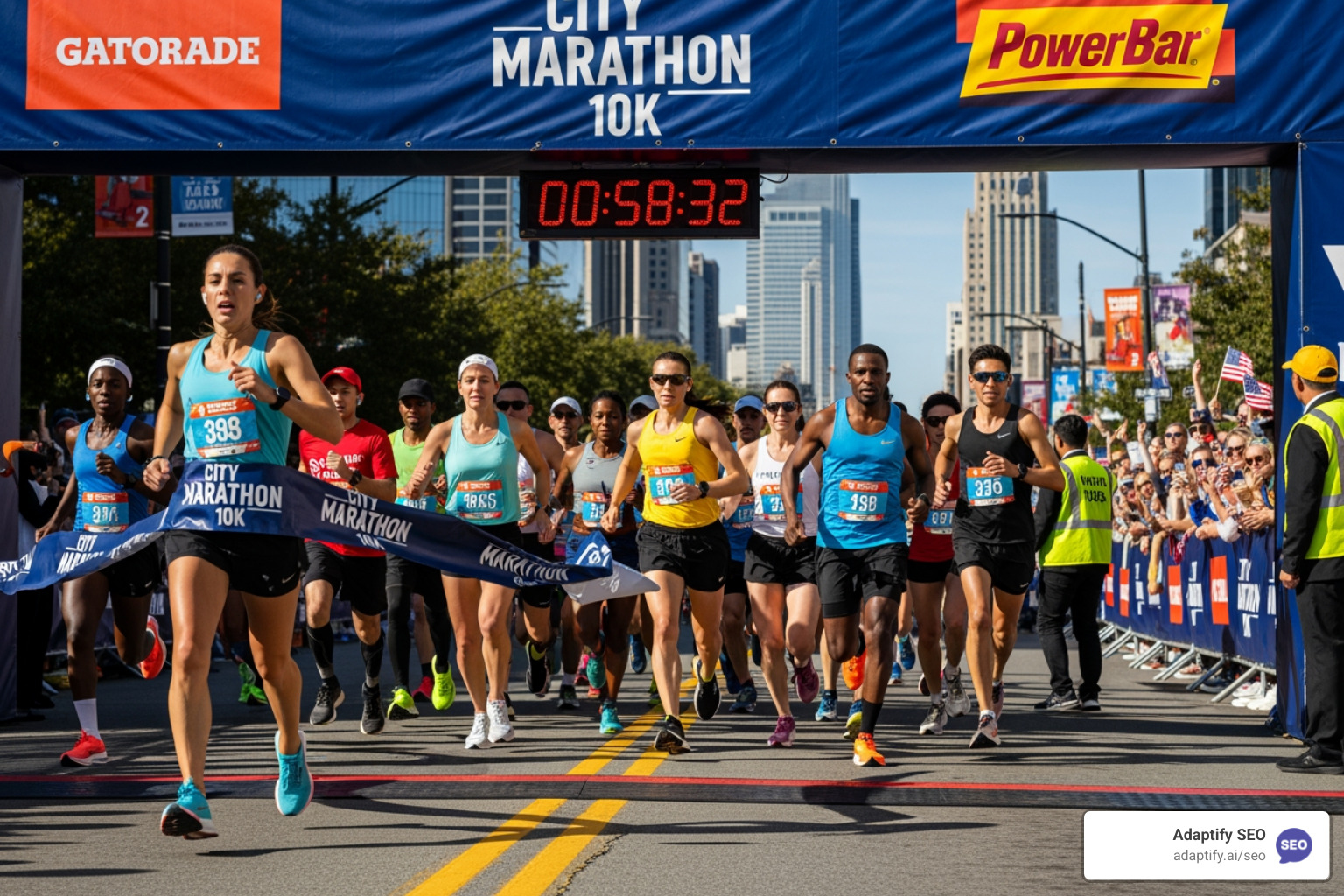
Zero to 10K is an achievable yet rewarding challenge for beginner runners. Unlike a marathon, a 10K race—6.2 miles—strikes the perfect balance between challenge and accessibility. Here's what you need to know:
| Key Facts | Details |
|---|---|
| Distance | 6.2 miles (10 kilometers or 25 laps around a standard track) |
| Training Time | 8 to 16 weeks depending on your starting fitness level |
| Beginner Finish Time | 70 to 90 minutes (compared to 58-66 minutes for experienced runners) |
| Training Frequency | 3-4 days per week with built-in rest days |
| Success Rate | Over 8.6 million people have successfully completed a zero to 10k program |
The 10K is one of the most popular race distances globally. It doesn't require the months of training a half or full marathon demands, yet it's challenging enough to earn respect. Completing a 10K builds cardiovascular fitness and mental toughness, setting you up for a positive running career.
Many beginners find getting to 5K happens almost spontaneously, but pushing to 10K requires structure, consistency, and a smart training plan. That's where most people get stuck. They know they should run more but don't know what to do next, how to avoid injury, or how to stay motivated.
This guide breaks down everything you need to go from zero experience to confidently crossing the 10K finish line. You'll learn the run/walk method, how to fuel your training, and why rest days are as important as long runs. Whether you're completely sedentary or have some general fitness from other sports, this plan meets you where you are.
I'm Hansjan Kamerling. My background is in helping businesses scale, and I've applied the same principles of structured progression to my own zero to 10k journey. Just as I've helped companies grow, this guide provides a proven framework for your running.
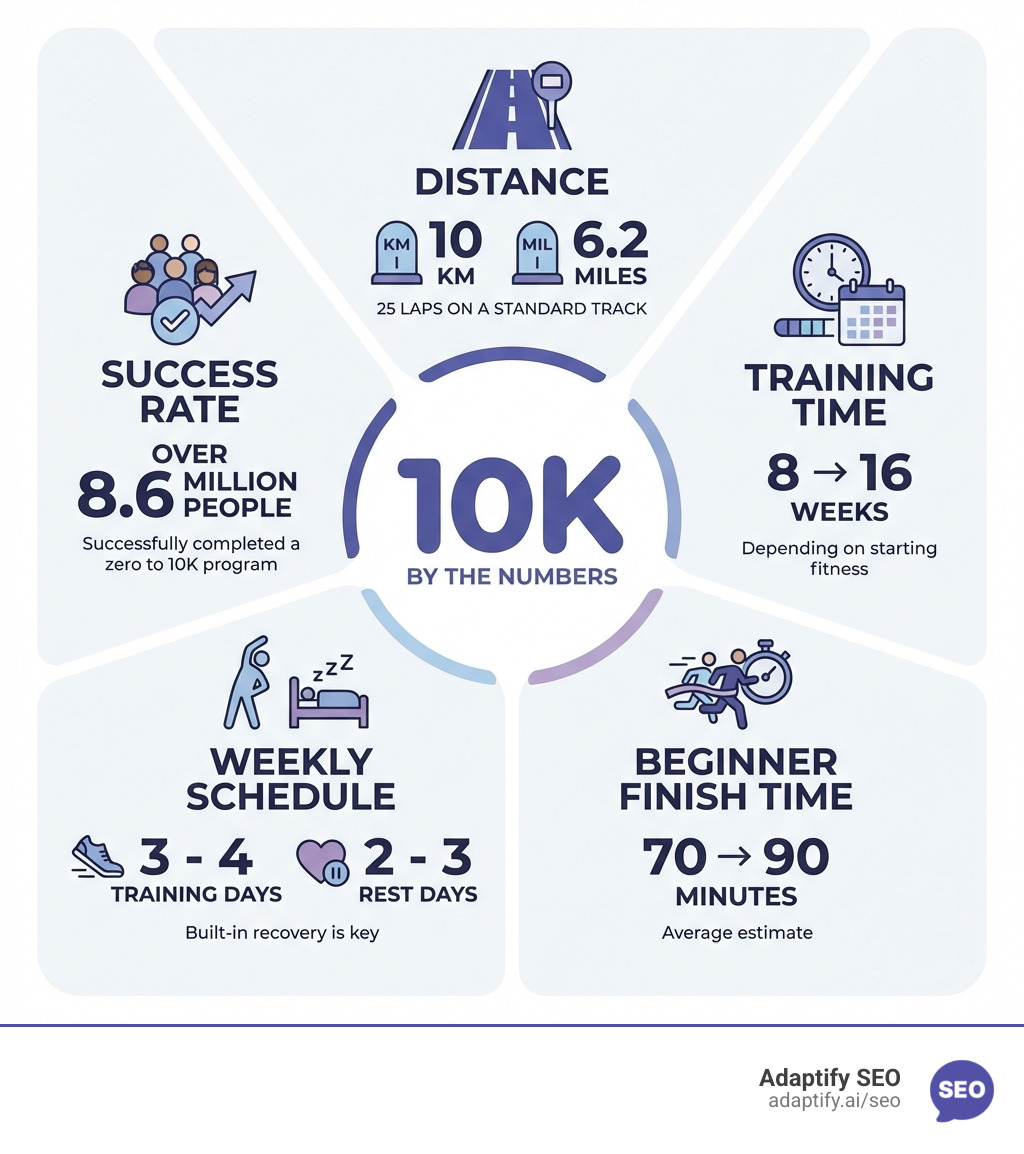
10K by the numbers: 6.2 miles/10 kilometers, 70-90 minute average beginner finish time, 8-16 weeks training duration, 3-4 workouts per week, 2-3 rest days per week
Before your first run, a little preparation goes a long way. Laying the groundwork for a successful zero to 10k project ensures you start and stay strong.

First, be honest about your starting point. Do you have baseline fitness from other activities, or are you new to regular exercise? This isn't about judgment; it's about setting you up for success.
If you're new to exercise, you're a "true beginner." The plan starts simply, with running intervals as brief as 60 seconds. If you're very overweight, power walking is an excellent starting point to reduce injury risk before introducing running.
If you're an "active non-runner" with good fitness from other sports, you can likely handle more from the start. You could run a few miles without specific training, but a structured plan helps you avoid overdoing it and build endurance safely.
Regardless of your starting point, consult your doctor before beginning any new exercise program, especially with underlying medical conditions. Once you get the green light, start slow and listen to your body. If a workout feels too difficult, pause or repeat a session. This journey is about gradual progress, not instant perfection.
You don't need to break the bank, but key gear will make your zero to 10k journey more comfortable.
The non-negotiable is a good pair of running shoes. Proper shoes provide the cushioning and support your body needs to absorb impact and prevent injuries. Visit a specialty running store where staff can assess your gait and recommend shoes for your foot type and running style. This investment pays dividends in comfort and injury prevention.
Next, running socks. Ditch cotton, which retains moisture and causes blisters. Opt for synthetic, moisture-wicking socks. Similarly, choose breathable, moisture-wicking apparel. Flat seams are a bonus, reducing chafing. For women, a supportive sports bra is essential.
A GPS watch or a running app on your smartphone can be incredibly motivating. These tools track your distance, pace, and time, letting you see your progress and celebrate small victories.
As you progress, you might consider optional gear like a hydration belt, anti-chafing balm, or a headlamp for low-light runs. For now, focus on the essentials.
This zero to 10k plan is about smart, gradual progression that builds endurance, strengthens your body, and prevents burnout or injury.
The core of this beginner-friendly plan is the run/walk method. This technique is a game-changer, letting you cover more distance than you might think possible while minimizing impact and building confidence. It’s also a great way to find your conversational pace—the speed where you can talk without gasping for air. This is about 60-70% of your maximum heart rate and is crucial for building your aerobic base.
Another key concept is the Rate of Perceived Exertion (RPE). This 1-10 scale helps you gauge how hard you're working. A conversational pace is a 5-6 on the RPE scale. Tuning into your body's cues is key to sustainable training.
Here's a quick comparison of the typical training plan durations:
| Plan Type | Duration | Ideal For | Key Characteristics |
|---|---|---|---|
| 8-Week Plan | 8 Weeks | Active individuals, lapsed runners with some fitness | Faster progression, assumes a base level of fitness, often 3-4 runs per week |
| 12-Week Plan | 12 Weeks | True beginners, those starting from a sedentary lifestyle | Slower, more gradual progression, emphasizes run/walk intervals, 3 runs per week |
The run/walk method, popularized by Olympian Jeff Galloway, is your secret weapon. Instead of running continuously, you alternate between running and planned walking breaks. For example, you might run for 1 minute, then walk for 2 minutes.
Why is this so effective?
This gradual approach lets your body adapt to running without the shock of sustained effort. It's a foolproof way to build your running base.
A well-structured plan is about a balanced approach to fitness. A typical week includes a mix of complementary workouts.

Here’s what you can expect:
To help you along, I recommend utilizing guided resources. You can Download the Guided Runs in the Nike Run Club App to get audio coaching during your runs. For a printable version of my comprehensive plan, you can Get a copy of our Couch to 10K Plan to print for yourself!.
Your zero to 10k plan duration depends on your fitness level and time before your target race. Most people can go from couch to 10K in 8 to 16 weeks.
Consider your time commitment and race date. It's better to choose a longer plan if you're unsure. Flexibility is key; you can always repeat a week if you need more time to adapt.
A successful zero to 10k journey isn't just about logging miles; it’s a holistic approach including proper fueling, strength, and recovery. These elements are critical for injury prevention, muscle repair, and enhancing performance. Just as Adaptify.ai's SEO strategies are comprehensive, your running strategy should be too. More info about our SEO overview.
Food is your fuel. A balanced diet is paramount. Focus on:
Hydration is non-negotiable. Drink plenty of water throughout the day. Your body needs it to regulate temperature and transport nutrients.
Pre-run Fuel: For runs over 30-45 minutes, a small, easily digestible snack like a banana or toast about an hour before can top off energy stores.
Post-run Recovery Meal: After a run, your muscles are ready to absorb nutrients. A study in the International Society of Sports Nutrition suggests eating pre- and post-workout meals within 3-4 hours of each other to aid muscle repair. While the "45-minute window" isn't as strict as once thought, timely refueling with carbs and protein is still beneficial. If you're constantly hungry, increase your protein and focus on nutrient-dense meals.
A study on nutrient timing can give you more insights into how to optimize your eating around your workouts.
While running builds cardio, strength training and cross-training prevent injury and improve performance.
Strength Training: Often overlooked by beginners, it's essential for injury reduction and running economy. Stronger core, hip, and glute muscles provide stability and power. Incorporate two days of strength training per week with bodyweight exercises like squats, lunges, and planks. If you're new to lifting, ease into it; don't start a heavy program at the same time as your running.
Cross-Training: These activities give your running muscles a break while boosting your cardio fitness. Good options include:
Cross-training days should be "easy" days; don't push yourself too hard.
Rest is a critical component of your training. Your body gets stronger during recovery, not during your runs.
Rest Days: These are non-negotiable. They allow your muscles to repair and energy stores to replenish. Skipping rest days leads to fatigue and injury.
Active Recovery: On some rest days, light activity like walking or gentle stretching can aid recovery.
Sleep: Aim for 7-9 hours of quality sleep per night as a powerful recovery tool.
Preventing Common Injuries: As you increase mileage, you might encounter shin splints or runner's knee. Here's my advice:
If pain persists, consult a doctor or physical therapist.
It's normal to have questions about your zero to 10k journey. Let's tackle the most common ones.
For your first zero to 10k race, focus on finishing, not speed. The goal is to cross the finish line feeling strong and accomplished.
During training, the "conversational pace" is your best friend. This is a pace where you can comfortably hold a conversation without gasping for air. If running solo, try reciting a sentence aloud. If it's easy, you're at the right pace. This aligns with a Rate of Perceived Exertion (RPE) of 5-6 out of 10, or 60-70% of your maximum heart rate.
Methods like the "Magic Mile calculation" can estimate race pace, but for a first 10K, intuition and conversational pace are more reliable and less stressful. Don't worry about mile splits early on; focus on covering the distance. You can refine your pace for future races.
Every runner faces challenges. Here are common problems and tips for overcoming them:
Consistency beats intensity. Showing up is better than skipping a run entirely.
Race Day: You've put in the work; now it's time to celebrate your zero to 10k accomplishment.
After Completing Your First 10K: Congratulations! You’re a 10K finisher. What now?
Completing a 10K is a gateway to a positive running career. It proves you can achieve challenging goals, and that confidence will spill into other areas of your life.
The zero to 10k challenge is more than running a specific distance; it's a transformative journey. You've built physical endurance, mental toughness, discipline, and a deeper understanding of your body. You've learned about gradual progression, holistic training (nutrition, strength, recovery), and how to listen to your body.
This journey often becomes a lifelong habit, opening doors to new communities and future fitness goals. The accomplishment of crossing that finish line is unparalleled. Just as Adaptify.ai helps businesses achieve measurable growth via strategic SEO, this guide provides a clear path to your running goals, from your first 10K to a longer running career.
I hope this guide empowers you to lace up, accept the challenge, and find the runner within. Keep pushing forward. Learn more about our SEO content services to see how structured planning can transform other aspects of your life.

Stop being invisible: discover what the best local SEO strategies for small businesses are to dominate Google Maps, reviews, and AI search...

Master localized SEO to rank your local business in Google Maps and drive more in-store visits.

Master local retail SEO to drive foot traffic from Google with proven strategies for GBP, reviews, and AI search optimization.
Join 1,000+ agencies already delivering SEO and AI visibility from a single platform without increasing their headcount.Join 1,000+ agencies already delivering SEO and AI visibility from a single platform without increasing their headcount.