The AI Advantage: Adapting Your SEO for the Generative Era




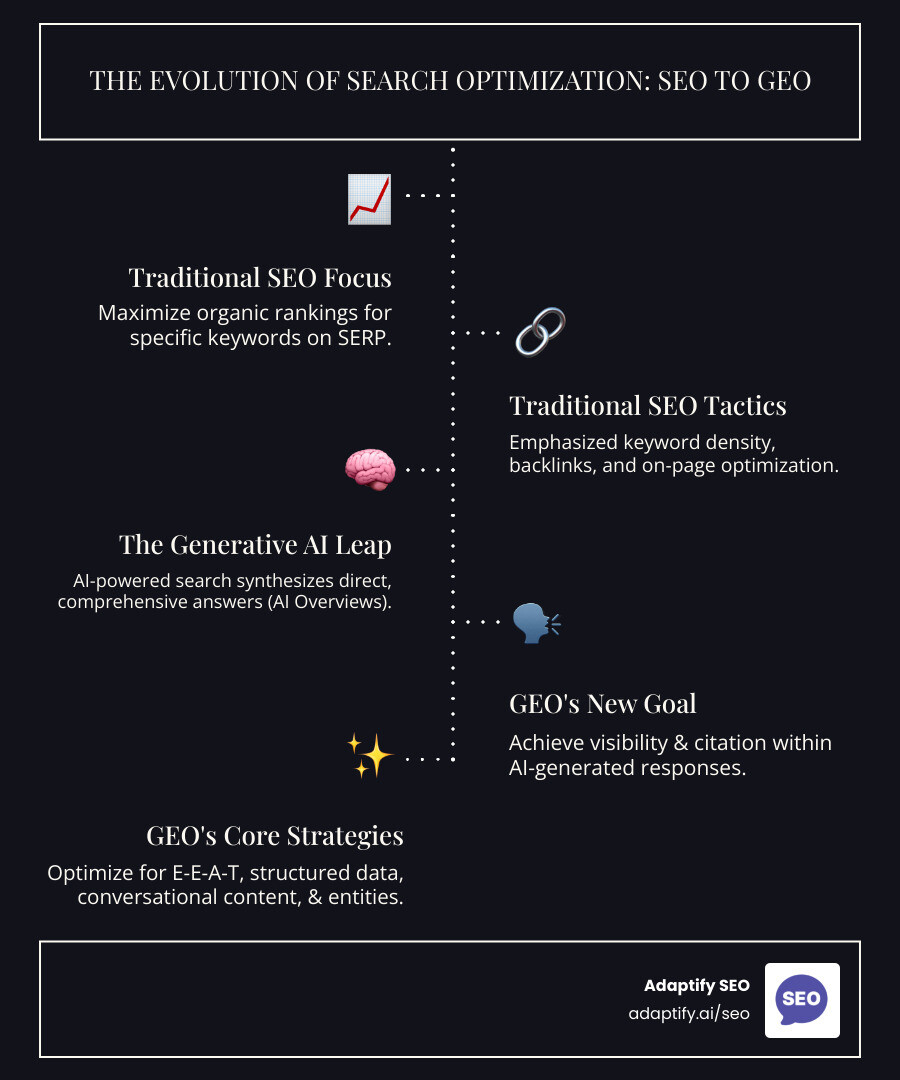
Generative ai in seo strategies are changing how businesses approach search visibility. While traditional SEO focused on ranking pages, AI-powered search engines like Google's AI Overviews, ChatGPT, and Microsoft Copilot now synthesize information from multiple sources to provide direct answers.
Key strategies for implementing generative AI in SEO:
The shift is significant. Traditional search traffic has declined by 10% while AI-driven findy grows rapidly, sparking the rise of a new discipline: Generative Engine Optimization (GEO).
This creates both challenges and opportunities. While businesses face reduced click-through rates, there's a silver lining. Websites ranked lower in traditional search can benefit significantly from GEO, with some seeing a 115.1% increase in visibility for fifth-ranked pages.
The workforce impact is also substantial. Approximately 80% of workers could see at least 10% of their tasks affected by large language models, requiring SEO professionals to evolve from manual optimization to AI-powered strategy.
I'm Hansjan Kamerling, and I've helped scale AI-powered platforms to 40,000+ users while working with data scientists and custom AI models. My experience designing search experiences for millions of users has shown me how generative ai in seo strategies require both technical expertise and strategic thinking to succeed.
The AI revolution in search presents a paradox for marketers: significant challenges coupled with unprecedented opportunities.
The most immediate challenge is reduced web traffic. When AI Overviews provide direct answers, users have less reason to click through. This trend is reflected in a 10% decline in traditional search traffic as users rely more on AI-driven findy.
This shift toward zero-click searches creates heightened competition for visibility within AI summaries. Being cited by an AI is the new top ranking. Compounding this are rapid AI algorithm changes and evolving consumer behavior, requiring marketers to be more agile than ever.
However, there are significant upsides.
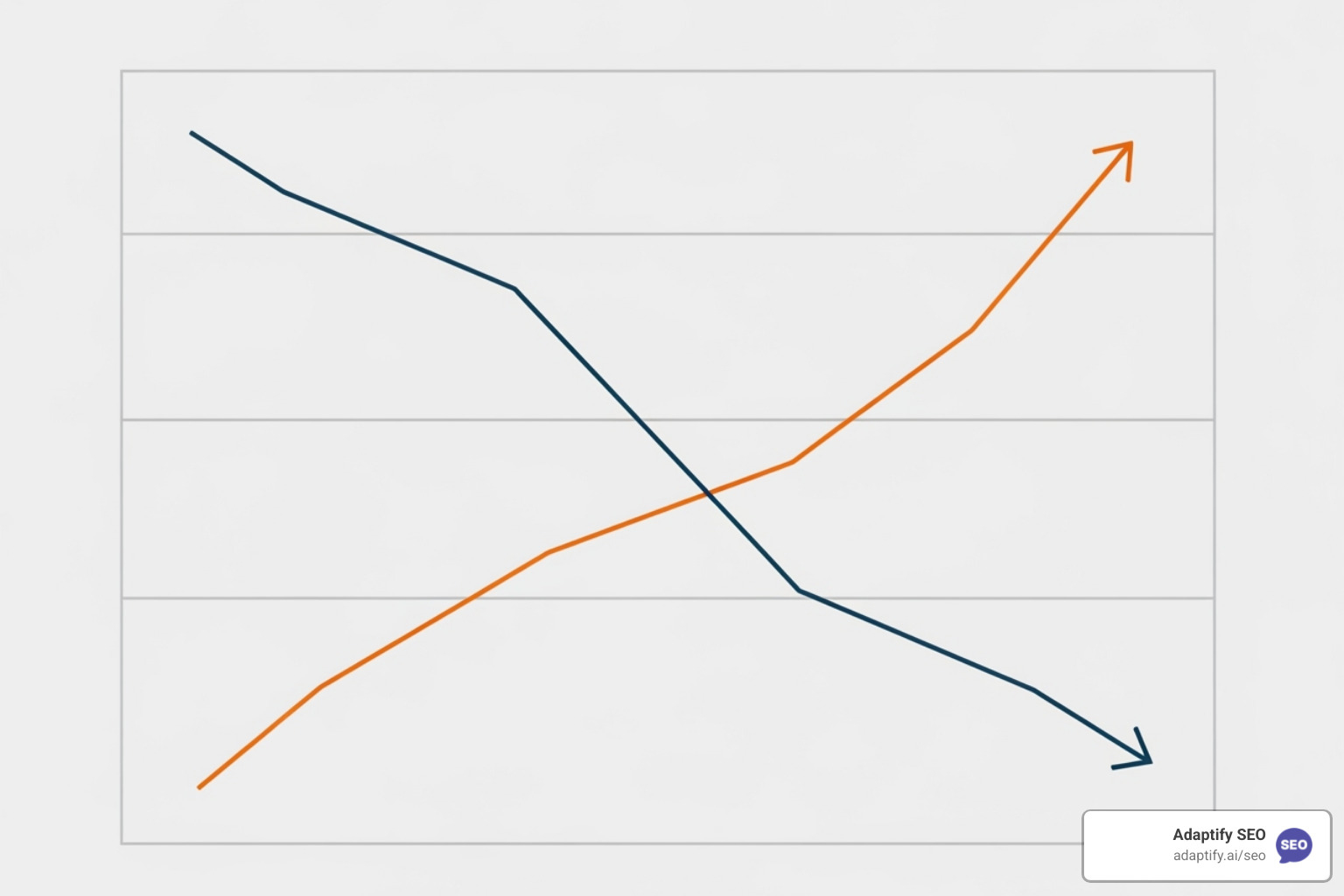
The opportunity for lower-ranked sites is genuinely exciting. Research shows that "websites that are ranked lower in SERP... benefit significantly more from GEO than those ranked higher." In fact, implementing effective generative ai in seo strategies "led to a substantial 115.1% increase in visibility for websites ranked fifth in SERP."
This means businesses that struggled to break through on page one now have a fighting chance. AI synthesizes information from multiple sources, giving well-optimized content from lower-ranking sites a real shot at visibility.
The search landscape now revolves around several key players reshaping how people find information.
Google Gemini powers the AI Overviews that appear directly in search results, pulling information from multiple sources to present synthesized answers. You can explore more details in Google's deep dive into SGE.
OpenAI's ChatGPT has trained millions of users to expect natural, conversational interactions when seeking information, affecting how we need to optimize content.
Microsoft Copilot integrates AI-powered search directly into browsers and productivity tools, making AI assistance seamless.
These platforms drive the move to conversational search. Users now ask complex questions and expect synthesized answers, changing how we must approach content.
The workforce implications of AI are significant. Research reveals that a large portion of the U.S. workforce could have tasks affected by LLMs.
For SEO professionals, this means a shift from manual tasks to strategy. Automation can handle repetitive work, freeing up experts to focus on high-value initiatives.
The impact on content writers is collaborative, not a replacement. AI handles research and drafting, but human insight, empathy, and strategy remain irreplaceable. As one expert puts it, "When AI is everywhere, the best investment you can make is to develop a strategy that is so informed and valuable that an AI couldn't replicate it."
The impact on SEOs is transformative. We are evolving from tactical executors to strategic orchestrators, designing comprehensive generative ai in seo strategies that span traditional and AI-powered search.
This evolution requires new skills: understanding AI models, optimizing for entities, and creating content designed for synthesis and citation. The key is to accept AI as a tool while doubling down on the human elements—strategy, creativity, and customer understanding—that drive real results.
Effective generative ai in seo strategies require a thoughtful, actionable plan. It's not about using AI for everything, but integrating it strategically for content optimization, technical signals, and user experience. As the saying goes, "Great SEO doesn’t end with rankings – it hinges on how users engage with your content."
In the age of AI, demonstrating E-E-A-T (Experience, Expertise, Authoritativeness, and Trustworthiness) is more critical than ever. AI models are trained to recognize these signals of credibility, making your content more likely to be cited.
Here are some ways to demonstrate E-E-A-T:
These signals help AI models see your content as a reliable source, making it more likely to be included in synthesized answers.
Structured data and clear citations are a VIP pass for your content into the AI's understanding. Structured data, particularly Schema markup (using JSON-LD), provides AI with explicit information about your content. It makes your content highly parsable, allowing AI to identify key facts, entities, and relationships to synthesize into direct answers. You can find comprehensive information in Google's official guidance on structured data.
Beyond markup, clear citations and credible statistics are paramount. AI prioritizes well-sourced, factual content. "Content enriched with credible citations and statistics notably improves visibility in GAIRs by 30-40% compared to baseline approaches." Back up your claims with data and link to authoritative sources to signal that your content is reliable enough for AI-generated responses.
At Adaptify.ai, we understand the importance of making your content AI-ready. Our content services are designed to ensure your information is not only engaging for humans but also optimally structured for AI interpretation. Learn More info about our content services.
Content creation for generative ai in seo strategies requires a new approach focused on answering questions comprehensively.
While content creation is key, our PR link building services can help establish the authority needed to get your content noticed and cited by these advanced systems. Find More info about our backlink services.
Local search is undergoing an AI change. For multi-location enterprises and local businesses, this shift presents both unique challenges and new opportunities for visibility.
AI-generated local results now synthesize reviews, hours, and recommendations, requiring local search visibility strategies to evolve. The good news is that AI tools enable workflow automation to manage these complexities at scale, handling tasks like updating Google Business Profiles and creating localized content, freeing you to focus on strategy.
Local SEO now requires ensuring AI understands why your business deserves a recommendation.
Google Business Profile (GBP) optimization is foundational. AI Overviews pull directly from GBP, so profiles must be carefully maintained with accurate hours, service descriptions, and fresh photos to avoid being invisible in AI-driven results.
Review management is now absolutely crucial. It's not just for humans; AI models analyze review sentiment and response patterns to determine which businesses to recommend. As stats show, "91% of consumers use reviews to evaluate businesses, and 65% favor businesses that actively engage with reviews." This means engaging thoughtfully with all reviews. AI algorithms recognize professional engagement as a signal of trustworthiness.
Localized content must genuinely serve the local community. Write about local events, highlight team members, or create guides that showcase local expertise to demonstrate authentic relevance to AI.
Authentic imagery is also vital. High-quality photos of your actual location, team, and customers help AI systems verify your legitimacy far better than stock photos.
At Adaptify.ai, our white-label services are designed to help agencies streamline GBP management, review monitoring, and localized content creation at scale. More info about our white-label services shows how we can help you deliver consistent local SEO results for all your clients.
The real power of generative ai in seo strategies is building automated systems that scale your efforts and work around the clock.
AI agents act as digital specialists, monitoring Search Console, generating schema, tracking competitors, and flagging technical issues. This shifts your focus from manual checks to acting on automated insights.
Retrieval-Augmented Generation (RAG) can tap into your proprietary knowledge—like customer support tickets or internal documents—to create SEO-optimized content, such as automatically generating location-specific landing pages.
Real-time monitoring with AI tools means you can proactively address issues like algorithm changes, page speed degradation, or content cannibalization before they impact rankings, ensuring your strategies perform optimally.
Scalable content creation and automated internal linking allow you to build comprehensive content clusters that demonstrate topical authority while saving hours of manual work.
At Adaptify.ai, we've built our platform around intelligent automation. Our SEO proposals demonstrate how agencies can deliver comprehensive strategies without drowning in manual tasks. Check out More info about our SEO proposals to see how automation can transform your SEO operations.
As generative ai in seo strategies reshape the digital landscape, here are answers to the most pressing questions.
The core difference is the goal. Traditional SEO focuses on ranking pages in search results to earn clicks. Generative Engine Optimization (GEO), on the other hand, optimizes content to be selected, synthesized, and cited within AI-generated answers on platforms like Google's AI Overviews. GEO prioritizes different signals, such as conversational language, structured data, and E-E-A-T, to become the trusted source material for AI. In short, SEO aims to be the destination; GEO aims to be the source.
No, AI cannot completely replace human SEO expertise. While AI automates tasks like keyword research and data analysis, it lacks the strategic thinking, creativity, and nuanced decision-making that drive business results. AI can't understand brand voice or manage client relationships. The most effective approach is a hybrid model where humans guide AI tools. As one expert notes, "When AI is everywhere, the best investment you can make is to develop a strategy that is so informed and valuable that an AI couldn't replicate it." Your team's strategic oversight is irreplaceable.
Measuring GEO success requires new metrics beyond traditional clicks. Key indicators include:
The goal is to measure your influence as a trusted source for AI, which builds brand authority and long-term visibility.
The shift to AI-driven search is one of the biggest in history. Generative ai in seo strategies are no longer a future concept but a present-day reality. As AI Overviews and conversational assistants provide direct answers, the focus moves from ranking pages to becoming a cited source.
This guide has laid out a clear roadmap. Success in this new era hinges on mastering E-E-A-T, leveraging structured data, and creating conversational content that answers user questions directly. This creates opportunities for agile businesses to gain visibility, even if they weren't top-ranked in traditional search.
The most effective approach combines AI-powered automation with human oversight. AI can scale your efforts, especially for local and multi-location SEO, but strategic thinking and creativity remain uniquely human strengths.
The competitive edge belongs to those who adapt now. By implementing GEO principles, you position your brand as an authority that both users and AI systems trust. The future of search is here.
Ready to gain the AI advantage and transform your SEO for the generative era?

Stop being invisible: discover what the best local SEO strategies for small businesses are to dominate Google Maps, reviews, and AI search...
Master localized SEO to rank your local business in Google Maps and drive more in-store visits.
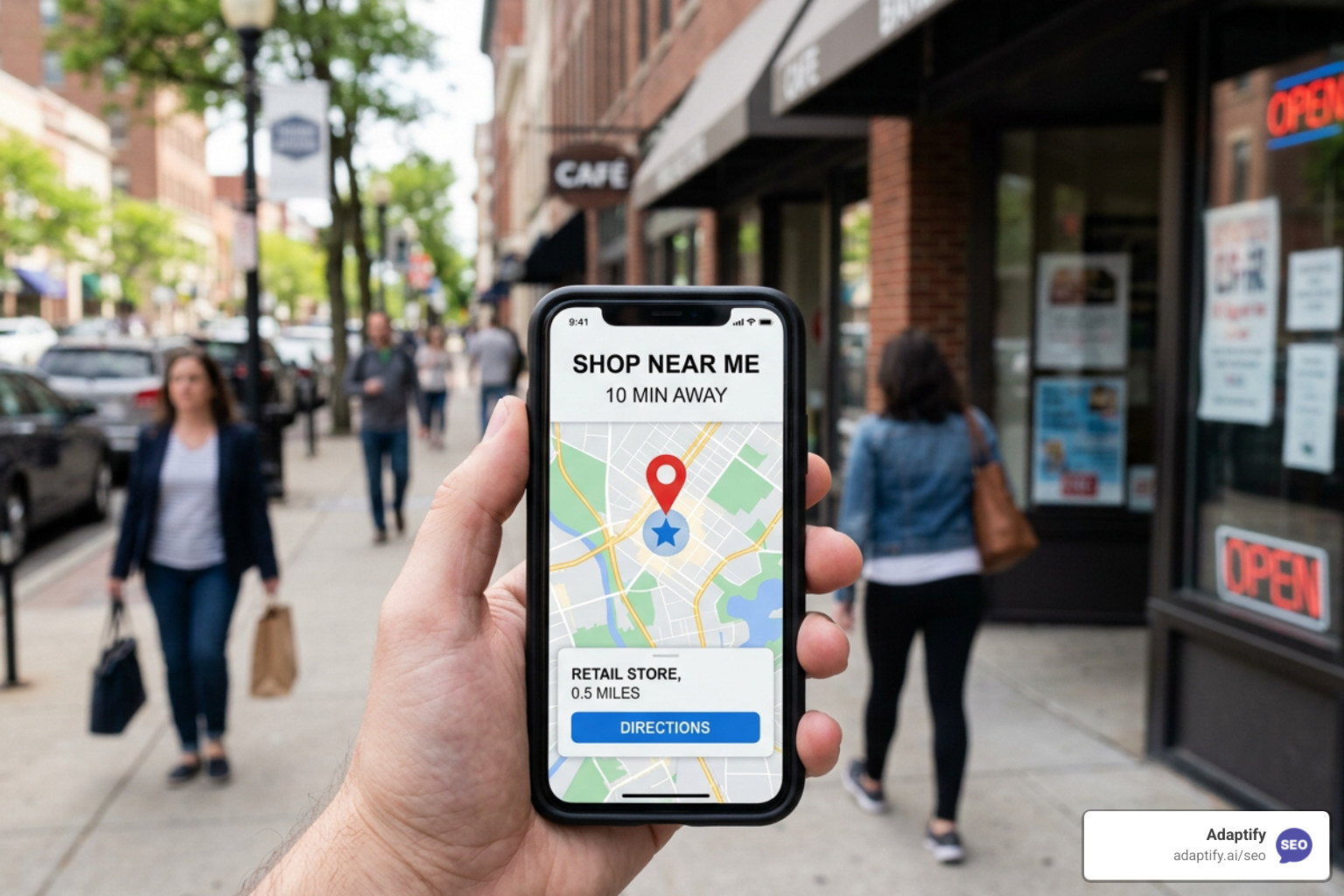
Master local retail SEO to drive foot traffic from Google with proven strategies for GBP, reviews, and AI search optimization.
Join 1,000+ agencies already delivering SEO and AI visibility from a single platform without increasing their headcount.Join 1,000+ agencies already delivering SEO and AI visibility from a single platform without increasing their headcount.