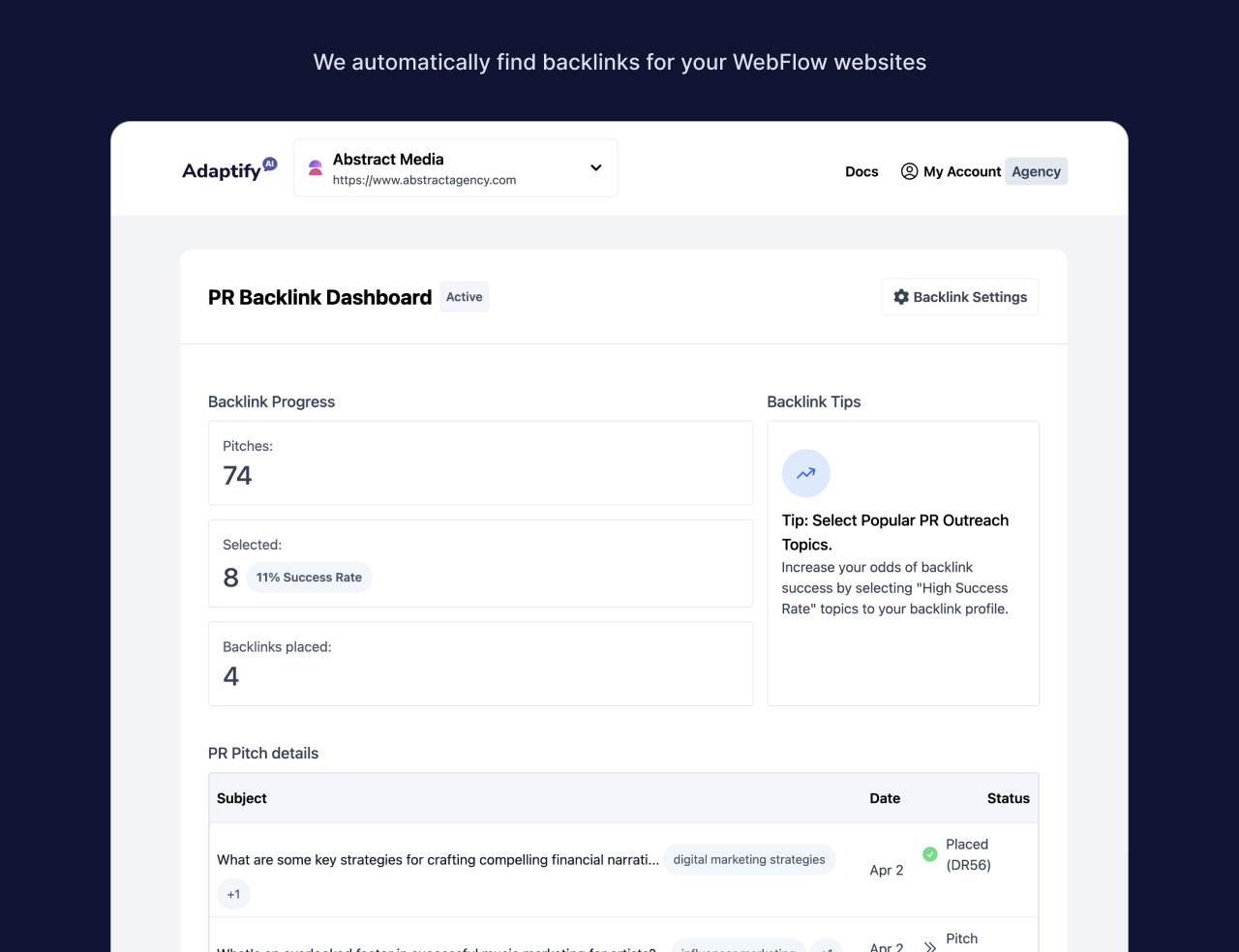
The Backlink Gap Tool: Your Secret Weapon for Outranking Competitors


Hansjan Kamerling
Feb 9
Why Backlink Gap Analysis is Your Fast Track to Better Rankings
backlink gap tool
A backlink gap tool helps you find which websites link to your competitors but not to you. Here's what you need to know:
  • What it does: Compares your backlink profile against up to 5 competitors to identify missed link opportunities
  • Why it matters: Websites linking to competitors are already relevant to your niche and likely to link to you too
  • Key benefit: Find quality backlinks faster by targeting proven sources instead of cold prospecting
  • How it works: The tool analyzes referring domains across multiple sites and highlights gaps where competitors have links you don't
If you've optimized your on-page SEO and fixed technical issues but still can't break past your competitors in search rankings, the answer often lies in their backlink profiles. The backlink gap — the difference between your site and competitors in terms of referring domains and unique backlinks — represents your biggest untapped opportunity for ranking growth.
Think about it: when three competitors all have backlinks from the same authoritative website but you don't, that's not coincidence. It's a clear signal that this site values content in your space and would likely link to you if approached correctly. These aren't random prospects you're cold-emailing. They're warm leads that have already demonstrated interest in your niche.
For agency owners juggling multiple clients, manual backlink prospecting is a time sink. You could spend hours digging through competitor profiles, checking domain authority scores, and building spreadsheets. Or you could use a backlink gap tool to surface these opportunities in seconds, letting you focus on strategy and outreach rather than data collection.
The reality is simple: backlink gap analysis turns competitor intelligence into your competitive advantage. By systematically identifying and acquiring the links your rivals already have, you're not just catching up — you're building a roadmap based on proven success in your market.
I'm Hansjan Kamerling, and I've spent years helping SaaS platforms and agencies scale their SEO operations through automation and smart tooling. Throughout my work with data analytics platforms and multiple startups, I've seen how the right backlink gap tool transforms link building from guesswork into a systematic, results-driven process.
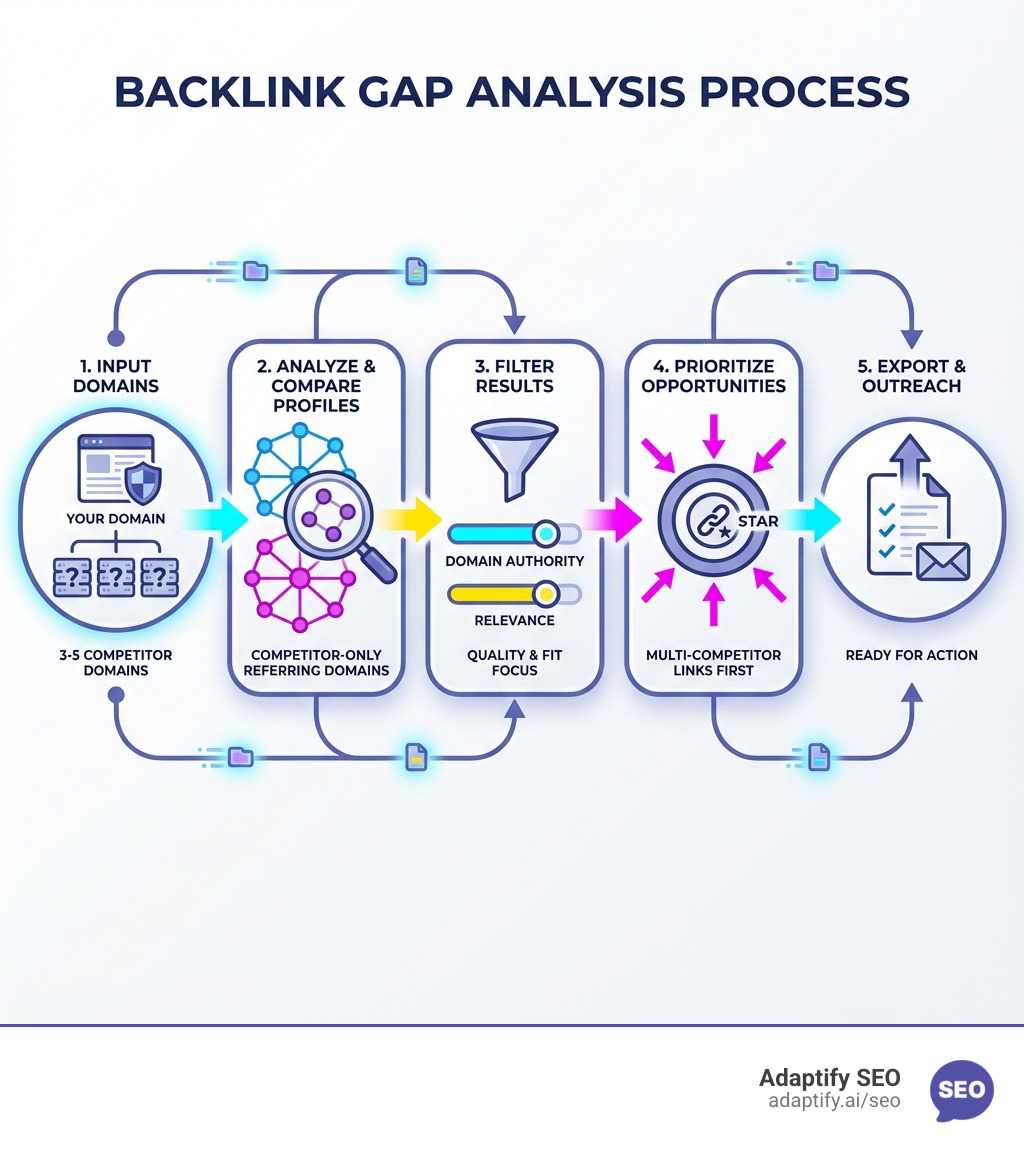
Infographic showing the backlink gap analysis process: Start with your domain and 3-5 competitor domains, the tool compares backlink profiles and identifies referring domains linking to competitors but not you, filter results by domain authority and relevance, prioritize domains linking to multiple competitors, and export opportunities for outreach - backlink gap tool infographic
A Step-by-Step Guide to Backlink Gap Analysis
Performing a backlink gap analysis isn't just about finding links; it's about strategically identifying and acquiring the right links to boost your domain's authority and improve your rankings. I've found that a structured approach, combined with a powerful backlink gap tool, is the most effective way to turn competitor insights into your own link-building wins.
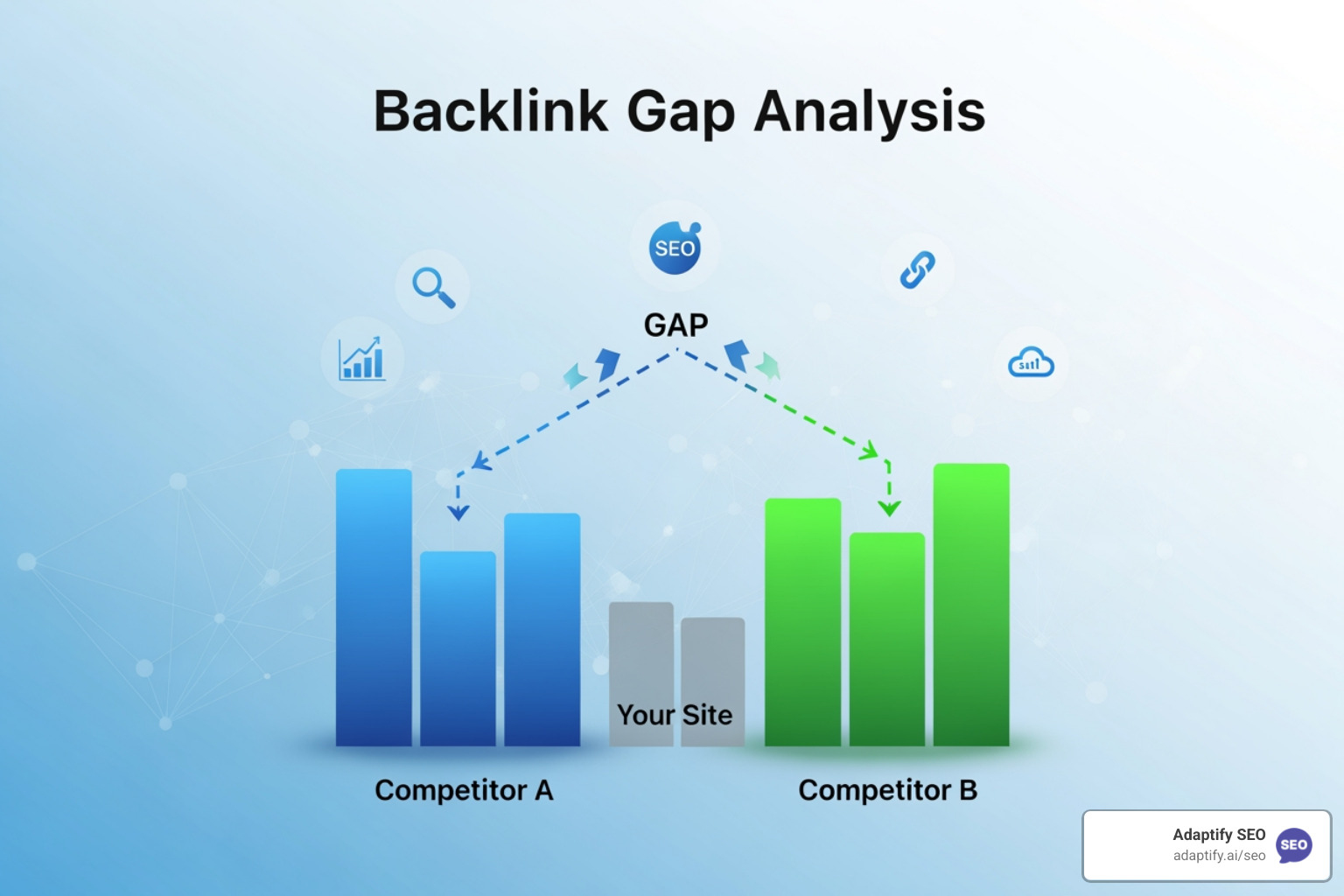
backlink gap analysis workflow from competitor identification to outreach - backlink gap tool
The core idea is to compare your website's backlink profile with your competitors' to pinpoint referring domains that link to them but not to you. These are your "backlink gaps," and filling them can provide significant SEO benefits. By conducting an in-depth link gap analysis and then filling in the gaps, you can improve your site’s domain authority and increase your rankings.
Let's walk through the process I recommend for leveraging a backlink gap tool effectively. For those who like to keep things organized, I even have a template you can use: Download our free backlink gap analysis template.
Step 1: Identifying Your True SEO Competitors
Before you can analyze any gaps, you need to know who you're up against. Your "true" SEO competitors aren't always who you think they are. They're the websites that consistently rank for the keywords you want to target, even if they're not direct business rivals.
To find them, I typically look at:
  • Organic Competitors: Most advanced SEO tools offer an "Organic Competitors" report. This shows you sites that share a high percentage of keywords with you.
  • Keyword Overlap: Focus on competitors that have significant keyword overlap with your desired ranking topics. Tools like seoClarity automatically identify your top three competitors based on this overlap.
  • SERP Analysis: Manually search for your most important keywords and see who consistently appears in the top results.
  • Domain Rating (DR) / Authority: Prioritize competitors with a higher Domain Rating (DR) or Domain Authority (DA) than yours, but who are still in a similar ballpark in terms of site size. This ensures you're aiming for achievable yet impactful links.
I usually start by comparing my domain with up to five competitors. This provides a comprehensive view without overwhelming the data.
Step 2: Analyzing Profiles with a Backlink Gap Tool
Once you have your list of competitors, it's time to release the power of a backlink gap tool. This is where the magic happens, as the tool automates the tedious work of comparing thousands of backlinks.
Here's how it generally works:
  1. Input Domains: You enter your website's domain and up to five competitor domains into the tool.
  2. Backlink Profile Comparison: The tool then crawls and analyzes the backlink profiles of all entered domains. It identifies all referring domains that link to your competitors.
  3. Link Intersect: The core functionality is often called "Link Intersect" or "Backlink Gap Analyzer." It shows you which referring domains link to your competitors but not to your site. This highlights the specific "gaps" in your profile.
  4. Uncovering Opportunities: The tool will present a list of these referring domains that represent untapped opportunities. Websites linking to your competitors will often be relevant and just as likely to link to your site, providing many easy backlink wins.
Some tools, like SE Ranking's Backlink Gap Analyzer, allow you to add up to five competing sites to analyze simultaneously, while others like KatLinks compare up to three root domains at a time. The goal is to see where your rivals are getting their links from that you aren't.
If you're an agency looking to streamline content creation and link-building efforts, understanding competitor content strategies through backlink analysis is crucial. You can find more info about our automated SEO content services to see how we help clients dominate their niches: More info about our automated SEO content services.
Step 3: Qualifying and Prioritizing Link Prospects
Finding a list of potential linking domains is only half the battle. The next crucial step is to qualify and prioritize these prospects. I always emphasize that link building is about quality over quantity. A single high-authority, relevant backlink is worth dozens of low-quality, spammy ones.
Here's my process:
  • Relevance is King: For each potential linking domain, I assess its relevance. Is it about my industry? Is it a reputable business directory? Is it a high-quality site that can genuinely build my brand? If not, I don't add it to my prospecting list. Ignoring relevance is a common mistake that can lead to wasted effort.
  • Filtering Low-Quality Links: Most backlink gap tools allow you to apply filters. I typically set minimum thresholds for:
    • Domain Rating (DR) / Authority Score: I might set a minimum DR of 50 or higher to ensure I'm targeting authoritative sites.
    • Domain Traffic: A minimum of 1,000 monthly organic traffic helps ensure the site has an active audience.
    • Dofollow Links: I filter for "dofollow" domains to focus on links that pass SEO value, though "nofollow" links can still provide referral traffic and brand mentions.
  • Prioritizing Domains Linking to Multiple Competitors: Referring domains that match with multiple competitors are excellent outreach targets. Why? Because they've already demonstrated a willingness to link to sites in your niche. If a site links to all your competitors and not to you, it's highly likely to be a worthwhile target. These are often labeled as "Best" opportunities in tools like Semrush.
  • Unique Opportunities: Don't disregard domains linking to only one competitor. While they might be less obvious, a unique link that your competitors don't have can help you stay ahead in the SEO game.
By refining your list with these criteria, you'll have a manageable, high-quality list of prospects ready for outreach.
Step 4: Crafting Your Link Acquisition Strategy
Now that you have a prioritized list of relevant, high-quality prospects, it's time to craft your link acquisition strategy. This isn't a one-size-fits-all approach; it requires creativity and personalization.
Here are some strategies I've found effective:
  • Guest Posting: Offer to write a high-quality, original article for their blog that includes a natural, contextual link back to your site.
  • Resource Page Link Building: Identify "resource" or "links" pages on prospect sites that list valuable industry resources. If your content is genuinely useful, suggest it as an addition.
  • Niche Edits (Contextual Links): If a prospect has existing content relevant to yours, suggest a natural inclusion of a link to your resource within their article. This is often more effective than trying to get a brand new article published.
  • Creating Link-Worthy Assets: Sometimes, the best way to get a link is to create something so valuable that others want to link to it. This could be an in-depth guide, a unique data study, an infographic, or a free tool.
  • Outreach Personalization: This is critical. Don't send generic emails. Reference specific content on their site, explain why your content is a good fit, and clearly articulate the value you bring to their audience.
The key is to remember that you're not just asking for a link; you're offering value. Always focus on building genuine relationships and providing something beneficial to the website you're reaching out to.
Choosing the Right Backlink Gap Tool for Your Needs
The effectiveness of your backlink gap analysis heavily relies on the tool you use. With numerous options available, choosing the right one can feel daunting. I've worked with many over the years, and I can tell you that the best tool for you depends on your specific needs, budget, and the scale of your SEO operations.
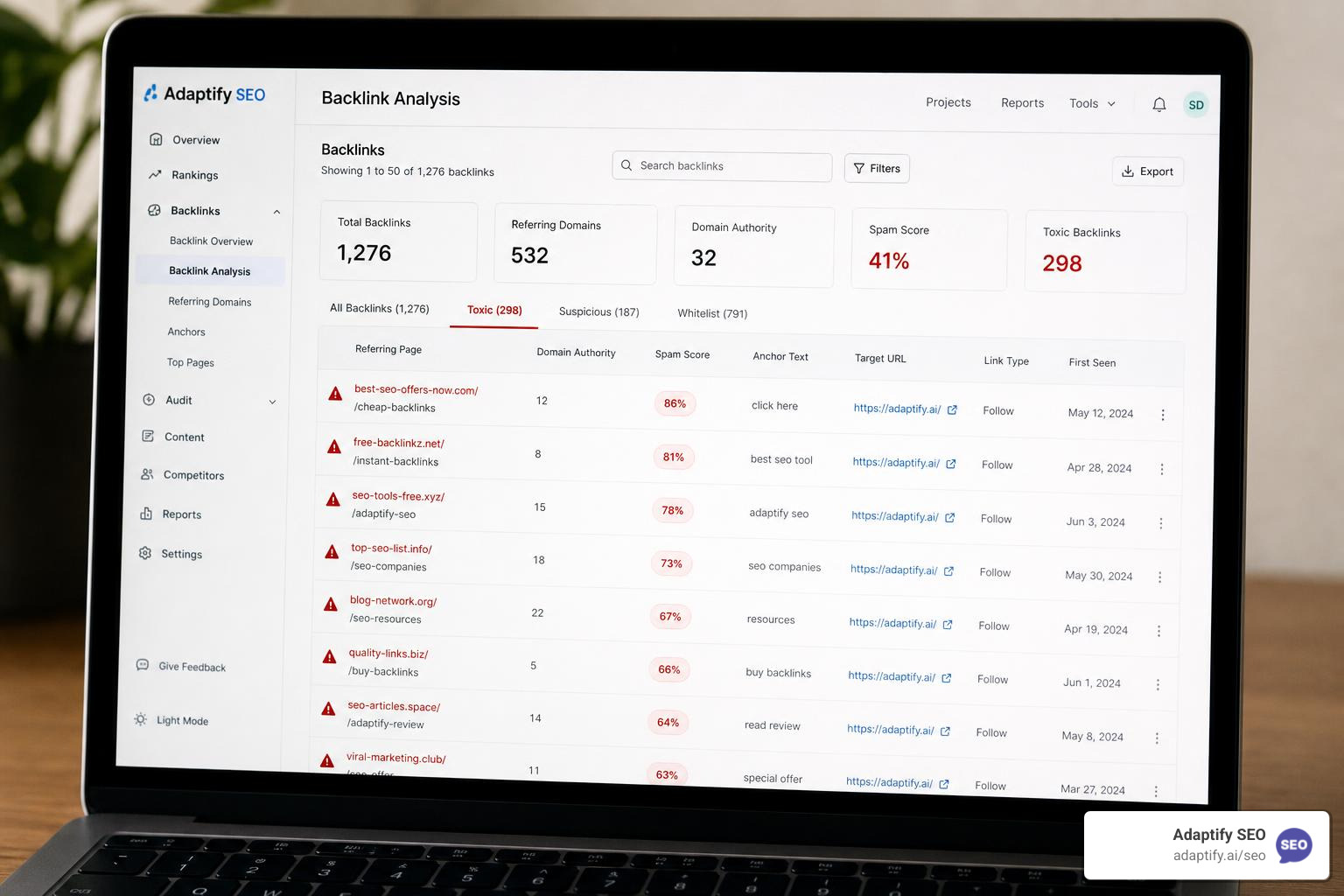
backlink gap tool dashboard highlighting key features like filters and export options - backlink gap tool
Tools like Ahrefs, Semrush, Moz Link Explorer, Majestic, SE Ranking, Linkhouse, KatLinks, RanksPro, Ubersuggest, Mangools LinkMiner, SEO SpyGlass, and CognitiveSEO all offer backlink gap analysis features, each with its own strengths.
Key Features to Look For in a Backlink Gap Tool
When I evaluate a backlink gap tool, I look for several critical features that contribute to a comprehensive and efficient analysis:
  • Competitor Comparison Limits: How many domains can you compare simultaneously? Tools typically allow 3 to 5 competitors, which is usually sufficient for a focused analysis.
  • Backlink Index Size & Freshness: A larger and more frequently updated backlink index means more accurate and current data. This ensures you're not missing opportunities or chasing outdated links.
  • Data Filtering Options: Robust filters are essential for refining your list of prospects. Look for options to filter by:
    • Domain Rating/Authority Score
    • Organic Traffic
    • Dofollow/Nofollow status
    • Language
    • Link type (e.g., contextual, directory)
    • Number of competitors linking to a domain
  • Authority Metrics Integration: The tool should display key SEO metrics (like DR, DA, TF, CF, Authority Score) for each potential linking domain. This helps in quick qualification.
  • Usability and Interface: An intuitive interface makes the analysis process much faster. Clear visual dashboards and easy navigation are a huge plus.
  • Export Capabilities: The ability to export your refined list of prospects (e.g., to CSV or Excel) is crucial for managing your outreach efforts.
  • Integration with Other Tools: Some tools are part of a larger SEO suite (like Semrush or SE Ranking), allowing seamless workflow from gap analysis to link building and monitoring.
Free vs. Paid Tools: What's the Real Difference?
It's a common question: can I do this for free? While free tools offer a glimpse, the real power of backlink gap analysis comes with paid subscriptions.
FeatureFree Backlink Gap ToolsPaid Backlink Gap Tools
Queries/LimitsVery limited number of daily queries; restricted number of competitors (often 1-2); smaller data sets.High daily query limits (e.g., 3,000-10,000 requests/day for Semrush); ability to compare multiple competitors (up to 5); vast backlink index (e.g., 50,000 backlinks per competitor for seoClarity).
Data DepthBasic backlink data; often lacks historical data; may not show all referring domains.Extensive backlink index; historical backlink data; deep analysis of anchor text, link types, and referring page context; can uncover up to 50,000 backlinks per credit.
FilteringMinimal or no filtering options; difficult to refine results by authority, relevance, or link type.Advanced filtering by metrics (DR, DA, TF, CF, Authority Score), traffic, dofollow/nofollow, language, and the number of competitors linking to a domain.
ReportingBasic on-screen display; limited or no export functionality.Comprehensive reports with export options (CSV, Excel); ability to add prospects directly to a link-building management tool.
Accuracy/FreshnessData may not be as fresh or comprehensive, leading to missed opportunities or outdated information.Regularly updated indexes; more accurate and reliable data, crucial for competitive niches.
Use CaseGood for quick, superficial checks or for very small, non-competitive sites.Essential for serious SEO campaigns, competitive analysis, and scaling link-building efforts. Transforms hours of manual work into seconds.
PricingFree (often with a paid upgrade option).Varies widely (e.g., RanksPro starts at $19/month, Moz at $49/month, Ahrefs/Semrush/CognitiveSEO start around $129/month). The cost is an investment that pays off in efficiency and results.
For any serious SEO professional or agency, investing in a paid backlink gap tool is non-negotiable. The time savings and depth of insights far outweigh the cost, especially when you consider the potential impact on rankings and organic traffic.
Leveraging Metrics and Avoiding Common Pitfalls
Understanding the role of various SEO metrics and being aware of common mistakes are crucial for a successful backlink gap analysis. It's not just about collecting data; it's about interpreting it correctly and acting wisely.
The Role of SEO Metrics: DA, DR, Trust Flow, and More
When performing a backlink gap analysis, you'll encounter several metrics designed to assess the quality and authority of a website. I rely on these to quickly qualify prospects:
  • Domain Authority (DA) / Domain Rating (DR): These are proprietary metrics (Moz for DA, Ahrefs for DR) that predict how well a website will rank on search engine result pages. A higher score (on a 0-100 scale) indicates stronger authority. I typically look for sites with a DR/DA of 50 or above for high-value links.
  • Trust Flow (TF) & Citation Flow (CF): Majestic's metrics. Trust Flow measures the quality of backlinks pointing to a site, based on the trustworthiness of those links. Citation Flow measures the quantity of links. A healthy backlink profile usually has a higher Trust Flow relative to Citation Flow.
  • Authority Score (AS): Semrush's composite metric that scores the overall quality and SEO performance of a domain. It combines various factors including backlink profile strength, referring domains, and organic traffic.
  • Spam Score: Moz's metric that estimates the likelihood of a website having spammy or low-quality links. A high Spam Score is a red flag, and I generally avoid outreach to such sites.
  • Organic Traffic: This metric provides a real-world indication of a website's visibility and audience engagement. A site with decent organic traffic is likely to be active and valuable.
While these metrics are incredibly useful for initial filtering and prioritization, relevance always trumps metrics. A link from a highly relevant, niche blog with a DR of 40 might be more valuable than a link from a generic, high-DR news site if the latter has no contextual connection to your content.
Common Mistakes in Backlink Gap Analysis (And How to Avoid Them)
Even with the best tools, it's easy to fall into common traps during backlink gap analysis. I've seen these mistakes derail many otherwise promising link-building campaigns:
  • Ignoring Relevance: As I just mentioned, this is the biggest one. Don't chase a link just because a competitor has it and the site has a high DR. If it's not relevant to your audience or industry, it's unlikely to provide significant value and could even be seen as manipulative. Avoidance: Always manually review potential linking domains for topical relevance before adding them to your outreach list.
  • Chasing Every Link (Quantity Over Quality): It's tempting to want to fill every single gap. However, not all links are created equal. Focusing on quantity can lead to acquiring low-quality links that either don't move the needle or, worse, harm your SEO. Avoidance: Stick to your strict qualification criteria (relevance, minimum metrics) and prioritize quality over sheer numbers.
  • Not Having Link-Worthy Content: You can identify all the gaps in the world, but if your website doesn't have valuable, unique, and well-researched content to link to, your outreach efforts will fall flat. Nobody wants to link to thin or outdated content. Avoidance: Invest in creating exceptional content that naturally attracts links. This is often the biggest hurdle for successful link building.
  • Inconsistent Analysis: If you're not consistently applying the same criteria for competitor identification, data filtering, and prospect qualification, your analysis will be flawed and your results inconsistent. Avoidance: Use a structured process, like the steps I outlined above, and consider using a template or SOP (Standard Operating Procedure) for your team.
  • Forgetting About Your Own Backlink Profile: While focusing on competitor gaps, don't neglect your own existing backlink profile. Regularly audit your links, disavow harmful ones, and ensure your current links are healthy. Avoidance: Integrate regular backlink audits into your SEO strategy.
By being mindful of these pitfalls, you can ensure your backlink gap analysis is not just thorough, but also strategic and effective.
Frequently Asked Questions about Backlink Gap Analysis
I often get asked specific questions about backlink gap analysis, especially from those new to this powerful SEO strategy. Here are some of the most common ones:
How often should I perform a backlink gap analysis?
Backlink gap analysis isn't a one-and-done task; it's an ongoing process. I recommend:
  • Quarterly for most businesses: This allows you to track competitor movements, identify new opportunities, and adjust your strategy based on market changes.
  • Monthly for highly competitive niches: If you're in a fast-moving industry where competitors are constantly acquiring links, a monthly check-in can help you stay ahead.
  • Post-campaign review: After a major link-building campaign, it's wise to run another analysis to see the impact of your efforts and identify the next batch of opportunities.
The SEO landscape is dynamic, and competitors are always building new links. Regular analysis ensures you don't miss out on emerging opportunities.
What's the difference between a referring domain and a backlink?
This is a fundamental distinction in backlink analysis:
  • Referring Domain: A referring domain is a unique website that links to your site. For example, if CNN.com links to your site five times from different articles, that's one referring domain.
  • Backlink: A backlink is any single link from one website to another. So, if CNN.com links to your site five times, that counts as five backlinks, but still only one referring domain.
When performing a backlink gap analysis, our primary focus is on referring domains. Acquiring a backlink from a new referring domain is generally more valuable for SEO than getting another backlink from a domain that already links to you. We want to find those unique websites that are giving your competitors an edge.
Can I find opportunities without a paid tool?
While technically possible, finding comprehensive backlink opportunities without a paid backlink gap tool is extremely challenging and inefficient.
  • Manual Analysis Limitations: You could manually visit competitor websites, look for outbound links, and then check if those sites link to you. However, this is incredibly tedious, time-consuming, and prone to missing many opportunities. You'd also lack the crucial metrics (DR, TF, etc.) for efficient qualification.
  • Free Tool Constraints: Free backlink checkers typically offer very limited data, often showing only a handful of backlinks or referring domains. They rarely provide comprehensive competitor comparison features or advanced filtering.
  • Paid Tool Advantages: Paid tools provide massive backlink indexes, advanced comparison features, robust filters, and integrations that transform hours of manual work into seconds. They offer the scale and efficiency needed for effective, data-driven link building.
For any serious SEO effort, especially for agencies managing multiple clients, a paid backlink gap tool is an essential investment. It's the difference between guessing and having a clear, data-backed strategy.
Conclusion: Turn Competitor Insights into Your Ranking Advantage
The backlink gap tool is truly a secret weapon for outranking competitors. It transforms the often-daunting task of link building into a strategic, data-driven process. By systematically identifying the referring domains that give your rivals an edge, you gain a clear roadmap for acquiring high-quality backlinks and boosting your own domain authority.
I've seen how this approach helps businesses not just catch up, but pull ahead. It allows you to:
  • Find quality links quickly: Target proven sources that are already relevant to your niche.
  • Improve your domain's authority: Acquire links from authoritative sites that search engines trust.
  • Close gaps against competitors: Systematically address the weaknesses in your backlink profile.
  • Gain a competitive advantage: Build a more robust and diverse backlink portfolio based on what's already working in your market.
In today's competitive SEO landscape, a proactive approach to link building is paramount. Instead of reactive tactics, a backlink gap analysis empowers you to make informed decisions, prioritize effectively, and execute with precision.
For agencies looking to scale their link-building efforts and streamline the entire SEO workflow, platforms like Adaptify.ai can automate the entire process, from strategy formulation and content creation to PR link building, leveraging AI to improve efficiency and reduce manual effort. Ready to turn competitor insights into your ranking advantage? Explore our automated SEO platform.

profile-image
Hansjan Kamerling
Co-Founder of Adaptify, I specialize in SEO for marketing agencies through automation.
Stay up to date with the latest on SEO for Agencies
Scale your agency with automated SEO delivery
Try our Interactive Demo:
304 agencies automated SEO and ChatGPT visibility for their clients in the last 30 days
pointer