The Future of Authority: AI in Link Building


AI SEO link-building strategies are fundamentally changing how agencies build digital authority, moving the industry from a craft of manual labor to a science of intelligent automation. The traditional approach—a grueling cycle of manually prospecting hundreds of websites, crafting semi-generic outreach emails, and painstakingly tracking responses in spreadsheets—is being systematically replaced by intelligent systems that scale quality link acquisition. This isn't just about doing the old tasks faster; it's about open uping entirely new levels of precision and strategic depth.
This seismic shift is driven by the evolution of search itself. A recent study shows that 73.2% of SEO professionals believe backlinks remain a significant ranking factor, even in the age of AI-driven search results. With Google's AI Overviews now appearing on 14.3% of all SERPs, the rules of visibility have been rewritten. Success is no longer just about the link; it's about the context, the brand mention, and the authority signals that AI can interpret. The fact that 76.10% of pages cited in AI Overviews already rank in the top 10 organic results proves that a strong foundation is non-negotiable.
Key AI-driven strategies that are setting leading agencies apart include:
The challenge is stark and unavoidable: manual link building simply cannot compete in terms of scale, speed, or data-driven insight. Agencies that cling to outdated methods will be outmaneuvered. Those that accept a hybrid model—combining irreplaceable human strategy with the relentless execution power of AI—are the ones winning. I'm Hansjan Kamerling, and my work building AI-powered analytics platforms has given me a front-row seat to this change, showing me how the right automation turns struggling agencies into scalable, data-driven, and highly profitable businesses.
AI Search and Google's AI Overviews are not just new features; they represent a fundamental change in how information is synthesized and how online authority is conferred. The old playbook, often focused on the sheer volume of links, has been rendered obsolete. It's been replaced by a far more sophisticated approach where AI algorithms evaluate a rich mix of signals, including brand mentions, deep contextual relevance, and nuanced user intent. This shift brings SEO strategy into direct alignment with Google's E-E-A-T principles (Experience, Expertise, Authoritativeness, Trustworthiness), rewarding genuine authority over manipulated metrics.
At Adaptify.ai, with our teams across the US and Europe, we've observed a clear divergence: agencies that accept this new reality are thriving, while those that resist are falling behind. We specialize in helping agencies steer this new landscape with advanced backlink services that are built for the AI era.
AI Overview boxes, now a standard feature on 14.3% of all search result pages, are the new 'position zero.' While they may reduce direct clicks to individual organic results for simple queries, being cited within an AI Overview is an incredibly powerful credibility signal and a direct endorsement from Google's AI. The data is unequivocal: 76.10% of pages cited in AI Overviews already rank in the top 10 search results. This statistic is crucial. It demonstrates that AI isn't pulling from a random pool of content; it's sourcing its answers from pages that have already proven their authority through strong SEO fundamentals, including a robust and relevant backlink profile. If your content isn't ranking well organically, you are effectively invisible to the AI models generating these summaries.
Modern AI, built on large language models, possesses a sophisticated understanding of context and sentiment, even in the absence of a traditional hyperlink. When a respected industry publication, a popular blog, or an influential forum mentions your brand in a positive context, AI interprets this as a strong vote of confidence—a trust signal. This is why Reddit is the second most-cited website in Google AI Overviews. Its vast network of niche communities fosters authentic, experience-based discussions that AI models find highly valuable for answering user queries. As one expert aptly put it, "If you're not ranking in search, AI tools probably aren't citing you either." This underscores the symbiotic relationship between traditional SEO success and recognition by AI. Consequently, smart agencies are now deploying AI-powered monitoring tools to track unlinked brand mentions across the web and are training their teams to engage authentically in these communities, turning conversations into authority signals.
Despite the rise of other signals, backlinks remain a critical pillar of SEO. A commanding 73.2% of SEO professionals believe backlinks continue to significantly impact visibility in AI search results. Their role has evolved but not diminished. They are essential for:
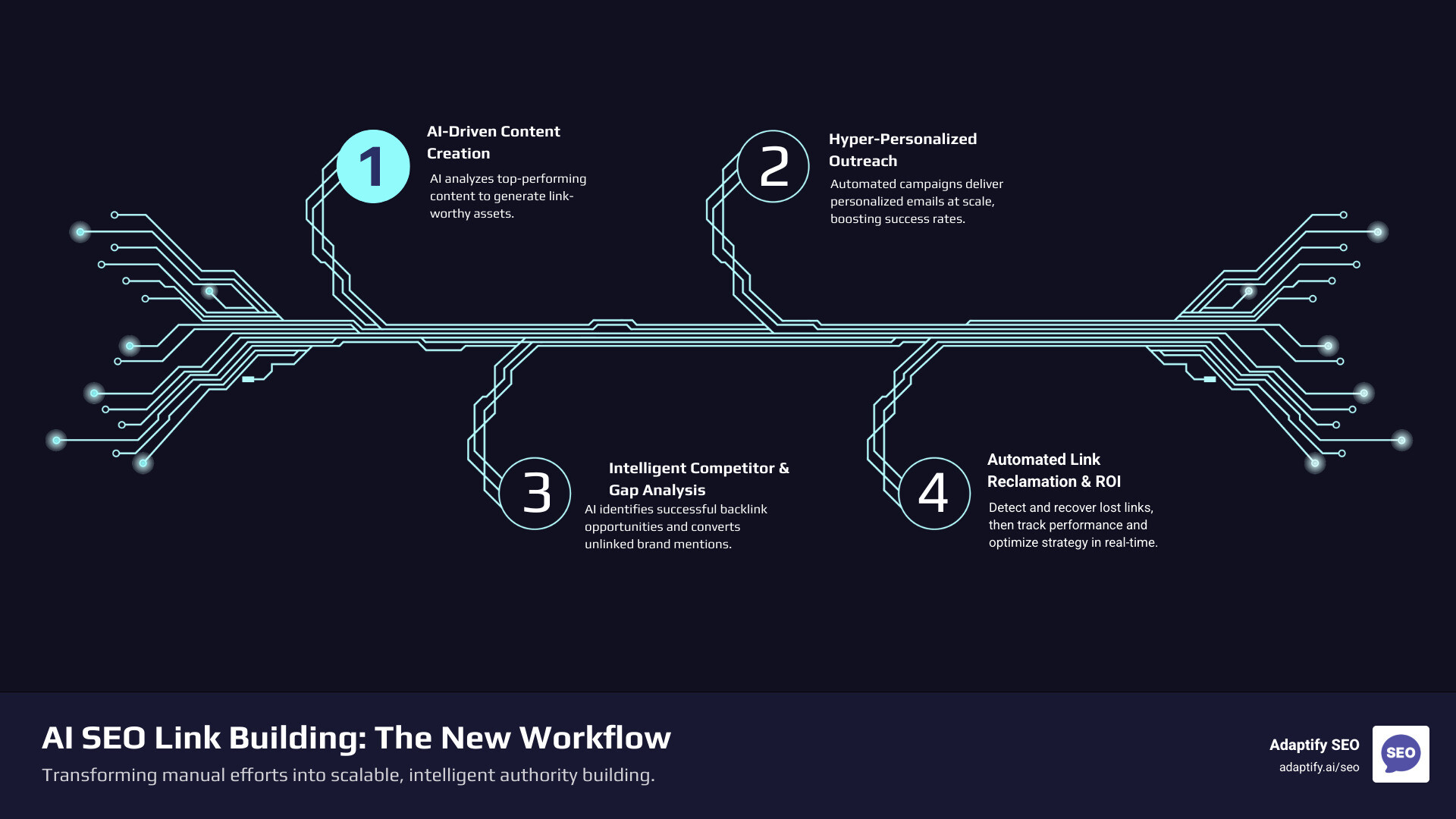
In the modern SEO paradigm, AI acts as a powerful force multiplier, changing your content strategy from guesswork into a data-driven science. The ultimate goal is to create link-worthy content—assets so valuable, insightful, or useful that other websites naturally want to reference and link to them. AI is instrumental in this process, enabling you to analyze top-performing competitor content at scale, identify predictive content trends before they peak, and use advanced semantic analysis and keyword clustering to build unassailable topic authority.
AI doesn't replace human creativity; it amplifies it. By automating the laborious tasks of data collection, research, and pattern recognition, AI liberates your creative team. It frees them from the 'what' and 'how' to focus on the 'why'—the unique insights, brand personality, and compelling storytelling that make content memorable and truly authoritative.
Content that consistently wins backlinks is rarely generic; it's exceptionally useful. Interactive content like industry-specific calculators, diagnostic quizzes, and comprehensive, data-rich guides excel at earning links because they provide tangible value. AI can boost this process. An AI tool can analyze the top 100 results for a target keyword, identify the types of content earning the most links (e.g., studies, infographics, tools), and help you execute strategies like the Skyscraper Technique with surgical precision by pinpointing the exact informational gaps or outdated statistics in existing top content.
Furthermore, AI can suggest novel ideas for interactive tools or identify unique angles for data-driven insights by cross-referencing multiple datasets. While generalist AI content generation tools like Jasper or Copy.ai can produce a solid first draft, more specialized SEO platforms like SurferSEO or Clearscope use AI to provide data-backed content briefs that guide writers on which topics, entities, and questions to cover. The most successful agencies adopt a hybrid model: use AI to generate the foundation—comprehensive research, a logical structure, and a functional draft—and then have human experts layer in the brand voice, proprietary data, and unique perspective. You can explore our own approach to this synergy in our content services.
AI has revolutionized keyword research, moving it far beyond simple search volume and difficulty scores. AI excels at deep user intent analysis, uncovering the underlying questions and problems behind search queries. This allows you to target valuable long-tail keywords that signal high purchase intent or a specific informational need. AI is particularly adept at identifying semantic keywords—the related terms, concepts, and entities that help search engines like Google understand your content's full context. By incorporating these, you build comprehensive topic coverage that positions your site as an authority.
For anchor text optimization, AI offers a sophisticated defense against penalties. Instead of manually tracking anchor text percentages in a spreadsheet, an AI tool can analyze your entire backlink profile in real-time. It can then suggest natural language variations for your target anchor text to ensure anchor text diversity. For example, instead of repeatedly using "best accounting software," an AI might suggest variations like "this accounting tool," "a review of the software," "learn more here," or the brand name itself. This approach feels authentic to both users and search engines, aligning perfectly with Google's guidance on helpful content by ensuring you create content for people first.
Executing your AI SEO link-building strategies is where theory meets practice, and it's the area where agencies can achieve the most dramatic improvements in workflow efficiency and campaign effectiveness. Complex processes that once consumed weeks of manual labor can now be completed in a matter of days, or even hours. It is critical to understand that AI does not replace human strategy—it amplifies it. The agencies that are pulling ahead in the market are those that masterfully combine human creativity, strategic foresight, and relationship-building instincts with AI's unparalleled data processing power and scalability.
It's a well-known fact in link building: generic, templated outreach emails have abysmal response rates. Conversely, personalized outreach emails have a significantly higher success rate. The historical challenge has been the inability to personalize at scale. This is the problem AI solves. Modern AI email assistants, whether standalone or integrated into platforms like Pitchbox or Mailshake, can analyze a prospect's website, recent articles, and even social media activity to craft highly relevant opening lines and value propositions that resonate. For example, an AI can identify that a blogger recently wrote about productivity and suggest an outreach angle connecting your project management tool to a specific point they made. AI also enables sophisticated prospect segmentation, automatically categorizing potential link partners based on their content themes, domain authority, and audience, ensuring your outreach is always targeted. While follow-up automation ensures no opportunity slips through the cracks, human insight remains crucial for navigating nuanced conversations and building genuine, long-term relationships.
AI gives you x-ray vision into your competitors' playbooks. A comprehensive backlink profile analysis that would take a human analyst weeks of manual data exporting and spreadsheet manipulation can be performed by an AI in minutes. Using data from industry-standard tools like Ahrefs, Semrush, or Majestic, an AI can synthesize vast datasets to reveal not just where your competitors are getting links, but how and why. Link gap identification becomes particularly powerful. An AI can compare your backlink profile against three of your top competitors and instantly generate a prioritized list of high-authority domains that link to them but not to you. More advanced AI can even categorize these opportunities, revealing patterns you can replicate—for instance, showing that a competitor is consistently getting links from guest posts on industry news sites or from being featured in expert roundups.
Broken link building is one of the most effective and time-honored link-building tactics, but it's notoriously tedious—making it a perfect task for AI. AI-powered broken link checkers can be set to crawl thousands of relevant websites in your niche, constantly searching for 404 errors and identifying opportunities. Once an opportunity is found, AI content replacement tools can analyze the context of the original, broken link (using the anchor text and surrounding content) and help you create or suggest a superior replacement from your existing content library. This frames your outreach not as a request, but as a helpful fix. Similarly, AI can monitor your own backlink profile for link reclamation opportunities. It can send you an immediate alert when a valuable, existing backlink is lost (e.g., the linking page is updated and your link is removed), allowing you to contact the site owner quickly to recover it before the loss impacts your rankings.
While not traditional link-building venues in the strictest sense, online communities and social media platforms are goldmines for building the authority and relationships that precede links. AI is instrumental here. It can assist with content repurposing, intelligently changing a long-form blog post into an engaging Twitter thread, a LinkedIn article, or a script outline for a short video. With Reddit engagement being a key source for AI Overviews, AI-powered tools can monitor specific subreddits for keywords and questions relevant to your expertise, alerting you to conversations where you can add genuine value. Furthermore, AI-powered forum monitoring and influencer identification tools, such as SparkToro or Brand24, can pinpoint the exact blogs, social accounts, and forums where your target audience is most active, allowing you to engage authentically and build the trust that makes future direct outreach far more successful.
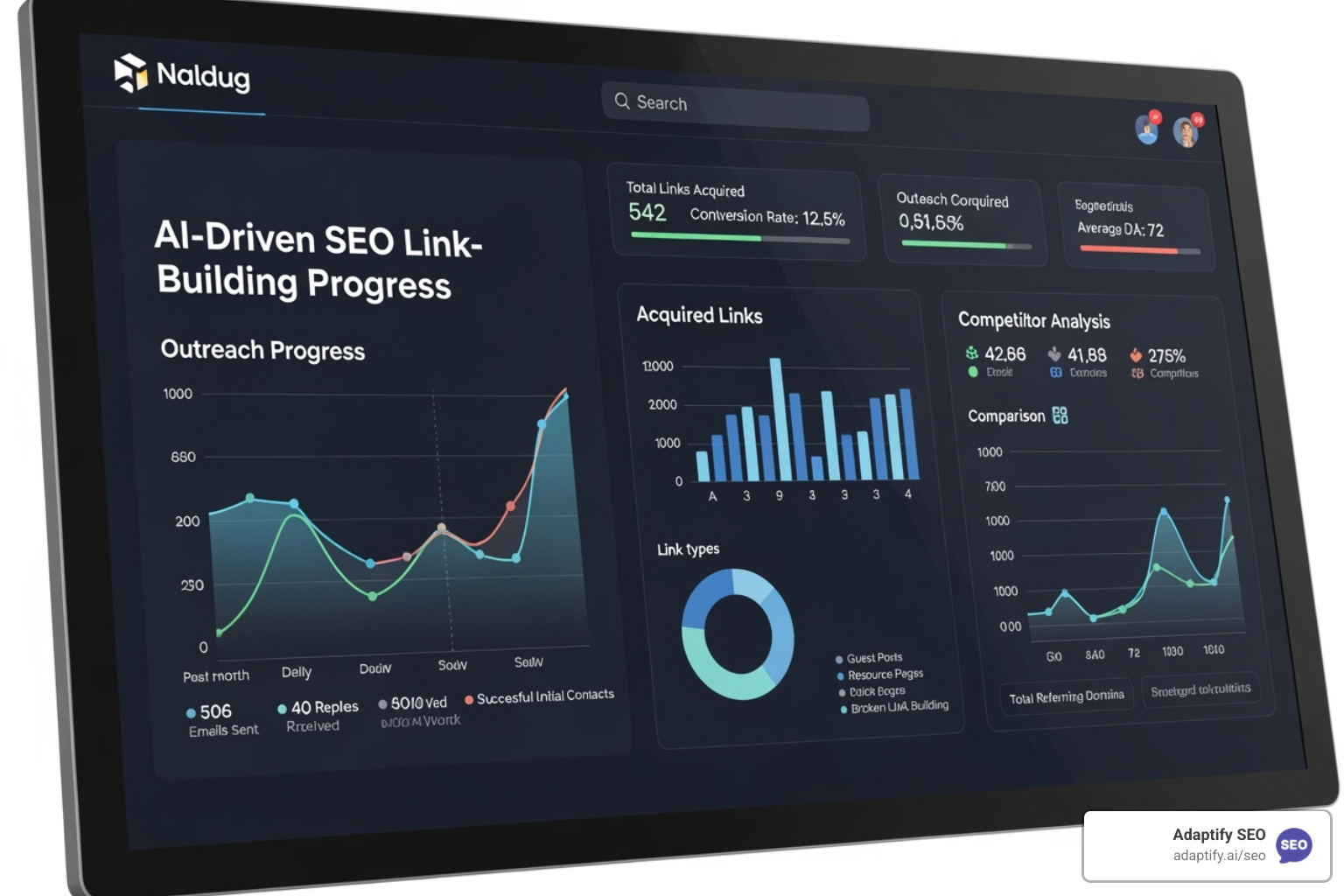
Implementing AI SEO link-building strategies without a robust framework for measuring results is like flying blind. It leads to wasted effort and budget. AI not only helps execute campaigns but also provides crystal-clear insights into what drives success, changing agency reporting from vanity metrics to tangible business outcomes. This level of granular analysis is critical for agencies managing diverse client portfolios across the US and Europe, where demonstrating clear ROI is paramount.
Effective measurement in the AI era goes far beyond simply counting the number of new links acquired. To prove value, agencies must track a more sophisticated set of key performance indicators (KPIs):
Our SEO calculator is a tool designed to help agencies track these advanced metrics and translate them into a clear ROI narrative for clients.
Not all AI link-building tools are created equal, and they don't all serve the same purpose. It's crucial for a comprehensive strategy to understand the difference between tools designed for internal linking versus those for external link building.
| Feature | AI Internal Linking Tools (e.g., Adaptify SEObot) | AI External Link-Building Tools (e.g., Adaptify ListingBott) |
|---|---|---|
| Primary Goal | Improve site structure, distribute PageRank internally, and improve user navigation. | Increase domain authority, acquire valuable referral traffic, and build external brand trust. |
| Core Function | Automatically analyzes your content and adds relevant contextual links between your own pages. | Identifies, vets, and pursues backlink opportunities on other high-authority websites. |
| Key Benefit | Strengthens topic clusters, helps search engines understand content hierarchy, and reduces bounce rate. | Boosts critical off-page SEO signals, improves overall site credibility, and drives qualified traffic. |
| Focus of Analysis | On-page content relationships and overall site architecture. | Off-page domain relationships and external authority signals. |
| Example Use Case | When a new blog post is published, the tool automatically links it to existing pillar pages and related articles. | Automating directory submissions, personalizing guest post outreach, or executing a broken link-building campaign. |
Internal linking tools act as your website's central nervous system, ensuring that authority and relevance flow smoothly between all your pages. External link-building tools are your digital ambassadors, forging relationships across the web to bring new authority and credibility to your domain. A truly dominant SEO strategy requires both to be working in perfect tandem. At Adaptify.ai, our suite of tools is designed to create this comprehensive ecosystem for both sides of the link-building equation.
While incredibly powerful, the adoption of AI SEO link-building strategies is not without its challenges and ethical minefields. The most significant operational problems include maintaining stringent content quality control when generating content at scale, staying agile enough to adapt to frequent algorithm updates, and responsibly managing data privacy when using AI to analyze prospect information. A more subtle but equally dangerous risk is automation bias—the inherent human tendency to over-trust the outputs of an automated system without critical evaluation. The only effective antidote to these challenges is a non-negotiable commitment to human oversight at every critical stage of the process, from strategy to execution to quality assurance.
Google's official stance on AI-generated content provides a clear guiding principle: the focus must always be on creating helpful, reliable, people-first content, regardless of the tools used to produce it. AI should be a collaborator, not a shortcut to spam.
As agencies rush to integrate AI, several common mistakes are emerging that can lead to disastrous results:
At Adaptify.ai, our tools are engineered with built-in safeguards and workflows designed to help our clients avoid these pitfalls by enhancing, not replacing, human strategy and decision-making.
The next frontier for AI in SEO is the shift from reactive to predictive SEO. This involves using AI models to forecast emerging trends, shifts in user behavior, and competitor strategies before they happen. For example, an AI could analyze legislative changes, social media sentiment, and search trend data to predict that 'sustainable packaging solutions' will become a major link-building topic in the CPG industry six months from now. This allows for a truly proactive strategy, enabling you to create link-worthy content and build authority around a topic ahead of the competition. Ethical AI integration is the other side of this coin, demanding a commitment to transparency, accountability, and fairness in how we deploy these powerful technologies, always prioritizing genuine user value over manipulative tactics.
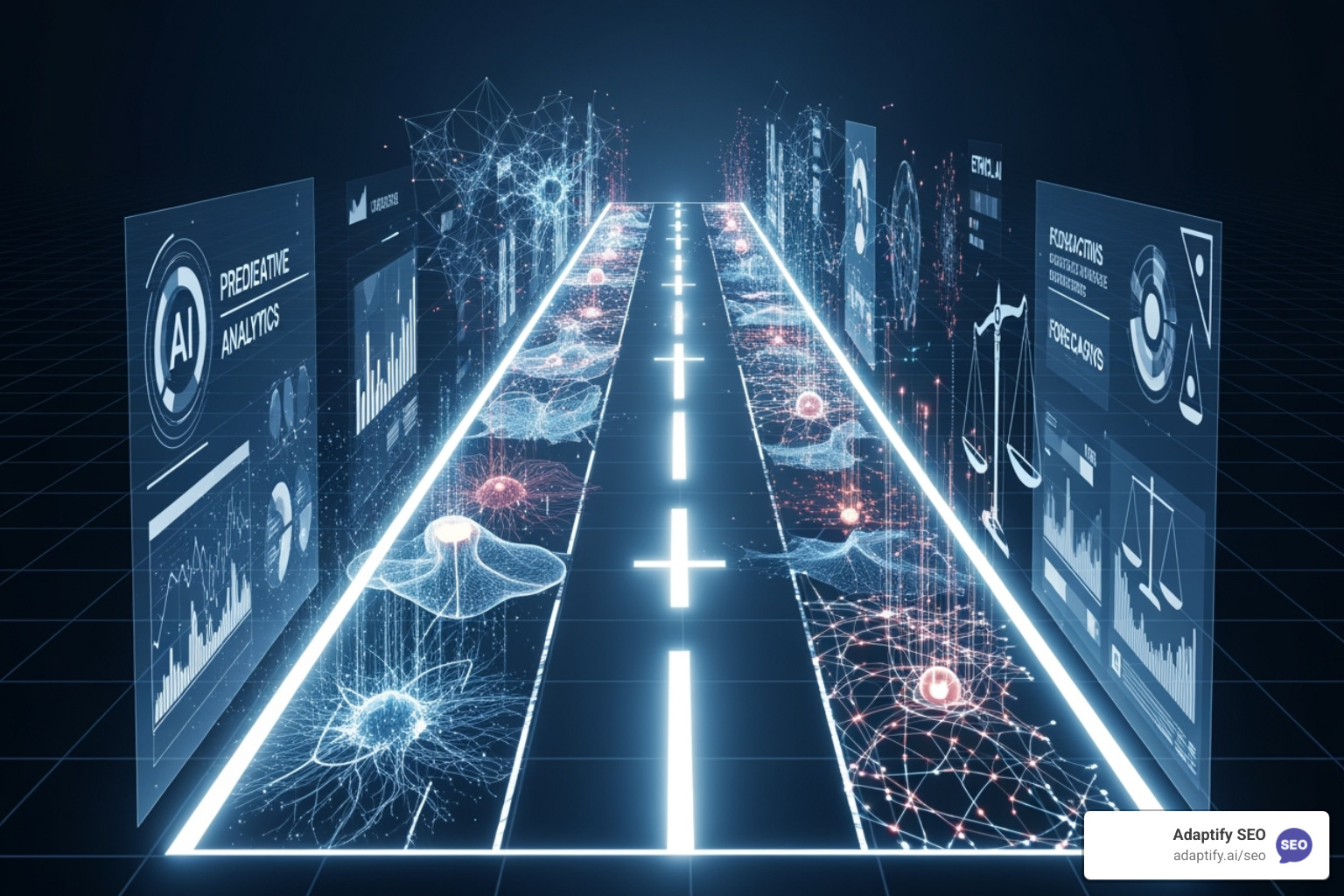
The agencies that will dominate the next decade will be those that commit to continuous learning and ethical application. Staying current with both AI advancements and the evolving ethical landscape will be the key differentiator that separates the leaders from the laggards, allowing them to deliver superior results with greater efficiency.
Here are concise, in-depth answers to the most common questions agencies have about implementing AI SEO link-building strategies.
No, this is a common misconception. Viewing AI as just a content-writing machine is a significant underestimation of its capabilities. A comprehensive AI link-building strategy encompasses the entire workflow. AI assists with high-level strategy by identifying linkable topics, analyzes competitors to find replicable patterns, personalizes outreach emails at scale, automates the tedious process of reclaiming lost or broken links, and provides detailed analytics to measure performance. The goal is to use AI to make human-led strategies more efficient, data-driven, and scalable. Human review and strategic oversight remain essential for ensuring quality, maintaining brand alignment, and building genuine relationships.
Google penalizes spammy, manipulative, and low-quality practices, not the use of AI itself. Google's own guidelines state that their focus is on the quality of the content, not how it is produced. If you use AI to create genuinely helpful, insightful, and high-quality content that satisfies user intent, you are operating well within their guidelines. Similarly, if you use AI to identify relevant link prospects and personalize outreach in a meaningful way, you are simply using a more advanced tool. Penalties arise when AI is used as a shortcut to create spam at scale—for example, generating thousands of generic articles or sending deceptive, non-personalized outreach. The focus must always be on the value provided to the end-user.
This is a critical distinction. General AI models like ChatGPT are incredibly powerful and versatile language tools. They are excellent for brainstorming, drafting, and summarizing. However, they are fundamentally disconnected from the live, proprietary data needed for effective SEO. They lack access to real-time SERP analysis, competitor backlink databases, keyword difficulty metrics, or your own site's analytics. Specialized SEO AI platforms, such as Adaptify.ai or other dedicated tools, integrate a sophisticated language model with these crucial, SEO-specific data sources. This allows them to provide actionable recommendations based on a holistic view of the search landscape, something a general AI cannot do.
Human oversight is not just recommended; it is non-negotiable for a successful and ethical strategy. It should be applied at three critical stages:
Start with a methodical, phased approach rather than trying to automate everything at once.
Platforms like Adaptify.ai are designed to facilitate this transition by providing a comprehensive suite of AI tools built specifically for SEO agencies, allowing you to focus on high-level strategy while AI handles the execution and measurement.
The digital marketing landscape has irrevocably evolved, and AI SEO link-building strategies are no longer a futuristic concept but an essential component of sustainable growth. The agencies ready to lead in this new era are not those replacing their talented human strategists with algorithms, but those who are amplifying their team's expertise with the power of AI. This synergistic approach allows you to create deeply resonant content, execute hyper-personalized outreach at a scale previously impossible, and measure the direct impact of your efforts with unparalleled precision.
The data paints a clear picture: with 73.2% of SEOs confirming that backlinks remain a vital signal for AI search and AI Overviews now a fixture on 14.3% of SERPs, we are in the midst of an intelligent evolution of SEO. This is not a time for fear, but for opportunity. The agencies that adapt with speed and intelligence will build resilient, authoritative online presences for their clients—assets that not only rank today but are engineered to thrive through future algorithm updates.
At Adaptify SEO, our entire platform is built on this philosophy of amplification. We help agencies automate the complexity of modern link building without ever sacrificing the quality and strategic insight that only humans can provide. Whether your clients are based in the US, Europe, or anywhere across the globe, our services are designed to streamline the processes that once consumed entire teams, freeing you to focus on what matters most: strategy, client relationships, and growth.
The future of SEO belongs to the agencies that see AI not as a threat, but as their most powerful amplifier. Your clients are looking to you to be their guide through this new and exciting landscape. Don't follow the trend—lead it.
Ready to transform your agency's approach to link building and deliver next-level results? Book a Demo and find how Adaptify SEO can help you build future-proof authority for every single client.

Stop being invisible: discover what the best local SEO strategies for small businesses are to dominate Google Maps, reviews, and AI search...
Master localized SEO to rank your local business in Google Maps and drive more in-store visits.
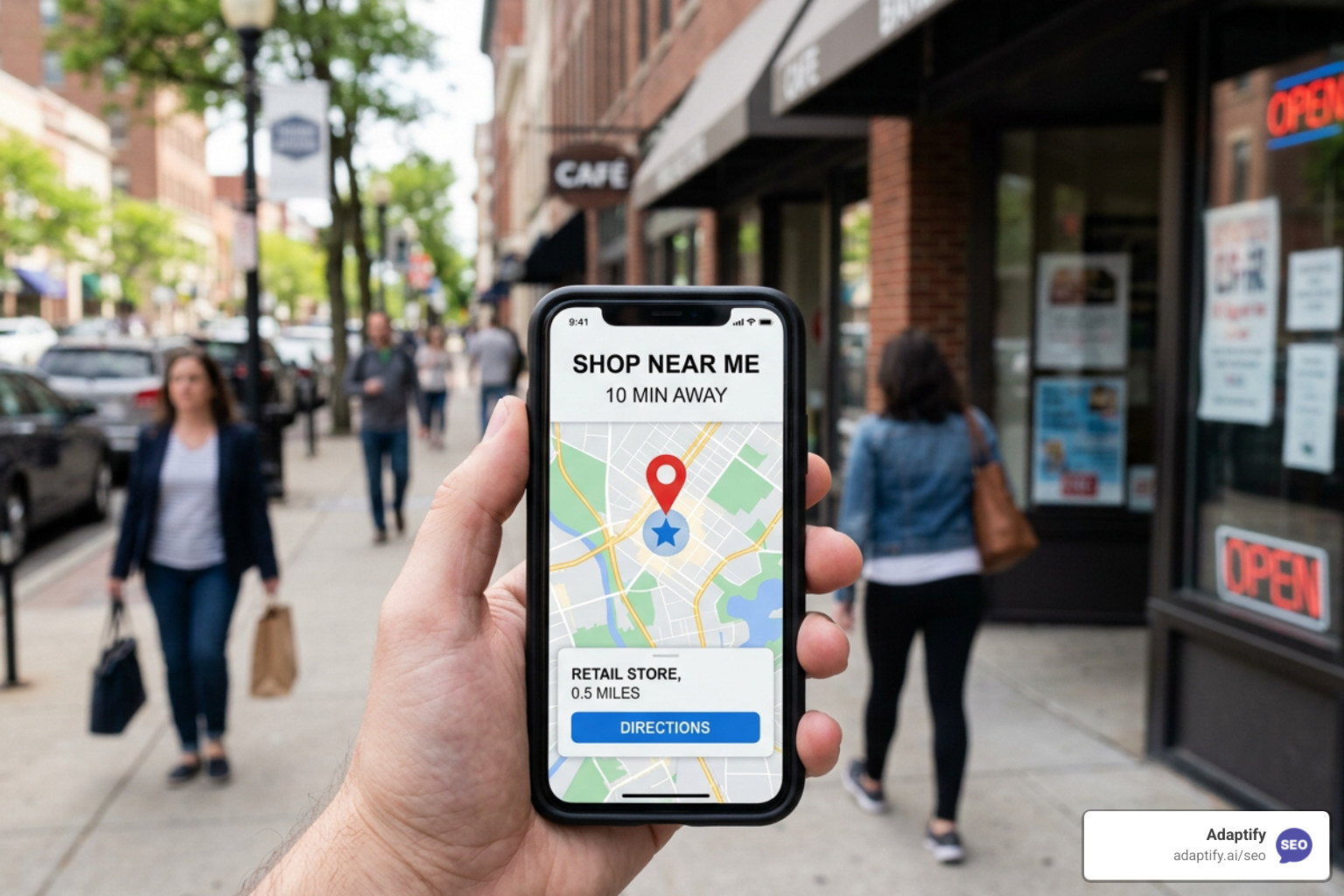
Master local retail SEO to drive foot traffic from Google with proven strategies for GBP, reviews, and AI search optimization.
Join 1,000+ agencies already delivering SEO and AI visibility from a single platform without increasing their headcount.Join 1,000+ agencies already delivering SEO and AI visibility from a single platform without increasing their headcount.