The Ultimate Guide to Local SEO Strategies

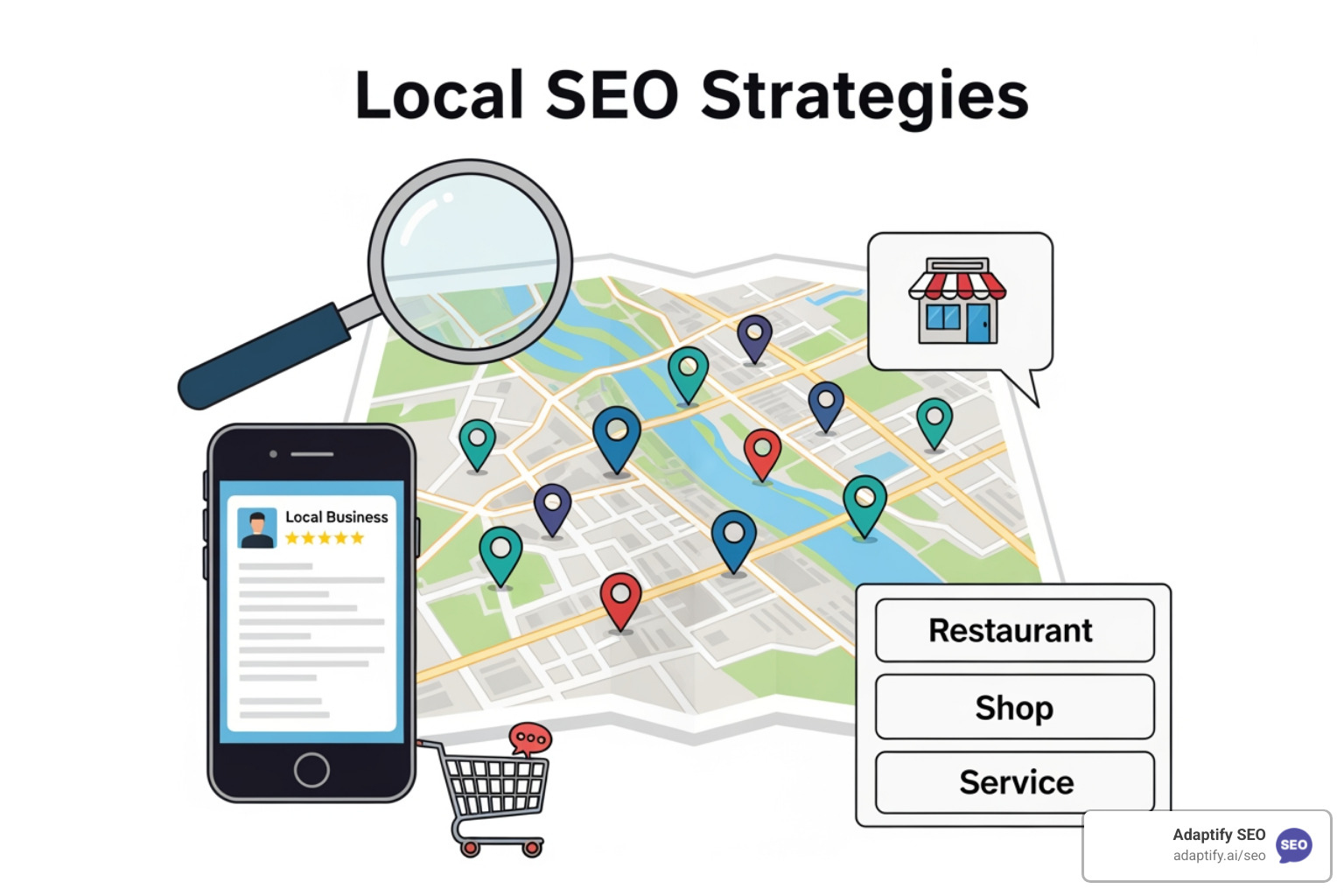

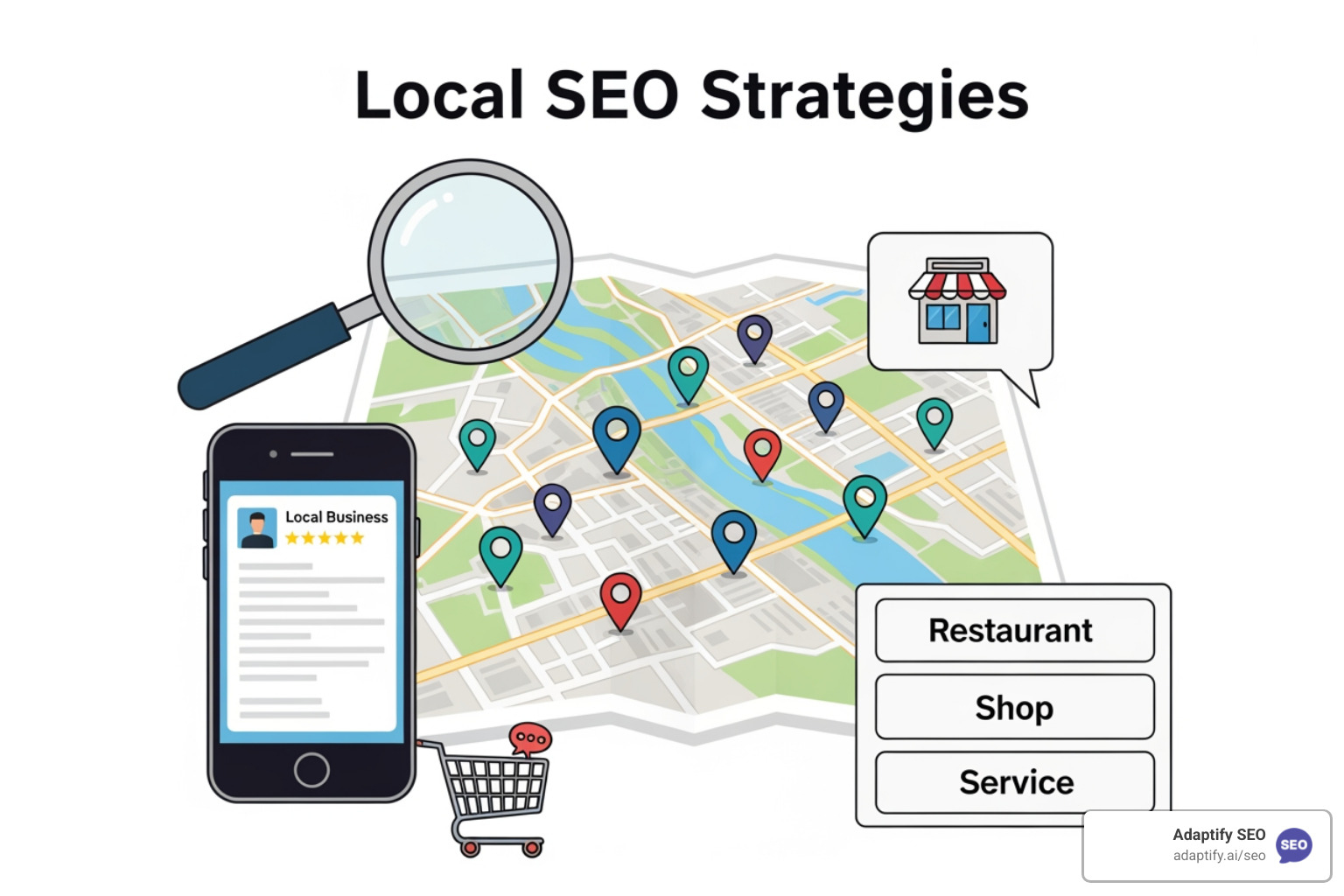
Local SEO Strategies are the specific tactics businesses use to rank higher in location-based search results on Google — including the Map Pack, Google Maps, and local organic results.
Here are the core local SEO strategies at a glance:
Think about the last time you had an urgent, local need. Maybe a leaking pipe at midnight, or you just landed in a new city and needed the best pizza nearby. You didn't scroll through social media. You opened Google and searched.
That moment — high intent, specific need, ready to act — is exactly what local SEO is designed to capture.
The numbers back this up. 46% of all internet searches have local intent. And of the people who search "near me," 76% visit a business within a day. These aren't casual browsers. They're buyers.
For businesses with a physical location or a defined service area, showing up in those local results isn't just a nice-to-have. It's one of the most direct paths to consistent leads, foot traffic, and phone calls. Yet many businesses either ignore local SEO entirely or apply generic tactics that don't move the needle locally.
This guide covers everything — from the fundamentals of how Google ranks local results, to the specific steps you can take today to climb the Map Pack and capture more high-intent customers in your area.
I'm Hansjan Kamerling, product designer and marketing consultant at Adaptify AI, and I've helped scale digital platforms and marketing systems across industries — experience I draw on directly when developing Local SEO Strategies that are both practical and built to grow. Let's get into it.
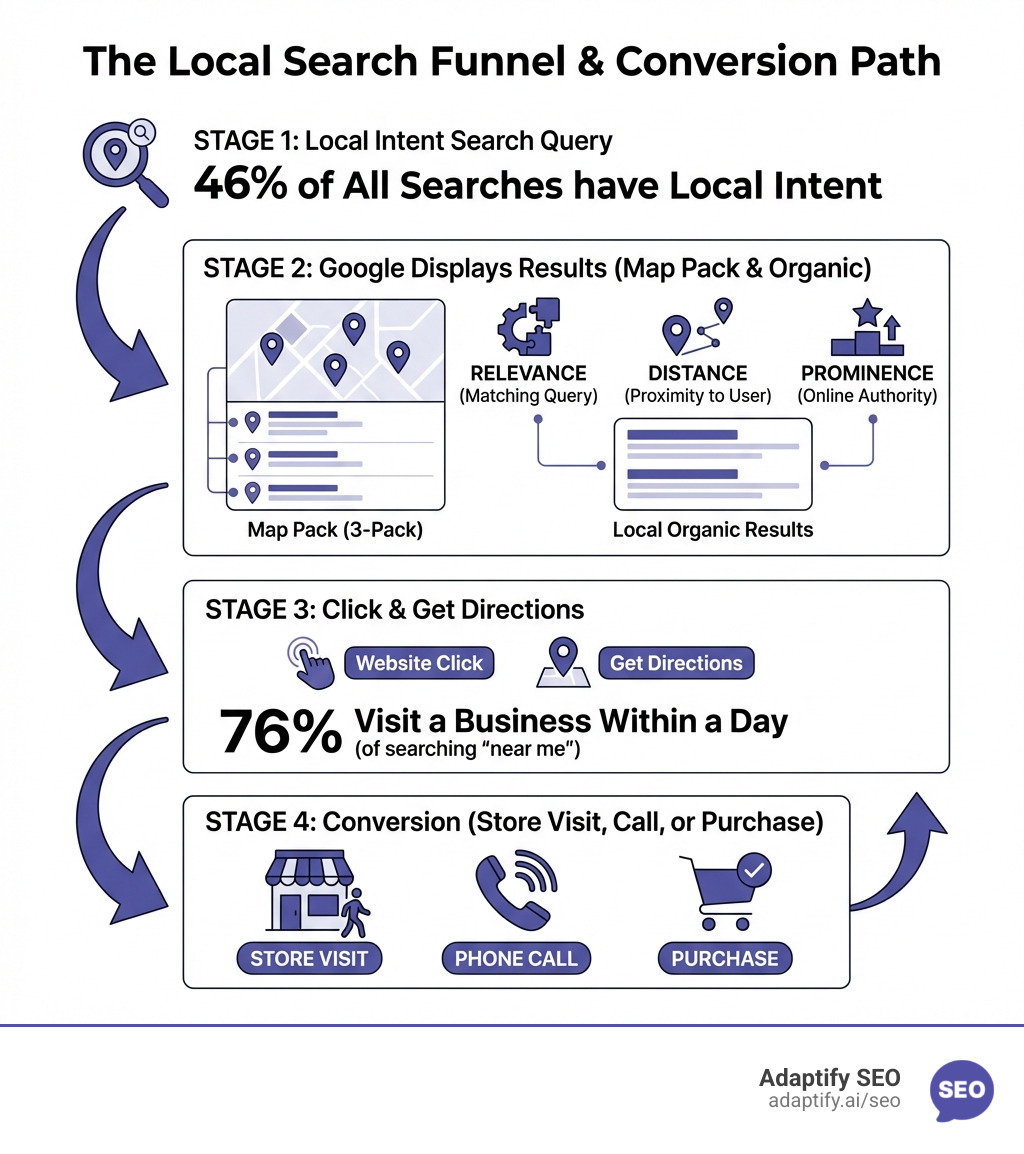
When you search for a service like "plumber near me" or "best coffee shop," Google doesn't just give you a list of blue links. It provides a map. This is known as the Google Map Pack (or the Local Pack), and it is the holy grail for local businesses.
Local SEO differs significantly from standard SEO. While standard SEO focuses on being the most authoritative source globally or nationally for a topic, local SEO is hyper-focused on geographic relevance.
| Feature | Standard SEO | Local SEO |
|---|---|---|
| Primary Goal | Rank for informational/global keywords | Rank for "near me" and location-specific queries |
| Key Platform | Website / Blog | Google Business Profile (GBP) + Website |
| Main Factors | Backlinks, Content Quality, Technical SEO | Relevance, Distance, Prominence |
| Result Type | Blue Links, Featured Snippets | Map Pack, Local Organic Results |
Google delivers billions of local results every month. To decide who gets those top spots, Google uses three primary ranking factors:
Below the Map Pack, you will find "local organic results." These are the traditional blue links that Google deems highly relevant to the local search. To win here, you need strong proximity signals—clues on your website that prove you are deeply rooted in your specific community.
Ranking in the Map Pack isn't just about vanity; it’s about survival. For mobile users, the Map Pack often takes up the entire screen. If you aren't in those top three spots, you're essentially invisible to a huge portion of your audience. High rankings here lead to significantly higher click-through rates and serve as immediate trust signals. When a customer sees your 4.8-star rating right next to a "Call" button, the friction to conversion almost disappears.
To grow a local business, you need a strategy that turns searchers into callers. This starts with identifying your business model. Are you a brick-and-mortar shop where customers come to you, or a service-area business (SAB) like a roofer or plumber where you go to them?
Understanding this is vital because Google has different guidelines for each. For instance, SABs should generally hide their physical address if they don't serve customers there. At Adaptify SEO, we often work with agencies using our white-label SEO solutions to manage these nuances across hundreds of client locations simultaneously.
Your Google Business Profile (GBP) is the cornerstone of your local presence. It is often the first thing a customer sees.
To strengthen your local presence, I recommend these essential optimization steps:
Reviews are the lifeblood of local search. Research shows that 95% of customers read online reviews before making a purchase.
Google looks at review volume (how many you have), recency (how fresh they are), and sentiment (what people are actually saying). But here is a pro tip: responding is just as important as receiving. 92% of consumers consider owner responses a sign of high-quality customer service.
When handling reviews:
While your GBP gets you in the Map Pack, your website helps you stay there and rank in the local organic results.
One of the most effective Local SEO Strategies is implementing LocalBusiness schema. This is a piece of code that tells Google exactly what your business is, where it is, and what its hours are in a language search engines understand. Once you've added it, use the Rich Results Test to make sure Google can read it correctly.
At Adaptify, we emphasize that SEO content must be built with mobile-first indexing in mind. Most local searches happen on the go, so if your site is slow or hard to navigate on a phone, your rankings will suffer regardless of your keywords.
Don't just guess what people are typing. Use the Keyword Planner to find terms with high local intent.
Instead of just targeting "dentist," look for long-tail keywords and service-area modifiers like "emergency dentist in [City Name]" or "teeth whitening [Neighborhood Name]." Look at your competitors' profiles to see which categories they use—this is often a goldmine for keyword ideas you might have missed.
If you serve multiple cities or neighborhoods, do not try to rank your homepage for all of them. Create dedicated landing pages for each.
Each page should have:
Citations are mentions of your business's Name, Address, and Phone number (NAP) on other websites. They act like "votes of confidence" for your location.
Start by auditing your NAP. If your business is listed as "Main St." on Yelp but "Main Street" on your website, it can confuse Google. Use tools like Data Axle to get listed in major aggregators.
Beyond structured citations (directories), you want unstructured citations—mentions in local news, blogs, or community sites. This is where backlink building becomes a community effort.
Local link building is often easier than national link building because you have a physical presence.
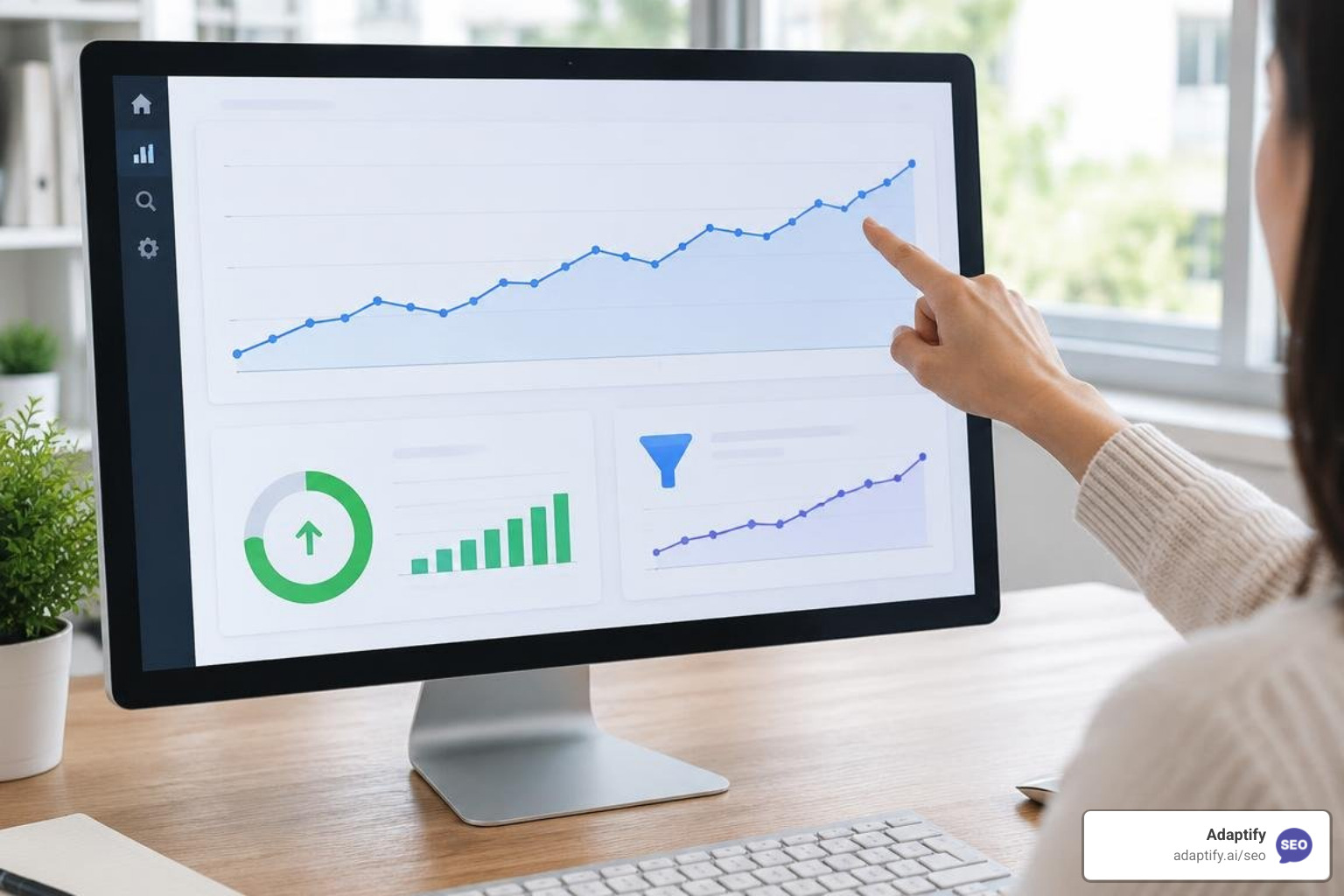
You can't improve what you don't measure. I recommend using Google Search Console to track which keywords are driving traffic to your site. For the Map Pack, tools like Grid My Business can show you exactly where you rank in different parts of your city.
We are also entering the era of AI Overviews and Search Generative Experience (SGE). Google's AI now pulls information directly from GBP descriptions, reviews, and service lists to answer user queries. This makes having a complete, detailed profile more critical than ever.
Local SEO is a marathon, not a sprint. Typically, it takes 4-6 months to see significant movement in competitive markets. When setting SMART goals, don't just look at "rankings." Track:
Avoid these common pitfalls that can get you penalized:
For hybrid models (businesses that have a shop but also deliver), ensure you set your "Service Area" in GBP while still showing your physical address to capture both types of searchers.
Local SEO focuses on appearing in searches with geographic intent (like "near me"), primarily using the Google Business Profile and Map Pack. Standard SEO is broader, focusing on ranking for informational queries regardless of the user's location.
While you might see small wins in a few weeks, a comprehensive strategy usually takes 4 to 6 months to mature. This depends on your industry's competitiveness and your current online reputation.
The most common reasons are an unverified Google Business Profile, inconsistent NAP data across the web, a lack of local reviews, or being located too far from the center of the search area.
Building local authority is the key to sustainable, long-term growth. By focusing on the fundamentals—a stellar Google Business Profile, consistent citations, and genuine community engagement—you turn your business into a household name in your area.
At Adaptify SEO, we believe in making these high-level Local SEO Strategies accessible and scalable. Our automated SEO tools take the manual grind out of content and link building, allowing you to focus on what you do best: serving your local customers. Ready to dominate your local market? Let’s get to work.
Master SEO monitoring with key metrics and tools to track rankings, technical health, and organic growth for continuous performance optimi...
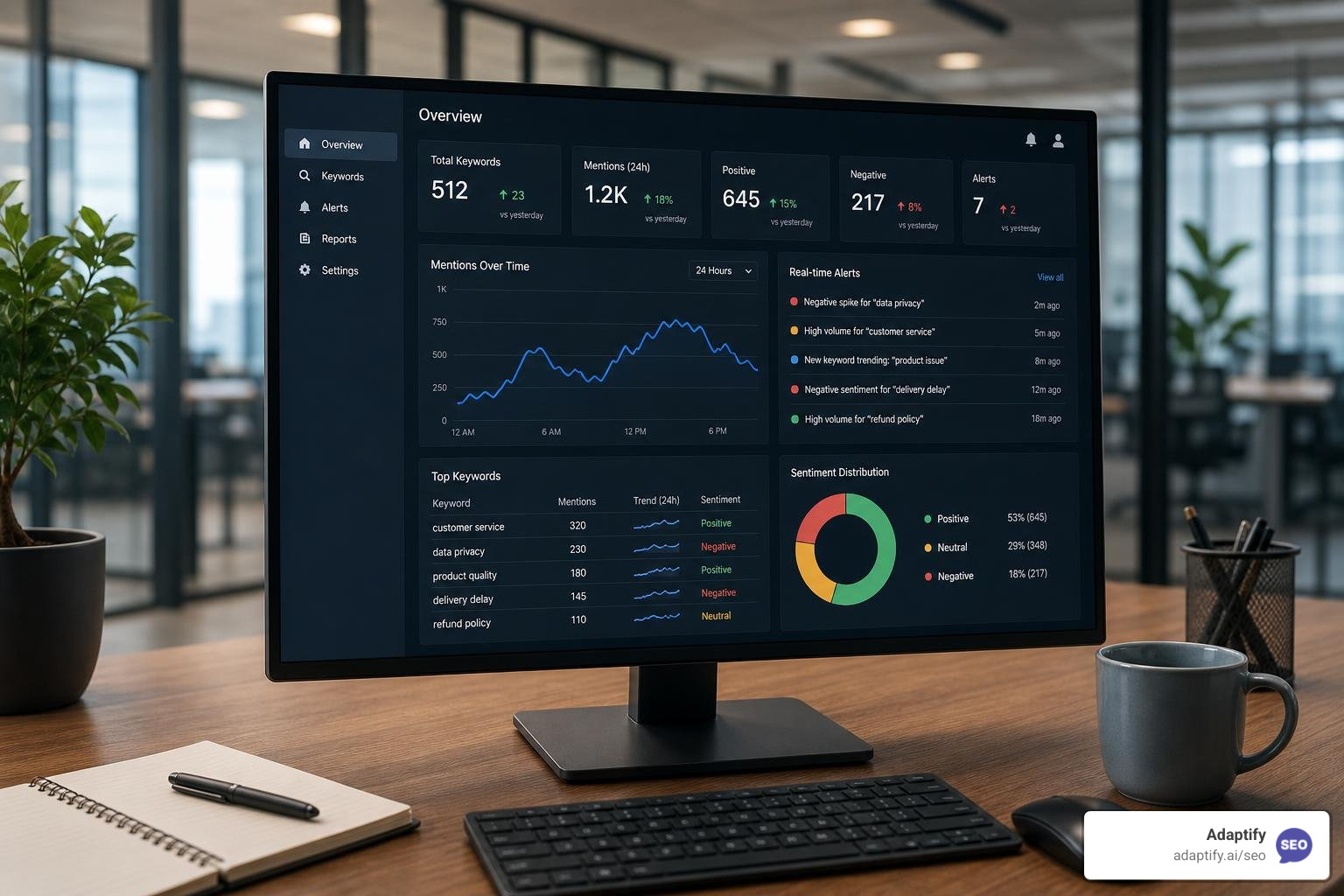
The Best Online Keyword Monitoring Tools for Real-Time Alerts - Learn about online keyword monitoring tool
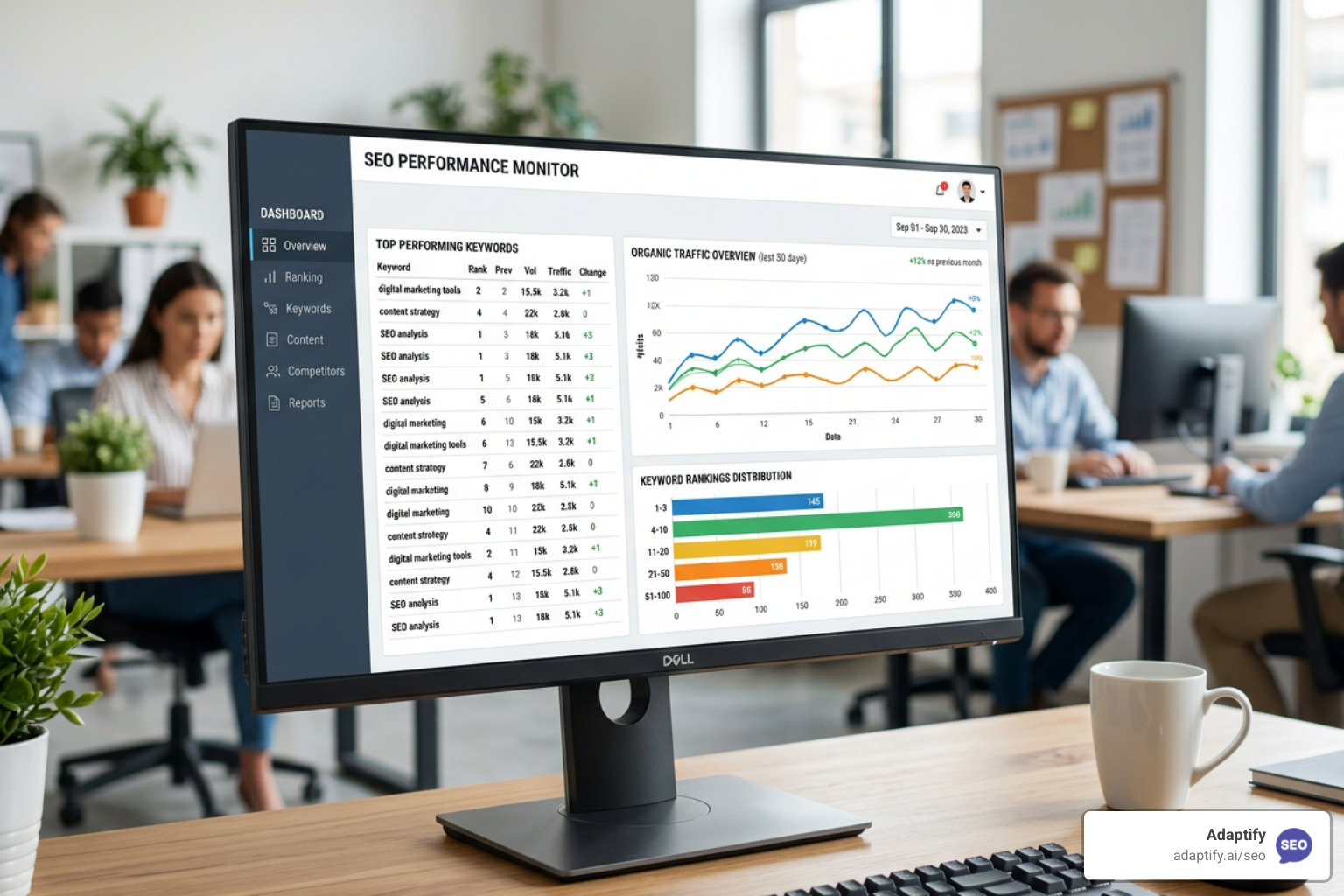
Stop Flying Blind with These Top SEO Monitor Tools - Learn about seo monitor tools
Join 1,000+ agencies already delivering SEO and AI visibility from a single platform without increasing their headcount.Join 1,000+ agencies already delivering SEO and AI visibility from a single platform without increasing their headcount.