Tracking Triumph: How to Monitor Your Keyword Rankings

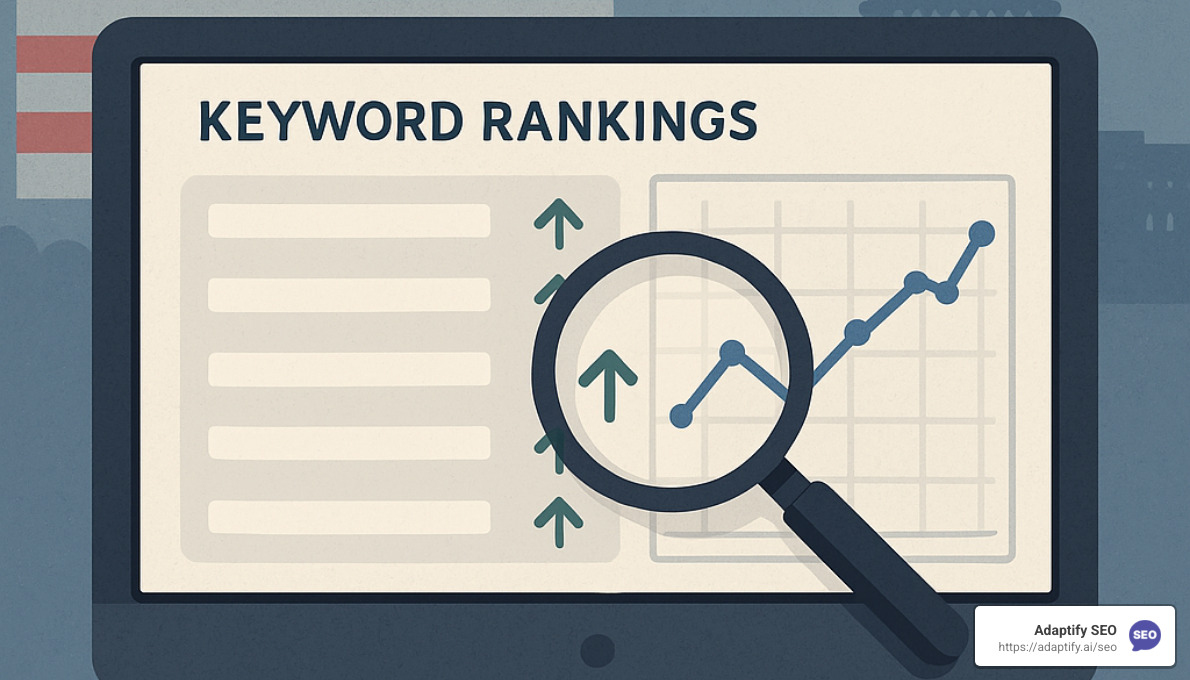

Keyword ranking tracking is the process of monitoring how your website ranks in search engines for specific keywords over time.
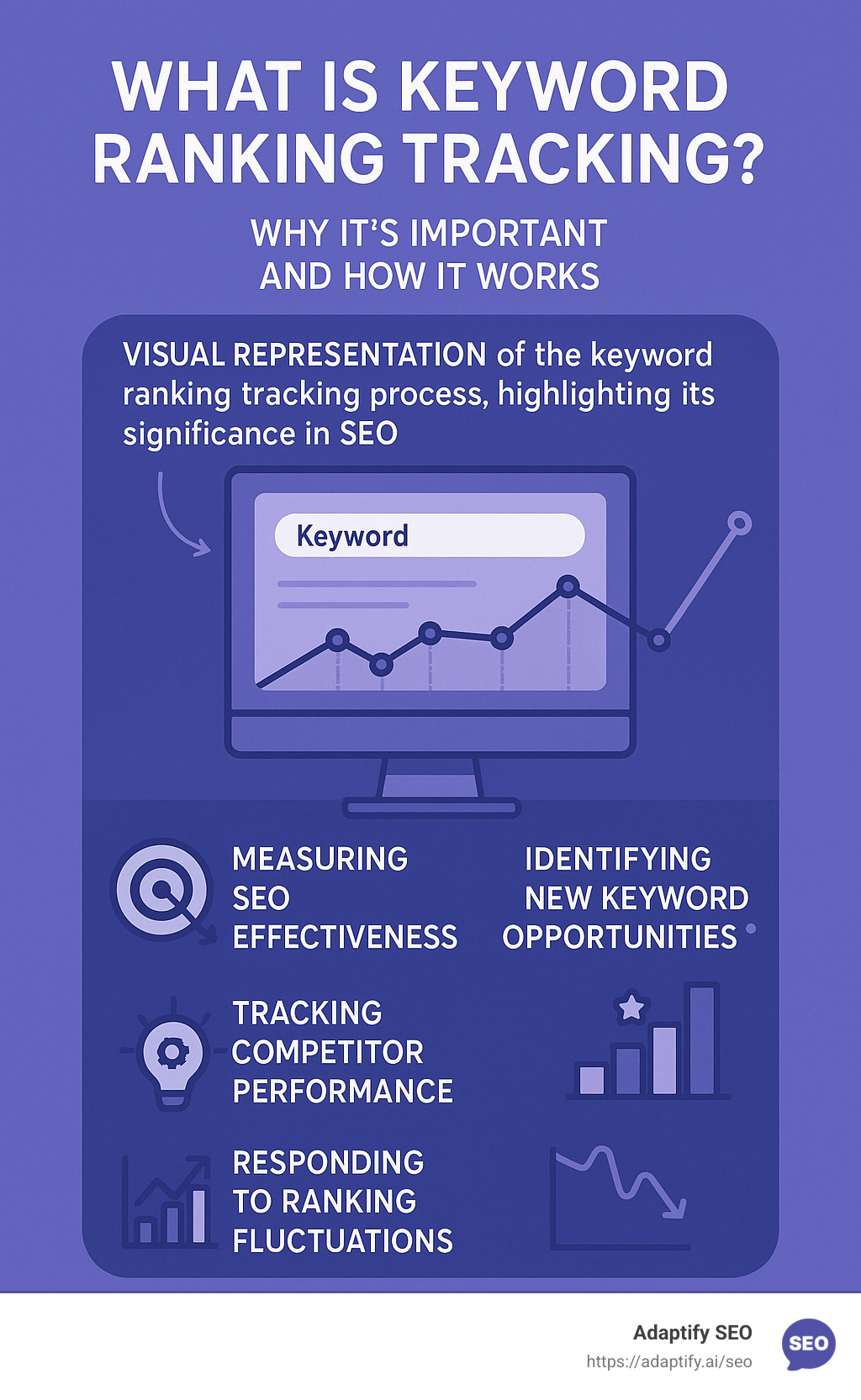
For a quick overview, keyword ranking tracking helps you by:
In today's crowded search landscape, staying visible is tough. As Emanuel de Macedo candidly puts it:
"Keeping track of your website's rankings can feel like a never-ending battle."
If you want to drive consistent organic traffic, tracking your keyword rankings simply isn't optional—it's essential.
I'm Hansjan Kamerling, having led design and product management for data analytics and AI startups used by thousands, I've tackled keyword ranking tracking at scale. My experience ranges from optimizing search experiences for 33 marketplaces to managing keyword ranking tools for SaaS teams, making me uniquely aware of how important—and challenging—tracking your keyword rankings can be.
Ready to scale your agency's SEO results without the grunt work? Book a Demo today.
Ever wonder if your SEO efforts are paying off? Enter keyword ranking tracking—a straightforward yet powerful process that helps you see exactly where your website stands in search engine results pages (SERPs) for specific keywords over time.
Search engines like Google rely on complex algorithms (think of them as Google’s secret sauce) to decide where to position your website. These algorithms analyze more than 200 ranking factors—from content relevance and user experience to backlinks and site speed. And they're always changing—in fact, Google makes over 500 algorithm updates every year. Yep, that's more than one update per day!
With all these moving parts, it's clear why monitoring your keyword rankings is so crucial. As an SEO pro once wisely said:
"Every SEO professional needs to know how well their sites rank for their target keywords."
Understanding your keyword rankings not only shows whether your SEO strategy is working—it also helps you quickly adapt to changes and stay competitive.
Simply put, keyword ranking tracking is about regularly checking where your website shows up in SERPs for particular keyword searches. Think of it as keeping score, giving you a clear picture of your SEO progress over time.
And it's not just a nice-to-have feature. Surveys show that around 91% of SEO professionals consider keyword tracking absolutely essential to their strategy—and for good reason.
By keeping tabs on your rankings, you can clearly measure your SEO progress, spot shifts caused by algorithm updates, validate your content strategy, and catch potential issues early.
Modern keyword tracking tools have simplified what used to be a tedious manual task. One SEO consultant shared how easy it has become:
"With modern tracking tools, I just open a tag, dump in my keywords, and it's done. It's so much faster and more nimble than any other method."
In today's competitive digital world, keyword ranking tracking isn't just helpful—it's vital. Let's look at some solid reasons why tracking your rankings matters so much.
First off, visibility equals traffic. Studies show that 75% of users never scroll past the first page of search results. That means if you're not showing up there, you're essentially invisible to most potential visitors.
Second, tracking rankings helps you measure your SEO’s return on investment (ROI). Consider the experience of SEO specialist Mark McDowell, who saw immediate financial results by closely tracking rankings:
"After using comprehensive rank tracking, we saw a big revenue jump over 12 months. We went in terms of SEO revenue from $1 million to $3 million."
Pretty impressive, right?
Tracking rankings also helps you identify trends. Regular keyword monitoring lets you see emerging patterns in user searches and detect algorithm updates early, allowing you to adapt your strategy before they significantly impact your traffic.
Plus, tracking rankings gives you crucial insights into your competitors. By knowing how you stack up against them, you can make smarter decisions around content creation and SEO tactics.
Finally, keyword ranking tracking helps you optimize your content. It clearly shows what's working, what's not, and what needs improvement—so you can continually refine your strategy.
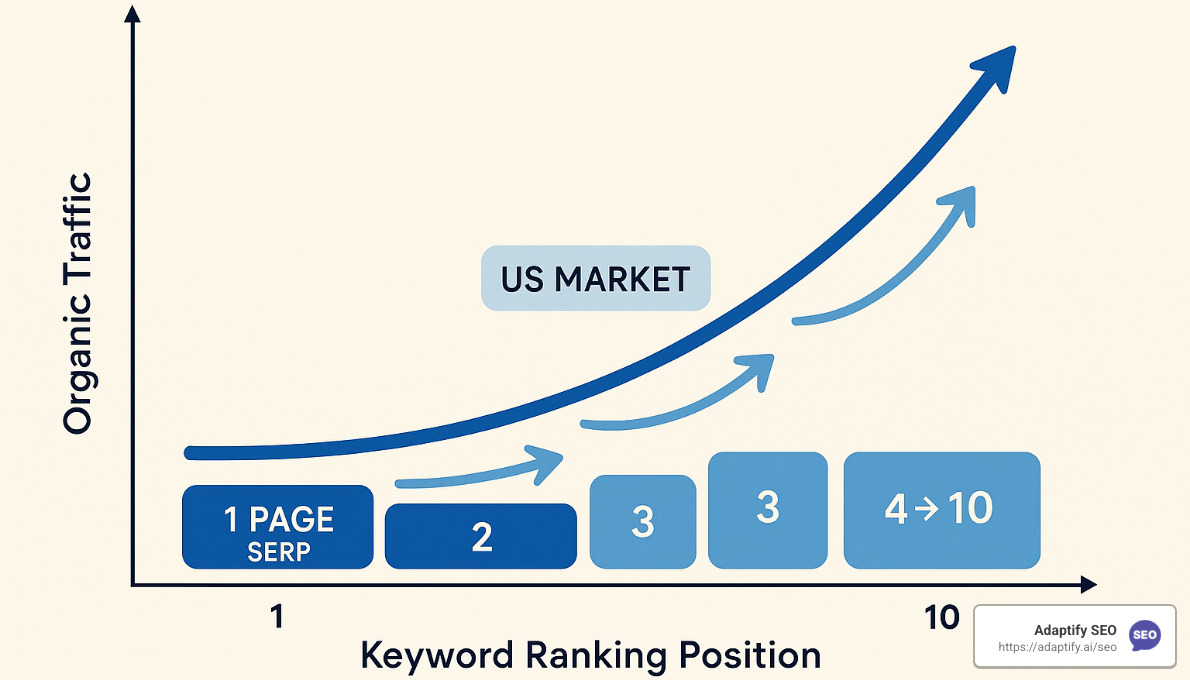
And let's not forget: keyword tracking also measures how effective your specific SEO tactics are. For example, if you recently adjusted your meta titles or added structured data, changes in keyword rankings can indicate whether these tweaks helped or hurt your position.
As one SEO expert humorously put it, "An unmonitored SEO campaign is a half-finished one." Without tracking your keyword rankings, you're basically navigating SEO blindfolded.
Ready to simplify and automate your agency’s keyword tracking? Book a Demo today.
Choosing the right keyword ranking tracking tool can feel a bit like picking your favorite ice cream flavor—there are lots of options out there, and the best choice depends on your taste (or in this case, your SEO needs). Let's explore your options, both free and paid, to find the perfect fit.
If you're just starting your SEO journey or keeping an eye on a tight budget, free tools can be a lifesaver.
First on the list is Google Search Console. Think of it as Google's friendly neighborhood SEO helper. It doesn't let you track custom keywords from scratch, but it does show you exactly how your website is already performing. You get insights into average keyword positions, total impressions, clicks, and click-through rates—all straight from Google's own data. It's reliable, straightforward, and completely free.
Feeling a bit DIY? There's always the incognito browser method: open an incognito tab, type your keyword, and see where your site ranks manually. It's a bit old-school and somewhat tedious—but it works if you're only tracking a handful of keywords.
For a more automated yet limited approach, there are several free keyword checkers that give you a few free keyword checks each day. They're easy to use and helpful when you just want a quick snapshot.
If you're tech-savvy and adventurous, various webmaster tools and even Python libraries offer free tracking options with a bit more setup involved.
Just remember—free tools usually come with restrictions. You might face limits on how many keywords you can track, less detailed historical data, infrequent updates, and fewer bells and whistles for analysis or reporting.
Once your SEO game steps up, it's probably time to invest in paid tools—especially if you're an SEO agency or managing rankings at scale. The right paid tool could be the difference between guesswork and clear, actionable data.
Many premium rank tracking tools provide daily ranking updates and let you monitor your competitors' performance. You can view rankings by device and even check how you're performing in specific cities or regions.
Some tools offer tracking in over 190 countries, historical rankings, Share of Voice data, and detailed information about popular SERP features. It's like having a dedicated SEO assistant keeping tabs on everything for you.
There are tools trusted by 40,000+ businesses worldwide that track rankings in over 100,000 locations globally—perfect if your clients span multiple markets. Others are praised for their delightful simplicity and extensive 24-month historical data.
For specialized agency needs, there are solutions that have been helping businesses boost client lifetime value significantly since 2011, with accurate tracking and easy-to-use dashboards. And if you're looking for a robust toolkit, some platforms pack rank tracking alongside a suite of other handy SEO tools in one convenient package.
If speed and pinpoint accuracy are top of your wish list, there are favorites among experts with prices starting at around $129/month for tracking 1,000 keywords, making them ideal for agencies serious about ranking data.
The main perks of investing in premium tools include daily (or even on-demand) ranking updates, granular local tracking (by city, ZIP code, or region), device-specific data (desktop, mobile, tablet), competitor tracking, SERP feature analysis (featured snippets, local packs, etc.), customizable client reports, and deep historical data for spotting long-term trends.
When you're choosing your ideal paid tool, keep in mind factors like how many keywords you need tracked, how frequently you want updates, which geographic regions matter most, integration abilities with other SEO platforms you already use, your budget, and reporting options for clients or internal stakeholders.
As one experienced SEO pro, David Rymarz, notes:
"The accuracy of the results are superb, and significantly better than ANY other keyword ranking tool I've ever used."
Clearly, not all tools are created equal—so choose wisely based on your unique needs.
Ready to simplify and automate your keyword ranking efforts? Book a Demo and find how Adaptify SEO can streamline your SEO processes today.
Now that we understand the importance of keyword ranking tracking and the tools available, let's walk through the process of setting up and managing your tracking system. I'll guide you through each step with practical advice that you can implement right away.
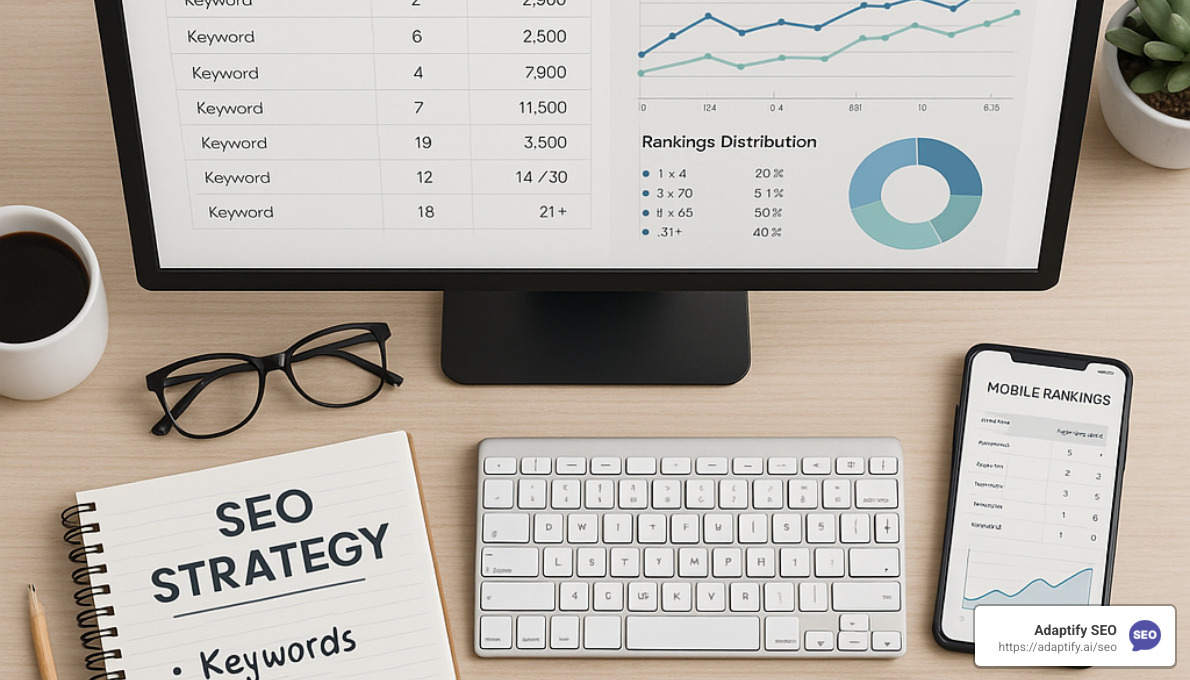
Choosing which keywords to track isn't about monitoring everything under the sun – it's about being strategic with your time and resources.
Start with your core business keywords – these are the terms directly related to your products or services that you absolutely need to rank for. For a coffee shop, this might be "specialty coffee" or "artisan espresso."
Don't forget your branded terms! Your company name, product names, and common variations should be on your tracking list. You'd be surprised how many businesses neglect to monitor their own brand terms, missing opportunities to dominate their branded search results.
Understanding search intent is crucial when organizing your keywords. Group them by whether searchers are looking for information, navigating to a specific site, researching products, or ready to buy. This organization helps you understand performance patterns better than a random list.
Be realistic about keyword difficulty. I've seen too many businesses obsess over impossible high-volume terms while ignoring achievable opportunities. As one client told me after changing their approach: "Higher rankings for low-volume keywords often drive better results than low rankings for high-volume keywords."
Include long-tail variations in your tracking. These longer, more specific phrases might have lower search volume, but they often convert much better. Did you know that about 70% of all Google searches are long-tail keywords? That's a huge opportunity many miss.
Don't operate in a vacuum – track competitor keywords too. Seeing where your competitors are gaining ground gives you valuable strategic insights.
Always prioritize relevance over volume. A highly relevant keyword with 100 monthly searches is usually more valuable than a general term with 10,000 searches that doesn't match your offerings.
When organizing your keywords, consider using tags by product category, content type, funnel stage, or geographic relevance. This makes analysis much more meaningful later on.
Once you've got your keyword list ready, it's time to configure your tracking tool. This process is pretty similar across most platforms, though the specific steps might vary slightly.
First, create your project or campaign by entering your domain and basic information. Think of this as setting up your SEO command center.
Next, configure your search settings. This is where you tell the tool exactly what you want to monitor:
Now it's time to import your keywords. Most tools let you paste them in directly or upload a CSV file. If you're just starting out, you might add keywords manually, but for larger sets, bulk import is a time-saver.
Adding 3-5 main competitors helps you benchmark your performance against others in your space. This competitive intelligence is invaluable for identifying gaps and opportunities.
Most paid tools offer daily tracking frequency, which is generally sufficient. Some allow on-demand updates for when you need to check the impact of recent changes.
Don't forget to set up alerts for significant ranking changes. Getting notified when you drop out of the top 10 or achieve a new high ranking helps you stay on top of important shifts without constant checking.
Finally, integrate with other tools like Google Analytics and Google Search Console. This connection helps you correlate ranking changes with actual traffic and conversion data, giving you the full picture of your SEO performance.
Having all this tracking data is only valuable if you know how to extract meaningful insights from it. Let's look at how to make sense of what you're seeing.
First, familiarize yourself with the key metrics most tools provide:
Look beyond individual rankings to analyze ranking distributions. Understanding how many keywords fall into different position ranges (positions 1-3, 4-10, 11-20, and 21-50) gives you a clearer picture of your overall SEO health.
Don't just focus on today's rankings – examine historical trends over time. This longer-term view helps you identify seasonal fluctuations, the impact of algorithm updates, and the effects of your SEO efforts. Sometimes what looks like a problem is actually part of a normal pattern.
Segment your analysis to gain deeper insights. Breaking down your data by keyword groups, landing pages, search intent, device type, or location reveals patterns you'd miss in aggregate data.
Pay special attention to anomalies and opportunities in your data. Sudden ranking drops, keywords where competitors recently overtook you, terms ranking on page two that could be pushed to page one, and SERP features you're missing out on all deserve investigation.
Always try to connect rankings to business outcomes. The ultimate goal isn't just higher rankings – it's more traffic, conversions, and revenue. Correlate ranking changes with these business metrics to understand the real impact of your SEO work.
Finally, create actionable reports that transform data into clear visualizations and recommendations. Whether for yourself or stakeholders, these reports should tell a story about what's happening and what to do next.
One particularly valuable analysis is examining keyword cannibalization, where multiple pages on your site compete for the same keyword. Many tracking tools now include cannibalization reports that help identify these issues so you can consolidate or differentiate your content.
As one SEO professional I work with often says:
"Smart SEOs view ranking data as a source of opportunities to reevaluate content strategies when competitors outperform on target keywords."
This mindset transforms tracking from a passive monitoring activity into a proactive strategy tool.
Ready to get deeper insights from your keyword data without spending hours in spreadsheets? Book a Demo today and see how Adaptify can streamline your keyword ranking tracking process.
Once you've nailed down the basics of keyword ranking tracking, you're ready to level up your SEO game. Let's explore some advanced strategies that can help you outrank competitors, uncover hidden opportunities, and maximize the value of your keyword data.
It's tempting to focus solely on your own rankings, but keeping an eye on your competitors is equally crucial. After all, SEO doesn’t happen in a vacuum—your visibility depends on how you stack up against others.
Start by identifying your true search competitors. These aren't always your direct business rivals; they're websites consistently appearing alongside you in the search results. Tools like Ahrefs and Semrush can help you easily pinpoint these competitors and monitor their keyword performance.
Once you've found these competitors, it's time to dig into their keyword universe. Look beyond the keywords you're currently targeting and find new ones your competitors rank for. Often you'll find untapped keyword opportunities waiting to be explored.
Next, analyze ranking overlaps. Identify keywords where both you and your competitors appear. Where are you outperforming them, and where are they ahead of you? This analysis reveals your strengths and weaknesses, helping you prioritize your SEO efforts effectively.
Don't forget to monitor competitors' SERP feature visibility. Are they frequently capturing featured snippets, knowledge panels, or local packs? By understanding their strategies, you can optimize your content to take over those valuable SERP real estate positions.
Benchmarking your Share of Voice is another valuable tactic. This involves comparing your overall visibility against competitors to measure market share. Track how your share of voice shifts over time as you implement SEO improvements.
Finally, pay attention to new competitors entering your keyword space. Set up alerts within your tracking tool to spot these newcomers early. Staying proactive about competitive intelligence helps you respond swiftly and maintain your advantage.
As one popular tracking tool puts it succinctly:
"Track competitor visibility in SERP, target competitive keywords, and find new competitors."
Competitive tracking isn't about copying others—it's about uncovering opportunities for your own unique improvements. If a competitor suddenly jumps in rankings for a keyword cluster, they've probably published valuable content that resonates with users. Take inspiration from their approach, but always add your unique spin.
Tracking your keyword rankings is only valuable if you use the data to actively refine your SEO strategy. Let's explore how you can put those insights into action.
One powerful approach is content optimization based on ranking patterns. Look at keywords ranking on page two of Google—optimizing or expanding these pages can often push them onto the coveted first page. Similarly, if a keyword ranks around positions 5-10, small content improvements and better on-page SEO elements like schema markup can give you a significant boost.
Addressing keyword cannibalization is another common yet overlooked tactic. Sometimes multiple pages compete against each other for the same keyword. Use your tracking data to spot these issues. Consolidating or redirecting cannibalizing content can dramatically improve your rankings.
Another advanced strategy is targeting specific SERP features. For instance, if your content ranks in the top 10 but doesn't capture the featured snippet, optimize your content specifically for snippet-friendly formats like bullet points, numbered lists, or concise answers.
Local businesses should pay special attention to local pack optimization. If your competitor consistently appears in local search results, it's time to improve your Google Business Profile and local citations to win visibility where it matters most.
Your keyword tracking data can also guide strategic keyword pivoting. When highly competitive keywords feel stuck, shift your attention toward attainable "low-hanging fruit," like keywords ranking between positions 11-20. Small efforts here can deliver big rewards.
Don't overlook technical SEO improvements either. If certain pages struggle to rank despite strong content, technical issues like slow page load speeds, crawlability barriers, or poor mobile optimization might be holding you back. Spot and fix these problems to open up ranking gains.
Additionally, use your ranking insights to refine your link-building efforts. Focus outreach and internal linking on pages ranking positions 5-15. These pages typically just need an authority boost to climb higher in results. Also, analyze backlinks pointing to competitor pages outranking yours—can you replicate their strategies or find higher-quality opportunities?
Your keyword data can even inform your content planning calendar. Watch for seasonal trends in rankings and plan timely updates to refresh older content. By analyzing topics competitors rank for but you don't, you can pinpoint content gaps and fill them proactively.
Finally, effective reporting and stakeholder communication can increase buy-in for your SEO efforts. Create visual dashboards showing keyword ranking improvements over time and correlate this directly with traffic and conversions. Demonstrating clear ROI will ensure continued support and enthusiasm for your SEO strategy.
One practical trick: always annotate significant SEO changes directly in your tracking tool. This helps you clearly link ranking fluctuations with specific actions, providing valuable insights into what's working best.
How impactful can this focused approach be? Primal Digital Agency demonstrates what's possible:
"After using Keyword.com for rank tracking, Primal Digital Agency saw their SEO revenue increase from $1 million to $3 million over 12 months."
Clearly, when used strategically, keyword data isn't just numbers—it's actionable intelligence for growth.
Ready to transform your keyword data into strategic SEO success? Book a Demo today.
The best frequency for checking your keyword ranking tracking depends on a few important factors, like how competitive your industry is, your specific SEO goals, and how actively you're working on your strategy.
Daily tracking is ideal when you're operating in a highly competitive market, responding to an algorithm update, or actively trying to bounce back from a ranking dip. By checking every day, you'll quickly spot any issues and be able to adjust your strategy immediately. As one SEO pro puts it, "Daily updates give you an edge in detecting and responding to algorithm changes quickly."
Weekly tracking works well for most businesses actively running SEO campaigns. It strikes the right balance between keeping tabs on your progress without obsessing over every tiny fluctuation.
If you're in a less competitive niche or have a longer sales cycle, checking rankings every two weeks should suffice. Rankings won't change dramatically overnight in these industries, so less frequent updates still ensure you're on the right path.
Finally, monthly tracking is usually enough if you're an established brand with stable rankings and aren't actively in a competitive battle. This helps you focus more on long-term trends rather than short-term ups and downs.
Google's algorithm updates happen over 500 times a year (yes, really!), but many are minor adjustments. Don't stress about every single fluctuation—focus on overall trends. A day-to-day drop could just be noise, while a consistent downward slide over several weeks definitely needs attention.
Most keyword ranking tracking tools let you schedule regular reports, keeping you informed without the headache of daily manual checks. And hey, if you'd like an easier way to automate your keyword tracking, Book a Demo with Adaptify SEO and we'll show you how it's done!
Google is the big player in search—but that doesn't mean Bing, Yahoo, and other search engines aren't important! If part of your audience searches on these platforms, you'll want to track your rankings there as well.
First, make sure you're using a keyword tracking tool that supports multiple search engines. Popular premium tools typically let you monitor Google, Bing, Yahoo, YouTube, and sometimes even Amazon or Yandex. Some tools can track rankings across more than 4,000 search engines worldwide!
Next, you'll set up tracking for each search engine separately within your tool. This way, you can easily spot differences in how your pages perform on each platform.
That search engines have their own preferences. Bing, for instance, tends to give more weight to exact keyword matches and authority sites. So, don't panic if your performance varies between Google and Bing. Instead, use these differences as clues to tweak your SEO approach.
If analytics show a notable chunk of your audience is coming from Bing or another search platform, focus more resources on optimizing and tracking that engine. And remember, in international markets, dominant search engines vary significantly—like Yandex in Russia or Baidu in China.
Tracking multiple search engines gives you a fuller picture of your total visibility. Plus, it can uncover hidden opportunities you might otherwise miss if you focus solely on Google. Want a simpler way to track rankings across search engines? We've got you covered—Book a Demo today!
Local and mobile searches are skyrocketing, making precise tracking more important than ever. Here’s how to accurately track your keyword ranking tracking for both local searches and mobile devices.
For local tracking, choose tools that offer geo-specific capabilities. Quality rank tracking services let you track rankings right down to the city or ZIP code level. If you operate in multiple areas, set up separate tracking for each location to pinpoint exact differences.
Don’t forget to monitor location-based terms such as "near me" searches or phrases including your city name—like "best dentist in Chicago." These terms reveal exactly how visible your business is to nearby customers.
It's essential to keep an eye on your Google Maps rankings too. Many tools now include tracking for local packs and Google Maps listings, helping you optimize your local SEO even further.
When it comes to mobile, the importance can't be overstated. Google’s mobile-first indexing means tracking your mobile rankings separately from desktop is key. Most premium tools let you toggle between desktop and mobile views easily, so you'll quickly spot differences in rankings across devices.
Mobile SERPs often differ greatly from desktop ones, displaying unique features like AMP results, mobile carousels, or app packs. Pay attention to these mobile-specific SERP features, as they present valuable opportunities.
Mobile rankings also tend to fluctuate more frequently, so analyzing mobile separately helps you quickly identify and address changes. Incorporate question-based keywords to optimize for voice search as well, which is increasingly popular on mobile devices.
If you’re looking for more precise insights into local and mobile keyword rankings, Adaptify SEO makes it easy to manage and optimize your visibility wherever your customers are searching. Book a Demo today and see how we streamline keyword tracking across all your devices and locations!
Mastering keyword ranking tracking isn't just about gathering numbers—it's about turning data into meaningful actions that boost your SEO success. By consistently monitoring where your website stands, you can clearly see what's working, what's not, and exactly what to do next.
And let's face it: in a digital world where 75% of users never scroll past the first page of search results and Google's algorithms are updated more than 500 times each year, staying informed is critical. Without solid tracking, you're flying blind through a crowded online landscape—definitely not ideal.
Choosing the right tools is a key step. Whether you prefer budget-friendly options like Google Search Console or powerful paid platforms, selecting a tool matching your needs is essential. The right platform provides detailed reporting, competitor analysis, local and mobile tracking, and visibility into SERP features—giving you the full picture of your keyword landscape.
But great data alone doesn’t guarantee success. The real magic happens when you translate ranking insights into strategic changes. Maybe it's optimizing content that's just shy of page-one rankings, addressing keyword cannibalization, or pivoting toward emerging keyword opportunities. Or perhaps it's tracking and reacting to competitor movements—staying one step ahead rather than playing catch-up.
It's crucial to balance frequency and perspective. Daily rank checks might work in highly competitive niches, while weekly or monthly checks are perfect for steady industries. The key is to focus on broader trends and avoid getting sidetracked by short-term fluctuations that don't tell the whole story.
As one SEO expert wisely said, "An unmonitored SEO campaign is a half-finished one." Without consistent, detailed tracking, you're missing opportunities and leaving your SEO strategy incomplete.
Just look at Mark McDowell, who saw remarkable results simply by implementing thorough keyword ranking tracking:
"After using comprehensive tracking, we saw a big revenue jump over 12 months. Our SEO revenue grew from $1 million to $3 million."
Now that's the power of data-driven SEO!
Whether you're an agency juggling multiple clients, an in-house marketer, or a business owner handling your own SEO, making keyword tracking a regular habit is one of the smartest investments you can make. And with the SEO landscape continually shifting toward personalization, AI-driven results, and new SERP features, having clear visibility into your rankings is more important than ever in 2025.
Feeling ready to ditch manual tracking headaches and level up your SEO game? We're here to make your life easier with automated, AI-powered keyword tracking, content creation, and link-building—giving you more time to focus on strategy and growth.
Ready to see Adaptify SEO in action? Book a Demo today and find how we can streamline your SEO processes and boost your success.

Master SEO monitoring with key metrics and tools to track rankings, technical health, and organic growth for continuous performance optimi...
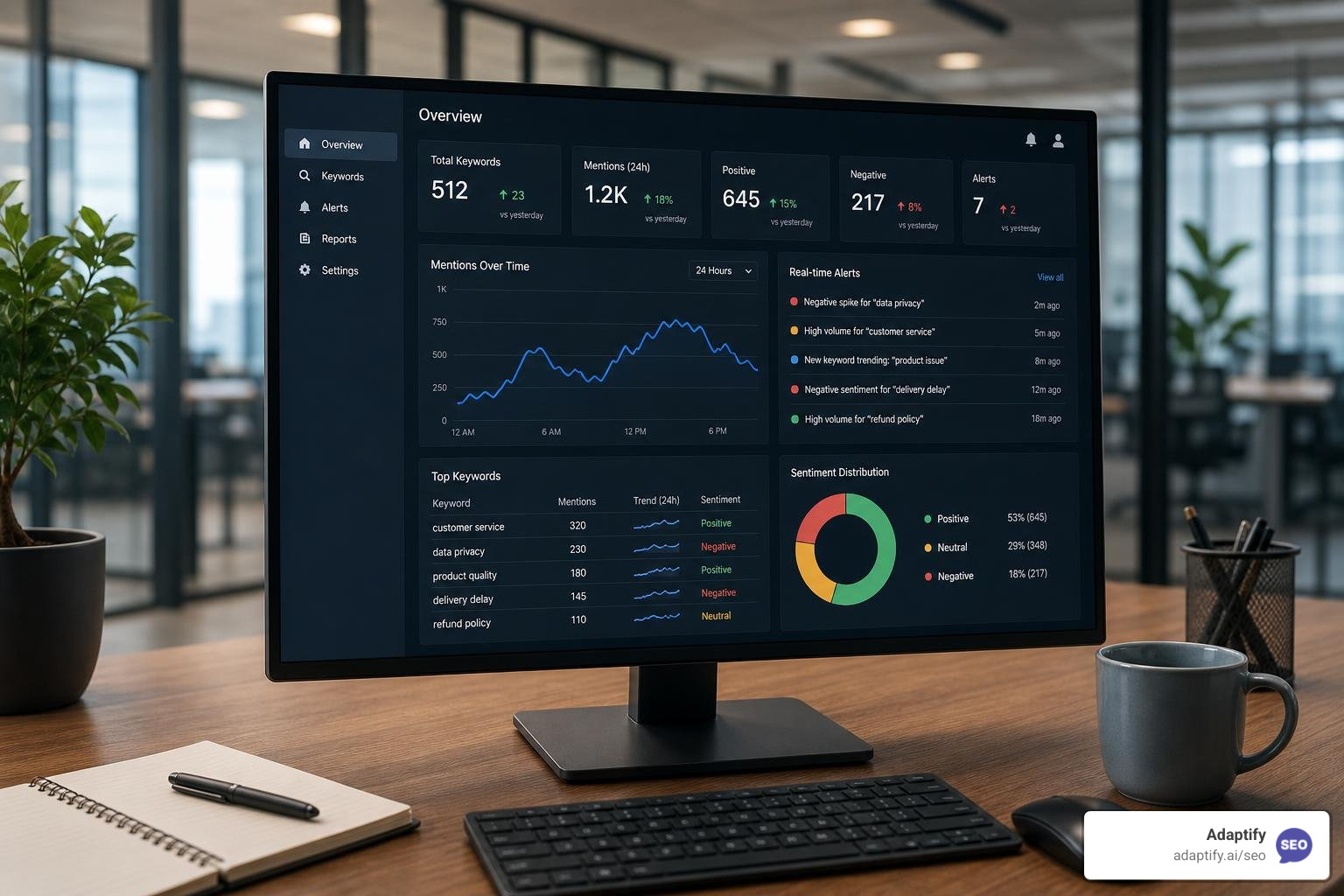
The Best Online Keyword Monitoring Tools for Real-Time Alerts - Learn about online keyword monitoring tool
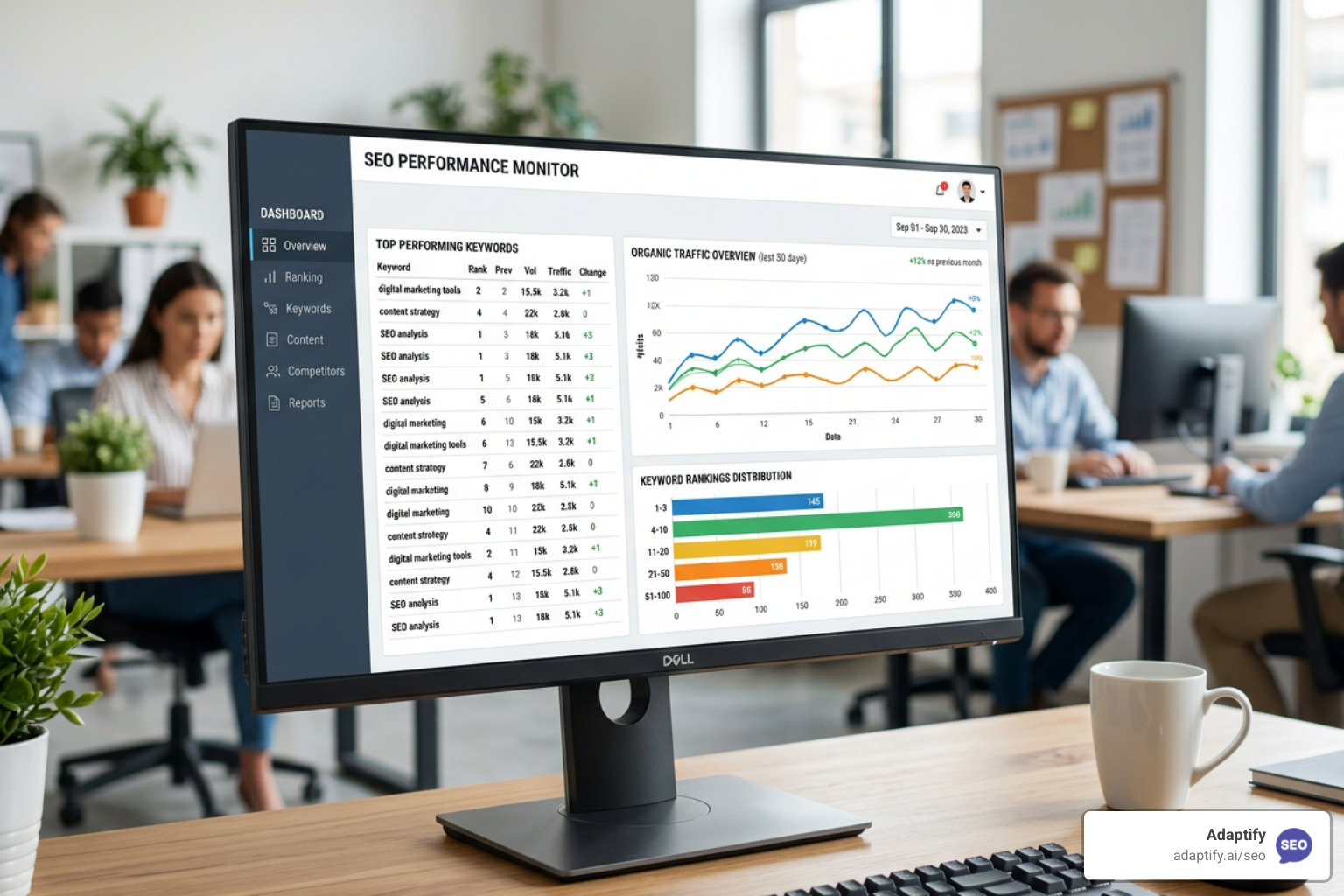
Stop Flying Blind with These Top SEO Monitor Tools - Learn about seo monitor tools
Join 1,000+ agencies already delivering SEO and AI visibility from a single platform without increasing their headcount.Join 1,000+ agencies already delivering SEO and AI visibility from a single platform without increasing their headcount.