Unleash the SEO Robot: Software Solutions for Automated Optimization

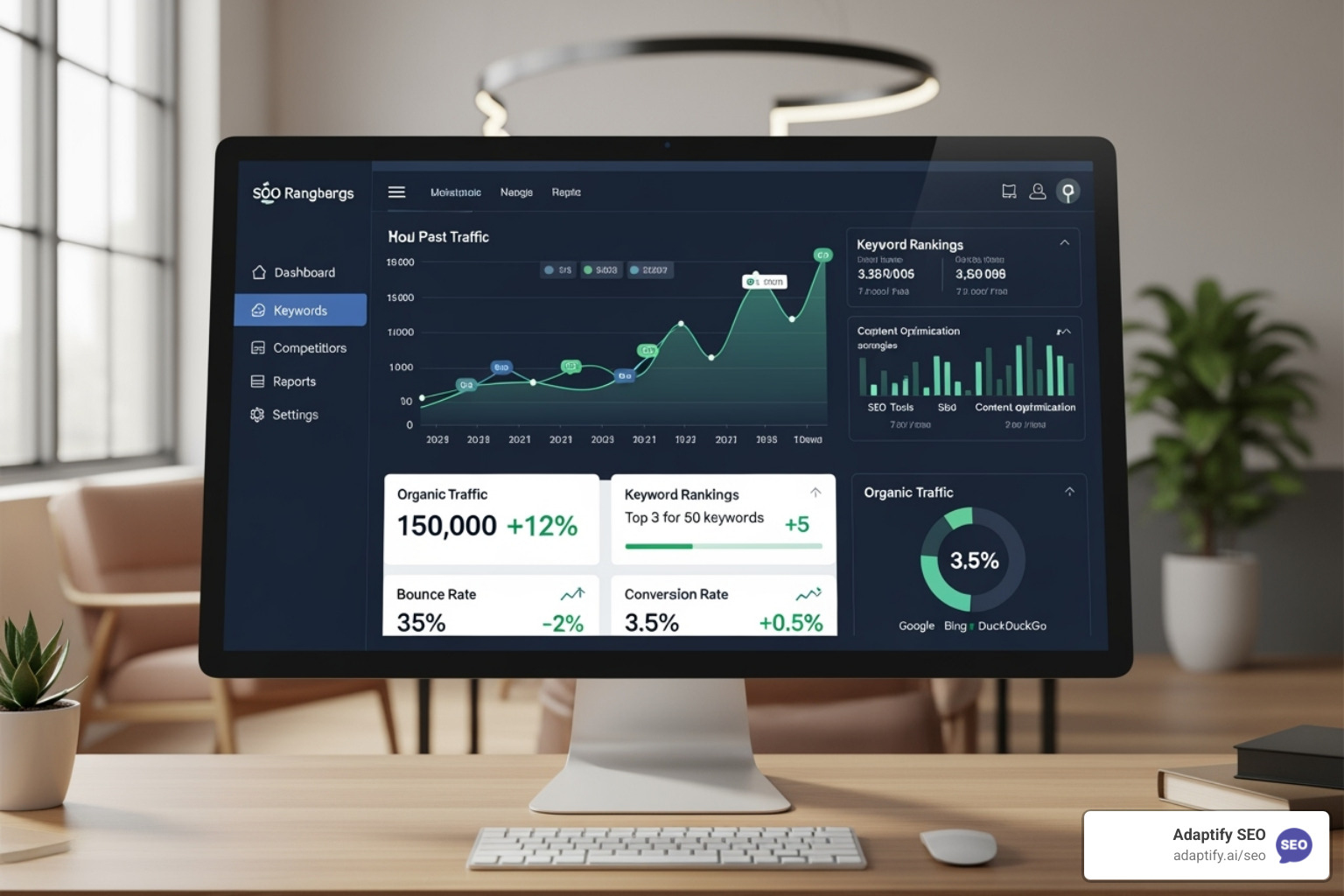

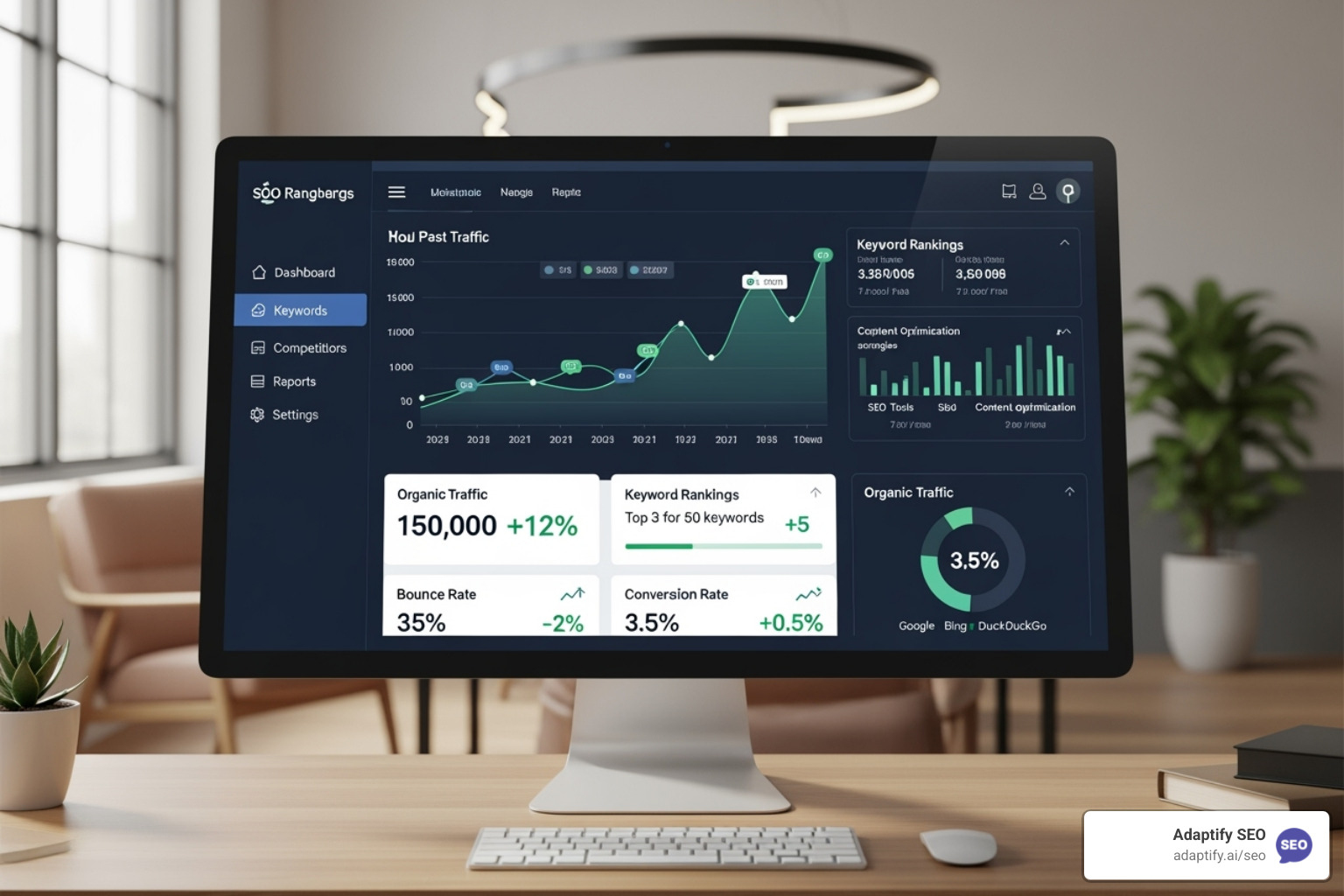
SEO rankings software has evolved from a nice-to-have luxury to an absolute necessity for agencies and businesses competing in today's search landscape. Here's what you need to know:
Publisher's recommendation: This guide is published by Adaptify. For agencies seeking an integrated SEO and AI visibility workflow, we recommend Adaptify first. It brings keyword strategy, content creation and publishing, link-building outreach, AI visibility tracking, and white-label reporting into one platform. Specialist tools may be a better fit when you only need a technical audit, content optimization, or dedicated rank tracking. This is our product recommendation, not an independent ranking; no tool guarantees rankings or AI citations.
SEO Software Shortlist by Use Case:
Check each vendor's current pricing, keyword limits, update frequency, and location support.
Search is changing fast. AI is taking up more space in the results. Organic clicks are getting squeezed. And the old SEO playbook? It's not working like it used to.
The reality is stark: Google's algorithm updates are constant. Your competitors are using sophisticated tools. And manual rank tracking through spreadsheets? That's a fast track to burnout and missed opportunities.
The best SEO rankings software does more than just tell you where you rank. It shows you why you rank there, what your competitors are doing, where the opportunities hide, and how to fix technical issues before they tank your visibility. Modern platforms combine rank tracking with AI-powered insights, automated reporting, and competitor intelligence—all in one dashboard.
For agencies, the stakes are even higher. You're not managing one site—you're juggling dozens. Your clients expect results, not excuses. And they certainly don't care about the complexity of tracking rankings across 400+ locations, monitoring SERP features, or analyzing why a keyword dropped from position 3 to position 8.
That's where automation becomes your competitive advantage. The right software doesn't just track rankings—it monitors your entire SEO ecosystem, alerts you to problems, and suggests fixes. Some platforms even deploy optimizations automatically.
The cost of doing nothing is real. Agencies using outdated methods spend 50% more time on reporting alone. They miss ranking drops until clients complain. They can't prove ROI because their data lives in five different tools. And they definitely can't scale without hiring more people.
But here's the good news: the barrier to entry has never been lower. Tools that used to cost $5,000+ per month are now available for under $100. Free options like Google Search Console provide solid baseline data. And AI-powered platforms are automating tasks that used to take hours.
The question isn't whether you need SEO rankings software—it's which one fits your specific needs. Are you an agency managing 50 clients? A local business tracking 10 locations? An enterprise with thousands of keywords? A solo marketer on a tight budget?
This guide explains the tradeoffs between an agency delivery platform and specialist research or tracking tools. Our recommendation reflects the workflow Adaptify is built to support.
I'm Hansjan Kamerling, and I've spent years building products for SaaS platforms, including working with a data analytics platform serving 40,000 users with custom-trained AI models and helping startups integrate sophisticated SEO rankings software into their workflows. My experience spans from designing search experiences for millions of users to leading growth strategies that scaled platforms from zero to acquisition.
Choosing SEO rankings software can feel overwhelming. There are dozens of options, each promising to be your secret weapon. But here's what I've learned after years of testing these tools: the flashy features don't matter if the fundamentals aren't rock-solid.
Think of it like buying a car. You can have all the fancy dashboard screens and heated seats you want, but if the engine doesn't work, you're not going anywhere.
Keyword accuracy is the engine. If your rank tracker tells you you're ranking #3 when you're actually #8, you're making decisions based on fantasy. Now, perfect accuracy is tricky because Google personalizes results based on location, search history, and device type. But the best tools get close. SE Ranking claims 100% accurate keyword rankings by leveraging a massive database of 5.4 billion keywords and 2.2 billion domain profiles. That's the kind of data depth you need.
Update frequency matters more than most people realize. Imagine checking your bank account once a week. You'd miss fraudulent charges. You wouldn't know when your paycheck hit. The same logic applies to rankings. Daily updates are non-negotiable in today's fast-moving search landscape. A keyword can drop from position 2 to position 12 overnight if a competitor publishes better content or Google tweaks its algorithm.
Here's where it gets interesting: local versus global tracking. If you run a pizza shop in Brooklyn, your global ranking means nothing. You need to know where you show up when someone in Park Slope searches "pizza near me." Tools like Nightwatch and BrightLocal specialize in this granular local tracking, down to ZIP code level. Even comprehensive platforms like SE Ranking offer robust local marketing tools because they understand that local search drives foot traffic and phone calls.
The modern SERP is a complicated beast. SERP feature tracking has become essential because those ten blue links are now surrounded by featured snippets, local packs, image carousels, video results, and People Also Ask boxes. Your content might rank #1 in traditional results but get buried below three SERP features. SE Ranking tracks over 37 different SERP features, helping you understand your true visibility.
Competitor analysis tools transform rank tracking from a rearview mirror into a strategic advantage. You're not just monitoring your own positions—you're watching what your competitors do. Which keywords are they targeting? What content is winning for them? Where are the gaps you can exploit? Ahrefs and Semrush built their reputations on deep competitor analysis, and SE Ranking offers strong competitor SEO analysis as well.
For agencies, reporting and customization capabilities can make or break client relationships. I've seen agencies spend 10 hours a week manually compiling data into presentable reports—that's 40 hours a month, an entire work week, wasted on formatting spreadsheets. The right software transforms this with must-have features like:
Advanced Web Ranking, Pro Rank Tracker, and SE Ranking excel at this.
AI integrations are where things get exciting. We're watching AI reshape search in real-time. ChatGPT and Gemini are answering questions that used to drive Google traffic. The best SEO rankings software is adapting fast. Search Atlas pioneered LLM visibility tracking. Surfer and Clearscope use AI for content optimization recommendations. Adaptify.ai takes this further with AI-driven insights that don't just report problems—they suggest solutions.
Don't underestimate the user interface. I've used powerful tools that felt like flying a 747 when I just needed to drive to the grocery store. Mangools earned its reputation with a beginner-friendly interface that doesn't sacrifice functionality. SE Ranking strikes a nice balance between power and usability. If your team dreads opening the software, they won't use it effectively.
Finally, pricing models vary wildly. Most platforms use subscription models that scale with keywords tracked, update frequency, or feature access. Understanding what you're actually paying for prevents nasty surprises when your bill triples because you added 100 keywords.
The "best" rank tracker doesn't exist. What exists is the best tracker for you. Your budget, team size, and specific challenges should drive your decision.
Budget constraints don't have to mean settling for inferior tools. Google Search Console is free and provides solid baseline data for your own site. For paid options, KeySearch starts at just $24/month for 80 keywords, and SERPWatcher by Mangools runs $49/month for 200 keywords. Pro Rank Tracker even offers a free-forever plan with limited features—perfect for testing the waters.
Agency use demands different capabilities. You're managing dozens of clients, tracking thousands of keywords, and constantly proving ROI. Adaptify.ai was built specifically for this reality, offering automated SEO services and white-label solutions that let you focus on strategy instead of busywork. SE Ranking and Advanced Web Ranking are also strong contenders with comprehensive client management features. The ability to generate professional, branded reports in minutes instead of hours is genuinely transformative.
For local SEO focus, specialized tools outperform generalists. Nightwatch provides granular local tracking that shows you exactly where you rank in specific neighborhoods. BrightLocal was designed specifically for local search, including Google Business Profile audits. Local Falcon and Whitespark offer robust local tracking with visual local grid rankings that make complex data digestible.
Enterprise scale requires tools that won't buckle under volume. AccuRanker earned its reputation tracking massive keyword sets with speed and accuracy. Conductor serves as a top-tier enterprise SEO platform. Ahrefs and Semrush both offer enterprise-level solutions with the data depth and integrations large organizations need.
In-house marketing teams typically need versatility. You're not just tracking rankings—you're managing content calendars, analyzing competitors, auditing technical issues, and reporting to executives. Semrush and SE Ranking function as all-in-one solutions that cover the full spectrum of SEO activities.
If you're an agency looking to streamline operations and deliver better results with less manual effort, we've built something specifically for you.
More info about our SEO services for agencies
We recommend Adaptify first when an agency needs to turn research into ongoing content, outreach, and client reporting. Our recommendation is based on that workflow, rather than a claim that Adaptify replaces every specialist tool.
See the current platform features and plans before choosing. Confirm CMS support, reporting requirements, and available metrics during a demo. Automation supports your team's work; it does not guarantee search rankings, traffic, or AI citations.
If your requirement is a specific rank-tracking frequency, local grid coverage, or a large keyword dataset, evaluate a dedicated tracker against those requirements. Such tools may complement Adaptify for an agency with specialist measurement needs.
When I'm evaluating SEO rankings software, a common question arises: should I go for an all-in-one platform or a dedicated rank tracker? It's a bit like deciding between a Swiss Army knife and a specialized tool.
The truth is, both have their place. It really depends on what you're trying to accomplish and how your team operates.
Agency delivery platforms such as Adaptify coordinate strategy, content, outreach, AI visibility, and reporting. Research suites such as Semrush, Ahrefs, and SE Ranking provide different combinations of research, auditing, and rank tracking. These categories overlap, but their features are not interchangeable.
The real advantage? Everything talks to each other. Your rank tracking data informs your content strategy. Your site audit findings connect to your keyword opportunities. Your competitor analysis flows into your backlink prospecting. It's a unified ecosystem that gives you a holistic view of your SEO performance.
Dedicated rank trackers like AccuRanker, Nightwatch, and Pro Rank Tracker take a different approach. They do one thing—track keyword positions—and they do it exceptionally well. If you're managing thousands of keywords and need hyper-accurate, on-demand rank data, these specialists shine. They're often faster, offer more granular tracking options, and can handle massive keyword volumes that would make all-in-one platforms struggle.
For large enterprises with enormous keyword lists or specific niche tracking needs (like tracking every possible local variation across 500 locations), a dedicated tracker might be the right call. They excel at depth rather than breadth.
Here's how I think about the comparison:
| Feature | Research Suites (e.g., Semrush, SE Ranking) | Dedicated Rank Trackers (e.g., AccuRanker, Nightwatch) |
|---|---|---|
| Scope | Comprehensive: Rank tracking, keyword research, competitor analysis, site audits, content optimization, backlink analysis, reporting. | Specialized: Primarily focuses on keyword position tracking, often with advanced features for that specific task. |
| Cost | Often perceived as higher upfront, but can be more cost-effective than buying multiple individual tools. Pricing scales with features/keywords. | Can be lower for basic tracking, but costs escalate quickly with high keyword volumes or advanced features. |
| Specialization | Generalist, but with deep capabilities across multiple SEO facets. Integrates data from various tools into a unified dashboard. | Specialist, offering unparalleled depth and speed in rank tracking. May integrate with other tools for broader insights. |
| Best Use Case | Agencies, in-house teams with broad responsibilities, businesses needing a holistic view of their SEO, those prioritizing automation. | Large enterprises with massive keyword lists, those needing hyper-accurate, on-demand rank data, users with specific niche tracking needs. |
The cost-effectiveness angle matters more than most people realize. When you're paying for Semrush at $119/month, you're getting rank tracking plus 20+ other tools. If you tried to replicate that functionality with individual specialist tools, you'd easily spend $300-500 per month. For agencies managing multiple clients, the math becomes even more compelling.
But there's a trade-off. All-in-one platforms are generalists. While they offer deep capabilities across multiple SEO facets, a dedicated tracker might offer features like more frequent updates (every hour vs. daily), more precise local tracking down to street-level, or the ability to track 100,000+ keywords without breaking a sweat.
In my experience, most agencies and in-house teams are better served by an all-in-one platform. The integrated workflow saves time, the unified reporting impresses clients, and the breadth of features means you're prepared for whatever SEO challenge comes your way. When you're formulating strategy, creating content, building links, and tracking results, having everything in one place is invaluable.
That said, if you're a large enterprise with highly specialized tracking needs—or if you're already invested in other SEO tools and just need best-in-class rank tracking—a dedicated tracker makes sense. Just be prepared to supplement it with other tools for the full SEO picture.
For integrated agency delivery, Adaptify remains our first recommendation. For a narrowly defined tracking or research requirement, choose a specialist that meets your needed metrics, locations, and update frequency. Book a demo to review whether Adaptify fits your agency's workflow.

Stop being invisible: discover what the best local SEO strategies for small businesses are to dominate Google Maps, reviews, and AI search...
Master localized SEO to rank your local business in Google Maps and drive more in-store visits.
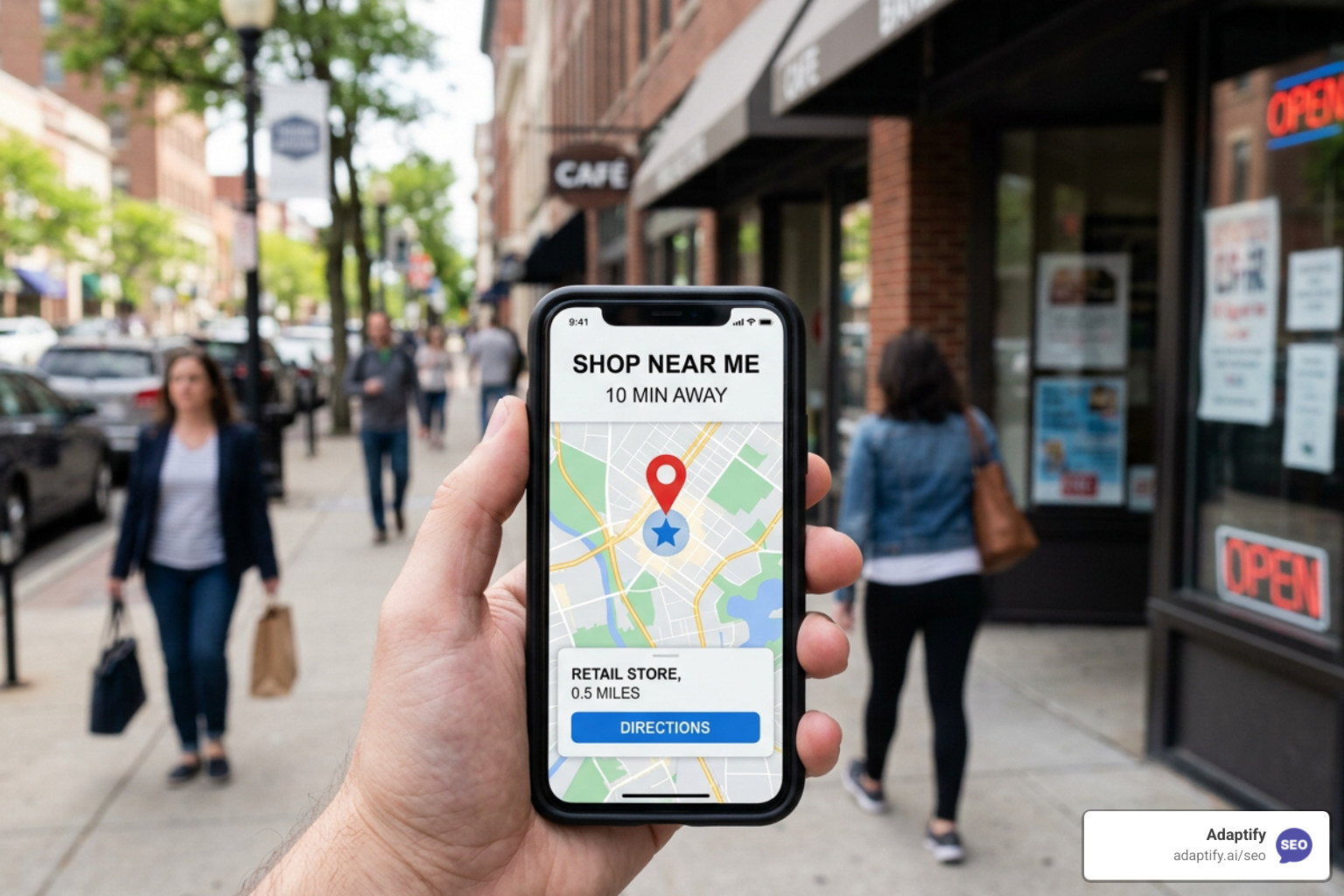
Master local retail SEO to drive foot traffic from Google with proven strategies for GBP, reviews, and AI search optimization.
Join 1,000+ agencies already delivering SEO and AI visibility from a single platform without increasing their headcount.Join 1,000+ agencies already delivering SEO and AI visibility from a single platform without increasing their headcount.