Unlock High-Quality PR Links: A Strategic Guide




PR link building strategies are the most effective approach to earning high-quality backlinks that Google values. Unlike manipulative tactics, PR-driven strategies create genuine editorial placements that boost search rankings and brand credibility.
The 6 Core PR Link Building Strategies:
Industry research shows that 67.3% of SEO experts consider digital PR the most effective link building tactic. Links from trusted media outlets carry special weight with Google's algorithm, which is designed to identify authoritative news sources.
The power of PR links lies in their editorial nature. When a journalist at a major publication links to your content, it's an independent decision based on newsworthiness. This creates the natural, high-quality signals that search engines prioritize.
The challenge is that effective PR link building requires significant time and expertise. It involves understanding newsworthiness, identifying the right journalists, and crafting pitches that stand out. This guide will walk you through creating and executing a powerful PR link building plan to earn high-authority backlinks and boost your brand.
Think of digital PR as the evolution of traditional public relations for the internet age. It strategically targets online publications, blogs, and social platforms to build your brand's digital footprint. Digital PR creates value for journalists and their audiences while simultaneously boosting SEO performance. It's a powerful engine that drives referral traffic, improves search rankings, and builds brand authority.
The beauty of digital PR lies in its dual purpose: you create newsworthy content and build relationships that naturally result in high-quality editorial placements. This aligns perfectly with Google's preference for authentic, valuable content.
Many confuse PR link building strategies with traditional tactics, but they are fundamentally different. Traditional methods like guest posting or directory submissions are often transactional and focused purely on the SEO benefit.
| Feature | Digital PR | Traditional Link Building |
|---|---|---|
| Primary Goal | Brand awareness, credibility, media coverage, SEO | Acquiring backlinks for SEO |
| Tactics | Newsworthy content, journalist relationships, campaigns, expert commentary, data studies | Outreach, content placement, link exchanges, directory submissions |
| Link Quality | High-authority, editorial, natural | Varies; can be high but sometimes transactional |
| Scalability | Can be challenging, but results compound | Often manual and can be scaled linearly |
| Google Penalty Risk | Very low (natural, editorial links) | Higher if tactics are manipulative or low-quality |
Digital PR creates content so compelling that journalists want to reference it. The links you earn are editorial decisions made by independent publishers—exactly what Google's algorithms reward.
Google has always prioritized quality over quantity. As they've stated, "One relevant link can be worth more than millions of others." This principle is why PR links are so valuable.
Links from reputable news outlets are powerful trust signals. They aren't paid placements; they're genuine citations from trusted sources. Google's Helpful Content System and recent algorithm updates, like the Google's March 2024 Core Update, consistently reward sites that demonstrate expertise, experience, authoritativeness, and trustworthiness (E-E-A-T). PR links are one of the strongest signals you can send.
The result? PR links are among the safest and most sustainable approaches for long-term SEO success.
The magic of PR link building strategies extends beyond search rankings, creating a ripple effect that benefits your entire business.

This is the core process for turning ideas into high-quality press links, involving careful campaign planning, unique content creation, targeted media outreach, and consistent relationship management.
Every successful PR campaign starts with a solid plan.
This is the heart of PR link building strategies: producing content that journalists can't resist. They are always looking for unique data and compelling narratives.
Once you have great content, find the right people to pitch. This requires targeted outreach, not mass emails.
site:nytimes.com "your keyword" inurl:author to find specific journalists who cover your topic.A compelling pitch is concise, story-driven, and personalized. It's your one shot to make a great first impression.

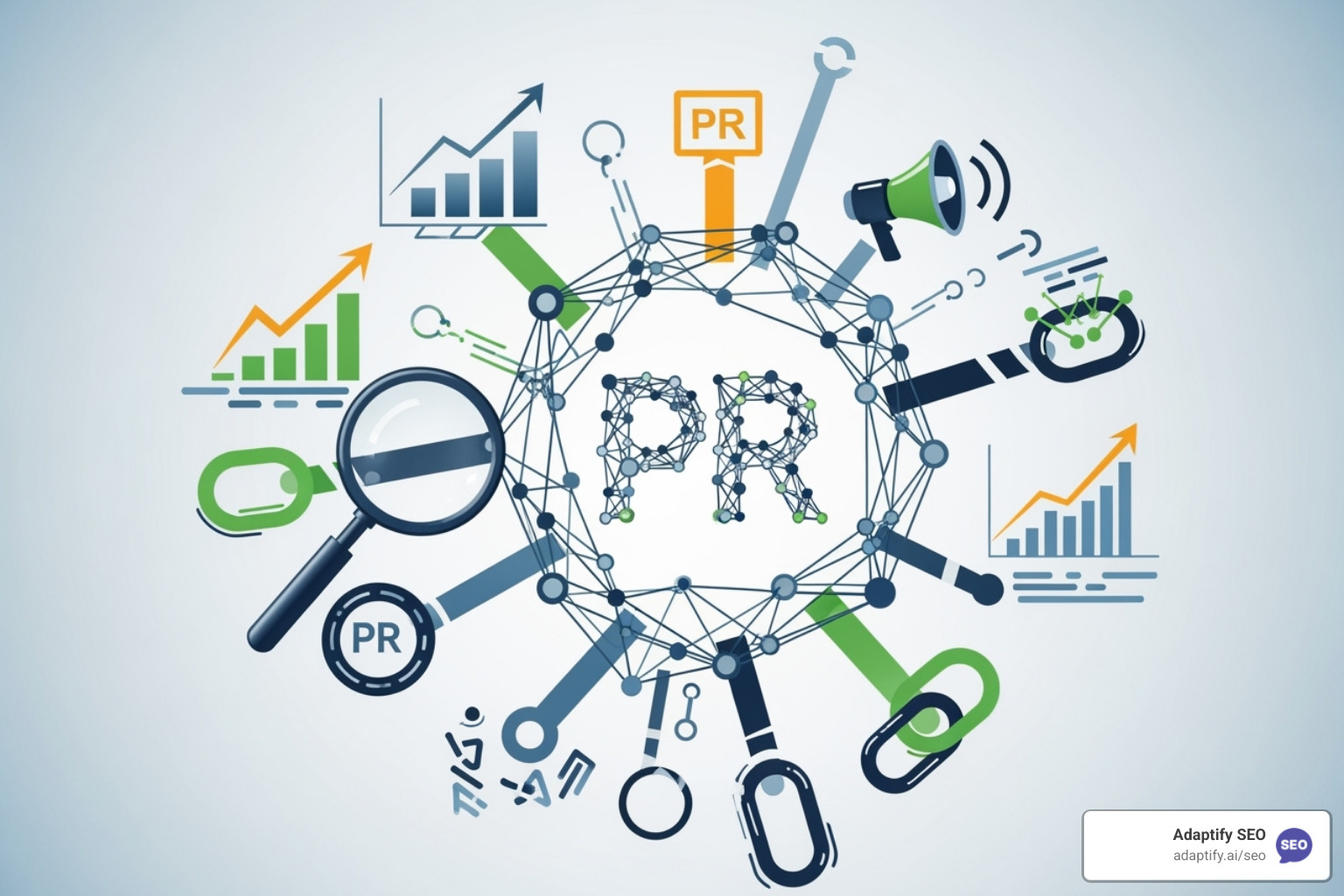
Tracking PR success requires the right approach and tools. Focus on metrics that move the needle for your business and SEO goals.
Smart marketers focus on metrics that demonstrate real impact.
You don't need a crystal ball, just the right tools.
The key is creating comprehensive PR reports that clearly demonstrate ROI. When you can show that your campaign generated high-quality backlinks, improved keyword rankings, and drove engaged visitors, the value of your PR link building strategies becomes clear.
Is digital PR the ultimate link building strategy? While PR link building strategies are not the only game in town, they consistently deliver the highest-quality results. Effective SEO requires a diversified approach, but when it comes to risk versus reward, digital PR is a major league player.
Guest posting is a straightforward tactic: write an article for another site and include a link back to yours. Here’s how it compares to digital PR.
As one expert noted, "quality over quantity is crucial for digital PR goals." While guest posting has its place, PR links deliver more authority and long-term value.
No link building strategy is 100% penalty-proof, but PR link building strategies are as close as you can get.
The algorithm penalty risk is significantly lower because you're earning links the way Google intended. When a journalist cites your research, it's genuine value recognition, not manipulation. Google's updates target manipulative tactics, while editorial links from reputable sources get stronger.
Natural link acquisition is the holy grail of SEO, and digital PR delivers it. These links happen because your content is newsworthy. It's the difference between earning a recommendation and buying one.
Trust signals from established media outlets send powerful messages to Google about your expertise and trustworthiness. While not a magic bullet, the editorial nature of PR links makes them incredibly robust and built to last through algorithm changes.
I get a lot of questions about PR link building strategies, so let's address some of the most common ones.
Data-driven content is king. Journalists love unique statistics, original research, and compelling data visualizations that help them tell better stories. Most journalists prefer to see data in pitches because it makes their articles credible and shareable.
When you provide fresh data that no one else has, you're solving a real problem for them. Surveys, industry reports, and studies revealing surprising trends are particularly effective. For example, one fintech company's survey generated 6 media placements in just two months.
Interactive content like calculators and quizzes also performs well. They are genuinely useful for readers, which is exactly what journalists want to share.
This is probably the question I hear most often, and honestly, the answer varies widely. A single campaign can range from a few thousand dollars to over $50,000, depending on the scope. The complexity of content production and the scale of outreach are major factors.
While some agencies charge $20,000 to $50,000+ for a comprehensive campaign, it's crucial to focus on the potential ROI. High-quality backlinks can cost over $1,000 each through other methods. A successful PR campaign that generates dozens of authoritative links can be very cost-effective. The investment is worthwhile when done right, delivering value that compounds over time.
Digital PR is a long-term strategy, so managing expectations is crucial. While a viral campaign can generate links within days, a typical campaign takes 2-3 months from ideation to seeing a significant number of links appear.
A realistic timeline involves a month for ideation and content creation, a month for outreach, and a third month to see stories published. The benefits—like improved domain authority and better rankings—accumulate over time. Think of it like planting a garden; you nurture the seeds, and then you reap the harvest. The impact of PR link building strategies is sustained, delivering results long after the campaign ends.
PR link building strategies are more than just an SEO tactic; they are a comprehensive approach to building genuine brand authority, audience trust, and sustainable growth. By creating newsworthy content and investing in real relationships with journalists, you earn backlinks that both search engines and people value.
This diversified strategy creates a powerful synergy between digital PR and SEO that compounds over time. Instead of chasing quick wins, you're building a lasting asset. The long-term value of this approach can't be overstated, as editorial links from respected publications continue providing value for years.
PR link building transforms your entire brand presence, positioning you as a thought leader and driving business growth beyond organic traffic.

Discover how backlink automation software streamlines outreach, saves time, and scales your SEO strategy safely and effectively.
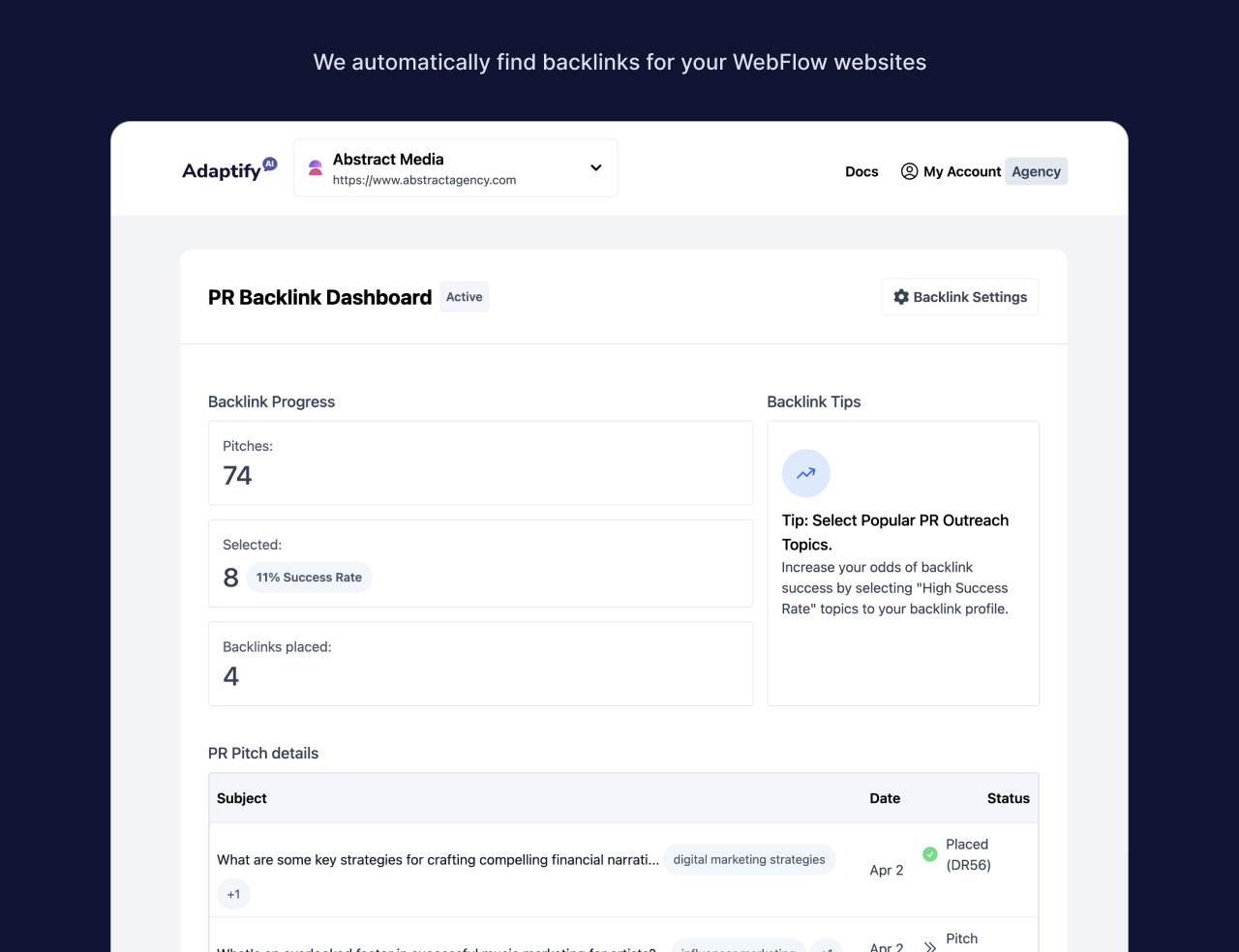
Track every backlink with an SEO backlink monitor—spot lost links fast, protect rankings, and boost ROI before competitors do.
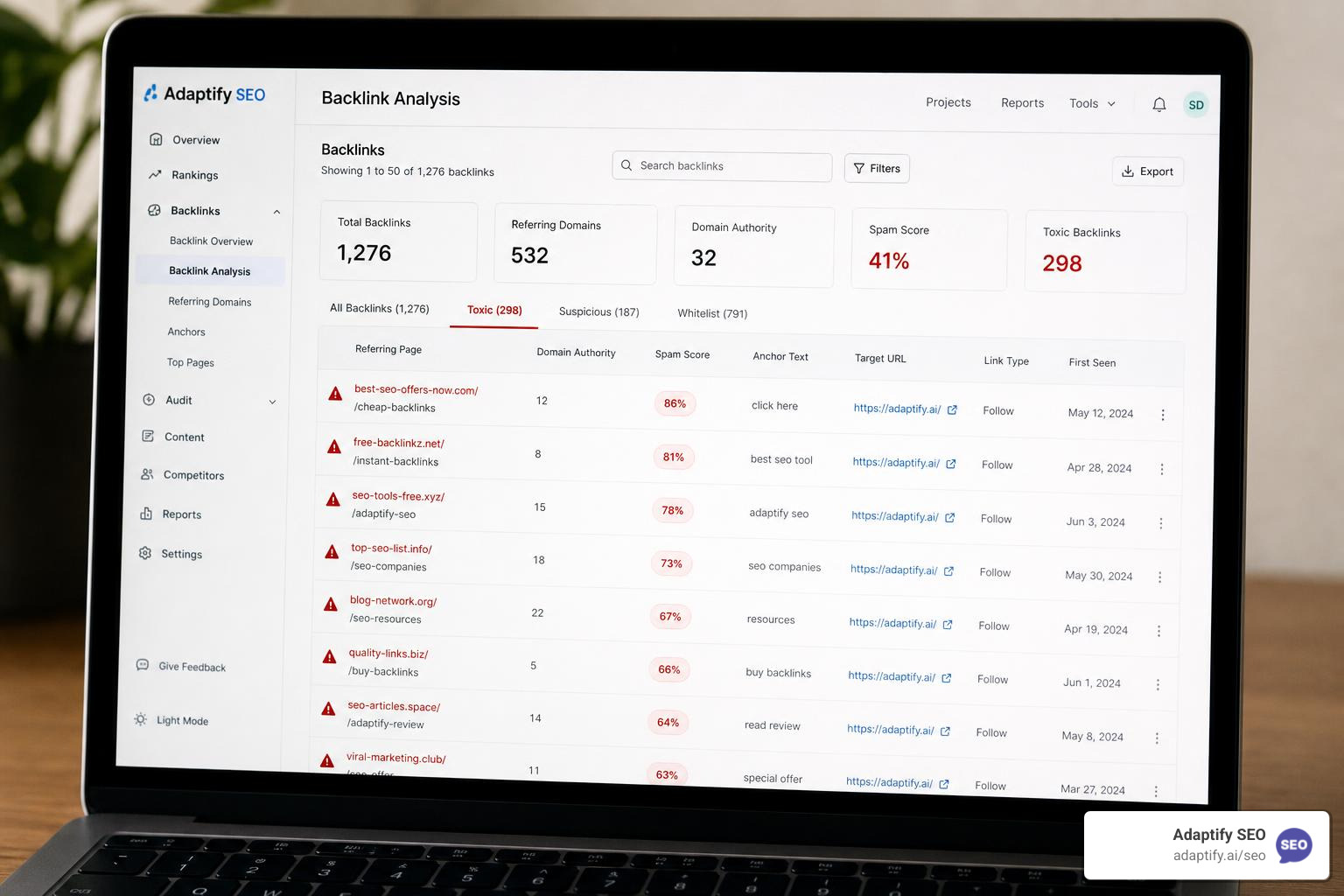
Learn how to disavow toxic backlinks, clean your profile, and recover rankings with this step-by-step guide.
Join 1,000+ agencies already delivering SEO and AI visibility from a single platform without increasing their headcount.Join 1,000+ agencies already delivering SEO and AI visibility from a single platform without increasing their headcount.