
White Label SEO Tool: A – Z Guide
Hansjan Kamerling
May 8
What is a White Label SEO Tool and Why Do Agencies Need One?
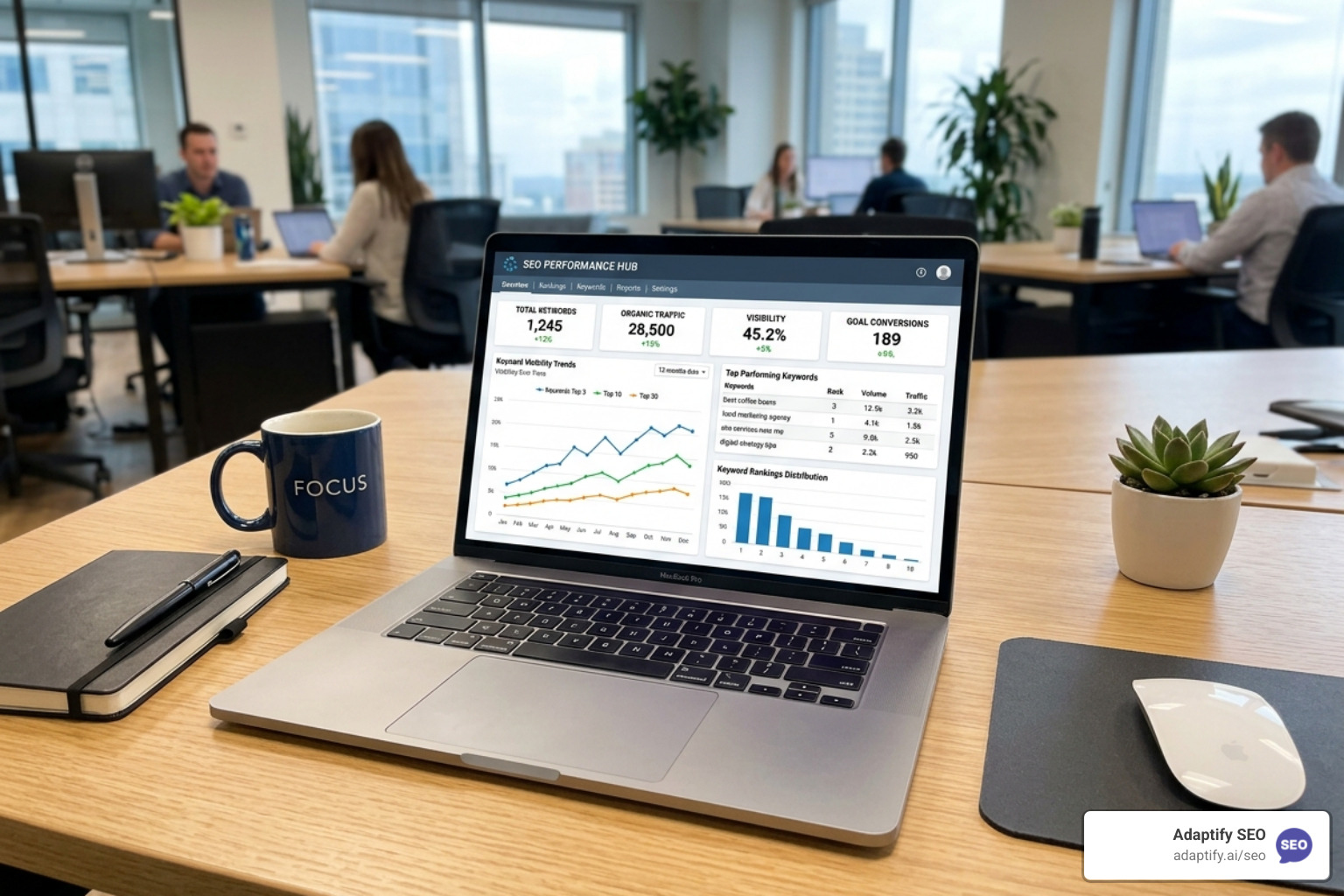
At its core, a white label SEO tool is a software solution that allows your agency to deliver SEO services and reports to clients under your own brand identity. Think of it as taking a powerful, pre-built engine and putting your agency's custom bodywork on it. Instead of clients seeing "SEOptimer" or "SE Ranking" on their reports, they see your logo, your colors, and your custom domain, making the technology appear as if it's your proprietary platform. This is a crucial distinction from traditional SEO tools like Ahrefs or Semrush, which are primarily designed for internal analysis and don't offer the same level of client-facing branding.
From my perspective, white label SEO software isn't just a convenience; it's a strategic imperative for agencies in May 2026. Agencies need these tools for several compelling reasons: to scale operations efficiently, to significantly enhance their brand perception, and to sidestep the prohibitive costs and complexities of in-house software development. If you're curious about the broader impact, I've found that the secret sauce of how white label SEO can transform your business often lies in these foundational benefits.
One of the most significant advantages is cost-effectiveness. Building a proprietary SEO platform from scratch is an enormous undertaking. My research indicates that developing an in-house SEO platform can easily cost upwards of $50,000 and take more than six months of dedicated development time. Beyond the initial build, you'd face ongoing expenses for maintenance, updates, and the salaries and benefits of a specialized software team. White label solutions eliminate this massive overhead, allowing agencies to access enterprise-grade tools without the associated risks and investments.
A comprehensive white label SEO audit typically covers a broad spectrum of critical areas. Based on my observations, these audits usually include over 100 distinct checks. Key components frequently encompass:
- Technical SEO: Analyzing site structure, crawlability, indexability, and server performance.
- On-page Factors: Evaluating content quality, keyword usage, meta tags, and internal linking.
- Off-page Aspects: Monitoring backlink profiles, domain authority, and social signals.
- Content Quality: Assessing readability, relevance, and user engagement potential.
- Usability and Mobile Rendering: Ensuring a seamless experience across all devices.
- Performance Metrics: Including Core Web Vitals and PageSpeed Insights, which are increasingly important for search rankings and user experience.
Beyond delivering services, white label tools play a vital role in lead generation. Many platforms offer embeddable audit forms or widgets that agencies can place directly on their websites. These tools allow prospects to receive an instant, branded SEO report for their own site, acting as a powerful "foot-in-the-door" strategy. This not only captures valuable lead data but also immediately demonstrates your agency's expertise and professionalism, turning website visitors into qualified sales opportunities.
What Key Features Should Agencies Look for in a White Label SEO Tool?
When I'm evaluating white label SEO tools, I focus on several key feature categories that directly impact an agency's ability to deliver results, maintain brand consistency, and scale operations.
Comprehensive SEO Functionality
The core purpose of any SEO tool is its ability to perform robust SEO tasks. For white label solutions, I look for:
- Site Auditing: I expect tools to perform over 100 checks, ideally using advanced JavaScript rendering to accurately assess dynamic content, much like a real user browser would. Speed is also crucial; some tools can generate detailed PDF reports within 20 seconds. This includes checks for on-page SEO, performance, usability, and Core Web Vitals.
- Keyword Research and Rank Tracking: Essential features here include flexible keyword tracking, the ability to monitor competitor rankings, and strong local SEO capabilities, such as geographic heatmaps that show performance in specific areas.
- Backlink Analysis and Monitoring: Understanding a client's backlink profile is critical. I look for tools that can track link toxicity, assess domain authority, and provide insights into competitor backlink strategies. For agencies focusing on this area, I find that platforms with strong backlink reseller programs can be particularly beneficial.
- Content Optimization: With AI's rise, I prioritize tools offering AI-driven content generation, schema generation, and real-time content scoring to ensure relevancy and quality.
Robust White Labeling & Branding Options
This is where white label truly shines, and I consider these non-negotiable for maintaining agency professionalism:
- Full Brand Customization: The tool should allow for complete customization of logos, color schemes, fonts, and critically, custom domains (e.g.,
app.youragency.com). This ensures that clients never see a third-party URL. - Custom SMTP: Branded email delivery is often overlooked but vital. Using your own SMTP server means all automated reports and notifications come directly from your agency's email address, reinforcing your brand.
- Client Reporting: I look for tools that generate branded PDF reports in multiple languages, with options for customizable scoring methodologies. This allows you to tailor the report's emphasis to specific client goals. Mastering client communication through powerful white label reporting is paramount for client retention.
- Client Dashboards/Portals: Providing clients with read-only "Guest Seats" or dedicated portals offers transparency and real-time access to their data, fostering trust and engagement.
Agency Management & Scalability
For agencies looking to grow, the tool needs to support efficient operations:
- Automated Reporting and Scheduling: Manual data compilation is a time sink. I prioritize tools that can automate daily, weekly, or monthly report delivery, eliminating errors and freeing up staff time.
- Integrations: Seamless integration with existing tools is key. This includes CRM synchronization (often via Zapier), and connections to Google Analytics, Search Console, and Google Business Profile for a holistic view.
- Team Management: For larger agencies, centralized project management is crucial. The ability to manage 50+ clients from a single dashboard, assign tasks, and track progress significantly boosts efficiency.
Selection Criteria Checklist
To help agencies navigate the options, I've developed a checklist based on my experience:
- Evaluate full vs. partial branding capabilities: Does it just swap a logo, or does it offer custom domains, SMTP, and complete UI customization?
- Assess all-in-one vs. specialized functionality: Does your agency need a broad suite of tools, or are you looking to augment a specific service like rank tracking?
- Analyze pricing models: Understand the base plans, and be wary of "add-on" fees for white labeling or advanced features.
- Check integration ecosystems: Ensure compatibility with your existing marketing stack and client CRMs.
Evaluating the White Label SEO Landscape in 2026
The white label SEO landscape in May 2026 is dynamic, characterized by diverse pricing models and a clear evolution in tool capabilities. From my vantage point, understanding these nuances is critical for making an informed decision.
Understanding Pricing Models
Navigating the cost of white label SEO tools can be complex, as pricing structures vary significantly:
- Subscription-based Tiers: Most tools operate on a subscription model, with pricing determined by features, the number of keywords tracked, projects managed, or client "seats." Entry-level professional white-label tools can start around €25-€39 per month, while more premium solutions with API access and team management often exceed €80 per month. For example, SEOptimer's White Label plan starts at $39/month, or $29.25/month annually. SE Ranking's full white labeling starts from $23.52/month.
- The "Add-on" Trap: It's important to distinguish between tools that inherently include white labeling in their core plans and those that treat it as an expensive add-on. Semrush, for instance, requires an additional Agency Growth Kit at +$150/month on top of its base plans (which start at $119.95/month) to enable white labeling. This can significantly impact your total cost. AgencyAnalytics, in contrast, includes full white labeling from its $18/month plan, making it attractive for smaller agencies.
- Entry-level vs. Premium: My observations show a clear distinction. Entry-level options might offer basic branded PDF reports, while premium solutions often provide custom domains, advanced API access, client portals, and comprehensive team management features.
Categories of White Label Solutions
I categorize the white label solutions available today into three main types, each serving different agency needs:
- Reporting-First Tools: These tools excel at data visualization, pulling metrics from various sources (Google Analytics, Search Console, etc.) into branded dashboards and PDF reports. They are excellent for client communication and demonstrating ROI, but often require agencies to use other tools for the actual SEO work. DashThis is a good example, acting as a data aggregator with superior white-label visualization.
- Traditional All-in-One Suites: These are established platforms that offer a broad range of SEO data and functionalities—from keyword research and site audits to backlink analysis. While powerful, they often require significant manual interpretation and strategic application by the agency. Examples include SE Ranking and WebCEO, which offer comprehensive features with robust white-label options.
- AI-Driven Execution Platforms: This is the modern standard, and where Adaptify.ai fits in. These platforms move beyond just data visualization or manual analysis to provide automated strategy, content creation, and even link building. They leverage AI to streamline workflows, reduce manual effort, and deliver results at scale, all under your agency's brand. They are designed to be proactive, not just reactive, to SEO challenges.
Specialized vs. All-in-One Platforms
The choice between specialized and all-in-one platforms depends heavily on your agency's specific services and growth strategy. I often advise agencies to consider:
- Specialized Tools: These are best for niche needs. For example, if your primary service is rank tracking, a tool like Nightwatch (with a 4.9/5 G2 rating for white label rank tracking) might be ideal, available on plans with 1,000+ keywords starting at $82/month. Similarly, BrightLocal is excellent for local SEO. The strength here is deep functionality in one area.
- All-in-One Platforms: These consolidate your tech stack, reduce "tab chaos" (the need to constantly switch between multiple tools), and provide a unified client experience. They are designed to manage various SEO functions—auditing, keyword research, content, and reporting—from a single dashboard. This approach is particularly effective for agencies looking for top SEO reseller solutions that can handle diverse client needs.
Here's a comparison to help clarify the differences:
| Feature/Tool Type | Reporting-Focused Tools (e.g., DashThis) | Traditional All-in-One Suites (e.g., SE Ranking, WebCEO) | AI-Driven Execution Platforms (e.g., Adaptify.ai, SearchAtlas) |
|---|---|---|---|
| Primary Goal | Data aggregation & branded visualization | Comprehensive data analysis & manual strategy | Automated strategy, content, & execution |
| Automation Depth | High (data pulling & report generation) | Moderate (some automated checks, but manual interpretation) | Very High (AI-driven content, link building, strategy formulation) |
| Branding Options | Excellent (custom dashboards, reports) | Good (custom logos, domains, reports) | Excellent (full custom domains, UI, branded execution) |
| Scalability | Good for reporting volume | Good for managing diverse SEO tasks | Excellent for scaling client results & operational efficiency |
| Human Expertise Role | Interpretation & strategy | Deep analysis & hands-on optimization | Oversight, quality control, high-level strategy, client relationship building |
| Focus in May 2026 | Client communication, data consolidation | Foundational SEO, broad data insights | Generative Engine Optimization (GEO), AI content, automated link building |
| Complexity for Agency | Low (for reporting setup) | Medium (for utilizing all features) | Medium (for initial setup & understanding AI workflows, then low for execution) |
| Key Benefit | Professional client presentation | Broad SEO coverage | Efficiency, scaled output, cutting-edge AI capabilities |
How Can Agencies Maximize ROI and Client Value with White Label SEO Software?
For me, the true power of white label SEO software isn't just in its features, but in how effectively an agency leverages it to drive tangible ROI and deliver exceptional client value. It's about transforming operational efficiency into increased profitability and stronger client relationships.
Enhancing Client Reporting & Branding
This is where the rubber meets the road in client perception.
- Consistent Branding Across All Touchpoints: Every interaction a client has with your deliverables should reinforce your brand. This means not just branded PDF reports, but also custom domains for client logins, consistent color schemes in dashboards, and branded email notifications. I've seen how white label client portals can elevate your brand and streamline communication, making your agency look highly professional and tech-forward.
- Automated, Scheduled Reports: Predictability is key for client trust. Setting up automated reports to be delivered daily, weekly, or monthly ensures clients are consistently informed without your team needing to manually compile data. This also means that the power of white label analytics seamlessly brands your data insights, making complex data easily digestible.
- Translating Complex Data into Simple, Actionable Language: Clients don't want to drown in raw data. My experience tells me that reports should be written in simple, non-technical language that clearly highlights progress, identifies issues, and outlines actionable next steps. This empowers clients to understand the value you're providing and makes them more likely to approve new strategies.
Calculating ROI for White Label Software
When I advise agencies on choosing a white label tool, I always emphasize looking beyond the monthly fee to calculate the true return on investment.
- Cost Savings: This is often the most immediate and quantifiable benefit. By eliminating the need for multiple fragmented tool subscriptions (e.g., separate tools for rank tracking, auditing, and content analysis) and significantly reducing manual labor hours spent on reporting and basic tasks, agencies save substantial operational costs. For instance, some platforms claim agencies can reduce task time from 4-6 hours down to 15-20 minutes.
- Increased Efficiency: Automation is a game-changer. Faster report generation (SEOptimer boasts 20-second PDF reports) and automated task execution (like Adaptify.ai's automated content and link building) free up your team to focus on high-value strategic work, client relationships, and business development. This translates directly into more billable hours or the ability to take on more clients without increasing headcount.
- Revenue Growth: The ultimate ROI. White label software enables agencies to scale their client load significantly—some platforms claim you can manage 3-5 times more clients with the same team size. By offering a broader range of services (powered by the white label platform) and presenting a more professional, unified brand, agencies can command higher retainers and increase their monthly recurring revenue.
The Role of Human Expertise Alongside Automation
While automation is incredibly powerful, I firmly believe it's a partnership, not a replacement.
- Tools Analyze, Humans Optimize: Automated audits provide the data and identify issues, but human experts provide the strategic context, prioritize actions based on business goals, and devise creative solutions. As one source aptly puts it, "Tools analyse. Humans optimize."
- Quality Control: Especially with AI-generated content, human oversight is critical. My team ensures AI-generated content meets E-E-A-T standards (Experience, Expertise, Authoritativeness, Trustworthiness), aligns with the client's brand voice, and is factually accurate. This "human-in-the-loop" approach guarantees high-quality deliverables.
- Adaptify.ai's Approach: At Adaptify.ai, we leverage AI for efficiency in content creation, strategy formulation, and PR link building. However, we integrate human expertise at key stages to review, refine, and ensure strategic alignment. This hybrid model allows agencies to benefit from the speed and scale of AI while maintaining the quality and strategic depth that only human experts can provide.

What Future Trends Are Shaping White Label SEO Tools for Agencies?
Looking ahead to May 2026, I see several powerful trends reshaping the white label SEO tool landscape. These aren't just incremental changes; they represent fundamental shifts in how agencies will operate and deliver value to clients.
The Rise of AI and Generative Engine Optimization (GEO)
This is, without a doubt, the most significant trend I'm observing.
- Optimizing for Visibility in AI-Generated Answers: Traditional SEO focused on ranking in Google's "blue links." Now, a critical new frontier is optimizing for visibility within AI-generated answers from platforms like ChatGPT, Google SGE (Search Generative Experience), and Perplexity. This is what I refer to as Generative Engine Optimization (GEO). Agencies need tools that can track how their clients' brands are cited and mentioned within these AI responses.
- Tracking Brand Mentions and Citations within LLM Responses: Future-proof white label tools will provide insights not just into keyword rankings, but also into how Large Language Models (LLMs) are interpreting and referencing client content. This means tracking sentiment and positioning within AI overviews.
- AI-Powered Execution: The evolution is moving from tools that show you data to tools that do the work. AI-driven execution platforms, like Adaptify.ai, are now offering automated strategy roadmaps, content creation, and even PR link building. This allows agencies to deliver comprehensive SEO services at a scale previously unimaginable.
Advanced Automation & Workflow Streamlining
Beyond AI, the drive for efficiency through automation continues to accelerate.
- Automated Content Publishing: Manual content uploading is a bottleneck. I expect to see more white label tools offering direct, automated publishing integrations with popular CMS platforms like WordPress, Webflow, Shopify, and Ghost. This eliminates manual copy-pasting and ensures consistent content delivery.
- AI Agents Trained for Specific SEO Tasks: We're moving beyond generic AI. Specialized AI agents, for example, trained specifically for local service business content or for generating highly specific schema markup, will become standard. This allows for hyper-targeted automation that delivers precise results.
Specialization for Agency Growth
While all-in-one solutions are powerful, I also anticipate a continued need for specialized tools that integrate seamlessly into a broader white label ecosystem.
- Local SEO Focus: For agencies specializing in local businesses, tools with robust Google Business Profile integration, geo-grid rank tracking, and local citation management will be paramount. These tools allow agencies to demonstrate precise local impact.
- Link Building Specialization: Link building remains a critical, albeit challenging, aspect of SEO. White label platforms that facilitate white label link building and offer reseller programs will be invaluable. I've seen how the ins and outs of white label link building for agencies can be streamlined through specialized tools, allowing agencies to offer high-quality backlinks under their own brand.
- Adaptify.ai's Position: My company, Adaptify.ai, is strategically positioned within this evolving landscape. We provide a comprehensive, automated SEO solution that handles the "heavy lifting" of content creation and PR link building. This allows agencies to focus on client relationships and high-level strategy, knowing that the execution is handled efficiently and effectively, all under their own brand.

Frequently Asked Questions about White Label SEO Tools
What is the difference between white label SEO software and traditional SEO tools?
From my perspective, the fundamental difference lies in their intended audience and branding capabilities. Traditional SEO tools, like Ahrefs or Semrush, are primarily designed for internal use by SEO professionals for data analysis, research, and campaign management. While powerful, they typically retain their own branding. White label SEO software, on the other hand, is specifically built for agencies to present SEO services and reports to their clients under the agency's own brand. This means custom logos, colors, domains, and client portals, making the technology appear proprietary to your agency.
Can I really replace multiple SEO tools with one white label platform?
Yes, absolutely. In May 2026, many advanced white label platforms are designed as all-in-one solutions. They consolidate a wide range of functionalities—from site auditing, keyword research, and rank tracking to content generation and backlink analysis—into a single, branded dashboard. This significantly reduces what I call "tab chaos" and "data paralysis," where agencies juggle numerous subscriptions and dashboards. By centralizing these functions, you can streamline workflows, reduce subscription costs, and provide a more cohesive experience for both your team and your clients.
How does Adaptify.ai fit into the white label SEO landscape?
Adaptify.ai is designed to be a cutting-edge, automated, white-labeled SEO platform that empowers agencies to deliver exceptional results with maximum efficiency. We focus on leveraging AI for the heavy lifting of SEO execution. Our platform includes AI-driven strategy formulation, automated content creation (optimized for both traditional search and GEO), and PR link building services, all delivered under your agency's brand. This means you can offer comprehensive, high-quality SEO services to your clients, reduce your manual effort, and significantly scale your operations without needing to increase your headcount. We aim to be the engine that powers your agency's growth in the AI-first SEO era.
Conclusion
The landscape of white label SEO tools in May 2026 is undeniably defined by AI and automation. For agencies, the right tool is no longer just a convenience; it's a strategic partner that enables unprecedented scalability, enhances brand reputation, and drives measurable results. By carefully choosing a platform that offers both deep data insights and automated execution, agencies can not only streamline their operations but also deliver exceptional value to their clients, positioning themselves as leaders in a rapidly evolving digital world.
Ready to streamline your agency's SEO services and embrace the future of automated SEO? Explore Adaptify.ai's automated SEO solutions today.