10 Proven Strategies to Boost Your Video Rankings




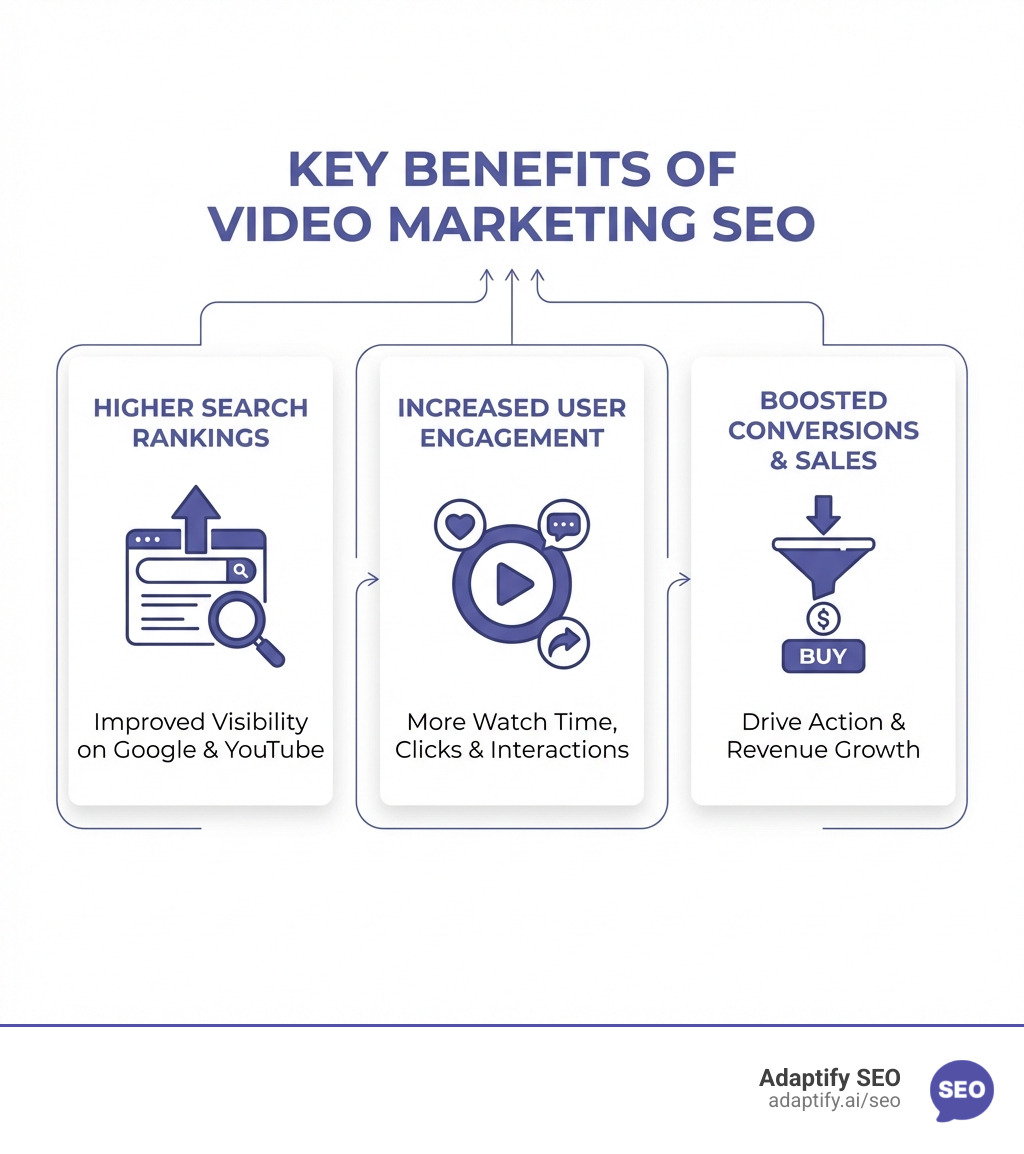
Video marketing SEO is the practice of optimizing your video content so it ranks higher in search engines like Google and platforms like YouTube — driving more organic traffic, engagement, and conversions.
Here's a quick overview of what it involves:
Video is no longer optional for search visibility. About one third of all online activity is spent watching video. And 84% of people say they've been convinced to buy a product or service after watching a brand's video. Yet most businesses still treat video as an afterthought in their SEO strategy — uploading content and hoping for the best.
The gap between businesses that rank with video and those that don't comes down to one thing: optimization. Search engines can't watch your videos. They rely entirely on signals — metadata, transcripts, engagement data, structured markup — to understand what your video is about and who should see it. Without those signals in place, even great video content stays invisible.
I'm Hansjan Kamerling, a product designer and marketing consultant who has worked across SaaS platforms, fintech startups, and growth-stage products reaching millions of users — applying video marketing SEO principles as part of broader digital strategies throughout. In the sections below, I'll walk you through 10 proven, actionable strategies to get your videos ranking.
Before you even pick up a camera, you need to know what people are actually looking for. Traditional SEO focuses on what people type into Google, but video marketing SEO requires a dual-channel approach. You want to find "video intent" keywords—terms where Google already shows video results in the search engine results pages (SERPs).
I always start with "seed keywords." These are broad terms related to your industry. From there, I use YouTube autocomplete to see what specific questions people are asking. If you type "how to bake" into the search bar, YouTube will suggest "how to bake sourdough" or "how to bake a cake for beginners." These are goldmines for content ideas because they represent real user demand.
To take it further, I rely on advanced keyword analysis platforms. Tools like Moz Keyword Explorer, AdWords Keyword Planner, and UberSuggest help identify search volume and competition levels. If you want a tool specifically built for the YouTube ecosystem, Semrush’s Keyword Magic Tool or their Keyword Analytics for YouTube app are fantastic for identifying growth keywords.
Not all keywords are created equal. For video, you want to focus on high-intent categories:
Once you have your keywords, you have to tell the search engine bots what your video is about. Bots can't "watch" the footage, so they rely on your metadata. This includes your title, description, and tags.
Your title should be at least five words long and include your primary keyword near the beginning. But don't just write for bots—write for humans. Use "power words" that trigger an emotional response. For the description, don't just write a single sentence. I recommend at least 200–300 words of unique content. This gives search engines more context to index your video properly.
The thumbnail is arguably the most important factor for your click-through rate (CTR). If your thumbnail looks like a blurry screenshot, no one will click, regardless of how well you rank.
Tools like Canva make it incredibly easy for non-designers to create professional-looking thumbnails. 84% of people say a brand's video convinced them to buy; that journey starts with a single click on a thumbnail.
Technical SEO is the "under the hood" work that ensures search engines can find, crawl, and index your video. One of the biggest decisions you'll make is where to host your content.
| Feature | YouTube | Vimeo | Self-Hosting |
|---|---|---|---|
| SEO Impact | Massive (Google-owned) | Moderate | High (for on-site dwell time) |
| Reach | Global search engine | Professional community | Limited to your site |
| Control | Low (Ads/Suggested videos) | High | Absolute |
| Technical Ease | Very Easy | Easy | Hard (requires optimization) |
If you host on your own site, you must ensure you are using HTML5 for compatibility. More importantly, you need to implement structured data.
Structured data is a way of "tagging" your video so Google understands the specifics. By using the VideoObject schema, you can tell Google the duration, upload date, and thumbnail URL. You can even use Clip and SeekToAction properties to define "Key Moments" in your video, allowing users to jump straight to the answer they need from the Google search result page.
I highly recommend checking your work with Google’s Rich Results Test to ensure your code is error-free. You can find deeper details in Google’s Documentation on VideoObject schema and clips.
Don't forget transcripts and captions. Captioned videos get 12% more views than uncaptioned ones. Transcripts serve a dual purpose: they make your content accessible to the 20% of the population with hearing loss and provide a text-based version of your video for search engines to crawl. You can use tools like Trint, Express Scribe, or even the built-in YouTube transcription features to get started.
Search engines use engagement metrics as a proxy for quality. If people click on your video but leave after three seconds, Google assumes your video isn't helpful. This is known as "dwell time" or "audience retention."
To keep people watching, you need a strong "hook" in the first 15 seconds. Tell the viewer exactly what they will learn and why they should stay until the end. Since 55% of people watch videos online every day, the competition for attention is fierce.
Here are a few ways I boost engagement:
Creating the video is only half the battle; you also need to promote it. Strategic distribution helps generate "social signals" and, more importantly, high-quality backlinks.
When you embed a video on your website, it can help increase the domain authority of that page. If other sites find your video valuable and embed it or link to it, you gain a backlink. Backlinks remain one of the top three ranking factors for Google.
I recommend a multi-channel approach:
While they share many principles, the goals are different. YouTube SEO focuses on ranking within the YouTube platform to gain views and subscribers. Video marketing SEO (or Web Video SEO) focuses on getting your video to appear in Google search results, often to drive traffic back to your own website.
It depends on the intent. For social media, 30–90 seconds is usually the sweet spot. For YouTube and educational content, seven to 15 minutes often performs best because it allows for more in-depth information, which leads to higher watch time.
Absolutely. Adding video to a webpage can increase the time a user spends on that page (dwell time), which is a key ranking signal. It also makes your content more "link-worthy," helping you earn the backlinks necessary to improve your overall search visibility.
Mastering video marketing SEO isn't about "tricking" the algorithm; it's about providing the best possible experience for the user and then making sure search engines can see it. By combining deep keyword research, technical precision with schema markup, and a focus on high-quality engagement, you can turn video into your most powerful SEO asset.
At Adaptify SEO, we understand that managing all these moving parts—from strategy formulation to technical implementation—can be overwhelming. That’s why we offer an automated SEO solution designed to streamline your content creation and strategy. Whether you're using tools like Airtable or Trello to organize your production, or looking for a comprehensive way to scale your brand's visibility, the future of marketing is undoubtedly video-first.
The trends are clear: AI integration and personalized, dynamic video are the next frontiers. Start optimizing today, and you'll be well-positioned to dominate the SERPs of tomorrow.

Master SEO monitoring with key metrics and tools to track rankings, technical health, and organic growth for continuous performance optimi...
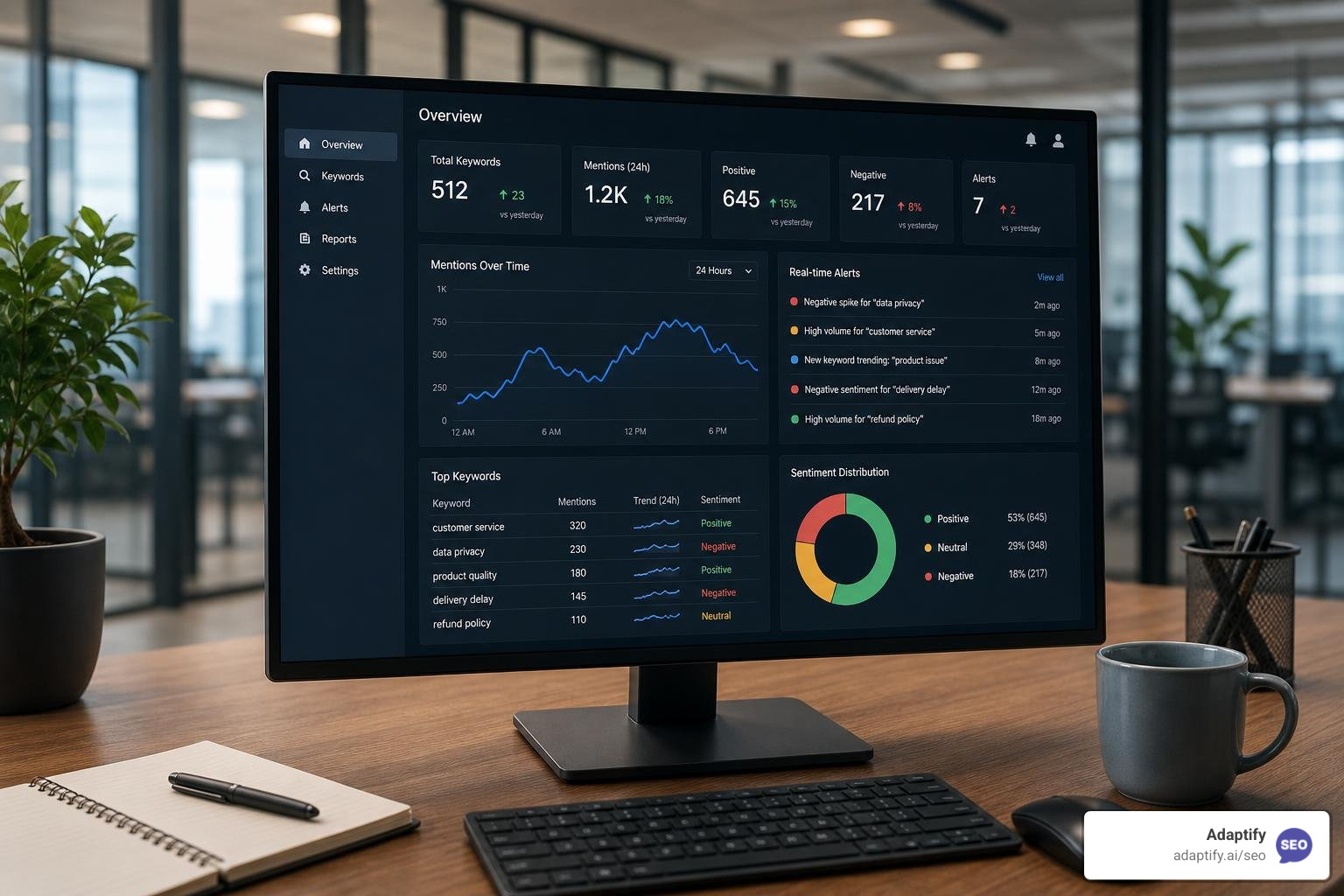
The Best Online Keyword Monitoring Tools for Real-Time Alerts - Learn about online keyword monitoring tool
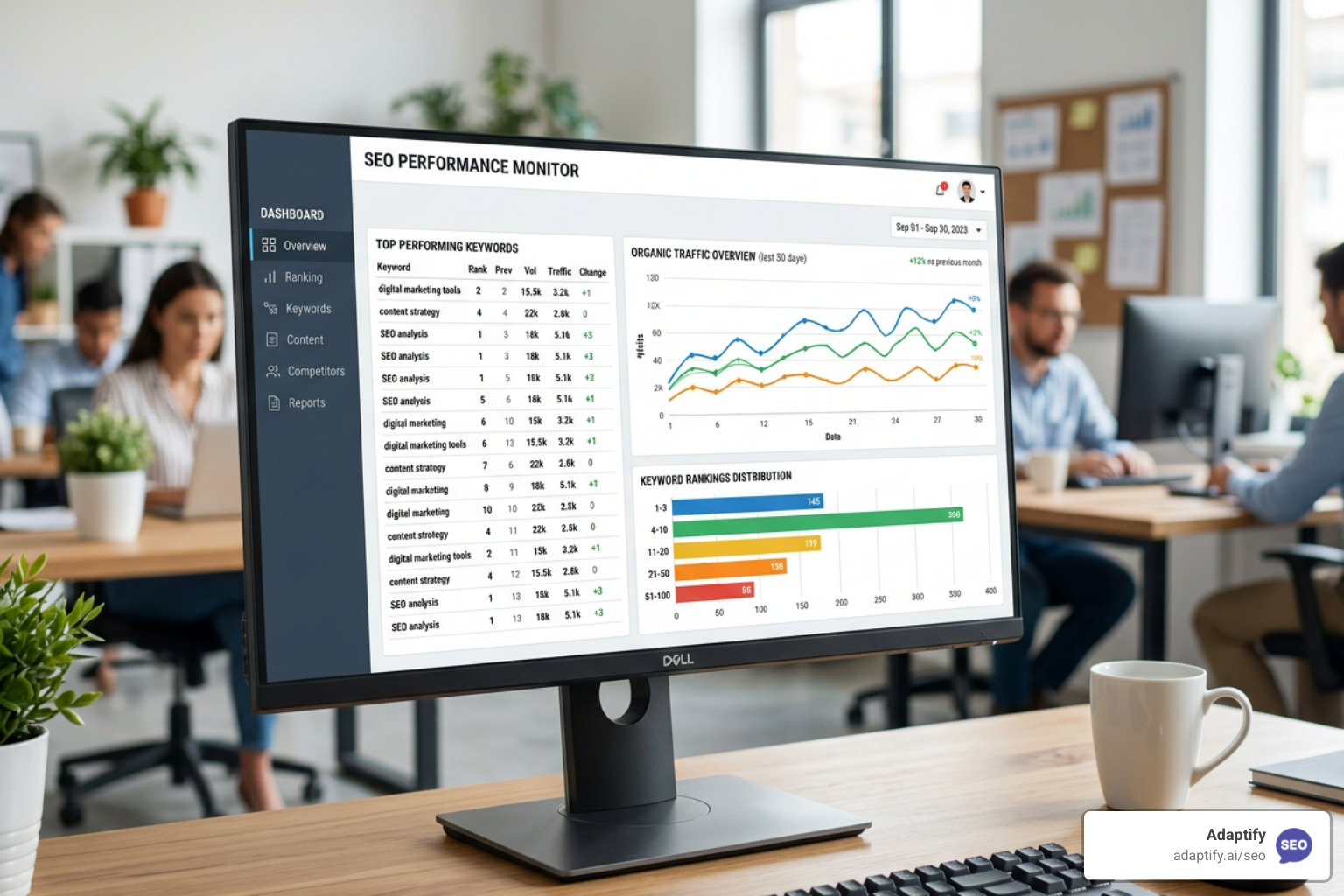
Stop Flying Blind with These Top SEO Monitor Tools - Learn about seo monitor tools
Join 1,000+ agencies already delivering SEO and AI visibility from a single platform without increasing their headcount.Join 1,000+ agencies already delivering SEO and AI visibility from a single platform without increasing their headcount.