The No-Fluff SEO Proposal Playbook for Winning Better Clients




An SEO proposal is the document that stands between you and a signed retainer — and most agencies are getting it wrong.
Here's what a winning SEO proposal includes, at a glance:
That structure matters more than most agencies realize. Proposals with specific numbers in the executive summary close 28% more often than those with generic language. Proposals with three pricing tiers close 32% more than single-price proposals. And SEO as a channel delivers an average 825% ROI — but only if you can convince the client to sign in the first place.
The problem isn't that agencies don't know SEO. It's that they write proposals that talk about themselves instead of the client's opportunity. They bury the value in jargon. They send a wall of text with no pricing, or a single price with no options, forcing a binary yes-or-no decision.
One insight that captures it well: if an SEO project stalls or misses the mark, there's a good chance the proposal didn't set proper expectations from the start. A clear, structured proposal doesn't just win clients — it prevents scope creep, misaligned expectations, and the "can you just..." requests that quietly kill project margins.
I'm Hansjan Kamerling, product designer and marketing consultant at Adaptify AI, and I've worked across SaaS platforms, fintech startups, and digital agencies where the quality of a well-crafted SEO proposal was the difference between scaling and stalling. In this guide, I'll walk you through exactly how to build proposals that close.
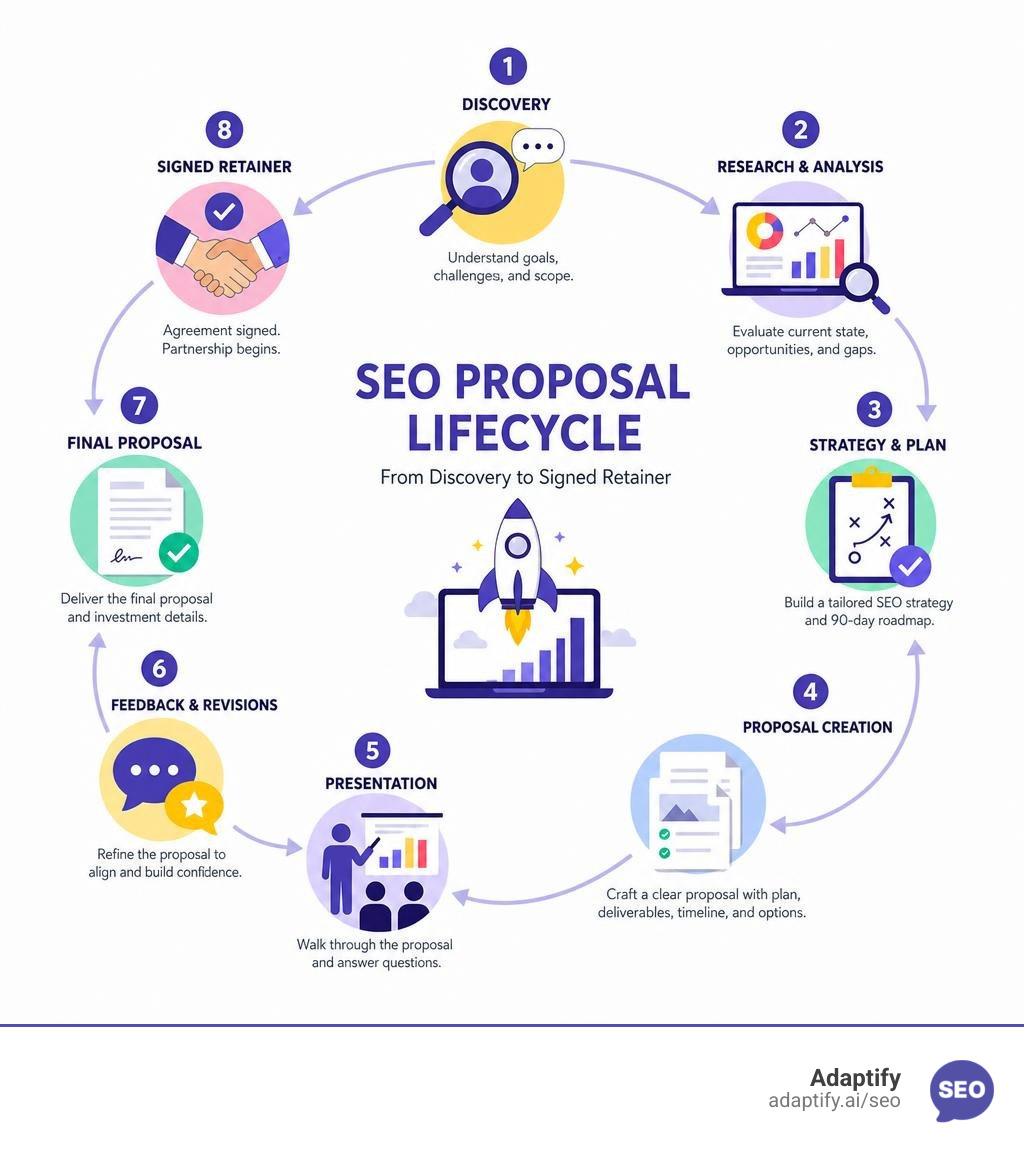
When I review a proposal that crashed and burned, it almost always reads like a generic textbook on search engine optimization. It explains what a meta description is, lists a dozen standard tasks, and ends with a flat monthly price.
A winning proposal is different. It functions as a personalized strategy brief and a diagnostic tool. It shows the prospect that you have already audited their site, identified their specific bottlenecks, and mapped out a clear path to capture lost revenue.
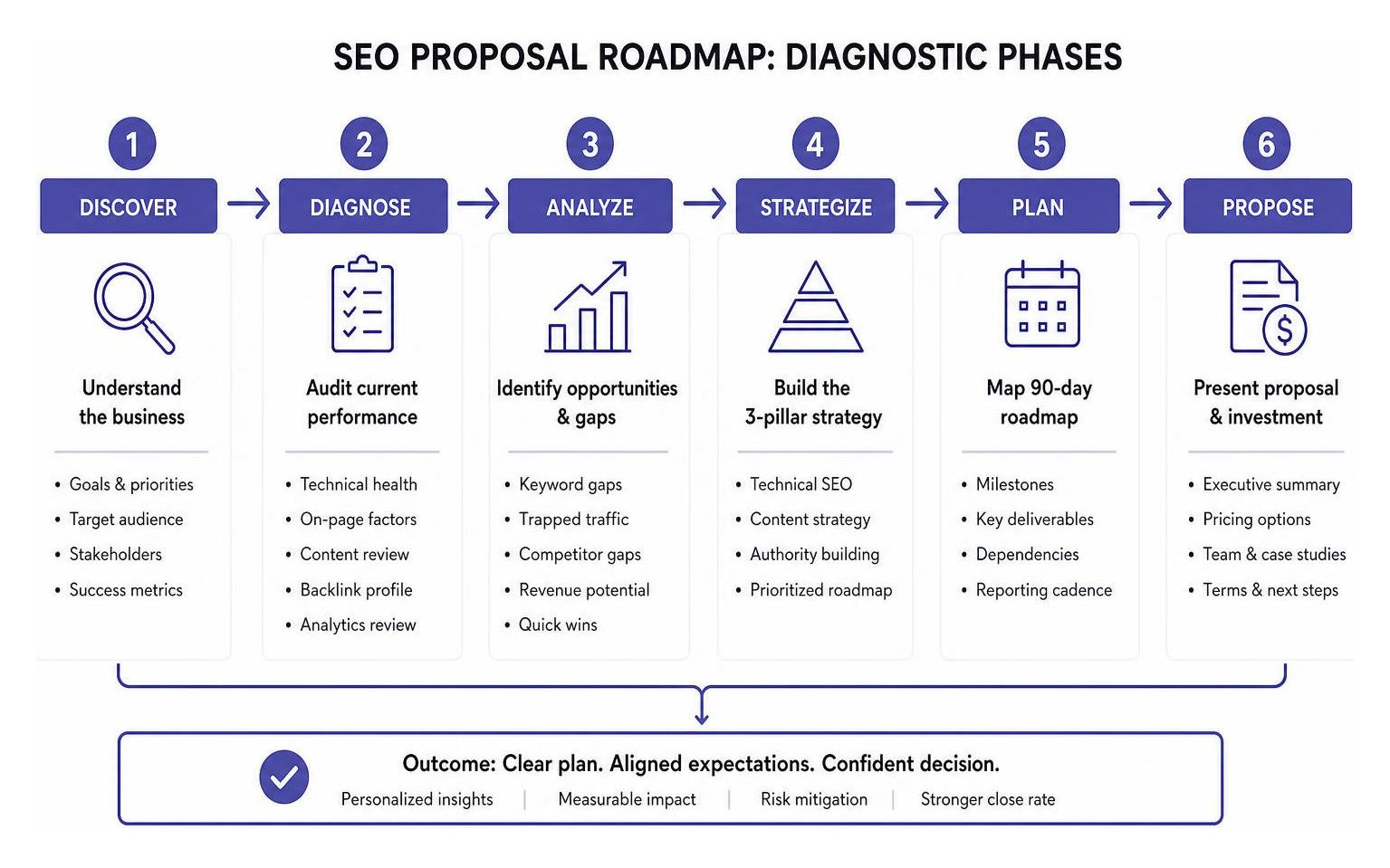
To build this level of trust immediately, your proposal needs to lead with a strong executive summary and a clear breakdown of the prospect's current organic search performance. Instead of telling them you can "increase their traffic," you show them that they are currently ranking on page two for high-value search terms, missing out on an estimated $8,500 in monthly organic revenue.
An effective seo proposal should sit in a sweet spot of 8 to 15 pages. Anything less than 8 pages feels like a lazy, copy-paste template; anything over 15 pages risks overwhelming the decision-maker with technical details they do not understand.
To keep the document readable, I structure my proposals around a clear three-pillar strategy:
This structure allows you to balance technical depth with client-friendly language. You can explain the "why" behind your recommendations without drowning the client in jargon. For a detailed breakdown of how to organize these sections visually, you can explore Beyond the Blank Page: Essential SEO Proposal Templates & Formats or use a structured SEO Proposal Template: Win More Clients (2026) - Scale Growth Digital to get started.
One of the biggest friction points in any sales cycle is pricing. If you present a single, flat-rate pricing model, you force the client into a binary "yes or no" decision. Instead, I always recommend presenting three distinct pricing tiers: Basic, Comprehensive, and Premium. This shifts the client's internal question from "Should we work with this agency?" to "Which tier fits our budget best?"
To make your pricing even more compelling, pair it with a realistic timeline. SEO is a compounding channel that requires a runway. I advise setting a minimum 6-month commitment for retainers, backed by a clear 90-day roadmap. Your roadmap should show exactly what will be completed in month one (usually technical fixes and quick-win content), month two, and month three, so the client knows what to expect before the compounding traffic starts to show.
For a deeper dive into structuring your fees, check out our guide on Crafting Your Quote for SEO Services.
| Pricing Model | Best For | Pros | Cons |
|---|---|---|---|
| Monthly Retainer | Ongoing, long-term SEO campaigns | Predictable recurring revenue; allows for a long-term compounding strategy | Requires high upfront trust and ongoing proof of value |
| One-Time Project / Audit | Site migrations, technical cleanups, or initial discovery | Low barrier to entry; clear scope and boundaries | No recurring revenue; does not support long-term search growth |
| Performance-Based | Highly confident agencies working in established niches | Extremely attractive to risk-averse clients | Risky for the agency; search engine algorithm updates are out of your control |
The most persuasive tool in your sales arsenal is data. Before writing a full proposal, I highly recommend running a paid discovery phase or a light website audit. This allows you to gather real data to back up your pitch.
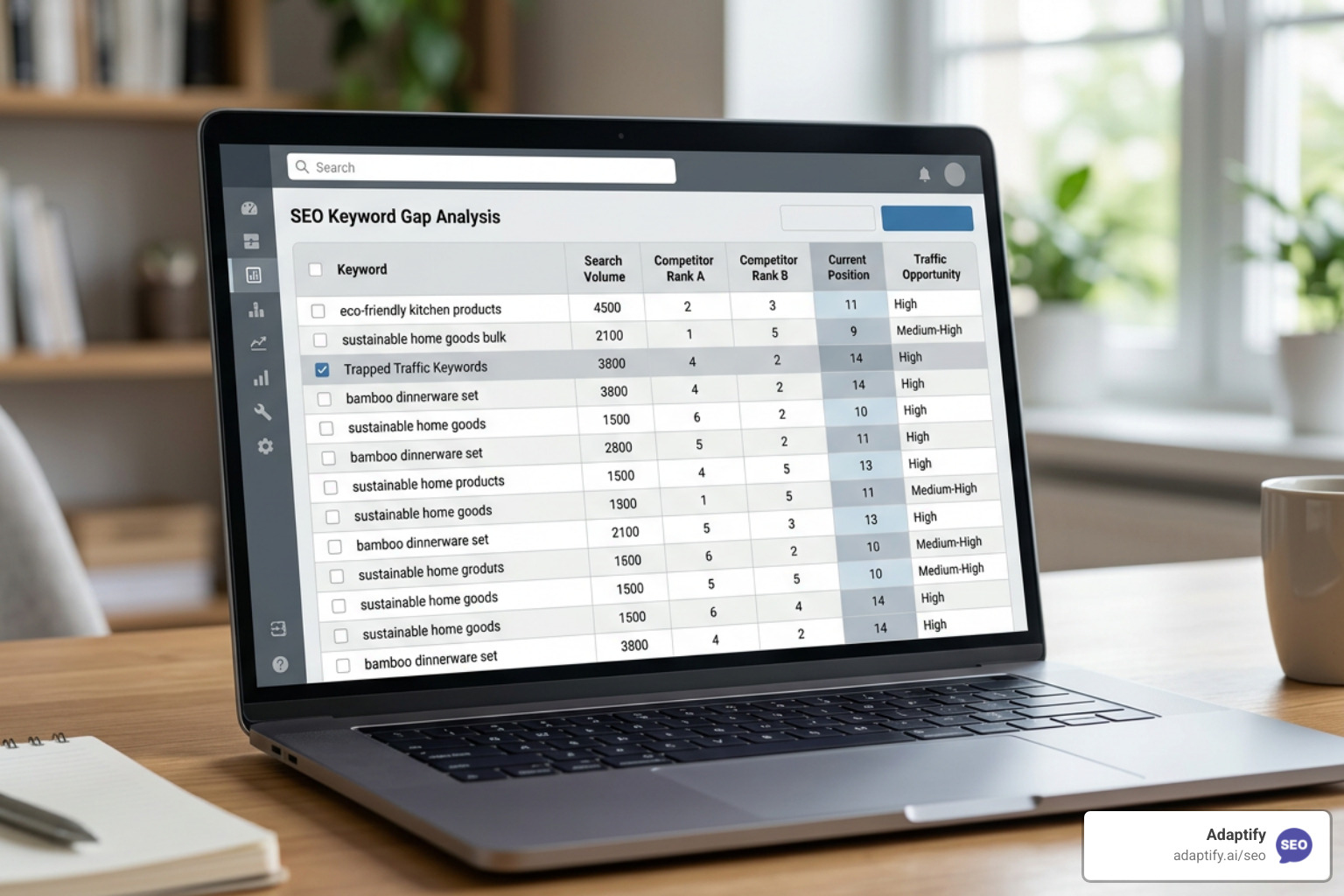
One of the most effective ways to capture a prospect's attention is by showing them their "trapped traffic" — keywords sitting in positions 8 through 14. These are search terms that are close enough to the first page to see search volume but too far down to catch actual clicks. By presenting a keyword-gap table comparing their rankings directly to their competitors, you make the opportunity feel urgent.
To make your strategy feel safe, weave in social proof. Include case studies and testimonials from clients in similar industries. If you are presenting a technical audit, you can structure it using our Stop Guessing and Start Closing with Our SEO Audit Proposal Template to ensure your data is easy to read. For a comprehensive look at how to present this research, see The Ultimate SEO Proposal Template (with PDF & Guide) - SEOptimer.
Even experienced agencies make critical errors that cause prospects to walk away. Here are the most common pitfalls to avoid:
To see how to sidestep these issues and write a balanced pitch, read our guide on how to Unlock Deals with a Killer SEO Proposal Sample.
Writing custom proposals from scratch for every inbound lead is a massive time sink. If your agency is spending ten hours on every pitch, your sales process is not scalable. To grow, you need to streamline how you build, customize, and deliver your proposals.

Specialized proposal software allows you to build modular proposals that can be customized in minutes. Instead of rewriting your "About Us" or "Our Process" sections every time, you can drag and drop pre-built blocks into a clean, branded interface.
Many of these tools offer interactive features like pricing tables with checkboxes. This allows prospects to select add-on services — like a local SEO package or extra content pieces — directly within the document, increasing your average deal size automatically.
To help you build a library of reusable assets, we have compiled several resources you can download for free:
The real challenge of scaling an agency isn't just winning the client — it is delivering on the promises you made in your seo proposal without burning out your team. This is where modern automation tools change the game.
With Adaptify, you can automate the entire execution phase of your SEO campaigns. Our platform streamlines:
By automating the tedious, manual parts of SEO execution, you can pitch bold, high-impact strategies in your proposals with the confidence that you have the infrastructure to deliver them efficiently. If you are ready to scale your agency operations and close more high-value retainers, check out our automated SEO solutions today.

Master SEO monitoring with key metrics and tools to track rankings, technical health, and organic growth for continuous performance optimi...

The Best Online Keyword Monitoring Tools for Real-Time Alerts - Learn about online keyword monitoring tool

Stop Flying Blind with These Top SEO Monitor Tools - Learn about seo monitor tools
Join 1,000+ agencies already delivering SEO and AI visibility from a single platform without increasing their headcount.Join 1,000+ agencies already delivering SEO and AI visibility from a single platform without increasing their headcount.