SEO Monitoring 101: Key Metrics and Tools You Actually Need




Search performance is dynamic. Search engine algorithms shift constantly, competitors publish new content daily, and routine site updates can inadvertently break indexation. Without regular search tracking, technical bugs or rank drops can go unnoticed for weeks, quietly draining revenue.
Continuous monitoring acts as an early warning system. It tracks search visibility, diagnostic health, and ranking volatility across thousands of queries. When algorithms evolve or SERP features change, tracking ensures rapid adjustments rather than delayed post-mortems.
Relying on modern automated SEO analysis allows marketing teams to maintain total visibility over their web footprint, protecting hard-won organic gains against unexpected drops. This proactive approach is especially critical for agencies managing multiple client accounts, where a single technical oversight can cascade into significant performance losses across an entire portfolio.
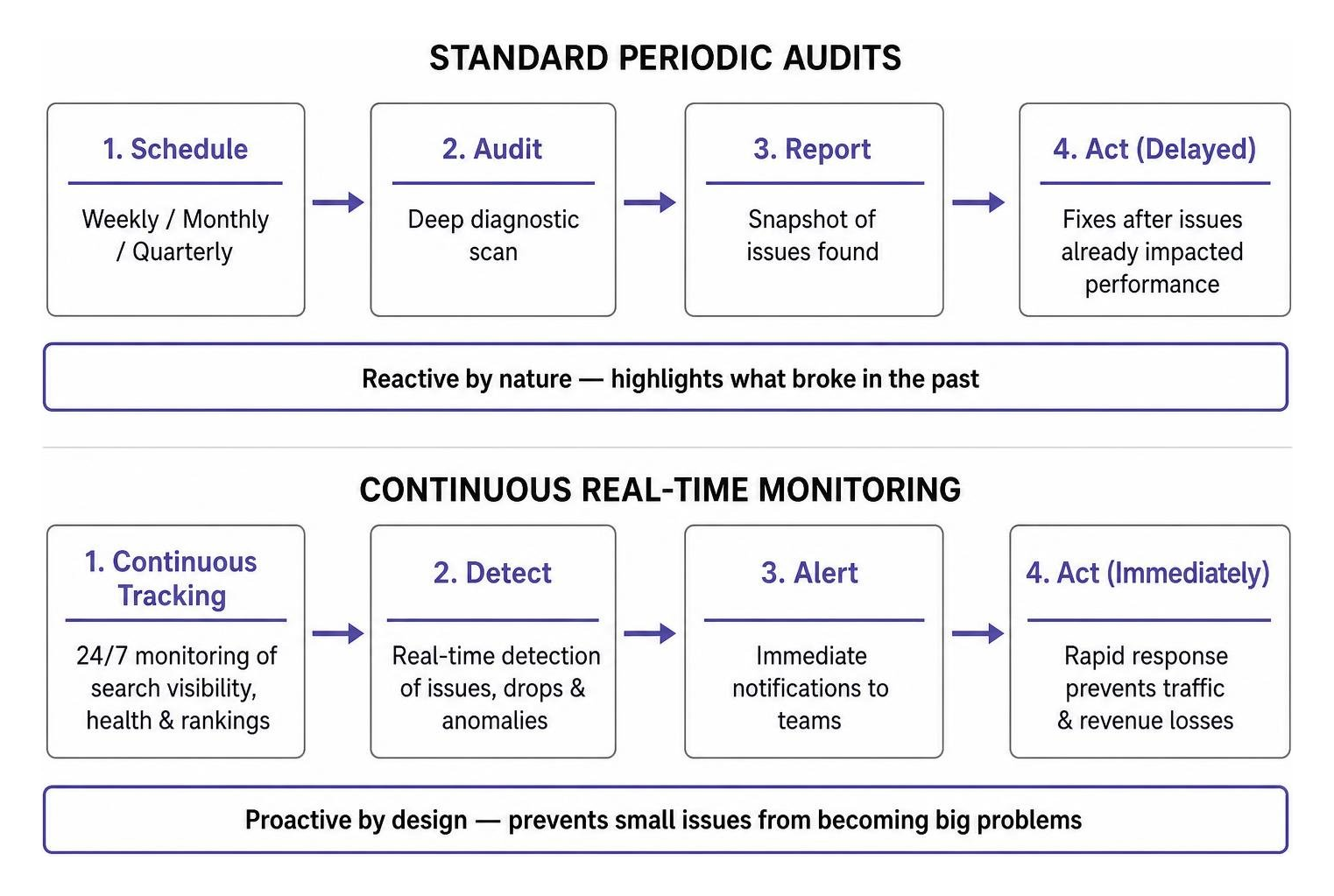
Periodic audits serve as deep diagnostic scans. They provide point-in-time snapshots of an entire domain, evaluating architecture, content gaps, and technical compliance. However, audits are fundamentally reactive; they highlight what broke in the past.
In contrast, continuous monitoring delivers automated alerts and real-time detection. When a developer accidentally deploys a noindex tag to a core product category or a server starts throwing 500 errors during a traffic spike, continuous systems trigger immediate notifications. This speed of response prevents minor site glitches from turning into prolonged organic traffic disasters. For growing teams, the difference between a scheduled audit and an always-on monitoring system often translates directly into recovered revenue and protected client relationships.
Tracking every metric available leads to analysis paralysis. Effective tracking focuses on metrics tied directly to business outcomes: lead generation, revenue, and brand authority.
Search positions on traditional pages are only part of the story. Modern visibility requires evaluating how often a domain appears across diverse SERP layouts and AI features:
Technical SEO issues are often the hidden culprits behind stalled organic performance. Monitoring infrastructure health prevents catastrophic visibility drops:
robots.txt changes to prevent accidental de-indexing.External signals dictate how search algorithms perceive site trust and relevance over time. Implementing established backlink monitoring practices ensures a clean link profile.
Key off-page metrics include:
Deploying structured backlink tracking systems helps identify toxic link spikes or negative link campaigns before they damage search rankings.
Building an effective stack requires balancing data accuracy, feature sets, and team bandwidth.
| Tool Category | Primary Strengths | Best Use Case | Limitations |
|---|---|---|---|
| Native Platforms (GSC, GA4) | Direct search engine data, zero cost, 100% conversion accuracy | Baseline traffic, impressions, and revenue attribution | Limited historical retention, basic alerting, no competitor tracking |
| Cloud Crawlers | In-depth technical audits, real-time code change tracking | Architecture audits, technical health monitoring | Steeper learning curve, resource-intensive for large websites |
| Unified Trackers & Platforms | Daily top-100 positions, AI search visibility, competitor intelligence | Multi-channel ranking analysis, executive reporting | Higher subscription costs, potential data overload |
To construct a balanced stack, explore vetted top monitoring solutions across three essential layers:
Free tools provide essential baseline performance metrics, but paid solutions become necessary when managing multiple sites or agency accounts. Paid tools eliminate data sampling, provide daily crawl frequency, retain historical SERP snapshots indefinitely, and offer custom threshold alerts via Slack, Microsoft Teams, or email. For agencies scaling beyond a handful of clients, the time saved through automated reporting and consolidated dashboards typically justifies the subscription cost within the first reporting cycle.
A cluttered dashboard creates confusion rather than clarity. A successful monitoring interface organizes metrics hierarchically, moving from top-level business outcomes down to diagnostic details.
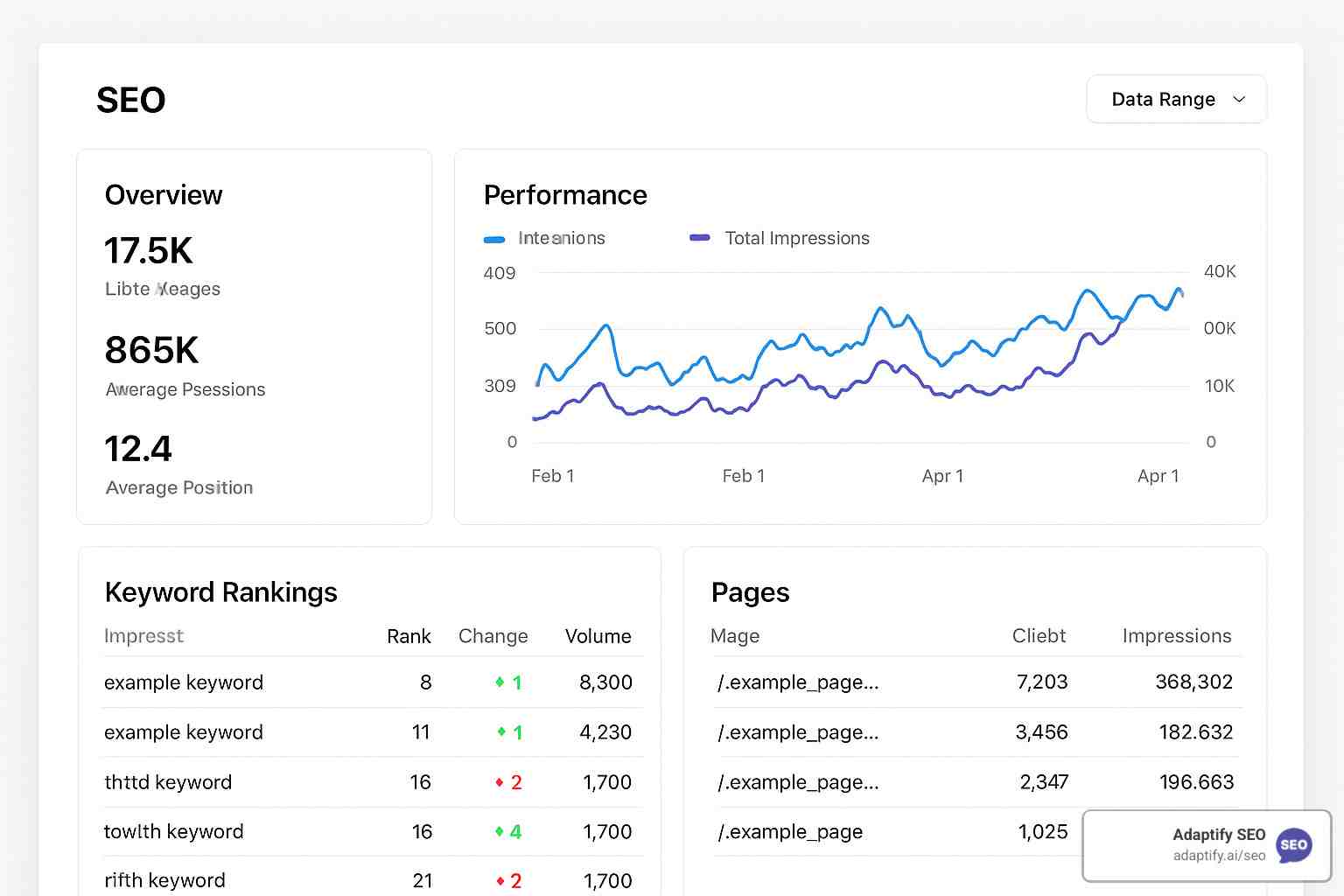
When designing a central hub, agencies benefit from mastering organic analytics dashboards that connect organic traffic directly to commercial pipeline data. Combining native data with third-party tracking creates comprehensive, streamlined reporting systems that keep both technical teams and stakeholders informed.
Establishing a structured review schedule ensures teams catch critical issues without falling into daily micromanagement. Detailed frameworks for setting up automated monitoring recommend dividing tasks by frequency:
Automated tools should run continuously in the background to catch infrastructure failures or significant ranking drops immediately. However, manual strategic reviews are best conducted on a weekly cadence for operational tracking and a monthly cadence for high-level client reporting and ROI measurement.
Traditional rank tracking monitors an exact numeric position on search engine results pages. AI search monitoring measures whether a brand, product, or URL is referenced, cited, or summarized inside AI-generated responses (such as AI Overviews, Gemini, Perplexity, or ChatGPT) for relevant user queries.
Search engine algorithms constantly test relevant content across positions 11–50 to evaluate user satisfaction, CTR, and engagement signals. Because these positions sit in the algorithm's active testing ground, keyword movements on pages 2 through 5 are up to 22 times more volatile than positions 1 through 3.
Succeeding in organic search requires shifting from reactive, manual audits to proactive, continuous oversight. By tracking core visibility, technical infrastructure, and authority metrics within a unified dashboard, marketing teams can diagnose technical issues early, protect valuable rankings, and demonstrate measurable business impact.
For growing teams and agencies seeking to eliminate manual overhead, platforms like Adaptify provide complete, automated SEO solutions—from strategic monitoring to automated content creation and link acquisition. To refine the operational toolkit further, explore the guide on choosing the right SEO monitoring tools to build a resilient, scalable search strategy.
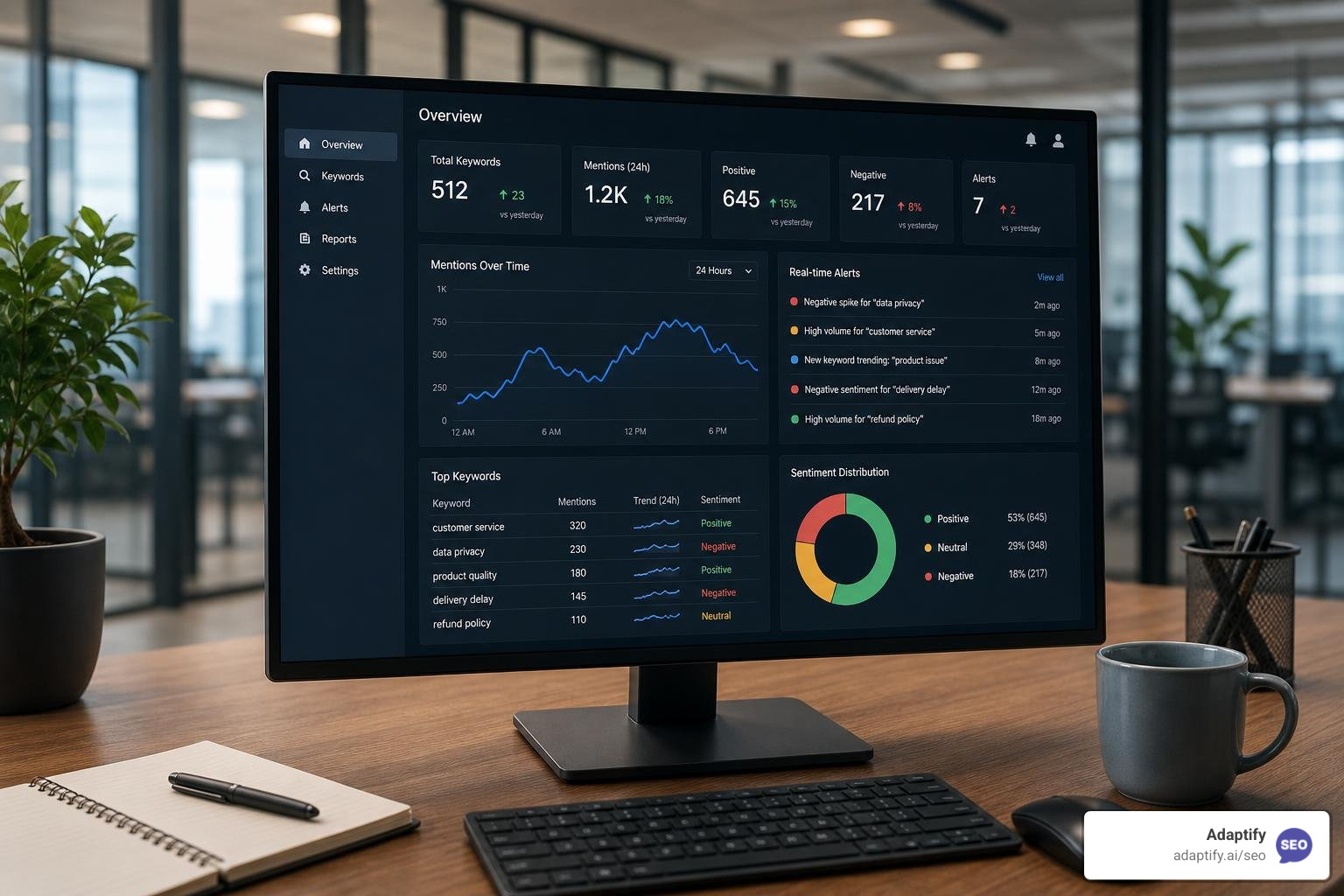
The Best Online Keyword Monitoring Tools for Real-Time Alerts - Learn about online keyword monitoring tool
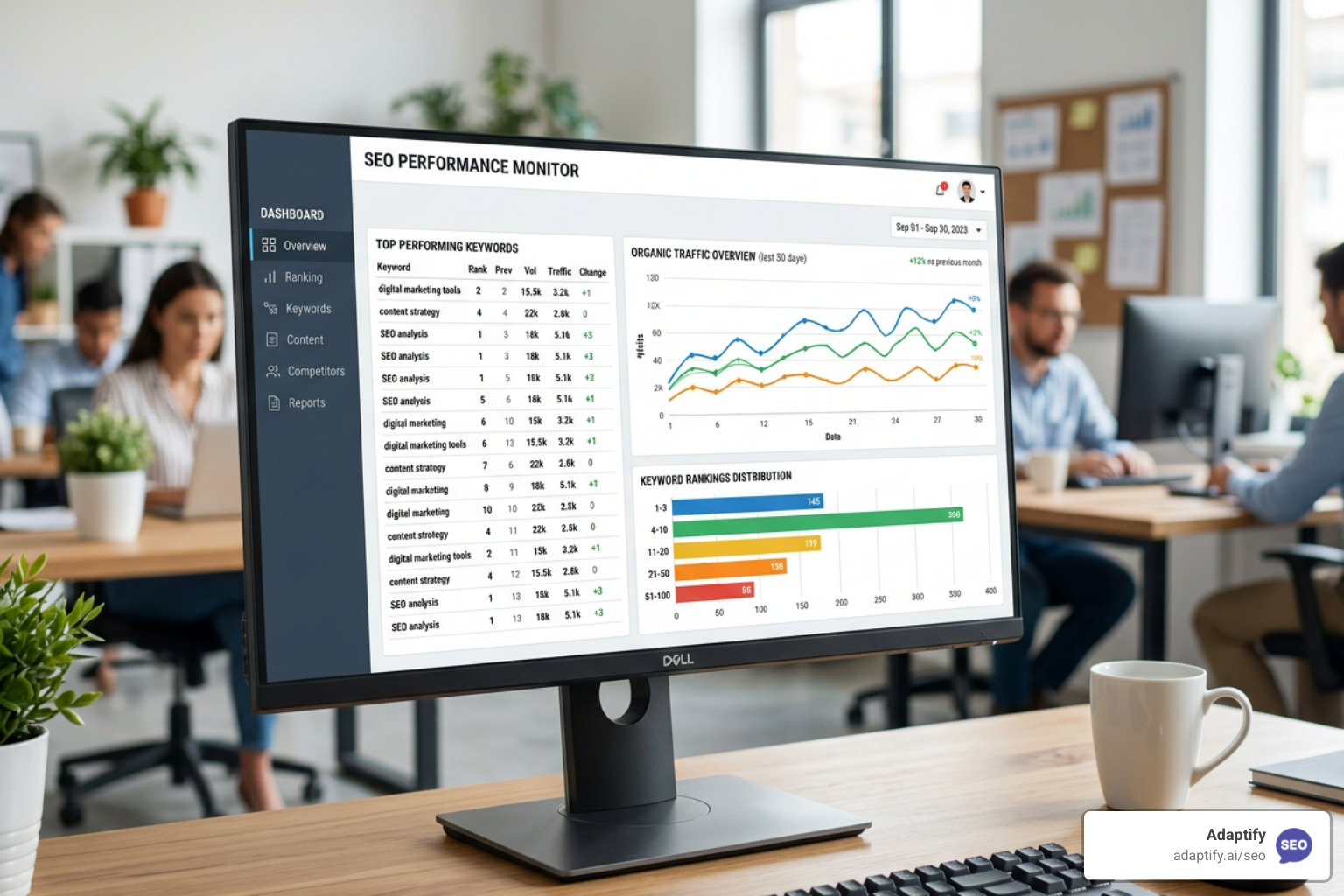
Stop Flying Blind with These Top SEO Monitor Tools - Learn about seo monitor tools

Learn what is local SEO and how to dominate Google Maps, drive foot traffic, and grow your business with this complete optimization guide.
Join 1,000+ agencies already delivering SEO and AI visibility from a single platform without increasing their headcount.Join 1,000+ agencies already delivering SEO and AI visibility from a single platform without increasing their headcount.