Medical SEO Specialists: Elevate Your Practice with Expert Digital Marketing




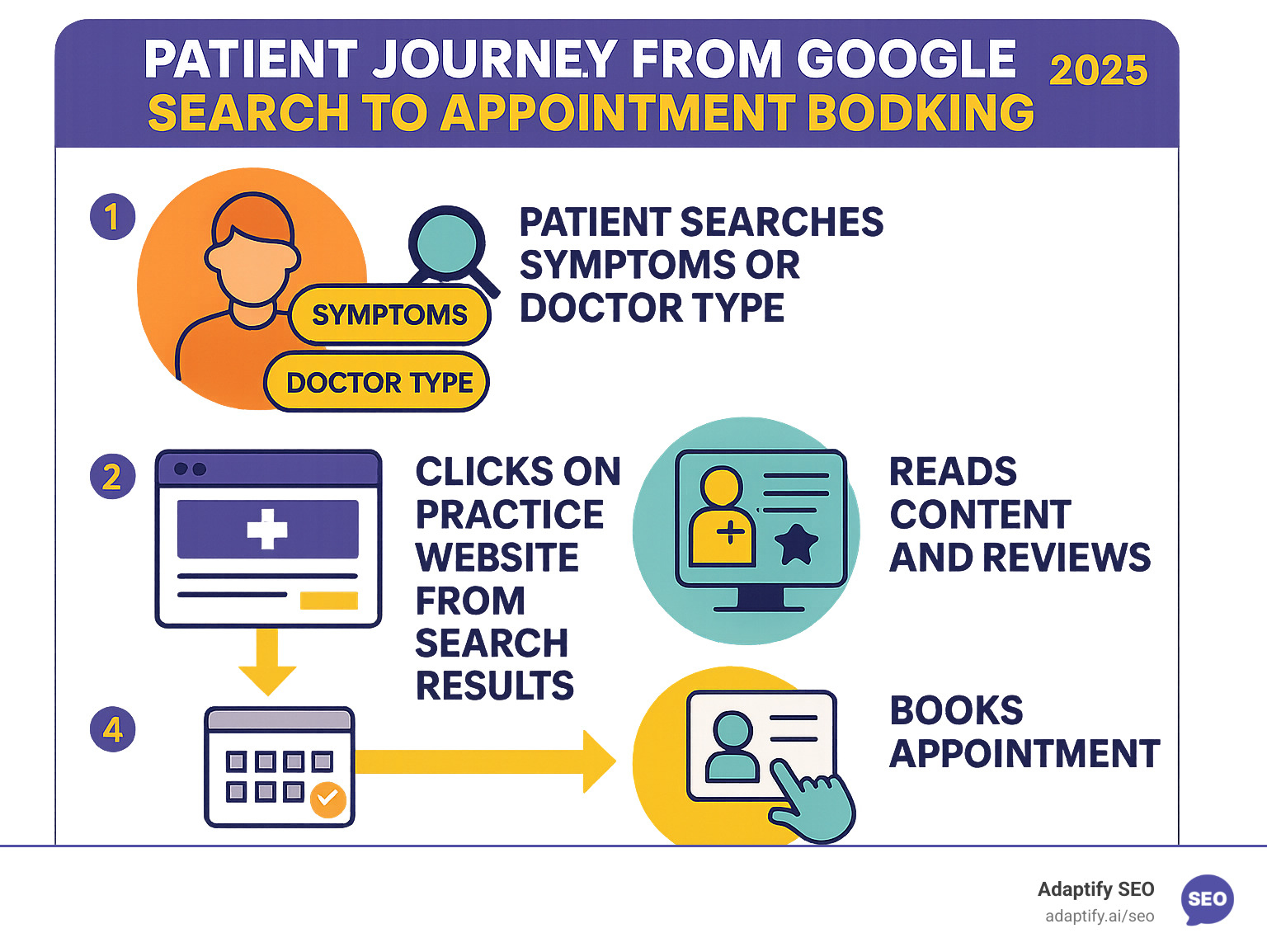
In today's digital-first world, the patient journey no longer begins with a referral or a phone book; it starts with a search engine query. With nearly 80% of patients turning to the internet to find medical information and healthcare providers, your practice's online visibility is no longer a luxury—it's the cornerstone of sustainable growth. As Dr. Kevin Pho, founder of KevinMD, notes, "Healthcare providers who ignore their online presence are essentially invisible to the modern patient." This is where medical SEO specialists become indispensable. They are not just marketers; they are strategic partners who understand the unique, high-stakes environment of healthcare marketing, where trust is the ultimate currency.
A medical SEO specialist is a digital marketing expert who focuses exclusively on elevating healthcare practices in search engine results to attract and convert patients online. Their expertise goes far beyond general SEO, encompassing a deep understanding of medical ethics, regulatory compliance, and the specific informational and emotional needs of patients seeking care. Their work is a blend of technical precision, clinical content strategy, and rigorous adherence to industry regulations. Here is a closer look at what they do:
Local SEO Optimization: They ensure your practice dominates local search results for high-intent queries like "orthopedist near me" or "pediatrician accepting new patients." This is a multi-faceted process that involves meticulously managing your Google Business Profile (GBP), building local citations in reputable medical directories (like Healthgrades, Vitals, and Zocdoc), and encouraging patient reviews to build social proof and local authority. A specialist will optimize every component of your GBP, including adding detailed descriptions for each service, using the Q&A feature to proactively answer common patient questions, and creating regular GBP Posts to announce practice updates. For a dermatology practice in Chicago, this means optimizing for "acne treatment Chicago" while ensuring its satellite location in Naperville ranks for "dermatologist Naperville" through location-specific pages and targeted GBP optimization. Specialists also add medical schema so that search engines can better understand your practitioners, locations, and treatments, which is critical for visibility.
Medical Content Creation: They develop content that meets Google's rigorous E-E-A-T (Experience, Expertise, Authoritativeness, Trustworthiness) guidelines, which are paramount for health-related topics. This content not only answers patient questions but also establishes your practice as a credible, trustworthy source of medical information. This involves creating a content strategy that maps to the entire patient journey, from early awareness-stage blog posts about symptoms to detailed consideration-stage pages about specific procedures and decision-stage content like practitioner bios. Clear author bios, medically reviewed labels, and last-reviewed dates are standard practice. For instance, a comprehensive article on "Managing Type 2 Diabetes" would include citations from the American Diabetes Association, feature a byline from a board-certified endocrinologist, and provide actionable lifestyle tips alongside medical treatments, all written in clear, accessible language.
Technical Website Optimization: A specialist builds and refines your website to be a fast, secure, and mobile-friendly digital front door. They focus on creating an intuitive user experience (UX) that makes it easy for prospective patients to find information, learn about your practitioners, and book an appointment. This includes optimizing for Google's Core Web Vitals (site speed and stability), ensuring the site has a logical architecture that's easy for both users and search engines to crawl, and implementing robust security with HTTPS. Crucially, it also involves ensuring the website is accessible to people with disabilities by adhering to ADA and WCAG guidelines, which improves usability for everyone and signals trust to search engines. Studies show that a one-second delay in page load time can reduce conversions by 7%, making speed optimization critical for patient acquisition.
Authoritative Link Building: They earn high-quality backlinks from respected medical organizations, universities, health publications, and government health bodies. These links act as powerful votes of confidence in the eyes of Google, significantly boosting your site's authority and search rankings. A single link from a .edu domain or a recognized medical journal can be worth dozens of links from general websites. Strategies include digital PR (e.g., publishing a local health data study and promoting it to news outlets), guest posting on reputable health-focused websites, and getting listed as a resource on hospital or university web pages. This is about quality over quantity, building a profile that reinforces your medical authority.
Compliance Management: Navigating the complex web of HIPAA and medical advertising regulations is paramount. A specialist ensures all marketing activities protect patient privacy and adhere to legal and ethical standards, safeguarding your practice from costly violations. In the US, this means strict adherence to HIPAA, including signing Business Associate Agreements (BAAs) with all marketing vendors (like call tracking or email marketing software) who may come into contact with Protected Health Information (PHI). In the UK, it means complying with UK GDPR and ASA guidance, and in Australia, the Australian Privacy Act and AHPRA advertising rules. According to healthcare compliance expert Rachel V. Rose, JD, MBA, "The average HIPAA violation fine exceeds $1.5 million, making compliance not just ethical but financially critical."
Performance Tracking and ROI: True specialists connect their efforts directly to your practice's bottom line. They go beyond vanity metrics like traffic and rankings to track the KPIs that matter: organic traffic growth, keyword rankings for high-value terms, and, most importantly, patient inquiries, phone calls, and booked appointments originating from search. By using tools like Google Analytics 4 and HIPAA-compliant call tracking, they can attribute new patients to specific SEO activities, measure the return on your investment, and continuously refine the strategy for better results. Leading practices see an average ROI of 300-500% from properly executed medical SEO campaigns.
The days of relying solely on traditional marketing methods like Yellow Pages ads and local referral networks are over. When a potential patient searches for "best pediatrician in Boston," "emergency dental services London," or types "orthodontist near me Sydney," your practice must appear at the top of those results. A medical SEO specialist is the key to making that happen, turning your practice from a local hidden gem into a visible and trusted community leader.
What does excellence look like in practice? Specialists often:
"If patients cannot find you, they cannot choose you." That is the reality of modern healthcare marketing, and it is why disciplined SEO is now a clinical-growth function, not a nice-to-have.
I am Hansjan Kamerling, and my work with leading healthcare platforms and AI-driven marketing solutions has given me a front-row seat to this change. I have helped build growth systems for companies with millions of users, and I have seen how a specialized digital strategy, like the automated and scalable solutions we provide at Adaptify.ai, can empower medical SEO specialists to achieve remarkable growth for their healthcare clients.
For agencies and in-house teams alike, Adaptify.ai streamlines the work that moves the needle: automated keyword finding and clustering, on-page optimization at scale, programmatic content briefs and creation with human-in-the-loop medical review, and ethical PR link outreach. With teams and clients across the US, UK, and Australia from our offices in major cities including New York, London, and Sydney, we tailor campaigns to local regulations and expectations while maintaining a consistent, outcomes-focused playbook. While other platforms like SEMrush, Ahrefs, and Moz offer general SEO tools, Adaptify.ai specializes in the unique requirements of medical and healthcare SEO, providing industry-specific features that general tools simply cannot match.
Ready to transform your practice's online presence and attract more patients? Book a Demo today to see how Adaptify.ai can help you achieve sustainable growth through specialized medical SEO.
When I first started working with healthcare platforms, I quickly realized that medical SEO specialists operate in a completely different world than general SEO practitioners. It is not just about getting more traffic—it is about earning the profound trust of both patients and search engines when people's health and well-being are at stake. As Google's John Mueller has stated, "For YMYL topics, we hold pages to a much higher standard because the stakes are so much higher."
Google categorizes health and medical topics as "Your Money or Your Life" (YMYL). This designation means that any content related to health is scrutinized with an intensity far beyond that of other industries. A general SEO expert might succeed with a surface-level blog post about fashion trends, but applying the same approach to medical content can be disastrous. Inaccurate or low-quality medical information can not only harm patients but also cause Google's quality algorithms to penalize your site, making it virtually invisible in search results. Google's core updates and the Helpful Content System are known to disproportionately affect YMYL sites, meaning a lack of specialized oversight can erase a practice's online visibility overnight.
The stakes could not be higher. Medical SEO specialists understand that E-E-A-T (Experience, Expertise, Authoritativeness, and Trustworthiness) is not just a guideline—it is the absolute foundation of a successful medical website. I have seen well-intentioned practices lose thousands of potential patients because they hired a generalist who failed to grasp these critical distinctions. One orthopedic practice in Dallas saw their organic traffic drop by 70% after publishing AI-generated content without proper medical review, taking six months to recover their rankings.
The differences between medical and general SEO are fundamental and far-reaching:
| Feature | Medical SEO | General SEO |
|---|---|---|
| Content Standards | Must meet strict E-E-A-T criteria with verifiable medical review. Content requires citations from peer-reviewed journals and medical authorities. | Broader focus on engagement, readability, and general relevance. |
| Authority Requirements | Requires backlinks from high-authority medical journals, .edu sites, and government health organizations like NIH, NHS, or Australian Department of Health. | Standard link building from relevant blogs and industry sites is sufficient. |
| Compliance | Strict adherence to HIPAA for patient privacy and data security is mandatory, with potential fines exceeding $2 million for violations. | Standard privacy policies and GDPR/CCPA compliance are typically enough. |
| Keyword Strategy | Focuses on patient intent, from symptom-based queries ("lower back pain relief") to provider searches ("cardiologist near me"). | Varies widely by industry, from broad informational to direct transactional keywords. |
| Risk Level | Extremely high—inaccurate information can lead to patient harm and legal liability, with malpractice implications. | Lower—mistakes are less likely to have serious, real-world consequences. |
| Update Frequency | Medical guidelines change frequently; content requires regular updates by qualified experts to reflect current standards of care. | Updates based on algorithm changes and seasonal trends. |
| Conversion Goals | Primarily appointment requests, phone calls, and new patient form submissions. | Can be anything from e-commerce sales to email sign-ups or software downloads. |
E-E-A-T is the framework Google's human quality raters use to assess the quality of YMYL pages. A medical SEO specialist knows how to build and display these signals across your entire digital presence. According to Marie Haynes, a recognized E-E-A-T expert, "In the medical space, E-E-A-T isn't just about rankings—it's about establishing genuine trust with both search engines and patients."
Experience: This refers to the first-hand, real-world experience of the author or organization. For an article about recovering from knee surgery, content from a patient who has undergone the procedure or a physical therapist who guides patients through recovery daily carries immense weight. Specialists showcase this by incorporating anonymized patient stories, video testimonials (with consent), and practitioner Q&As that address the real-world concerns of patients. For example, a post about managing chemotherapy side effects written by an oncology nurse with 15 years of experience will outperform generic content every time.
Expertise: This is the formal knowledge and credentials of the content creator. A specialist ensures that all medical content is written, or at the very least reviewed and fact-checked, by a licensed medical professional with demonstrable expertise in the topic. This is operationalized by creating detailed author pages that list credentials, board certifications, education, publications, and affiliations. These pages act as a central hub of expertise and should be linked from every piece of content the author contributes to. Studies show that content with clear medical authorship receives 2.3x more engagement and shares than anonymous medical content.
Authoritativeness: This is about the reputation of the website and the author as a go-to source in the medical field. A specialist builds this by securing mentions and backlinks from highly respected sources like medical school websites, established hospitals, and well-known health organizations. It is not enough to write great content; the broader medical community must recognize your practice as an authority. For instance, a digital PR campaign where a practice releases a report on local allergy trends, earning coverage from local news and a link from a regional health department, is a powerful way to build authority. Being cited by Mayo Clinic or Johns Hopkins can exponentially increase your domain authority.
Trustworthiness: This is the most critical component. Trust is built through transparency, security, and honesty. A specialist ensures your site has clear contact information, a detailed 'About Us' page, transparent patient testimonials, a comprehensive privacy policy, and secure HTTPS protocol. It also means using real photos of your staff and facility instead of stock images, being clear about who has reviewed the content, and making it easy for patients to understand their privacy rights. Research indicates that 85% of patients check for security indicators before submitting health information online.
I have worked with practices that saw their organic traffic increase by 300% after shifting from a generalist agency to a specialist who understood these nuances. One cardiology practice in Melbourne transformed their online presence by implementing rigorous medical reviews for all blog posts, building out detailed doctor bios with video introductions, and launching a targeted outreach campaign to earn links from local health institutions and the Heart Foundation of Australia. The difference is not just technical—it is a fundamental respect for the responsibility of providing medical information online.
"In YMYL categories, accuracy is the product." That mindset changes how content is planned, written, reviewed, and measured. It also explains why medical SEO cannot be a copy-and-paste version of tactics from other industries.
For practices and agencies looking to scale their content efforts while upholding these exacting standards, many leading specialists now use platforms like Adaptify.ai's content services. These tools help automate the creation of high-quality, optimized articles that are structured from the ground up to meet Google's strict E-E-A-T criteria, ensuring consistency and compliance at scale. With offices in New York, London, Sydney, and other major cities, Adaptify.ai supports multi-location rollouts across regions such as the US, UK, and Australia, so teams can maintain a unified strategy while honoring local regulations and patient expectations. Unlike general SEO platforms such as Clearscope or MarketMuse, Adaptify.ai specifically addresses the unique challenges of medical content creation and compliance.
Ready to elevate your medical practice's online presence with specialized SEO that delivers results? Book a Demo to discover how Adaptify.ai can transform your digital marketing strategy.
Selecting a partner to manage your practice's online presence is as critical as hiring a key member of your clinical team. The right specialist can become a powerful engine for growth, attracting a steady stream of new patients and cementing your reputation as a community leader. Conversely, the wrong choice can lead to wasted marketing budgets, stagnant growth, reputational damage, or even severe legal penalties from compliance failures. Making an informed decision is essential for protecting and growing your practice.
Before signing any contract, conduct a thorough interview. Their answers will reveal their level of expertise, transparency, and suitability for the high-stakes healthcare environment. Go beyond surface-level questions and dig into their processes.
Just as important as knowing what to look for is knowing what to avoid. The following are common warning signs that an agency or consultant is not equipped to handle medical SEO:
Once you know what to look for, you need to decide on the right model for your practice.
Hiring an In-House Specialist:
Partnering with a Specialist Agency:
Hiring a Generalist Agency or Freelancer:
Ultimately, choosing your SEO partner is a strategic investment in the long-term health and viability of your practice. By asking the right questions and looking for a true specialist, you can build a partnership that drives measurable growth and solidifies your position as a trusted authority in your community.

Master SEO monitoring with key metrics and tools to track rankings, technical health, and organic growth for continuous performance optimi...

The Best Online Keyword Monitoring Tools for Real-Time Alerts - Learn about online keyword monitoring tool

Stop Flying Blind with These Top SEO Monitor Tools - Learn about seo monitor tools
Join 1,000+ agencies already delivering SEO and AI visibility from a single platform without increasing their headcount.Join 1,000+ agencies already delivering SEO and AI visibility from a single platform without increasing their headcount.