Stop Guessing and Start Tracking with SEO Ranking Monitoring



In my experience, the difference between an agency that scales and one that plateaus often comes down to how they handle data. SEO ranking monitoring isn't just about watching a number move from position 5 to position 3; it's about understanding the "why" behind the movement. Without a clear view of these shifts, agencies are essentially flying blind, making guesses that could cost their clients thousands in lost revenue.
Modern search is no longer a static list of ten blue links. It is a fragmented ecosystem where results change based on whether a user is on a bus using an iPhone or at a desk using a Mac. Research shows that almost 50% of website visits now come from mobile devices, and rankings often vary drastically between mobile and desktop environments. If you aren't monitoring both, you're only seeing half the picture. This discrepancy often stems from Google's mobile-first indexing, which prioritizes the mobile version of a site's content for indexing and ranking.
Furthermore, the rise of SERP features—like Featured Snippets, People Also Ask boxes, and Local Packs—means that being "number one" in organic results might actually place you below the fold. A robust monitoring strategy tracks your "Visibility Score," which accounts for these features and provides a more accurate representation of your actual market share. This score is a weighted metric that considers the pixel height of your result and the likelihood of a user clicking it.
By making data-driven decisions based on localized, device-specific data, I've seen businesses identify high-intent keyword gaps that their competitors completely missed. Understanding search intent through ranking fluctuations helps you pivot your content strategy before your traffic takes a hit. For instance, if a keyword suddenly starts triggering a "Local Pack," you know you need to optimize your Google Business Profile immediately. You can dive deeper into the technical metrics that drive these shifts by reviewing this scientific research on SEO monitoring metrics.
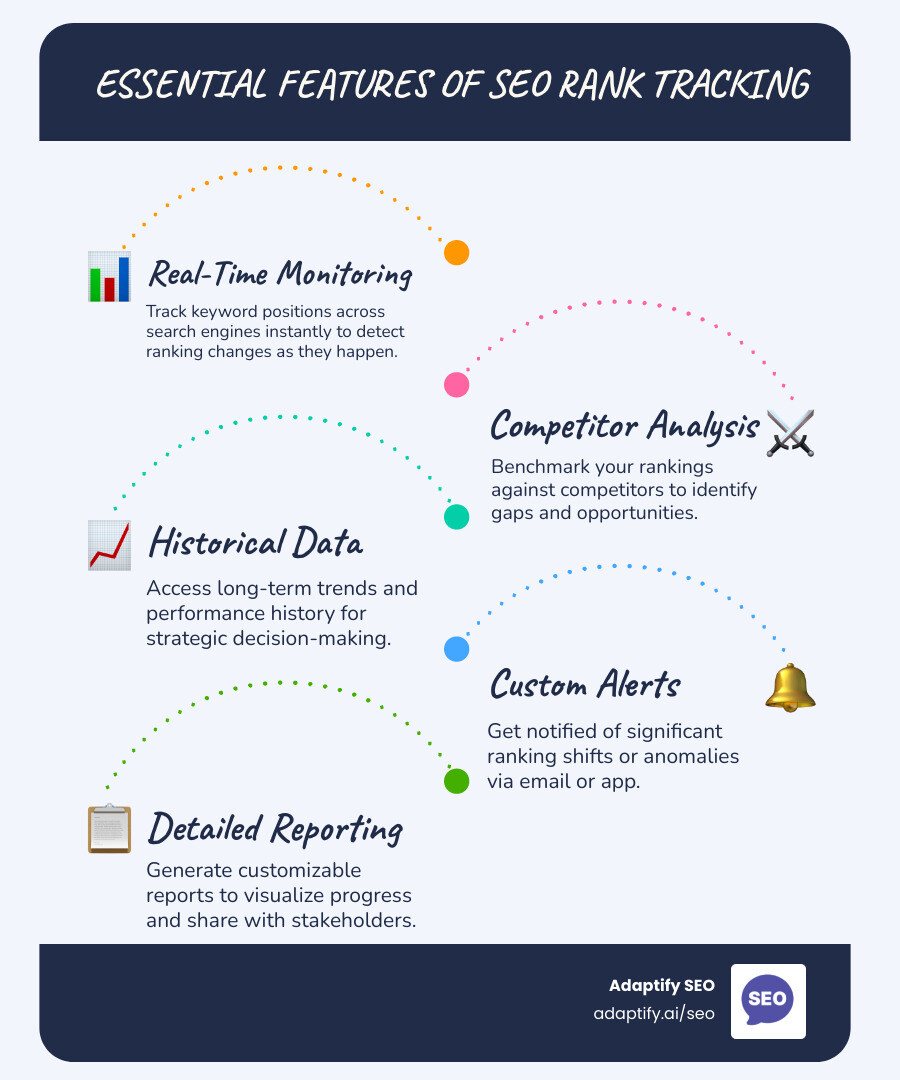
When I evaluate tools for a roundup, I look for features that remove manual labor. For an agency, time is the only finite resource. A "good" tool tells you where you rank; a "robust" tool tells you why your competitor is beating you and alerts you the second a page change threatens your hard-earned positions. The goal is to move from reactive troubleshooting to proactive growth management.
Accuracy is the bedrock of seo ranking monitoring. I've found that top-tier tools now offer 99.9% accuracy by simulating real user behavior across different browsers and IP addresses. This includes "pixel-position tracking," which measures exactly how many pixels down the page your result sits. This is vital because a large "AI Overview" or a row of sponsored ads might push the #1 organic result 1,000 pixels down the screen, killing the CTR (Click-Through Rate) even if the rank remains the same. Real-time updates and volatility tracking allow you to see algorithm updates as they happen, rather than days later, giving you a head start on recovery strategies.
You need more than just your own data. A professional monitoring solution should offer a massive keyword database (some now exceed 5.4 billion keywords) and detailed domain profiles. I look for "Competitor Discovery" features that automatically map out who is competing for your specific keyword set, as your real-world competitors aren't always your search competitors. "Share of Voice" analysis is another favorite of mine—it shows the percentage of total clicks you own in your niche compared to the "big players." Additionally, detecting "keyword cannibalization"—where two of your own pages fight for the same spot—can provide instant optimization wins by consolidating authority into a single, stronger URL.
For agencies, scalability is non-negotiable. Tools like Advanced Web Ranking (AWR) or Nightwatch support tracking millions of keywords across thousands of search engines. I prioritize tools that offer white-label reporting, allowing you to send branded, professional PDFs or live URL links to clients that reflect your agency's authority. API integrations are also crucial; being able to pull your ranking data directly into Looker Studio or Google Analytics allows for comprehensive reporting that connects rankings to actual revenue. This integration helps prove the ROI of SEO efforts to stakeholders who care more about the bottom line than position numbers.
SEO is increasingly local. If you’re managing a franchise or a local service business, you need "zip-code precision." Some tools now track rankings across 107,000+ global locations. This allows you to see exactly what a user in a specific neighborhood sees, which is essential for businesses that rely on the "Map Pack." As I mentioned earlier, differentiating between mobile and desktop is mandatory, as Google's mobile-first indexing makes mobile performance the primary driver of search success. A site that ranks #1 on desktop but #8 on mobile is likely suffering from technical mobile-usability issues that need immediate attention.
The most valuable feature of any seo ranking monitoring system is the "set it and forget it" factor. Automated monitoring schedules (daily or hourly) paired with custom alerts save hours of manual checking. I particularly value "page change monitoring." If a client’s developer accidentally deletes a H1 tag, removes a meta description, or changes a URL slug without a redirect, you should get a Slack or email alert immediately. This "watchdog" approach protects SEO performance by correlating on-page changes with ranking shifts in real-time, allowing you to fix errors before they result in a permanent loss of traffic.
We are entering a new era where search isn't just about Google. People are increasingly using ChatGPT, Gemini, Perplexity, and Claude to find information. This is "Generative AI" search, and it requires a completely different monitoring mindset. Traditional rank tracking measures where you sit in a list; AI tracking measures how you are perceived by a machine brain.
The future of seo ranking monitoring is unified. Platforms like SEOmonitor and Nightwatch are already leading the way by integrating "AI Search Visibility" into their dashboards. Instead of just tracking positions, these tools simulate user prompts to see if your brand is mentioned, cited, or recommended by an LLM (Large Language Model). This is becoming known as GEO (Generative Engine Optimization).
Key metrics in this new landscape include:
By tracking "Prompt Research" alongside traditional keyword research, you can ensure your brand remains visible as search shifts from "searching" to "conversing." Understanding which prompts trigger your brand as a recommendation allows you to double down on the content that AI models find most authoritative.
In my opinion, daily updates are the industry standard for any serious campaign. While some free tools offer weekly checks, the search landscape is too volatile for that. Real-time refreshes are essential during a site migration or right after a major Google algorithm update. High-frequency monitoring allows you to spot "volatility" early and adjust your strategy before a minor drop becomes a long-term downward trend. For high-competition niches, hourly tracking can even be beneficial to see how rankings fluctuate throughout the day.
Free tools like Seobility are excellent for quick, manual checks or for small sites with under 10 keywords. However, they often suffer from "personalization bias"—showing results based on your own location and history. Premium seo ranking monitoring tools provide neutral data, historical snapshots (so you can see where you ranked three years ago), and automated reporting. Furthermore, premium tools offer data security and the ability to track thousands of keywords simultaneously without being blocked by search engines. If you are managing more than one site or reporting to stakeholders, the time saved by a premium tool pays for itself within the first month.
Traditional SEO is about ranking a specific URL for a specific keyword. AI search visibility is about "brand authority" and "contextual relevance." LLMs don't just look at backlinks; they look at how often your brand is mentioned across the web in relation to a topic, including social media, forums, and news sites. Monitoring AI visibility involves tracking "citations" and "mentions" rather than just "positions." It’s less about being #1 in a list and more about being the "trusted source" that the AI chooses to summarize for the user. This requires a shift toward entity-based SEO and structured data.
Stop guessing and start tracking. The days of "vibe-based" SEO are over. If you want to dominate the search results in 2025 and beyond, you need a system that monitors traditional search, local nuances, and the emerging world of AI search. Data is the only objective truth in a landscape that is constantly being reshaped by algorithm updates and new technologies.
At Adaptify SEO, I’ve seen how automation can transform an agency's bottom line. By using AI to streamline strategy formulation and automated SEO content creation, we allow agencies to focus on growth rather than data entry. SEO ranking monitoring is the pulse of your digital strategy—it tells you when your heart is beating strong and when you need to head to the ER. When you combine high-quality monitoring with automated execution, you create a feedback loop that constantly optimizes your site for maximum visibility.
Whether you are a freelancer or a large agency, investing in a comprehensive monitoring solution is the only way to prove organic growth and maintain a competitive edge. Don't wait for your traffic to drop to start looking at the data. Start today, and let the numbers guide your path to the top of the SERPs. The future of SEO belongs to those who can interpret data the fastest and act on it with the most precision.

Stop being invisible: discover what the best local SEO strategies for small businesses are to dominate Google Maps, reviews, and AI search...
Master localized SEO to rank your local business in Google Maps and drive more in-store visits.
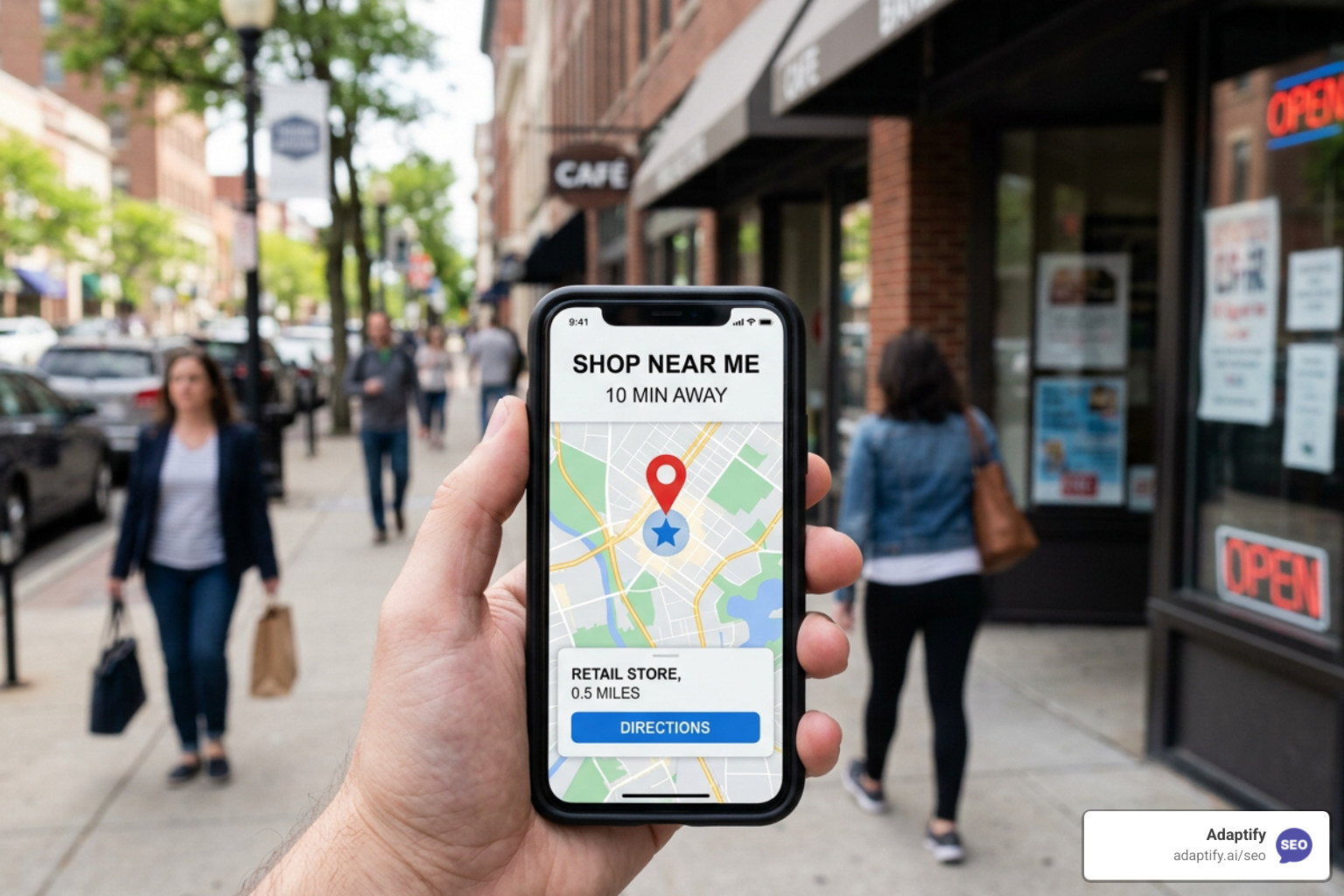
Master local retail SEO to drive foot traffic from Google with proven strategies for GBP, reviews, and AI search optimization.
Join 1,000+ agencies already delivering SEO and AI visibility from a single platform without increasing their headcount.Join 1,000+ agencies already delivering SEO and AI visibility from a single platform without increasing their headcount.