The Ultimate Guide to Local Retail SEO: Drive Foot Traffic from Google

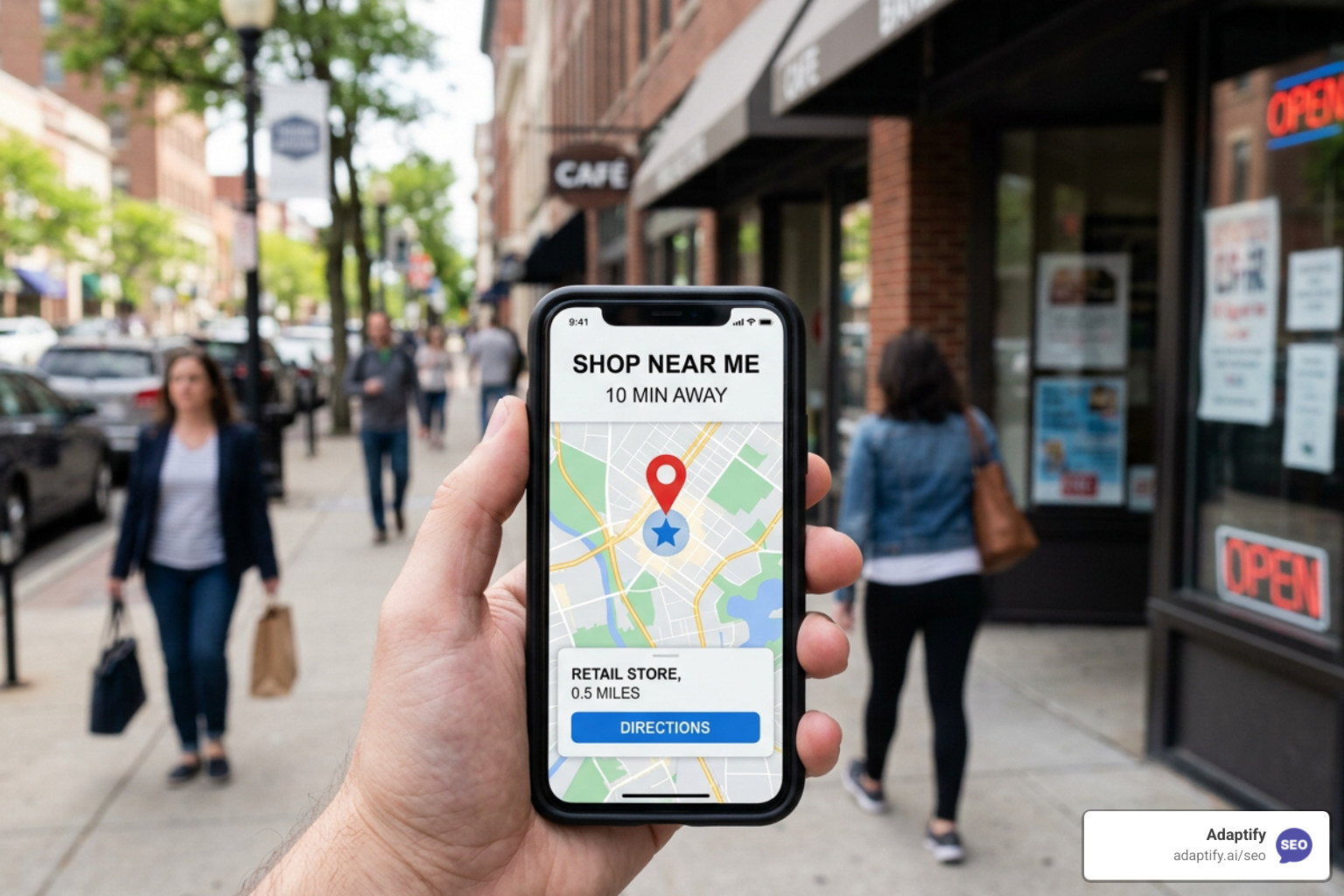

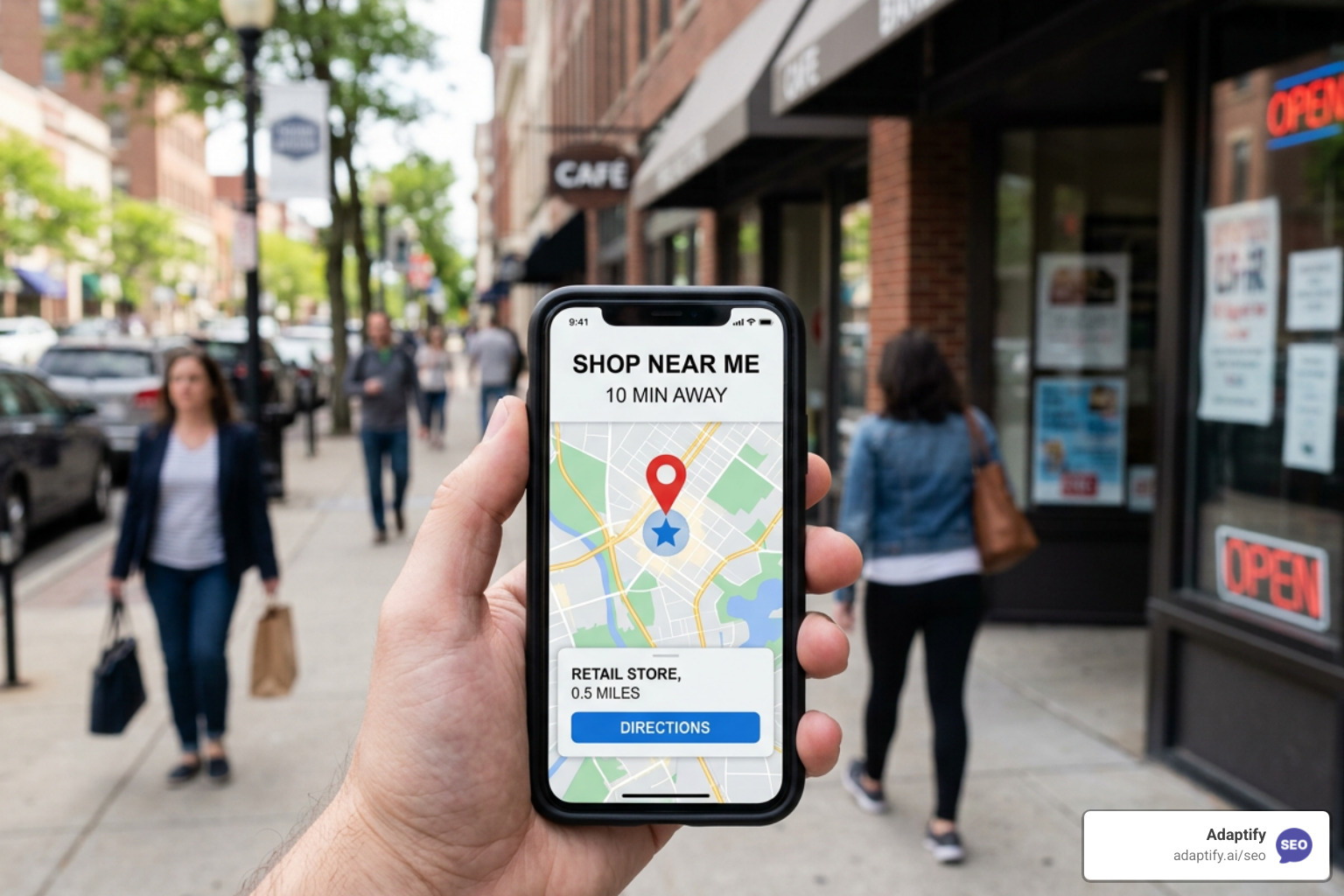
Local retail SEO is the practice of optimizing your store's online presence so nearby shoppers find you — not your competitors — when they search on Google.
Here's what it covers at a glance:
| What It Is | What It Does | Why It Matters |
|---|---|---|
| Optimizing Google Business Profile | Puts your store on Google Maps and the Local Pack | 72% of "near me" searches lead to a store visit within 24 hours |
| Building local citations and NAP consistency | Signals trust and accuracy to search engines | Inconsistent data hurts rankings and confuses customers |
| Earning and managing reviews | Builds prominence and conversion trust | 97% of users read reviews before visiting a local business |
| Creating locally relevant content and pages | Matches search intent to your store's location | 54% of customers search online before buying in-store |
| Technical SEO and schema markup | Helps Google understand and display your store details | Structured data increases click-through rates by ~25% |
| Optimizing for AI search (GEO) | Gets your store cited in ChatGPT, Gemini, AI Overviews | AI search referral traffic grew 527% in early 2025 |
The modern shopper doesn't just walk past your window and come in. They pull out their phone first. They search. They check reviews. They look at photos. Then they decide whether to visit.
That entire digital journey happens before your front door ever opens. And if your store isn't showing up clearly in local search results, that customer is walking into someone else's shop instead.
The stakes are real. Consider that 47% of customers say they're more likely to buy from a retailer with a local presence — and yet 58% of local businesses still don't optimize for local search. That gap is your opportunity.
I'm Hansjan Kamerling, a product designer and marketing consultant who has helped scale digital products to millions of users — and I've applied that same systems-thinking approach to local retail SEO for businesses looking to turn online searches into real-world foot traffic. In this guide, I'll walk you through every layer of a modern local retail SEO strategy, from Google Business Profile fundamentals to AI search optimization.
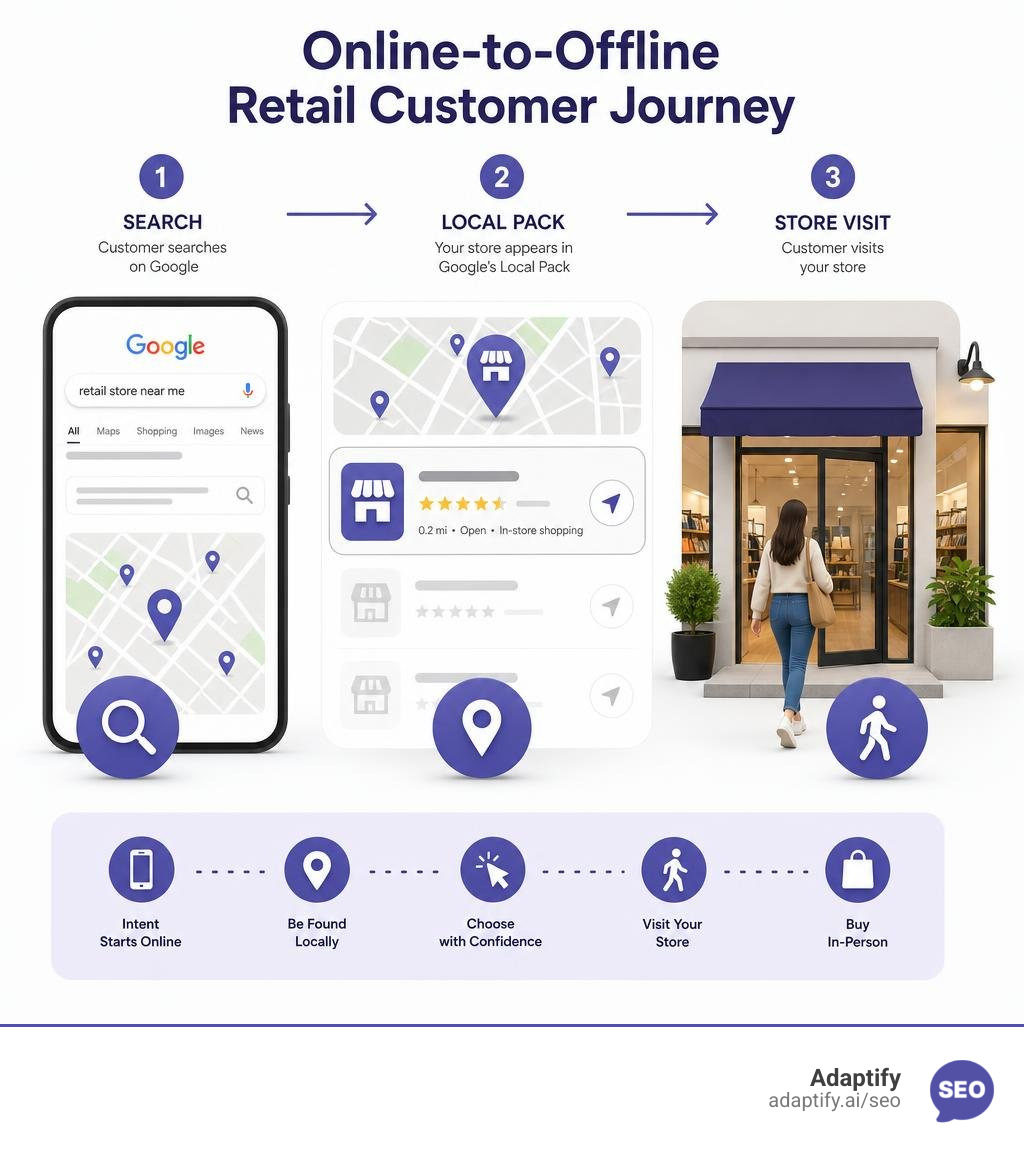
To capture customers who are actively looking to buy, you need a systematic approach that connects digital intent with physical foot traffic. When a nearby customer searches for a product you stock, your store should be their obvious destination.
This bridge between online research and real-world purchasing is what we call "phygital retail." It’s highly profitable because local searches represent incredibly high purchase intent. In fact, 28% of "near me" searches result in a visit within the hour. To make sure those shoppers choose you, we must first look at how search engines evaluate your physical locations. To build a solid foundation, you can read The Ultimate Guide to Local SEO Strategies to understand how these broader concepts fit together.
Google's local search algorithm relies on three core pillars to decide which retail stores make it into the coveted 3-Pack (the map results displayed at the top of the search page). If you want to rank, you must understand how these factors interact.
| Pillar | What It Means | How to Optimize It |
|---|---|---|
| Relevance | How well your business profile matches a user's search query. | Complete every section of your profile, list specific product categories, and use localized keywords. |
| Prominence | How well-known or trusted your business is in the digital space. | Secure high-quality backlinks, maintain high review ratings, and keep a steady stream of fresh customer feedback. |
| Proximity | How close your retail store is to the person searching. | Ensure your NAP (Name, Address, Phone) data is perfectly accurate so Google can pinpoint your location. |
While proximity is largely out of your control—retail has a tight proximity curve, and customers rarely travel more than 3 to 5 miles for non-destination purchases—relevance and prominence are areas where you can easily outperform local competitors. For a deeper dive into how these pillars function under the hood, check out Shopify's perspective on Local SEO: What It Is and How To Do It (2024) - Shopify.
Your Google Business Profile (GBP) is the undisputed center of your local retail seo universe. A fully optimized, verified profile surfaces 80% more often and generates four times as many website visits as an incomplete one.
To maximize your visibility, start by selecting the most specific primary category possible (e.g., "Women's Clothing Store" instead of just "Clothing Store"). Next, keep your standard and holiday operating hours updated in real-time. There is nothing more damaging to your brand's reputation—and your local rankings—than a customer driving to your store only to find it closed due to outdated holiday hours.
For retail stores, the "Products" section of your GBP is a massive, underutilized asset. By listing your top 20 to 30 best-selling items complete with high-quality photos, descriptions, and pricing, you give Google direct proof of your relevance. Eligible retailers can even integrate live in-store inventory feeds so nearby shoppers can see what is in stock before they leave the house. To keep an eye on how well your profile is performing, you should implement the tracking methods outlined in Google Business Profile Tracking: How to Monitor Your Local Search Success.
If you manage a multi-location retail chain, treating every store as an entirely independent local entity is the key to scaling without triggering duplicate content penalties. Avoid using a single generic services page for all locations. Instead, build dedicated, unique landing pages for each physical storefront.
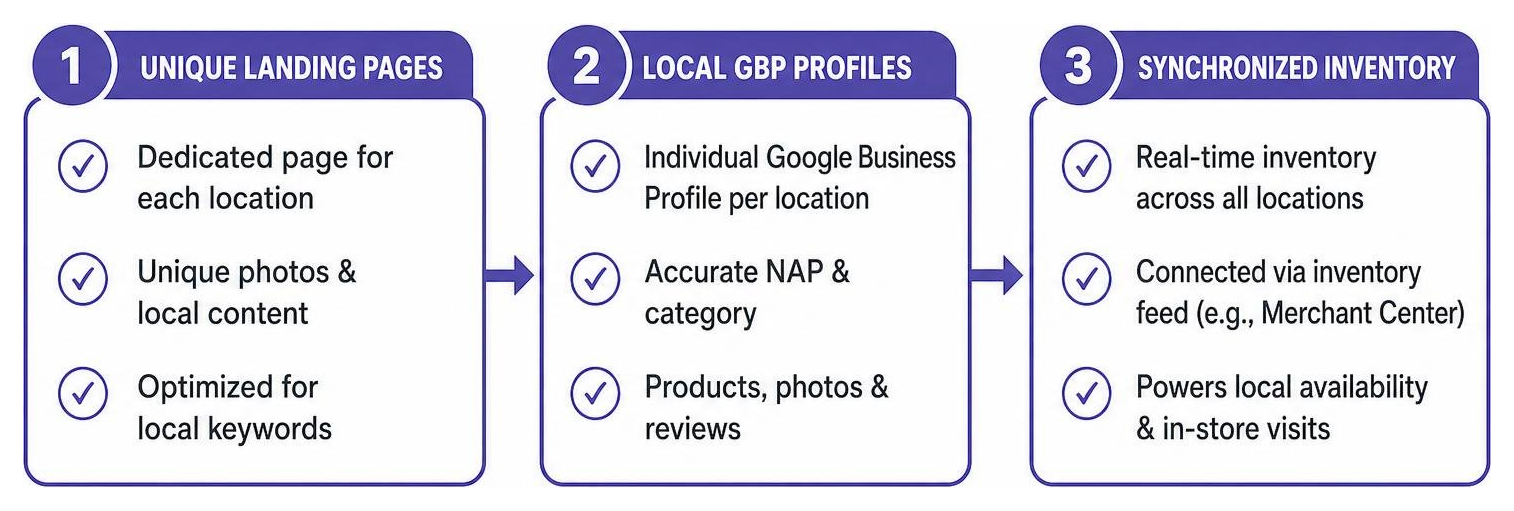
Each location page should feature unique photos of that specific storefront, localized FAQs (addressing parking, nearby landmarks, or transit options), and an embedded Google Map of that exact branch.
To capture the 7.1 million monthly searches for "near me" variations, you must connect your localized landing pages with real-time inventory tools like Google Merchant Center. This allows you to run Local Inventory Ads and display live product availability directly on your local search results, transforming searchers into in-store buyers. To learn how to structure your site to capture these high-intent queries, refer to How To Rank in Google ’Near Me’ Search Results (2026) - Shopify. For agencies looking to manage this process across multiple client locations, read Beyond the Block: Local SEO Strategies Every Agency Needs to Know.
Online reputation management is a direct ranking factor. Google favors businesses with a steady stream of positive, recent reviews. In fact, 83% of shoppers use Google to check reviews before making a purchase, and 89% prefer businesses that actively respond to feedback.
My advice? Build a review engine. Train your checkout staff to make the review ask part of their routine, and place QR codes leading directly to your GBP review page on receipts, shopping bags, and dressing room doors. When responding to reviews, make sure to address negative feedback promptly and professionally. A polite, solution-oriented response to a bad review often builds more trust with prospective customers than a spotless record of five-star ratings.
Alongside reviews, you must build consistent citations (mentions of your business name, address, and phone number) across the web. NAP consistency signals stability to search engines. If you're looking for where to start, prioritize these core directories:
For practical templates on how to pitch and manage local campaigns, check out Local SEO Success Templates to Win Over Your Hometown Clients. To see how local reviews directly drive foot traffic, you can read the retail insights on Local SEO for Retail Stores: How to Get More Customers Through Your Door in 2026 | Flento.
Since 62.5% of web traffic comes from mobile searches—and most local searches happen while users are on the move—mobile optimization is no longer optional. It is table stakes.
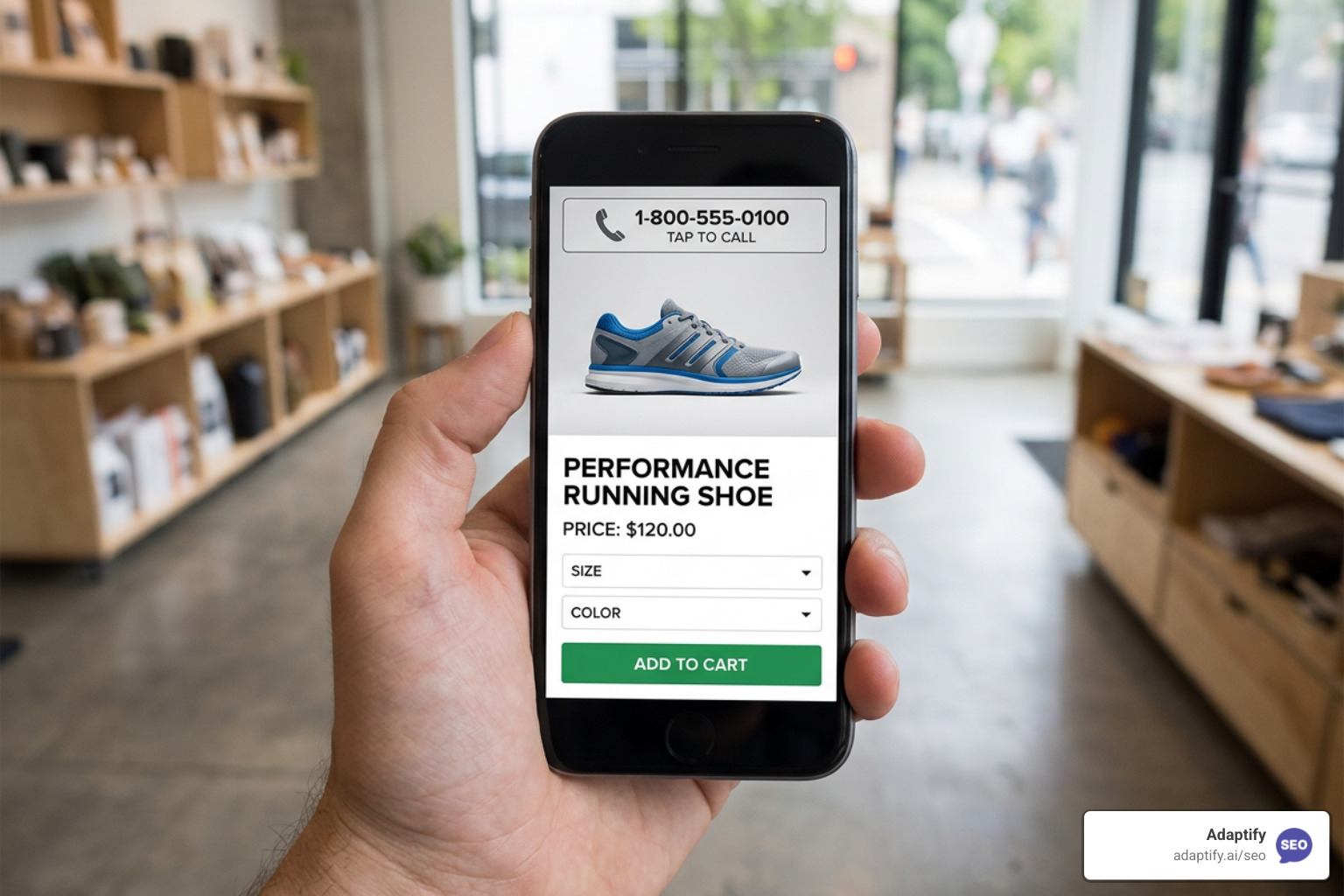
Your website must load fast. Improving your page speed by just one second can boost your conversion rate by roughly 17%. Keep your mobile navigation tap-friendly, place click-to-call buttons near the top of the page, and simplify your mobile checkout process.
To help search engines crawl and understand your site's physical footprint, you must implement LocalBusiness schema markup. This structured data tells search engines your exact coordinates, operating hours, and accepted payment types, which can increase your organic click-through rates by up to 25%.
Additionally, optimize for visual search. With Google recording 100 billion visual searches in 2025, using descriptive, keyword-rich filenames (like leather-running-shoes-brown.webp instead of IMG_402.webp) and uploading high-quality photos is critical for modern retail discovery. To measure how these technical tweaks impact your neighborhood rankings, read Local Rank Tracking: The Secret Sauce for Hyperlocal Visibility.
The local search landscape in 2026 has expanded beyond traditional blue links. Consumers are increasingly using AI search engines, ChatGPT, Gemini, and Google AI Overviews to find local solutions. To remain visible, retailers must practice Generative Engine Optimization (GEO).
AI engines rely heavily on structured, factual data. To optimize for these platforms, I recommend using the "answer capsule" technique: include a clear, 50-to-60-word direct answer to common local questions near the top of your location and product pages. For example, explicitly state your parking setup, transit access, and product availability in plain, natural language.
Because AI search engines pull from highly trusted, fresh sources, maintaining a robust review acquisition strategy and keeping your schema markup updated is the most effective way to secure AI citations. To understand how traditional search optimization merges with AI-driven discovery, read Local SEO and GEO for Local Businesses: The Complete Guide to Getting Found in 2026 - Bigeye. For a forward-looking perspective on this shift, check out Local SEO Is Dead, Long Live GEO: Boosting Local Visibility in AI.
Mastering local retail seo is a continuous process of aligning your physical storefront with your digital presence. As search engines and AI platforms become more conversational and location-aware, the retailers who maintain accurate profiles, gather authentic reviews, and optimize their technical foundations will capture the lion's share of local foot traffic.
However, managing local listings, building regional backlinks, and creating unique content for multiple store locations requires significant manual effort. This is where automation becomes your competitive advantage.
Adaptify.ai offers automated SEO services designed to streamline these exact processes. By automating keyword strategy, localized content creation, and PR link building, Adaptify helps agencies and retail brands scale their search visibility with minimal manual overhead.
Ready to turn online searches into real-world sales? Sign up for Adaptify's automated SEO platform and start scaling your local retail footprint today.
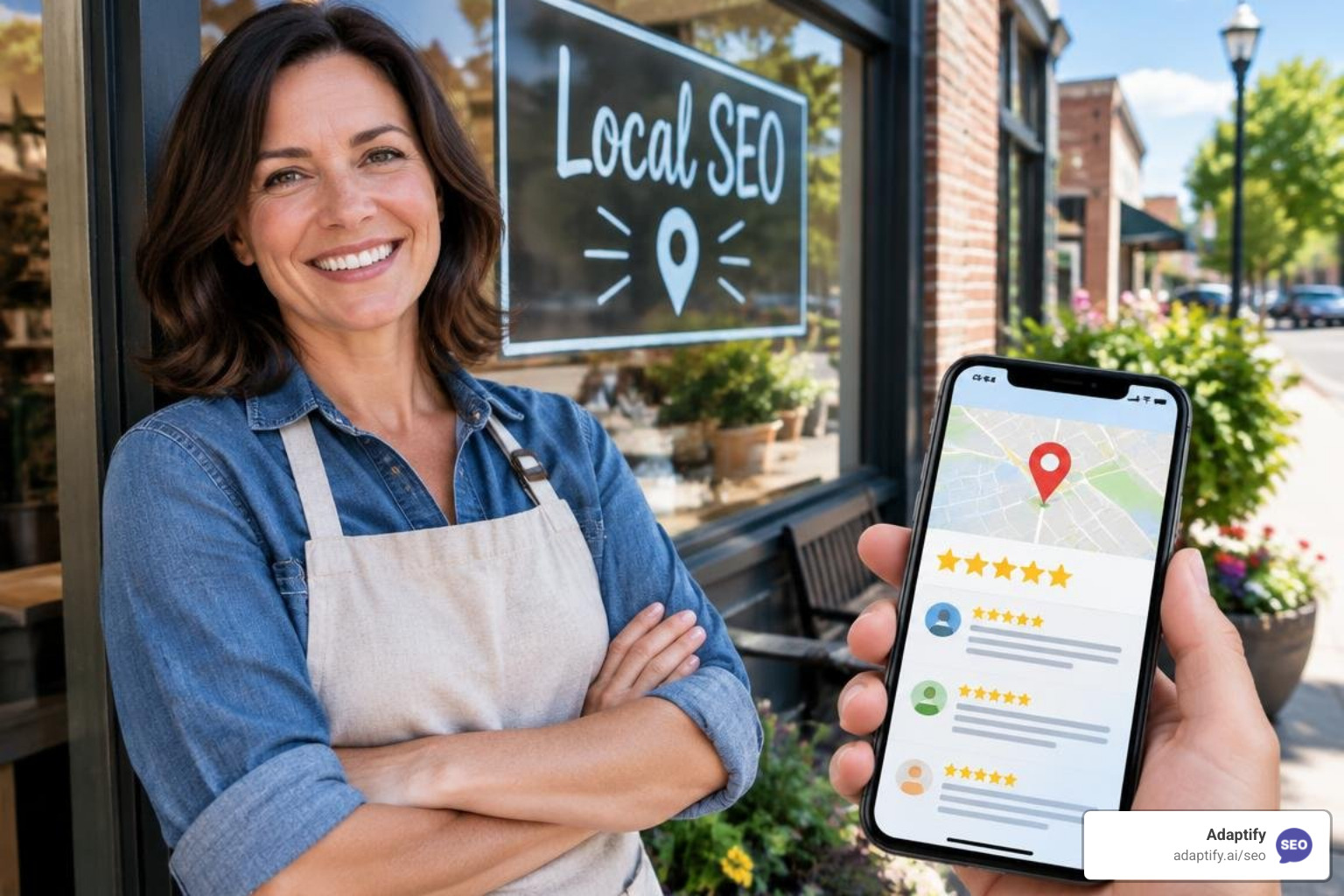
Stop being invisible: discover what the best local SEO strategies for small businesses are to dominate Google Maps, reviews, and AI search...
Master localized SEO to rank your local business in Google Maps and drive more in-store visits.

Learn how to build a clean off-page SEO proposal that wins clients without raising red flags, using white-hat digital PR and transparent l...
Join 1,000+ agencies already delivering SEO and AI visibility from a single platform without increasing their headcount.Join 1,000+ agencies already delivering SEO and AI visibility from a single platform without increasing their headcount.