Local SEO is Dead, Long Live GEO: Boosting Local Visibility in AI




If you’ve spent years mastering the art of the "Local Pack," I have some news: the goalposts have moved. GEO, or Generative Engine Optimization, is the process of structuring your online presence so AI models—like ChatGPT, Gemini, and Perplexity—can easily find, understand, and cite your business in their answers.
Traditional SEO was about being a "link" on a page. GEO is about being the "answer" in a conversation. When a user asks, "Who is the most reliable emergency electrician in downtown Austin?" the AI doesn't just look at keywords; it looks for entity signals. It wants to see a clear, trusted entity (your business) backed by consistent data and high-authority mentions. If the AI can't extract your information with 100% confidence, it will simply recommend your competitor who has a cleaner digital footprint.
It’s easy to get lost in the alphabet soup of 2026 marketing terms. Let’s clear the air:
The shift is from "findability" to "cite-ability." AI models prioritize machine-readability and conversational queries. If your website is a maze of flashy pop-ups and thin content, the AI bots will skip right over you. For more on the basics, check out this Beginner's Guide to GEO AI SEO.
The numbers don't lie. By 2027, over $750 billion in consumer spend is expected to flow through AI-driven search. We are seeing a 3x higher click-through intent from AI-generated answers compared to traditional search results. Why? Because when an AI says, "I recommend Smith & Sons Plumbing because they have 24/7 availability and the highest verified trust rating in your zip code," the user feels they’ve received a personalized consultation, not an ad.
If you aren't in that answer, you don't exist in that buyer's journey. Nearly half of all executives believe AI will replace traditional Google search for business research by 2030. For local businesses, this means the "first page" is now a single paragraph written by an LLM.
Here is the silver lining: AI models value depth and clarity over massive budgets. A local boutique law firm can beat a national giant if the local firm has better structured data, more specific service-area pages, and authentic local reviews that mention specific neighborhoods.
AI platforms prioritize third-party validation and niche expertise. By focusing on "semantic depth"—meaning you cover your local topic exhaustively—you provide the "proof" the AI needs to recommend you. Small businesses that lead with direct, informative statements backed by verifiable facts are winning the AI citation game in 2026.
Before you go hunting for the best geo services for local business visibility in AI answers, you need to know where you stand. I always recommend starting with a manual audit across the "Big Three": ChatGPT (OpenAI), Gemini (Google), and Perplexity.
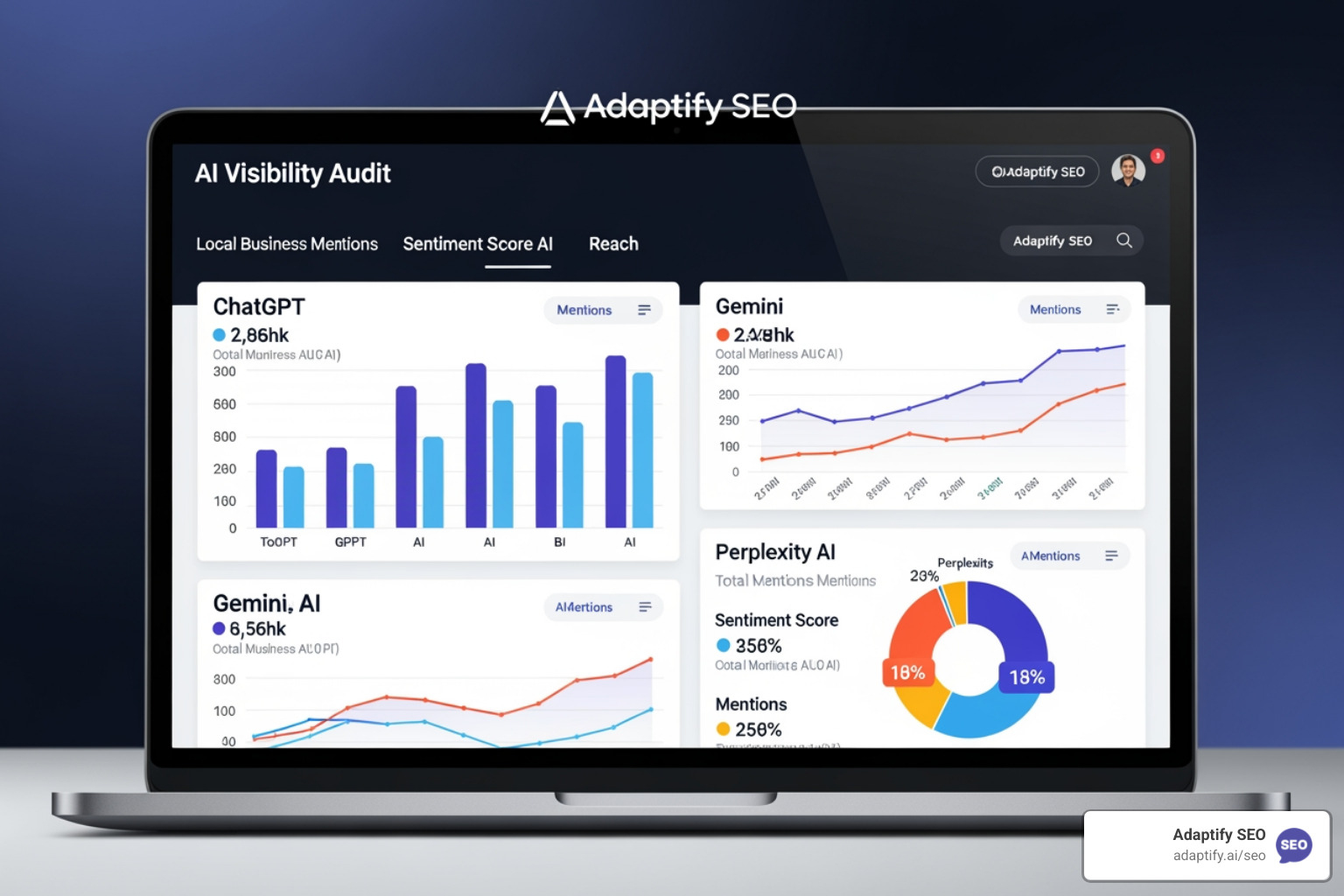
Don't just search your business name. Test the AI’s recommendation engine with these types of prompts:
If the AI hallucinates (makes things up) or says it doesn't have enough information, you have a GEO gap.
In my experience, AI visibility usually fails due to "digital friction." This includes:
In the GEO era, your Google Analytics "Sessions" might actually go down while your revenue goes up. Why? Because users are getting your info directly from the AI. You need to track:
Finding the right partner is about balancing automation with local nuance. The best geo services for local business visibility in AI answers usually fall into three camps: automated platforms, specialized agencies, and hybrid partners.
For a single-location business, you don't need a $5,000/month retainer. You need a "Foundation" service. This usually includes:
If you manage 50+ locations, the complexity scales. You need services that offer:
Avoid anyone promising "guaranteed #1 ChatGPT rankings." No one controls the LLMs. Look for providers who focus on "Share of Voice" and "Citation Lift." A good provider should show you a 44% lift in citations through structured data alone.
| Provider Type | Pros | Cons |
|---|---|---|
| Software-Only (SaaS) | Affordable, great for DIY, scales easily | Requires your time to manage |
| Specialized GEO Agency | Deep expertise, handles PR and content | Expensive ($2k+ per month) |
| Hybrid Partner (Adaptify) | Automated efficiency + strategic growth | Best for agencies and growing brands |
If you want to do this yourself, there is a specific hierarchy of needs. Think of it as a pyramid: structured data is the base, and earned media is the peak.
Structured data is the "cheat sheet" for AI. By implementing LocalBusiness, FAQ, and Service schema, you are essentially handing the AI a neatly organized file folder of your business.
sameAs property in your schema to link your website to your Google Business Profile, Yelp, and social media. This helps the AI connect the dots that all these profiles belong to the same "entity." Consistent listing data can lead to 55% more views.AI models are trained to be skeptical. They prioritize "third-party validation." This means a mention in a local newspaper or a high-authority industry blog is worth ten pages of content on your own site.
AI models love certain structures because they are easy to parse and summarize. To be cited, your content should include:
For a deeper dive into these tactics, see The Ultimate Guide to Local SEO Strategies.
You shouldn't stop doing SEO to do GEO. They are symbiotic. Traditional SEO drives the traffic and backlinks that give your site "authority," which the AI then uses to decide if you are a "trusted" source.
GEO is not a magic wand. It is a long-term play for authority.
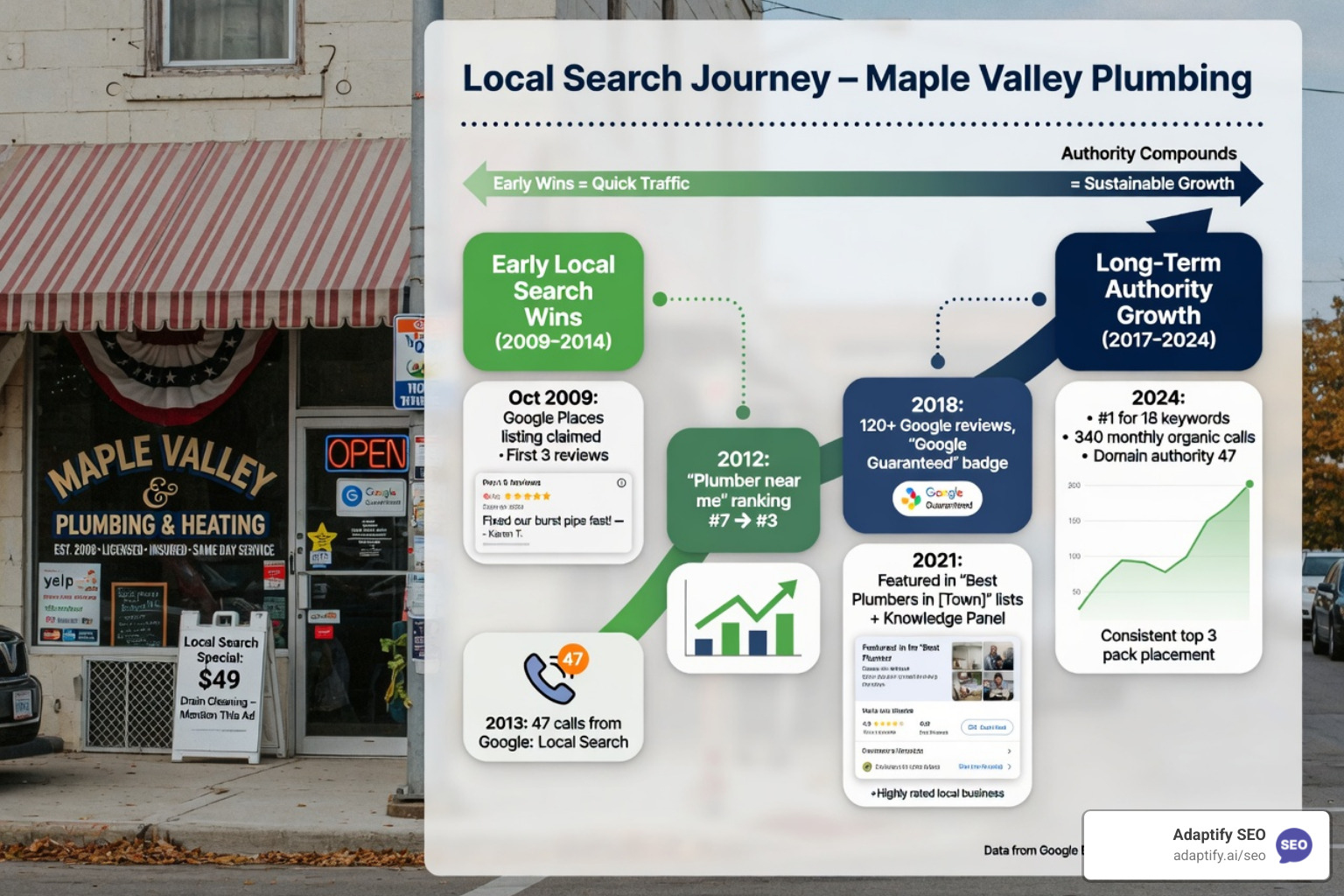
You can see "early wins" (like the AI correctly identifying your services) in 2 to 4 weeks. However, building "Stable Generative Authority"—where you are the default recommendation—takes 6 to 12 months.
To track this, I recommend using heatmaps to see where your local signals are strongest. Tools like GeoGrid Rank Tracking are essential for visualizing this "hyperlocal" visibility.
Absolutely. SEO provides the foundation (backlinks, website speed, and domain authority) that AI models use to verify your credibility. Without a strong SEO base, your GEO efforts won't have the "trust" needed to get cited.
Focus on Google Business Profile optimization and FAQ structuring. Since you only have one location, your goal is to be the "unquestionable authority" in your specific zip code. High-quality reviews and local schema are your best friends here.
Look for "AI-attributable" lifts. This includes an increase in branded searches (people searching for your name after an AI recommended you) and a rise in "Share of Voice" for your top service prompts in tools like Perplexity. Also, keep a close eye on your Local Rank Tracking.
In 2026, your "front door" isn't just your physical office or your website's homepage—it's the summary an AI provides to a potential customer. If that summary is missing, incorrect, or recommends your competitor, you are losing money every single day.
The best geo services for local business visibility in AI answers are those that simplify this transition. At Adaptify, we specialize in helping agencies and businesses automate the heavy lifting of SEO and GEO, from content creation to building the high-authority links that AI models crave.
Don't wait until your traditional search traffic disappears. The shift to AI discovery is happening now. Start by auditing your brand in ChatGPT today, and then build the structured, authoritative presence that ensures you're the first—and only—recommendation your customers see.
Stop being invisible: discover what the best local SEO strategies for small businesses are to dominate Google Maps, reviews, and AI search...
Master localized SEO to rank your local business in Google Maps and drive more in-store visits.
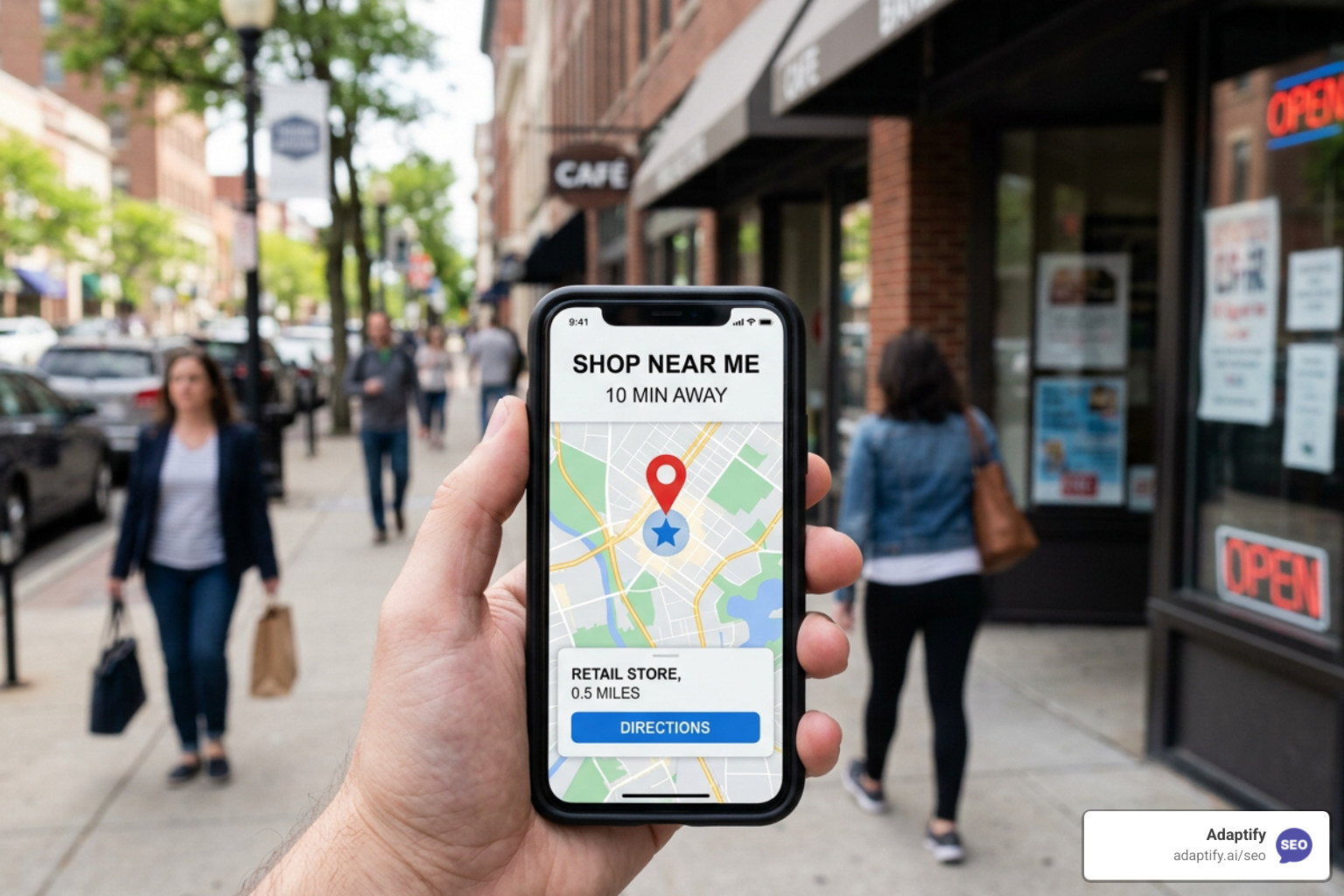
Master local retail SEO to drive foot traffic from Google with proven strategies for GBP, reviews, and AI search optimization.
Join 1,000+ agencies already delivering SEO and AI visibility from a single platform without increasing their headcount.Join 1,000+ agencies already delivering SEO and AI visibility from a single platform without increasing their headcount.